Trying scuba without certification: clarify what the experience actually includes
GotGear and DiveHarbour share an owner; this collection is not an independent recommendation. GotGear is not a diving school and does not provide dive training. Articles are general information, not practical training, instructor guidance or individual medical clearance to dive. Original concept images are not real course records. No certification or safety outcomes are promised.
The short answer
You can try scuba through a supervised introductory programme without already holding a diving certification, but that does not remove health screening, briefing or participation requirements. Before booking, confirm the named programme, whether it includes only a pool-style session or an optional open-water dive, who supervises you and what the written fee covers. Treat the experience as a chance to assess your interest and comfort, not as permission to dive independently afterwards.
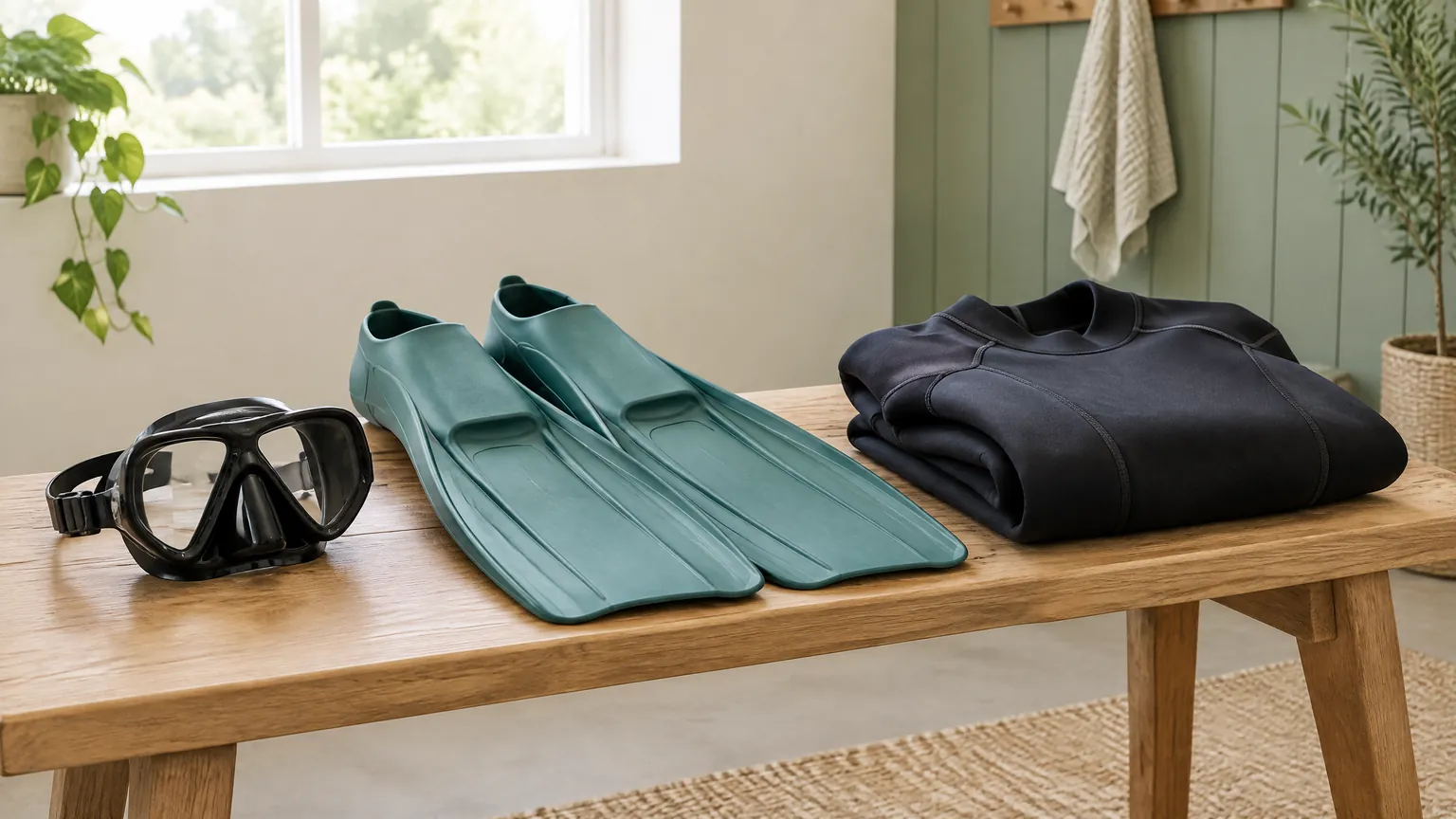
An introductory scuba experience can answer a useful question: do you want to explore diving further before committing to certification? It cannot answer that question well if the advertised package leaves you guessing about where you will go, who will accompany you or what happens if you cannot participate. Start with the scope of the experience, rather than its photographs or the promise that no certificate is needed.
GotGear publishes this planning guide but does not provide diving training. GotGear and DiveHarbour share ownership; the DiveHarbour links below are information routes to a related business, not independent provider endorsements. Scuba is a water activity with significant risks. This article helps you prepare questions and compare arrangements; practical instruction belongs with a qualified diving professional, and personal medical suitability belongs with qualified healthcare professionals.
What “no certification required” actually means
PADI describes Discover Scuba Diving as an opportunity to try scuba before deciding whether to take the full Open Water Diver certification course. Its official FAQ distinguishes the introductory experience from that longer learning commitment. A first-time participant is therefore not expected to arrive with an existing diving qualification, but the experience still has paperwork, knowledge preparation and professional supervision. 1
Do not read the absence of a certificate requirement as the absence of entry conditions. Ask the school which programme it will deliver and which participant requirements apply to that programme. A general phrase such as “try dive” is not enough to establish the agency, setting or included activities. If the programme is presented as PADI Discover Scuba Diving, request confirmation that this is the actual programme being booked, rather than assuming every introductory package uses the same format.
The important distinction is what you can do afterwards. Trying scuba does not give you an Open Water Diver qualification or authorise independent diving. You may finish with a clearer idea of whether you enjoy the activity, but that is different from completing certification training and assessment. If a package mentions a participation record, ask what it records and avoid treating a souvenir or attendance document as a diving qualification.
DiveHarbour’s try scuba diving Hong Kong information page can help you frame an initial enquiry about an introductory experience. Ask for the named programme and the proposed format for your preferred date in the reply; a public course listing does not establish that a particular session is available or that you meet its participation requirements.
Separate the initial session from an optional sea dive
PADI’s FAQ says its Discover Scuba Diving experience begins in a swimming pool or water with pool-like conditions, and describes an open-water dive as optional. That distinction matters when comparing packages. A picture taken in the sea does not establish that an open-water dive is included in the option you are considering. Equally, a session outside a built swimming pool should not be assumed to be an unrestricted sea outing. 1
Ask for a description of the actual setting, not just a place name. “Hong Kong” identifies a region, while “Sai Kung” may describe a broad activity area rather than a confirmed meeting point. You need to know whether the initial session is in a pool or another suitable setting, and whether any later open-water component is included, separately offered or not part of the arrangement.
| Format described in an enquiry | What to have confirmed | What not to assume |
|---|---|---|
| Pool introduction | Venue, session outline and professional supervision | That a sea dive is included later |
| Introduction in pool-like conditions | Exact setting and how the proposed session meets the named programme’s requirements | That any calm-looking shoreline is suitable |
| Introduction with an optional open-water component | Whether that component is included, who conducts it and what affects participation | That every participant will complete it |
| Certification course | Named qualification, learning requirements and assessment arrangements | That it is interchangeable with a short introductory experience |
These are comparison questions, not alternative standards created by GotGear. The school should explain its proposed programme and any decisions that remain dependent on participant readiness or conditions. Do not use a promised amount of underwater time as the sole measure of value. Ask how much of the advertised schedule is briefing, preparation, travel and time in the water, without assuming any component has a guaranteed duration.
Understand who supervises you and how the group works
Professional involvement is central to an introductory experience. PADI’s FAQ distinguishes the professionals who may conduct a pool-only experience from those conducting the optional open-water component, which it assigns to PADI Instructors. Rather than relying on the broad word “guide”, ask for the professional role appropriate to each part of your proposed session. 1
A useful enquiry asks who will conduct the session, under which agency programme and how that professional’s current status can be checked. A school’s biography can introduce its team, but a list of backgrounds is not independent verification of current teaching eligibility. There is no need to turn the question into an accusation: explain that you are new and want to understand who is responsible for your learning.
Also ask about the proposed group size and how individual needs will be managed within it. The answer should describe the actual arrangement, rather than suggest that one participant-to-professional ratio applies to every agency, setting or age group. A private booking and a group session may offer different scheduling or attention arrangements, but neither label alone proves that the experience is suitable for you.
If you are unsure about being in the water
PADI says participants should feel comfortable in the water and be able to maintain themselves at the surface. That is more informative than an advert that simply says “beginners welcome”. 1 Describe your comfort level honestly when enquiring. For example, you can say that you swim occasionally but feel uneasy when you cannot see the bottom, without trying to diagnose the reason or asking the school to declare you medically fit.
Ask whether you can discuss concerns before the session and how the professional will handle a participant who wants to pause or stop. Clarify what that would mean for the remaining programme and booking terms. Do not assume that choosing not to continue creates a refund entitlement or a guaranteed replacement session. A clear answer helps you make a voluntary decision without feeling that payment obliges you to complete every advertised activity.
Sort out screening before the booking becomes urgent
“No certification required” is not a medical clearance statement. The Undersea and Hyperbaric Medical Society describes a screening system with distinct parts: a participant questionnaire, a physician’s evaluation when medical approval is necessary, and guidance for physicians. The questionnaire identifies matters that may need medical evaluation; it is not an online editorial test of whether an individual can safely dive. 2
Request the actual forms the school requires early enough to read them properly. UHMS recommends using the most recent available version in the language you need, while acknowledging that translations may have different version dates. 2 Ask which version the programme uses and how any required physician documentation should be supplied. An older form found through a search engine should not replace the paperwork requested for your booking.
DAN warns against omitting information because someone has already invested time or money in a trip. It recommends planning ahead and completing screening honestly. DAN also makes clear that instructors and dive-shop staff are not physicians and should not provide personal medical clearance. 3 If your answers require medical review, follow the form’s directions and consult a qualified healthcare professional rather than requesting reassurance through a sales chat.
DiveHarbour’s PADI Discover Scuba Diving Hong Kong page is a relevant place to begin a programme-specific discussion about participation without an existing qualification. Ask which screening documents are required for the proposed experience and when they must be completed. The wording of that information page is not a substitute for the school’s written requirements or any medical evaluation indicated by the forms.
Choose a language you can genuinely understand
Reading ability matters for both paperwork and the briefing. Ask which language the professional will use, whether written materials are available in a language you understand and what happens if someone in your group needs clarification. Having a friend translate casual messages does not establish that everyone will understand the formal participant information or the session itself.
Keep medical questions separate from logistical ones. Ask the school how to submit required documents and who receives them; discuss health details with the appropriate healthcare professional. Do not post a completed medical questionnaire in a general group chat merely because that chat is organising the outing. An enquiry can establish a suitable document channel without circulating sensitive information to the entire group.
Compare what is included, not just the advertised fee
Two packages with similar names can cover different services. One may describe only the initial session; another may involve additional transport or an open-water component. Ask for an itemised written explanation of what is included and what would require a separate decision or payment. This article does not quote amounts, because the relevant basis for your decision is the school’s current written offer for the arrangement you want.
PADI’s official description says a PADI Professional provides scuba gear for the experience. 1 Still, confirm the supplied equipment for your actual booking, how fitting is handled and what personal items you must bring. Do not buy unfamiliar diving equipment solely to make a first experience seem more complete. Ask whether the available equipment can accommodate your needs, including any vision-related requirements, before assuming standard rental items will work for everyone.
The discover scuba diving price Hong Kong page gives you a related DiveHarbour information route for an inclusions enquiry. Request confirmation of the initial session, any optional open-water element, equipment, learning materials and any venue or transport items that apply to your proposed booking. Read the response alongside the written cancellation and non-refund terms, rather than treating the page as a guarantee of a particular package or offer.
Photography is another useful distinction. Ask whether images are included, optional or unavailable, and whether the arrangements allow a participant to decline photography. Pictures can be a pleasant record, but they should not become the reason you feel obliged to continue when you have concerns. Similarly, an advertised marine-life image is not a promise that those animals, that visibility or that sea condition will occur on your date.
Get a written reply that you can make a decision from
An efficient enquiry does not need to be long. It needs to connect your situation with the questions that affect whether you can participate and what you are committing to. Tell the school that you are an uncertified beginner, give your preferred date and state whether you are interested in an initial introduction only or would like to discuss an optional open-water component. Mention any relevant communication or equipment needs without asking a booking administrator for a medical verdict.
Before paying, use this checklist to identify gaps in the reply:
- Confirm the programme name and the participant requirements that apply to it.
- Identify the initial setting and whether an open-water component is included or only a possibility.
- Confirm professional supervision, the proposed group arrangement and the briefing language.
- Obtain the required screening forms and the process for any physician documentation.
- Request the included equipment and materials, plus anything you are expected to supply.
- Confirm the proposed meeting instructions and any travel arrangements, without assuming a public location page establishes them.
- Read the payment, cancellation, non-refund and make-up-session terms for this booking.
- Ask who communicates changes and what happens if conditions or participation requirements prevent part of the plan.
A vague answer such as “everything is arranged” does not resolve these points. Follow up only on the missing information. If the reply says “weather dependent”, ask how the decision will be communicated and which written terms govern the changed arrangement. Do not interpret that phrase as an automatic refund or a free reschedule. Where different language versions of a policy appear inconsistent, ask the school to clarify the terms that apply before you pay.
For a family or mixed-age group, confirm eligibility individually under the named programme. Ask about parental consent, suitable equipment and whether everyone can participate together. Do not borrow an age rule from another agency or assume an adult’s suitability establishes a child’s suitability. It may be more practical to choose different activities than to book everyone into a single session that has not been confirmed for them.
Use the experience to decide your next learning step
A well-understood introduction gives you information about your interest, the learning environment and the questions you want answered next. Afterwards, consider whether you felt able to ask questions, understood the briefing and had enough information to choose whether to continue. Those observations are more useful for selecting future training than judging the outing solely by photographs or whether you reached a particular location.
If you want to pursue certification, ask for a separate explanation of the full course. PADI says a Discover Scuba Diving experience may count towards its Open Water Diver course when arranged appropriately, and advises discussing that intention with the dive centre in advance. 1 That is not a universal credit promise. Ask what records and additional requirements would apply to your particular programme; do not presume a fee reduction, transferable credit or exemption from assessment.
You can also decide that this is not the right time to continue. An introductory experience does not need to become a rushed certification commitment to be useful. The booking decision should rest on a clearly described programme, appropriate screening and understandable written terms. If a material question remains unanswered, resolve it with the school before committing rather than relying on the reassuring phrase “no certification needed”.

Common questions
Does an introductory scuba booking automatically include a sea dive?
No. PADI describes an initial pool or pool-like session and an optional open-water component. Ask which parts your proposed booking includes and what affects participation. A coastal photograph, destination name or general promise of a diving experience does not establish that a sea dive is included.
Can the school clear me to participate if my medical questionnaire raises a concern?
The school can explain the required documents and booking process, but it cannot replace a qualified healthcare professional’s medical evaluation. Follow the actual questionnaire’s directions and obtain any indicated review before participation. Give truthful answers even if you have already made travel plans or paid for the activity.
What should I ask if I might stop after the initial session?
Ask how a participant can pause or stop, what that means for an optional open-water component, and which written booking terms apply. Confirm this before payment. Do not assume that discomfort, a decision not to continue or an incomplete activity automatically creates a refund or make-up-session entitlement.
Sources & what they support
The scope below identifies what each reference supports. Citations do not imply independent endorsement of DiveHarbour or any school, establish course outcomes or provide individual medical clearance to dive.
- PADI: Discover Scuba Diving FAQs (opens in a new tab)
Introductory purpose distinct from the full certification course; initial pool or pool-like setting and optional open-water component; professional roles, supplied equipment, water comfort, medical paperwork and conditional progression towards Open Water Diver. No numerical limits or diving techniques are reproduced.
- UHMS: Recreational Diving Medical Screening System (opens in a new tab)
Separate roles of the participant questionnaire, physician evaluation when indicated and physician guidance; recommendation to use the most recent available version in the required language. Does not establish an individual’s fitness to dive.
- DAN: Honesty and the Dive Medical Form (opens in a new tab)
Honest completion and advance planning reduce pressure to omit information; personal medical clearance belongs to medical professionals rather than instructors or dive-shop staff. Historical numerical screening criteria and clearance-validity statements are not used.