
For a commercial broom Hong Kong, identify the main surface and debris, then compare bristle stiffness, head width and handle length against the cleaning route. Include how debris will be gathered, how tools will be cleaned and where the broom and dustpan will be stored.
Match bristle type to the task for commercial broom Hong Kong
Start with the floor and the type of debris. Smooth epoxy, polished tile and vinyl perform best with soft, fine, flagged synthetic filaments that trap dust without scratching, while medium filaments are suitable for sealed concrete, terrazzo and general retail floors. For rougher concrete loading bays or textured anti-slip finishes, choose stiffer, unflagged filaments that move grit without splaying. Natural fibres (such as bassine or coco) sweep dry grit well, but synthetics resist moisture better in Hong Kong’s humidity. If static build-up or powders are a concern, check for anti-static properties. For hot, greasy areas, consider heat- and oil-resistant filaments.
When shortlisting, buyers in Hong Kong looking for a commercial broom should request written specifications for filament material (PET, PP, PBT or natural), stiffness rating, filament diameter range, trim length, flagged or unflagged tips, staple- or resin-set construction, and staple metal (ask for stainless in damp sites). Confirm chemical compatibility if solvents or degreasers are present, and ask for colour-coding options to support hygiene zones. Provide suppliers with photos of the floor texture and a description of typical debris, noting any glass, metal offcuts or wet litter. At sample review or on receipt, inspect bristle set density, even trim, secure ferrules and tug-test for shedding. Any antimicrobial or food-area suitability claims should be backed by the manufacturer’s documentation where required by your venue or insurer; written model specifications and quotation terms must prevail.
Choose working width and handle length for commercial broom Hong Kong
Working width governs productivity and manoeuvrability. Map your route and record the narrowest aisle, shelf overhang, turn at line ends and doorway pinch points. As example starting points to be confirmed in your quotation, larger open floors may suit 600–800 mm heads, while congested aisles and edge work may benefit from 300–450 mm. Head angles and slim yokes help reach skirting lines without snagging. Specify replacement head availability if you expect high wear.
Handle length should match operator height and posture. As example starting points only, a 140–160 cm overall handle length works for many teams, while telescopic handles accommodate mixed crews and tight storage. Note the thread type (tapered, European, or proprietary), ferrule material, grip texture and handle diameter for gloved use. Record lift cabin size and store-room clearance so the assembled tool fits your building. In a written enquiry, ask for head width, overall and collapsed lengths, weight, handle material (aluminium, fibreglass, sealed hardwood), angle/yoke design, connection type and spare-part codes. On receipt, check straightness, thread compatibility, no sharp burrs, secure ferrules and that stated dimensions match the quotation. Use this guide to compare specifications and prepare a written enquiry that reflects route measurements and operator needs.
What should buyers compare for commercial broom Hong Kong?
| Criterion | Straightforward requirement | More complex requirement | Evidence to provide |
|---|---|---|---|
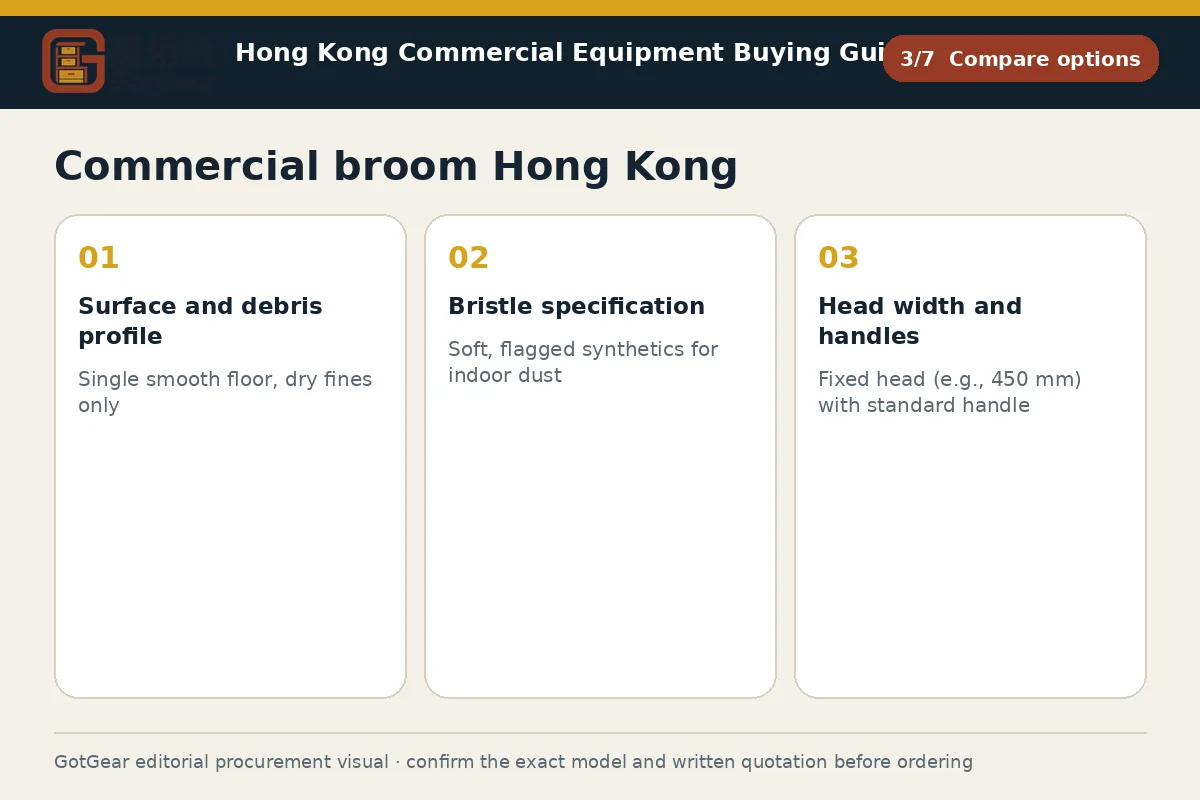
| Surface and debris profile | Single smooth floor, dry fines only | Mixed textures, fine-to-coarse debris, occasional wet patches | Photos of floors, debris description, any glass/metal notes |
| Bristle specification | Soft, flagged synthetics for indoor dust | Resin-set, solvent/heat-tolerant, colour-coded system | Material, stiffness, filament diameter/trim, flagged/unflagged, set method |
| Head width and handles | Fixed head (e.g., 450 mm) with standard handle | Interchangeable heads, telescopic handle, angled yoke | Aisle widths and lift clearances (examples to confirm), operator heights |
| Collection method | Handheld dustpan with flexible lip | Wheeled, lidded lobby pan; anti-static or metal edge if needed | Pan width, lip material/replaceability, wheel/noise details, storage footprint |
| Storage and cleaning | Wall hook space available, basic rinse routine | Trolley docking, restricted rooms, hygiene colour coding | Storage dimensions, approval needs, care schedule starting point |
This framework helps buyers create comparable written enquiries. Final model specifications, availability, delivery and commercial terms must be confirmed in a formal quotation.
Commercial broom Hong Kong: Pair with Dustpan and Brush Hong Kong
A dustpan-and-spot routine completes the sweep. For “dustpan and brush Hong Kong” selection, match the pan lip to the floor and the brush to typical debris. Flexible rubber or TPE lips help seal to smooth tile and polished concrete; rigid leading edges suit coarse grit on textured floors. Long-handle lobby pans reduce bending and speed up public-area response; a lid limits odour and airflow disturbance. In kitchens or hot zones, metal pans may tolerate heat better, subject to supplier confirmation. Where powders or fine fibres are common, ask about anti-static features.
Specify pan width, lip material and replaceability, hinge strength, wheel type (rubberised for quieter hotel corridors) and parking footprint. Request compatibility details for clips that secure the broom or brush to the pan during transport. If your sweep meets damp residues, plan to follow with floor squeegee Hong Kong on problem patches. For high shelves, vents and fixtures, close the routine with microfiber cleaning cloth Hong Kong. For fine follow-up on expansive interiors, consider dust mop and handle Hong Kong to capture residues after brooming. Ask the supplier for any food-area suitability or temperature-tolerance documentation if the tools will enter kitchens or chilled rooms, and confirm all dimensions in the written quotation.
Plan tool storage and cleaning for commercial broom Hong Kong
Storage and tool care affect lifespan and hygiene. Identify a ventilated space where brooms can hang head-up to prevent bristle deformation and mildew. In tight plant rooms, use wall rails with clips and drip trays to keep floors clean. Confirm management-office approval before drilling into common walls, and coordinate any mounting with building hours. Where teams work across multiple floors or public venues, plan a compact cleaning trolley Hong Kong so tools travel safely between lifts and event spaces without obstructing guests.
Define a simple cleaning routine: rinse heads after gritty shifts, use mild detergent on oily areas, and air-dry fully before storage. Create bilingual care cards so contractors and in-house staff follow the same method. In your enquiry, request drawings that show hanger-hole diameters, head-to-wall clearances and compatible rail/clip systems, plus any trolley docking features. Ask the manufacturer for written care guidance and recommended replacement intervals as example starting points to be validated on your site. On receipt, inspect labels, colour-coding, secure grips and that storage accessories match the quotation. Plan space for spare heads and safe glass-shard disposal where relevant; local site rules and insurer requirements take precedence.
Commercial broom Hong Kong decision checklist
Confirm the dominant floor texture and main debris, then shortlist bristle material, stiffness and trim that won’t scratch or clog. Measure the tightest aisle, doorway and lift size along the route, and choose head width and handle length to suit operators. Decide how debris will be gathered: handheld pan for back-of-house, or wheeled, lidded lobby pan for public spaces. Plan storage on rails or a trolley, with bilingual care instructions and drying ventilation. In your written enquiry, request filament specs, head width, handle material and connection type, dustpan lip details, replacement parts and any hygiene or temperature documentation. Compare quotations line-by-line against these fields, and on receipt verify dimensions, build quality and accessories match the agreed model specification.
- Operating use, quantity and expected frequency
- Dimensions, capacity, material and accessory requirements
- Delivery address, floor, goods lift and loading window
- Required documents, acceptance checks and after-sales arrangements
Key points for commercial broom Hong Kong, dustpan and brush Hong Kong
Hong Kong sites often face narrow goods lifts, segmented back-of-house corridors and compact store rooms, so check the assembled length of tools and the parking footprint for lobby pans before ordering. Humidity accelerates mildew and odours if bristles dry poorly, making ventilation and hang-up storage important. Loading windows and management-office controls can restrict delivery and wall-fixing times, so schedule approvals early. Public-event venues may also impose quiet-hours cleaning and movement routes. This is practical purchasing guidance, not legal advice; confirm any venue-specific or insurer instructions in writing.
Questions about commercial broom Hong Kong
Can one broom serve both smooth interiors and rough outdoor areas?
Use separate heads or an interchangeable system. Soft, flagged filaments trap fine dust indoors, while stiff, unflagged filaments move grit on rough concrete. A single compromise head often performs poorly in one area. Where budgets or storage are tight, specify a compatible handle with quick-change fittings and confirm head widths and materials in the written quotation and any site risk assessment.
Which handle material copes best with Hong Kong humidity?
Aluminium and fibreglass handles resist swelling and mould, and are easy to wipe down. Sealed hardwood can work if properly finished, but may need more care. Confirm grip texture for gloved use and corrosion resistance for metal fittings. Ask the supplier for care guidance and any limitations; model specifications and your venue’s hygiene rules take precedence.
How do I choose a dustpan edge for uneven tiles or anti-slip floors?
Pick a flexible rubber or TPE lip with a deeper bevel to bridge texture and grout lines. On very rough surfaces, a rigid edge may push grit better but can leave fines; test onsite if possible. For public areas, consider wheeled lobby pans with lids to control odour and airflow. Confirm lip replaceability and width in the quotation.
What should be included in a sweeping-tools quotation for fair comparison?
Ask for bristle material, stiffness, filament details, head width, handle length, connection type, weight and spare-part codes. For collection, include dustpan width, lip material, hinge or wheel type, and parking footprint. Request any hygiene, temperature or compatibility statements in writing. Compare each line against your route measurements and site constraints; the quoted model specification prevails.
Continue with closely related procurement topics
These pages share equipment, operating or decision-stage signals with this guide.
Floor squeegee Hong Kong
Compare floor squeegee Hong Kong and window squeegee Hong Kong by surface, blade material, width, edge contact, handle fit and drainage to choose the right tool. Find the right model at GotGear.
Read the guide
Wet mop and handle Hong Kong
Compare wet mop and handle Hong Kong by floor type, liquid load and wringing method. Discover when dust mop and handle Hong Kong or Kentucky mop Hong Kong suit the task with GotGear.
Read the guide
Telescopic cleaning pole Hong Kong
When choosing a telescopic cleaning pole Hong Kong, consider safe working reach, collapsed length, attachment compatibility and storage rather than maximum extension alone. See the GotGear checklist for guidance.
Read the guide
Hooded waste bins Hong Kong
GotGear compares hooded waste bins Hong Kong and wall mounted waste bins Hong Kong by aperture, floor clearance, fixings and cleaning access to help foodservice buyers assess suitability.
Read the guideRelated topic indexOpen more English procurement pages2 topics
Browse additional equipment families, applications and procurement questions relevant to a wider buying brief.