
Match a Floral Gift to the Recipient’s Desk and Journey Home
GotGear and YumYum (including its gifting, baking and florist branches) share an owner; this collection is not an independent recommendation. GotGear does not provide catering, gifting, cake, floral, tuition or rental services. External-service information is separate from GotGear’s equipment catalogue; confirm the actual scope with the relevant provider. Articles are general planning information, with no promises about supply, arrangements or outcomes. Concept photos are not records of real events, customers or classes.
The short answer
Choose the floral format by where it will sit, how the recipient will carry it home and whether they want to arrange stems or maintain a finished display. A bouquet needs a plan for water and a suitable vase; a basket, box or vase design needs confirmed dimensions, construction and transport instructions. None is automatically the easiest choice.
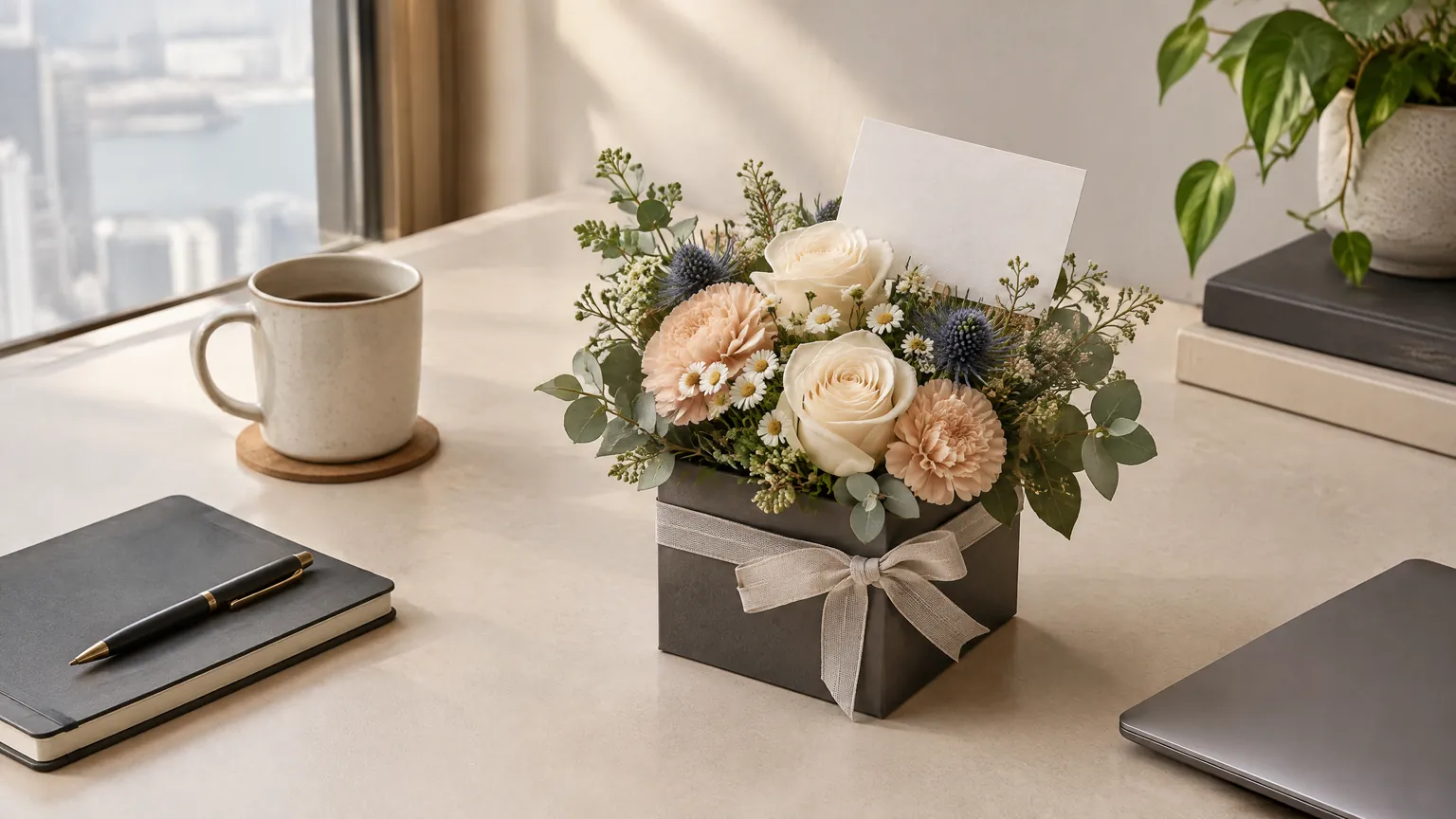
Choose the floral format by where it will sit, how the recipient will carry it home and whether they want to arrange stems or maintain a finished display. A bouquet needs a plan for water and a suitable vase; a basket, box or vase design needs confirmed dimensions, construction and transport instructions. None is automatically the easiest choice.
For a colleague working in Central and travelling home through an MTR interchange, the relevant question is not simply which arrangement looks most impressive. It is whether they can answer the phone beside it, carry their laptop at the same time and place the flowers somewhere suitable that evening. A modest gift that fits those tasks can be more considerate than a larger display with nowhere to go.
GotGear and YumYum share the same owner. This is a GotGear journal guide, not an independent endorsement or an offer of floral services; GotGear does not provide food, floral, gift, class or rental services. The linked Y. Florist pages are related service-information resources, with actual arrangements and fulfilment details subject to confirmation.
Start with the usable desk, not its overall size
Look at the space left after the monitor, keyboard, documents and everyday belongings are in position. That remaining area is the useful starting point. Include the widest spread of flowers and wrapping, not just the container base. A slim vessel with stems extending sideways can occupy more working space than its photograph suggests. Ask for the finished height and width as well as the base dimensions.
A desk in an open-plan Kowloon Bay office might have a clear corner but no place to refill a vessel without walking to a pantry. A reception counter may look spacious yet need that area for visitors to sign in. At home, the intended surface may double as a dining table in the evening. In each case, plan where the gift can be moved without putting it on the floor or balancing it beside electronics.
Check the viewing position too. Flowers beside a monitor should not make the recipient lean around them to speak to a colleague. A shared meeting table calls for a design that leaves conversation and documents unobstructed. This is a practical preference rather than a rule about a particular flower: describe the task happening around the display before selecting its shape.
The convenient corner may also be the wrong environment. NC State Extension recommends keeping cut flowers out of sun and wind and away from drafts, including heating and cooling vents.2 If the only desk space lies under an air-conditioning outlet, consider an agreed side table instead of expecting the format alone to solve the placement problem.
Choose a bouquet when arranging it is part of the pleasure
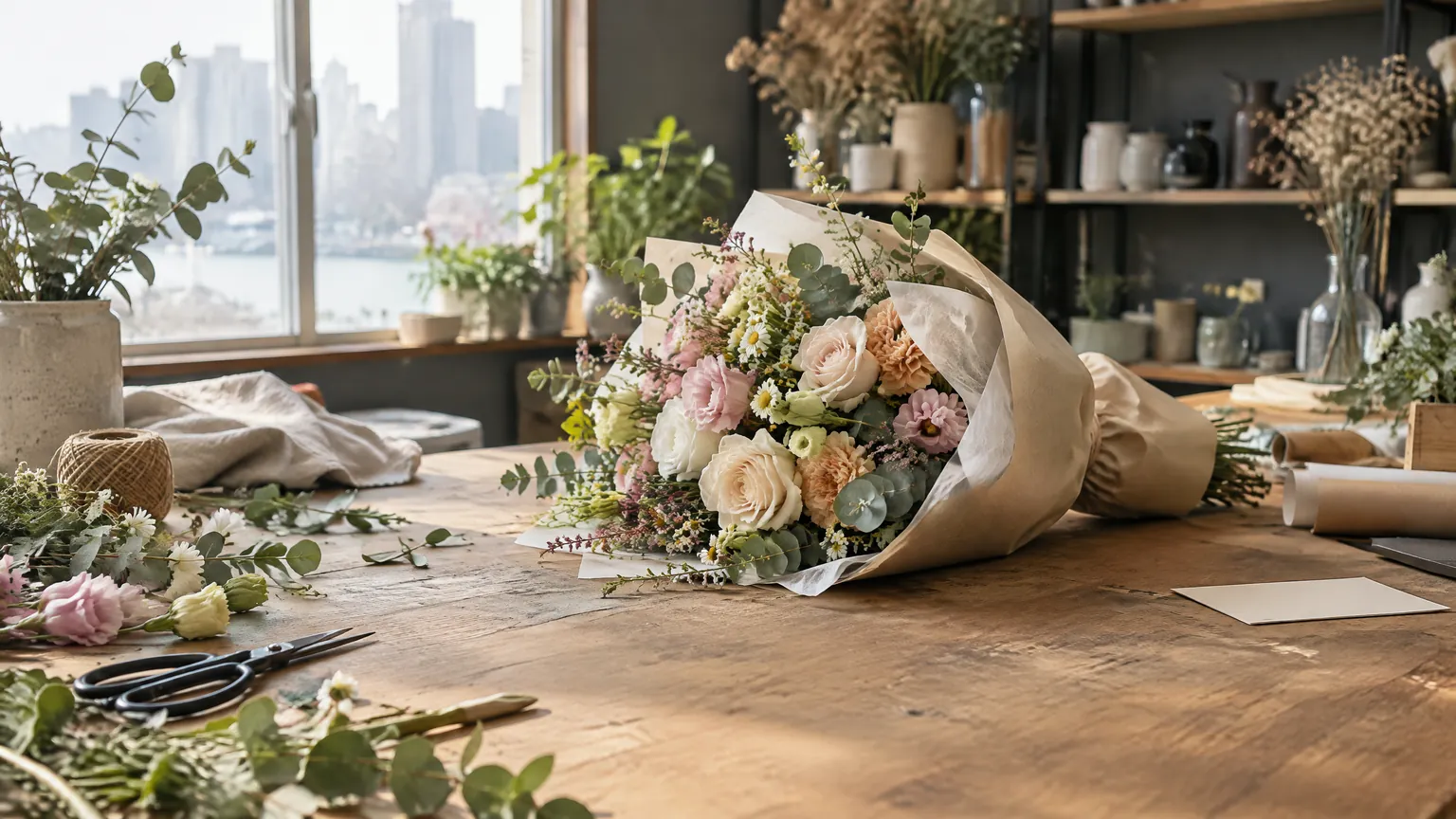
A wrapped bouquet suits someone who enjoys selecting a vase and adjusting the stems at home. It also gives a clear handover moment at an office farewell or a small birthday gathering. The trade-off is what happens after that moment. Ask whether the recipient has a suitable vessel at work, whether one is needed immediately and what the florist recommends for the period before they reach home.
The related page for flower bouquets presents bouquet designs and discusses colour, size, wrapping and messages. Use it to identify a presentation direction, then ask for the finished spread, the current flower selection and the handover preparation. A wrapped image does not establish that a vase, water reservoir or carrying bag is included.
For a colleague leaving a Wan Chai office with a backpack, a compact bouquet may be easier to manage than a wide arrangement requiring both hands. That conclusion depends on the actual packing, however. A broad fan of wrapping can catch against other belongings, and long stems can be awkward at a station gate. Explain the recipient's other bags rather than asking only for something described as portable.
A bouquet is less convenient for someone who wants to place a gift down and return to work without rearranging it. RHS guidance for cut stems includes using a clean vase, removing foliage below the waterline and making clean cuts when preparing the flowers.1 If those tasks would become an unwelcome extra job, discuss a finished container design instead of assuming that flowers are always effortless to receive.
Choose a vase design for a known display position
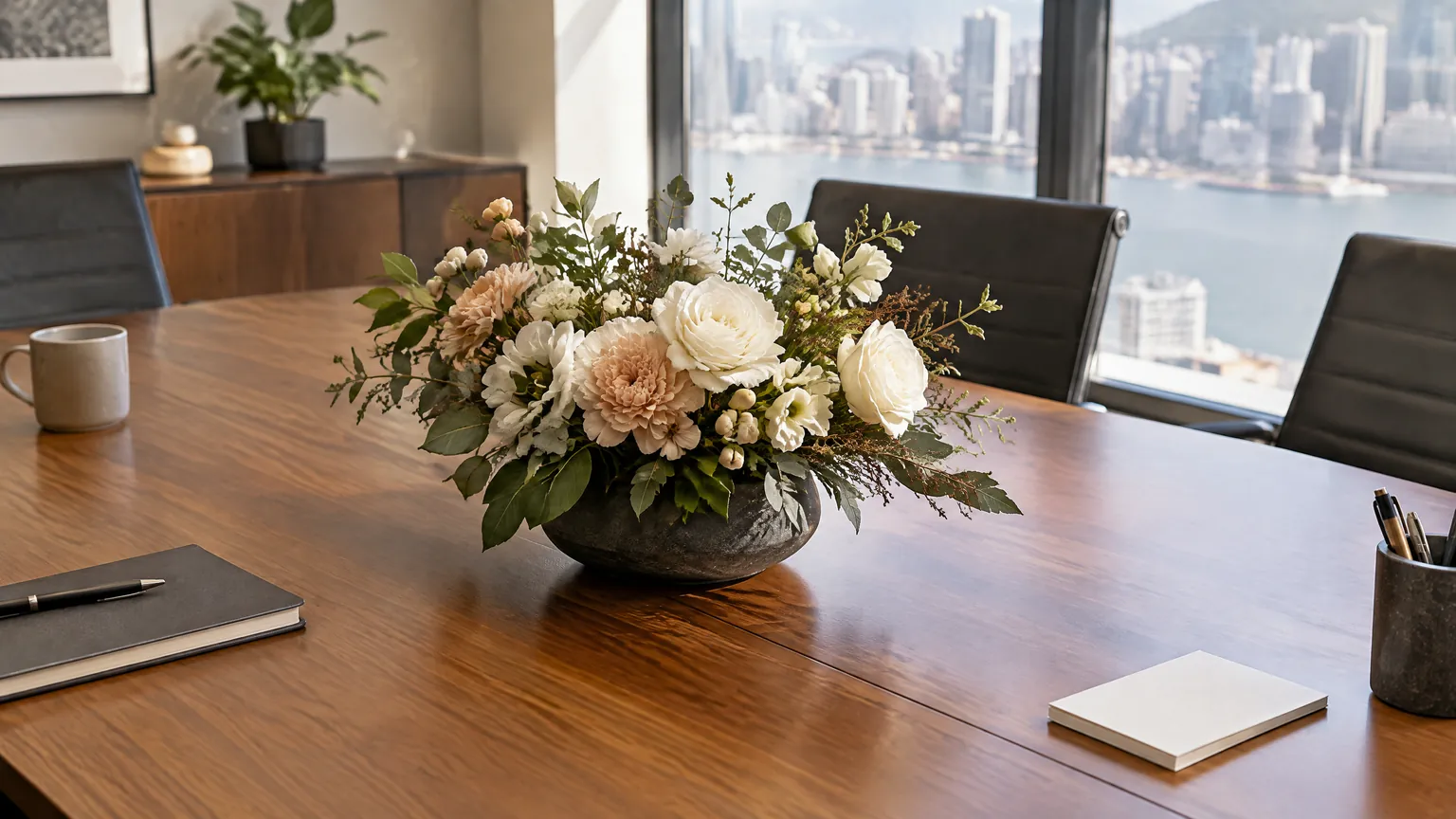
A finished vase design makes most sense when the destination is settled. Perhaps the recipient has a clear sideboard at home, or an office team has agreed on a stable table away from equipment. You can then discuss the whole composition in relation to that surface. Establish whether the vessel forms part of the gift and whether any support inside it changes how the recipient should handle the stems.
The vase arrangement resource discusses vessel shape, floral height and placement in homes and offices. The useful enquiry is specific: describe the surface, the space around it and the recipient's willingness to change water. Confirm the actual vessel material and packing before deciding that this is the right format for a journey home.
A low design could suit a meeting-room thank-you gift that later moves to a dining table in a Sha Tin flat. A taller composition may instead work on a sideboard where no one needs to see over it. These are possible briefs, not assurances that a photographed design can be resized or that a particular vessel is available. Share which constraint matters most so alternatives can be assessed sensibly.
Do not confuse concealed water with reduced care. An opaque vessel hides the water from view but does not remove the need to check it. RHS and NC State Extension both recommend clean containers and regular water replacement for cut-flower displays.1 Choose opaque or transparent material for appearance and usability, not as a way to skip maintenance.
Separate tabletop baskets from larger displays, then consider boxes
A basket needs a scale and construction check
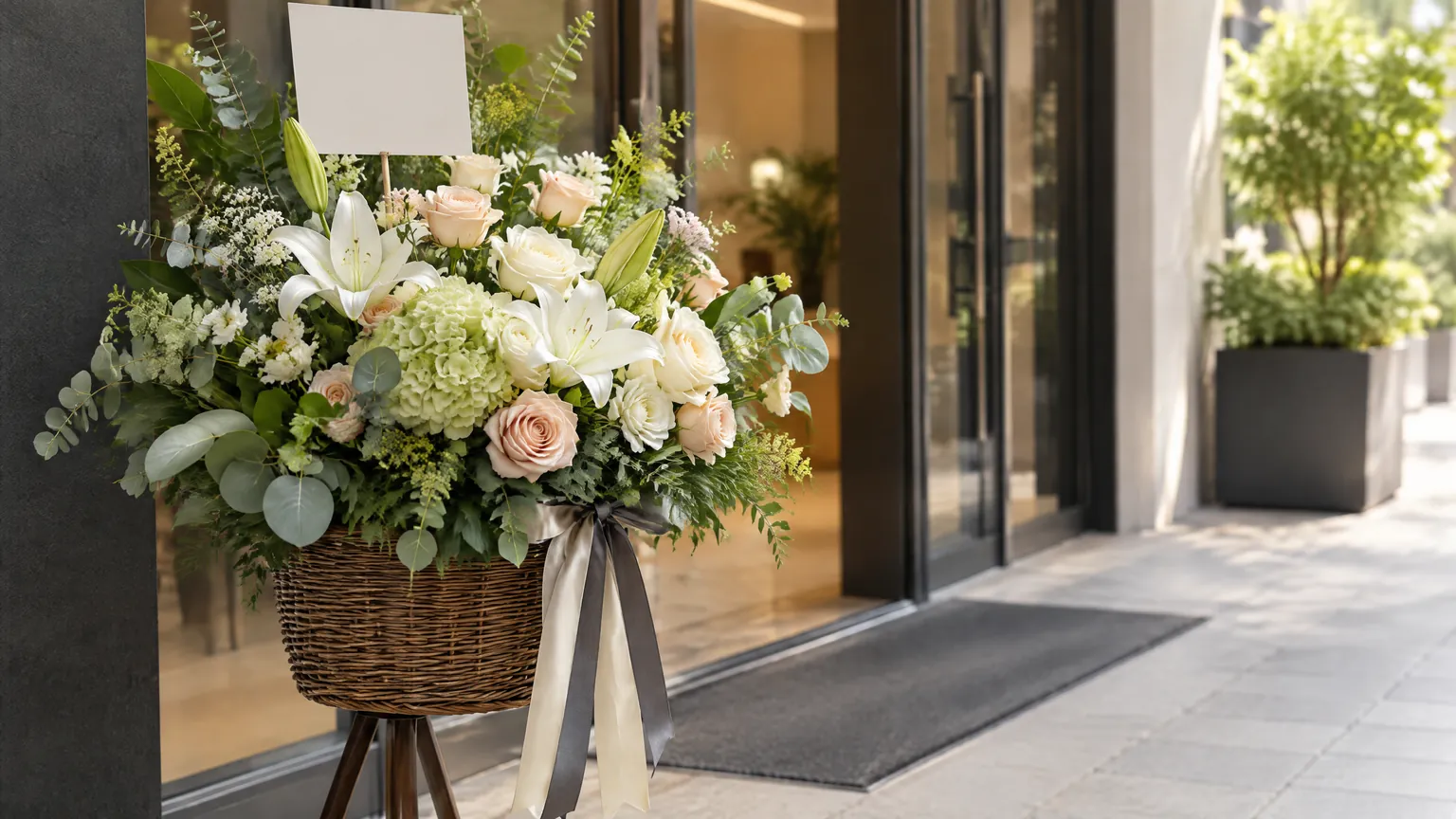
A tabletop basket and a freestanding celebratory basket answer different needs. The first might sit on a side table and later go home with the recipient. The second may belong at an event entrance and remain with the host. Do not use a standing example as evidence that a basket will fit an individual workstation. Decide who owns the display and where it goes after the occasion.
The flower baskets page discusses compact and larger formats, including different possible floral or plant components. Treat that range as a prompt to confirm the particular design's contents and construction. Ask whether it contains cut stems or potted components, where moisture is held and whether a decorative handle is intended for lifting. The category name cannot answer those questions.
For a small office opening in Kwun Tong, a freestanding basket might be considered for a permitted entrance position, with a host responsible for moving it afterwards. That is not the same brief as a personal congratulations gift for an employee's desk. In the latter case, check the complete width, the surface protection needed and how the recipient will support the base during transport.
A box is a container format, not a maintenance promise
A box can appeal to someone who prefers a composed display without finding a separate vase. Yet a square exterior does not prove that the gift can be stacked with shopping, placed sideways or closed under a lid. Blooms may extend beyond the rim, and the internal moisture system may need particular handling. Ask what can touch the box and what must remain clear.
The flower boxes resource describes round, square and shallow presentations. Compare the actual footprint and floral height rather than choosing by the outline alone. Confirm how water is managed, whether a protective outer carton is supplied and whether the lid, if present, can be used for transport without contacting the flowers. Do not assume that cards, ribbons or other additions are included.
A shallow design may preserve sightlines but occupy more of a table than a compact upright box. A taller box may leave room for papers while making a shared screen harder to see. For a hot-desk user, the more important issue may be whether flowers are permitted to remain overnight at all. If no display place is available, agree on a different receiving location rather than trying to solve everything with packaging.
Test the journey home before finalising the format
Picture the recipient's hands and other belongings
Imagine the journey as a sequence: leaving the desk, using a lift, opening a door, passing a ticket gate and walking from the station. Can the recipient hold the gift in the required position while managing their usual bag? Will they need help at a particular point? These questions reveal awkward formats more clearly than a general request for easy transport.
A person travelling from Admiralty to Tseung Kwan O with a work bag may prefer a smaller gift or a handover closer to home. Someone receiving flowers at a weekend gathering in their own flat has a different problem: the display may barely travel, but it still needs a suitable resting place. Neither situation makes one format universally better; it changes which constraint deserves priority.
Ask how the finished design should be packed
Mississippi State University Extension's handling guidance stresses protection from weather and temperature extremes and packing designs securely for transport.3 For a gift recipient, the useful application is to ask the florist for instructions appropriate to the actual arrangement. Do not improvise by bending stems into a tote or pressing a lid down because the container appears sturdy.
Confirm which part should be supported, whether the gift must remain upright and whether any transport preparation needs changing on arrival. A decorative handle, ribbon or paper wrap should not be treated as load-bearing unless its intended use is confirmed. Keep unrelated heavy belongings from resting against the flowers, and avoid leaving the gift waiting in a sunny location while other errands are completed.
If the journey is incompatible with the design, change the handover plan. It may be better to present the card at the workplace and arrange a separately confirmed home handover, or choose a format that the recipient can manage. Ask about the practical options without assuming delivery availability or a particular arrival time.
Match the care routine to the recipient's actual week
Someone who enjoys arranging flowers may welcome loose stems and a simple care note. Another recipient may spend most weekdays away from their desk and prefer not to take responsibility for a display there. Ask discreetly about their routine. A gift received before several days away should have an agreed home destination or a named person who is willing to look after it.
For cut flowers in a vase, the basic routine is to monitor water, keep the container clean and follow appropriate instructions for refreshing the stems. RHS also recommends removing dead or dying flowers and placing the vase in a cooler spot away from heat and ripe fruit.1 These measures support care; they do not establish a fixed display life for every flower combination.
For a basket or box, obtain instructions for its actual internal construction rather than pouring water over the flowers. If potted components are present, ask for care information for those plants instead of applying cut-stem guidance. The words ready to display describe the initial presentation, not the absence of future attention.
In a shared workplace, include the recipient's preferences about scent and the office's rules about personal displays. At home, ask whether the proposed location is within reach of young children or pets, and raise any relevant plant restrictions with the provider before the flowers are selected. Colour preferences also belong to the recipient; there is no need to impose a universal occasion palette.
Give the recipient a usable handover, not just a gift
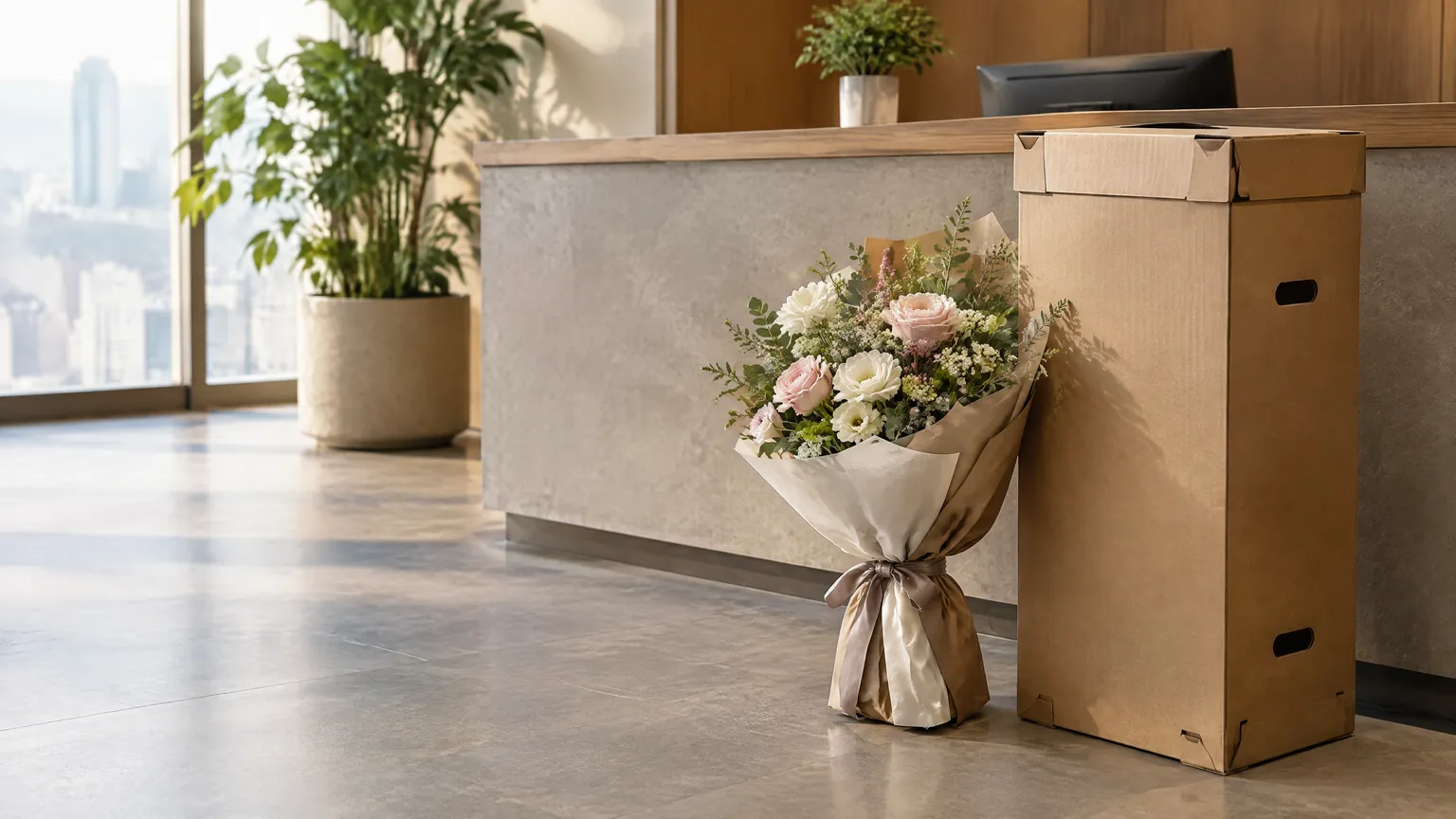
An office receiving desk is a temporary stop, not necessarily the display destination. Agree who will collect the flowers, where they can wait and whether the outer packing stays with them for the journey home. If the recipient is in meetings, avoid creating an arrangement that reception must store without a suitable surface or any handling information. Building access and timing should be checked with the people involved.
A short note can carry the practical details without overshadowing the message: the intended display format, where to support it, what packing to remove and where to find the care instructions. Keep the personal message separate and brief. The recipient should not have to work out the construction by pulling stems out or testing whether a container leaks.
Before making the enquiry, use this checklist:
- Identify a permitted display surface and note its usable space.
- Describe the recipient's journey and the belongings they will carry.
- Confirm the finished dimensions, vessel or container inclusion and actual contents.
- Request transport, water-care and unpacking instructions for that design.
- Agree who receives the gift and where it waits before going home.
The final choice should still feel personal. Start with the recipient's favourite colours or preferred mood, then fit that intention into the practical brief. When space or carrying needs require a change, preserve what matters to them rather than enlarging the gift for its own sake. A thoughtful floral gift belongs comfortably in the recipient's day as well as in the handover photograph.
Common questions
What should I choose for a colleague with no vase at work?
Discuss a finished container design or confirm a suitable vessel and temporary water arrangement for a bouquet. Check the actual construction and care instructions; a box or basket does not automatically remove the need for attention.
Is a flower box easier to carry on the MTR than a bouquet?
Not necessarily. Compare the finished width, required carrying position and protective packing with the recipient's usual bags. A compact bouquet may be more manageable than a wide box, while another recipient may prefer a securely supported container.
Can an opaque vase be left without changing the water?
No. Concealing the water does not remove the need to check it, clean the vessel and replace water regularly. Follow care instructions for the particular stems and any internal support.
What if the recipient cannot leave flowers on a hot desk overnight?
Agree on a permitted temporary location and a same-day journey home, or discuss a different handover location. Do not assume a smaller container will override workplace rules or create storage space.
Sources & what they support
Each reference supports only the stated scope. Citations are not independent endorsements of YumYum or its branches and do not confirm a provider’s current arrangements or any individual outcome.
- Royal Horticultural Society: Cut flowers, cutting and conditioning (opens in a new tab)
Clean vases, removal of submerged foliage, clean stem preparation, water monitoring and regular replacement, removal of dying flowers, and cool placement away from heat and ripe fruit. Does not support guaranteed display duration.
- NC State Extension: Selecting and Caring for Cut Flowers (opens in a new tab)
Placement away from direct sun, wind, doors and heating or cooling drafts; container hygiene and regular water replacement for cut flowers. Supports rejecting the inference that an opaque vase removes care needs.
- Mississippi State University Extension: Care and Handling of Fresh-Cut Flowers and Foliage (opens in a new tab)
Transport sections describe protection from weather and temperature extremes, appropriate packaging and stabilising floral designs. Used for protective transport principles, not provider performance claims or professional procedures.