
A Flower Subscription Gift Needs Ongoing Consent, Space and a Pause Plan
GotGear and YumYum (including its gifting, baking and florist branches) share an owner; this collection is not an independent recommendation. GotGear does not provide catering, gifting, cake, floral, tuition or rental services. External-service information is separate from GotGear’s equipment catalogue; confirm the actual scope with the relevant provider. Articles are general planning information, with no promises about supply, arrangements or outcomes. Concept photos are not records of real events, customers or classes.
The short answer
Choose a recurring flower gift only after the recipient agrees to the routine, identifies a suitable display space and knows how to request changes. Confirm the provider’s actual pause, substitution and end-date terms before committing; a subscription label does not establish those features.
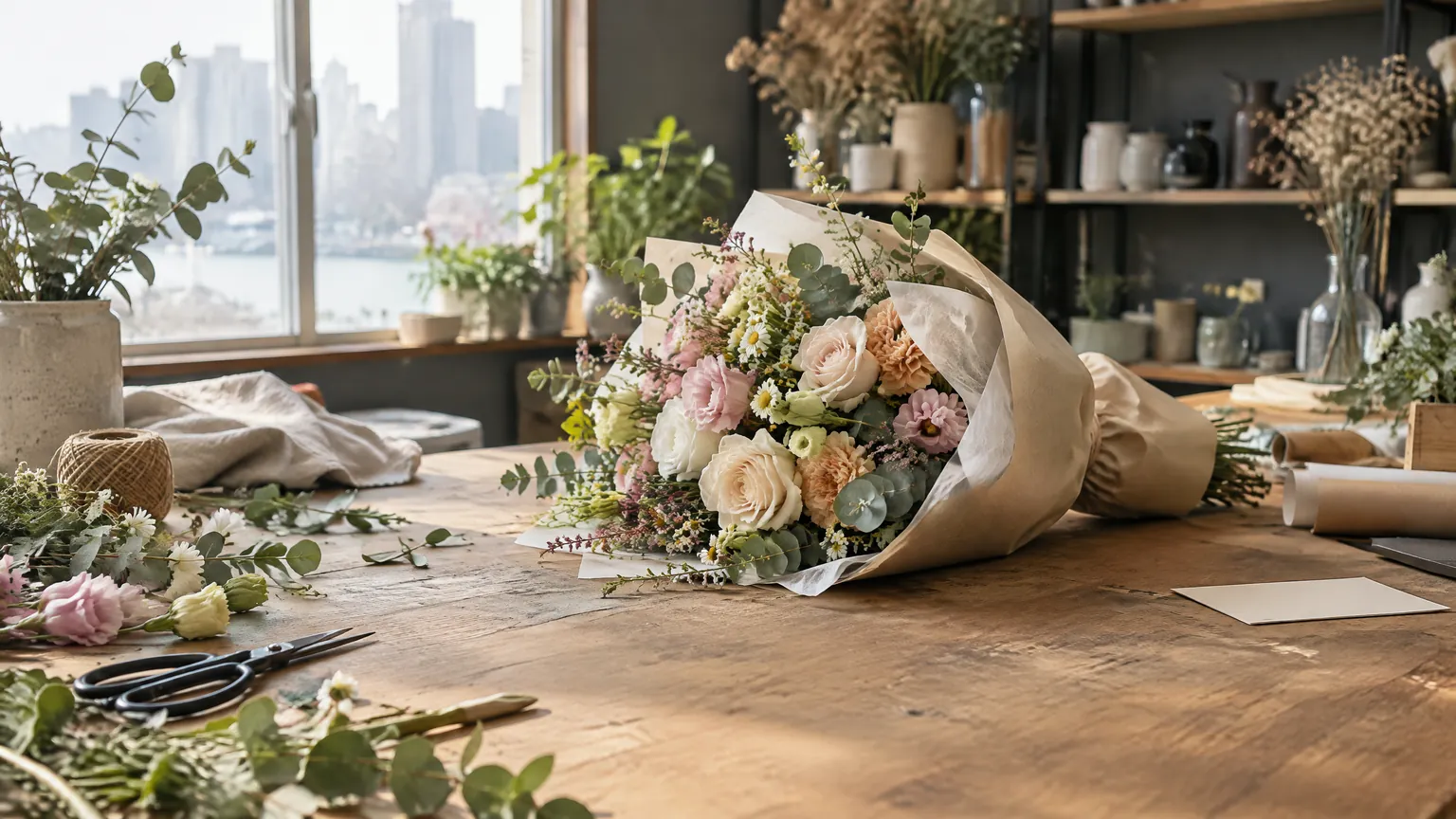
Choose a recurring flower gift only after the recipient agrees to the routine, identifies a suitable display space and knows how to request changes. Confirm the provider’s actual pause, substitution and end-date terms before committing; a subscription label does not establish those features.
A bouquet arriving once is a moment. Repeated arrivals create a small household or workplace responsibility: someone must receive them, find room, maintain the display and remove spent flowers. The thoughtful choice is not necessarily the most frequent one. It is the arrangement that still fits when the recipient travels, works elsewhere or simply wants a break.
This is GotGear’s same-owner planning journal: GotGear and YumYum share an owner, and the linked pages are related-business resources, not independent endorsements. GotGear does not provide food, floral, gifting, classes or rental services.
Ask for agreement to the routine, not just the flowers
Start with a question that leaves room for a genuine refusal: “Would you enjoy flowers arriving regularly, or would you prefer an occasional bouquet?” Someone can love flowers and dislike scheduled deliveries. They may work unpredictable hours, share a crowded dining table or feel uncomfortable asking a gift-giver to stop. Agreement to one celebratory bunch should not be treated as agreement to an ongoing arrangement.
For example, imagine a birthday gift for a friend in Tai Kok Tsui who spends alternate stretches away for work. A surprise first bouquet might be welcome; a standing delivery on days when the flat is empty might not. Ask about normal weeks and exceptional weeks separately. You do not need their full itinerary. You need to know whether the proposed routine is workable and whether they want responsibility for notifying changes.
The related-business flower subscription page discusses recurring arrangements and questions about scheduling and flexibility. Use it to prepare an enquiry, not as proof that a particular pause option or delivery pattern is available. Ask whether the proposed gift is currently offered, what each arrival contains and how long the arrangement runs. Match those answers to the recipient’s agreement before confirming anything.
Make the permission ongoing by agreeing how you will check in. A simple message after the first arrival can ask whether the size and routine suit them, without requiring enthusiastic praise. Tell them plainly that wanting fewer flowers, a different format or no further deliveries is acceptable. Their preference and the provider’s contractual process are separate matters: respecting the first still requires following the second.

Build the schedule around absences and changes
Write a short calendar brief before choosing frequency. Include known travel, office closures, periods of working from home and the intended final delivery. Do not choose a schedule because it sounds generous, then ask the recipient to reorganise their life around it. If their availability changes often, occasional orders may fit better than a recurring commitment.
Test an ordinary week and an awkward week
An ordinary week tells you where the flowers will be enjoyed. An awkward week tells you whether the arrangement is manageable. Suppose someone usually works in a Quarry Bay office but travels immediately after a project meeting. A delivery before departure could leave the display with colleagues who never agreed to maintain it. Moving that arrival might be sensible, but only if the provider confirms that changes are possible.
Ask the recipient who, if anyone, could take over during an absence. Do not assume a partner, domestic helper, colleague or building receptionist will do so. A willing backup needs the care instructions and permission to act; merely being nearby is not consent. If nobody wants the task, record that as a reason to avoid the affected date rather than a problem someone else must solve.
Give the pause a restart decision
A pause request should identify the affected arrival and ask for its status in writing. Ask whether it is omitted, moved or held for later, and whether the overall end date changes. Also ask what happens if the request arrives after the provider’s notice deadline. These are different outcomes, and the word “pause” alone does not tell you which applies.
Decide how restarting would work before a trip begins. Would the original schedule resume automatically, or would someone need to confirm the next arrival? Request an explicit answer rather than assuming silence means continued suspension. For a household returning from an extended visit overseas, an agreed restart check avoids flowers being sent while the return date is still uncertain.
Check the actual display space before choosing the format
Measure the available surface, not merely the room. A sideboard may look spacious until it holds keys, a router and everyday paperwork. Ask where the recipient wants flowers to sit and whether they are willing to keep that area available. Check the footprint of the container and the spread of the finished arrangement. A compact base does not necessarily mean compact flowers.
For a recipient comparing options through the related-business Hong Kong florist overview, make the room brief more specific than “suitable for a small flat”. Describe the intended surface, nearby equipment and preferred height, then ask which current formats could fit. The page offers general design and briefing information; it does not establish that a pictured arrangement is part of a recurring plan.
At home, keep the display off the only table needed for dinner. In a shared office, keep it clear of screens, documents and walking routes. For an occasional planning meeting or small workplace celebration, a low arrangement may be easier to accommodate than tall stems that interrupt conversation. Ask the people using the space rather than relying on the gift-giver’s impression of how it should look.
Placement also affects care. NC State Extension advises keeping cut flowers out of sun and wind, in a cool position and away from drafts, including heating and cooling vents.3 In a Hong Kong flat, the bright ledge beside a window may therefore be a less useful choice than a shaded side table. At work, check the proposed position when the air-conditioning is operating, not just while viewing an empty room.
Choose a format the recipient can maintain
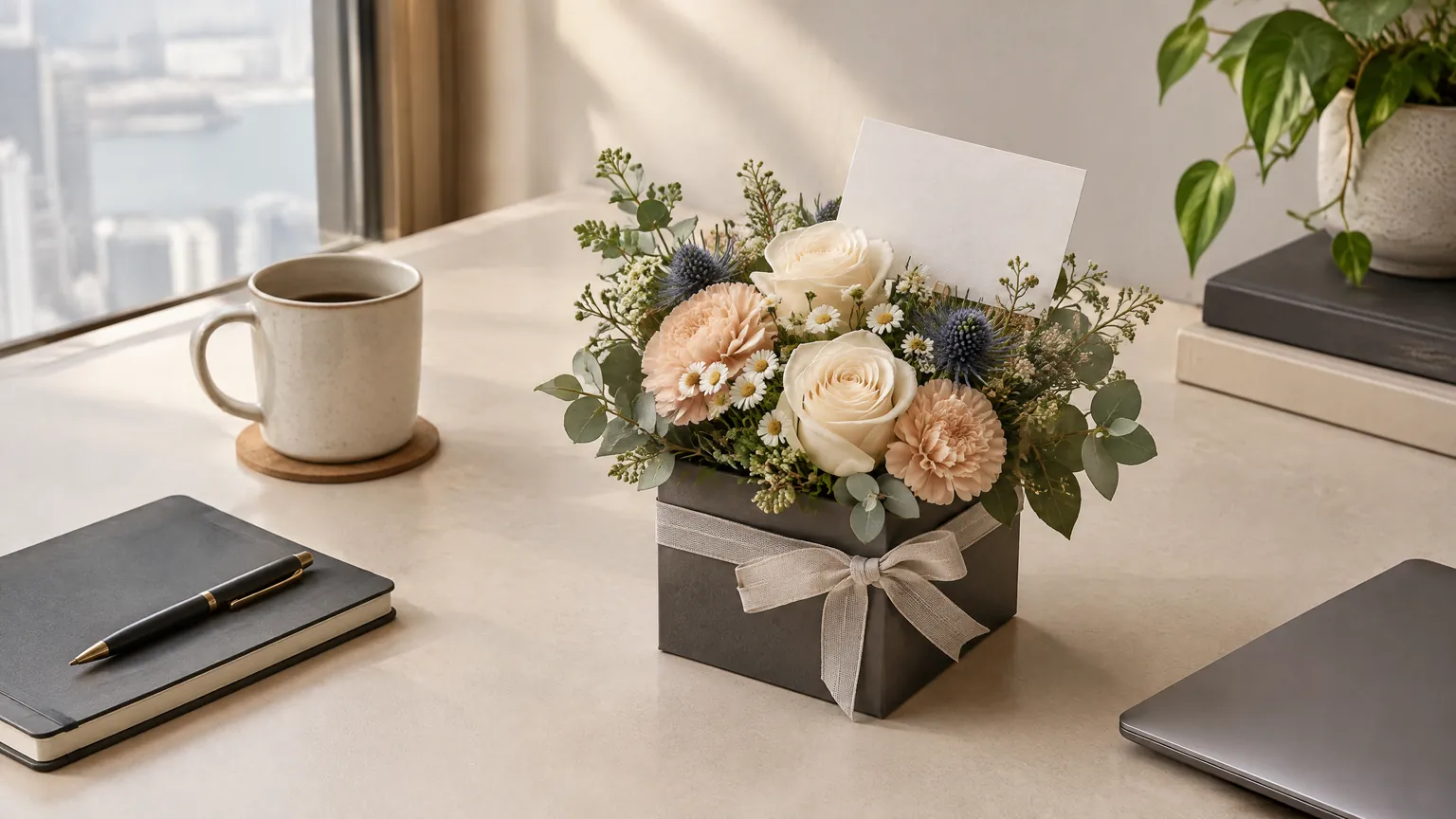
A wrapped bouquet, a vase arrangement and a flower box create different handling questions. Ask what the recipient will receive and what they must supply. Does the bouquet need transferring to an existing vase? Can the chosen container be cleaned easily? For a box arrangement, what care instructions apply to its particular construction? Do not assume a contained design means no care is required.
When browsing related-business flower bouquets, compare the handover format with the recipient’s equipment and inclination to arrange stems. Someone who enjoys arranging flowers may welcome a wrapped bunch. Someone receiving them between meetings may prefer to enquire about a ready-to-place format. Confirm container inclusion and care requirements separately; bouquet references do not establish subscription contents.
For ordinary cut flowers in a vase, the Royal Horticultural Society recommends clean containers, removal of foliage below the water level, water checks and top-ups, regular water changes and re-cutting of stems. It also advises removing dead or dying flowers and keeping arrangements in a cooler place away from heat and ripe fruit.2 These are recurring tasks, so ask whether the recipient actually wants them rather than describing the gift as effortless.
Keep the handover instructions practical and specific to the supplied arrangement. Ask the provider how to access the water, which parts can be handled and what to do as individual stems fade. Do not experiment with specialist conditioning treatments or homemade mixtures because a general internet tip sounds promising. If the recipient is unwilling to perform routine care, a less frequent gesture may be a better gift.
Frequency should not depend on an assumed number of display days. Ask the provider what is reasonable for the selected materials and conditions, while recognising that this is guidance rather than a lifespan guarantee. The first arrival can reveal whether the intended interval works for this household, but it cannot establish a promise for every later bouquet.
Agree what may change and what must not
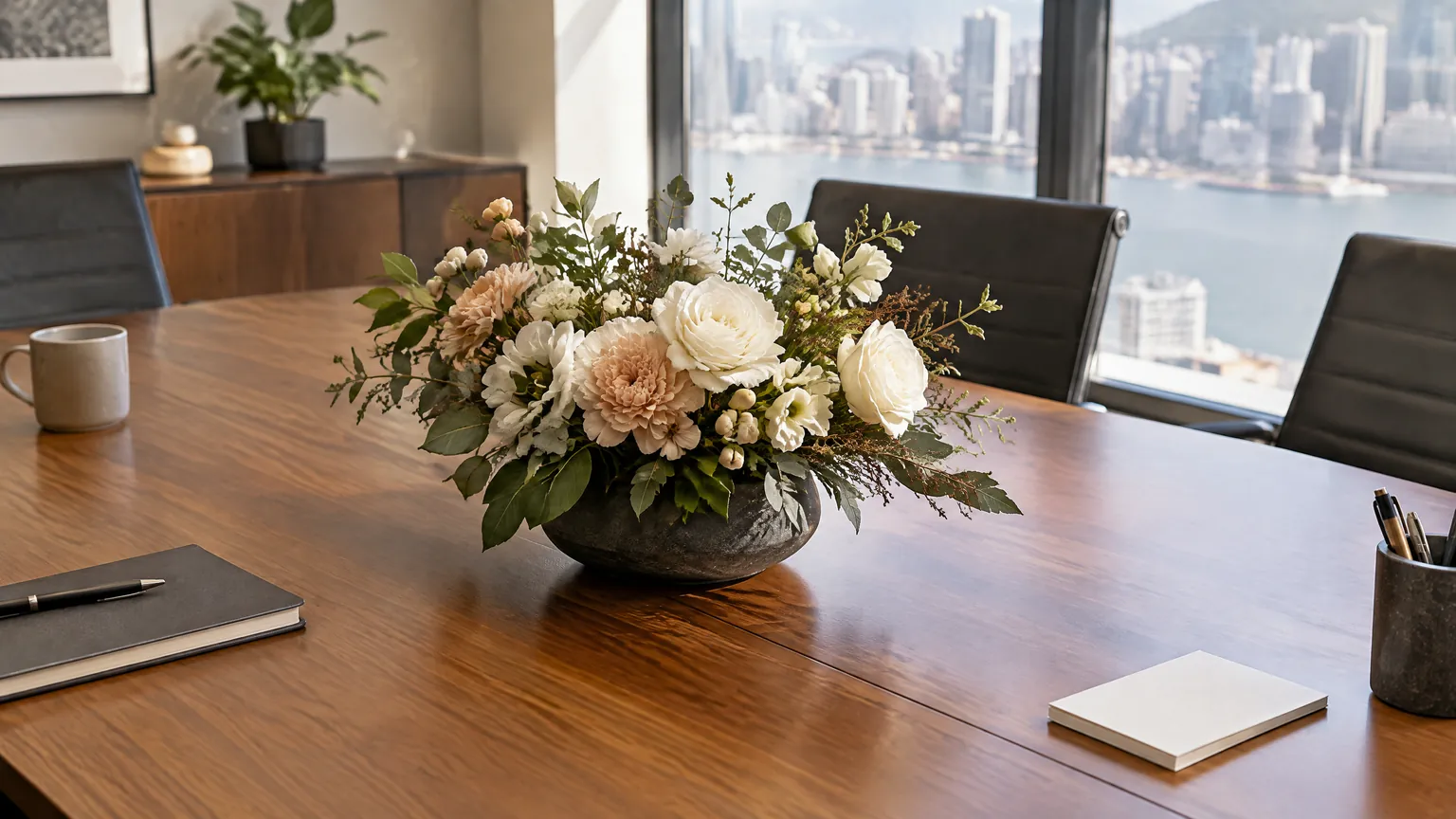
Separate flexible visual preferences from firm restrictions. A recipient might accept changing seasonal textures within a soft palette but dislike strongly scented flowers or bulky wrapping. Record those points clearly. A picture can communicate mood; it should not substitute for a written description of the parts that matter, especially when future arrangements may vary.
Ask who chooses substitutions and when approval is sought. Can the recipient refuse a proposed change before preparation? What happens if the only available alternative conflicts with the brief? Will the gift-giver or recipient be contacted? These are questions for the provider, not features to assume. “Seasonal selection” should not be read as unrestricted permission to ignore a stated preference.
For a household sharing a dining area, arrangement size may be the non-negotiable point while individual varieties remain flexible. In a Central office, discreet card wording may matter more than an exact ribbon colour. State the priority and ask whether it can be respected throughout the proposed term. A broad aesthetic brief is useful only when both parties understand its limits.
Preferences can change after flowers arrive. Someone may discover that the chosen style takes more space than expected, or that they prefer fewer stems to handle. Build a review into your own gifting arrangement: ask what should change, then seek confirmation from the provider. Do not promise a different format for the next arrival until it has been accepted.
Put pauses, renewal and decision authority in writing
Before committing, distinguish a fixed gift with an end date from an arrangement that continues unless stopped. Ask about any renewal process and who receives reminders. The Consumer Council’s study of standard-form consumer contracts identifies automatic renewal without a clear written reminder and onerous cancellation formalities as fairness concerns.1 This supports careful questions, not an assumption that any particular floral agreement can be ended or paused on demand.
When preparing to order flowers online through the related-business enquiry route, keep the initial brief and the written response together. Confirm the approved dates, recipient details, actual arrangement scope, change-notice process and end point before proceeding. The ordering guide does not establish a self-service subscription account, so ask how amendments are accepted rather than expecting an online pause button.
Agree who is authorised to request changes. The purchaser might retain responsibility for ending the arrangement while the recipient asks about colours and scheduling, but the provider must confirm whether that division is workable. If all amendments require the purchaser, give the recipient an easy way to contact you. A gift should not leave them repeatedly explaining their needs to someone unable to act.
Keep requests unambiguous. “Please do not send flowers during my trip” leaves uncertainty about dates and restarting. Identify the scheduled arrivals concerned, ask what happens to them and request confirmation of the next planned handover. Save the reply. A friendly acknowledgement is useful, but it should be clear whether the requested change has actually been accepted.
Do not assume that telling a receiver about an absence changes the provider’s schedule. If an office receptionist knows the recipient is away, that information may never reach whoever manages the order. Send the instruction through the agreed amendment channel and ask for its status. This separates building logistics from management of the recurring agreement.
Make every handover manageable, then review the gift
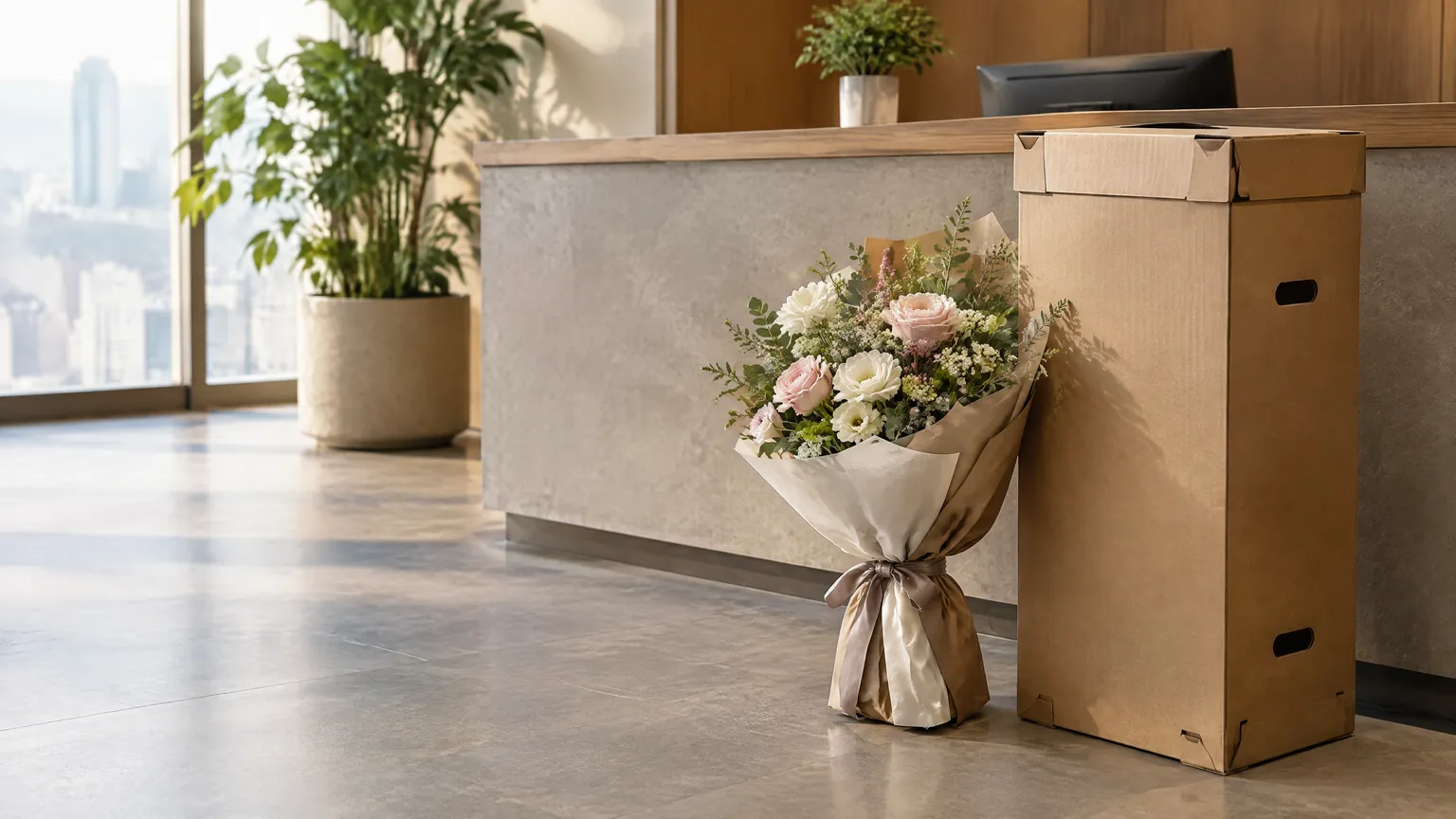
For each destination, confirm the tower or estate name, floor, receiving contact and allowed handover point. Ask building management whether the proposed arrangement can be accepted there. A concierge’s willingness to receive a parcel does not establish that flowers will be unpacked, placed in water or moved into the flat. Those tasks need a separate willing person.
If the recipient works remotely part of the week, do not leave an office address unchanged merely because the first delivery used it. Ask whether an address change is possible and what notice is required. If delivery cannot take place as planned, ask about the provider’s actual response rather than promising unattended placement, redirection or another attempt.
Before confirming, use this short checklist:
- Ask whether recurring flowers are wanted and identify a convenient display surface.
- Check normal availability, upcoming absences and any willing backup carer.
- Confirm the supplied format, care instructions and limits on substitutions.
- Obtain the notice process, pause outcome, restart method and end-date terms.
- Name the person authorised to request changes and save the provider’s confirmation.
After the first arrival, ask a concrete question: “Did this fit where you wanted it, and would you like the next one on the planned date?” Review again when travel, work patterns or household space change. Continuing only while the recipient still wants the routine keeps the gesture considerate. If the arrangement cannot accommodate their needs, occasional flowers can express the same thought without an ongoing obligation.

Common questions
Can I surprise someone with a recurring flower gift?
Keep the first bouquet a surprise if appropriate, but ask before arranging repeated arrivals. Check whether the recipient wants the receiving and care routine, not only whether they like flowers.
What should I ask if the recipient travels often?
Ask about the change-notice deadline, which arrivals can be affected, what happens to paused deliveries and how restarting works. If suitable changes are unavailable, consider occasional orders instead.
Does a subscription page mean pauses and substitutions are included?
No. General guide content does not establish contractual features. Ask the provider to confirm current availability, permitted changes, substitution approval and end-date or renewal terms in writing.
Can a building receptionist look after the flowers while someone is away?
Only if that person explicitly agrees and the building permits it. Receiving a package is not the same as unpacking or caring for flowers; arrange those tasks separately or avoid the affected arrival.
Sources & what they support
Each reference supports only the stated scope. Citations are not independent endorsements of YumYum or its branches and do not confirm a provider’s current arrangements or any individual outcome.
- Consumer Council: Unfair Terms in Standard Form Consumer Contract (opens in a new tab)
The 2012 fairness study identifies onerous cancellation formalities and automatic renewal without clear written reminders as concerns. Supports asking for understandable renewal, end-date and notice terms; not a statement of current flower-specific legal rights.
- Royal Horticultural Society: Cut flowers, cutting and conditioning (opens in a new tab)
Care for bought cut flowers as well as home-grown flowers: clean vases, removing submerged foliage, water checks and changes, re-cutting, removing dying flowers and cooler placement away from heat and ripe fruit. Does not guarantee vase life.
- NC State Extension: Selecting and Caring for Cut Flowers (opens in a new tab)
Supports cooler cut-flower placement out of sun and wind and away from drafts, including heating and cooling vents. No numerical longevity, homemade preservative or US-market claims reproduced.