Choose a Floral Keepsake by Care Preferences, Not Promised Longevity
GotGear and YumYum (including its gifting, baking and florist branches) share an owner; this collection is not an independent recommendation. GotGear does not provide catering, gifting, cake, floral, tuition or rental services. External-service information is separate from GotGear’s equipment catalogue; confirm the actual scope with the relevant provider. Articles are general planning information, with no promises about supply, arrangements or outcomes. Concept photos are not records of real events, customers or classes.
The short answer
Choose a floral keepsake by the recipient's preferred texture, available display space and willingness to handle delicate materials—not by a promised lifespan. Ask what each part is made from and request care instructions for that exact arrangement before deciding between preserved and dried formats.
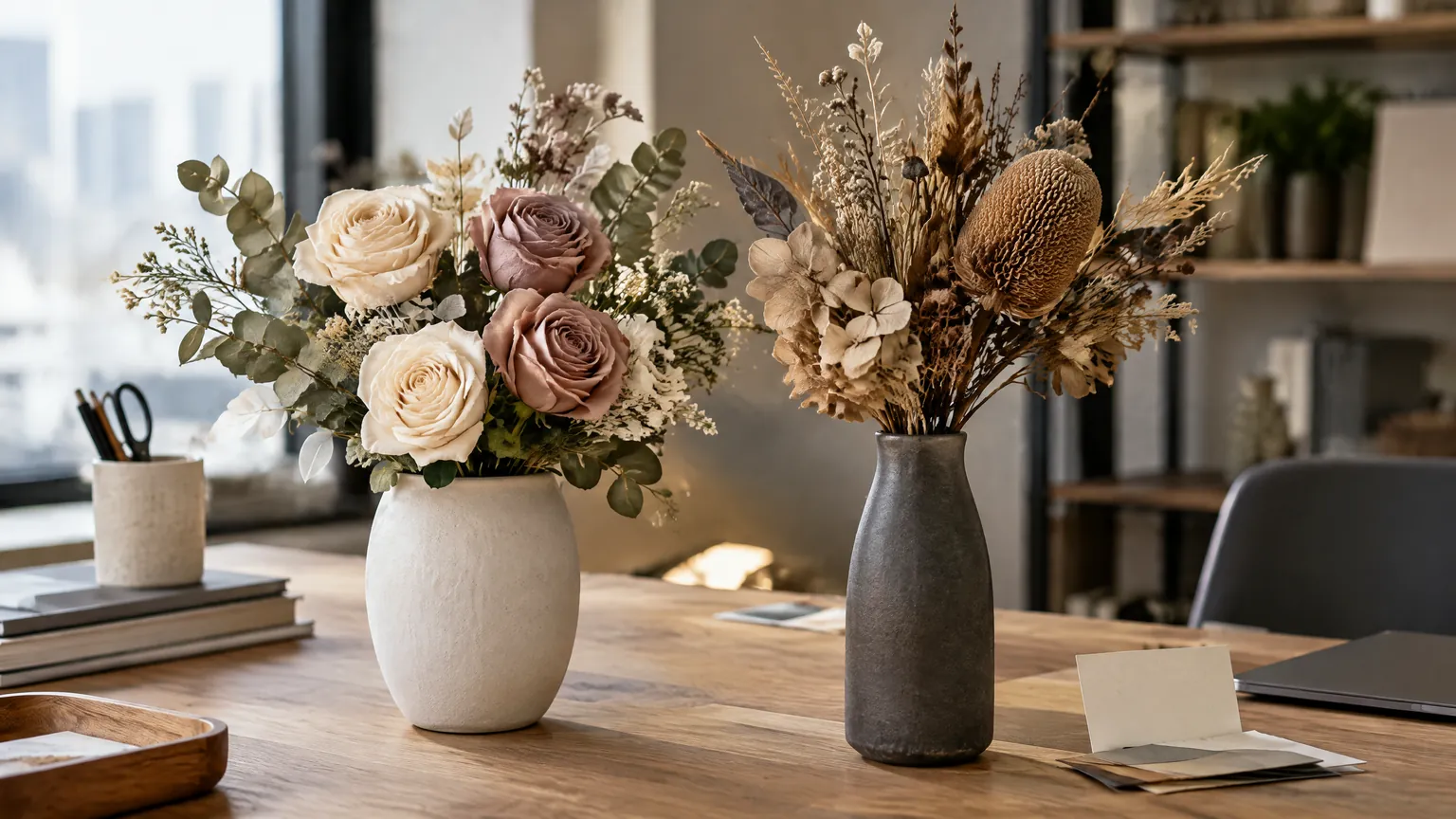
Choose a floral keepsake by the recipient's preferred texture, available display space and willingness to handle delicate materials—not by a promised lifespan. Ask what each part is made from and request care instructions for that exact arrangement before deciding between preserved and dried formats. A gift that fits comfortably on a shelf and comes with understandable instructions can be more welcome than a large piece chosen only because it is described as everlasting.
GotGear and YumYum share an owner. This is a same-owner planning journal, not an independent endorsement; GotGear does not provide food, floral, gift, class or rental services. The linked florist pages are resources for understanding options, with actual materials and arrangements subject to confirmation.
Start with the recipient's everyday habits
Before looking at flower colours, ask a simple question: does the recipient actually want a decorative object to keep? Someone who enjoys changing a room's appearance may prefer a temporary fresh arrangement. Another person may value a small reminder of a family milestone. Neither preference measures how much they appreciate the giver. A keepsake should not quietly become an obligation to display something indefinitely.
Consider a mother who uses her dining table for meals, sewing and family paperwork. A broad bouquet might have to move repeatedly, even if it looks impressive at the handover. A compact arrangement for an existing side cabinet could suit her habits better. Alternatively, she may enjoy arranging fresh stems herself and dislike fixed designs. Ask about that pleasure rather than assuming that avoiding water care is always an advantage.
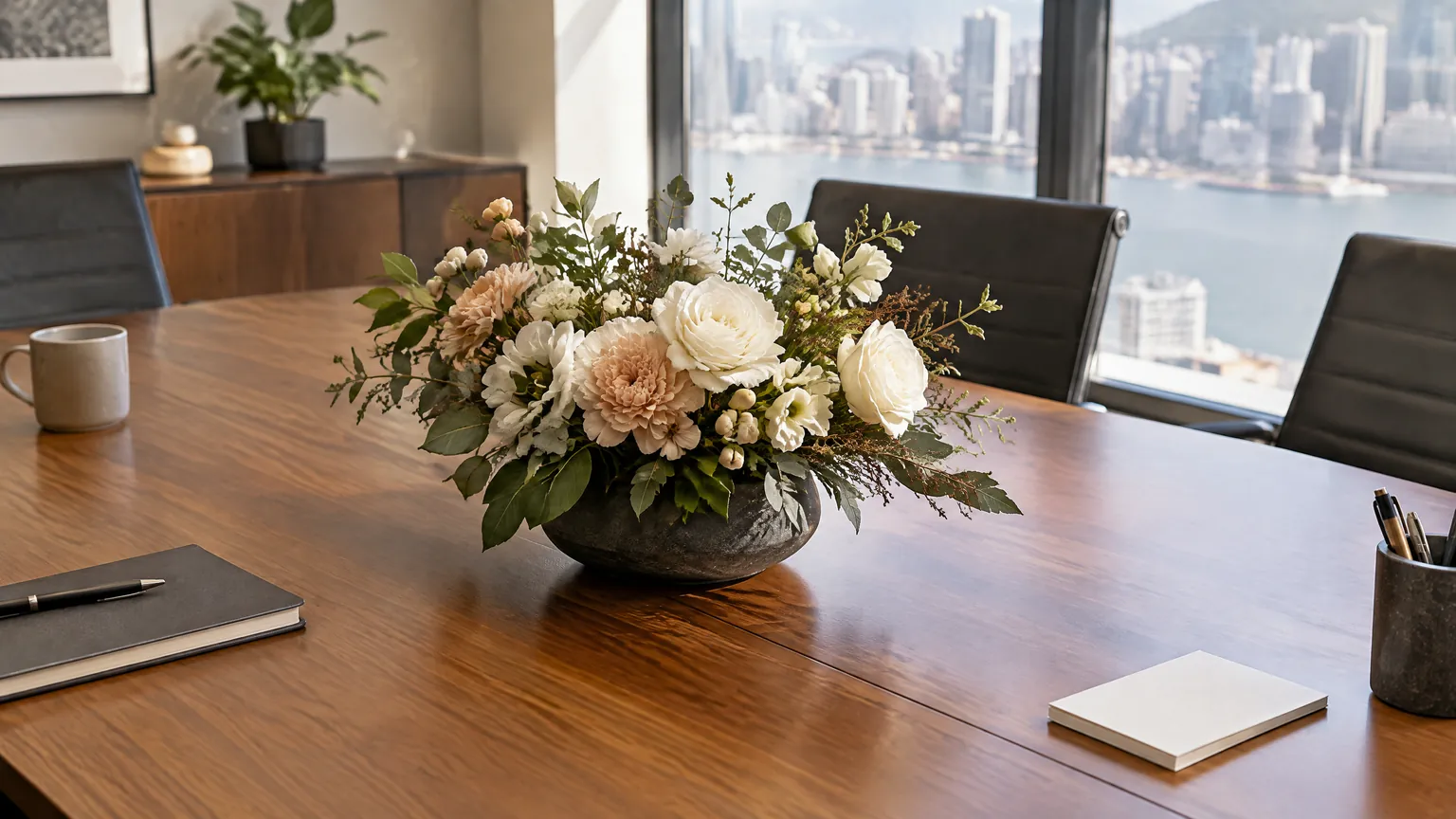
For workplace appreciation, distinguish a personal gift from a shared decoration. A departing colleague might welcome something easy to carry home after a gathering in a Kwun Tong office. A piece intended for a reception counter needs a different decision: someone must agree to its position and ongoing care. Do not give the receptionist an unrequested responsibility simply because a dried or preserved format sounds effortless.

Know what the flower materials actually are
Treated natural material is not the same as artificial flowers
Preservation is not one universal process. University of Florida guidance describes several methods for drying or preserving plant material, as well as dyeing and decorative finishes. A natural-looking colour or petal shape therefore does not identify the treatment, and a photograph cannot establish whether every component is natural. Ask for a description of the flowers, foliage and supporting elements in the proposed piece.1
Glycerin treatment is one example, particularly relevant to foliage. Mississippi State University Extension explains that a glycerin solution can replace water within plant cells and leave preserved foliage with a soft, leathery feel. Its guidance specifically says glycerin is best used for foliage rather than flower petals. This is a useful reason not to assume that every commercially preserved bloom uses the same process or behaves like the leaves beside it.2
When reviewing a preserved flower bouquet, use the page's discussion of treated flowers and dry display to prepare specific questions. Which parts are preserved natural material, which are dried, and are any artificial? Ask whether the stems are supported or fixed, whether a vessel is included and what care instructions apply to the chosen combination. The category name alone is not a complete contents description.
Dried does not necessarily mean only air-dried
Drying removes moisture, but different methods produce different results. University of Missouri Extension covers air-drying, drying with absorbent materials and freeze-drying. It also describes using wire stems and glue in some arrangements. A dried piece may therefore contain construction materials as well as flowers, and its handling needs cannot be judged simply from the word natural.3
The resource on a dried flower bouquet is useful for considering textured stems, earthy palettes and placement questions. Treat its air-dried description as the page's category framing, not proof of the process used for every possible design. Request the actual method where known, the flower and foliage list, and details of any dyes or finishes. Choose the texture because the recipient likes it, rather than treating rustic appearance as evidence of durability or environmental superiority.
It is also worth separating visual softness from resistance to handling. Preserved-looking petals may appear supple, while dry grasses may appear firm. Neither appearance tells you how a particular flower head will respond to squeezing, brushing or repeated travel. Ask which part should be held when moving the finished piece and whether any components should not be touched.
Choose the display position before the silhouette
Hong Kong Observatory describes occasional high humidity in March and April, followed by hot and humid conditions from May to August. That seasonal background makes moisture a sensible planning question, but it does not tell you the humidity inside a particular flat or office.4 Look at the actual position: a shelf beside an open window, a kitchen steam source or a surface with recurring condensation deserves closer attention than a room described loosely as air-conditioned.
Walk through a normal day in the intended room. Does direct afternoon sun reach the cabinet? Is a curtain pulled across that space? Does a cupboard door swing towards the flowers? Tell the florist about these conditions and ask for placement guidance for the specific treatment. A glass-fronted cabinet might reduce casual touching, but it should not be assumed to solve moisture problems or make the contents maintenance-free.
There is a material-specific reason to ask about contact with furniture. Mississippi State's guidance notes that glycerin-treated foliage can release solution droplets under humid conditions, potentially staining wood or textiles.2 This does not mean every preserved bouquet will do so. It means that, where such foliage is present, you should confirm how it is supported and whether the proposed display keeps it clear of a favourite wooden cabinet or fabric runner.
Measure the usable surface rather than the whole piece of furniture. Leave room for nearby objects and for lifting the arrangement without catching its edges. Ask whether the quoted dimensions describe the flower face, the wrapping or the container. In a shared meeting room, favour a position that does not interrupt sightlines, reach across papers or crowd the route around the table.
Keep dried botanical decorations away from candles and other flames. University of Florida identifies dried plant materials as highly flammable.1 An anniversary arrangement does not need to sit beside a lit candle to feel meaningful. For a family gathering, put it on a separate stable surface and choose the lighting independently.
Match the milestone without imposing a tradition
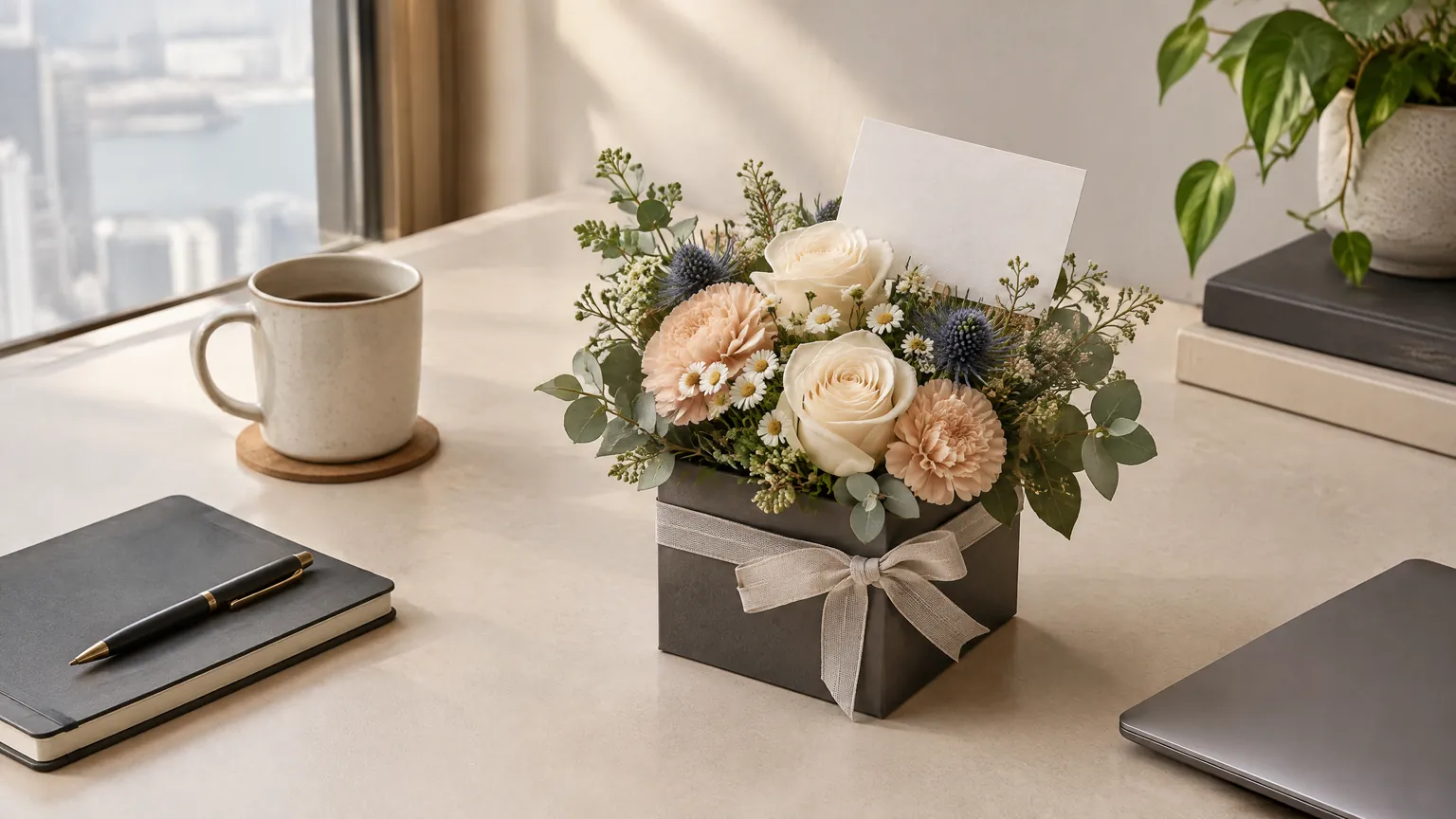
For a relationship anniversary, decide what you want the gift to recall. It might echo a colour from a shared occasion, suit the recipient's favourite ceramic vase or accompany a handwritten memory. None of those choices requires a claim that the flowers will remain unchanged. An honest card can celebrate the relationship without making the object's lifespan stand for its strength.
The anniversary flowers catalogue offers occasion-led design references, but its entries should not all be read as preserved natural flowers. The current page includes an item whose flower specification says artificial flowers. If a romantic name suggests permanence, check the material description separately. Ask whether a preferred palette can be considered in the format you actually want, rather than assuming that an anniversary design can automatically be converted into a preserved keepsake.
Imagine a couple marking their wedding anniversary with a quiet evening at home in Sha Tin. If the recipient wants the dining table clear afterwards, plan a smaller display destination before choosing the presentation. A card kept in a drawer may carry the memory while the flowers remain optional decor. That arrangement respects a shared home without demanding permanent space for the gift.
When considering a Mother's Day bouquet, start with your mother's own preferences rather than treating colour symbolism as a rule. The page mainly discusses fresh flower choices, scent, wrapping and cards; it does not establish that a particular preserved Mother's Day design is available. If she wants a keepsake, ask about that format directly and make sure fresh-flower watering instructions are not passed on with a dry arrangement.
Family appreciation may involve several givers. Agree who will choose the final design and what the message says before sending separate requests. One sibling may want bold colours while another prefers a restrained display. Resolve the difference around the recipient's taste and available space, not by insisting that a particular flower is compulsory. Family habits can differ, even within the same household.
Plan the journey home and the care handover
A floral keepsake may still face a busy journey. After a workplace presentation in Central, the recipient might need to carry it onto the MTR with a laptop bag. Ask about a supported outer package, how the arrangement should sit inside it and which part can be lifted. Do not assume that an attractive open wrap also protects delicate stems during crowded travel.
Agree who will receive the piece and where it can wait indoors. Share any building access requirements with the florist and confirm the proposed handover rather than promising the recipient a particular arrival time. If flowers are being brought to a family gathering, check that there is a stable place for them before and after the presentation. The display plan should survive the end of the event.
Request care information that names the actual format. University of Florida suggests careful dust removal with a soft brush for dried and preserved materials.1 However, an assembled gift may have fragile components or a finish that needs different handling. Ask whether brushing is suitable, how to support the piece while cleaning and which parts should be left alone. Do not substitute household cleaning spray, a damp wipe or a hot airflow treatment for confirmed instructions.
Ask whether the whole arrangement is intended for dry display. A mixed design containing fresh and dried components needs explicit instructions about separation or continued care. Water-free care for one part does not describe another. Keep the written guidance with the gift, and avoid adding water or mist simply because the object resembles a fresh bouquet.
If the recipient wants to put the piece away later, ask how to support it in its container without pressing the flower heads. University of Missouri recommends checking stored dried material for insect damage and notes that even well-kept dried flowers gradually fade.3 A keepsake need not stay on display forever: storage should be an option, but not a promise that its appearance will be frozen in time.
Make the enquiry about materials, not years
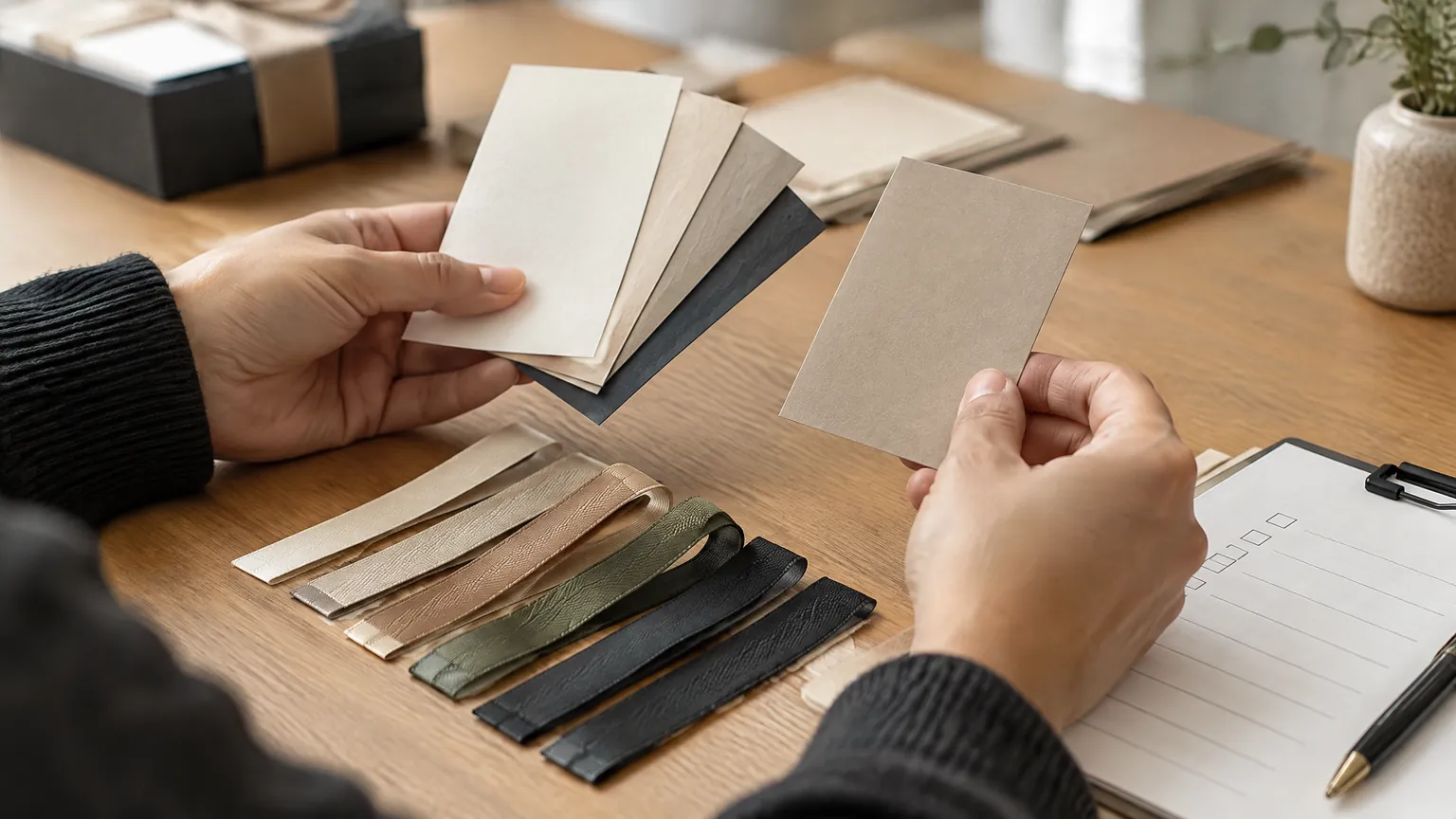
Send a brief that describes the recipient, the occasion and the proposed position. Include the usable shelf space, preferred texture, colours and whether the piece will travel by public transport. State clearly if you want treated natural flowers rather than artificial material, or if a mixed composition is acceptable. Ask the florist to identify suitable current options rather than relying on a photograph alone.
Set substitution boundaries according to what matters. If the recipient dislikes dry grasses, preserving the overall colour is not enough to make a replacement acceptable. If the treatment is central to your choice, ask to approve a change from preserved to dried or artificial components. Written confirmation should distinguish the intended appearance from the actual material category and identify what remains uncertain.
For a household with pets or young children, discuss access and loose parts, but do not assume that dried, preserved or natural means safe to chew. Ask for the material list and consider whether there is a genuinely inaccessible display position. Where suitability is uncertain, choose another gift rather than using this comparison as a safety clearance. Fragrance preferences likewise deserve a direct question; the format alone is not an assurance of no scent.
Finally, ask what to do if the piece sheds heavily, becomes damp or changes visibly after handover. You need a practical care response, not a guaranteed number of years. Declining an unsuitable location or choosing a different format is a successful decision, even if it means not buying a floral keepsake.
A short checklist before you confirm
- Ask whether the recipient wants an ongoing decorative keepsake.
- Identify the flowers, foliage, treatment and any artificial components.
- Measure the usable display position and describe moisture, sunlight and nearby flames.
- Confirm the container, support, travel packaging and receiving arrangements.
- Agree substitutions and request care instructions for the exact composition.
Use those answers to choose the format. If the materials or display conditions remain unclear, pause the decision. A thoughtfully selected keepsake is one that the recipient can enjoy on their own terms, with realistic care expectations and no obligation to prove a promised lifespan.
Common questions
Can I tell from an anniversary design name whether the flowers are preserved?
No. Check the material specification and ask which components are treated natural flowers, dried material or artificial flowers. The current anniversary catalogue includes an entry explicitly described as artificial.
Should I put a dried or preserved keepsake in a vase of water?
Do not add water by habit. Ask whether the exact arrangement is intended for dry display, and request separate instructions if it includes fresh components.
What should I ask before placing preserved foliage on a wooden cabinet?
Ask about the treatment and possible contact with the surface. Glycerin-treated foliage can release staining droplets in humid conditions, so confirm its support and placement rather than assuming every preserved piece behaves the same way.
What if my mother prefers changing her flowers rather than keeping them?
Respect that preference. A fresh arrangement or another appreciation gift may suit her better; a keepsake should not impose permanent display or storage work.
Sources & what they support
Each reference supports only the stated scope. Citations are not independent endorsements of YumYum or its branches and do not confirm a provider’s current arrangements or any individual outcome.
- University of Florida IFAS Extension: Drying and Preserving Plant Materials for Decorative Uses (opens in a new tab)
Multiple drying and preservation methods, dyes and finishes, soft-brush dust removal, storage damage precautions and flammability of dried plant materials. No lifespan, chemical recipe or product-specific safety claim is adopted.
- Mississippi State University Extension: Glycerin-Preserved Foliage (opens in a new tab)
Glycerin preservation of foliage, its soft leathery texture, suitability mainly for foliage rather than petals, and humid-condition weeping with potential surface staining. Not evidence of the process used for every commercial preserved bouquet.
- University of Missouri Extension: Drying Flowers and Foliage for Arrangements (opens in a new tab)
Different drying methods, possible wire and glue construction, fragile dried petals, gradual fading and periodic inspection of stored dried material. Replacement intervals, chemical treatments and drying recipes are not adopted.
- Hong Kong Observatory: Climate of Hong Kong (opens in a new tab)
Occasional high humidity in March and April and hot, humid conditions May to August; not an assessment of any particular indoor display environment.