A Get-Well Gift Needs Permission and Ingredient Questions, Not Health Promises
GotGear and YumYum (including its gifting, baking and florist branches) share an owner; this collection is not an independent recommendation. GotGear does not provide catering, gifting, cake, floral, tuition or rental services. External-service information is separate from GotGear’s equipment catalogue; confirm the actual scope with the relevant provider. Articles are general planning information, with no promises about supply, arrangements or outcomes. Concept photos are not records of real events, customers or classes.
The short answer
Ask whether the recipient wants a gift and whether the receiving location permits it before choosing any food. Then check the actual contents against the recipient's stated requirements, including halal documentation and allergen information where relevant. A health-themed hamper is a gesture of care, not evidence of treatment or faster recovery. If permission or essential information is missing, send a simple message and leave the food decision for later.

Ask whether the recipient wants a gift and whether the receiving location permits it before choosing any food. Then check the actual contents against the recipient's stated requirements, including halal documentation and allergen information where relevant. A health-themed hamper is a gesture of care, not evidence of treatment or faster recovery. If permission or essential information is missing, send a simple message and leave the food decision for later.
GotGear and YumYum share an owner. This journal discusses gifting decisions; it is not an independent provider endorsement. GotGear does not provide food, flowers, gifts, classes or rental services.
Ask for permission without asking for a diagnosis
A useful first message is: 'Would a small gift be welcome, or would you prefer a card for now?' Follow with a practical question about where and when it could be received. This gives someone staying in hospital, recovering at home or taking leave from work an easy way to decline. Do not make them explain their condition to justify that choice.
Imagine colleagues in a Kwun Tong office organising a gesture for someone on extended leave. One person can privately ask what would be welcome and whether a household member can receive it. The rest of the team can contribute a message without receiving the person's ward details or dietary history. A shared card does not require a shared account of someone's health.
Ask whether the food is intended for the recipient or for their household. These are different gifts. A recipient may welcome a note but prefer that any food go to family members at home. Do not write 'for your recovery' on a household hamper when no one has asked for recovery-related food. The intention should be clear before the contents are chosen.

Treat the receiving institution as a separate decision
The recipient's agreement does not establish ward permission. An institution may have its own rules for outside food, packaging and storage. For a concrete example, Bristol NHS hospital guidance requires food gifts to be declared on arrival and checked by nursing staff for suitability, containers and labelling. Its policy also restricts foods needing refrigeration or heating. Those are that institution's rules, not a permission list for Hong Kong hospitals.1
For a Hong Kong visit, ask the relevant ward or institution what can be brought and where it can be handed over. Describe the proposed contents rather than simply saying 'a hamper'. A basket containing whole fruit, biscuits and bottled drinks presents several separate questions. Ask whether any food is accepted, whether the original packaging must remain intact and whether there is an agreed receiving point.
If the recipient is staying in hospital
A colleague visiting after work should not arrive with a bulky basket and assume the nurses' station will store it. Establish an acceptable handover arrangement before buying. If the institution cannot receive the proposed gift, ask the recipient whether a later home gift would be welcome. Do not pressure staff to make an exception because a group has already signed the card.
The same care applies when browsing a Hospital fruit basket resource. The linked page provides a gifting reference, but its title does not establish permission for a particular ward or suitability for a particular person. Use it to start questions about the actual basket, then confirm acceptance directly with the receiving institution. Do not treat a delivery description as proof that staff will accept the parcel.
If the recipient is recovering at home
Home delivery removes the ward question, not the recipient question. Ask whether anyone will be there to receive the parcel and whether they want food at all. In a small Hong Kong flat, a large display basket may occupy the only clear dining surface. A modest gift that can be put away easily may be more considerate than an arrangement that needs unpacking and sorting immediately.
If a family member is receiving on the person's behalf, agree which questions that person can answer. They may know the handover arrangement but not the recipient's current food requirements. Keep unresolved contents unresolved; do not convert a helpful relative's 'I can receive it' into agreement about every item.

Keep health-themed language out of the decision
Words such as wellness, vitality and nourishment can influence how a gift looks or feels. They do not supply evidence that the assembled basket will benefit this recipient's health. In its June 2024 explanation of health-food regulation, the Hong Kong Government noted that there is no consistent international definition of health food products and that regulation depends on the individual product's nature, composition, claims and usage.5
When comparing Health hampers, read the category as a presentation theme rather than a therapeutic recommendation. The linked general guide does not establish a clinical benefit or a confirmed current composition. Ask what is actually included and whether the recipient wants those items; a wholesome-looking basket should not bypass the same permission and ingredient questions as any other food gift.
This changes the selection process. Instead of asking which basket will 'build strength', ask which permitted items the person has requested, whether they can read the packaging and how much they want to receive. Leave supplements and unfamiliar health products out of an unsolicited get-well gift. The sender's role is to express care, not to choose a treatment or introduce a new product into someone's routine.
Write the message accordingly. 'Thinking of you; no reply needed' offers warmth without a timetable. Avoid suggesting that eating the contents will speed recovery or that the recipient should be back at work soon. The gift should not create a health claim or an expectation of progress.
Check actual items, not just the basket name
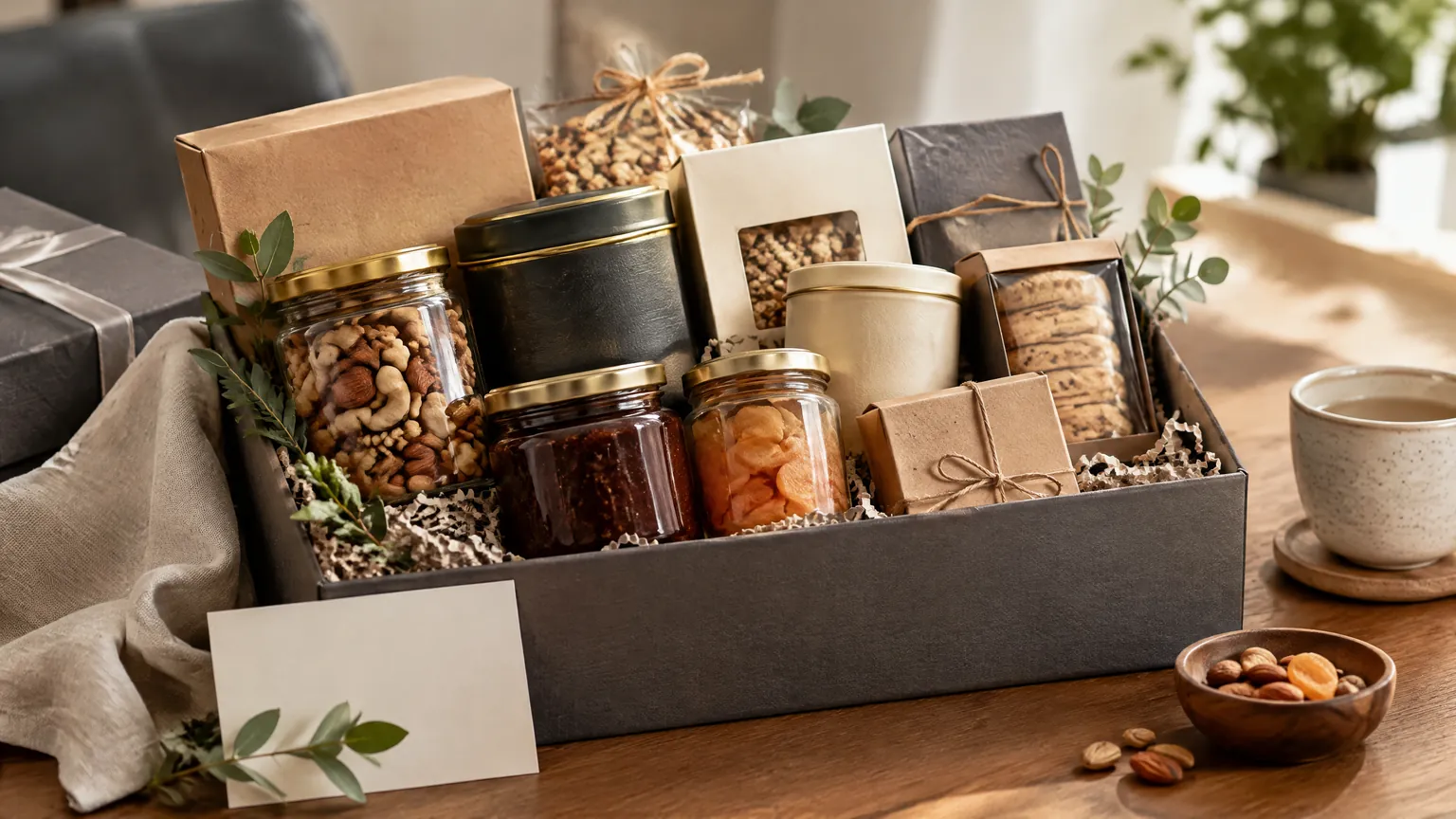
Request an itemised proposed contents list before deciding. For packaged foods, ask for clear images of the actual product labels, including ingredients, allergen statements, dates and storage instructions. A photograph of an attractive display is not the same as information about the packages that will be supplied. If a product changes, the information you relied on may need to be checked again.
Hong Kong's Centre for Food Safety explains that specified allergenic substances must be declared under the relevant prepackaged-food labelling requirements. Its guidance identifies reading the ingredients list as the most straightforward way to know whether an allergen is present.2 That makes the original label a useful starting point, not a blanket assurance about every possible concern.
For example, dried fruit and crackers may look like uncomplicated additions to a basket. CFS guidance lists dried fruit among foods in which sulphites may be found and crackers among foods in which tree nuts may be found.4 This does not mean every such product contains those substances. It means the exact product matters more than its familiar category or neutral packaging.
Separate an ingredient question from a cross-contact question. Cross-contact means an allergen can be unintentionally transferred to another food during handling or production. CFS discusses the prevention of unintended allergen contamination, and its labelling guidance describes precautionary wording associated with shared production.2 Ask what current supplier information is available; do not interpret a missing warning as a guarantee that a concern is absent.
If essential information is unreadable, incomplete or unavailable, leave that candidate item out of the proposed gift. Do not try to compensate by peeling off labels, transferring food into a decorative jar or attaching your own 'suitable' statement. Keep the manufacturer's information available to the recipient and avoid making a claim that the supplier has not established.

Ask halal questions respectfully and item by item
Do not infer a recipient's requirements from their name, nationality or workplace. Ask privately what they want checked and what evidence they expect. A person may ask for particular certification information or may have their own purchasing practice. Record the request in their terms rather than translating it into a general instruction to choose something that looks appropriate.
For Halal gift hampers, the linked page describes enquiries for non-floral food hampers assessed against current shareable information for candidate items. It asks buyers to clarify ingredients, alcohol-related information, allergens, cross-contact and any required supporting evidence. That is an enquiry process, not a category-wide certification statement. Tell the team what the recipient requires before agreeing on contents or presentation.
Formal certification should not be confused with seller wording. The Incorporated Trustees of the Islamic Community Fund of Hong Kong describes carrying out halal inspections and issuing certificates under Imam supervision.3 Its explanation does not certify any hamper discussed here. If certification is required, ask for the relevant current evidence and what product or operation it covers, then check that it corresponds to the proposed item.
Keep additional requirements separate. A request for halal evidence does not answer a question about milk, nuts or another allergen. Nor does an attractive sealed package reveal the source of animal-derived ingredients. If alcohol-related information or gelatine sourcing matters to the recipient, name those points explicitly. Check small extras as carefully as the main item; a biscuit or confectionery addition should not escape review because it is decorative.
Where the recipient has not yet stated their requirements, a card is a reasonable interim choice. You do not need to settle a religious or ingredient question on their behalf to show that the team cares.
Give a workplace organiser a brief they can actually use
A get-well gesture from an employer should not feel like a procurement campaign. Choose one contact person, agree whether the gift is from colleagues or the organisation, and decide who will approve the final message. The practical brief can cover the recipient's requested contents, evidence needed, receiving location and acceptable handover arrangement without circulating a diagnosis.
A company exploring Corporate halal gifts should distinguish a single colleague's get-well gift from a wider staff-gifting request. The same page invites corporate enquiries with recipient requirements, quantity, message-card needs and distribution details, subject to individual confirmation. Do not assume that an item considered for one colleague suits everyone, or that a corporate label establishes stock, presentation or delivery arrangements.
Consider a hypothetical Central office where a manager proposes sending the same hamper to two absent colleagues. One wants no food, while the other requests item-level halal evidence and a household handover. Matching boxes would be tidy for the organiser but would ignore both people. A card for one and a separately checked gift for the other is a more recipient-led decision.
Keep the working record small: what was requested, which proposed items have usable information, what remains unanswered and who will confirm receipt. Do not describe an internal approval as certification or as an allergy-safety guarantee. If the provider proposes a substitution, return to the affected questions instead of treating the original approval as transferable.
Make the handover lighter, not more impressive
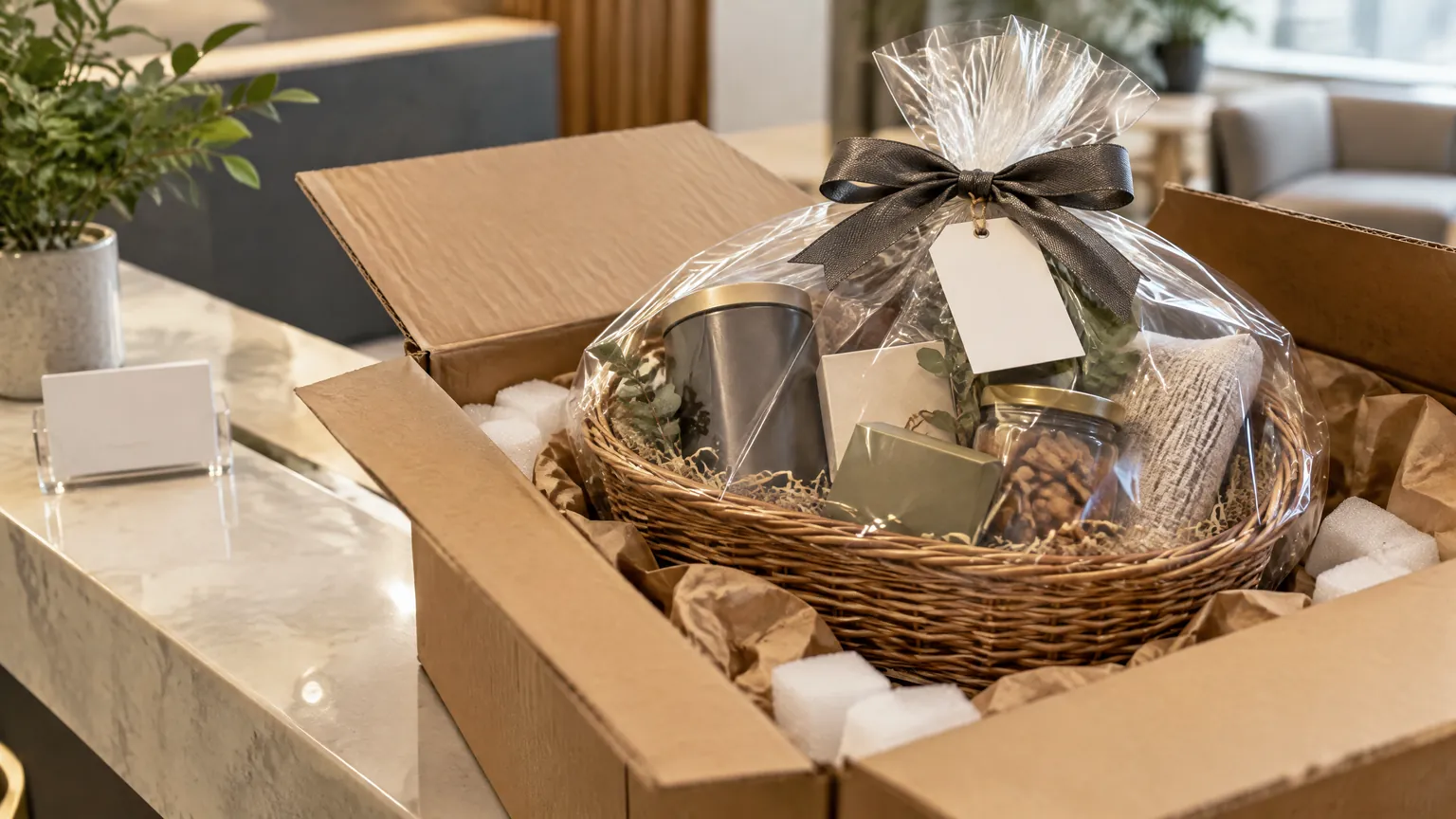
Presentation should support a manageable gift. Ask about a stable container, protective packing and access to the original product information. Decorative wrapping should not make it difficult to identify the contents. A blank or simple card can carry the personal message without putting private health details on the outside of a parcel.
Agree what happens if the receiving plan changes. A person may move from hospital to home before the intended handover, or a household member may become unavailable. Ask the provider how an unconfirmed or changed receiving arrangement would be handled; do not assume redirection or another attempt is available. A requested date is not a delivery guarantee.
After handover, do not ask for a photograph, a public thank-you or proof that the food has been eaten. A brief check with the agreed receiving contact is enough to establish whether the parcel reached the intended place. The recipient should remain free to set it aside, share permitted contents with their household or decline further gifts.
A short check before committing
- Confirm that a gift is welcome and identify the intended recipient of any food.
- Ask the local institution about outside gifts, or agree a household receiving arrangement.
- Review the actual contents and any essential ingredient, allergen or halal information.
- Recheck substituted items and keep unresolved questions open rather than assuming approval.
- Use a simple supportive message and confirm handover arrangements without health or delivery promises.
If any essential answer is still missing, pause the food purchase. Sending care now and deciding on a suitable gift later is more thoughtful than asking someone else to solve an avoidable problem after the basket arrives.

Common questions
Can I send fruit to a Hong Kong ward if the recipient agrees?
Ask the ward directly before buying. Recipient consent and institutional permission are separate, and the basket's name does not establish either. Describe the actual contents and ask about the accepted handover arrangement.
What should I do if a hamper is described as healthy but has no item list?
Request the proposed contents and relevant current labels. Do not treat the description as evidence of benefit or suitability. If essential information remains unavailable, choose a card now rather than guessing about food.
Is a halal hamper label enough for a colleague who asks for certification?
No. Ask what evidence the colleague requires, request the relevant current documentation and establish what it covers. Check the proposed items against that evidence; keep allergen and other ingredient questions separate.
Should an office organise a surprise get-well delivery?
Confirm privately that a gift is welcome and that someone can receive it. The message can still be a surprise without making the parcel unexpected. Avoid putting a diagnosis or recovery timetable on the card.
Sources & what they support
Each reference supports only the stated scope. Citations are not independent endorsements of YumYum or its branches and do not confirm a provider’s current arrangements or any individual outcome.
- Bristol NHS hospital guidance: Bringing food into hospital (opens in a new tab)
An institutional example requiring declaration and nursing checks of food gifts, packaging and labels, with restrictions on foods requiring refrigeration or heating. Not presented as Hong Kong ward policy.
- Centre for Food Safety: Labelling Guidelines on Food Allergens, Food Additives and Date Format (opens in a new tab)
Hong Kong prepackaged-food allergen declaration guidance, use of ingredients lists and discussion of precautionary statements and cross-contamination. Does not guarantee suitability of any gift.
- Incorporated Trustees of the Islamic Community Fund of Hong Kong: Halal Certification (opens in a new tab)
The institution describes halal inspections and certificate issuance under Imam supervision. Supports distinguishing certification from category wording; no certification or endorsement of YumYum is inferred.
- Centre for Food Safety: Food allergens (opens in a new tab)
Unintended allergen cross-contamination and examples of food categories where allergens may be found, including sulphites in dried fruit and tree nuts in crackers. No claim that all products in a category contain them.
- Hong Kong Government: LCQ22, Regulating health food products (opens in a new tab)
Dated June 2024 explanation of the lack of a consistent international health-food definition and Hong Kong's product-dependent regulatory approach; supports not treating a health-themed basket label as therapeutic evidence.