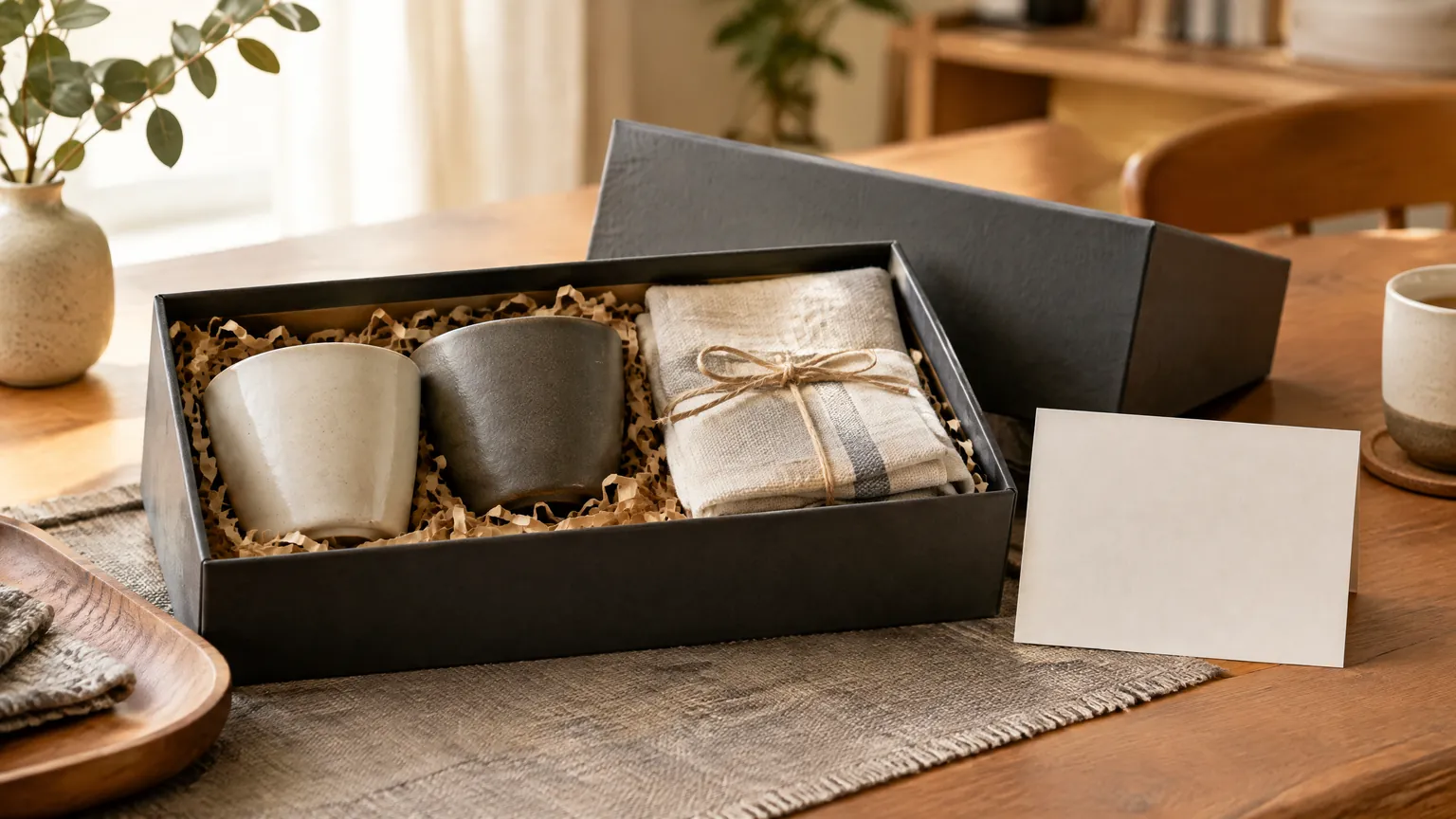
A Useful Gift Starts with the Recipient’s Day, Not a Supplier Ranking
GotGear and YumYum (including its gifting, baking and florist branches) share an owner; this collection is not an independent recommendation. GotGear does not provide catering, gifting, cake, floral, tuition or rental services. External-service information is separate from GotGear’s equipment catalogue; confirm the actual scope with the relevant provider. Articles are general planning information, with no promises about supply, arrangements or outcomes. Concept photos are not records of real events, customers or classes.
The short answer
Choose the gift by working backwards from the recipient’s day: who will receive it, where it will wait, how it will be used and whether it must travel again. Compare suppliers against that brief, not a page’s claim to be best, and confirm the contents and handover arrangements before ordering.
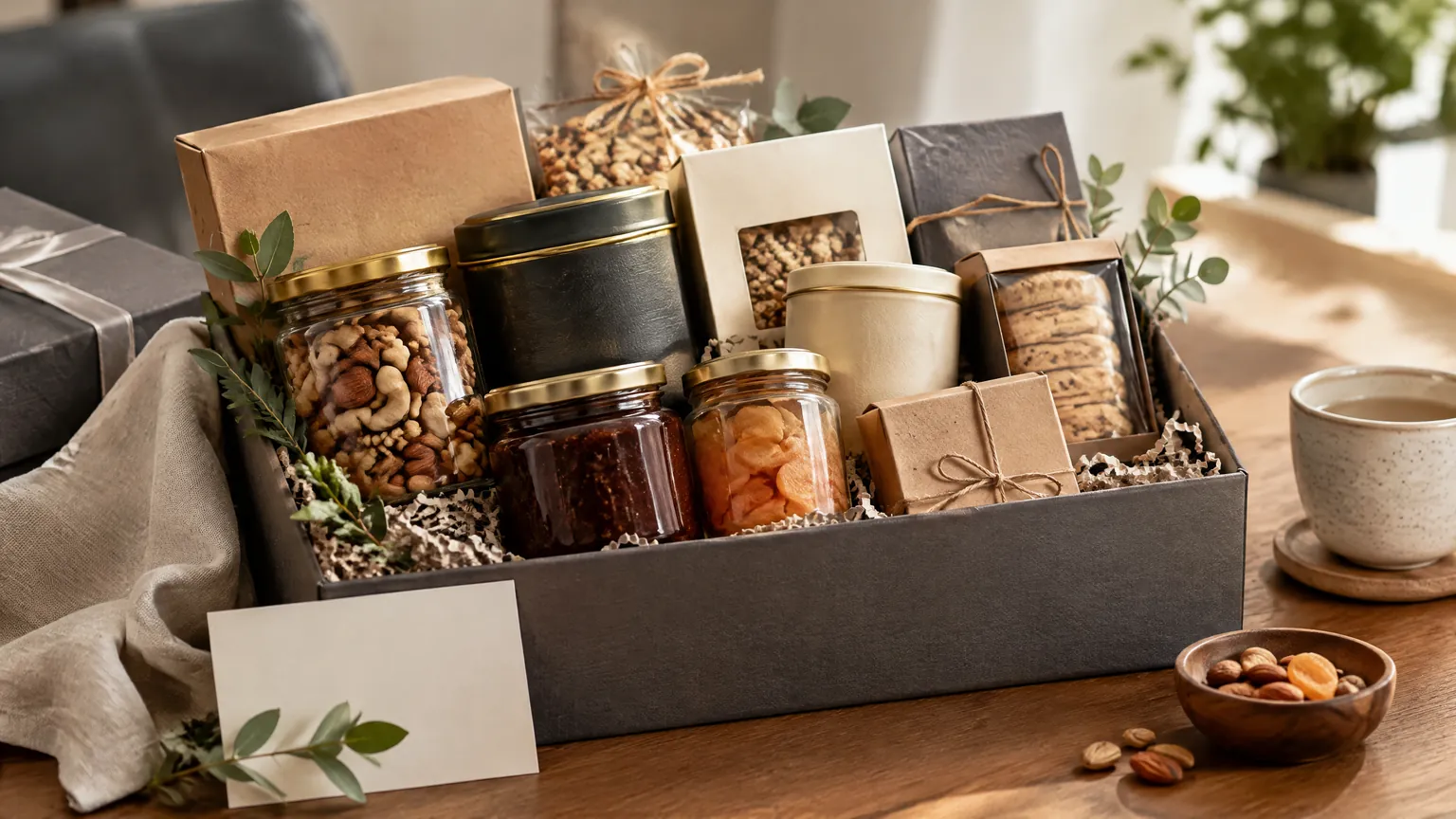
Choose the gift by working backwards from the recipient’s day: who will receive it, where it will wait, how it will be used and whether it must travel again. Compare suppliers against that brief, not a page’s claim to be best, and confirm the contents and handover arrangements before ordering. A beautiful basket is less useful if receiving it creates an errand.
GotGear and YumYum share an owner. This article is part of GotGear’s business and lifestyle journal, not an independent provider endorsement. GotGear does not provide gifts, food, floristry, classes or rental services; gift arrangements need to be confirmed with the provider.
Map the hours after the gift arrives
Begin with an ordinary question: what will the recipient be doing after the handover? A colleague in a Central office may spend the afternoon in meetings and then carry the gift home on the MTR. A family in Tseung Kwan O may welcome a delivery at home but have little space to unpack a large basket. Neither situation calls automatically for the most elaborate presentation.
Write a short route from arrival to use. For an office gift, that might be reception, the recipient’s desk, a shared pantry and home. For a housewarming, it might be the building entrance, the flat and a dining table already occupied by guests. At each point, ask who is responsible for moving it and where it can sit. This exposes practical gaps before a container style distracts you.
Decide whether the gift is personal or shared
A personal thank-you should not quietly turn into food for an entire team because it arrived at work. Ask whether the recipient wants to take it home or share it. If sharing is intended, establish the likely group and whether people will be present together. Individually packaged contents may be easier to distribute across different shifts than something that requires a group gathering, but the actual pack sizes still matter.
Check the organisation’s gift policy before sending to a client or colleague whose workplace may restrict acceptance. Do not assume a shared basket avoids a restriction on personal gifts. If permission is uncertain, a message of appreciation can remain the thoughtful option while you wait.

Choose contents the recipient can actually use
Start with familiar preferences rather than symbolic assumptions. Ask whether the recipient enjoys tea, wants whole fruit or would rather avoid edible gifts. Family traditions differ, and knowing someone’s age or surname does not tell you what belongs in their basket. A discreet question about what they would enjoy is more useful than a confident guess about custom.
The Gift hamper page offers a starting point for considering pantry-style, traditional dried-food and wine-themed formats. Use those categories to develop a question, not to assume a particular assortment is available. For example, a tea-drinking household might prefer a manageable selection of sealed items, while a recipient who rarely cooks may not welcome ingredients requiring substantial preparation. Request the actual contents before choosing.
Hong Kong’s Centre for Food Safety explains that, subject to exemptions, prepackaged-food labels generally include ingredients, specified allergenic substances, a durability indication and special storage or use instructions where required. Count, net weight or net volume also belongs among the general label information. These are useful details to request for the packaged items inside a hamper, rather than relying on its overall appearance.1
Check labels, not just the gift’s theme
A photograph of jars and boxes cannot establish dietary suitability. Where an ingredient matters, ask for a readable label for each proposed product and check any relevant cross-contact information with the provider. Do not treat a description such as plant-based or a removed ingredient as an assurance that the whole gift meets the recipient’s requirements. If the necessary information is unavailable, leave that item out of the proposal or choose a different gift.
Storage belongs in the same conversation. Follow the actual product instructions rather than treating every sealed item as suitable for an office cupboard.1 If the recipient will be away, ask whether the planned contents can wait under the available conditions. A pantry without suitable storage is not solved by adding a decorative ribbon.

Turn a comparison page into questions, not a verdict
A supplier comparison becomes useful when the alternatives answer the same brief. Ask each provider for item names, quantities, finished dimensions, storage information and substitution rules. Record a missing answer as unconfirmed rather than interpreting polished wording as evidence. A description that says seasonal selection still leaves open what the recipient will receive.
The same-owner Best fruit basket resource discusses fruit selection, presentation and delivery as comparison topics. Its label is not an independent assessment, and its promotional ranking does not establish that one provider will suit your recipient. Extract the questions that matter to your day: which fruit is proposed, how much is included, what changes require approval, and how will the basket be received?
For fruit, distinguish an attractive assortment from a usable one. A whole melon requires more handling and space than a piece someone can easily take home. A recipient living alone may prefer a smaller variety of familiar fruit to a display that requires sharing immediately. Do not infer ripeness, origin or condition from the styling of a photograph; ask what information the provider can confirm for the proposed selection.
If two proposals differ, identify the difference before deciding. One might include a decorative container while another uses simpler protective packaging. One might specify each item while another leaves substitutions open. Neither is automatically superior. The useful choice is the one that meets your recipient’s needs with fewer essential details unresolved.

Specify the handover, not just the district
An address is necessary but not sufficient. The recipient’s name, building name, floor and unit should match the instructions available to the receiving person. Ask whether the gift is meant to reach the flat or office, or whether an entrance-level handover is being proposed. Do not assume that a provider’s mention of a district includes every access arrangement within it.
When reading Gift hamper delivery in Hong Kong, separate the hub’s broad delivery description from your actual request. Specify a Central office with a staffed reception, a residential flat in Sha Tin or the agreed receiving point for a family gathering. Then ask the provider to confirm the destination, feasible arrival window and receiving method. A general page claim is not confirmation for your chosen day.
Reception can be a useful handover point only if the staff agree to accept the parcel and can contact the recipient. For example, an office may have a receiving counter but no suitable place to hold food. Ask the recipient or organiser about the real arrangement; do not instruct building staff to store a gift on someone else’s behalf without agreement.
Agree what happens if nobody can receive it
Identify one receiving contact and a permitted backup, if available. Share the contact details needed for that handover rather than circulating the recipient’s information in a large planning group. Confirm who the provider should contact if access fails, and what options would then need approval. An unattended doorstep is not a universal fallback.
Keep a desired arrival window separate from a confirmed one. If a colleague’s farewell gathering ends before the provider can confirm arrival, discuss an earlier agreed handover or another gift format. Ask about the process for changes or failed receipt before placing the order. The Consumer Council advises online shoppers to understand the seller or platform’s role and responsibilities and read the applicable terms.2

Make the container fit the onward journey
Ask for the finished gift’s outer dimensions and carrying weight, including any transport carton. A basket shown without wrapping or padding may look easy to lift while the delivered package is much bulkier. If the recipient has a laptop bag and shopping to carry home, consider whether they would welcome another awkward parcel. Discuss a home handover or a more compact format rather than assuming they can manage it.
The Gift basket delivery hub can help you consider the relationship between basket presentation and delivery, but it does not replace an item-specific packaging check. Ask how the selected container will be protected, whether its handle is intended for carrying the finished load, and whether outer packaging stays with the recipient. These answers matter more to someone leaving an office than the width of a ribbon in a reference image.
Presentation should also respect the receiving space. For a Kwun Tong team gathering, a modest package that fits a side table may be easier to manage than a tall display near the entrance. At a housewarming in a small flat, packaging that can be removed without clearing the whole table may be welcome. These are planning choices, not claims about what any provider currently offers.
Keep personalisation and substitutions under control
Personalisation is most useful when it removes ambiguity. Check the recipient’s preferred name, the sender’s name and the exact card message. For a team gift, decide whether the card speaks for the whole group or only the organiser. A short, clear note explaining the thanks can feel more considered than a message written as though everyone knows the background.
Review the card separately from the contents. A correctly printed greeting does not prove that the right items are packed, and an appealing sample card does not confirm that your wording has been accepted. Request a written summary of both. The Consumer Council recommends checking the product information in an order confirmation and retaining transaction records; keeping the relevant product-page details can help if there is a later disagreement.2
Agree the boundaries for substitutions before ordering. If the recipient avoids alcohol, a replacement bottle should not be treated as an equivalent decorative item. If a particular tea or fruit is central to the choice, ask to be contacted before it changes. Where you are comfortable with variation, describe that flexibility clearly so the provider does not have to guess.
For an office organiser, one person should hold the latest approved summary. Collecting suggestions in a group chat is fine, but send the provider a single final brief. If the destination or receiving contact changes, obtain acknowledgement of the new arrangement rather than assuming the newest message has replaced the earlier instructions.

Leave the recipient with a simple arrival check
The receiving person should know what they are accepting and whom to contact about a problem. They do not need the whole planning conversation. A concise note with the sender’s name, an expected gift description and the provider’s problem-reporting contact may be enough. Keep the surprise in the message or design rather than hiding essential receiving information.
The Consumer Council advises inspecting online purchases promptly after receipt and understanding return procedures in advance.2 For a gift, that translates into a practical check of visible packaging damage, the agreed contents and the card. If something differs, record it and contact the provider promptly through the agreed channel. Do not assume a particular return or replacement remedy applies to perishable or personalised contents.
A short checklist before you order
- Confirm that the recipient wants the gift and may accept it at the chosen location.
- Match the contents and labels to their preferences and available storage.
- Check finished dimensions, carrying weight and the onward journey.
- Obtain agreement on the receiving contact, arrival window and failed-handover process.
- Approve the card, substitutions and one final written order summary.
If an essential answer is still missing, pause the order rather than filling the gap with a supplier slogan. You can simplify the selection, change the receiving arrangement or wait until the recipient is available. The useful gift is the one that fits comfortably into their day and makes the intended kindness easy to enjoy.

Common questions
Should I send a colleague’s basket to reception as a surprise?
Only after confirming that reception may accept it and can contact the colleague. Check where it will wait and whether the colleague plans to take it home. Keep the card a surprise, not the essential receiving arrangements.
What should I ask if the recipient will carry the gift home on the MTR?
Request the finished outer dimensions and carrying weight, including transport packaging, and ask how it should be carried. Consider the recipient’s other belongings; if the load is awkward, discuss a compact format or a separately confirmed home handover.
Does a page called best prove that the supplier suits my recipient?
No. Use its comparison topics as questions, then examine written contents, storage information, substitution rules and handover arrangements. A same-owner promotional ranking is not an independent endorsement.
What if a supplier cannot confirm every packaged food label?
Do not guess ingredient or dietary suitability from the hamper theme. Ask for the missing labels and relevant cross-contact information. If those details are essential to the recipient and remain unavailable, choose a different item or gift.
Sources & what they support
Each reference supports only the stated scope. Citations are not independent endorsements of YumYum or its branches and do not confirm a provider’s current arrangements or any individual outcome.
- Centre for Food Safety: Food Labelling (opens in a new tab)
Subject to exemptions, general Hong Kong prepackaged-food labelling information includes ingredients and specified allergenic substances, durability indication, special storage/use instructions where required and count/net weight/net volume. Supports checking actual packaged-product labels, not guaranteeing suitability.
- Consumer Council: Beware of Traps – Shop Smartly on the Web (opens in a new tab)
Supports identifying the responsible seller/platform, reading terms and return procedures, checking order-confirmation product details, retaining transaction records and relevant product-page information, and inspecting received online purchases promptly. Does not verify any gift provider’s delivery performance.