Send Sympathy Flowers Only After Listening to the Family’s Wishes
GotGear and YumYum (including its gifting, baking and florist branches) share an owner; this collection is not an independent recommendation. GotGear does not provide catering, gifting, cake, floral, tuition or rental services. External-service information is separate from GotGear’s equipment catalogue; confirm the actual scope with the relevant provider. Articles are general planning information, with no promises about supply, arrangements or outcomes. Concept photos are not records of real events, customers or classes.
The short answer
Send sympathy flowers only after checking whether the family welcomes them, where they should go and who can receive them. Follow any request for family flowers only or another form of remembrance; then confirm the design, wording and handover with the appropriate contacts.
Send sympathy flowers only after checking whether the family welcomes them, where they should go and who can receive them. Follow any request for family flowers only or another form of remembrance; then confirm the design, wording and handover with the appropriate contacts. A considerate gesture can be a quiet message rather than flowers when the family does not want another item to manage.
GotGear and YumYum share an owner. This journal offers planning guidance, not an independent endorsement; GotGear does not provide floral, food, gift, class or rental services.
Ask whether flowers are wanted before discussing a design
Read the family’s announcement or message first. It may already explain whether flowers are welcome, whether only relatives are sending them, or whether a charitable gift is preferred. Cruse’s funeral-planning guidance explicitly distinguishes a wish for many flowers from family flowers only. Marie Curie likewise recommends communicating wishes about flowers and donations when inviting people to a funeral.1 These are choices to respect, not obstacles to work around with a smaller arrangement.
If there is no instruction, send a brief enquiry to the person nominated to coordinate arrangements. For example: “We are thinking of your family. Would flowers be welcome, and is there someone handling enquiries about the service?” This gives them a straightforward decision without asking them to compare photographs. If you do not know the family well, a mutual contact may be able to relay the question, provided the family has agreed to that role.
Imagine a Hong Kong office team wishing to acknowledge a colleague’s bereavement. The team organiser should not ask everyone to send separate gifts before knowing the family’s wishes. Start with the colleague’s preferred contact, or an approved workplace liaison. An unanswered message is not permission to place an order. Send your sympathy without demanding a reply, and leave the floral decision open rather than presenting the family with an unexpected delivery.
If flowers are welcomed, Y. Florist’s condolence flowers page provides reference presentations for funerals and wakes. Use it to frame a focused enquiry about a compact or standing format, not to decide what the family ought to accept. Its colour suggestions cannot replace their instructions, and actual flowers, dimensions and availability still need confirmation.

Separate family wishes from ceremony and venue permission
The family can say what feels appropriate to them; the ceremony organiser and venue contact can explain what can be accommodated. Keep both answers together. A welcome for flowers does not establish that a stand can enter a particular room, that a ribbon may carry any wording, or that reception staff will accept a handover whenever it arrives. Ask those questions rather than assuming they have been resolved.
Who should answer questions about the ceremony?
When you are unsure about religious wording or a ceremonial symbol, ask the family’s nominated contact who should advise. Marie Curie recommends consulting the faith leader, celebrant or person leading the ceremony when the deceased’s wishes and family discussions have not clarified what is appropriate.2 Do not identify a universal flower rule from a surname, a language spoken at home or a label attached to the service.
For a hypothetical memorial in a Kowloon hall, the family contact might welcome a shared tribute while the hall contact needs its outer dimensions and receiving window. Send the logistical questions to the hall, rather than asking a grieving relative to investigate door widths or staff arrangements. The family should still decide the message and whether the tribute belongs at the ceremony at all.
Ask about placement as well as size
A wreath’s circular outline is only part of its footprint. Ask for the complete dimensions including the support, projecting foliage and card or ribbon. Establish the intended display position, whether the piece needs a stand, and who is authorised to move it. Do not choose a prominent location yourself or assume that a public ceremony means every available corner can hold flowers.
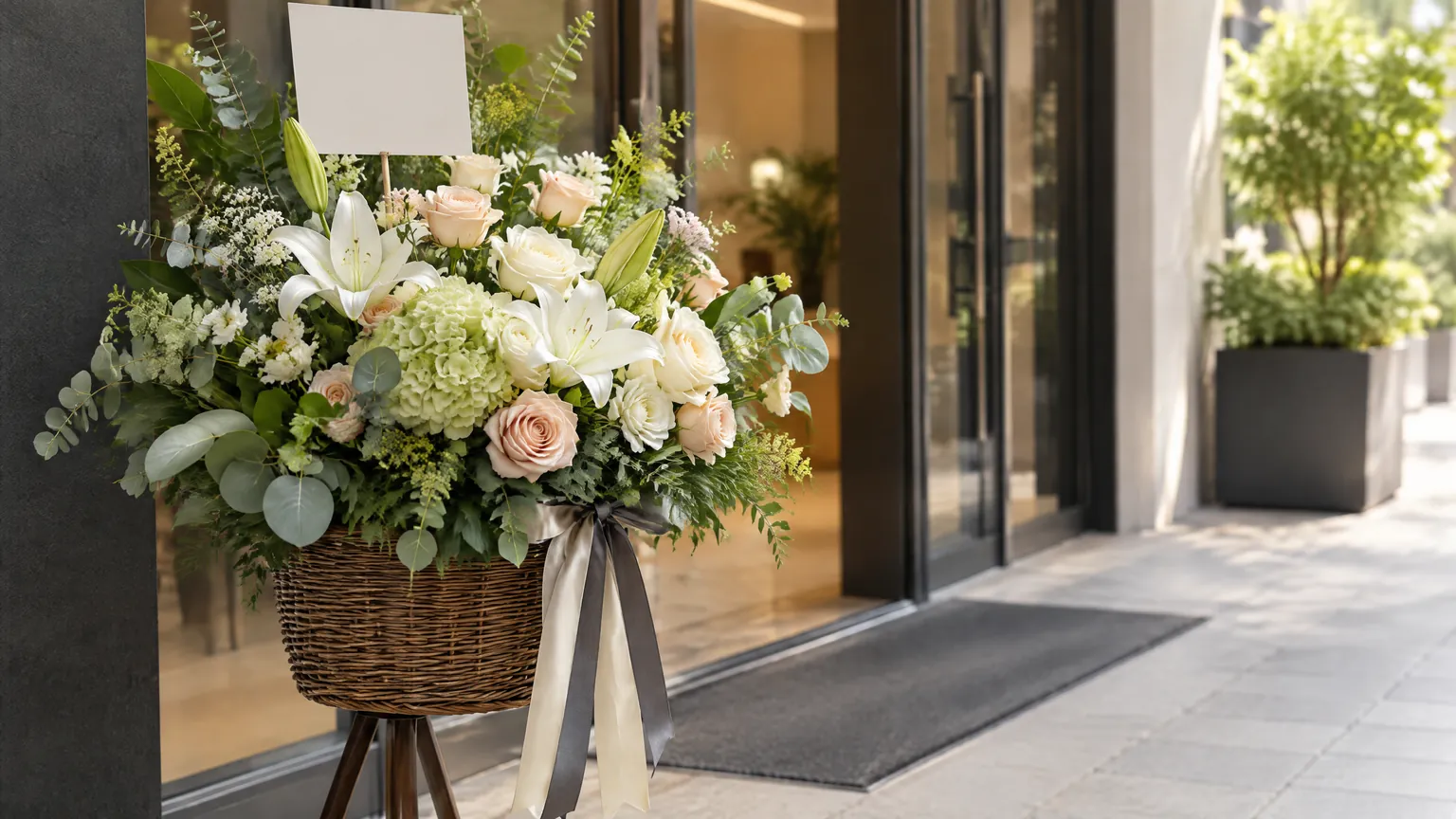
The assigned funeral wreath resource covers design references, ribbon personalisation and venue coordination. It is useful after the family has accepted this format: ask the florist to describe the proposed support and complete footprint so the venue can review them. A wreath’s meaning is not universal, and a reference image does not establish permission to display it.

Match the format to the place and the person handling it
A tribute for a ceremony and a gift for a family home are different practical tasks. Ask which destination the family actually wants. Sending something to their flat merely because the ceremony cannot accommodate it may transfer the problem to them. They may have visitors, limited display space or no wish to keep flowers afterwards. The destination should be a choice, not a fallback imposed by the sender.
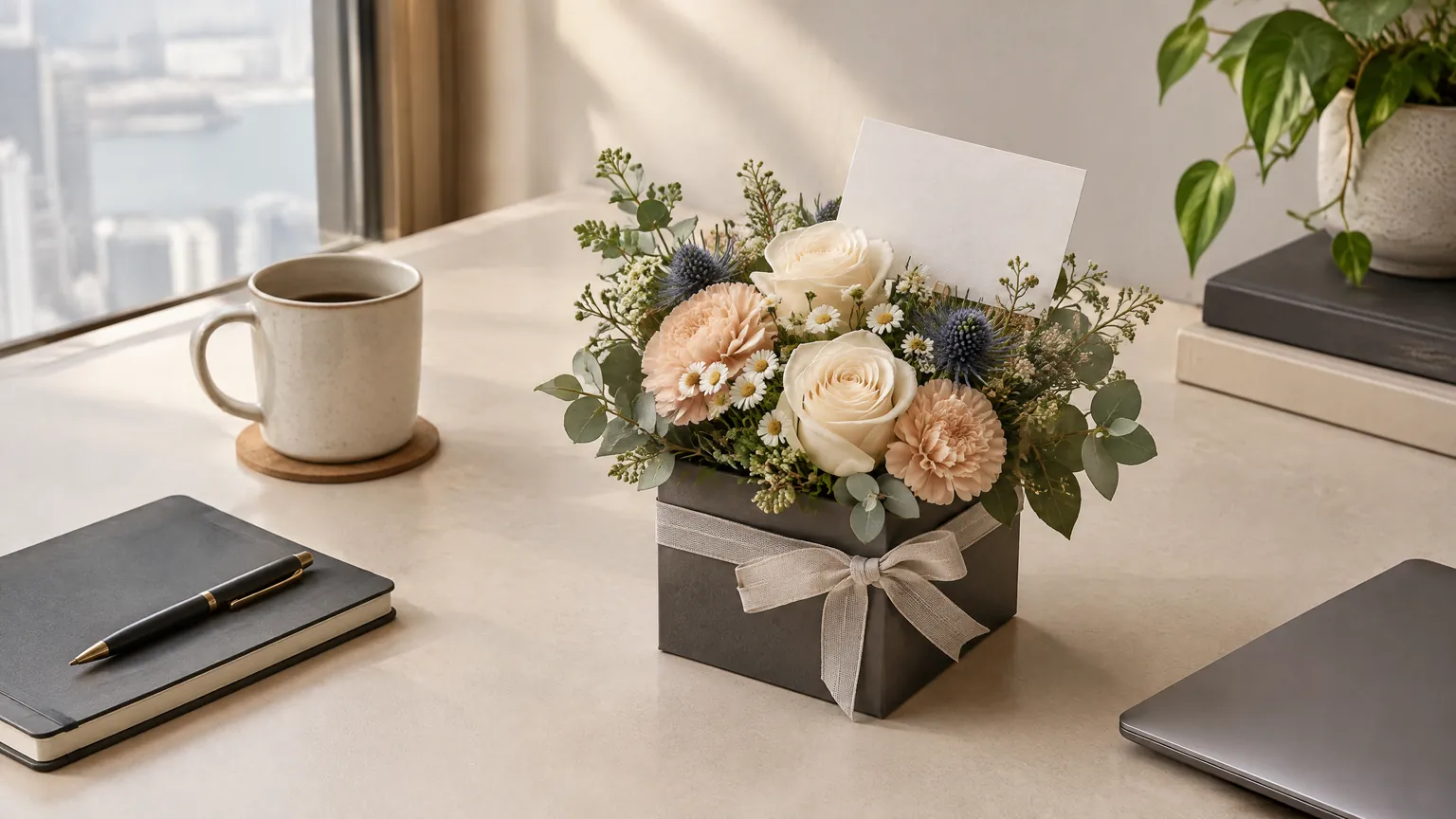
For a home in Sha Tin, a useful question is whether the recipient wants a finished container arrangement or a bouquet they would need to place in a vase. Discuss the intended surface and whether anyone wants to look after it. Do not describe a box as maintenance-free: ask the florist for handling and care instructions appropriate to its actual construction. If those tasks are unwelcome, choose a message instead.
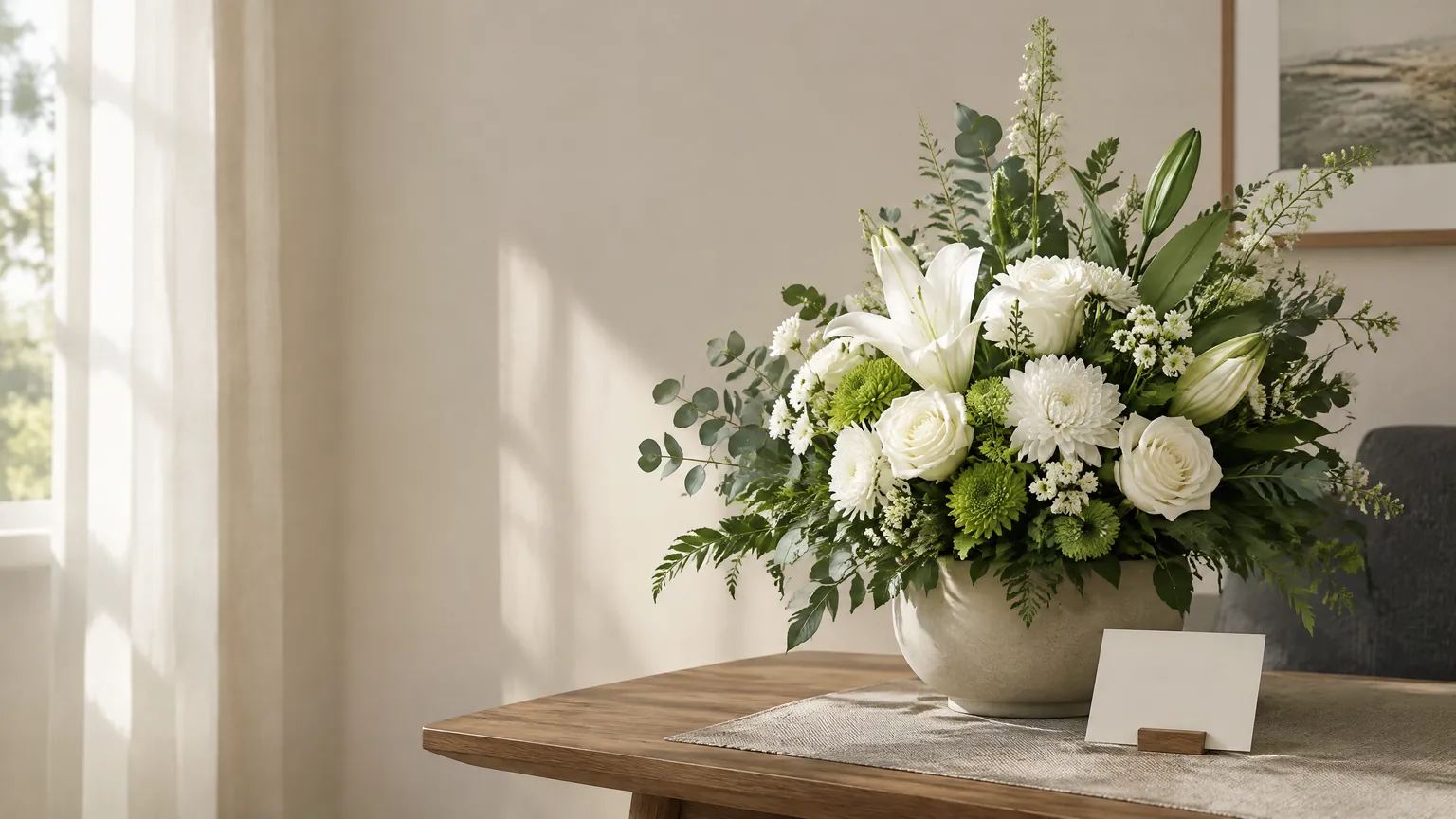
When comparing flower arrangements, use the container, viewing direction and finished dimensions to decide what to ask about. A low arrangement might suit an agreed table, whereas a front-facing piece needs a suitable display position. Ask whether the vessel is included and who will deal with it afterwards; the page’s general format descriptions do not confirm a particular design for your request.
Colour is another preference to check, not a test the sender must pass by guessing. Ask whether there are requested or excluded colours and flowers. If a favourite flower matters, say so, while allowing the florist to explain what is possible. Cruse notes that the time of year can affect whether a favourite flower can be included.1 Agree any acceptable alternative before production; do not let an unexpected substitution become a question for the family during the ceremony.

Write a card that acknowledges the loss without explaining it
A short, sincere message is enough. Sue Ryder recommends acknowledging the loss, taking cues from the bereaved person and avoiding assumptions about their feelings. Its guidance also warns against trying to fix grief or introducing religious explanations that the person may not share.3 Apply that restraint to the card or ribbon: you are expressing care, not interpreting the death or telling the family how they should feel.
For colleagues who did not know the deceased, a possible message is: “We are very sorry for your loss. Thinking of you and your family. From your colleagues.” If you knew the person, you could add a brief, genuine memory that belongs to your relationship. Do not invent a shared memory on behalf of an entire team or include private details simply to make a corporate card sound more personal.
Approve the exact text before it is reproduced
Check the deceased’s name, the form of address and the sender’s name against information the family has supplied. If the card is intended for the bereaved colleague rather than the deceased, make that distinction clear to the florist. A company name should identify the sender without turning the tribute into advertising. Leave slogans, product references and promotional logos out of the message.
In a bilingual Hong Kong family, ask which language or languages they prefer. Do not automatically add a translated ceremonial phrase. Where translation is wanted, have the family’s nominated reviewer or an appropriate language reviewer check the exact text and name order. Approve the whole card layout rather than only a message fragment, so the person reproducing it knows what belongs together.
Keep private condolences off public channels unless the family has agreed. Marie Curie advises checking with close family or friends before posting memorial content on social media.2 That is also a sensible boundary for an office tribute: permission to send flowers does not imply permission to publish the card, the service details or a photograph of relatives receiving them.
Coordinate a workplace tribute without making it a team performance
Choose a single organiser to hold the confirmed brief and handle provider questions. If several departments want to participate, agree whether the sender will be the company, a named team or individual colleagues. This is an administrative choice, not a measure of who cares most. Avoid circulating the family’s contact details in a large chat merely because several people want to contribute wording.
In a Central office, colleagues might suggest a large tribute on behalf of the whole business. Before proceeding, the organiser should establish whether company flowers are welcome and whether the family wants a public sender name. If the colleague prefers a private acknowledgement, respect that instruction even if a manager has proposed a more visible display. Do not ask the colleague to settle internal disagreements about the design.
Keep the brief limited to information needed for this gesture. It can contain the accepted format, approved message, destination and authorised contact. It does not need the cause of death, a family history or a list of who has replied to condolences. When the family has asked for no flowers, the organiser can tell colleagues that the team is following that request without disclosing further personal information.
Confirm a handover that does not interrupt the family
Before asking a provider to proceed, establish who has agreed to receive the flowers. That person may be a venue staff member or a relative’s nominated helper rather than the closest bereaved family member. Supply a contact only with their agreement, and make clear whether they are handling access, placement or both. A contact number does not itself establish authority to accept an item.
The flower delivery Hong Kong page raises useful address and access questions. For this task, give the confirmed building, room or flat details, agreed receiving contact and any known entry instructions, then ask Y. Florist whether the proposed handover is feasible. Treat it as a request requiring confirmation, not an assurance of coverage, direct access or arrival before a service.
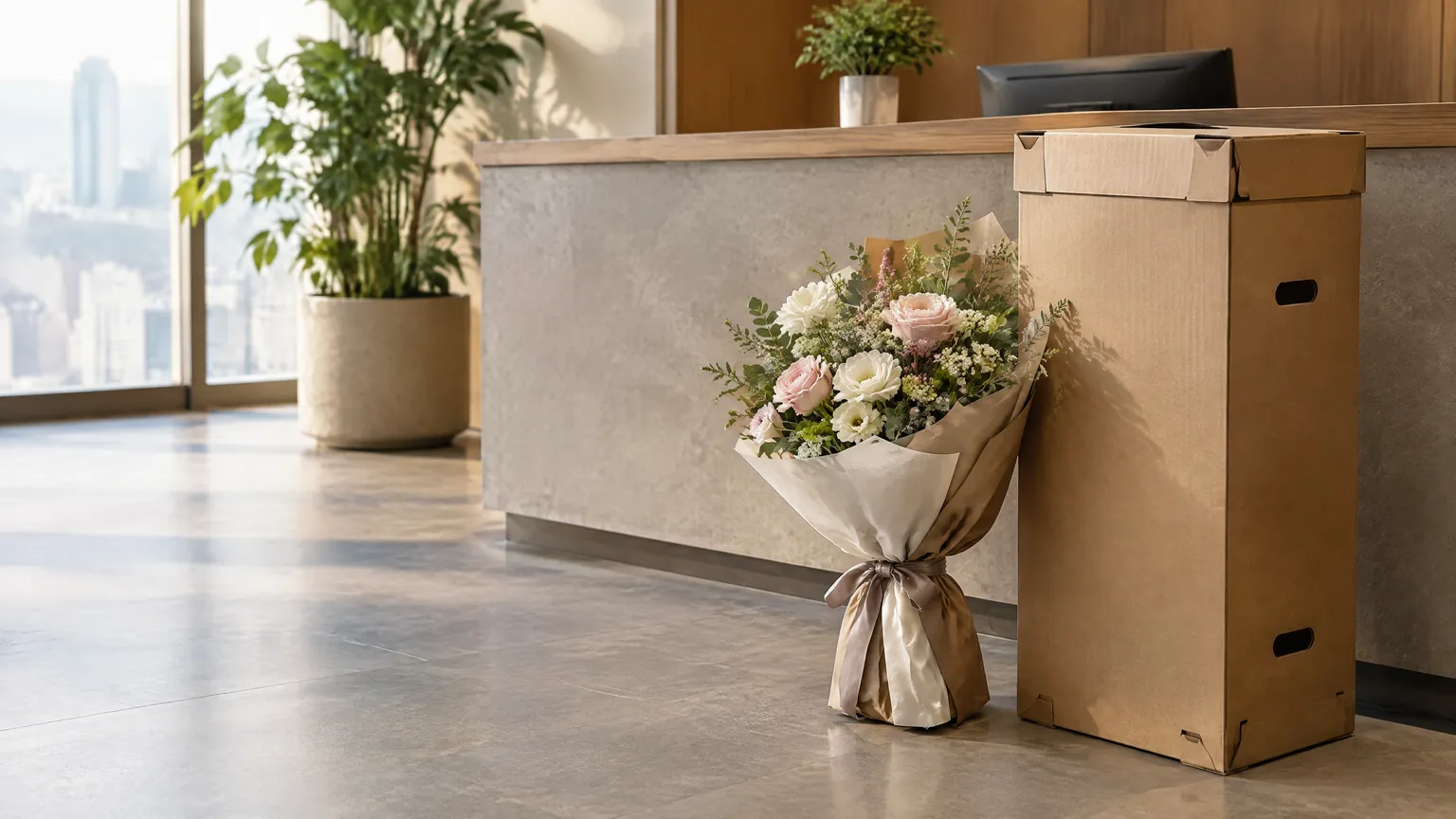
For a memorial venue, distinguish the ceremony time from the window in which an authorised person can receive the tribute. Ask the venue whether items should go to a reception point or another specified location. For a home, ask whether the family wants contact before arrival and whether a nominated helper can receive it. Do not assume a concierge desk can keep flowers, or that leaving them outside the flat is acceptable.
Agree what should happen if access is refused or the receiving contact cannot be reached. The instruction should avoid repeated calls to grieving relatives and should not permit an unapproved unattended drop. Ask how the sender will be contacted about a problem. An alternative destination or later handover needs its own approval; the provider should not be left to infer the family’s wishes from the sender’s good intentions.
When plans change, do not force the original gesture through
If the venue, service time or family preference changes, pause and update the relevant instructions. Check directly with the provider what can still be changed; do not promise colleagues that a revision is available. A reference design, an enquiry response and a confirmed request are different stages, and the organiser should know which one has actually been reached.
If flowers are no longer welcome, acknowledge that decision without asking the family to justify it. You can still send a brief message or ask whether a specific practical task would help. Sue Ryder recommends offering concrete help while allowing the bereaved person to lead what support they want.3 For a colleague, that might be an offer to handle an agreed routine work task, not an unrequested visit to their home.
After a ceremony, do not assume the family wants to take the tribute away. Ask the nominated organiser in advance who will deal with the flowers, stand and container, following the venue’s instructions. That final decision belongs in the original brief because a gesture is not considerate if its practical responsibilities become an unwelcome surprise.
A short check before asking the florist to proceed
- Confirm that flowers are welcome and that the chosen destination matches the family’s wishes.
- Record the accepted format, colours and complete dimensions; obtain any necessary venue approval.
- Approve the exact card or ribbon text, language and sender name.
- Confirm provider feasibility and an authorised receiving contact with an agreed window.
- Agree the failed-handover instruction and responsibility for the flowers and container afterwards.
If an essential answer is missing, leave the floral request unconfirmed while expressing sympathy directly. The aim is not to complete an impressive display. It is to offer something the family has chosen to welcome, with as little additional decision-making as possible.

Common questions
Can our office send a wreath when the notice says family flowers only?
Do not assume that a company tribute is included. Follow the restriction and send a private message instead, unless the family’s nominated organiser explicitly welcomes the office’s flowers.
Should the card be bilingual because the funeral is in Hong Kong?
Not automatically. Ask which language or languages the family prefers, then check names, form of address and the complete wording before it is reproduced. Do not add an unapproved translated ceremonial phrase.
What if the florist cannot reach the receiving contact?
Agree a failed-handover instruction beforehand, including how the sender will be contacted. Do not authorise an unattended drop or a different destination without the relevant recipient or venue approval.
Can I send the ceremony flowers to the family’s flat instead?
Only if the family wants them there and an authorised person can receive them. A home destination needs separate consent and practical arrangements; it is not an automatic fallback when a venue cannot accept a tribute.
Sources & what they support
Each reference supports only the stated scope. Citations are not independent endorsements of YumYum or its branches and do not confirm a provider’s current arrangements or any individual outcome.
- Cruse Bereavement Support: Let’s talk about funerals (opens in a new tab)
Individual funeral wishes can include many flowers or family flowers only; favourite flowers may be affected by the time of year. Used for preference-led planning, not UK funeral law or universal Hong Kong customs.
- Marie Curie: How to arrange a funeral (opens in a new tab)
Check the deceased’s and family’s wishes; ask the ceremony leader when unsure what is appropriate; invitations can communicate wishes about flowers and charitable gifts; consult close family or friends before public memorial posts. No UK legal or venue-entitlement claims used.
- Sue Ryder: What to say to someone who is grieving (opens in a new tab)
Acknowledge loss simply, take cues from the bereaved person, avoid assuming feelings or imposing religious explanations, and offer concrete help while letting the recipient lead. Supports wording and interpersonal recommendations, not clinical outcomes.