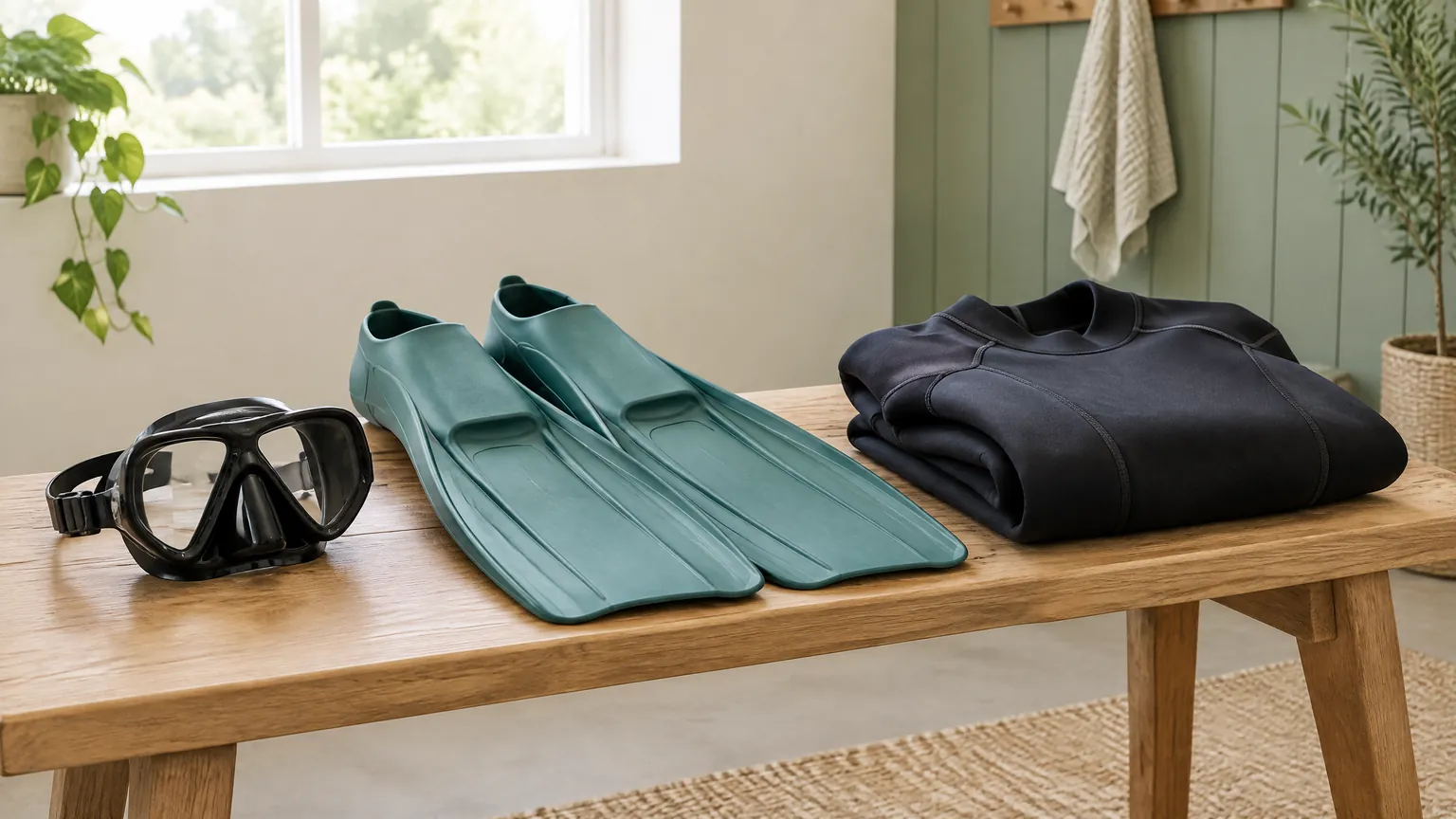
Already certified? Choose local diving support for your Hong Kong visit
GotGear and DiveHarbour share an owner; this collection is not an independent recommendation. GotGear is not a diving school and does not provide dive training. Articles are general information, not practical training, instructor guidance or individual medical clearance to dive. Original concept images are not real course records. No certification or safety outcomes are promised.
The short answer
Choose local diving support by describing your recent experience and comparing it with the proposed Hong Kong outing, rather than relying on your certification card alone. Share your last-dive date, relevant logbook entries, equipment familiarity and concerns before committing. A guided recreational dive, instructor-led refresher or different training arrangement may be appropriate. Ask for written details about supervision, the activity setting and weather decisions; personal health questions need a qualified clinician, not an online readiness verdict.
A certification card records training you completed. It does not tell a Hong Kong operator how recently you used those skills, whether you are comfortable with the proposed conditions or what help you need with unfamiliar equipment. For a visiting certified diver, the useful question is not simply whether a boat has space. It is whether the available support fits your experience now.
Diving carries significant risks. This guide helps you prepare an enquiry and compare arrangements; it is not a skills tutorial or personal medical clearance. GotGear does not provide diving training. GotGear and DiveHarbour share an owner, so the DiveHarbour links below are information routes rather than an independent provider endorsement.
Describe your recent diving, not just your highest qualification
Start with your certification agency and level, then explain your recent activity. A long history of diving can be useful context, but an operator also needs to understand your last few outings. Send the date of your most recent dive and describe its setting. Mention whether it involved a boat, what equipment you used and which parts felt comfortable or uncertain.
DAN explains that diving skills are learned through training and maintained through practice. Its return-to-diving guidance recommends a formal review of knowledge and in-water skills after a long hiatus. That supports an honest discussion about inactivity; it does not establish one booking threshold for every agency, provider or diver. Ask which requirements apply to the arrangement being offered. 1
For a visitor-focused enquiry, the certified-diver fun dive Hong Kong information page provides a starting point for discussing certification, recent diving and language needs. Use it to frame your questions, then request the actual proposed support and participation requirements. A public description is not confirmation that a particular date or setting is suitable for you.
Make the logbook useful to the person reviewing it
Select entries that help explain your present experience, rather than sending a large collection without context. Recent entries from similar environments are particularly useful to discuss. If all your recent diving took place in warm, sheltered water, say so. If you have not recently boarded a dive boat or worn the exposure protection being proposed, identify those differences too.
Be clear about missing records. You can explain an approximate last-dive date when the exact entry is unavailable, but mark it as approximate. Do not reconstruct precise conditions or inflate a dive count to satisfy an assumed requirement. Ask what certification evidence and recent-experience records the operator needs, and whether anything must be checked before arrival.
Explain what a recent dive does not show
A recent date is only part of the picture. One comfortable outing does not establish comfort with every entry, equipment configuration or sea condition. Describe the aspects you have not encountered recently. This gives the operator a more useful starting point than a general statement that you are experienced.
Consider two hypothetical visitors with the same certification. One has been diving regularly but has no recent boat experience. The other knows boats well but has not used scuba equipment for a long time. They may need different arrangements. Neither example is a readiness verdict: the point is to give the local professional enough information to assess the proposed activity.
Separate guiding from refresher training
A guide arrangement and a refresher should not be treated as interchangeable. Guiding concerns the recreational outing and its agreed support. Refresher training addresses knowledge or skills that need review. Ask which service is being offered, who provides it and whether your concerns can realistically be addressed within that format.
PADI describes its ReActivate programme as an online knowledge review with an optional in-water component. The distinction matters when comparing an online purchase with supervised water practice. PADI also cautions that the questions in its refresher article are not a thorough test of whether someone needs a refresher. These are PADI-specific programme details, not proof of what another agency or a local package includes. 2
DAN recommends both knowledge review and in-water skills review when undertaking refresher training after inactivity. For a visitor, the practical implication is to ask about the full arrangement rather than assuming that reading online material resolves all concerns. The professional should explain the proposed review environment and how further support would be considered. 1
The Hong Kong scuba refresher boat dive page is an enquiry route for that discussion, not a reason to assume a boat-based review is automatically the first step. Ask whether the proposed plan involves confined water, open water or both, and what happens if the professional recommends review before any offshore outing.
| Arrangement to discuss | Question it helps address | Detail to obtain before committing |
|---|---|---|
| Guided recreational outing | Does the local plan fit my recent experience? | Guide role, buddy arrangement and suitability review |
| Instructor-led refresher | Do I need knowledge or supervised skills review? | Review setting, scope and how further practice is decided |
| Equipment orientation alongside an agreed activity | Is unfamiliar equipment a concern? | Who provides orientation and whether additional training is needed |
| Separate training or a deferred outing | Is the intended activity beyond my present training or comfort? | Applicable prerequisites or a realistic alternative plan |
These are comparison questions, not guaranteed products or a self-selection test. An orientation is not a replacement for a refresher, and a guided outing does not extend your qualification. If your goal involves a new specialised environment or activity, disclose that before booking rather than expecting informal instruction during a recreational trip.
Ask what local support means on this particular day
The word 'guided' can leave important questions unanswered. Ask whether a guide will be in the water with your group, how buddies are arranged and who reviews your experience before the activity. Clarify whether any instructor-led review is separate. Do not infer the service from a photograph, the number of people on a boat or a general page heading.
Language needs deserve the same clarity. Request the language you need for the briefing and for discussing concerns, not just for the booking conversation. If you and your travel companion prefer different languages, explain that early. Ask how the provider will make essential communication clear to the whole group.
Tell the operator when members of your party have different levels of recent experience. A booking made under one person's name should not hide another person's long break or uncertainty. Each diver's background needs attention. Ask whether the proposed group arrangement accommodates those differences or whether separate support would be more appropriate.
An enquiry is more useful when it names the concern plainly: 'I have recent dives, but I have not used this type of rental equipment,' or 'I am unsure whether my time away means I need a refresher.' You do not need to diagnose the problem or choose the training format yourself. You do need an answer before treating the outing as settled.
Confirm equipment needs before packing
Divide your equipment information into what you will bring and what you need to rent. Give the operator useful sizing information and identify any unfamiliar item. Ask about exposure protection, the rental scope and whether the equipment you expect to use is available. Avoid assuming that an advertised activity includes a complete rental set.
For your own equipment, raise any outstanding inspection or servicing questions with the relevant qualified service professional. For rental equipment, ask who handles fit and familiarisation and when this happens. This is an enquiry about support and time allocation, not instructions for assembling, testing or operating scuba equipment yourself.
A computer you have not used before is worth mentioning explicitly. Ask what familiarisation can be provided and what preparation the professional recommends. Do not treat a short online explanation as permission to use unfamiliar equipment independently. The appropriate response may require supervised instruction beyond the original booking.
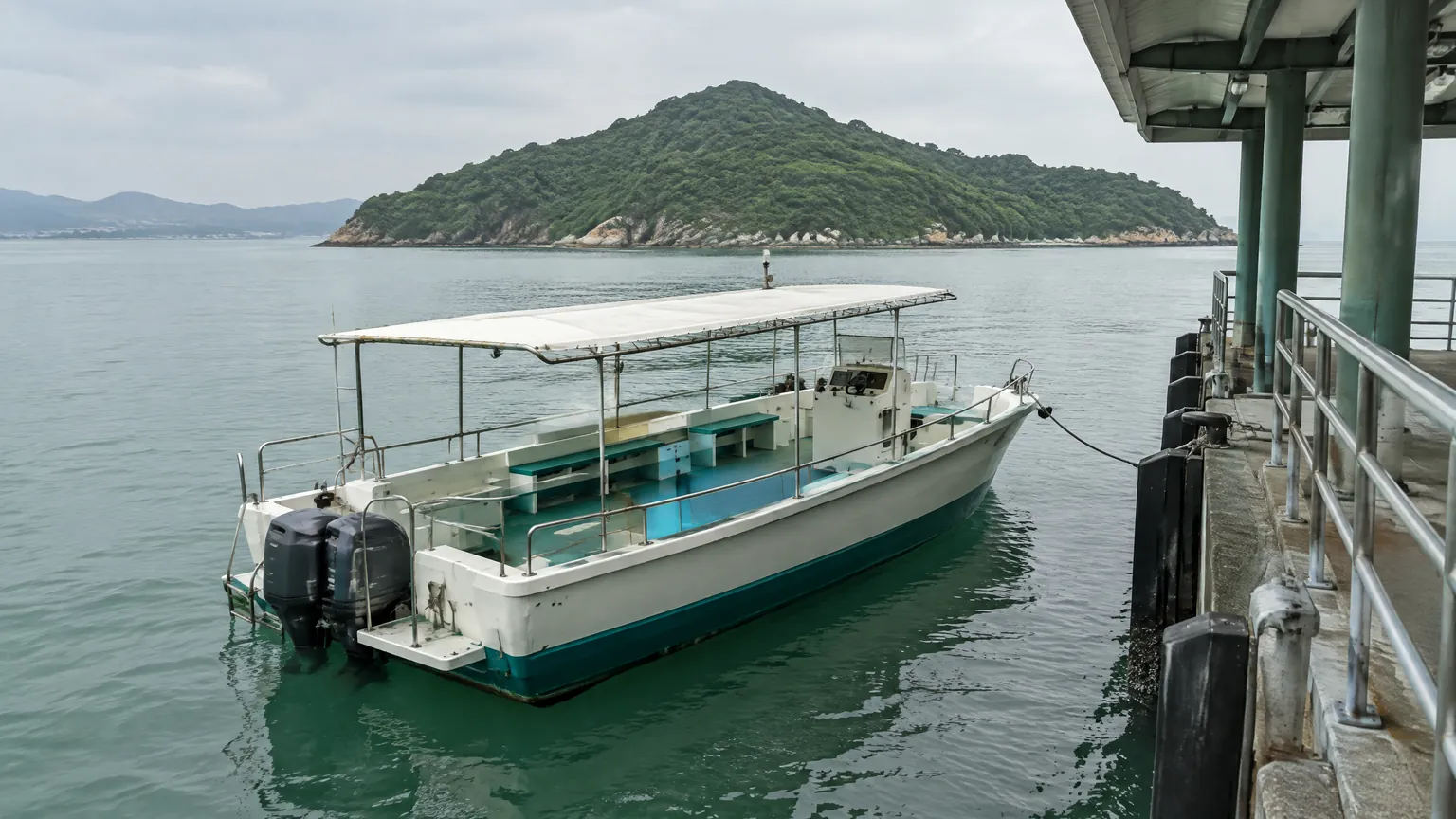
Packing decisions also depend on the confirmed transport plan. Ask about carrying equipment to the meeting point, storage while aboard and whether personal bags can remain dry. A visitor staying in a hotel may need different arrangements from a local diver travelling with a full equipment bag. Confirm practical details rather than building luggage plans around an illustrative boat image.
Treat a boat plan as conditional, not a fixed sightseeing itinerary
The Hong Kong Observatory provides marine forecasts and tropical cyclone information, including warnings for shipping, through its marine community service. Those resources are more relevant to a sea-day enquiry than relying only on a general city forecast. They do not decide whether your provider's particular boat outing proceeds. 3
Ask who communicates the operational decision and when you should check for updates. Confirm whether the site is provisional, how a location change would be handled and whether that change prompts a fresh discussion about suitability. A plan matched to your experience should not silently become a different activity because the route changes.
Keep meeting arrangements equally specific. Request the exact location, reporting time, boarding expectations and anticipated return window in writing. A place name on a website is not evidence of a branch, a permanent departure point or a confirmed route. Allow room for the briefing and equipment arrangements rather than arriving with only a moment to spare.
Avoid scheduling the day around a promised underwater scene. Visibility, sea state and wildlife encounters are not guaranteed. Ask about expected conditions and what uncertainty remains. If you have onward travel, disclose it before committing and seek appropriate diving-medicine guidance where relevant; this article does not prescribe a personal flying interval.
Send one enquiry that exposes the important gaps
A compact message can be easier to answer than several disconnected conversations. Its purpose is to help the operator propose a suitable format, not to persuade them to accept a plan you have already fixed. State your preferred dates alongside any flexibility, and distinguish requests from confirmed arrangements.
Use this enquiry checklist before sending:
- Give your certification agency and level, and ask what evidence is required.
- State your last-dive date and summarise relevant recent logbook entries.
- Identify unfamiliar conditions, equipment or aspects that concern you.
- Describe each travelling diver separately and state briefing-language needs.
- List equipment you will bring and rental items that require confirmation.
- Ask whether the proposal is guiding, refresher training or another arrangement.
- Request the meeting details, weather-update process and current written booking terms.
For a general recreational proposal, the Hong Kong fun dive page can help you ask about equipment inclusions and support separately. Do not read a headline listing as a complete personalised arrangement. The written reply should identify the relevant activity, what is included and what still depends on further information or conditions.
You can also ask what information must be supplied before the operator can make a decision. Missing documents, unresolved equipment needs or a recommended refresher may affect planning. An acknowledgement of your message is not the same as acceptance of your experience, a reserved place or confirmation of the final activity.
Keep health questions separate from booking acceptance
Answer any requested health documentation accurately and use the provider's current process. If a health concern or change needs assessment, consult a qualified clinician, preferably one familiar with diving medicine. Neither this article nor a helpful booking reply can provide personal medical clearance.
Raise unresolved concerns before payment or travel arrangements make you feel committed. Ask what documentation is required and when it must be reviewed. You do not need to share an unnecessary medical history in a general group chat; ask how sensitive information should reach the appropriate recipient.
A certificate, recent logbook or previous uneventful trip does not replace individual medical advice. Likewise, completing health paperwork does not resolve a skills-review question. Keep those conversations distinct so that each goes to the person qualified to address it.
Make the written reply your decision point
Before paying, obtain a summary covering the proposed format, experience requirements, support, equipment scope, venue or boat status and timing. It should also explain what happens if information remains incomplete, conditions change or the proposed review indicates that more practice is needed. Ask for clarification wherever the answer still relies on an assumption.
Request the current written non-refund, cancellation and make-up terms for your particular booking. Do not assume that a weather change creates a refund right or guarantees a replacement date. If wording differs between languages or between a webpage and a message, resolve the difference before committing.
The useful outcome is a plan you can understand and question, not necessarily the most ambitious outing available during your stay. Choose support that addresses the difference between your recent experience and the current setting. If that means a refresher, another activity or a later date, keep that option open rather than treating a holiday timetable as evidence of readiness.

Common questions
My logbook is recent, but I have never dived in Hong Kong. Should I request a refresher?
Describe your recent settings and the conditions or equipment that are unfamiliar. Recent records help the operator understand your experience, but they do not settle every support question. Ask whether the proposed local outing fits your background and whether guiding, orientation or instructor-led review is appropriate. Do not use the last-dive date alone as a readiness verdict.
Does finishing an online refresher mean I can join the boat outing?
Do not assume so. PADI distinguishes its ReActivate online knowledge review from its in-water component, and other arrangements may differ. Tell the operator exactly what you completed and ask what further review or documentation the proposed activity requires. Online completion is not written acceptance for a particular boat trip or proof of current in-water proficiency.
Can my experienced travel companion make one enquiry for both of us?
Yes, but the message should describe each diver separately. Include individual certification details, recent diving and concerns, rather than presenting the strongest diver's experience as the group's standard. Ask how buddies and support will be arranged, and make sure both of you receive the same written activity details and terms before committing.
Sources & what they support
The scope below identifies what each reference supports. Citations do not imply independent endorsement of DiveHarbour or any school, establish course outcomes or provide individual medical clearance to dive.
- DAN: Refresh Your Skills (opens in a new tab)
Diving skills require maintenance through practice. DAN recommends formal knowledge and in-water review after a long hiatus and both knowledge and water components when undertaking refresher training. Its general guidance is not presented as a universal provider admission rule.
- PADI: Scuba Refresher Questions and ReActivate Programme (opens in a new tab)
PADI's official article distinguishes ReActivate online knowledge review from an optional in-water component and cautions that its sample questions are not a thorough refresher-needs test. These claims are limited to PADI's description, not asserted as DiveHarbour package terms.
- Hong Kong Observatory: Weather Information for the Marine Community (opens in a new tab)
HKO supplies marine forecasts and tropical cyclone resources including shipping warnings. The article uses these as planning resources without reproducing a temporary forecast or substituting them for the operator's boat decision.