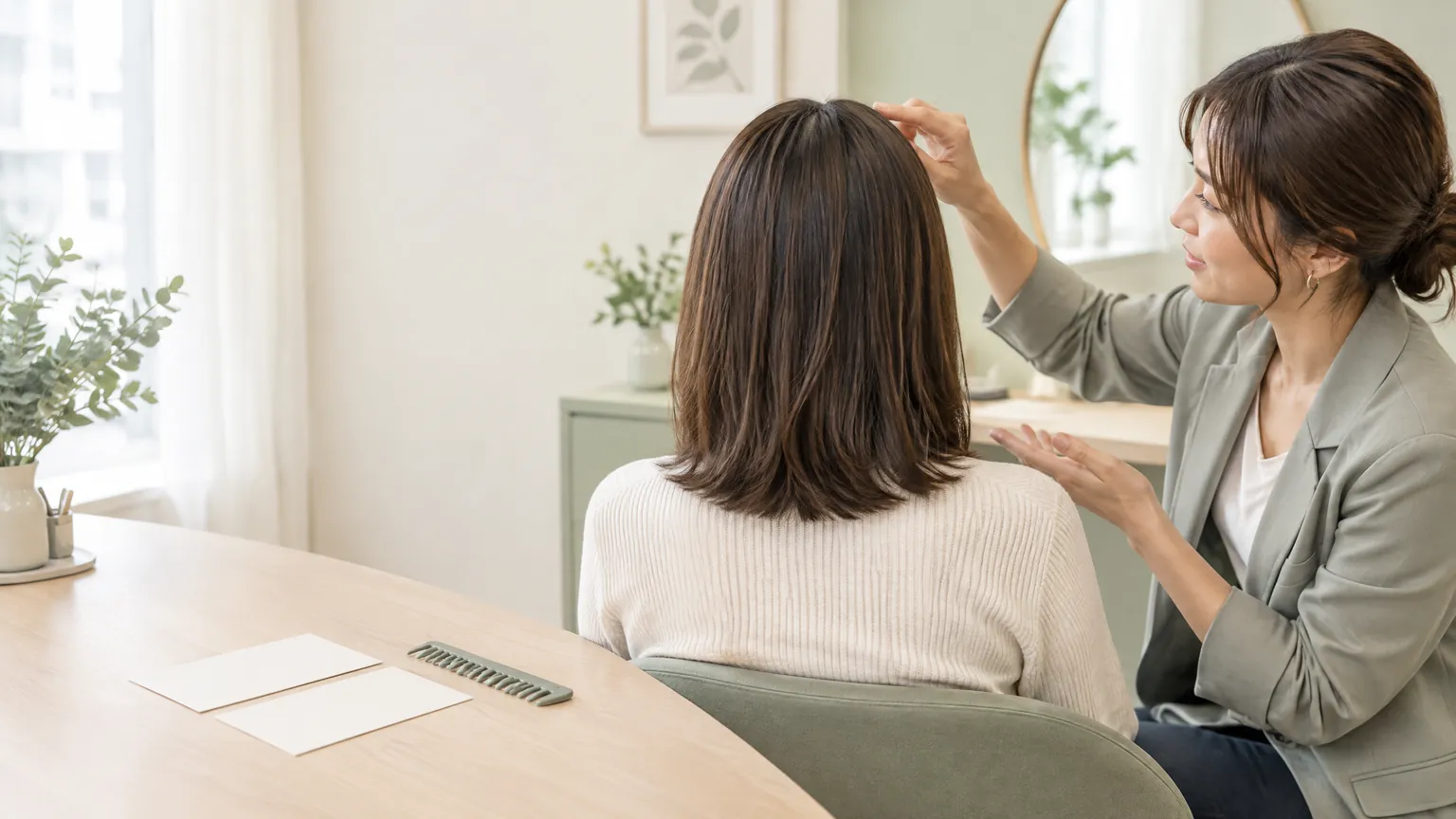
Event and bridal hair: the useful brief starts with outfit and schedule
This column offers salon and styling information and links to Vit So, a hair website under the same ownership. Hair services are provided by Vit So, not GotGear.
The short answer
A useful event-hair brief starts with what you will wear and when you must leave, not just a photograph of a hairstyle. Share your neckline, outfit fastening, accessories, hair history and event sequence before asking what can be arranged. Then confirm the appointment, finishing deadline and exact service scope in writing. For a small salon, the same information helps organise the preparation desk, keep hot tools separate from clothing and avoid promising more work than the schedule allows.
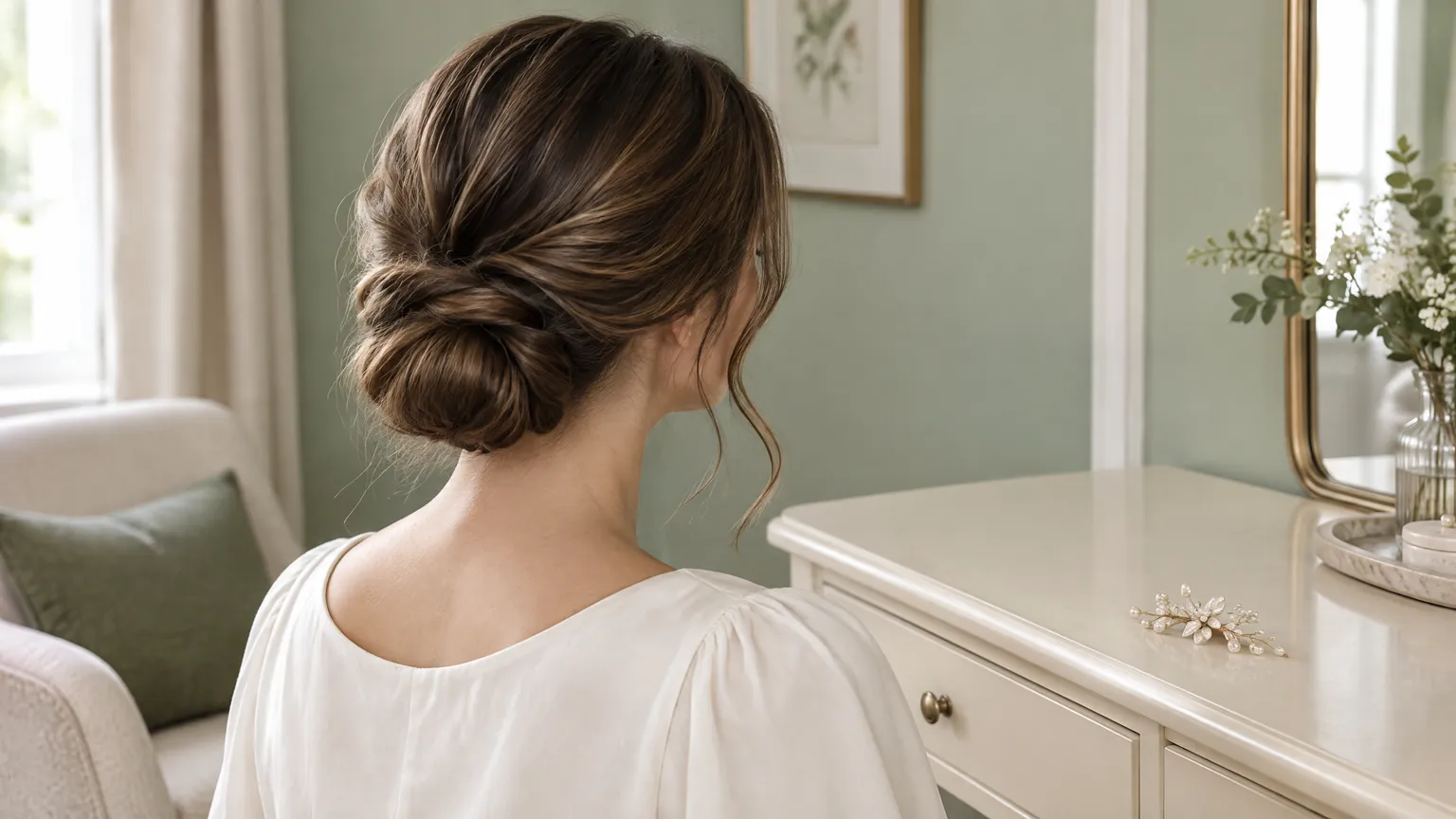
Start with the outfit, not a folder of hairstyles
An attractive reference photograph leaves several practical questions unanswered. Will a high collar catch a low bun? Does a dress have to pass over the head after styling? Will a necklace, veil comb or presentation headset occupy the same space as the hair? These details can change the brief before anyone considers a curl pattern or finish. Send a clear image of the outfit's neckline and back, then explain how it fastens. A front-opening preparation top can make dressing simpler, but the actual outfit still needs a workable changing sequence.
Choose a small set of references and say what you like in each. One might show the shape from the front; another might explain how much of the neck should remain visible. Distinguish an essential feature from a preference. Keeping hair away from the face during a speech is a functional requirement. Copying every detail of a heavily edited photograph is not a useful specification, particularly when the reference hair differs from your own.
For an initial enquiry about hair styling, describe the occasion alongside those requirements rather than asking only whether a picture can be copied. GotGear and Vit So share ownership; these service links are resources for checking scope, not independent recommendations. Ask the provider what information is needed to assess the request, and keep the agreed description with your event notes.
Turn the event schedule into a finishing deadline
The ceremony or dinner start time is not necessarily the styling deadline. Hair may need to be complete before dressing, portraits, transport or a sound check. Write down the first activity that requires the finished look, then work backwards through the remaining tasks. Include whoever will help with clothing and accessories: a hairstyle that is finished while the dress is still elsewhere has not solved the preparation problem.
Give the stylist both the required finish time and the departure time. Ask for an assessment of the appointment length rather than estimating it from a short online video. Mention whether several people need styling and whether anyone shares a photographer, changing room or transport. A small shop should not treat several guests as one booking without clarifying the work for each person.
When reviewing event hair styling, use the service description as a starting point for a dated enquiry. Confirm whether the requested event, appointment location, number of people and finishing deadline can actually be accommodated. A published page does not confirm a particular date, and an enquiry is not the same as an accepted appointment. Do not build the rest of the schedule around an unconfirmed slot.
Keep any contingency visible. If the morning runs late, agree which detail could be simplified while preserving the essential shape and comfort. Removing an optional accessory or omitting a second look may be more sensible than compressing every remaining task. The fallback needs to be discussed before the day, not improvised while a car is waiting.
Compare options by what the day demands
An updo is not automatically the most practical choice, and loose hair is not automatically easier. The useful comparison is between the proposed style and the tasks ahead. Consider outfit changes, accessories, time away from a mirror and who can help after the appointment. The table below is a planning aid, not a promise about how any style will perform on every hair type.
| Styling direction | Useful reason to discuss it | Detail to test or confirm | Scheduling implication |
|---|---|---|---|
| Loose waves or a smooth finish | You want the length visible and relatively few fixed accessories | How the front sits during movement, and whether clothing catches the ends | Allow dressing without dragging the outfit across finished hair |
| Half-up arrangement | You want some hair away from the face while retaining visible length | Whether the fastening competes with a veil comb or headset | Agree when each accessory will be fitted |
| Low bun or other pinned updo | You want the neckline clear or a defined place for an accessory | Collar clearance, pin comfort and the accessory's weight | Include a final check with the actual outfit and head movement |
| A planned change between occasions | Different parts of the day have genuinely different needs | Who performs the change and whether it requires rebuilding the style | Treat the change as additional work, not a free gap in the itinerary |
Natural texture, available length and previous chemical processing belong in this discussion. Tell the stylist about recent colouring, bleaching, straightening or perming, along with any extensions or hairpieces already worn. Do not assume that extra hair or a last-minute chemical service is necessary to make a reference possible. Ask what can be done within the present hair condition and the confirmed appointment.
A second look deserves particular scrutiny. Loosening a section and removing an accessory is different from dismantling and rebuilding a pinned arrangement. Ask which interpretation is intended. If nobody has agreed to perform the change, choose an initial style you would be comfortable wearing for the whole event.
Bring the actual accessories to a bridal discussion
A veil, comb or decorative headpiece is part of the styling brief, not a finishing surprise. Show its attachment, size and position, and bring the real item to a consultation or trial if the provider offers one. A photograph cannot establish how a particular clasp opens or how the item sits against the hair. Check whether there are rough edges, damaged fastenings or exposed points before the appointment.
When enquiring about bridal hair, ask specifically about the arrangements required for your day. Clarify whether a trial, accessory fitting, veil removal or a later change is included, available separately or not offered. Do not assume travel to a venue or attendance throughout the wedding. Keep a confirmed service boundary separate from the wedding organiser's wider timetable.
Test comfort as well as appearance
For a trial, if arranged, look at the front, sides and back, then move your head in ordinary ways. Sit, stand and look down. Explain where an accessory feels heavy or a pin presses. The American Academy of Dermatology warns that repeatedly wearing hairstyles that pull tightly can cause traction-related hair loss, and identifies pain from tightly pulled hair as a reason to change the style immediately.1 A single event should not be presented as proof of future hair loss, but pain is not something to accept for the sake of a polished photograph.
Ask for tension or uncomfortable attachments to be adjusted rather than covered by more decoration. If irritation or pain persists, or there is sudden marked hair loss, seek assessment from a qualified healthcare professional. A styling consultation is not a diagnosis or a treatment appointment.
Agree who will remove the veil
If the veil comes off after the ceremony, find out whether its comb is attached independently or shares the structure holding the hairstyle together. Ask the stylist to explain the intended removal method and identify any pins that should stay in place. Do not ask a relative to pull out an unfamiliar attachment under time pressure.
For a complex change, confirm whether professional help can be arranged; do not infer this from the original appointment. If help is not confirmed, discuss a simpler accessory arrangement. Keep any agreed removal notes where the person assisting can find them, rather than buried among inspiration images.
Set up a preparation desk with a separate hot-tool area
For a small shop, the preparation desk should support the agreed sequence. Reserve a clean area for accessories, a separate place for personal bags and a designated heat-resistant surface for hot tools. Keep the outfit and veil away from the heated equipment. A table crowded with garment covers, drinks and hair accessories makes it harder to put a tool down safely.
Electrical Safety First advises that straighteners and tongs should be unplugged after use and left to cool on a heat-resistant surface. It also advises against using them near water, with wet hands or on wet hair, and says damaged equipment should not be used.2 These are appliance-safety precautions, not instructions for selecting a styling temperature or a Hong Kong electrical-compliance guide. Follow the manufacturer's directions for the equipment in use.
Plan the cooling position before the appointment starts. It should not become a temporary shelf for the veil when someone needs more space. Keep cables out of the dressing route and hot equipment beyond children's reach. Allow tools to cool before packing them; finishing the hairstyle does not mean the equipment is ready to go into a bag.2
The desk also needs a clear handover point. The person finishing the style should know whether accessories are still waiting to be fitted and whether dressing has happened. In a small salon, use one current booking note rather than relying on several message threads. Record changes to the outfit or schedule in that note so an old photograph does not become the day's working instruction.
Confirm the booking with one usable checklist
A short confirmation should be specific enough for both client and provider to recognise the same appointment. It need not describe every pin. Its purpose is to settle the decisions that affect time, location, comfort and responsibility. Send the following details together, then ask the provider to confirm or correct them.
- State the event date, appointment location and the time hair must be finished.
- Give the departure time and any dressing or photography tasks that follow.
- Identify each person requiring styling and their individual request.
- Attach the selected references, outfit details and accessory photographs.
- Describe current hair length, texture, relevant processing history and existing hairpieces.
- Ask how to prepare the hair beforehand; do not assume a universal washing rule.
- Clarify whether accessories, a trial, a second look or later assistance form part of the service.
- Confirm the service scope, total charge and any booking or change conditions directly, without relying on an old screenshot.
- Name the contact for schedule changes and record the agreed fallback.
For the shop, confirmation should also distinguish the styling finish from departure. If someone still needs to change, they may need space beyond the styling chair. Ask about this rather than silently treating the next client's appointment as spare dressing time. Where the requested sequence cannot fit, explain the limitation and agree a revised plan before accepting the work.
Avoid adding promises that the provider has not made. A request for an early start, a particular accessory or an additional guest needs an explicit response. Silence about a detail is not confirmation. Save the accepted version so both parties can refer to it if arrangements change.
A hypothetical two-outfit morning
Consider a hypothetical bride who will wear a high-collared outfit for a morning ceremony and change into a back-fastening dress for later portraits. She likes a low bun in a reference photograph and wants a veil removed between the two occasions. This is an illustrative planning scenario, not a customer account or a tested styling result.
The first question is whether the bun would interfere with the high collar. The next is how the second outfit can be put on without catching the accessory or disturbing the hair. Only then should the brief settle the bun's position and veil attachment. If no stylist is confirmed for the transition, the consultation should focus on an arrangement with a clearly explained removal method, rather than assuming someone can rebuild it.
Her schedule should include the first outfit, the first photographs and the departure, not merely the ceremony time. The shop should confirm the appointment against that sequence and reserve a safe place for tools to cool while dressing takes place. If the requested finish cannot be met, a different appointment or a simpler agreed arrangement is a real decision; promising to hurry is not a substitute.
Before leaving, she should check the style with the actual neckline and accessory, report any pulling and confirm what stays in place when the veil comes off. The useful brief has now connected a visual preference to clothing, comfort and a workable handover. That connection matters more than collecting another dozen inspiration photographs.
Leave with removal instructions, not just a finished photograph
Ask how to remove the pins and accessories after the event, especially where the attachment is not obvious. Keep the explanation simple enough for the person who will actually do it. If an item catches, stop and locate the fastening rather than tugging at the hair. Repeated tension and painful styling should not become the routine for a run of celebrations.1
For the salon, close the appointment by confirming that the intended accessories are fitted, the client understands any agreed later steps and hot equipment is unplugged and cooling safely. For the wearer, the final check is whether the look works with the outfit and the next activity. A sound event-hair plan ends with a clear departure and removal plan, not an unspoken expectation of all-day support.
Common questions
What should I send if I have not chosen a hairstyle yet?
Send the outfit neckline and fastening, your event sequence, the required finish time and a clear description of your current hair. Add a few references with notes about what appeals to you. This gives the stylist practical constraints to discuss without treating one photograph as a fixed specification.
Should I bring my veil or headpiece to a trial?
If a trial is offered and arranged, ask to bring the actual accessory. Its weight and fastening matter as well as its appearance. Discuss where it will sit, whether it shares pins with the hairstyle and who will remove it later. Do not assume veil fitting or removal support is included.
How should we plan styling for several people in a small salon?
List each person's request and finishing deadline, then identify shared dressing, photography and transport tasks. Ask the salon to confirm capacity and the sequence rather than assuming everyone can start together. Keep one accepted booking note and obtain confirmation before adding another person or changing the agreed schedule.
What if an updo feels tight before I leave?
Tell the stylist immediately and ask for the tension or uncomfortable attachment to be adjusted. Pain is not a necessary part of a secure finish. Do not try to disguise it with another accessory. Persistent pain or irritation, or sudden marked hair loss, should be assessed by a qualified healthcare professional.
Sources & what they support
The scope below identifies the information supported by each reference; a citation is not an endorsement of a salon or a guarantee of results.
- American Academy of Dermatology: Hairstyles that pull can lead to hair loss (opens in a new tab)
Repeated pulling from tight hairstyles can cause traction-related hair loss; pain from tightly pulled hair calls for changing the style, and hair-loss concerns warrant dermatological assessment.
- Electrical Safety First: Hair straighteners and tongs (opens in a new tab)
Unplug hot styling tools after use and cool them on a heat-resistant surface; keep them away from water and children, avoid wet hands or wet hair, and do not use damaged equipment. These are general appliance precautions, not Hong Kong compliance rules.