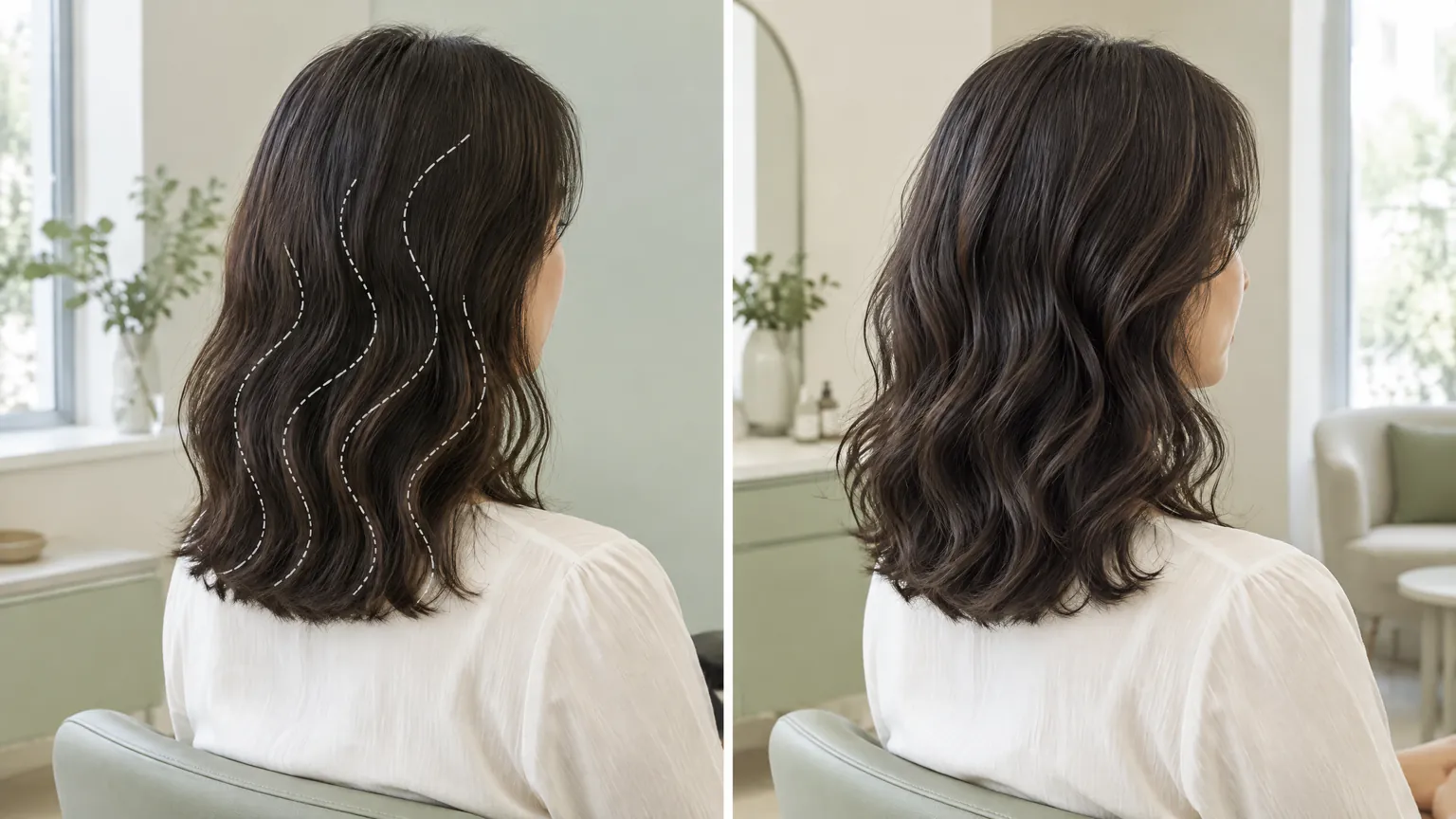
Plan a practical cut when workdays leave little styling time
This column offers salon and styling information and links to Vit So, a hair website under the same ownership. Hair services are provided by Vit So, not GotGear.
The short answer
A practical haircut starts with the morning you can actually manage, not the finish you admire in a photograph. Identify the hair you need to keep, the styling steps you will repeat and the point at which growth becomes inconvenient. Then confirm the washing, cutting and finishing scope against your available appointment window. If a child is coming too, discuss supervision and comfort separately: combining journeys does not automatically make the visit simpler.

Start with your hardest ordinary workday
When the day begins with opening a shop, handing over a shift or getting a child to school, hair has to fit around tasks that cannot move. A useful haircut brief describes that day rather than an unusually relaxed weekend. Explain whether you wash before work or the previous evening, how you dry your hair and what you do when the front will not sit where you want it.
Name the actual difficulty. Perhaps the fringe needs repeated brush work, the sides catch under spectacle arms, or the back is easy to tie while shorter front pieces escape. These observations give a consultation something concrete to address. Saying that you want easier hair leaves open whether you mean less daily styling, fewer trims or less rearranging during a shift.
Choose one priority and one boundary. You might want fewer adjustments around the face but need enough length for a comfortable tie. Alternatively, keeping the ears clear may matter more than preserving a ponytail. Describe the boundary before discussing an attractive shorter reference, because removing length can also remove a useful rushed-day option.
Separate essential steps from optional polish
Write down the steps you already repeat without difficulty. Gentle detangling and setting a parting might be realistic; shaping every section with a round brush might not. Do not agree to a design on the assumption that you will suddenly adopt tools you dislike. Ask how the proposed shape is intended to sit after your usual drying method, not only after a salon finish.
For a related design discussion, Vit So's guide to a haircut for a busy lifestyle considers natural movement, retained length and upkeep between trims. GotGear and Vit So share ownership; this is a related-site resource, not an independent salon endorsement. Use it to formulate your own constraints rather than to choose a supposedly effortless style.
Compare shapes by the tasks they leave you
Short hair is not automatically the least demanding option. A closely defined ear area or fringe gives you a visible point to maintain, while a longer outline may preserve the ability to tuck or gather the hair. The useful comparison is between the tasks you will keep doing, including return visits, rather than between photographs labelled short and long.
Bring a current photograph after your normal drying routine. A straightened reference can conceal waves or crown direction that reappear after washing. Point out which part of the reference you like: the end line, the ear coverage or the length near the face. Ask what would need adapting to your hair instead of requesting a complete visual copy.
| Direction to discuss | Practical benefit to assess | Trade-off to clarify |
|---|---|---|
| Retain enough length for a loose tie | A familiar fallback during work or exercise | Check whether the front and sides still reach the tie after cutting. |
| Shorten around the ears and neckline | Less hair resting against frames or a collar | Ask which growing area will first change the outline you want. |
| Keep natural waves with a revised shape | Avoid making daily straightening part of the brief | Establish the detangling and drying steps the shape still needs. |
| Retain overall length and tidy selected areas | Preserve a familiar routine while addressing one problem | Confirm which sections can change and which must remain untouched. |
The table is a consultation aid, not a prediction of results. Hair density, strand texture and the way you handle it all affect the routine. A shorter shape can still need directional styling; retaining length can still involve substantial detangling. Ask for an explanation of the proposed compromise in terms you can repeat at home.
The American Academy of Dermatology advises washing according to how dirty or oily the hair becomes, using conditioner after washing and handling wet hair gently. It also recommends limiting heat styling and using low or medium heat settings with heat protection.1 An easier routine should therefore not depend on rough drying or simply turning up the heat to rush out.
Define washing, cutting and finishing before booking
Decide whether the problem is excess length, the existing shape or the finish for one particular day. Washing and drying without cutting can refresh how hair is arranged, but it cannot remove a fringe that has grown past your preferred boundary. Conversely, if the cut remains comfortable, you may not need to change its structure just to prepare for a meeting.
The wash cut and blow dry page explains the combined service and distinguishes it from washing and drying alone. For an enquiry, specify whether you want a defined tidy-up or a change to the overall shape. Describe the length to retain and the finish you expect, then confirm the agreed work and total charge without treating additional styling as automatic.
A photograph can hide extra steps. Pinned sections, accessories or additional curling may be part of the appearance you like, even though your intended request is an everyday cut. Identify those details separately. If the appointment has to fit around work, adding them later can change the scope you originally discussed.
Tell the stylist about recent bleaching, colouring, perming or straightening, and about extensions or areas that tangle or appear fragile. This informs the discussion of handling and finishing; it does not establish a diagnosis. A shiny finish is not evidence that damage has been permanently repaired. Persistent scalp irritation, pain or sudden noticeable shedding should be assessed by a qualified healthcare professional rather than treated as a haircut problem.
Ask for a finish you can learn from
Explain whether you normally use a dryer with your fingers, a brush or no heated tool. Ask which part of the proposed finish demonstrates the cut and which relies on extra styling. You can enjoy a more polished salon finish while still needing clear instructions for an ordinary morning. Those are different aims, and both should be stated.
At the finish check, wear your usual glasses and look at the front as well as the back. Demonstrate your normal tuck or loose tie if those options matter. Confirm that you understand any suggested home steps before leaving; an unfamiliar product name alone does not explain how to manage the shape.
Build the appointment around a real departure deadline
For shift workers and small-shop staff, an appointment slot is only part of the scheduling problem. Include the journey, the time needed to leave work and any commitment afterwards. Tell the salon when you must depart, not simply that you are busy. Ask whether the proposed service can reasonably fit that constraint before confirming.
There is no useful universal duration for every haircut. Consultation, the extent of the change, washing, drying and finishing all need to be considered in the individual arrangement. A familiar trim and a substantial restyle should not be assumed to occupy the same window. If the available window is restrictive, discuss a simpler scope or another date rather than expecting essential steps to be rushed.
Keep uncertainty about your work rota visible. You can enquire about possible dates before the rota is final, but do not treat an unanswered enquiry as a reserved appointment. Once arrangements are agreed, keep the service description and departure constraint together so that any later change is easy to explain. If work coverage falls through, contact the salon instead of relying on a late arrival to fit unnoticed.
Plan around required headwear too. If your next task involves a helmet or uniform cap, do not compromise safety equipment to preserve a finish. Explain the headwear in advance and ask how to rearrange the hair afterwards. The goal is a usable workday appearance, not an untouched photograph of the moment you leave the chair.
Treat child accompaniment as a separate decision
Combining an adult haircut with a child's visit may reduce the number of journeys, but it also creates a supervision question. An adult having their hair washed cannot necessarily attend to a child in a waiting area. Before combining appointments, ask whether the proposed attendance arrangement is workable and who will remain responsible for the child throughout.
If the child is also receiving a cut, consult the kids haircut information with their exact age, the length to keep and any comfort concerns in mind. Confirm accompaniment, included service items and timing directly. A children's service listing does not by itself establish specialist seating, entertainment, sensory-trained staff or washing and finishing arrangements.
If the child is only accompanying you, say that clearly. Ask about bringing them and explain whether another adult will attend. Do not assume salon staff can supervise, that a pushchair will fit beside the chair or that two family services can happen simultaneously. Separate visits may be the more practical choice when one adult would otherwise have to manage competing responsibilities.
Aneurin Bevan University Health Board's occupational therapy guidance identifies tool sounds, product smells, scalp touch and loose cut hair as possible challenges for children with sensory difficulties. It suggests preparation, showing tools beforehand and telling the hairdresser about anxiety and helpful strategies.2 These are prompts for an individual conversation, not evidence that every salon can provide specialist support.
Ask before bringing a familiar toy or requesting headphones, a different cape or a particular seating position. The arrangement must allow safe access to the child's head. Agree on a simple way to request a pause, and alert the hairdresser before the child turns or moves. If the proposed visit cannot be managed comfortably and safely, reconsider the plan rather than treating completion as the only acceptable outcome.
A hypothetical work-and-school planning example
Hypothetical scenario: a retail supervisor has an evening shift and an earlier school collection. Their hair is long enough to tie, but the front needs repeated attention. Their child also needs the fringe tidied and dislikes buzzing sounds. Neither wants a major change of appearance.
The supervisor's adult brief would preserve the tying option, identify the front as the main concern and rule out daily straightener use. The enquiry would request washing, a clearly defined cut and a finish suited to that routine. It would state the work departure deadline and ask whether the proposed appointment fits, without assuming a standard duration.
The child's brief would give the exact age, describe the dry fringe boundary and mention the reaction to buzzing. The parent would ask what preparation and accompaniment can be accommodated, including whether the adult and child should attend separately. School collection remains a fixed commitment rather than spare time into which another service can automatically be inserted.
If combining the visits leaves nobody able to supervise the child during the adult service, the family could choose separate appointments or ask whether another accompanying adult is acceptable. This example illustrates a planning choice, not an actual booking, customer experience or promised result. Fewer journeys are helpful only if the arrangement remains workable.
Send one enquiry that can be answered clearly
A concise enquiry works best when it connects the desired change with practical limits. Avoid sending several style photographs without explaining which features matter. Use the following checklist to prepare the message and then keep the confirmed details somewhere the attending adult can access.
- Describe your usual washing and drying routine, and identify the area that takes unwanted attention.
- State the shortest acceptable length and demonstrate any tie-back or ear-tucking requirement.
- Name the tools and styling steps you are willing to use, including anything you want to avoid.
- Share current photographs and relevant processing history; explain the feature you like in a reference.
- Specify washing, cutting and the intended finish, then ask about extra work and the agreed total charge.
- Give possible dates and the time you must leave, allowing for your actual journey and work commitments.
- If a child is involved, distinguish a haircut from accompaniment and ask about supervision, comfort and included steps.
After the cut, try the agreed routine and observe one ordinary workday. Note whether the difficulty arises while drying, after sleeping or when gathering the hair. A photograph and a description of the steps used are more informative for a follow-up discussion than saying it looked different at home.
Base the next trim enquiry on the first area that becomes inconvenient and your real calendar. That might be the fringe, ear coverage or the loss of a preferred outline. You do not need to promise an identical interval forever. A practical cut is a negotiated set of length and routine choices that you can live with between appointments, not a guarantee that your hair will never need attention.
Common questions
Should I choose a shorter haircut if I cannot style before an early shift?
Not automatically. Decide whether your main difficulty is drying, directing the front or keeping hair out of the way. A shorter cut may remove your usual tying option and still require shaping. Bring photographs after your normal drying method and ask which length and outline fit the steps you are willing to repeat.
Can I book my own cut and my child's haircut as one quick visit?
Ask about the complete arrangement rather than assuming the services can overlap. Give the child's age, intended cut and support needs, and explain who will supervise during your washing or cutting. Confirm timing and accompaniment before travelling. Separate appointments may be more workable if you are the only attending adult.
What should I say when I have to leave for work at a fixed time?
Give the actual departure deadline and describe the requested work, including any restyle or extra finishing. Ask whether that scope fits the available window, then plan your onward journey separately. Do not rely on a generic haircut duration or assume a later addition can fit into the same appointment.
How can I avoid choosing a cut that only works with a salon blow dry?
Explain your usual tools and drying method before agreeing the shape. Ask which parts of the salon finish depend on brush shaping or additional styling, and request guidance for your ordinary routine. Preserve any useful tuck or tie-back option. After washing at home, describe specific differences before deciding that more cutting is needed.
Sources & what they support
The scope below identifies the information supported by each reference; a citation is not an endorsement of a salon or a guarantee of results.
- Tips for healthy hair — American Academy of Dermatology (opens in a new tab)
Supports washing according to dirt and oil, conditioning after washing, gentle handling of wet hair, limiting heat styling and using low or medium heat with heat protection. It does not establish a haircut result or appointment duration.
- Sensory Strategies for Hair Cuts — Aneurin Bevan University Health Board (opens in a new tab)
Supports recognising possible sensory challenges during children's haircuts, advance preparation, explaining anxiety and helpful strategies to the hairdresser, and showing tools beforehand. It does not establish specialist support at any Hong Kong salon.