Custom fitting is a separate decision from choosing a style
GotGear and OWNSTRAND share the same owner. This collection is not an independent recommendation. GotGear does not supply wigs or medical treatment; actual wig services are provided by OWNSTRAND, whose only known studio is in Kwun Tong. These articles provide general information, not medical advice.
The short answer
Choosing a wig style decides the appearance; fitting checks how the cap sits and behaves on your head. A preferred colour or haircut does not establish comfort, and a custom order still needs a completed-piece try-on. Start with samples and a written account of your daily needs, compare the adjustment scope of a ready-made option, then confirm what measurement, fitting and finishing mean for the specific piece. Custom should describe agreed work, not a promise of perfect precision.
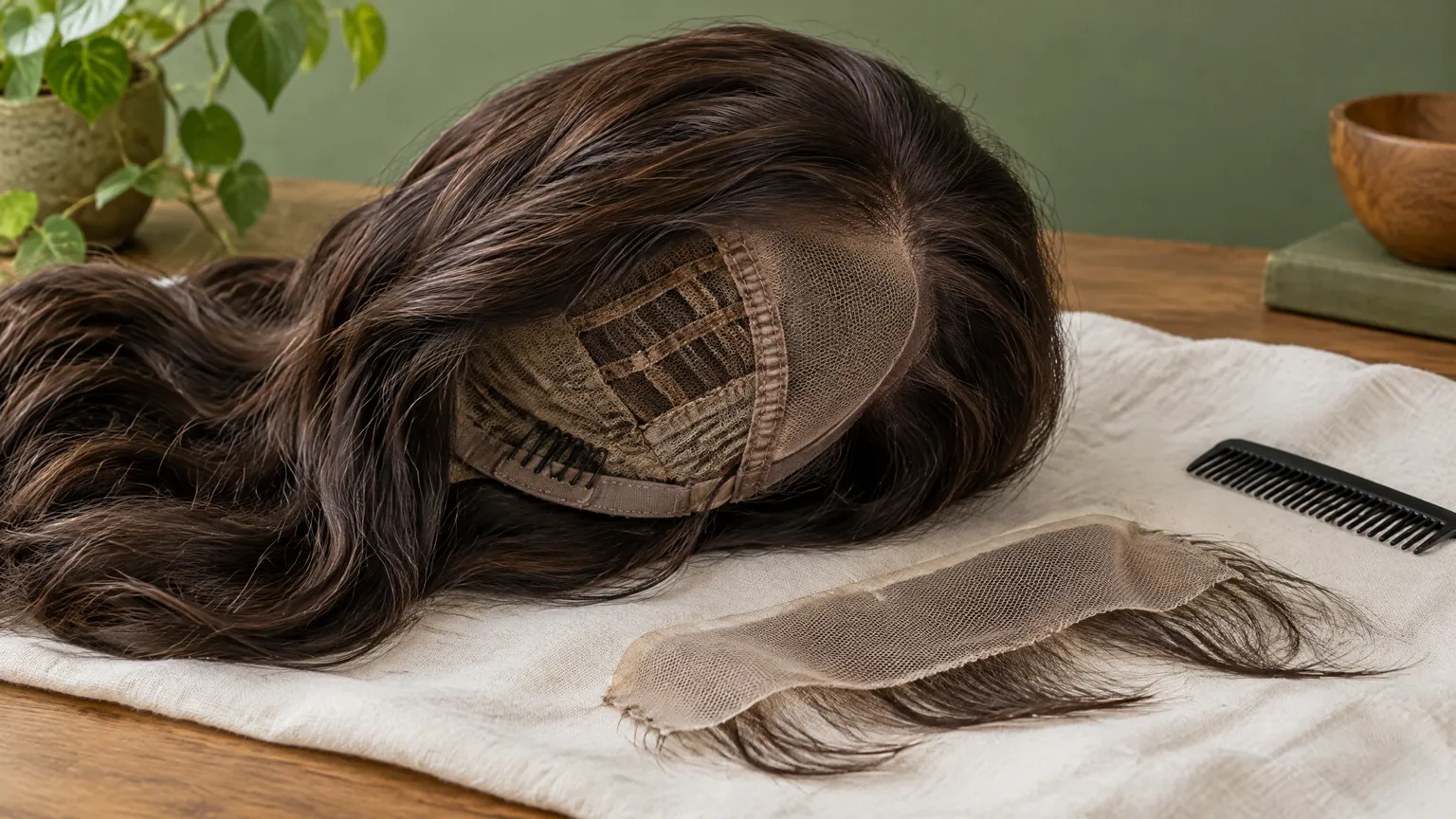
A photograph can help you choose a fringe, length or colour, but it cannot tell you whether a wig presses behind your ears or moves when you look down. Those are fitting questions. Keeping them separate makes a consultation more useful: you can like the appearance while asking for a fit change, or find a comfortable cap while deciding that its hair density is wrong for you.
Dana-Farber Cancer Institute's wig-selection guidance treats natural-looking appearance and a comfortable fit as separate requirements. It also describes ready-made wigs selected by style, colour and head size, noting that machine-made pieces can sometimes be altered for a near-custom fit.1 The practical implication is that neither a catalogue photograph nor the word custom should settle the whole decision.
Define the piece before discussing the hairstyle
Begin by naming what you need to wear. A full wig covers the head; a topper covers a particular area and must work with the surrounding hair. A men's hair system or toupee has its own base and attachment considerations. Do not assume that a consultation for one includes the fitting or installation methods used for another. This guide focuses on a full wig, with any other piece requiring its own scope confirmation.
Next, divide your requirements into appearance and wear. Appearance includes the parting, length, texture, colour and amount of visible hair. Wear includes how you arrange your existing hair underneath, whether you use a liner and how the cap behaves with glasses. These categories can influence each other, but they are not interchangeable. A longer style might cover an edge you dislike without changing how that edge feels against your skin.
Avoid using natural-looking as the only instruction. It could mean a familiar hairline, modest volume or a colour that blends with your eyebrows. Specify which matters to you. Likewise, comfortable needs a situation: comfortable while sitting at a desk, while wearing spectacles or while taking the piece on and off. That gives a fitter something concrete to discuss rather than an undefined expectation.
Compare ready-made and custom by the problem they solve
Ready-made describes a piece produced before your individual order; custom should identify which features are being made or changed for you. Neither term alone explains the material, construction or permitted alterations. Dana-Farber's observation that some machine-made wigs can be altered is a reason to ask about the actual cap rather than dismissing an entire category.1
| Decision point | Ready-made route: what to establish | Custom route: what to establish | Useful evidence before agreeing |
|---|---|---|---|
| Cap fit | Whether the sample sits acceptably and which adjustments are possible | Which measurements inform the base and how the completed fit is checked | Try-on observations and a written adjustment scope |
| Appearance | Whether the existing colour, density and parting suit you | Which visual features can be specified for this order | Identified samples and agreed reference views |
| Existing hair | How your normal hair arrangement fits beneath the cap | Which hair arrangement is assumed when measurements are taken | A recorded preparation method |
| Finishing | Whether any cutting or styling is included | What happens after construction and before acceptance | An agreed sequence for fitting and finishing |
| Daily care | Instructions for this particular piece | Instructions for the agreed hair and base combination | Written care guidance, not a material label alone |
For a Hong Kong reader comparing the two routes, OWNSTRAND's custom vs ready-made wigs guide is a place to check the brand's explanation against those questions. GotGear and OWNSTRAND share ownership, so this link is a service-information resource, not an independent endorsement. Use it to clarify the proposed work rather than treating the category name as proof of better fit.
If a ready-made sample meets your wear requirements and the necessary appearance changes are within its confirmed scope, custom construction may not solve an additional problem. Conversely, a sample that repeatedly fails an important requirement can help you explain why you are considering custom work. Ask what would change in the proposed piece and how that change will be assessed.
Use samples to separate colour, density and cap behaviour
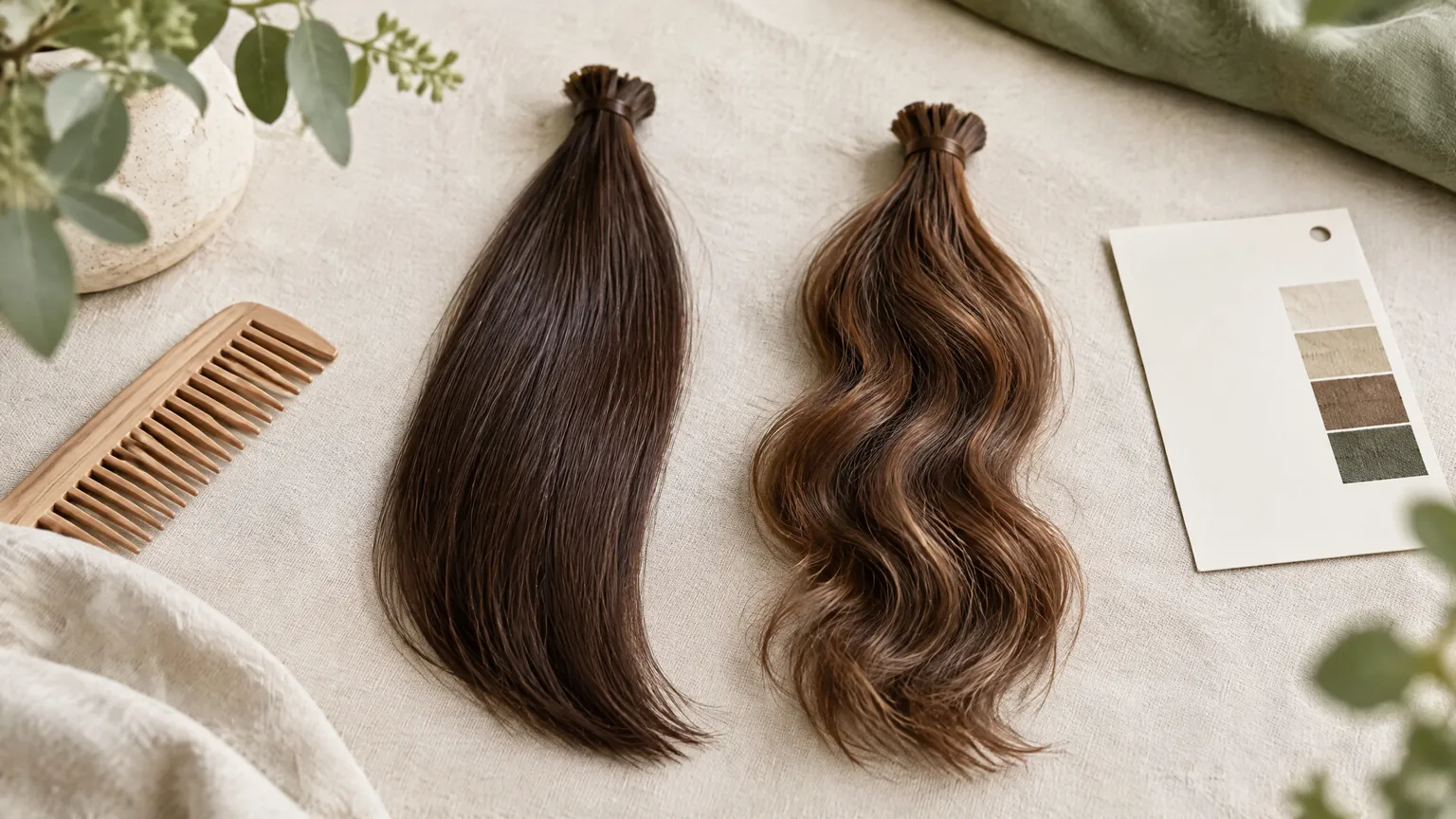
A sample is useful only when you know what it represents. It may demonstrate hair colour but not the final cap, or show a cap construction without matching your proposed density. Ask which characteristics transfer to your order. Do not infer that every displayed feature can be combined, or that the sample proves a particular piece is available.
Compare one visual feature at a time
Try to compare similar lengths when judging density, and similar densities when judging colour. Otherwise, you may choose the fuller sample because its shape is more appealing, then wrongly record that preference as a colour decision. Look at the front, side and back rather than relying on a single mirror angle. State whether the fringe should meet your glasses or leave your forehead visible.
For a grey blend, describe the areas where you want grey to appear and ask how the sample relates to the proposed proportion. A broad request such as some grey leaves room for different interpretations. Written notes should distinguish an overall blend from a particular concentration around the temples. Treat reference photographs as discussion aids, not exact reproduction promises.
Inspect the base as well as the hair
Ask to see the inside of the sample and identify the areas that contact your head. Discuss the position of the ear tabs, the rear edge and any adjustable parts. A soft-feeling sample in your hand does not establish how its edges will sit when worn. Keep your own observations separate from the fitter's proposed response: pressure behind the left ear is a clearer note than needs to be more comfortable.
Human hair is a material choice, not a fitting specification
Choosing human hair does not specify cap dimensions or confirm the suitability of an attachment method. Nor does hand-tied tell you which measurements will be used. Record material and construction separately so that an attractive hair sample does not distract from an unanswered fit question. Ask about the exact combination being proposed rather than assigning every feature of a display piece to your order.
OWNSTRAND's custom human hair wig Hong Kong service description provides a starting point for questions about samples, head measurements, hairstyle and grey proportion. Ask which of these decisions will be recorded for your piece and what still requires confirmation. A human hair order should be understood through its agreed specifications, not through an assumption that the material guarantees comfort.
Maintenance is another separate decision. Macmillan Cancer Support explains that human hair wigs may need regular cleaning and styling by a professional, while synthetic wigs commonly retain a set style. It advises following the instructions supplied with the wig.2 Consider how you will manage drying and restyling, not just how the sample looks at the consultation. Do not assume that human hair permits any colouring, chemical treatment or heated tool; obtain guidance for the particular piece.
Write a short brief that can survive the handover
A useful brief is short enough to check together. It should distinguish requirements from preferences and unanswered questions. Someone who wears glasses daily might make room around the ears a requirement, while placing a slightly longer fringe under preferences. This avoids treating every requested detail as equally important when a sample reveals a trade-off.
Use the following checklist before agreeing to the proposed work:
- Identify the piece type and the areas it is intended to cover.
- Record the sample references, noting whether each represents hair, colour, density or cap construction.
- Describe the normal arrangement of existing hair and any liner used during measurement or trial.
- Write down the priority appearance features, including parting and grey distribution where relevant.
- Note specific wear concerns, such as an edge touching the ear or movement when looking down.
- Ask which adjustments and finishing steps are included, and which need separate confirmation.
- Agree how unresolved points will be recorded and who will explain care instructions.
Keep photographs optional and purposeful. A side view may help explain the desired outline, but an order should still have written specifications if you prefer not to be photographed. You do not need to explain private reasons for choosing a wig to describe the shape, coverage or wear conditions you need. If images are proposed, ask how they will be used and whether they are necessary for that particular step.
Treat the completed-piece fitting as its own decision
Measurements provide information for making or selecting a cap; they are not the completed try-on. Macmillan notes that having a human hair wig made can involve more than one fitting.2 That supports a process-based expectation, not a promise about the number of appointments a Hong Kong provider will include. Ask how the proposed fitting sequence works before committing.
For the completed-piece stage, the custom wig fitting Hong Kong description is a resource for asking OWNSTRAND what the try-on and adjustment cover. Clarify the order of fit checks and any wash, cut or blow-dry finishing, and ask what happens if a concern remains. Do not infer that a fitting appointment includes unrestricted alterations or that every issue can be resolved by tightening the cap.
Repeat ordinary movements, not a theatrical test
Prepare your hair as agreed and wear the glasses you normally use. Sit, look down as you would at a phone and turn your head gently. Observe whether an edge catches or the piece shifts. Macmillan includes gentle movement among its suggestions for checking security.2 There is no need to prove stability through vigorous pulling or an unfamiliar activity that does not represent your day.
Check cap position before judging the haircut. If the piece is sitting differently from the agreed position, the fringe and side lengths may appear wrong for that reason. Ask the fitter to distinguish a positioning issue from a cutting decision before a permanent change is made. After any agreed adjustment, repeat the relevant observation and record what still needs attention.
A hypothetical office-day choice
Suppose a Hong Kong office worker wears spectacles, keeps some hair underneath the cap and wants a restrained side-parted style. This is a hypothetical example, not a customer account. They like a full-looking sample, but notice that its ear area meets the arms of their glasses. A second, less dense sample feels easier to wear. The decision is not simply to order the first style as custom.
They could ask whether the second sample's appearance can be modified within the confirmed finishing scope. They could also ask what a custom base would change about the ear area, while keeping the preferred density as a separate specification. Either route needs a clear answer. If the proposed custom work changes only the hairstyle, it has not yet addressed their stated fit concern.
At the completed try-on, they would repeat the same hair preparation and glasses check. A good photograph alone would not close the fitting question. Equally, a comfortable cap would not settle whether the hair is fuller than agreed. Recording those two outcomes separately makes any further discussion more precise without implying that either route must deliver a perfect result.
Make acceptance specific, and leave room for real changes
Before agreeing that the work is complete, compare the piece with the recorded requirements. Ask about the process for raising a remaining concern and distinguish current fitting adjustments from future maintenance. Do not assume a later change in hair arrangement, liner or desired hairstyle is covered by the original fitting scope. Keep the supplied care instructions with the order details so you can refer to both.
Existing hair can also change the space beneath a cap. Macmillan notes that a wig selected before treatment-related hair loss may feel tight initially and require a smaller fit as hair is lost.2 The broader fitting question is what conditions the measurements assume. If your hair underneath changes, ask whether the fit needs reassessment instead of relying on the original measurement indefinitely.
Comfort checks are not medical assessments. Persistent irritation or pain, or sudden marked hair loss, should be assessed by a qualified healthcare professional rather than explained away as a styling problem. During medical treatment, ask your clinical team about specific wearing or attachment restrictions. A fitting conversation can address appearance and ordinary wear, but it should not promise treatment, regrowth or permanent scalp improvement.
The most useful outcome is a defined piece with a defined fitting process. Choose the appearance you want, test the wearing conditions you actually have, and keep both decisions visible in the written record. That gives ready-made and custom options a fair comparison without asking the word custom to do more than the agreed work.
Common questions
Does liking a sample mean its cap will suit me?
No. First establish whether the sample represents the final cap or only a hair feature such as colour or density. Try it with your normal hair preparation and glasses, then record fit observations separately from appearance preferences. An attractive sample is useful evidence for a style discussion, but it does not establish the completed piece's fit.
Should I rule out ready-made if I want an individual fit?
Not automatically. Some ready-made caps allow adjustment or alteration, but the scope varies by piece. Ask what the sample can accommodate and whether the proposed changes address your actual concern. Consider custom work when you can identify a requirement that the available ready-made option cannot meet, rather than because custom sounds more precise.
What should I confirm before the completed-piece fitting?
Confirm how to prepare your existing hair, whether to bring a liner and glasses, and which fit checks and finishing steps are included. Ask how remaining concerns will be recorded and handled. Keep the appearance specifications available too, so a cap adjustment is not confused with a change in fringe length, density or parting.
Sources & what they support
The scope below identifies what each reference supports. Citations do not imply independent endorsement of OWNSTRAND or any provider, and do not establish treatment benefits or guaranteed results.
- How to Choose a Wig — Dana-Farber Cancer Institute (opens in a new tab)
Separates natural-looking appearance from comfort and fit; describes ready-made selection by hairstyle, colour and head size, and the possibility of altering machine-made wigs for a near-custom fit. Used for general appearance-selection principles, not endorsement of a Hong Kong service.
- Wigs for cancer treatment — Macmillan Cancer Support (opens in a new tab)
Supports following piece-specific care instructions, differences in common human hair and synthetic maintenance needs, the possibility of multiple fittings, gentle movement checks and changes in cap fit as existing hair is lost. Treatment-related guidance is identified in context and is not presented as a local service guarantee.