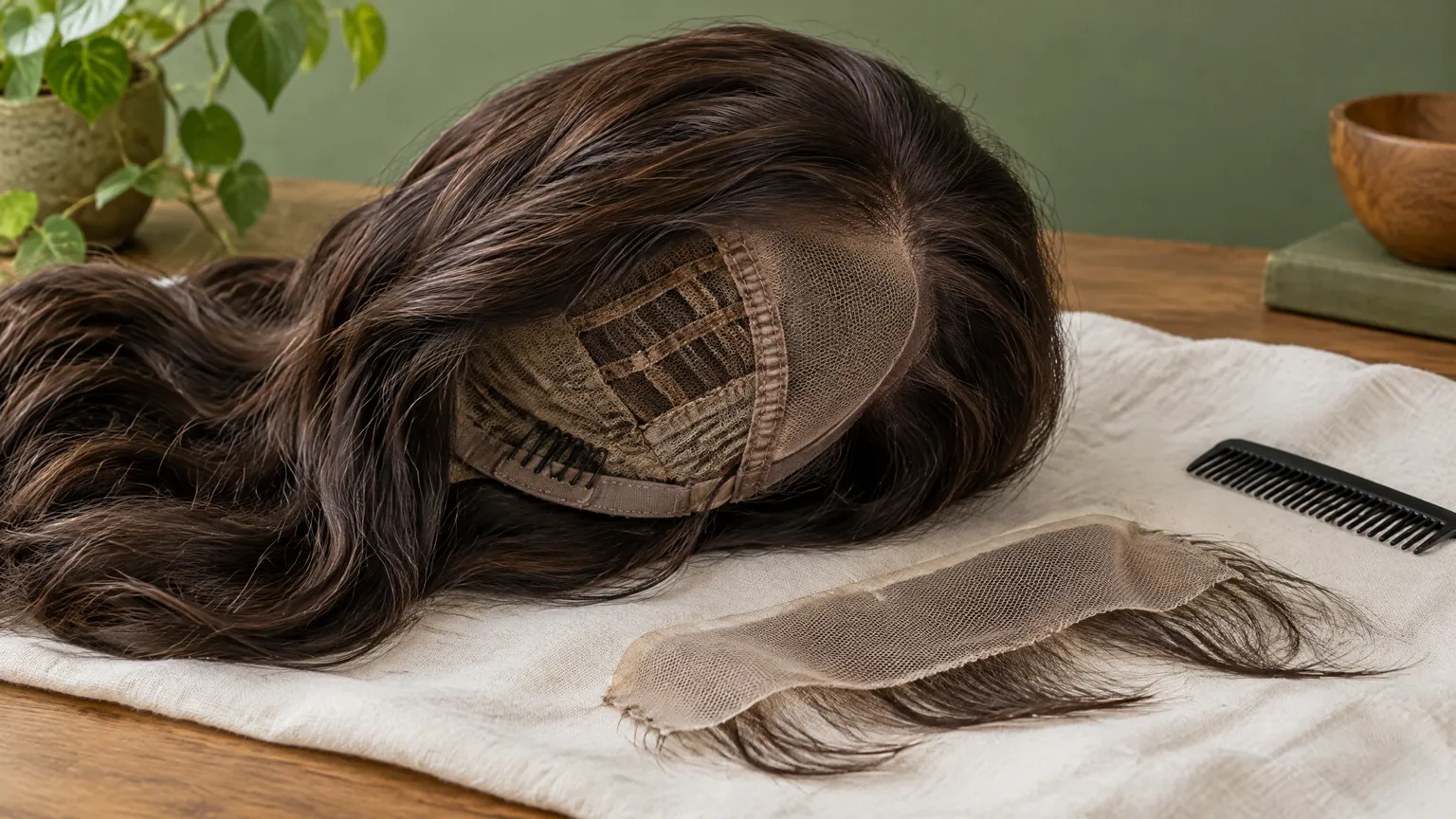
A custom human-hair brief: what a quotation should describe
GotGear and OWNSTRAND share the same owner. This collection is not an independent recommendation. GotGear does not supply wigs or medical treatment; actual wig services are provided by OWNSTRAND, whose only known studio is in Kwun Tong. These articles provide general information, not medical advice.
The short answer
A useful custom human-hair wig quotation should describe the piece being made, the agreed appearance, the fitting method and the work included after manufacture. It should also identify unresolved choices, exclusions and how changes will be approved. Start with coverage and daily wearing habits rather than a hairstyle photograph alone. A written brief lets you compare equivalent scopes, ask precise questions and recognise where an appealing sample differs from the finished piece you are discussing.

A photograph can show a hairstyle, but it cannot specify everything needed to make a wearable piece. It rarely reveals how the cap fits, how the hair is secured, what happens after washing or which finishing appointments are included. A quotation that says only ‘custom human hair’ leaves those practical decisions open.
The aim is not to produce a technical drawing yourself. It is to give the supplier enough information to explain the proposed construction and to record the choices you agree. Keep three things distinct throughout: what you want, what has been confirmed and what still needs checking. An unanswered question should remain visible rather than quietly becoming an assumption.
Define the piece before choosing the haircut
First establish whether the enquiry concerns a full wig or a smaller hairpiece. The American Cancer Society distinguishes a full wig, which covers the entire head, from a topper, which adds coverage and volume over thinning hair at the top. These are different starting points, not interchangeable names for the same product. Its guidance also notes that no single wig type or style is inherently better than another. 1
For a full wig, describe the overall silhouette and which edges you expect to show. For a partial piece, explain the area you want covered and how the visible hair should meet your existing hair. Ask the supplier to confirm whether the proposed product suits that coverage requirement before discussing a detailed cut. A request for fullness at the crown does not, by itself, establish that a topper is appropriate.
When reviewing custom human hair wig Hong Kong, use the service description as a starting point for questions about samples, measurement and finishing. Ask which parts of your proposed brief can be accommodated and which require further assessment. GotGear and OWNSTRAND share an owner; this link is a service-information resource, not an independent recommendation or evidence that every construction discussed here is offered.
Write a short purpose statement near the top of the brief. ‘For regular office wear, with glasses and a side part’ gives a supplier more usable information than ‘natural and premium’. Add what you do not want, such as a fringe covering the eyebrows or excessive volume around the temples. These preferences help explain the goal without prescribing a construction you have not examined.
Turn appearance preferences into checkable details
Hairline, parting and density
Separate the cut from the placement of hair. A shoulder-length style can have different partings, front shapes and amounts of fullness. Identify your usual parting and whether you expect to change it. If you tuck hair behind your ears, say so; if you normally keep the front hairline covered, record that instead. Ask what the proposed base allows rather than assuming any hairstyle can be reproduced.
The American Cancer Society describes lace-front, full-lace, monofilament and hand-tied constructions as distinct categories. 1 A label therefore needs a location and an explanation: which area has that construction, and what does it mean for your intended parting or visible hairline? Do not treat unfamiliar material names as synonyms. Ask to see the relevant sample and have the agreed description written down.
Density should be discussed in terms of where fullness is wanted, not simply ‘thick’ or ‘thin’. You might want modest volume at the front but a fuller outline towards the ends. Macmillan suggests matching your existing volume, or slightly less, when the aim is continuity with your current appearance. 2 That is a useful conversation starter, not a rule that everybody must follow.
Colour, grey distribution and texture
A colour name is not a complete colour specification. Ask to identify an agreed sample, then record whether the roots, lengths and ends should look uniform or varied. If grey hair is part of the design, describe its distribution: concentrated at the temples, scattered throughout or more visible near the front. A stated proportion alone does not explain where the grey should appear.
For matching, the American Cancer Society recommends comparing hair and wig swatches in natural light. 1 Photographs remain useful references, but lighting and camera settings can change their appearance. Note which physical sample or agreed reference takes priority if an image appears different. You need not surrender personal photographs that are unrelated to the proposed look.
Also distinguish the supplied texture from the final styled finish. ‘Soft waves when collected’ does not answer whether those waves need recreating after washing. Ask how the actual hair has been processed and what styling is permitted. Human hair does not automatically mean untreated hair: Macmillan notes that human-hair wigs may contain different hair types that have been bleached and dyed. 2
Record the fitting conditions, not just a size label
The American Cancer Society’s sizing guidance considers circumference, front-to-back and side-to-side measurements, and cautions that size charts can vary between brands. 1 For a custom enquiry, let the supplier explain its own measurement method. Record who will take the measurements and how your existing hair will be arranged. A measurement taken over bulky hair may describe a different wearing condition from one taken with the hair flattened.
Bring up ordinary contact points. Glasses, hearing devices, a usual head covering or a preferred liner may matter to the fitting discussion. Ask whether they should be present during assessment and trial fitting. Do not assume an accessory will work simply because the hairstyle looks suitable in a photograph.
The brief should identify the proposed securing method and what it relies on. If clips are discussed, ask where they sit and what hair they attach to. If adhesive is proposed, ask about application, removal and compatibility rather than treating it as an automatic inclusion. Macmillan advises people with treatment-related skin sensitivity to check suitable tape and removal methods with their doctor or nurse. 2 A supplier’s fitting explanation is not a substitute for that advice.
The following comparison helps turn broad requests into questions that can be answered before acceptance. The clearer wording is an enquiry, not a claim that the option is available.
| Vague wording | More useful wording for the brief | What needs confirmation |
|---|---|---|
| Custom fit | Measurement with my usual hair arrangement | Measurement method and proposed adjustment range |
| Natural front | Front hairline visible with hair swept aside | Construction and realistic styling limits |
| Some grey | Grey more noticeable at the temples than the crown | Agreed sample and distribution |
| Easy care | A routine I can carry out without daily heat styling | Actual washing, drying and restyling needs |
| Finished style | Side part with ends resting around the shoulders | Length before and after the agreed cut |
| Adjustments included | State which fitting and finishing changes are included | Scope, conditions and approval process |
Separate manufacture from fitting and finishing
A completed piece and a finished wearing experience are not necessarily the same scope. Ask the quotation to distinguish making the base, adding the agreed hair, preparing the piece for fitting and carrying out the final cut. If washing and styling are discussed, ask whether they refer to the initial finish, instruction for home care or subsequent maintenance. These should not be bundled under an unexplained word such as ‘service’.
The custom human hair wig price Hong Kong page can be used as a scope-checking resource when preparing an enquiry. Request written confirmation of what the proposed quotation covers, what is separate and what remains conditional on sample review or fitting. This article does not provide a tariff: its purpose is to help you recognise whether two descriptions concern equivalent work.
Ask what ‘custom’ means in that particular proposal. Is the base made to the recorded measurements, is an existing base adapted, or are the custom choices mainly hair colour and haircut? None of these descriptions should be inferred from the word alone. Request a plain explanation of the actual process and any constraints that affect your priorities.
Accessories need their own clarification. A stand, liner, securing product or care product mentioned during a discussion is not necessarily part of the order. Ask which items, if any, are included, which are optional and which you are expected to obtain separately. Do the same for a care demonstration and written instructions. Comparing scope is easier when the quotation names deliverables rather than relying on a broad package label.
Agree how revisions will be handled
Separate adjustments for fit from changes in taste. Repositioning an agreed fitting feature is a different request from changing the chosen parting, adding grey or deciding on a shorter fringe. Ask which changes can be assessed during a fitting and which affect work already approved. The answer should be specific to the proposed piece.
Before cutting, confirm the intended finished length and shape. A reference photograph may show hair curled under, while your request may concern its length when straight. Mark where the ends should sit and discuss the fringe separately. It is sensible to ask whether the supplier can review the outline with you before removing more length; do not assume that a later visit can reverse a completed cut.
The written terms should explain what happens if the piece differs from an agreed specification and how a preference change is handled. Ask about alteration, cancellation and return conditions before approving manufacture. The American Cancer Society recommends checking return and exchange policies before buying a wig because retailer policies differ. 1 For a custom proposal, request the applicable terms rather than borrowing the policy of a ready-made product.
Keep unresolved decisions clearly marked. If the base construction awaits a sample review, the document should say so. If a later decision changes the scope, ask for an updated version and confirm which earlier description it replaces. A verbal conversation can move quickly; a dated revision helps prevent both sides from working from different instructions.
Include the care workload in the brief
Human-hair wigs need more maintenance than synthetic options, according to the American Cancer Society. 1 Macmillan also notes that they may require regular cleaning and professional styling, although some can be cared for at home with suitable equipment and supplier advice. 2 The relevant question is not merely whether the piece can be styled, but whether its routine fits your daily life.
Describe your realistic habits. If you want to avoid frequent heat styling, explain that before choosing a finish that depends on it. If you have limited drying space, ask how the piece should be dried and stored. Someone comfortable maintaining waves may accept a different routine from someone who wants a straightforward morning preparation. Neither preference establishes which product will work without further discussion.
Request instructions for the actual hair and base supplied. These should cover washing products, handling, drying, storage and any restrictions on heat or colour changes. Do not use another wig’s care sheet as a substitute. Both organisations advise caution around heat, and the American Cancer Society says not to use heated styling tools unless the wig is heat resistant. 1
Ask what signs should prompt a maintenance enquiry and which work the supplier can assess afterwards. Avoid relying on an assumed lifespan or a promise that human hair will always behave like hair growing from the scalp. The useful deliverable is a care routine you understand, with a clear route for asking about the piece if its fit or handling changes.
Bring a focused consultation checklist
Before making an enquiry through custom wig consultation Hong Kong, prepare a brief that leaves room for the supplier’s assessment. Ask about the consultation arrangements and what to bring; do not assume walk-in access, a particular reception language or completion by a personal deadline. The consultation should clarify feasibility, not turn every initial preference into a promised result.
Use this checklist to keep the conversation actionable:
- State whether you are enquiring about full-head coverage or a partial piece, and ask the supplier to confirm the product category.
- Bring a small selection of hairstyle references and explain the detail you like in each.
- Describe your parting, visible hairline, usual glasses and everyday wearing habits.
- Ask to record the agreed colour sample, grey distribution and intended finished length.
- Confirm the measurement conditions, proposed base and securing method.
- Request separate descriptions of manufacture, fitting, cutting, initial styling and care instruction.
- Ask which decisions remain open, how revisions are approved and which terms apply before committing.
You do not need an extensive personal history to explain an appearance preference. Keep the discussion centred on fit, visible coverage and practical restrictions. If a health-related wearing restriction applies, seek guidance from a qualified healthcare professional rather than asking the quotation to resolve it.
A hypothetical brief for regular office wear
Consider this hypothetical situation: an office worker wants a full wig with a familiar side part and a modest amount of grey near the temples. They wear glasses and prefer not to recreate curls each morning. This is an illustrative enquiry, not a customer account or a claim about an available product.
Their opening brief could say: ‘I want full-head coverage for regular office wear. I prefer restrained fullness at the front, with more visible grey at the temples than elsewhere. I usually wear glasses and keep the side part in one position. Please assess a finish that does not depend on daily curling.’
That description is useful but still provisional. During sample review, they would ask how the proposed front looks with hair moved aside, how the ear area sits with glasses and what remains after washing. The supplier would need to explain the actual construction and achievable finish. The reader should not approve a waved display sample as evidence of a low-styling routine without that conversation.
The resulting scope would identify the confirmed hair sample, grey placement, measurement arrangement and cut. It would also state what fitting and finishing work is included and how an alteration request will be assessed. If the routine does not match the worker’s preference, the sensible outcome is to revise the proposed style before approval, not to rely on an undocumented expectation that care will be effortless.
Keep one clear record of what was agreed
Retain the quotation, accepted specification, revisions, receipts and relevant correspondence together. Hong Kong’s Consumer Council lists contracts, receipts and exchanges with traders among the documents useful when lodging a complaint. 3 Keeping these records is practical preparation, not a prediction that a dispute will occur or a guarantee of a particular remedy.
Before accepting, read the document without the sample or the salesperson beside you. Can you tell what is being made, how it should look, how fitting and finishing are handled, and what remains unresolved? If a significant answer depends on remembering a conversation, ask for it to be added. A good brief does not promise a perfect outcome; it makes the proposed work understandable enough for an informed decision.

Common questions
Is a hairstyle photograph enough for a custom quotation?
No. It can illustrate the silhouette, but it does not establish coverage, base construction, measurements, securing method or care needs. Explain which details you want to reproduce and ask the supplier to identify an agreed sample and written specification. Keep differences between the photograph and the proposed piece explicit.
How should grey hair be described in the brief?
Record both the agreed sample and where grey should appear. A proportion alone may not distinguish scattered grey from a concentration at the temples or front. Ask how the distribution will be represented, and confirm which reference takes priority if photographs look different under different lighting.
What should I clarify before approving the final cut?
Confirm the intended finished length, fringe shape and whether the reference shows straight or styled hair. Ask which fitting adjustments and finishing changes are included, and how a later preference change would be handled. Keep approval of the haircut distinct from approval of the cap fit and hair colour.
Sources & what they support
The scope below identifies what each reference supports. Citations do not imply independent endorsement of OWNSTRAND or any provider, and do not establish treatment benefits or guaranteed results.
- American Cancer Society: Wigs for Hair Loss (opens in a new tab)
Distinguishes full wigs and toppers; describes construction categories, measurement dimensions and brand sizing variation; recommends natural-light colour comparison, checking return policies and observing heat restrictions; notes greater maintenance requirements for human-hair wigs.
- Macmillan Cancer Support: Wigs for cancer treatment (opens in a new tab)
Explains that human-hair wigs may combine processed hair types and may need professional cleaning or styling; supports supplier-specific care advice, continuity-of-volume discussion and seeking clinical advice about tape for treatment-sensitive skin. UK funding, numeric prices and production times are not applied to Hong Kong.
- Hong Kong Consumer Council: Complaints and services FAQ (opens in a new tab)
Lists contracts, receipts and trader correspondence as relevant documents supporting a consumer complaint; supports the practical recommendation to retain transaction and approval records without asserting a guaranteed remedy.