Coordinate New Year Plant Gifts Across Several Workplace Reception Points
GotGear and YumYum (including its gifting, baking and florist branches) share an owner; this collection is not an independent recommendation. GotGear does not provide catering, gifting, cake, floral, tuition or rental services. External-service information is separate from GotGear’s equipment catalogue; confirm the actual scope with the relevant provider. Articles are general planning information, with no promises about supply, arrangements or outcomes. Concept photos are not records of real events, customers or classes.
The short answer
Coordinate New Year plant gifts with one shared sheet that identifies each receiving point, its responsible contact, the agreed plant allocation and the person taking over after reception. Confirm every destination with the provider and building management separately. A district page is a starting point for an enquiry, not proof of coverage, a florist branch address or permission to leave a plant at a lobby.
Coordinate New Year plant gifts with one shared sheet that identifies each receiving point, its responsible contact, the agreed plant allocation and the person taking over after reception. Confirm every destination with the provider and building management separately. A district page is a starting point for an enquiry, not proof of coverage, a florist branch address or permission to leave a plant at a lobby.
GotGear and YumYum share an owner. This journal explains planning decisions, rather than independently endorsing a provider; GotGear does not provide food, floral, gift, class or rental services. The workplace situations below are hypothetical examples, not accounts of completed customer orders.
Define the receiving points before choosing the plants
Start with the actual handover locations, not a list of districts. A company might have an office reception in Causeway Bay, a separate retail counter in the same district and an administrative office in Yuen Long. Those are three receiving points, even if head office considers them part of one New Year programme. Each needs its own row because the available space, access permission and responsible colleague may differ.
Give each point a short internal code and a plain description, such as “office floor reception” or “shop staff counter”. Record the full company or trading name used at that site, the building and unit details, and the entrance that management says deliveries should use. Where the signboard uses another language, retain that wording in the operational address record. Do not replace the address with a shopping centre name or an approximate map location.
Next, decide what receiving means. A guardhouse accepting a carton, a receptionist counting plants and a colleague placing them in the final display area are different stages. Your sheet should name the agreed boundary of the provider's handover and identify who handles the next movement. Otherwise, head office may mark a branch complete while its plants are still waiting downstairs.

Allocate a plant specification to each point
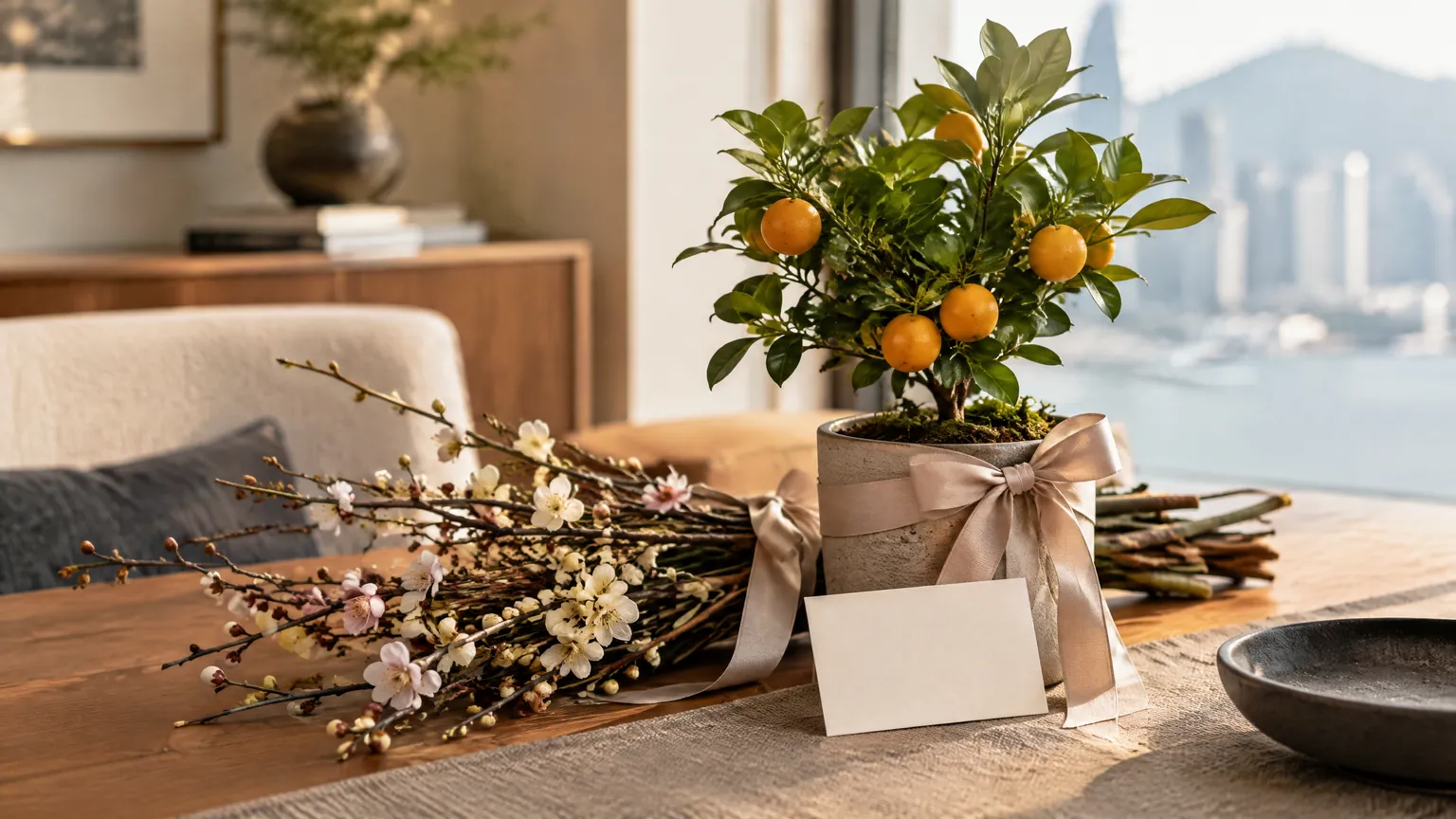
For seasonal citrus, describe the requested plant identity, overall height, branch spread and planter footprint as separate details. Ask whether stated dimensions include the container or decorations. A narrow pot does not necessarily mean a narrow canopy. A reference photograph is useful for discussing presentation, but it cannot establish the dimensions of the actual plant allocated to your workplace.
The same-owner journal resource on bulk kumquat plant orders describes an enquiry built around quantities, designs, destinations and dates. Use it to prepare the questions rather than infer a ready-made multi-branch package. Confirm the actual citrus type and planter for each selection, whether the requested quantities can be supplied, and which additional display or on-site tasks are included in the agreed scope.
Uniform appearance does not require every branch to receive an identical size. A wide entrance may accommodate a floor-standing plant while a small staff reception needs a more compact form. Agree which features should remain consistent, such as planter colour or restrained ribbon, and which may vary with the site. Record who can approve a proposed alternative; a receiving colleague should not have to make a design decision without that authority.
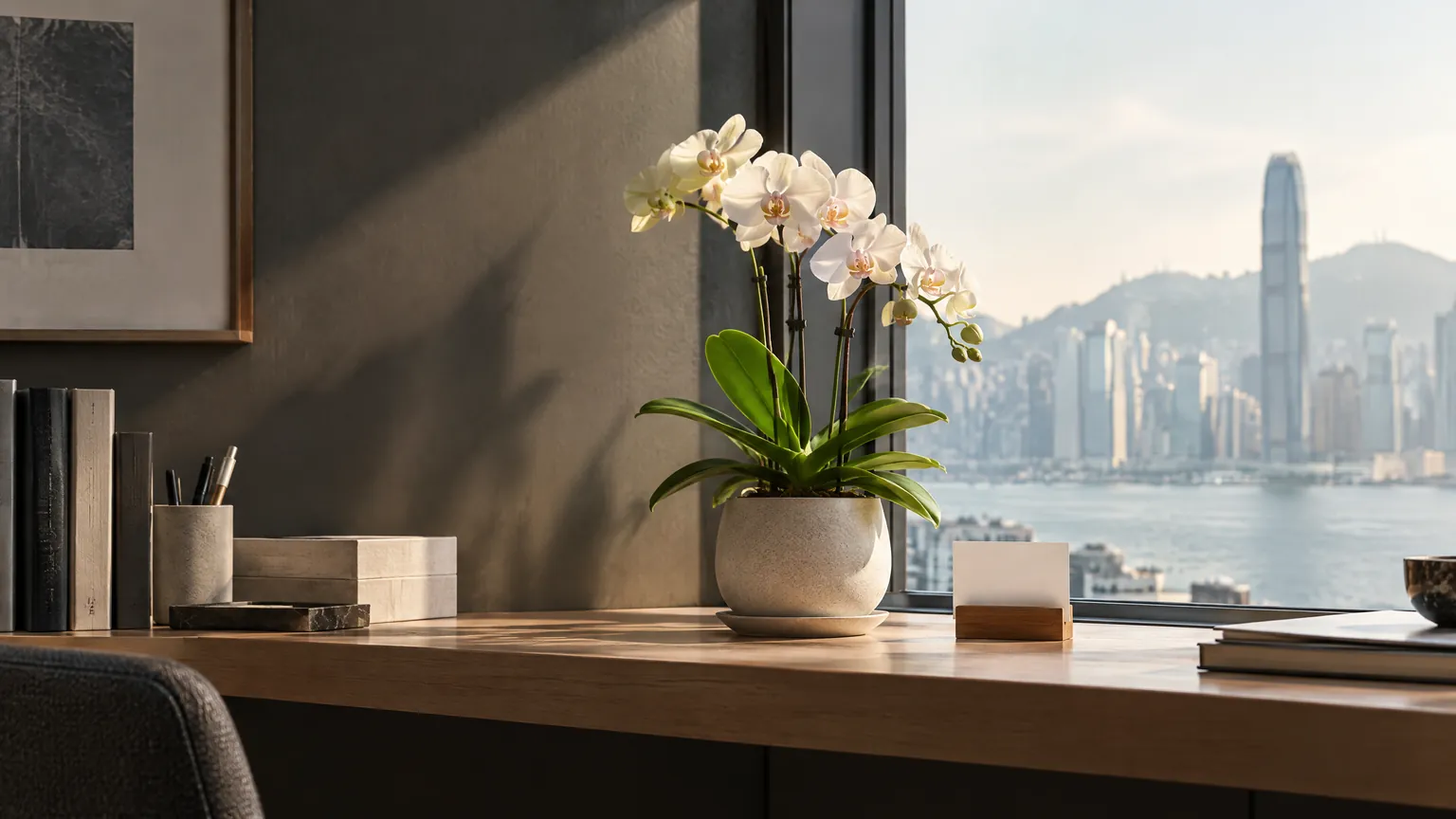
An orchid may be considered instead where a team prefers that form, but do not assume any flowering plant suits a windowless reception. Ask about the requirements of the specific plant before changing the selection. The RHS notes that citrus needs plenty of light and that long-term houseplant conditions can be unsuitable.1 A festive choice should therefore include a realistic destination after the reception display, not just a pleasing arrival-day appearance.
Build a contact sheet that survives a staff change
Each row needs a primary receiving contact, a backup and an internal coordinator who can authorise changes. Prefer a work contact channel where possible, and keep the detailed sheet limited to colleagues who need it. The external provider needs enough information to identify and reach the receiving point, not unrelated staff schedules or an entire company directory.
Write the receiving window as a request until the site and provider have both agreed it. Also record the last time at which a colleague can move the plants from reception to their intended position. A reception desk may remain staffed while the office team has already left, so acceptance at the desk does not automatically resolve care or placement before a holiday closure.
Keep the latest approved revision in one place. If a branch contact changes, update that row and tell the parties relying on it; do not circulate another unlabelled attachment. Useful status wording is “requested”, “confirmed”, “received at handover point” and “placed with care owner”. These labels describe your internal coordination record, not a tracking system that the provider is assumed to operate.
Use district details without inventing district rules
Causeway Bay: separate the office desk from the retail counter
Imagine a Causeway Bay company whose office and shop occupy different parts of one complex. The office receptionist can accept deliveries for the company floor, but shop staff cannot leave the sales counter to collect a heavy pot. The planner should ask management which entrance applies to each destination and whether a colleague needs to meet the delivery at a designated point. A shared district name does not make their arrangements interchangeable.
The Causeway Bay flower delivery page is relevant to an enquiry about venue details and arrangement scale. It does not establish a local florist premises or confirmed access to your building. Provide the precise shop or office destination and seek confirmation for that request, rather than adopting another venue's loading arrangements or assuming a quieter period will be available.
For the office, the sheet might identify reception as the agreed handover point and an office administrator as the person responsible for final placement. For the shop, it might name a staff counter only after management approves that arrangement. If one point cannot accept the proposed plant form, resolve its specification separately rather than delaying every other branch while someone decides what “small enough” means.
Yuen Long: confirm the last part of the handover
For a hypothetical Yuen Long administrative office, the main gate and office door may be different destinations. Record the full address first, then add an entrance description or a map pin where it helps the provider assess the request. Ask who can authorise entry, whether the receiver must meet at the gate and who can carry or otherwise move the plant onwards safely. Do not assume that a map pin establishes vehicle access.
The direct answer on flower delivery Yuen Long asks readers to check current availability and conditions. Treat that qualification as the starting point: obtain confirmation for the exact workplace address and handover point. The district label alone cannot settle access to a particular office, a gate-to-door transfer or the suitability of a large planter.
If the main contact works between sites, the backup must be someone who can actually attend this receiving point. A colleague in head office may coordinate calls but cannot necessarily open the gate or inspect the plant. Separate the decision-maker from the physical receiver so each knows which problem they are expected to resolve.
Check the display area and the holding area
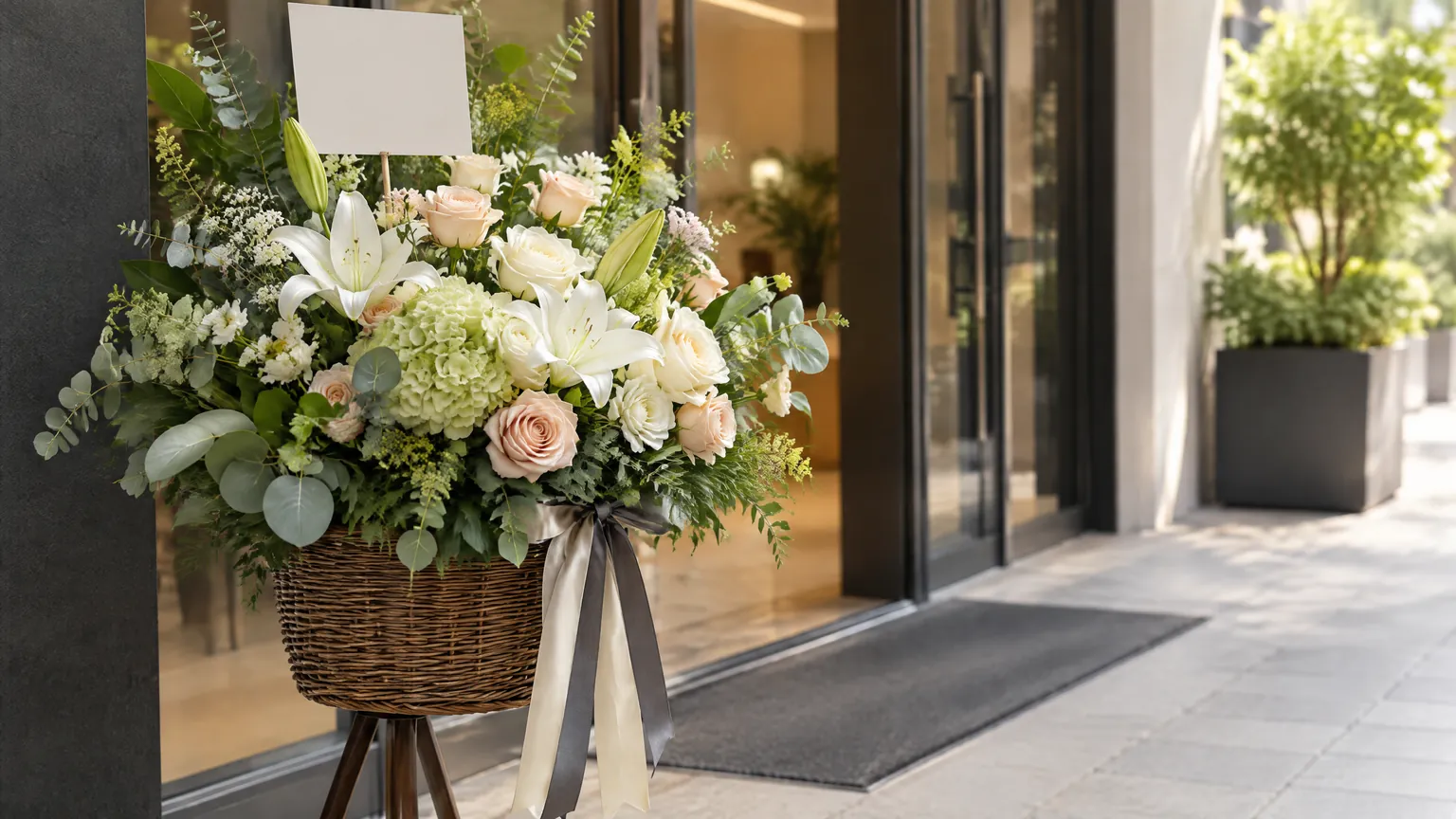
Inspect both where the plant will stand and where it may wait during handover. The Hong Kong Fire Services Department says escape routes, including corridors and staircases, should be free from obstruction, and smoke-stop doors should be kept closed.2 A festive plant, a celebratory flower basket or its transport carton should not become an obstacle on that route, even while someone is finding the correct recipient.
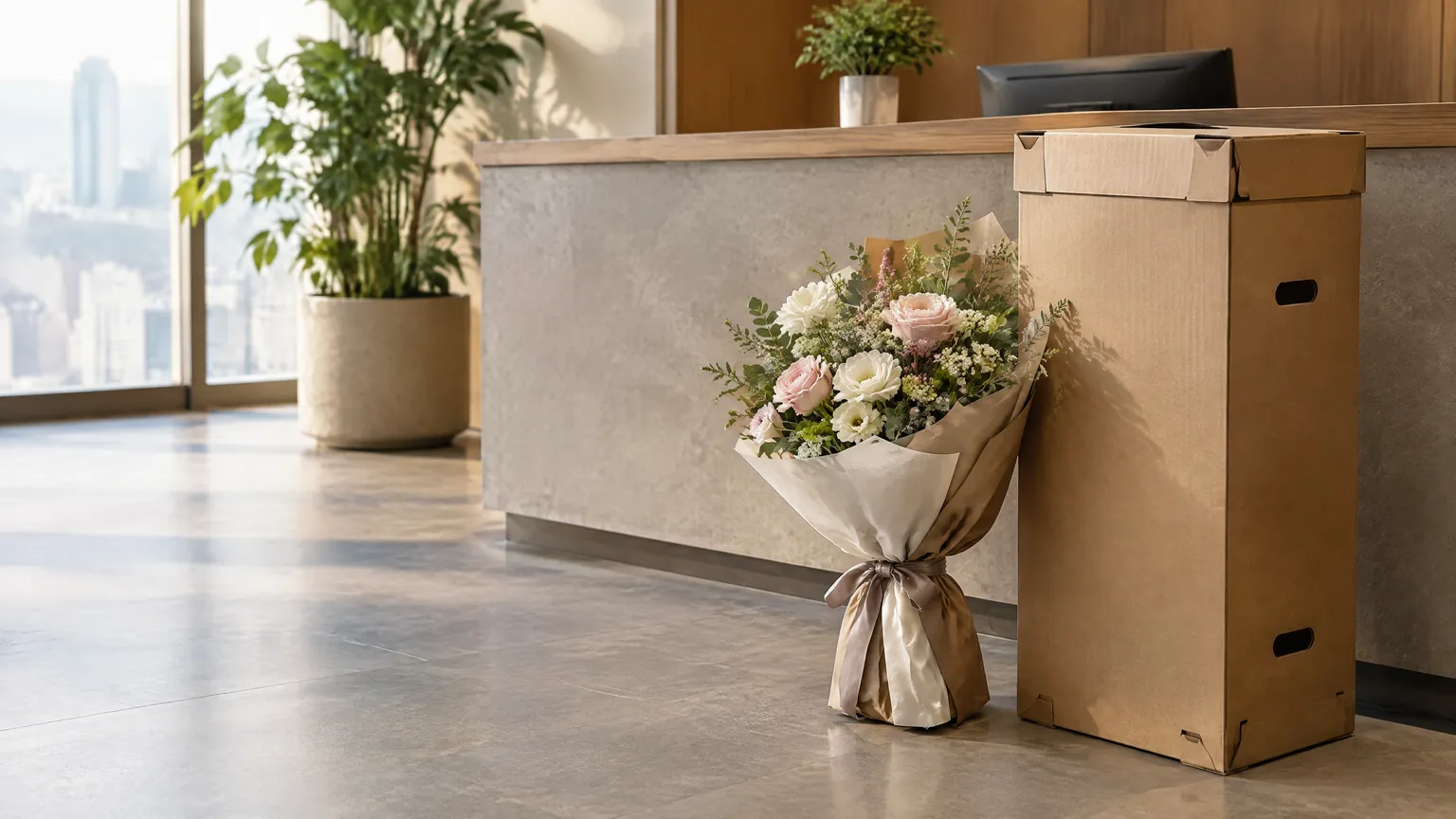
Ask building management to approve the proposed position where approval is needed. Do not invent a universal clearance measurement: the appropriate footprint depends on the site and its requirements. Consider the branch spread, door movement and access to the reception desk, not only the base of the pot. A photograph of an uncluttered entrance can help explain the proposal, but it is not evidence that the position is permitted.
Set aside a stable, approved holding position that does not block circulation. For a small plant, check that any supporting surface is suitable for the confirmed weight and protected against drainage water. For a larger plant, agree safe handling with the relevant parties rather than asking an unprepared receptionist to lift it. Confirm whether movement beyond the receiving point is a provider task or an internal task.
Resolve exceptions before sending the final brief
Use the broader flower delivery Hong Kong enquiry page to frame questions about the address, receiver and access conditions. Ask for written confirmation of each destination's feasibility and handover scope. Neither a general delivery page nor your own branch sheet establishes a particular transport method, coverage across every district or a guaranteed arrival window.
Decide in advance what happens if a receiver is absent or an entrance is unavailable. A backup contact is useful only if they have agreed to act. Do not instruct the provider to leave plants unattended as the automatic solution. Ask how an unsuccessful handover would be handled, and keep any revised destination or timing subject to confirmation rather than making a promise to the branch.
Separate plant changes from access changes. If Yuen Long needs a different receiving window, the Causeway Bay plant allocation should remain unchanged unless someone deliberately revises it. If the actual planter proposed differs from the approved selection, ask the authorised coordinator to review it. This protects branch preferences without making the receiver responsible for interpreting an informal “something similar” instruction.
Before sending the final brief, use this short checklist:
- Confirm every full address, receiving point and site contact.
- Match each plant allocation to its approved display space.
- Obtain provider confirmation of destinations, requested timing and handover scope.
- Agree backups and the response to an unsuccessful handover.
- Name the person responsible for placement and holiday-period care.

Record arrival without concealing unfinished work
At reception, check the destination code, plant count and agreed description against the confirmed allocation. Note visible concerns such as a cracked container, loose wrapping or a substantial difference from the agreed specification. Record what is observed rather than diagnosing plant health. Direct questions to the provider promptly, keeping the coordinator informed of any unresolved difference.
A useful handover note identifies who received the items, where they were left and whether anything remains to be resolved. If photographs help explain a concern, focus on the plant and packaging rather than including visitors or staff unnecessarily. Keep any receipt acknowledgement distinct from the internal placement check, so “accepted at reception” does not imply that all on-site tasks were completed.
If a reception point is serving a New Year staff gathering at the same time, appoint a different colleague to check the plants where possible. Visitors arriving, cards being distributed and cartons being opened can compete for the same counter. The coordinator can protect the handover by reserving an approved space and letting event colleagues know it is needed, without claiming that the provider will manage the gathering.
Transfer responsibility through the holiday period
When the plant reaches its display position, hand over the care information for that specific plant and container. The RHS advises allowing the surface of indoor citrus compost to partially dry before watering in winter, letting excess water drain away and never leaving the pot standing in water.1 These are useful cautionary principles, not a fixed watering timetable for every Hong Kong office; ask for instructions suited to the actual selection and site.
Name one care owner and a backup so several helpful colleagues do not water independently. Agree how they will check the plant during office closure and where they can deal with drainage without wetting the reception area. Avoid copying UK seasonal dates or temperature guidance directly into a local office instruction. A branch's light, container and indoor conditions need to be considered.
Finally, agree what happens when the festive display ends. The plant might move to a more suitable approved position, or a willing colleague might take responsibility for it elsewhere. Do not send it home with someone by default. Sort packaging according to the workplace's available reuse and recycling arrangements, clear the receiving area and close the sheet only when outstanding concerns and the next care responsibility are resolved.
Common questions
Can a guardhouse receipt count as the branch's completed handover?
It can record receipt at the agreed point, but not final placement. Name the colleague responsible for moving the plant onwards and record that separate completion step.
Does a Causeway Bay or Yuen Long page confirm delivery to our office?
No. Ask the provider to confirm the exact address, receiving point, access arrangements and requested timing. A district page also does not establish a florist branch address.
What should we do if one branch needs a different plant size?
Revise that branch's allocation after checking its usable space and obtaining approval. Keep other allocations unchanged unless a deliberate revision is agreed, and confirm the actual plant and planter dimensions.
Who should water the citrus plants while the office is closed?
Appoint a willing care owner and backup with permitted access, and obtain instructions for the specific plant. Do not assume the reception team or cleaning contractor will take responsibility.
Sources & what they support
Each reference supports only the stated scope. Citations are not independent endorsements of YumYum or its branches and do not confirm a provider’s current arrangements or any individual outcome.
- Royal Horticultural Society: How to grow citrus (opens in a new tab)
Citrus needs adequate light; long-term indoor conditions can be unsuitable. Indoor winter watering guidance allows partial surface drying, requires drainage and warns against standing water. UK seasonal timings and temperature thresholds are not applied to Hong Kong workplaces.
- Hong Kong Fire Services Department: Fire Escape (opens in a new tab)
Escape routes, including corridors and staircases, should remain unobstructed and smoke-stop doors should remain closed; supports rejecting obstructive plant and packaging positions without asserting a universal display clearance.