Before Adding Office Plants, Agree Who Looks After Them
GotGear and YumYum (including its gifting, baking and florist branches) share an owner; this collection is not an independent recommendation. GotGear does not provide catering, gifting, cake, floral, tuition or rental services. External-service information is separate from GotGear’s equipment catalogue; confirm the actual scope with the relevant provider. Articles are general planning information, with no promises about supply, arrangements or outcomes. Concept photos are not records of real events, customers or classes.
The short answer
Before adding office plants, name a main caretaker and an agreed backup, check the exact display conditions, and record who waters, receives deliveries and handles changes. A purchase or recurring display arrangement does not, by itself, establish who maintains the plants.
Before adding office plants, name a main caretaker and an agreed backup, check the exact display conditions, and record who waters, receives deliveries and handles changes. A purchase or recurring display arrangement does not, by itself, establish who maintains the plants. Settle these responsibilities before choosing a planter that nobody can safely move or an orchid destined for a dark corner.
A useful office-plant agreement can fit on a shared note. It connects each plant to a location, a care instruction and a person who has accepted the task. This is a planning article in GotGear's same-owner journal: GotGear and YumYum share an owner. The linked YumYum pages are related-business enquiry resources, not independent recommendations. GotGear does not provide floral, food, gift, class or ongoing display services.
Name the caretaker before choosing the greenery
Start with the work involved, not the person nearest the reception counter. The colleague who welcomes visitors may be unable to leave the desk to drain a pot, while the facilities team may manage building access without agreeing to horticultural care. Ask who can actually inspect the plant, reach a suitable watering point and record what they have done. Give that person a manageable responsibility rather than an undefined instruction to keep everything looking nice.
Imagine a small Central office with a hybrid-working administrator. A reception orchid might seem like an easy addition, yet the administrator is absent on some working days. The agreement should identify a backup who knows where the care note is and when to take over. If nobody accepts that role, reconsider the proposed plant or postpone the purchase. A low-maintenance description does not remove the need for attention.
Separate care from decisions. The caretaker may observe changes and water according to instructions; an office manager may approve relocation or a replacement enquiry. Reception may accept an incoming carton but not have authority to approve a different plant. A short note explaining these boundaries prevents a helpful colleague from making a decision that belongs elsewhere.
Treat cleaning support separately too. Ask whether the cleaning team has agreed to wipe the supporting surface or deal with an accidental spill. Do not quietly add watering, feeding or pest treatment to an existing cleaning arrangement. The essential question is not whether a task sounds small, but whether someone has understood it and accepted it.
Map the light and space at the actual display position
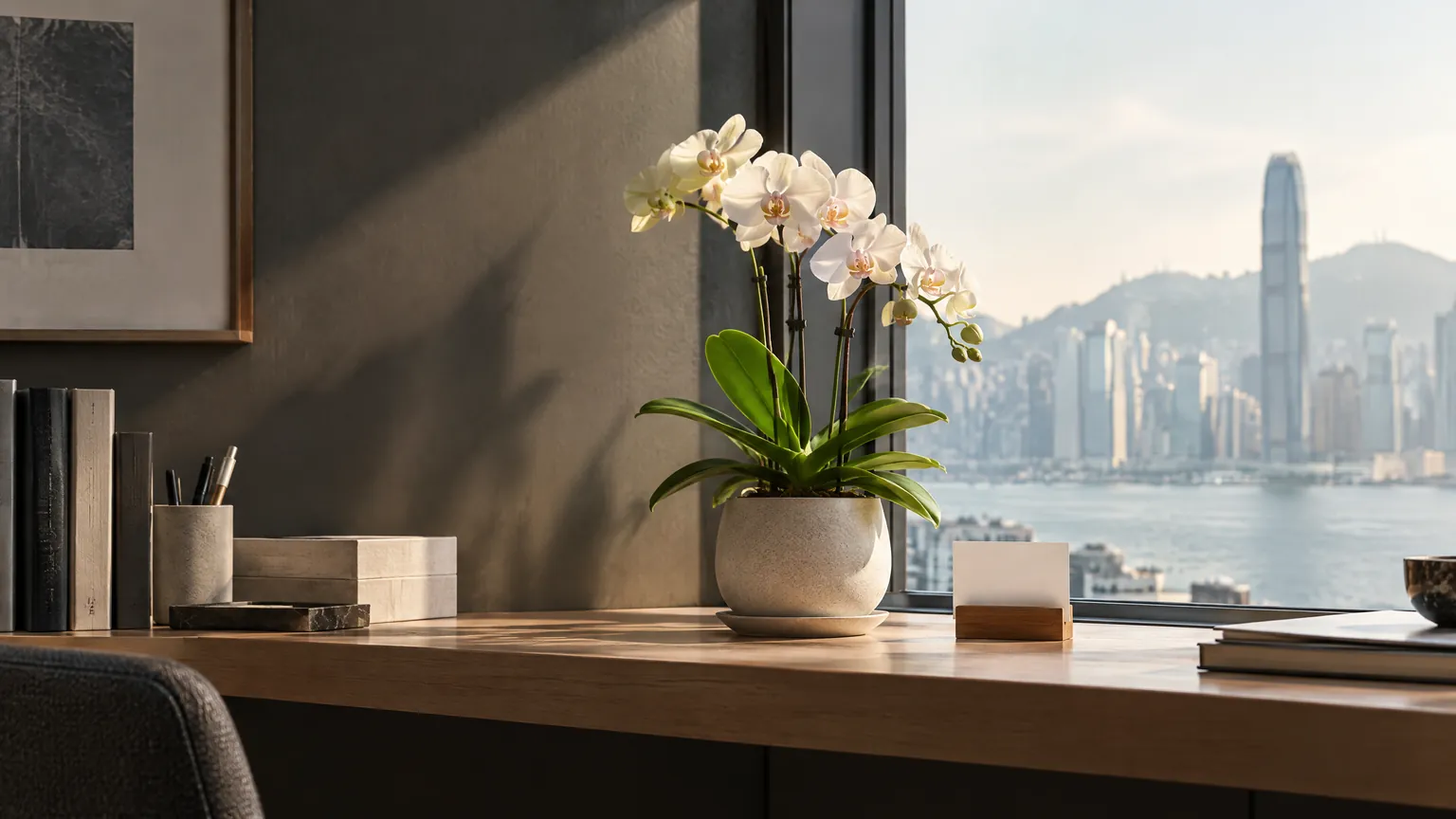
Describe the proposed position precisely: the shelf beside the reception window, not simply the front office. Observe it during ordinary working hours with blinds and doors in their usual positions. Note direct sunlight, nearby air-conditioning outlets and whether the plant will be moved whenever a meeting starts. A bright-looking photograph alone cannot establish that the location suits the chosen species.
The Royal Horticultural Society advises bright light for moth orchids, with protection from direct summer sun, and recommends keeping them out of draughts and away from fluctuating temperatures. That guidance concerns Phalaenopsis, not every orchid sold for display. Ask for the actual orchid type before applying its care requirements to an office arrangement. 1
A Kwun Tong meeting room might have a glazed wall but closed blinds during presentations. Record that pattern rather than describing the room as permanently sunny. If the preferred display point is unsuitable, change the position or ask about a different plant. Do not make the caretaker responsible for overcoming an unsuitable environment through extra watering.
For the journal resource on how to buy indoor plants, use a location brief that describes daylight, usable space and the team's care capacity. The page discusses selection and availability enquiries; its general plant descriptions are not confirmation that a particular species will suit your office. Ask which plant is proposed and what conditions it needs before accepting a substitution.
Measure the available footprint and the room around it, including the spread of leaves or arching flower stems. Check that people can use the visitor book, reach equipment and walk past without brushing the display. GovHK identifies housekeeping, lighting, ventilation and manual handling as relevant office considerations. Apply those priorities to the plant position rather than sacrificing routine access for a decorative effect. 3
Make a plant purchase a complete handover
When buying a plant, settle who keeps both the plant and the container after an event or office move. A purchase may be sensible for a reception with an accepted long-term caretaker. It is less straightforward for a temporary project room that will soon be emptied. Ask the team to identify the onward location before the display becomes an unwanted item on the final packing day.
The related journal resource for readers preparing to buy orchids online offers orchid design references and enquiry information. Use it to discuss the proposed orchid, finished planter and handover needs, not to assume continuing care is included. Confirm the actual contents and availability with the provider, then request care instructions for the arrangement being supplied rather than a generic orchid image.
The handover should explain how the growing pot sits inside any decorative container and where excess water can drain. An attractive outer vessel may conceal the part that needs inspection. If the arrangement cannot be lifted apart easily, ask how moisture and retained water should be checked without disturbing it. Do not improvise by dismantling decorative material or tipping a heavy planter over a workstation.
Keep the instructions with the plant record rather than solely in the purchaser's message history. Useful details include its identification, approved location and the provider contact for questions about the supplied arrangement. Distinguish that contact from the colleague responsible for daily observations. Having a supplier's number does not mean somebody outside the office is monitoring the plant.
Confirm what any ongoing arrangement actually includes
If the office wants an ongoing display without keeping every plant indefinitely, start with a scope enquiry. Write down the intended display period, proposed location and care tasks that the office can or cannot undertake. Ask who owns the plants and containers, what visits might be included, and who is responsible between visits. Do not choose an arrangement on the assumption that a recurring label means every task has been transferred.
The separate service-information resource on office orchid rental explicitly frames the topic as an enquiry, without a preset term, rotation pattern or replacement policy. Ask whether your proposed office arrangement is feasible and request written confirmation of care, access, placement and collection responsibilities. Its individual orchid design references do not establish the terms of an ongoing service. This is a related-business resource, not a GotGear equipment offer.
Distinguish a visit from care between visits
Ask what happens during a proposed visit and what remains with the office afterwards. A display change, a condition inspection and watering are different tasks. If somebody attends only to exchange an arrangement, the office still needs to understand any interim care instructions. If a visit is missed or access is refused, identify who receives the report and who can agree the next step. Neither party should have to guess.
Confirm how changes are requested too. A caretaker should know whether they can move the display away from a newly active air outlet, and whether larger changes need approval. Record the contact for an unexpected concern and the agreed method for sending observations. An office cannot assume an immediate attendance or replacement unless that response has been specifically confirmed.
Keep recurring cut flowers separate from potted plants
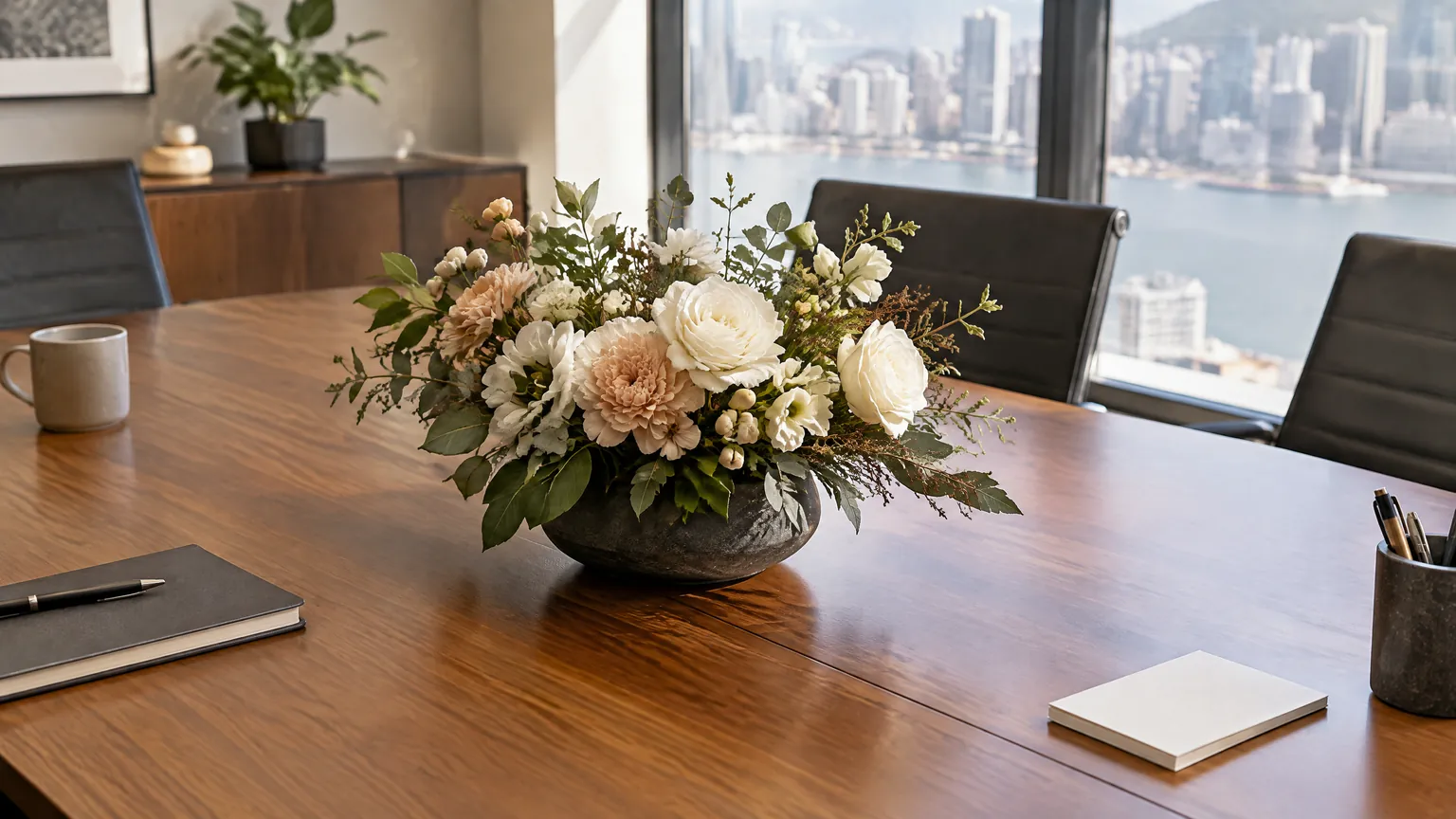
For a meeting table, the journal resource on corporate floral subscriptions concerns recurring floral arrangements and asks readers to confirm current availability and conditions. Enquire about the actual format, proposed intervals, containers and between-visit tasks. Do not treat a flower-delivery arrangement as evidence that potted orchids elsewhere in the office will also be maintained, or that every display will be refreshed on a fixed timetable.
A low vase arrangement for client meetings and a living plant beside a window serve different purposes. Give them separate records even if the same colleague coordinates both enquiries. The provider should explain care for the supplied flowers; the plant caretaker needs instructions for the living plant. If the office prepares occasional tabletop flowers internally, identify who handles that work instead of silently attaching it to the plant-care role.
Schedule observations, not automatic watering
A regular reminder can tell the caretaker to check the plant. It should not automatically tell every colleague to pour in water. University of Maryland Extension explains that watering needs depend on conditions including the growing medium, humidity and temperature, and advises checking need rather than watering by a fixed schedule. Its guidance also notes that wilting can occur with overwatering, so appearance alone is not a reliable instruction to add more. 2
Use a small observation record
Record the date, who checked, the observed moisture condition and any action taken. An entry saying that the medium was still damp and no water was added is useful: it tells the backup the plant was not forgotten. Record watering separately from checking. This helps avoid a well-meaning second person watering a plant shortly after the main caretaker has already done so.
Use the observation method appropriate to the supplied plant and medium. Maryland describes moisture checks and changes in pot weight for indoor plants, while RHS discusses transparent containers and airy bark-based media for moth orchids. A general soil instruction should not be transferred automatically to an orchid arrangement. Ask how to assess the actual pot if its roots or medium are concealed. 1
Agree a suitable watering location and a way to protect nearby surfaces. Both horticultural sources emphasise letting excess water drain and not leaving plants standing in it. RHS also advises avoiding water in the moth orchid's crown. The office task should therefore include checking retained water, not merely adding it. Keep the process away from documents, sockets and equipment. 1
Feeding, trimming and repotting need their own instructions and permissions. A colleague should not treat every change in appearance as a reason to add a product or cut a stem. For an unfamiliar problem, describe what has changed and ask the agreed provider or an appropriate horticultural adviser. That is more useful than several people trying unrelated remedies.
Decide where receipt ends and care begins
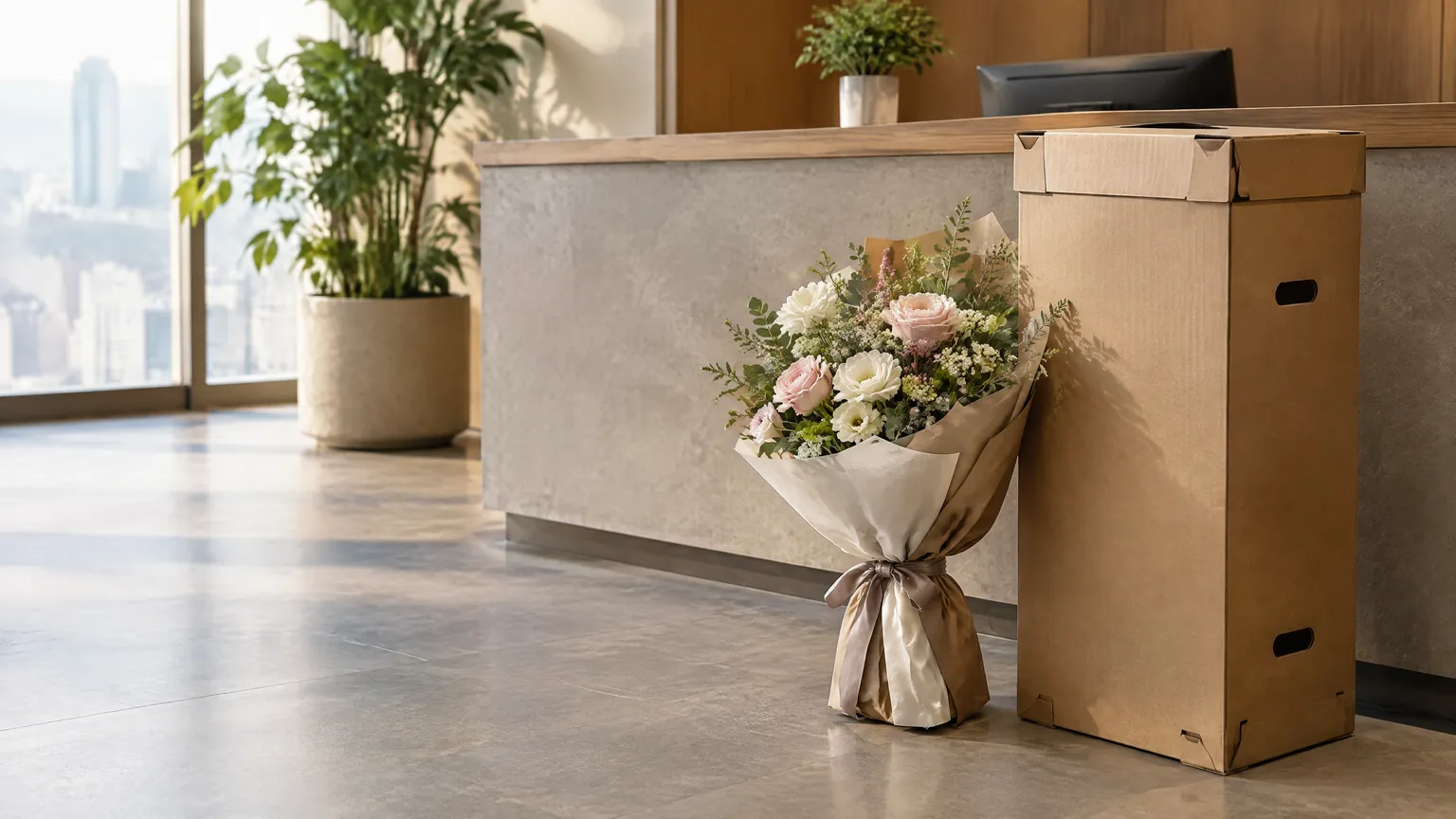
Before the plant arrives, agree the receiving endpoint. A carton accepted at a building desk is not necessarily a plant positioned in the office. In a multi-floor Chai Wan workplace, specify whether the receiver meets it downstairs, at the office entrance or at the display position. Confirm the relevant access arrangements with building management and the provider rather than assuming the route is available.
The receiver needs to know which plant or arrangement is expected, where it belongs and whom to contact about a mismatch. On receipt, note visible damage, unexpected substitutions or an unsuitable container and report them through the agreed channel. Do not claim that a quick visual check establishes plant health. Its purpose is to document the handover and identify questions promptly.
Allow clear space for unpacking and a practical route to the final position. GovHK includes manual handling among office precautions, so do not assign an awkward planter move merely because a colleague happens to be present. Ask how it will be handled and who is authorised to help. Keep cartons and packing material out of the normal circulation route. 3
Complete the handover by showing the caretaker the instructions and recording the initial placement. If a purchased plant is a gift for a colleague, ask whether they actually want responsibility for it and where it will go. A gift card does not substitute for an accepted care arrangement.
Plan for leave, closures and layout changes
Before the main caretaker goes on leave, confirm that the backup has accepted the dates and can access both the plant and its instructions. Review its current condition together. Avoid giving extra water simply because the office will be empty; watering still needs to follow the plant's requirements and observed condition. If nobody can check it during the absence, resolve the care arrangement beforehand. 2
An office closure may also change the environment. Blinds might remain shut or air-conditioning hours might change. Tell the relevant provider about those circumstances when discussing a continuing arrangement, and reassess the location of purchased plants. A care agreement based on a normally occupied room may no longer fit. Do not assume that moving the plant into a brighter lobby is authorised by building management.
Revisit the record after a desk move, a new reception layout or a change of caretaker. For a temporary display, confirm who arranges its removal and where each plant and container goes. If collection is part of an agreed arrangement, make its endpoint and access responsibilities explicit. For purchased items, identify an accepted onward home rather than relying on somebody to volunteer at the last moment.
A short checklist before approval
- Name a main caretaker, an accepting backup and a decision contact.
- Record the exact position, everyday light conditions and clear space.
- Confirm the supplied plant, container and species-specific care instructions.
- Separate checking, watering, display changes and receiving duties.
- Put any continuing care and collection scope in writing.
- Set the leave handover and the plant's onward destination.
Approve the greenery when these answers are workable, not merely when its colour suits the room. The result is a display the office can accommodate and a responsibility its people have actually agreed to carry.
Common questions
Can we make the receptionist responsible for every office plant?
Only if they accept the role and can carry out the required checks and handling. Reception duties do not automatically include plant care. Agree a backup and separate receiving duties from watering and approval decisions.
Does a continuing orchid arrangement mean the provider waters between visits?
Not unless that task is explicitly included in the confirmed scope. Ask what visits cover, which duties remain with the office and what happens if access is refused or an agreed visit cannot take place.
Should everyone water the plant when it looks wilted?
No. Use one caretaker and a shared observation record. Wilting can have more than one cause, including overwatering. Check the supplied plant's instructions and moisture condition before acting.
What should we do with a plant after a temporary office event?
Identify its accepted onward location before the event. Confirm ownership of the plant and container. If collection forms part of an agreed arrangement, specify the collection endpoint, access contact and responsibilities.
Sources & what they support
Each reference supports only the stated scope. Citations are not independent endorsements of YumYum or its branches and do not confirm a provider’s current arrangements or any individual outcome.
- Royal Horticultural Society: How to grow Phalaenopsis moth orchids (opens in a new tab)
Phalaenopsis-specific bright filtered light, avoidance of direct summer sun and draughts, airy bark-based medium, transparent-container observations, excess-water drainage and avoiding retained water or water in the crown. Not evidence for all orchids or guaranteed display duration.
- University of Maryland Extension: Watering Indoor Plants (opens in a new tab)
Indoor-plant watering needs vary with growing medium, humidity and temperature; condition-led moisture and pot-weight checks, exceptions to general methods, ambiguous wilting and removal of excess drainage water.
- GovHK: Occupational Health for Office Workers (opens in a new tab)
Housekeeping, lighting, ventilation and manual handling are office considerations. Clear placement, practical receiving routes and avoiding improvised planter moves are planning applications, not a government plant or supplier endorsement.