A Team Floral Workshop Works Better When Participation Has Real Choices
GotGear and YumYum (including its gifting, baking and florist branches) share an owner; this collection is not an independent recommendation. GotGear does not provide catering, gifting, cake, floral, tuition or rental services. External-service information is separate from GotGear’s equipment catalogue; confirm the actual scope with the relevant provider. Articles are general planning information, with no promises about supply, arrangements or outcomes. Concept photos are not records of real events, customers or classes.
The short answer
Give colleagues choices about how they contribute, which materials they handle and where the finished flowers go. Agree those options with the facilitator before confirming a workshop, rather than expecting everyone to cut stems, follow an identical design or take an arrangement home.
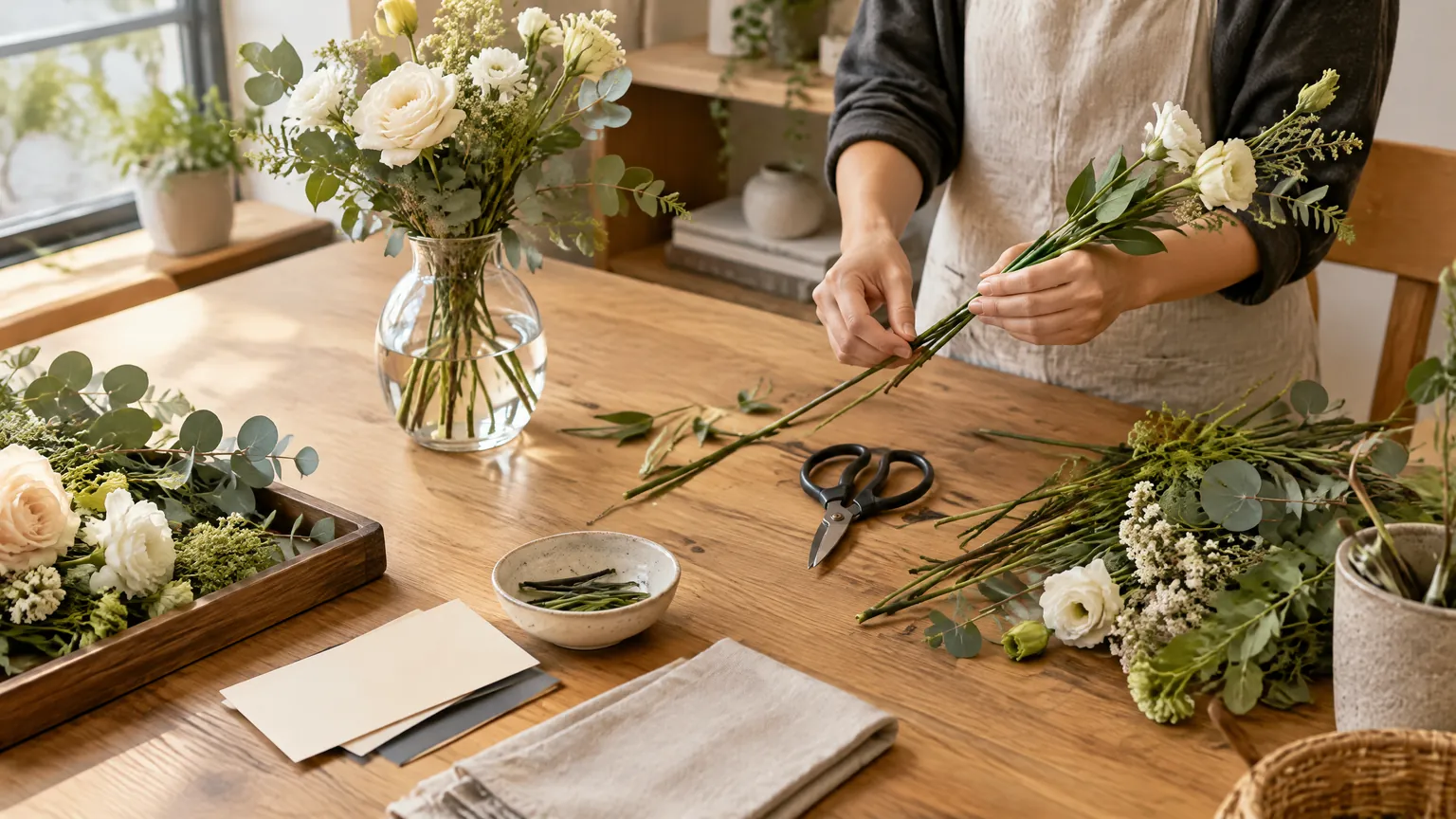
Give colleagues choices about how they contribute, which materials they handle and where the finished flowers go. Agree those options with the facilitator before confirming a workshop, rather than expecting everyone to cut stems, follow an identical design or take an arrangement home. A useful team session has a shared task, but it does not require identical participation.
For a Hong Kong workplace, the practical question is not simply whether flower arranging sounds enjoyable. It is whether the activity fits colleagues with different interests, access needs, languages and journeys after work. A person who likes choosing colours may not want to use cutting tools. Someone who enjoys making a bouquet may have nowhere suitable to display it. These are planning choices, not failures to join in.
GotGear and YumYum share an owner. This article is part of GotGear's service-information journal, not an independent provider endorsement; GotGear does not provide floral workshops, arrangements, food, gifts, classes or rental services. The linked pages are resources for enquiries, and arrangements described there remain subject to provider confirmation.
Start with a shared task, not a promised team outcome
Choose a task that can be explained without making claims about health, morale or performance. For example, colleagues might make low arrangements for the meeting tables used at a forthcoming internal briefing. Alternatively, each person could make a small piece while sharing decisions about a common palette. The first format concentrates on a shared result; the second allows more individual control. Neither automatically produces better teamwork.
Consider an imagined cross-department gathering in Quarry Bay. The organiser wants colleagues who rarely work together to exchange design ideas. A practical brief could ask each table to agree where its arrangement will be displayed, then discuss which shapes suit that location. This gives people a concrete reason to listen to one another, without asking them to reveal personal feelings or perform enthusiasm for a camera.
The same-owner team building floral workshop page discusses group formats and venue considerations, but asks readers to check current availability. Use it to frame an enquiry about your actual task, participant preferences and space. Do not treat descriptions of collaboration or well-being as guaranteed outcomes, or assume that a named format is available on your preferred date.
Decide what completion means before collecting registrations. A finished display might be the goal, but the activity could instead end with several design experiments and no public exhibition. If every piece must be suitable for an important reception, separate that requirement from the recreational session. Participants should not discover halfway through that their work is being assessed against a corporate presentation standard.

Offer roles that people can change
Invite colleagues to choose among meaningful contributions: discussing placement, selecting materials, arranging stems or preparing wrapping. A person can contribute to more than one stage. Avoid assigning the experienced hobbyist as permanent leader or asking the newest colleague to do only clearing up. The choice should remain open as people discover which tasks interest them.
For a shared piece, explain how decisions will be made. One workable approach is to discuss the intended shape together, invite an initial arrangement, then pause before anyone changes another person's contribution. This prevents a confident maker from quietly rebuilding the whole design. It also lets someone who prefers discussion take part without being responsible for delicate handwork.
An invitation should name a private contact for participation requests and explain that alternatives can be discussed. Cornell University's event checklist recommends asking about accommodations and following up when a requested arrangement cannot be met.1 Apply that principle before committing to materials: ask what would help someone participate, rather than asking colleagues to disclose a diagnosis to the group.
Make declining a particular task ordinary. A colleague might watch a demonstration before deciding whether to try it, or contribute to the colour discussion without handling plants. If the floral format cannot meet someone's needs, discuss another meaningful activity rather than placing them at an isolated table with no part in the shared task. Choices need a workable plan behind them, not just a welcoming sentence.
Check the room from a seated participant's position
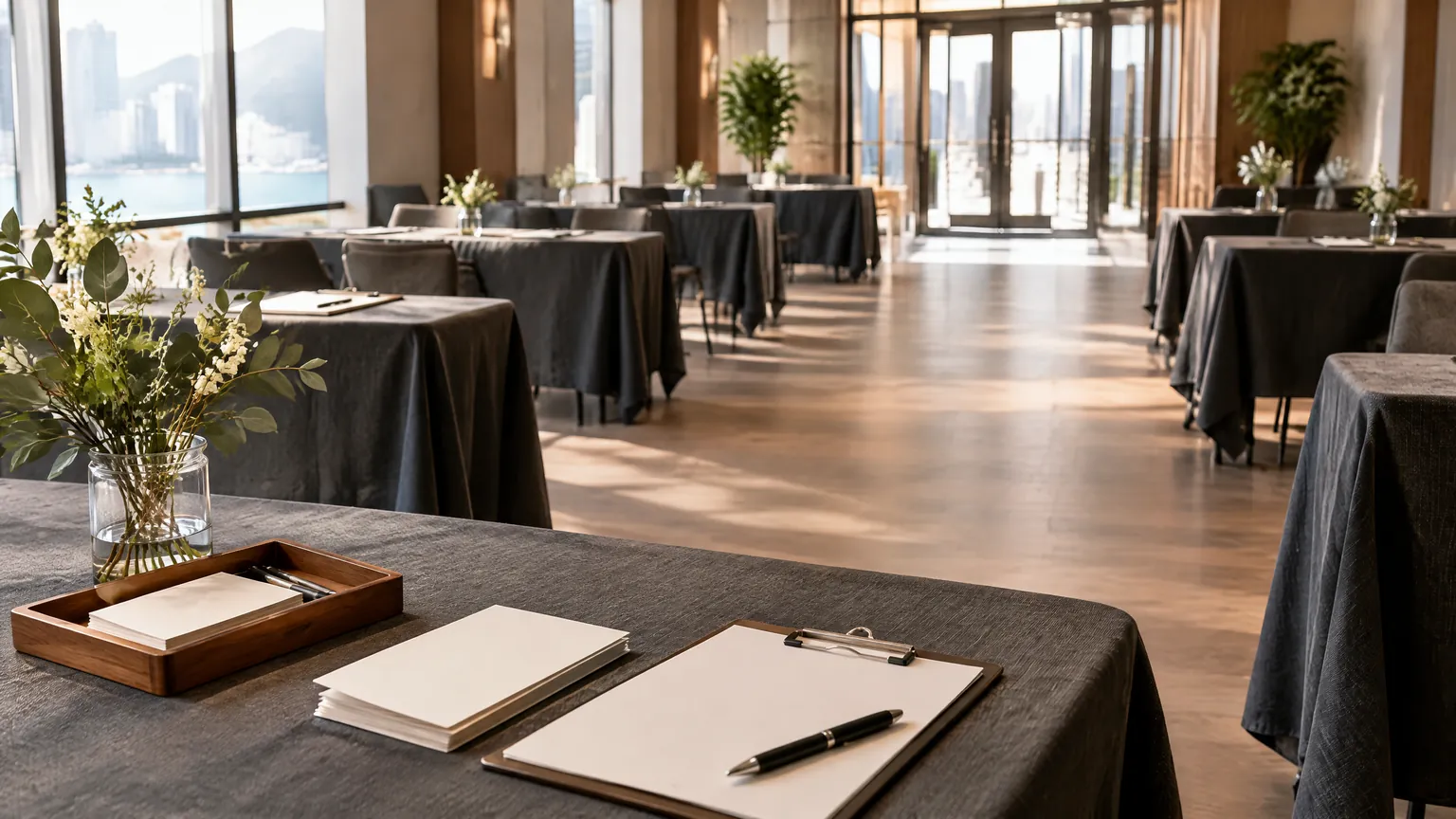
A room can look spacious when empty and become difficult to use after buckets, bags and finished pieces arrive. Inspect the route from the entrance to each workstation, not only to the front row. Cornell's checklist specifically includes accessible working tables, barrier-free routes, visibility and acoustics.1 It is useful planning guidance, not a statement of Hong Kong venue compliance. Confirm the actual room arrangements with the venue.
In a Kwun Tong office where the same room serves as a meeting space, test the proposed layout with chairs pulled out and a sample container on the table. Can a seated colleague reach their own materials without leaning across someone else's tools? Can another person pass behind them? Keep supply storage separate from circulation, and check that temporary table coverings do not hide trailing edges or cables.
Do not make standing at a central supply table the only way to select flowers. Discuss whether the facilitator can present a manageable selection at each workstation or bring materials to someone who needs that arrangement. This changes the logistics, so it needs agreement in advance. Likewise, a seated working position must offer access to the task, not merely a chair somewhere in the room.
Check sound as well as movement. Background music should not compete with instructions; Cornell recommends limiting unnecessary music and making visual material understandable through verbal description.1 For colleagues who use different languages, confirm the language of the demonstration and any supporting notes. An English invitation does not establish that a session will offer English instruction.
Choose materials by the task and the care they need
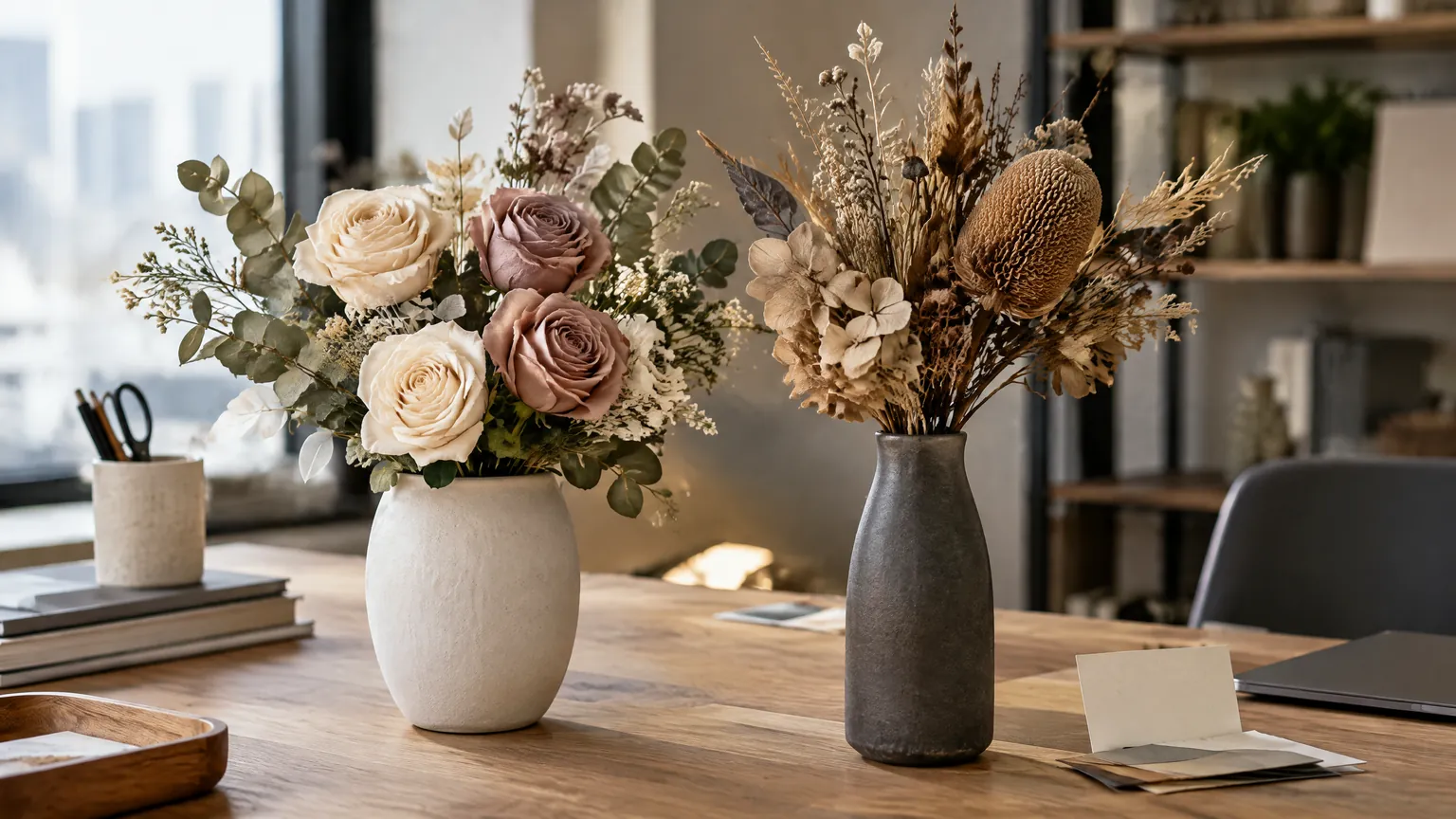
Fresh, dried and commercially treated preserved materials should not be treated as interchangeable. The University of Kentucky's preservation guide describes several methods, including air drying, desiccant drying and treatment of foliage.3 That variety is a reason to ask what the proposed workshop actually supplies. A photograph or the broad label “preserved” does not establish the treatment, handling instructions or class content.
Fresh flowers suit a session with a clear water plan
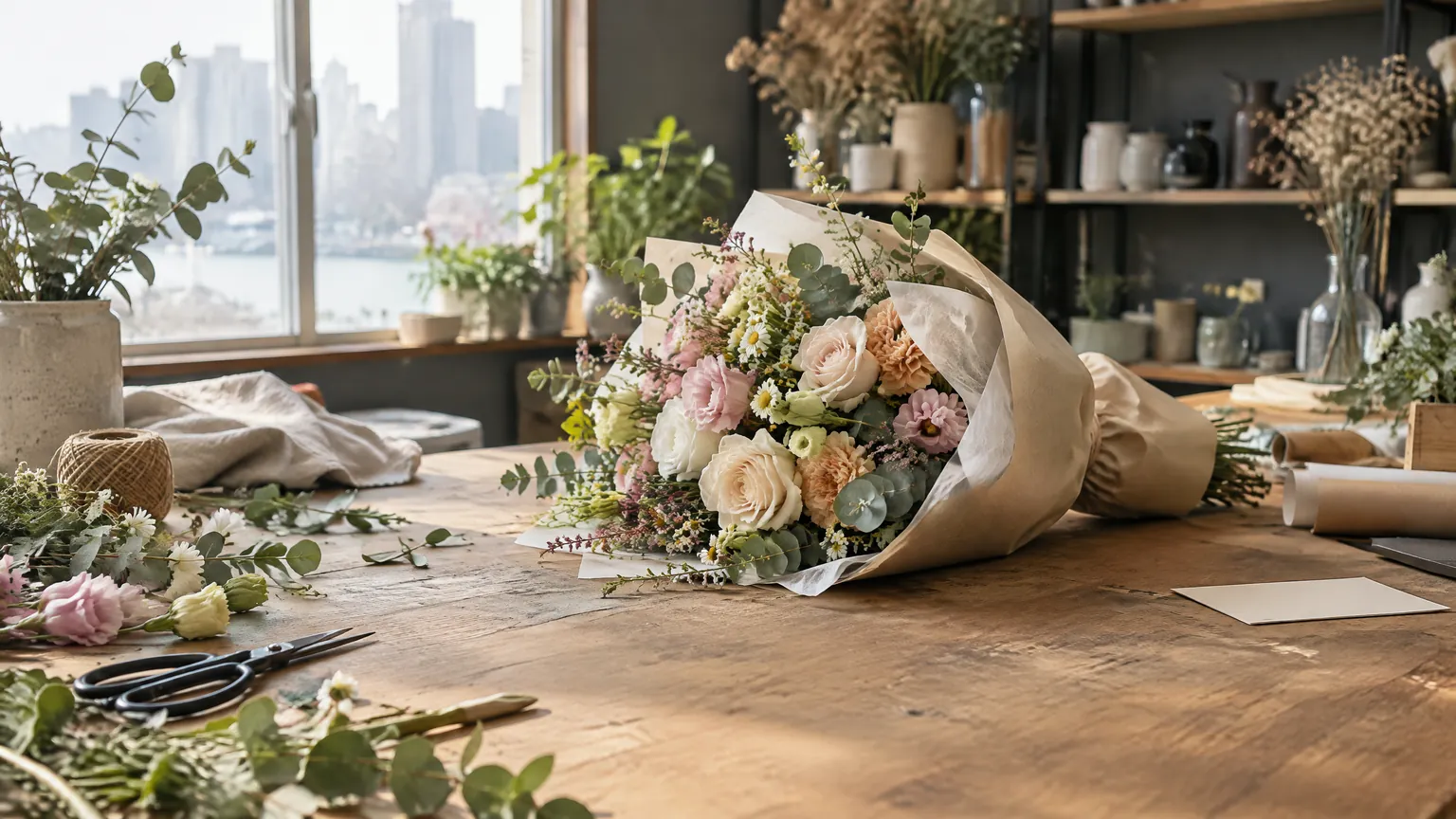
For a fresh-flower activity, discuss where water will be obtained, how surfaces will be protected and who will move filled containers. These are organiser and facilitator responsibilities to settle, not tasks to spring on attendees. If a colleague chooses not to cut stems, ask whether prepared material or another contribution is feasible. Never assume that every participant will be comfortable using the same tools.
NC State Extension advises using clean water and containers, removing leaves below the waterline, and positioning cut flowers away from sunlight and drafts, including cooling vents.2 Those points help identify the practical demands of a fresh arrangement. They do not promise a particular display life. Ask for care instructions for the actual flowers and arrangement structure rather than extending general advice to every finished piece.
For example, a meeting-room vase intended for Monday's briefing needs someone to check it after the workshop. If the activity takes place before a weekend, do not leave that responsibility to whoever happens to sit nearest the flowers. Name a willing caretaker and a suitable location, or choose a different destination for the piece.
Preserved and dried materials need specific handling enquiries
The same-owner preserved flower workshops resource is relevant when considering treated floral materials, but its broad descriptions do not confirm a particular session's contents. Ask whether attendees would arrange already-treated flowers, observe a process or perform another task. Confirm the actual tools, possible adhesives, prepared components and care notes; do not infer that everyone will learn preservation chemistry or make a long-lasting display.
Dried material can be fragile, and some dried arrangements collect dust. The University of Kentucky guidance also warns against direct sunlight and humid locations for particular dried materials.3 This is not a universal care specification for every commercial preserved flower. Request instructions for the supplied materials, especially where a finished piece may sit near an open window or in a room whose conditions change outside office hours.
Preserved material is not automatically a suitable substitute for a colleague concerned about scent, plant contact or another material. Ask what is actually present and keep an alternative contribution available. Avoid describing any floral option as allergen-free. A product-specific discussion may identify limitations, and a limitation should change the plan rather than disappear into a reassurance.
Match the demonstration to the available attention
A corporate gathering may contain speeches, announcements and refreshments as well as the making session. Protect a clear period for instructions and practice rather than compressing the demonstration whenever another item runs late. Tell the facilitator about any fixed room handover or departure time, including colleagues who cannot stay for an extended wrap-up.
The same-owner floristry classes page describes learning topics and different possible formats, with materials and arrangements to confirm. It can help distinguish a light introductory activity from a more technique-focused class enquiry. Ask which tasks will be demonstrated, how participants can request help and what happens if someone chooses a simpler version. Do not assume a teacher ratio, bilingual support, qualification or take-home item from general class descriptions.
Ask for a demonstration that explains the purpose of each step rather than relying on people copying a distant hand movement. Cornell recommends advance materials and verbal descriptions of visual content.1 A short, legible sequence can help colleagues follow the task, but it should accompany suitable instruction rather than replace it. Confirm whether the provider can supply such support for your session.
Discuss the points where assistance may be needed. Cutting, attaching delicate material and finishing a structure can require different kinds of help. Ask how the facilitator proposes to support those stages for the registered group. A plan that works for a small, attentive table should not be assumed to work unchanged for a larger gathering with several simultaneous questions.
Give the finished flowers a destination people actually want
Ask separately about making an arrangement and taking it away. A colleague travelling by MTR with a laptop bag may prefer contributing to an office display. Someone working remotely the next day may want a manageable piece for home. Neither choice should be treated as a lower level of participation, and an unwanted arrangement should not become an obligation.
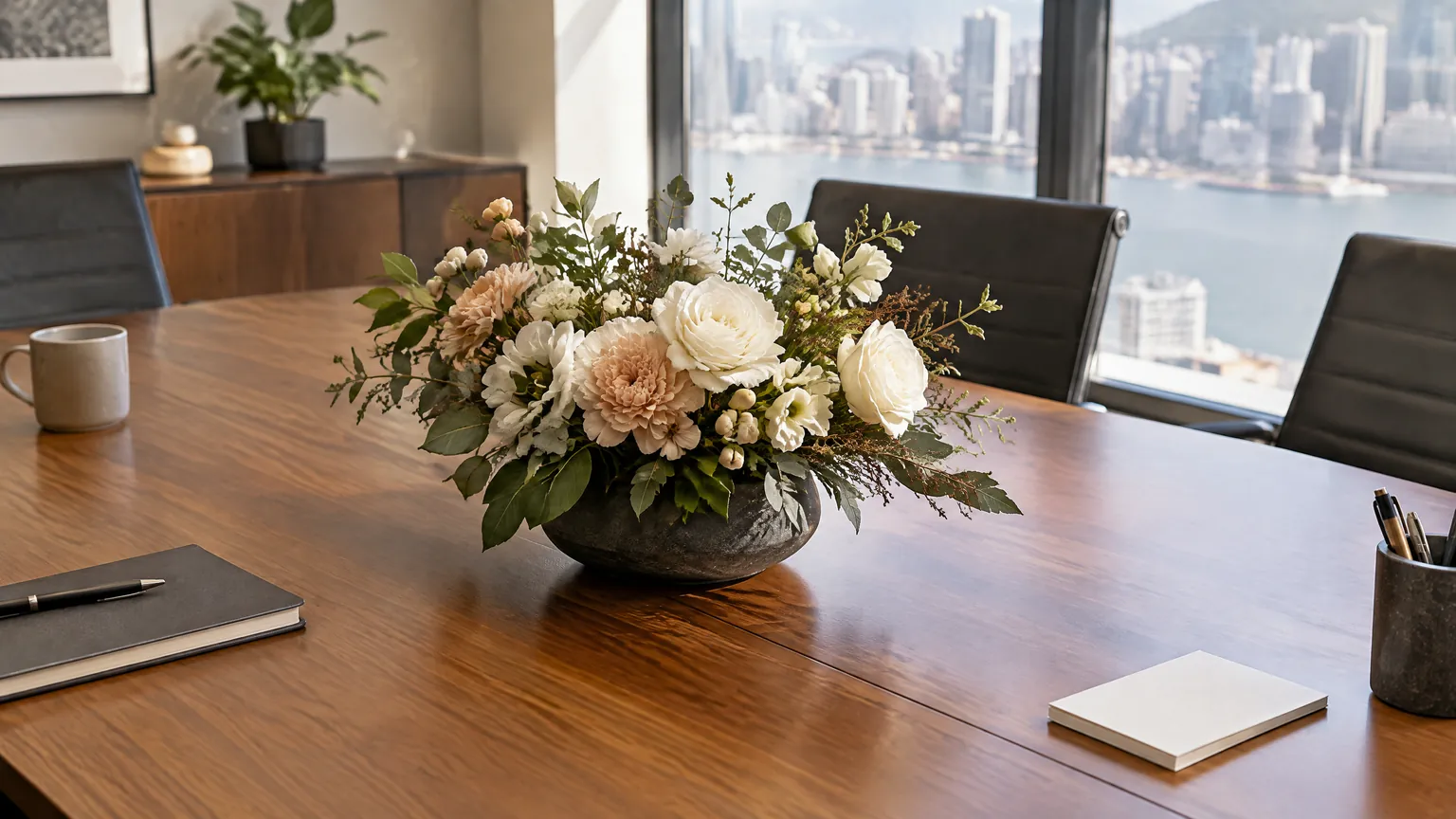
If the intended result is an office display, the same-owner corporate flower arrangements resource discusses scale, sightlines and venue logistics. Use it to clarify the difference between workshop-made pieces and a separately specified professional display. Do not assume that an individual design reference includes workshop facilitation, setup, installation or ongoing care. The scope needs confirmation for the intended use.
For an imagined Central reception, mark out the counter space needed for visitor sign-in before deciding where flowers can sit. For a boardroom, test the arrangement from seated positions so people can see one another and the screen. A low piece may be practical there, while a larger design could consume the space needed for papers. These are layout decisions to check, not universal height rules.
For take-home pieces, ask about a stable container and protective packaging for the agreed design. Establish whether the package can be carried upright on the participant's actual journey, and how water should be managed during transport. Obtain handling instructions rather than improvising. At home, use the relevant care guidance: fresh flowers need attention to water and placement, while treated or dried materials need their own instructions.2
Close the plan with a short action check
Before confirmation, use this checklist to resolve the choices that affect the whole session:
- State the shared task and whether the result is practice, a take-home piece or an office display.
- Invite private participation requests and agree workable alternatives.
- Check seated access, routes, demonstration visibility and language needs.
- Confirm the actual material types, tools, prepared components and assistance arrangements.
- Agree packaging, care responsibility, room handover and what happens if the format changes.
Keep the confirmed decisions together in a concise brief for the organiser, venue and facilitator. After the session, ask whether colleagues could participate in the way they wanted, not whether every arrangement looked alike. That feedback identifies concrete changes for another activity: a different workstation, clearer instructions or a more useful destination. The flowers can vary; meaningful access to the task should remain the priority.
Common questions
What can a colleague do if they do not want to cut stems?
Discuss material selection, placement decisions, arranging prepared stems or wrapping as possible contributions. Confirm which alternatives the facilitator can support, and allow people to change roles rather than assigning them permanently.
Does choosing preserved flowers remove the need to ask about sensitivities?
No. Ask about the actual floral materials, treatments and any adhesives or other components. Do not assume preserved material is allergen-free or suitable for everyone; agree an alternative contribution where needed.
Can workshop pieces become the reception display?
Only if that purpose is agreed and the resulting pieces suit the space. Check stability, visitor access, sightlines and care responsibility. A recreational workshop does not automatically include a professionally specified display or setup.
Must every attendee take an arrangement home?
No. Agree whether participants can contribute to a shared office piece or decline a take-home item. For anyone taking flowers away, confirm packaging and handling for the intended journey before the workshop.
Sources & what they support
Each reference supports only the stated scope. Citations are not independent endorsements of YumYum or its branches and do not confirm a provider’s current arrangements or any individual outcome.
- Cornell University: Accessible Meeting and Event Checklist (opens in a new tab)
Inviting accommodation requests and following up on alternatives; accessible working tables and routes; visibility, acoustics, limiting background music, advance materials and verbal descriptions of visual demonstrations. General event guidance, not Hong Kong compliance advice.
- NC State Extension: Selecting and Caring for Cut Flowers (opens in a new tab)
Clean containers and water, removing leaves below the waterline, attending to water levels and placing fresh cut flowers away from sunlight and drafts, including cooling vents. No numerical lifespan or species-specific suitability promise.
- University of Kentucky Cooperative Extension: Preserving Flowers and Foliage (opens in a new tab)
Different preservation methods; fragile dried materials and dust accumulation; keeping dried arrangements away from direct sunlight and avoiding humid locations for desiccant-dried material. Does not establish universal care requirements for commercial preserved products.