Plan a Private Flower-Making Session for Friends with Different Experience Levels
GotGear and YumYum (including its gifting, baking and florist branches) share an owner; this collection is not an independent recommendation. GotGear does not provide catering, gifting, cake, floral, tuition or rental services. External-service information is separate from GotGear’s equipment catalogue; confirm the actual scope with the relevant provider. Articles are general planning information, with no promises about supply, arrangements or outcomes. Concept photos are not records of real events, customers or classes.
The short answer
Choose one shared flower project with a simple starting version and optional design variations. Before booking, ask each friend about their goals, language and practical access needs, then confirm how the session will handle demonstrations, tools, individual support and carrying work home. A private booking should suit the group’s pace; it should not depend on everyone already knowing how to arrange flowers.
Choose one shared flower project with a simple starting version and optional design variations. Before booking, ask each friend about their goals, language and practical access needs, then confirm how the session will handle demonstrations, tools, individual support and carrying work home. A private booking should suit the group’s pace; it should not depend on everyone already knowing how to arrange flowers.
GotGear and YumYum share an owner. This journal offers planning guidance and related enquiry resources, not an independent provider endorsement. GotGear does not provide flowers, tuition, food, gifts or rental services.
Start with what each friend wants to do
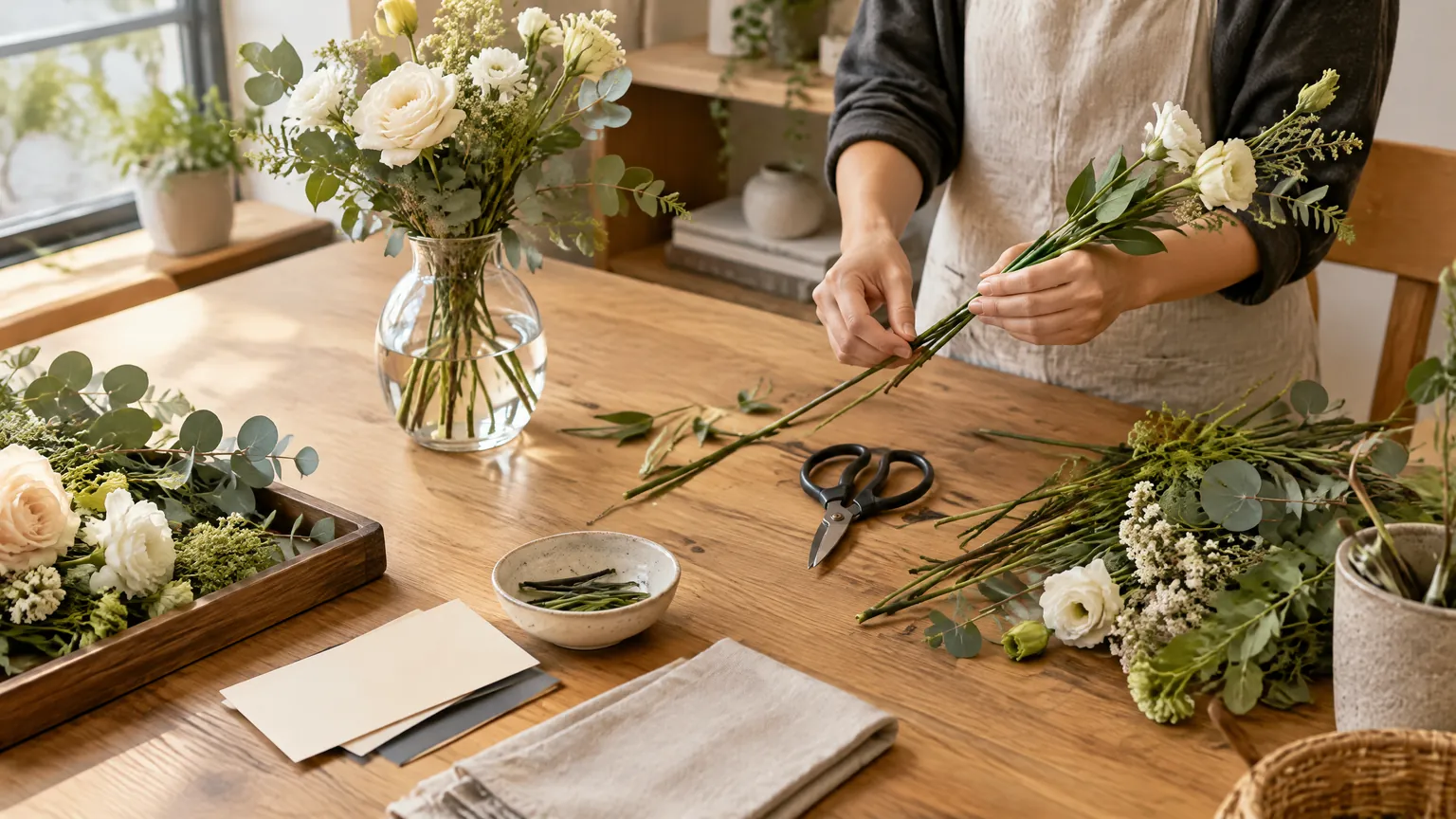
Ask about experience through actual tasks, not labels such as creative or uncreative. Someone who regularly puts market flowers in a vase may never have tied a bouquet. A friend who enjoys drawing may still want help handling stems. Useful questions are whether they have arranged cut flowers before, what they would like to try, and whether they want a relaxed afternoon or close instruction on a particular technique.
Imagine friends meeting after work in Kowloon, with one regular flower buyer and several first-time makers. Their shared goal might be to make a compact arrangement for their own homes. That gives the organiser a clearer brief than requesting a lesson suitable for all levels. It also makes a large decorative installation an unnecessary complication, even if an experienced friend likes the reference photograph.
Y. Florist’s floristry classes page can be used to frame an initial enquiry about learning formats. Describe the tasks your friends have tried and the outcome they want, then request the proposed project and teaching sequence for your particular group. A broad overview is not confirmation of dates, materials or a session that matches those goals.
Decide whether every person wants their own finished piece. A shared table arrangement can suit friends who prefer working together, but it changes how much individual practice each person gets. If personal practice matters, make that explicit rather than discovering during the session that the group will make only one design.

Choose between a held bouquet and a supported arrangement
A bouquet and a vase piece can look similar in a photograph while asking the maker to work differently. For this decision, focus on how the stems will be supported during assembly and what participants will do at each stage. Ask for a plain explanation of the proposed method, rather than choosing solely by the colours of a finished example.
When a bouquet matches the group’s goal
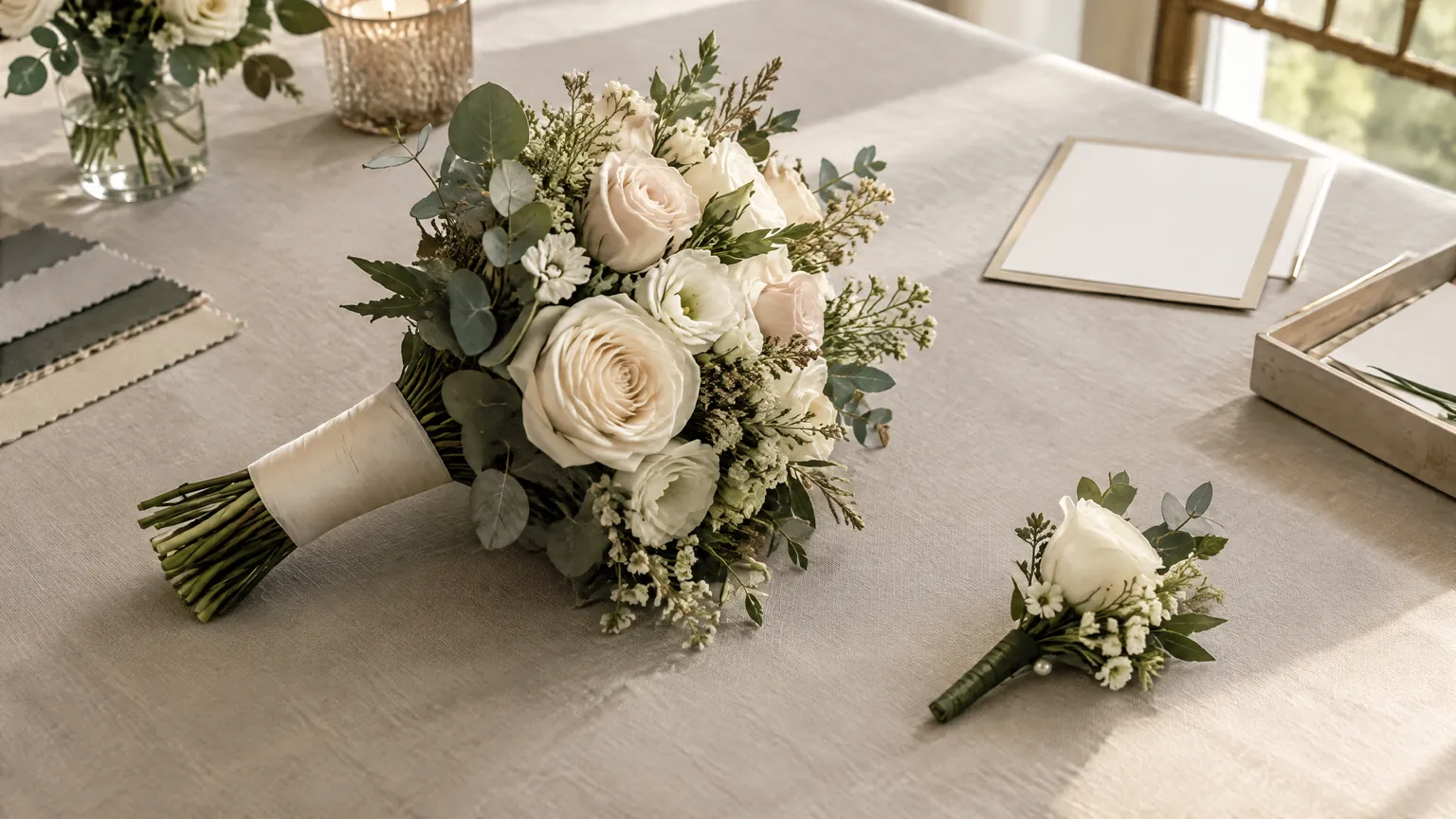
A hand-tied project is worth discussing when friends want to explore grouping stems, shaping a held design and finishing it with wrapping. Ask how much continuous holding is expected, whether stems can be set down during demonstrations, and what assistance is available for tying. A smaller starting design may fit the social purpose better than a large bundle that occupies both hands throughout.
For a bouquet making workshop, request a usable lesson outline before making your decision. The linked page identifies the topic but contains substantial unclear text, so it should not be relied on to establish the actual teaching sequence. Confirm whether preparation, grouping, tying and wrapping are included, and which steps each participant will practise rather than simply watch.
Consider the destination too. If friends will continue to dinner in Central, ask how the finished bouquet will be protected and supplied with appropriate moisture for the journey. A picture of attractive wrapping does not establish a transport method. Avoid planning a long series of stops without discussing how the actual flower materials will be handled.
When a vase piece offers a better starting point
A supported arrangement gives the group a different task: working with a container and considering where each stem sits. Brooklyn Botanic Garden describes how stems placed at angles can form a supporting grid within a vase, and connects arrangement scale with the container. These are useful topics to ask a tutor to demonstrate; they are not a universal design formula for every vessel. 2
The beginner floral arrangement class resource is relevant if the group wants to ask about preparation, simple composition and home care. Confirm whether the proposed private session uses a vase or another container, and whether that container is supplied for each maker to keep. Do not assume an introductory class covers both a bouquet and a vase project in one visit.
A low vase piece might suit a friend planning to display flowers on a small dining table in a Hong Kong flat. It could also be a useful exercise for someone who wants flowers on an office meeting table without obstructing conversation. If a flower box is suggested instead, ask how stems are supported and cared for; it is a different format, not just alternative packaging for the same lesson.
Agree how beginners and experienced makers will learn together
Keep the core task shared, with variations that do not interrupt instruction. For example, everyone could work within the same container type, while a more experienced friend explores an asymmetrical outline after completing the basic structure. Ask the tutor whether that variation fits the materials and available support. Do not build the event around an advanced exercise that leaves first-time makers waiting.
When discussing a private floral workshop, explain that your group includes different experience levels and ask how the proposed session will respond. Confirm what private means: exclusive attendance, an adjustable theme or a different teaching arrangement. None of those terms automatically means one-to-one attention, unlimited customization or an extended session.
Request a demonstration-and-practice rhythm
Ask whether the tutor can demonstrate a stage, let everyone try it, and check that people are ready before introducing the next one. Clarify how someone requests help while others continue working. A single opening demonstration followed by independent making may be fine for experienced participants, but it may not match the beginners’ expectations.
Agree that friends ask before rearranging another person’s work. Someone who knows a technique can describe a choice without taking the stems out of the maker’s hands. Keep feedback concrete: whether a container feels stable or a flower hides another bloom is more useful than deciding whose arrangement is best. Optional photographs should also remain optional, especially if the gathering includes colleagues as well as close friends.
Treat this as a recreational session unless a separate, clearly specified learning arrangement is being considered. Making an attractive piece does not establish a professional qualification or readiness to provide event floristry. For friends who want further practice, the useful question is which basic task they would like to repeat, not what status the afternoon will give them.
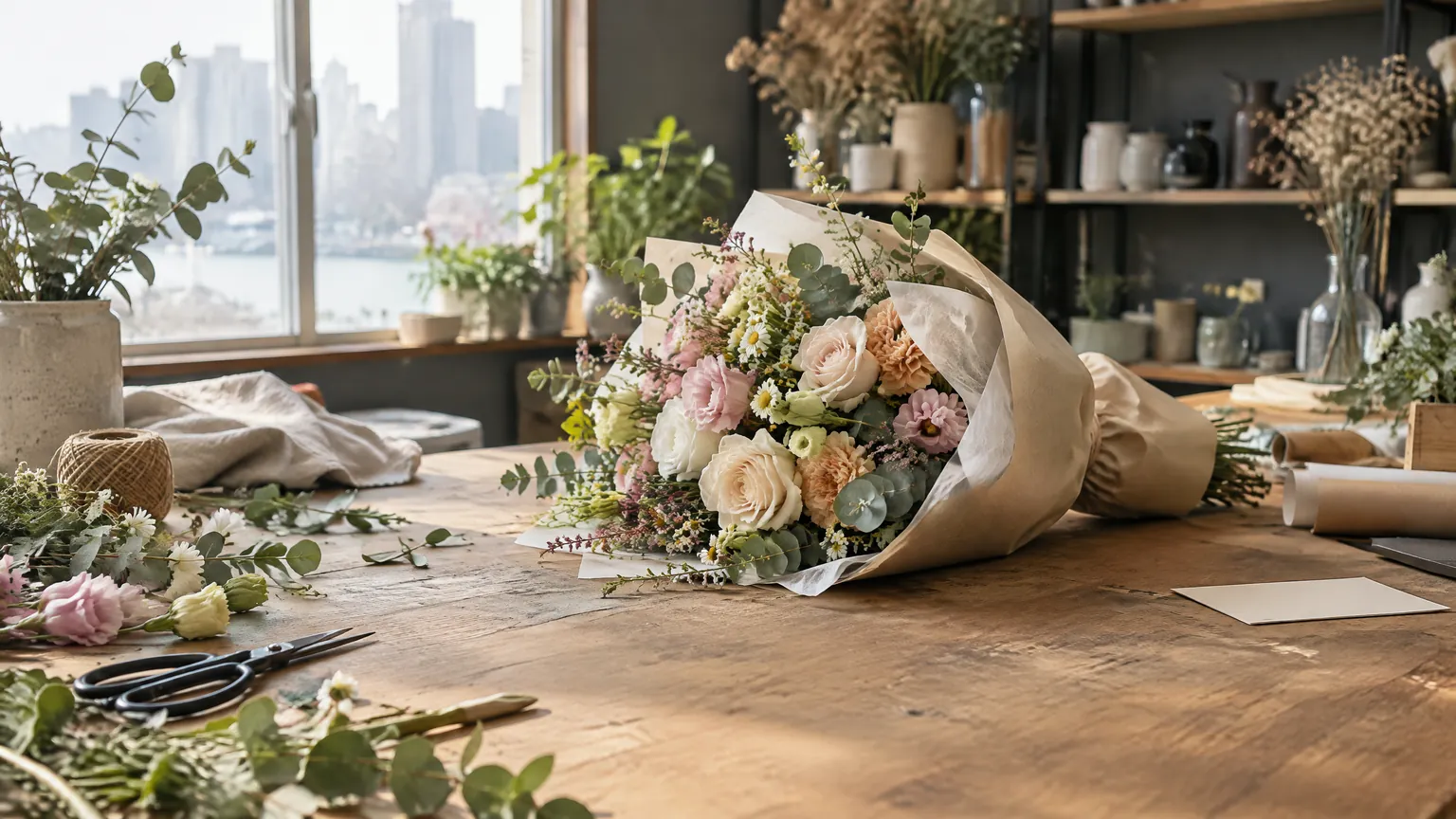
Check access from the building entrance to the work surface
Ask friends privately about practical requirements and pass on only the details they want shared. Relevant information might include a preference to sit, difficulty holding a bundle for long, a need to see demonstrations closely, or a preferred instruction language. Describe the required adjustment rather than asking people to explain personal circumstances to the whole group.
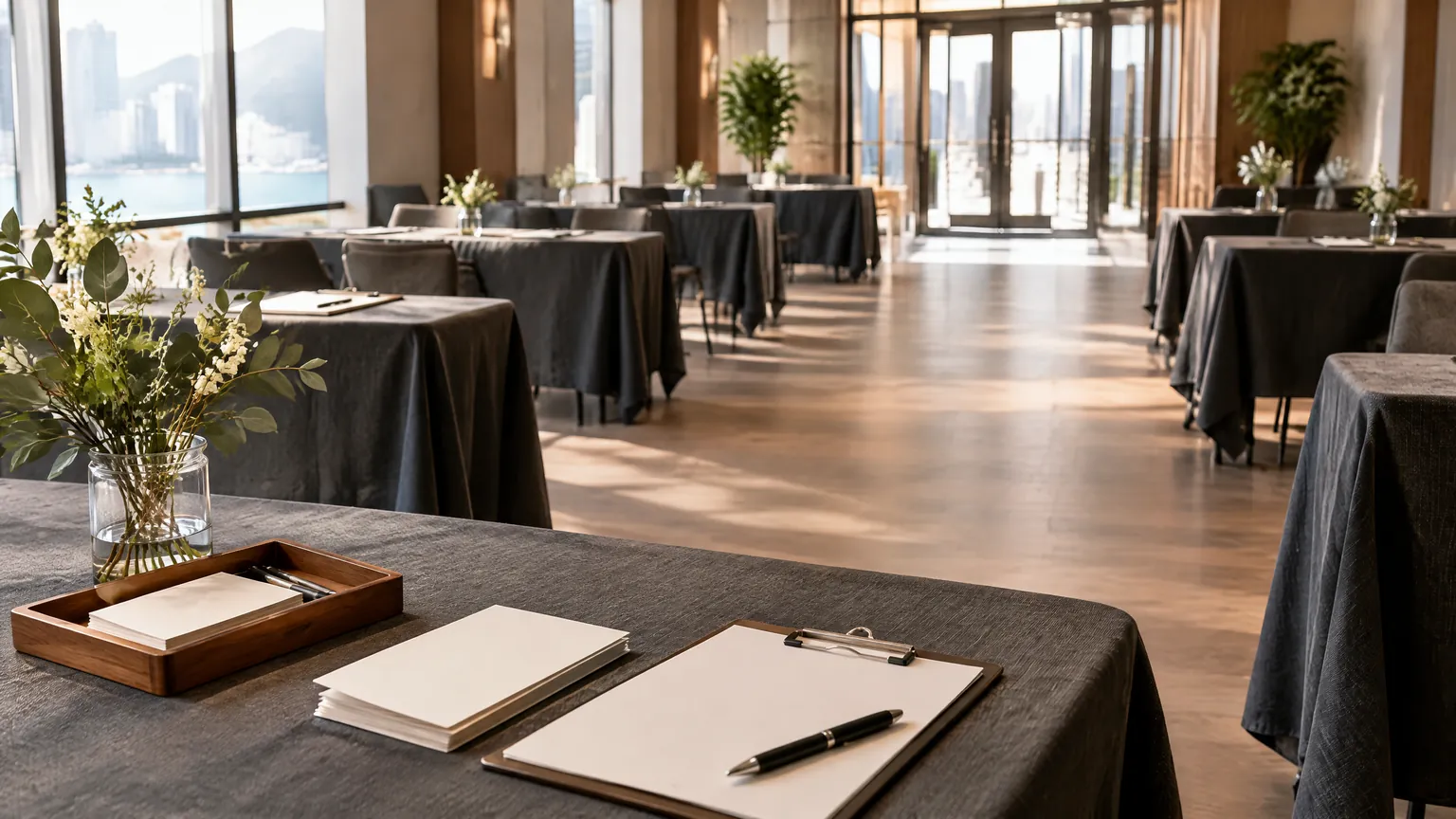
For a proposed venue in an upstairs Hong Kong building, check the full route: entrance steps, lift access, the route from the lift to the room, and the toilet arrangement. A street address does not answer these questions. Ask whether photographs or a description of the actual workshop layout are available, and check whether seated participants can use the table and see the demonstration.
If you are considering a home or workplace gathering, first confirm that the provider offers that format. Separately check the host’s permission to use the room. For an office meeting room, agree where water will be filled and emptied, where tools will be placed, and how the table will be cleared before the next working day. Keep laptops and documents away from the making area. These are proposed hosting arrangements, not claims about any provider’s facilities.
Language needs deserve a specific answer. Ask which language the demonstrations and individual explanations will use, and whether any care notes will be understandable to everyone. Do not assume a bilingual group will be comfortable with technical instructions delivered in only one language. A short explanation of the proposed project in advance can help friends decide whether it suits them.
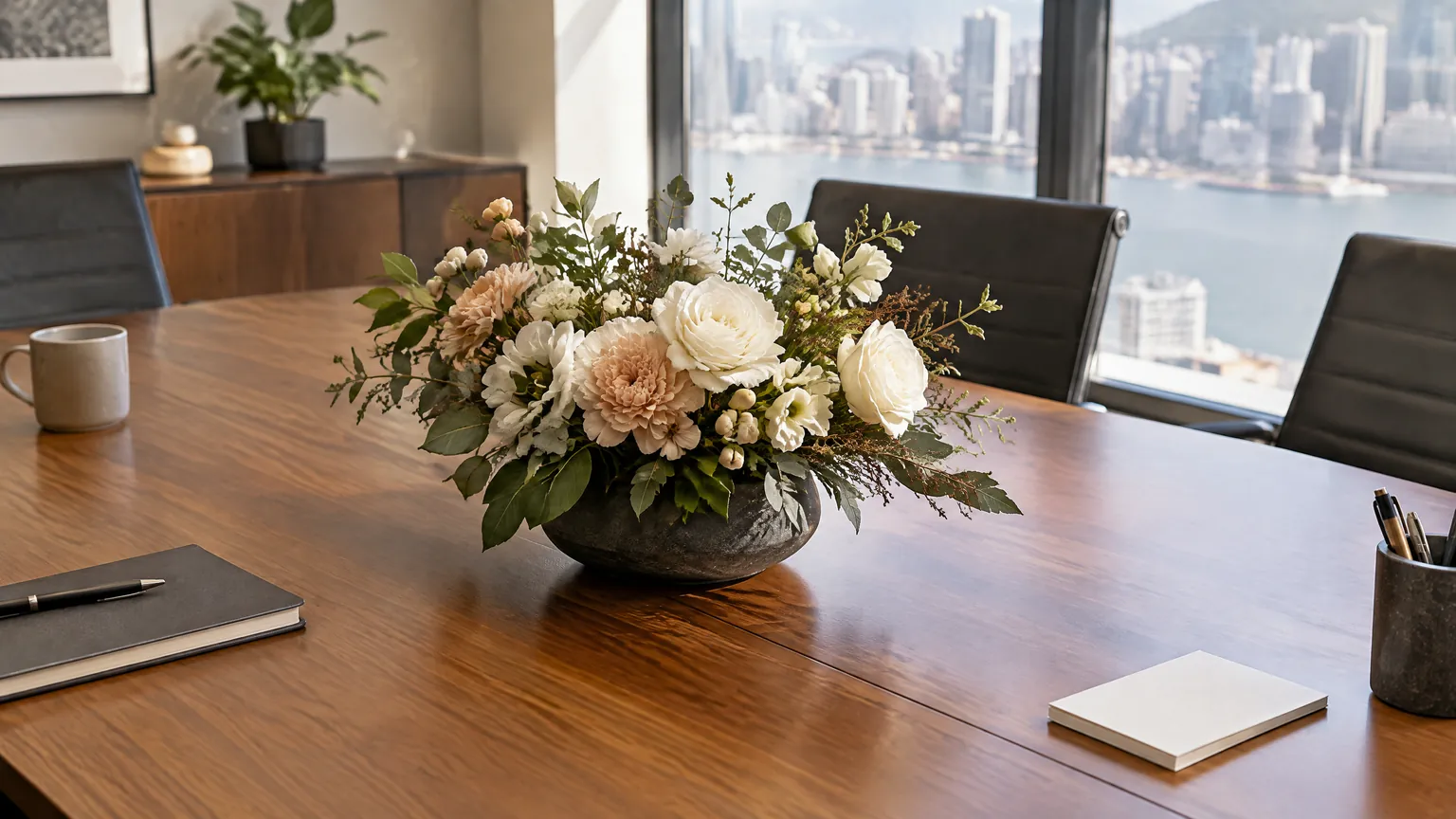
Confirm tools, preparation and material boundaries
Request a materials description that distinguishes what each participant receives from what the group shares. Ask about stems, foliage, containers, cutting tools, ties, wrapping and the final carrying method. If someone cannot comfortably operate the proposed tool, ask whether prepared stems or assistance are possible. Avoid telling friends to bring household equipment before the tutor has specified suitable tools.
The RHS explains that conditioning means preparing cut flowers for display. Its guidance includes removing foliage that would sit below the water, making suitable clean cuts without crushing stems, and allowing prepared flowers to take up clean water in a cool place. 1 Ask which preparation has already been done and which parts the group will learn. Pre-conditioned materials and participant-led preparation create different session schedules.
Tool supervision should be explicit even for an adults-only gathering. Ask who demonstrates handling, how tools are shared and where they are put when not in use. Keep the discussion tied to the actual materials. A simple fresh-flower project need not become an introduction to unfamiliar wires, specialist treatments or complicated supports unless these are genuinely part of the agreed lesson.
The RHS also warns that some flower materials can be poisonous or cause skin irritation. 1 If a participant has a known concern about a particular plant or scent, name it privately in the enquiry and ask what materials are proposed and whether changes are possible. Do not equate a changed flower choice with a guarantee that the session will be free of allergens or irritation.
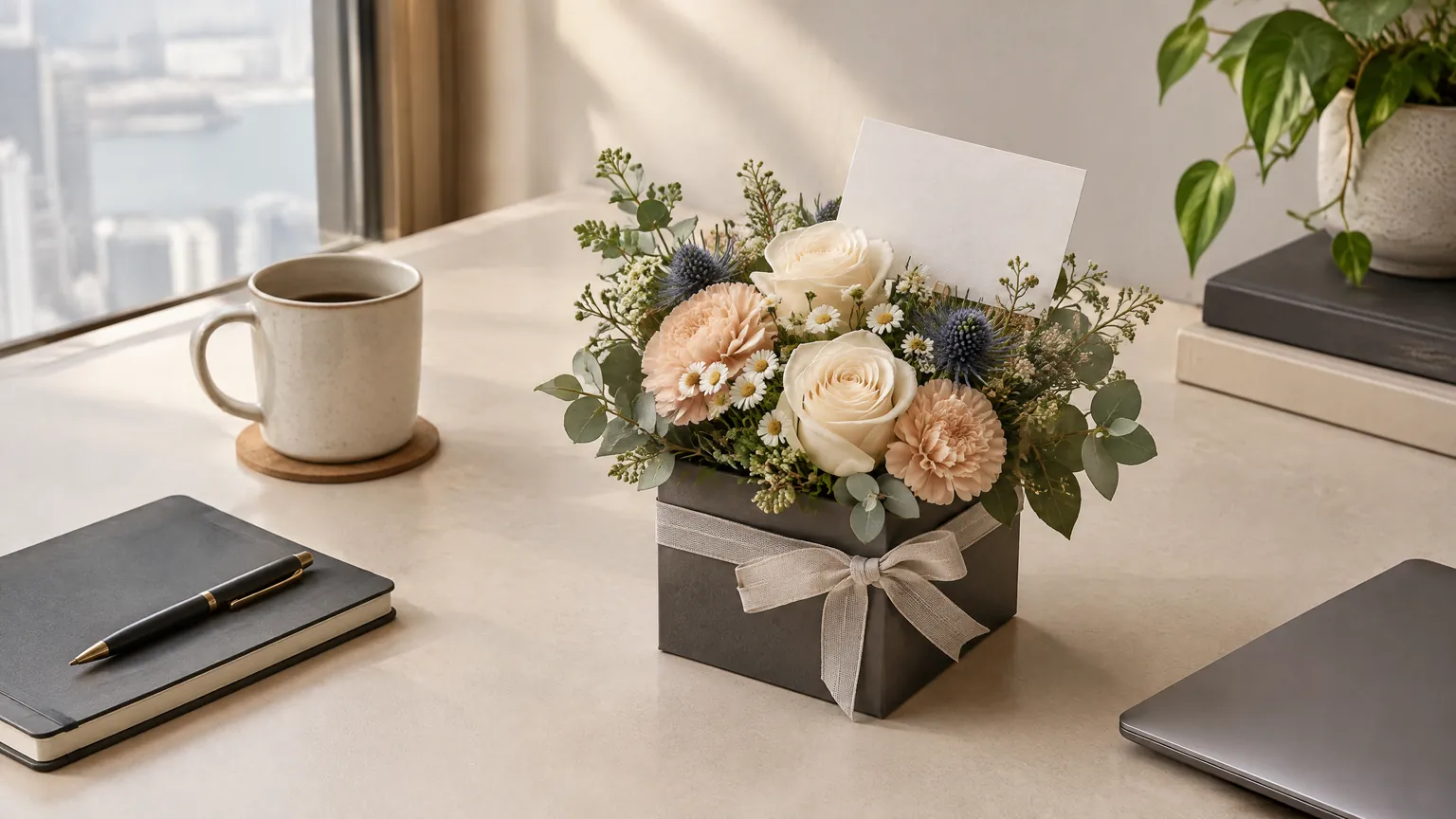
Plan the finish around the journey home
Allow for checking stability, receiving care instructions and packing, rather than treating the last placed stem as the end of the event. Ask whether each person will carry a bouquet, a water-containing vase or another supported piece. Confirm how the provider proposes to contain water and protect blooms. A tote bag on its own is not a complete plan for every arrangement.
For friends travelling separately on the MTR, choose a project whose carrying method they can realistically manage alongside their ordinary bags. Someone taking a piece back to a compact flat in Sha Tin may prefer a modest footprint; someone leaving it at a workplace needs a suitable display position and a plan for caring for it when they are away. Ask about these destinations before settling the design’s size.
Brooklyn Botanic Garden advises against overcrowding flowers in a container and recommends monitoring water and keeping arrangements away from direct sunlight, drafts and ripening fruit. 2 The RHS likewise recommends clean vases, checking water and removing declining flowers. 1 Ask for care instructions appropriate to the supplied stems and support method, rather than a promised number of days that every piece will last.
Before leaving, each friend can note one task they would repeat and one question they still have. A brief personal note about placement or preparation is more useful than trying to remember every detail from the group discussion. If the tutor permits photographs, photograph a relevant stage or the finished support arrangement without implying that someone else’s example is your own work.
Use a short checklist before committing
Turn the conversation into one written brief and ask for confirmation of the unresolved points. For example, your brief could request individual low vase pieces, seated making, English demonstrations and optional design variations for experienced friends. Mark these as requirements to discuss, not arrangements already secured.
- Confirm who is attending, what they want to practise and whether each person wants a take-home piece.
- Choose one main project and ask for its demonstration and hands-on stages.
- Check the entrance route, seating, work surface and instruction language.
- Confirm individual materials, shared tools, supervision and any requested adjustments.
- Agree the finish, carrying method, care notes and booking or rescheduling conditions.
Send the group the agreed practical details without circulating anyone’s private access information. If a requirement cannot be accommodated, reconsider the project or location before asking that friend to work around it. The strongest plan is not the most elaborate design: it is a session in which everyone can understand the task, make their own choices and leave knowing how to handle their work.
Common questions
Can a first-time maker join friends who already arrange flowers?
Yes, if the proposed session has an accessible starting project and agreed support for beginners. Ask how demonstrations and help will work, and whether experienced friends can try optional variations without changing the core task.
What should we ask if someone finds holding a bouquet uncomfortable?
Ask how long the method requires continuous holding, whether the work can be set down and whether help with tying is available. Discuss a supported vase project as an alternative, but confirm its table and tool requirements too.
Does booking privately mean everyone gets individual instruction?
Not automatically. Confirm whether private refers to exclusive attendance, an adjustable project or a different teaching arrangement, then ask how individual help is provided during the session.
Should we bring our own vases and cutting tools?
Only after checking the proposed project and materials. Ask whether containers are supplied to keep and what tools the tutor considers suitable. A personal vase may change the design and transport plan, so discuss it in advance.
Sources & what they support
Each reference supports only the stated scope. Citations are not independent endorsements of YumYum or its branches and do not confirm a provider’s current arrangements or any individual outcome.
- Royal Horticultural Society: Cut flowers — cutting and conditioning (opens in a new tab)
Conditioning cut flowers; removing submerged foliage; appropriate clean cutting without crushing stems; hydration in clean water in a cool place; clean vases, water monitoring and removal of declining blooms; cautious note that some flower materials can be poisonous or irritate skin. Does not verify provider services or a guaranteed vase life.
- Brooklyn Botanic Garden: Cut-Flower Care — How to Make Fresh Flowers from Your Garden Last Indoors (opens in a new tab)
Container scale as an arrangement consideration; stems forming a supporting grid in a vase; avoiding overcrowding; monitoring water; keeping arrangements away from direct sunlight, drafts and ripening fruit. No specialist treatments, household preservative recipes or fixed design ratios adopted.