Balayage, highlights and henna: discuss the process before the colour label
GotGear and DT HUB share an owner. This collection is not an independent recommendation. GotGear does not supply DT HUB salon, wig, Academy or healthcare services. Three online service sections do not represent three physical stores; the shared public studio is in Kwun Tong. Medical articles are informational only, with no diagnosis, clinical endorsement or outcome promises, and do not replace medical advice.
The short answer
Choose a colour process by asking what will happen to your existing hair, not simply which shade looks appealing. Balayage and highlights describe placement, while bleaching describes lightening and henna identifies a plant-derived colouring ingredient. None of these labels alone establishes suitability or freedom from allergy. Bring your colour history, discuss the exact products and testing requirements, and agree what can change if the proposed result would require more processing than your hair can reasonably tolerate.
Start with three separate decisions
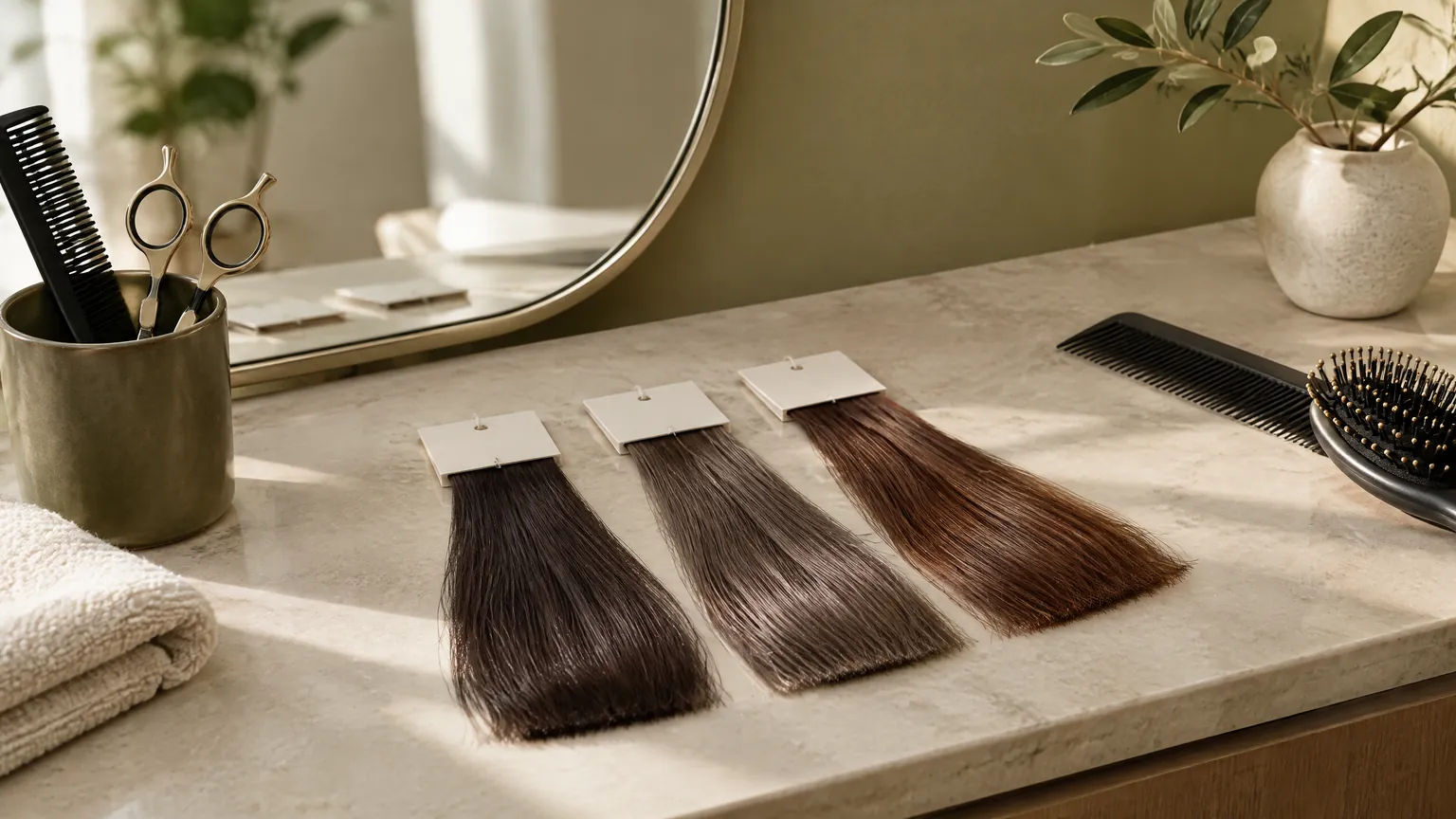
A colour photograph answers an appearance question: what would you like your hair to look like? It does not answer how much lightening is needed, where colour will be applied or which ingredients will touch your skin. Those are separate decisions. A soft-looking finish can involve substantial processing, while a visibly bold colour may involve a different combination of products. Looking subtle is not evidence that a service is gentle.
Ask the stylist to describe the proposed work in ordinary language. Will selected lengths be lightened? Will colour be deposited over the existing shade? Is a toner planned afterwards? Which parts of the hair will remain untouched? This explanation should come before choosing between fashionable names. The American Academy of Dermatology warns that appearance-enhancing processes can leave hair dry and brittle, and that greater lightening can cause greater damage. That is a reason to examine the proposed change, not a rule that every lighter result is unsuitable. 3
A service description such as balayage hong kong can help frame a consultation about colour placement. Ask what that description means for your starting shade and previously coloured lengths rather than assuming every balayage appointment involves the same products or amount of lightening.
GotGear and DT HUB are under common ownership. The linked DT HUB pages are first-party information resources, not an independent salon recommendation or evidence that a particular process will suit you.
Compare placement, lightening and ingredients
Balayage generally refers to a hand-painted placement approach. Highlights describe lighter sections within the overall hair colour and can be created using different placement methods. Bleaching is a lightening process rather than a finished style. Henna refers to a colouring material, not a pattern of application. These categories overlap: a placement service may include lightening and then a separate colour application.
The useful comparison is therefore not which label wins, but which unanswered question each label leaves behind. Salon terminology varies, so have the proposed steps written down when the distinction matters.
| Label or request | What it helps describe | What still needs checking |
|---|---|---|
| Balayage | How selected areas may be painted or blended | Whether lightener is used, which lengths are treated and what follow-up colour is planned |
| Highlights | Lighter sections against the surrounding colour | Placement, contrast, products and possible overlap with earlier lightening |
| Bleaching | A process intended to lighten hair | Hair condition, existing colour history and the agreed stopping point |
| Henna colour | A colouring ingredient or product category | Full formulation, previous products and manufacturer instructions |
| A misty or muted shade | The desired visual finish | The starting colour and processing needed to approach that finish |
When reviewing highlights hong kong, focus on how the lighter sections would sit around your normal parting and haircut. A photograph with curled hair may conceal the boundaries you would notice when wearing it straight. Ask to discuss both arrangements, without treating a reference image as a promised result.
Your colour history is part of the consultation
The visible roots are not the whole starting point. Longer hair may contain several earlier colour applications, with different products on different sections. Tell the stylist about home dyes, previous lightening, plant-based colour, straightening and perms. Include approximate dates and identify which lengths were treated if you can. A product photograph or packaging is more informative than remembering only that it was brown or natural.
If you cannot identify an old product, say so. Uncertainty is useful information; guessing creates a false basis for the plan. Ask how the stylist would assess the older lengths, whether a small hair sample should be checked and what would change if that assessment is inconclusive. Do not interpret a willingness to book as proof that every earlier product has been accounted for.
Check hair behaviour as well as the shade
Describe what you notice during ordinary washing and styling. Do the ends tangle more than the roots? Are short broken pieces appearing during brushing? Has the hair become harder to manage after earlier processing? These observations help explain your priorities, but they do not diagnose the cause or establish how much further processing is safe.
The discussion around hair bleaching hong kong should include which existing sections would receive lightener again and how that choice would be assessed. Ask what the alternative would be if those lengths are not suitable for the proposed change: less lightening, different placement, a revised shade or postponement. A responsible consultation needs room for a changed plan.
Agree a stopping point, not just a destination
A reference photograph can suggest a direction without defining an acceptable amount of processing. State which matters more if the two conflict: approaching the photograph or preserving your current length and manageability. Ask what happens if the hair does not respond as expected during the agreed work. The answer should not rely on a promise that an aftercare product will permanently undo damage.
Separate the decision to postpone from medical concerns. If your scalp is irritated, sunburned or damaged, FDA guidance advises against dyeing it. Persistent pain, inflammation or sudden marked hair loss should be assessed by a qualified healthcare professional rather than explained away as an ordinary colour-service issue. 1
Skin testing and hair assessment answer different questions
A hair-strand assessment can help explore colour response or how a small sample behaves. It does not establish whether your skin will tolerate a product. A manufacturer-directed skin or allergy-alert test addresses a different concern, and diagnostic patch testing arranged through a healthcare professional is different again. Ask which assessment is proposed, what it can show and what its limits are.
Follow the actual product instructions rather than assuming one remembered testing routine applies to every formulation. FDA guidance says sensitivities can develop after repeated exposure and formulations can change. It also states that a reaction remains possible even when a preliminary skin test shows no reaction. A previous uneventful appointment and a negative preliminary test are therefore not guarantees. 1
Tell the stylist about any earlier itching, burning, swelling or blistering after dye, even if you did not need medical help. Also disclose a history of black henna temporary tattoos. The NHS identifies PPD, or paraphenylenediamine, in many permanent and some semi-permanent dyes and notes that black henna tattoo exposure can increase the risk of reacting to PPD-containing products. A label such as semi-permanent does not, by itself, settle the allergy question. 2
If you have had a suspected reaction, do not use a salon appointment to experiment with a replacement formulation. Seek qualified medical advice about the reaction and ingredient avoidance. The NHS explains that a doctor may refer someone who has reacted to a dermatologist for patch testing to identify a particular chemical or ingredient. That is not equivalent to a salon declaring all future colour safe. 2
Henna requires an ingredient conversation
Plant-derived is a description of origin, not a promise of universal suitability. FDA guidance distinguishes henna from the Lawsonia plant from temporary tattoo products marketed as black henna that contain PPD. That warning concerns tattoo products; it should not be turned into an unsupported claim that every henna hair product contains PPD. Equally, the word henna is not enough to establish the composition of a particular hair-colour formulation. 1
Use the henna hair colour hong kong information page as a starting point for questions about the actual product. Ask for its full ingredient list, whether anything is mixed into it, the manufacturer's testing instructions and how your previous colour history affects the proposed work. Do not substitute the service name for those details.
Keep a record of the formulation if you go ahead, especially if you may want a different colour process later. Your future stylist needs to know what was applied, not just that the appointment was described as herbal. If the product cannot be identified, ask how that uncertainty would affect assessment before any subsequent processing. A gradual change of plan may be more useful than committing immediately to a very different shade.
There is also a difference between avoiding an identified ingredient and choosing a product because its marketing sounds reassuring. Someone with a previous reaction needs advice about their own history. Neither a plant-based label nor a claim about what a formulation excludes demonstrates that it contains no other ingredient capable of causing a reaction. The FDA's guidance is about informed precautions, not endorsement of any individual salon product. 1
Match the finish to your normal routine
Describe how you actually wear your hair on a workday. A soft blend that is attractive with heat-styled waves may look different in a tied-back style or with a sharp parting. Bring one reference for the colour and another for your usual haircut if necessary. Explain whether you want noticeable face-framing sections, an overall lighter impression or a quieter change visible mainly through the lengths.
A description such as misty hair colour communicates a visual preference, but it does not specify a formula or a safe route from your starting shade. Ask whether the muted appearance would require preliminary lightening, what might look different on your hair and how the proposed tone could change between appointments. An edited photograph cannot establish those answers.
Be realistic about maintenance without accepting a universal schedule. Discuss how the roots and lengths may look as the hair grows and the colour changes. Ask which future visits would involve lightening and which would involve a different colour step. This separates the first appointment from the continuing commitment and gives you a basis for deciding whether a smaller change would better fit your routine.
Location matters only after the work is understood. The area information linked under balayage kwun tong can support planning a consultation, but an area label does not confirm a separate branch, a particular appointment slot or the availability of your preferred process. Verify the location and arrangements directly before making travel plans.
Turn the quote into a clear scope of work
Two colour quotes are not comparable if one covers selected sections and another covers a broader change. Before considering the total, ask what work is included. Clarify whether the proposed scope covers preliminary assessment, lightening, subsequent colour, cutting, styling and any optional care step. Do not assume any of these is included merely because the appointment has a familiar name.
The hair colour price hong kong guide is a scope-checking resource rather than a substitute for an individual consultation. Use it to ask what would alter the agreed work, how additional steps would be explained and whether a revised quote would be approved before proceeding. No general guide can determine the condition of your current lengths.
A useful pre-appointment checklist is short enough to use in a message:
- Send a current hair photograph and identify earlier colour or chemical services, including products you cannot name.
- Explain your preferred finish and which priority takes precedence if less lightening is advised.
- Ask for the proposed steps, product-testing instructions and any need for a hair-strand assessment.
- Confirm the included work and how changes to the plan will be agreed.
- Mention previous reactions or current scalp symptoms before confirming the colour appointment.
Avoid compressing consultation, testing and a major colour change into a deadline you have set for a special event. Ask what preparation is needed before committing to the event date. Giving the assessment room to change the plan is more useful than treating a booking confirmation as a guarantee of the final shade.
A hypothetical choice: softer colour, not an automatic makeover
Consider a hypothetical reader with shoulder-length dark hair, older home-coloured ends and frequent weekday tie-backs. They like a pale, muted reference photograph but want to keep their length. The first question is not whether to book balayage or highlights. It is whether approaching that photograph would involve more processing on the older ends than they are willing to accept.
They could bring the previous dye packaging, ask how those lengths would be assessed and explain that retaining manageable hair matters more than matching the photograph. The consultation might then explore less contrast or a different placement, subject to assessment. This example illustrates a decision process, not a predicted result, a claim about service availability or evidence that a particular alternative is safe.
After any agreed colour work, keep the product information and follow the relevant aftercare instructions. The AAD notes that sun exposure can weaken hair and fade colour, especially after colouring or bleaching, and recommends a wide-brimmed hat outdoors. Such precautions support ordinary care; they do not make repeated processing harmless. 3
Pay attention to symptoms as well as appearance. The NHS says a dye reaction can take up to 72 hours to appear. If symptoms worsen or persist, seek qualified medical advice. Sudden swelling of the mouth, tongue or throat, difficulty breathing or fainting requires immediate emergency help; in Hong Kong, call 999. A salon should not be the endpoint for assessing those symptoms. 2
Common questions
Does balayage necessarily involve less processing than highlights?
No. Placement terminology does not establish how much lightening your starting shade needs or which previously coloured sections will be treated. Compare the proposed products, placement and steps. A soft-looking finish is an appearance description, not evidence of lower damage risk or freedom from skin reactions.
Can I choose henna simply because I reacted to another hair dye?
Do not treat the name as proof of suitability. Obtain qualified medical advice about the earlier reaction and check the full formulation of any proposed product. Plant origin does not establish that you will tolerate every ingredient, and a salon product test is not a substitute for investigating a suspected allergy.
What should I ask when comparing quotes for a muted colour?
Ask whether the proposed finish requires lightening, subsequent colour or work on previously processed lengths. Confirm the included assessment, cut and styling rather than assuming them. Also ask how a changed plan will be explained and approved if your hair assessment does not support the original reference image.
Sources & what they support
The scope below identifies what each reference supports. Citations do not imply independent endorsement of DT HUB or any provider, and do not establish treatment benefits or guaranteed results.
- FDA: Hair Dyes (opens in a new tab)
Sensitisation can develop after prior uneventful use; a negative preliminary skin test does not exclude all reactions; follow product instructions and avoid dyeing an irritated or damaged scalp; Lawsonia henna is distinct from PPD-containing black henna tattoo products. General US safety guidance, not Hong Kong product certification or salon endorsement.
- NHS: Hair dye reactions (opens in a new tab)
PPD occurs in many permanent and some semi-permanent dyes; black henna tattoos can increase PPD allergy risk; reactions can be delayed up to 72 hours; worsening symptoms warrant medical advice and severe swelling or breathing difficulty require emergency help; dermatologist patch testing can investigate suspected ingredient allergy.
- American Academy of Dermatology: Coloring and perming tips for healthier-looking hair (opens in a new tab)
Colour processes may cause dry, brittle hair; greater lightening can entail greater damage; sun exposure can weaken and fade coloured or bleached hair; a wide-brimmed hat is a general protective precaution. Does not establish individual suitability, permanent repair or endorsement of a commercial provider.