Cut and colour in one enquiry: record the starting point first
GotGear and DT HUB share an owner. This collection is not an independent recommendation. GotGear does not supply DT HUB salon, wig, Academy or healthcare services. Three online service sections do not represent three physical stores; the shared public studio is in Kwun Tong. Medical articles are informational only, with no diagnosis, clinical endorsement or outcome promises, and do not replace medical advice.
The short answer
Start a combined cut-and-colour enquiry with a record of the hair you have, not just a photograph of the hair you want. Describe your current length, natural roots, previous dye or chemical services, any reactions and the amount of styling you actually do. Then separate your priorities for shape and shade. This gives the salon a clearer basis for discussing what needs assessment, what could change and whether the requested work should be considered together or separately.
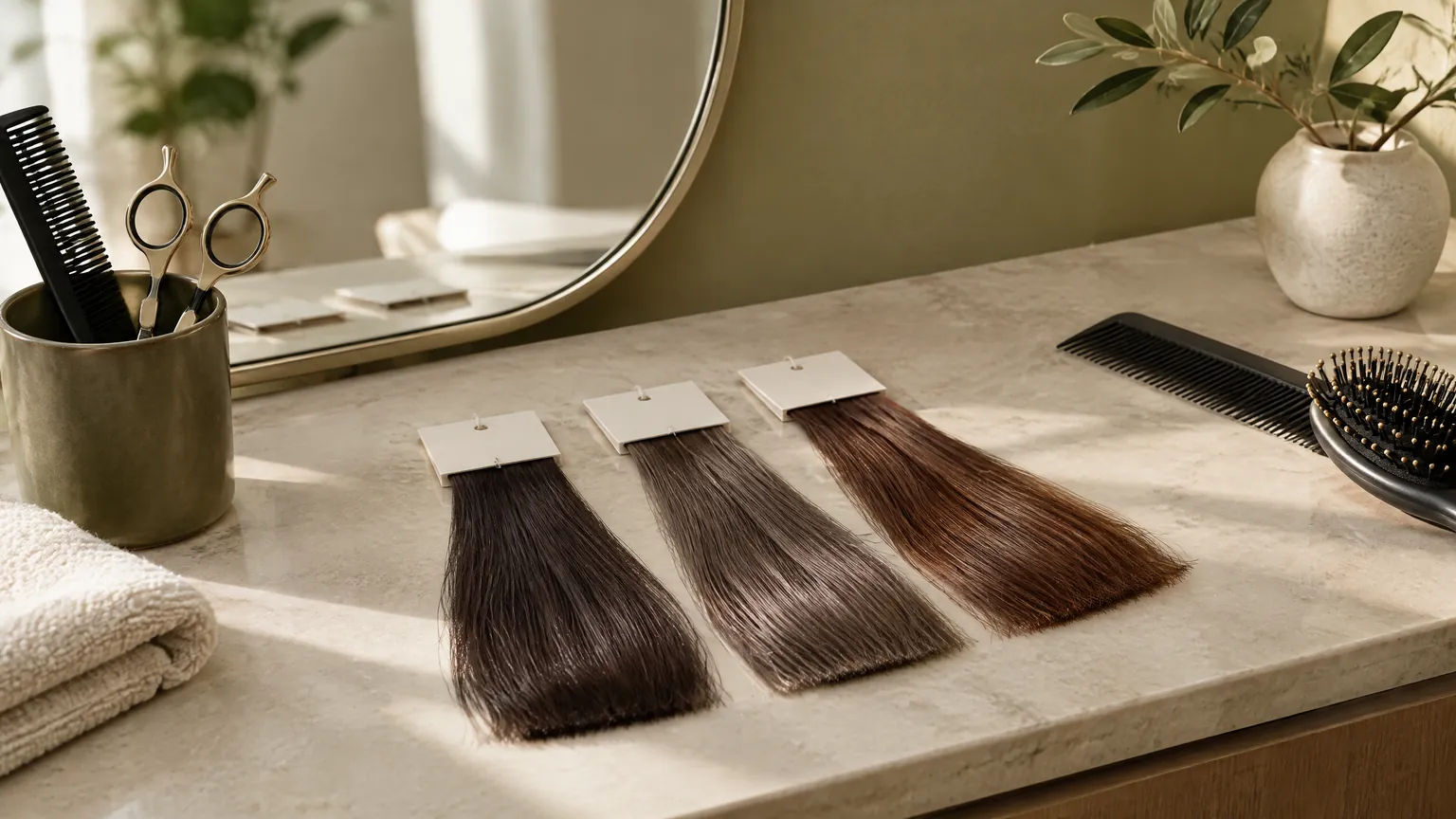
A cut-and-colour enquiry contains two decisions that affect each other. Taking off a substantial amount of length changes which coloured sections will remain. Keeping long ends means their previous treatment history still matters, even if the roots look untouched. A mood-board photograph cannot explain either point. Before discussing an appointment, create a short starting-point record that describes what is on your head now and what you are willing to change.
The record does not need technical salon vocabulary. Plain statements such as ‘the ends were lightened last year’, ‘I need enough length for a ponytail’ and ‘I do not use a round brush on workdays’ are useful. They expose constraints that a picture alone hides. A good enquiry leaves room for assessment instead of treating the desired photograph as an instruction that must be carried out.
Describe the roots, middle and ends separately
Start with your current length in recognisable terms: above the shoulders, touching the collarbone or below the shoulder blades. Mention a fringe and any notably shorter layers. Say whether your hair is usually worn naturally, straightened with a tool or tied back. If a photograph shows a styled finish, explain that it is styled rather than letting the image stand in for your everyday texture.
Next, describe the colour in three areas. The roots may show your natural shade while the middle contains an older salon colour and the ends retain previous lightening. If you cannot identify the exact shades, describe visible differences instead: darker roots, a warm-looking band or lighter tips. Do not guess a professional colour number from a screen. The purpose is to make uneven history visible, not to diagnose it yourself.
Reconstruct the history without inventing missing details
Work backwards through colour, bleach, perming and chemical straightening that may still affect the hair you intend to keep. Include home applications, not only salon appointments. Approximate dates are better than silence, provided you label them as approximate. If you do not remember whether a product was permanent or semi-permanent, say so and share a packaging photograph if you still have it.
A simple timeline also prevents the word ‘natural’ from becoming misleading. Someone may mean they have not coloured their hair recently, although treated ends remain. Write ‘no colour applied since around March; previously coloured lengths still present’ rather than ‘natural hair’. The stylist can then ask focused follow-up questions without having to discover the omitted history during the appointment.
Record observations, not promises of repair
Describe what you notice during ordinary washing and styling. Do the ends tangle more than the roots? Does the hair feel rough in one section? Are short broken-looking pieces appearing when you brush? These are observations to discuss, not proof of a particular cause. Avoid choosing a treatment merely because an enquiry form offers a box labelled ‘damaged hair’.
The American Academy of Dermatology notes that appearance-enhancing hair treatments can leave hair dry and brittle. Its general colour guidance favours staying close to the natural shade and explains that substantial lightening involves greater potential damage. That supports discussing the starting shade and condition before committing to a much lighter reference image; it does not establish that any particular shade is safe for every head of hair.1
Taking off rough ends may change the outline and remove those particular lengths, but it does not erase the history of hair left behind. Likewise, a smoother-looking styled finish is not evidence that previous chemical changes have been permanently reversed. Keep the cut decision practical: which lengths are dispensable, and which must remain for the style you need?
Give the haircut its own brief
For the cut, identify one main purpose. You may want to remove length, refresh an existing shape or change how the fringe sits. Then add a clear boundary: the shortest acceptable overall length, whether the ears should remain covered, or whether the hair must tie back without clips. These instructions are more useful than describing every attractive feature in several unrelated photographs.
The women's haircut kwun tong information page provides a separate place to check the haircut service category before sending a combined enquiry. Use that distinction to state the intended shape and length limits clearly, rather than assuming a colour request also explains how much hair you want removed.
Explain the finish you can maintain
Tell the salon what happens between appointments. If you normally air-dry, say that. If you use a straightener most mornings, describe the habit without implying that it is necessary for the proposed cut. Mention a regular helmet, a work requirement to tie hair back or a reluctance to style a fringe. These details let you discuss how the reference shape relates to your actual routine.
Also separate a photograph's cut from its finish. A curled picture may conceal the true length, and a tucked-behind-the-ear view may obscure the front layers. Ask which visible features belong to the cut and which depend on styling. You can like the silhouette without accepting the same daily preparation. That is a preference to establish before choosing a large change.
Turn the colour photograph into a specific request
Choose a colour reference for one reason at a time. Perhaps you like its depth, its muted warmth or the contrast between darker and lighter sections. Name that feature and identify anything you do not want. ‘I like the soft brown appearance, but do not want very pale pieces beside my face’ communicates more than ‘exactly like this’.
Use the hair colour kwun tong service information as a basis for checking the scope of the colour enquiry. Ask what needs to be assessed from your existing shade and history before a plan can be discussed. A service-category page does not confirm that a particular reference colour, sequence or appointment arrangement is suitable or available.
Screens and lighting make photographs imperfect colour records. Compare reference images cautiously, especially when one shows direct sunlight and another shows indoor lighting. Send the original image if possible and describe what you see in words. Do not use a filter on your current-hair photographs to make the starting point resemble the desired result. That removes information the enquiry needs.
The phrase korean hair colour can help introduce a visual preference, but it is not a single shade or technical specification. Translate the reference into the feature you actually value, such as a subdued brown appearance or gentle contrast. The label alone says nothing about whether your existing colour would need lightening or how much upkeep the finished look would involve.
Compare the choices before agreeing to a combined plan
A joint enquiry does not have to become one fixed package. The useful comparison is between different priorities, not between vague labels such as ‘complete makeover’ and ‘simple refresh’. State which outcome matters most if the original request cannot sensibly be carried out as described. That gives the discussion a direction without demanding an assessment by message alone.
| Main priority | Starting-point information that matters | Trade-off to discuss |
|---|---|---|
| Keep a reliable ponytail | Current length, front layers and shortest acceptable point | How much shaping is possible without losing tie-back length |
| Remove a substantial amount of length | Where previous colour and lightening remain | Which coloured sections would be removed and which retained |
| Change the overall shade | Natural roots, colour bands and treatment timeline | Whether the reference needs revision after assessment |
| Limit regular upkeep | Usual washing, styling and willingness to revisit the salon | How visible contrast and the chosen finish fit that routine |
| Keep chemically treated lengths | Dates of dye, lightening, perming or straightening | Whether to change, postpone or separate the requested work |
There is no universal rule in this record about cutting first or colouring first. The useful question is how the proposed shape affects the lengths and placement that would remain. Ask the salon to explain its proposed order for your situation. Do not turn a general internet sequence into an instruction that overrides the assessment of your hair.
When reviewing the hair dye kwun tong information page, keep product questions separate from shade preferences. Ask how to share a previous product name, ingredient concern or reaction history, and what checks are required before colour work is considered. GotGear and DT HUB share ownership; these links are service-information resources, not independent endorsements of results or suitability.
Keep reactions and recent chemical work visible
Do not bury a previous reaction at the bottom of a message about inspiration pictures. Record what happened, when it happened and the product involved if known. The FDA explains that reactions can develop despite earlier trouble-free use and that formulations can change. It recommends following product instructions and carrying out the specified skin test before each use, while warning that a negative skin test does not eliminate the possibility of a reaction.2
This means ‘I have dyed my hair before’ is not a safety clearance. Ask about the product-specific checks and timing before assuming that a colour appointment can proceed. A check involving a hair sample and a skin allergy check address different questions; ask which is being proposed and why. Neither replaces a truthful history or guarantees the final shade or absence of a reaction.
The FDA advises against dyeing an irritated, sunburned or damaged scalp and cautions about dye use soon after bleaching, relaxing or perming.2 Put the dates of recent chemical work near the top of the record. A combined cut-and-colour enquiry is not permission to stack further processes onto recently treated hair. The plan may need to change or wait.
If you have persistent irritation, pain, inflammation or sudden noticeable hair loss, seek assessment from a qualified healthcare professional rather than trying to resolve it through a colour booking. The FDA advises contacting a healthcare provider after a hair-dye reaction.2 This article concerns cosmetic enquiry preparation, not diagnosis, treatment or a promise that a different dye will solve a scalp problem.
Send a short record that can be answered
Use one message with the essentials in a predictable order. Keep the recent-history details beside the current photographs, then place the desired photographs after them. This makes it easier to distinguish what exists from what is only a preference. If a detail changes later, send a dated correction rather than allowing two contradictory descriptions to stand.
- Photograph your current hair from the front, side and back without colour filters, and label any styled finish.
- State the current length and the shortest length you would accept.
- Summarise dye, lightening and other chemical services affecting the lengths you plan to keep, marking uncertain dates.
- Put previous reactions and current scalp concerns in a clearly visible sentence.
- Identify one cut priority and one colour feature from your references.
- Describe your usual styling routine and realistic willingness to maintain the look.
- Ask what requires assessment, what safety checks apply and which parts of the service scope remain unconfirmed.
A hypothetical enquiry with incomplete colour history
Consider a hypothetical office worker with collarbone-length hair, darker roots and lighter ends from an old home-colour application. She wants a shorter outline and the muted brown appearance in a reference photograph, but needs to tie her hair back for exercise. She can remember roughly when she applied the colour, not its exact product type.
Her useful message would say: ‘My current hair touches my collarbone. The ends were coloured at home around last winter; I cannot confirm the product type. I want a tidier shape but still need a ponytail. In the reference, I like the subdued brown appearance rather than the curls. I usually air-dry. Please advise what you need to assess and what checks are required before discussing the colour work.’
This hypothetical message does not establish that the requested result is achievable. Its value is that it preserves the unknown detail instead of replacing it with ‘untreated hair’, and it separates the colour preference from the styled finish. It also gives the salon a reason to clarify the minimum retained length before discussing how the colour and cut might interact.
Before agreeing to the work, make sure the reply addresses your actual limits. Is the proposed retained length clear? Has the incomplete colour history been acknowledged? Are any further checks or assessments still outstanding? A useful answer need not promise an exact match. It should make the next decision clearer, including the possibility of changing the reference, simplifying the request or postponing colour while keeping the haircut enquiry separate.
Keep the record useful after the decision
Save the agreed description of the cut and colour scope for your own reference. After any service, record the date and the product details the salon can provide, without guessing information it has not confirmed. At a later enquiry, that factual note is more useful than trying to reconstruct the entire history from faded photographs. It also helps distinguish a new concern from a preference that has simply changed.
Maintenance belongs in the same conversation. The American Academy of Dermatology notes that sun exposure can leave hair dry, rough, faded and brittle, particularly after dyeing, bleaching or perming, and recommends protecting hair outdoors.1 Ask what ordinary care is appropriate for the agreed work and your routine, without expecting care products to make every further chemical change suitable.
The starting-point record is finished when it gives an honest account of the hair that will remain, the change you want and the limits you need respected. It is not a substitute for an in-person assessment. Its purpose is to make that assessment and the preceding enquiry less dependent on assumptions, so that cut, colour and upkeep can be discussed as connected decisions rather than an unexplained photograph.

Common questions
What if I cannot remember the dye used on my ends?
Say that the product type is unknown and give the approximate application date. Share any packaging photograph you already have, but do not infer a product category from the resulting shade. Explain which coloured lengths would remain after the proposed cut so the missing information can be addressed during assessment.
Should my current photographs show my usual styling?
Show the everyday appearance and label any use of curls, straightening tools or other styling. Unfiltered front, side and back views help describe length and visible colour differences. A desired-style photograph should be kept separate, with a sentence naming the specific cut or colour feature you like.
Does enquiring about a cut and colour mean both must happen together?
No. A combined enquiry lets the salon consider how the shape and shade affect each other, but it does not confirm suitability, timing or an appointment. Explain which change matters most and ask what needs assessment. The discussion may lead to a revised colour request, separate work or a haircut-only decision.
Sources & what they support
The scope below identifies what each reference supports. Citations do not imply independent endorsement of DT HUB or any provider, and do not establish treatment benefits or guaranteed results.
- American Academy of Dermatology: Coloring and perming tips for healthier-looking hair (opens in a new tab)
Supports the potential for cosmetic chemical services to leave hair dry and brittle, greater damage potential with substantial lightening, and sun protection for colour-treated hair. General guidance does not establish individual suitability or guarantee a result.
- U.S. Food and Drug Administration: Hair Dyes (opens in a new tab)
Supports recording previous dye reactions, the possibility of sensitisation after earlier uneventful use, product-instruction skin testing and its limits, avoiding dye on an irritated or damaged scalp, caution after recent chemical services, and healthcare advice following reactions. It is safety guidance, not approval of a salon or treatment.