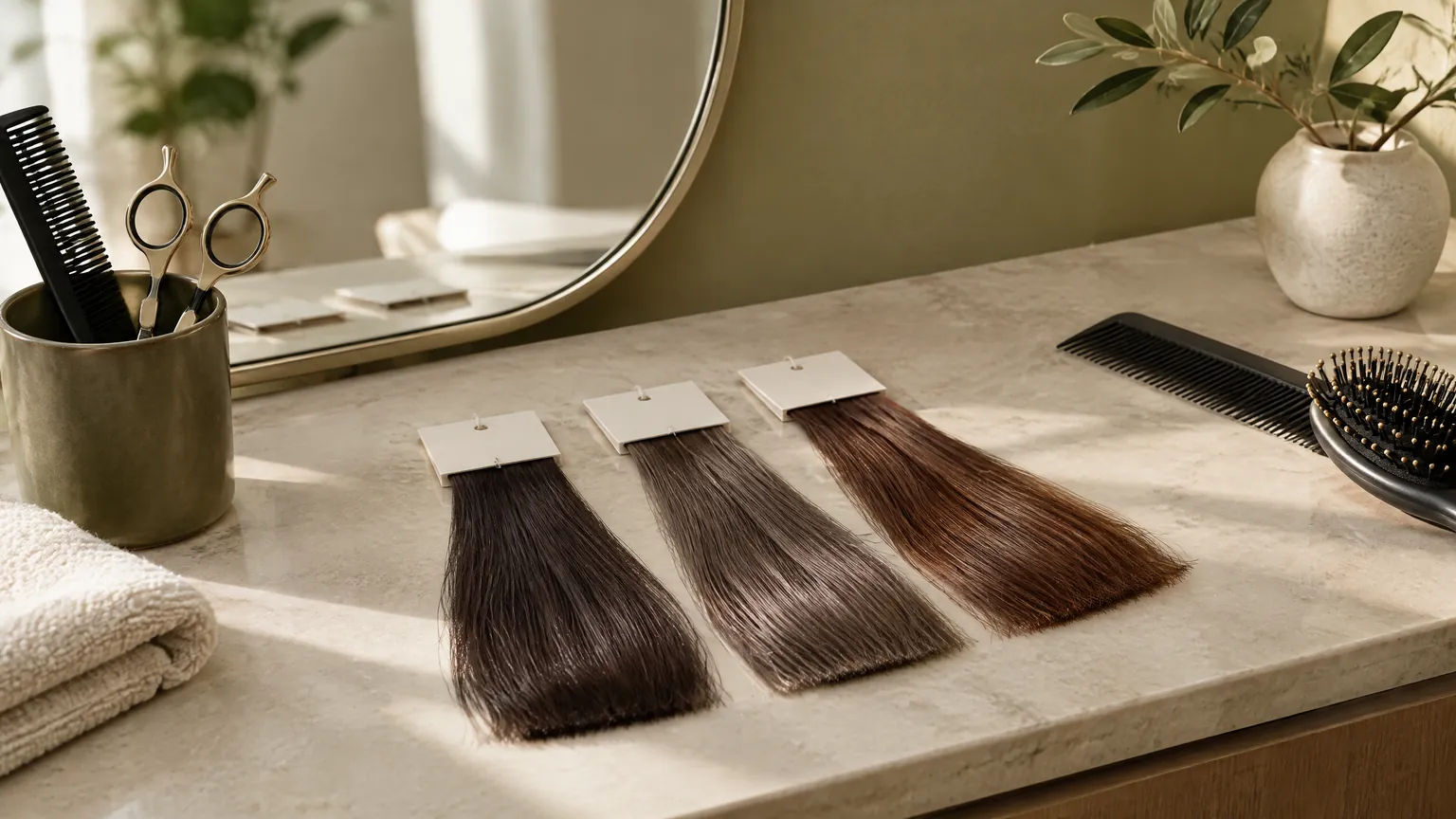
Conditioning and head-spa menus: what belongs to which appointment?
GotGear and DT HUB share an owner. This collection is not an independent recommendation. GotGear does not supply DT HUB salon, wig, Academy or healthcare services. Three online service sections do not represent three physical stores; the shared public studio is in Kwun Tong. Medical articles are informational only, with no diagnosis, clinical endorsement or outcome promises, and do not replace medical advice.
The short answer
Choose by the part of the routine you want help with, not by the most impressive care label. Conditioning concerns the feel and manageability of the hair lengths; a head spa usually centres on scalp cleansing and a relaxation experience. Neither name establishes a medical benefit. Before booking, confirm product placement, whether heat or smoothing is involved, the finishing service and any reasons to postpone. Persistent scalp symptoms need qualified medical advice, not a stronger salon package.
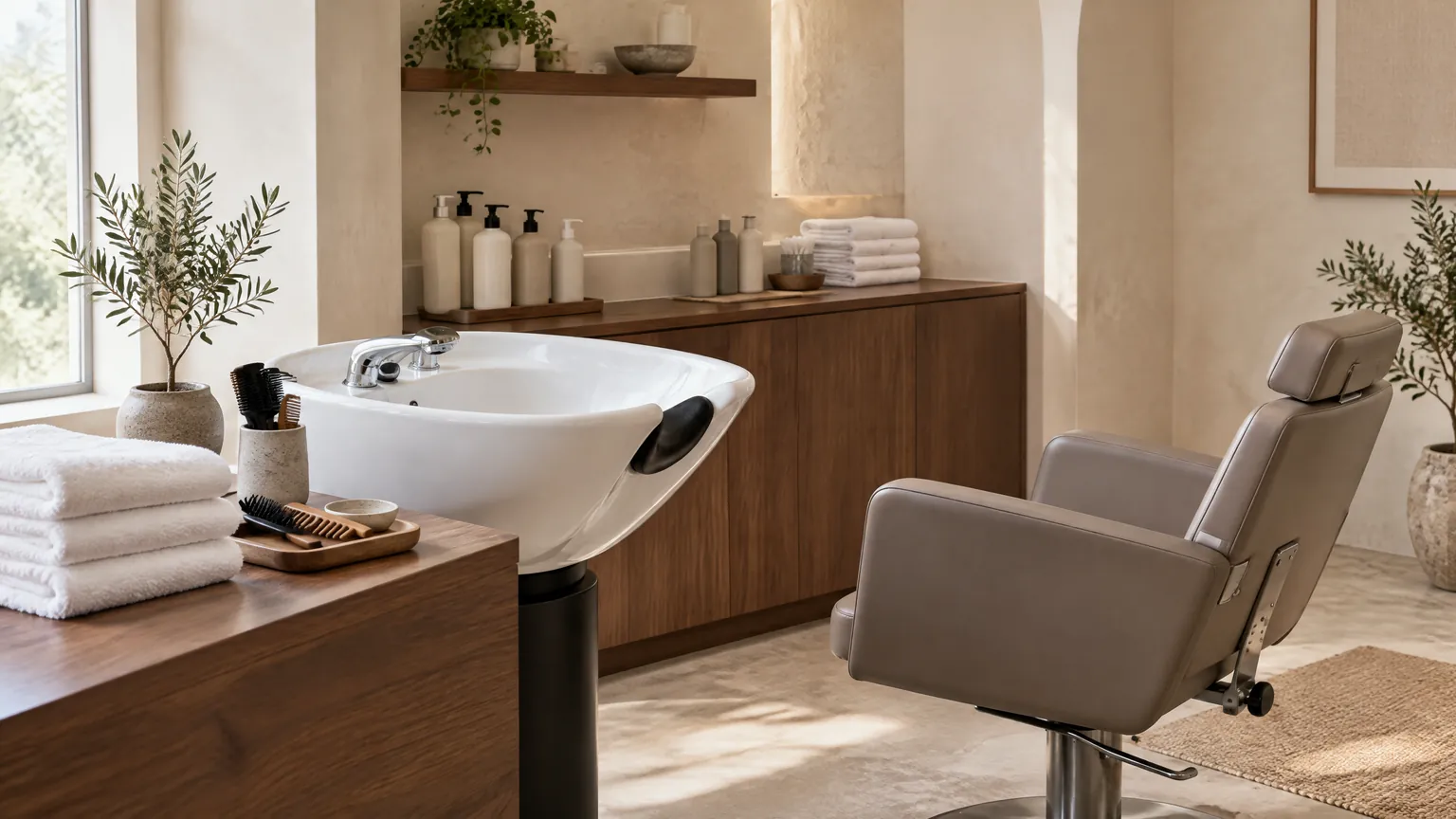
A care menu can place conditioning, keratin, oil treatment and head spa beside one another as though they were different strengths of the same service. They are not necessarily interchangeable. The useful question is what each appointment actually does: where products go, which steps are included and whether the goal is manageable hair, cosmetic scalp cleansing or a relaxing experience. A service name alone cannot answer those questions.
GotGear and DT HUB share an owner. The DT HUB links in this guide are resources for checking service descriptions, not independent recommendations or evidence of treatment effectiveness. The comparison below concerns cosmetic care and appointment planning; it does not diagnose hair loss or scalp disease.
Start with the hair lengths or the scalp
Notice where the difficulty occurs before choosing a service category. Hair that catches when combing at the ends presents a different practical concern from roots that feel oily after exercise. Both may occur on the same head. Describe them separately rather than asking for the deepest treatment available, because a product applied to the lengths does not automatically address the scalp.
The American Academy of Dermatology recommends applying shampoo to the scalp to remove built-up products, dead skin and excess oil. It recommends conditioner after washing to moisturise and detangle hair and make it easier to manage. For fine or straight hair, its advice is to condition the ends; for dry or curly hair, conditioner can go through the lengths. These distinctions support choosing product placement by hair type rather than coating every area identically. 1
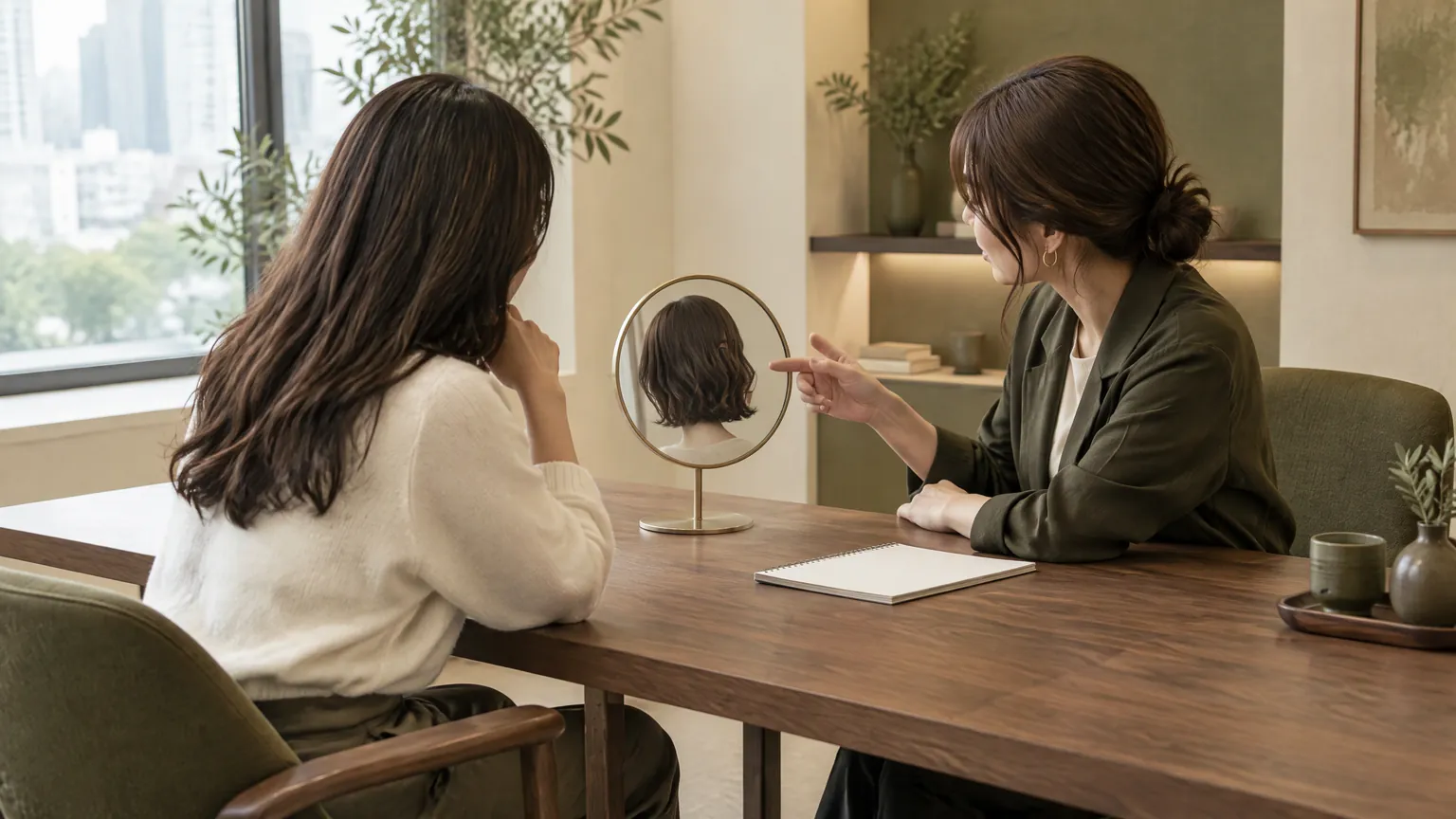
Try explaining your priority in everyday terms: the ends tangle when you dry your hair, the roots become oily before the next wash, or you want a comfortable cleansing appointment without changing your curls. Such descriptions are more useful than guessing that your hair lacks a particular ingredient. They give the stylist a starting point without turning a salon consultation into a medical diagnosis.
What the appointment categories do—and do not—tell you
Use this table to compare the questions worth asking. It is a reading aid for care menus, not a universal specification or a statement that every salon offers every step.
| Menu category | Main appointment focus to clarify | Question before booking | What the name does not establish |
|---|---|---|---|
| Conditioning or hair mask | Product application to the hair lengths and easier handling | Which areas will be conditioned, and how will it be rinsed? | Permanent reversal of damage or suitability for every hair type |
| Keratin or oil treatment | An ingredient-led care description that needs a process explanation | Is this conditioning, or a smoothing procedure involving heat? | A standard formula, a safety guarantee or a fixed result |
| Head spa | Cosmetic scalp cleansing and the comfort of the appointment | Are massage, exfoliation, steam and conditioning included or optional? | Treatment of scalp disease, reduced hair loss or hair regrowth |
| Combined care appointment | Separate scalp and hair-length steps | Which steps are additional, and what finishing service is included? | That combining services is necessary or appropriate |
The overlap matters. A head-spa appointment may include conditioner at the end, but that does not make it equivalent to a dedicated lengths-focused service. Conversely, a conditioning appointment normally involves washing, yet that alone does not mean it includes an extended scalp-care experience. Ask for a sequence of actions rather than relying on a package title.
For a lengths-focused enquiry, the deep hair treatment kwun tong page provides a place to compare the provider's descriptions. Use those descriptions to ask which process is being proposed for your current hair and chemical-service history. Terms such as deep, reconstruction and repair are not, by themselves, proof of a permanent change or a reason to accept every suggested step.
Read keratin as a question about process
Keratin can appear in the name of a conditioning product or in the description of a smoothing service. That ambiguity matters because an ingredient-led name is not a complete account of how a product will be applied. A rinse-out conditioning step and a procedure intended to smooth curls may involve different instructions, heat exposure and aftercare. Confirm the intended process before discussing the hoped-for finish.
The keratin treatment hong kong information page is useful for framing that conversation: ask which named option is being discussed, whether it aims to change the appearance of your curl pattern, and whether heated tools are involved. Do not infer the formula, suitability or duration of any cosmetic effect from the word keratin. Preserving volume may also be a different goal from seeking the smoothest finish.
If heated smoothing is proposed
The US Food and Drug Administration warns that some hair-smoothing products contain formaldehyde or related ingredients and can release formaldehyde gas when heated. Its consumer guidance recommends asking the salon about ingredients, including formaldehyde, formalin and methylene glycol. This warning concerns relevant smoothing formulations; it does not establish that every keratin-labelled conditioner contains them or that a particular linked service uses them. 2
Ask for the product identity and an explanation of its safe-use instructions. Where relevant, ask whether ingredient information and a safety data sheet are available. Ventilation is also part of the conversation for products that release hazardous vapours. The FDA describes eye, skin and respiratory irritation among potential reactions. If staff cannot clarify a proposed smoothing product, you can decline that step rather than treating uncertainty as reassurance. 2
Keep the regulatory context straight. FDA guidance is a useful source of safety questions, not evidence that a Hong Kong salon or product has received an FDA approval. Nor does it supply a local legal compliance assessment. For ordinary care, excessive heat is another consideration: the AAD advises limiting heat styling, using low or medium settings and using a heat-protectant product. 1
Keep head spa within a cosmetic scope
A head spa can be chosen for the experience of having the scalp washed and, where offered and appropriate, receiving massage. That is a valid preference without attaching a clinical claim to it. The details still matter: cleansing, exfoliation, scalp products, steam and finishing can be separate components. Ask what is included and whether a step can be omitted if it does not suit you.
The head spa hong kong description can help you identify those components before making an enquiry. Treat references to scalp care as an invitation to clarify cosmetic tasks, not as proof that the appointment treats inflammation, stops shedding or stimulates regrowth. A longer session, a scalp camera or a more elaborate menu does not by itself demonstrate medical benefit.
A camera image may help illustrate what someone can see, but appearance alone should not be presented as a diagnosis of the cause of itching or hair loss. Likewise, a freshly washed feeling is not a measure of follicle health. Keep any discussion of the result attached to the cosmetic experience actually requested, such as how the hair feels when handled or whether the appointment is comfortable.
Sensitivity changes the booking decision
Tell the provider about previous reactions to hair products before application, including any known sensitivity to fragrance or an earlier uncomfortable service. Ask what would happen if a cleanser, scalp product, heat source or massage pressure feels unpleasant. An assurance that a product is gentle is not enough information to decide whether you personally want it applied.
Do not assume visible flakes call for harder scrubbing. The NHS explains that dandruff is not caused by poor hygiene and that scalp flaking can have different causes. It advises medical assessment for severe itching, a red or swollen scalp, and symptoms that persist despite appropriate dandruff care. These are reasons to stop treating the concern as a menu-selection problem. 3
Agree the booking scope before arriving
A local appointment should still begin with a precise enquiry. The head spa kwun tong page points to the same service category, but a location term does not resolve which version, steps or finishing arrangements you are requesting. Confirm the current scope directly rather than assuming that every description on the page will apply to your appointment.
Use the following checklist in a message or consultation. It is designed to prevent a mismatch between what you expect and what the provider prepares to do.
- State one main goal: easier detangling of the lengths, cosmetic scalp cleansing or a relaxing appointment without changing hair shape.
- Describe recent colour, bleach, perm or straightening work and any further chemical service you are considering.
- Mention previous product reactions and current scalp discomfort before products are selected.
- Ask for the proposed sequence, including product placement, massage, exfoliation and any heat.
- Confirm what is optional and whether conditioning the lengths is separate from the scalp-focused steps.
- Clarify whether drying or styling is included, and what your hair will be like when you leave.
- Ask what signs would mean postponing the service or stopping an individual step.
This is also a practical timing issue. Washing, processing and finishing are not the same thing, so ask for the expected appointment scope rather than relying on a headline duration. If you need to return to work afterwards, explain the finish you need. Do not assume a particular drying method or same-day combination with colour can be accommodated.
A hypothetical mixed-concern appointment
Consider this hypothetical situation: a person with coloured, shoulder-length hair exercises before work and finds that the roots feel oily while the ends catch during detangling. They want their existing wave pattern preserved. They have no persistent itching, redness or pain. This example illustrates how to organise an enquiry; it is not a customer case or a predicted result.
Their first message could separate the tasks: they want the scalp cleansed and the lengths conditioned, without a curl-smoothing procedure. They would disclose the colour history and ask whether the proposed head-spa option already contains suitable lengths-focused conditioning. If it does, there may be no reason to request a second service solely because another menu name sounds more intensive.
If the main difficulty is tangling, a lengths-focused appointment may be the closer match to the stated goal. If the person values an extended cleansing and relaxation experience, they could enquire about a head spa while confirming how the ends will be handled. Neither choice requires claiming that the scalp needs detoxification or that the hair needs a diagnosed protein correction.
Now change one fact: the scalp is repeatedly painful and red. The priority is no longer choosing between packages. Medical assessment should come first, and an exfoliation or massage appointment should not be used to test whether the symptoms improve. The NHS referral advice for painful, persistent or inflamed scalp symptoms supports that boundary. 3
Judge cosmetic care alongside the everyday routine
After an appointment, distinguish the effect of the finish from the hair's usual behaviour. A styled appearance can be enjoyable without proving that damage has been permanently reversed. Useful observations include how easily the lengths detangle at your next normal wash, whether the finish feels too heavy for your preference, and whether any product has caused discomfort. These are observations to discuss, not a self-diagnosis.
Keep home care proportionate to hair type. The AAD recommends washing according to how dirty or oily hair becomes, gentle detangling with a wide-tooth comb and avoiding rough towel rubbing. It also advises limiting excessive heat. A salon appointment does not remove the need for these habits, and a more elaborate menu is not automatically better than a routine you can comfortably maintain. 1
Avoid turning a satisfactory cosmetic result into a promise that repeated appointments will cure scalp problems. Persistent irritation, pain or sudden marked shedding warrants advice from a qualified healthcare professional rather than automatic rebooking. If a smoothing product causes a reaction, seek medical advice; the FDA specifically advises consumers to report symptoms to their healthcare provider. 2
The best-defined appointment is the one whose tasks match your request and whose limits are clear. Decide which part of your routine needs help, clarify ambiguous product names, and confirm the finish before booking. Conditioning and head spa can overlap, but they should remain understandable cosmetic choices—not labels that stand in for clinical evidence.

Common questions
If a head spa includes conditioner, do I still need a separate hair treatment?
Not automatically. Ask where the conditioner is applied and what the lengths-focused step involves. If your goal is ordinary detangling and a comfortable finish, that step may match your request. A separate menu category is a reason to clarify the difference, not proof that you need both appointments.
Does choosing keratin mean my curls will be straightened?
The name alone does not tell you. Ask whether the proposed process is conditioning or smoothing, whether heated tools are used, and what change in curl appearance is intended. Explain that you want to preserve your curl pattern if that matters to you, and request product information before agreeing to heated smoothing.
Should I book a head spa because my scalp is flaky and itchy?
Do not assume flakes need an intensive cosmetic cleanse. Severe itching, redness, swelling, pain or persistent symptoms deserve qualified medical assessment. A head spa is not a diagnosis or a substitute for that advice. Clarify the cause and appropriate care before deciding whether a cosmetic scalp appointment is suitable.
Sources & what they support
The scope below identifies what each reference supports. Citations do not imply independent endorsement of DT HUB or any provider, and do not establish treatment benefits or guaranteed results.
- American Academy of Dermatology: Tips for healthy hair (opens in a new tab)
Dermatologist-reviewed guidance on scalp-focused shampooing, conditioner placement by hair type, gentle detangling, washing according to oiliness or dirt, and reducing excessive heat. It does not establish the efficacy of any linked salon service.
- FDA: Hair Smoothing Products That Release Formaldehyde When Heated (opens in a new tab)
Government guidance on formaldehyde release from relevant heated smoothing formulations, possible irritation, ingredient and safety-data questions, and medical advice after adverse reactions. US regulatory statements are not represented as Hong Kong requirements or product approval.
- NHS: Dandruff (opens in a new tab)
Government health guidance that dandruff is not caused by poor hygiene, that flaking can have different causes, and that persistent symptoms, severe itching, redness, swelling or pain can require medical assessment. No medication or treatment regimen is prescribed in this article.