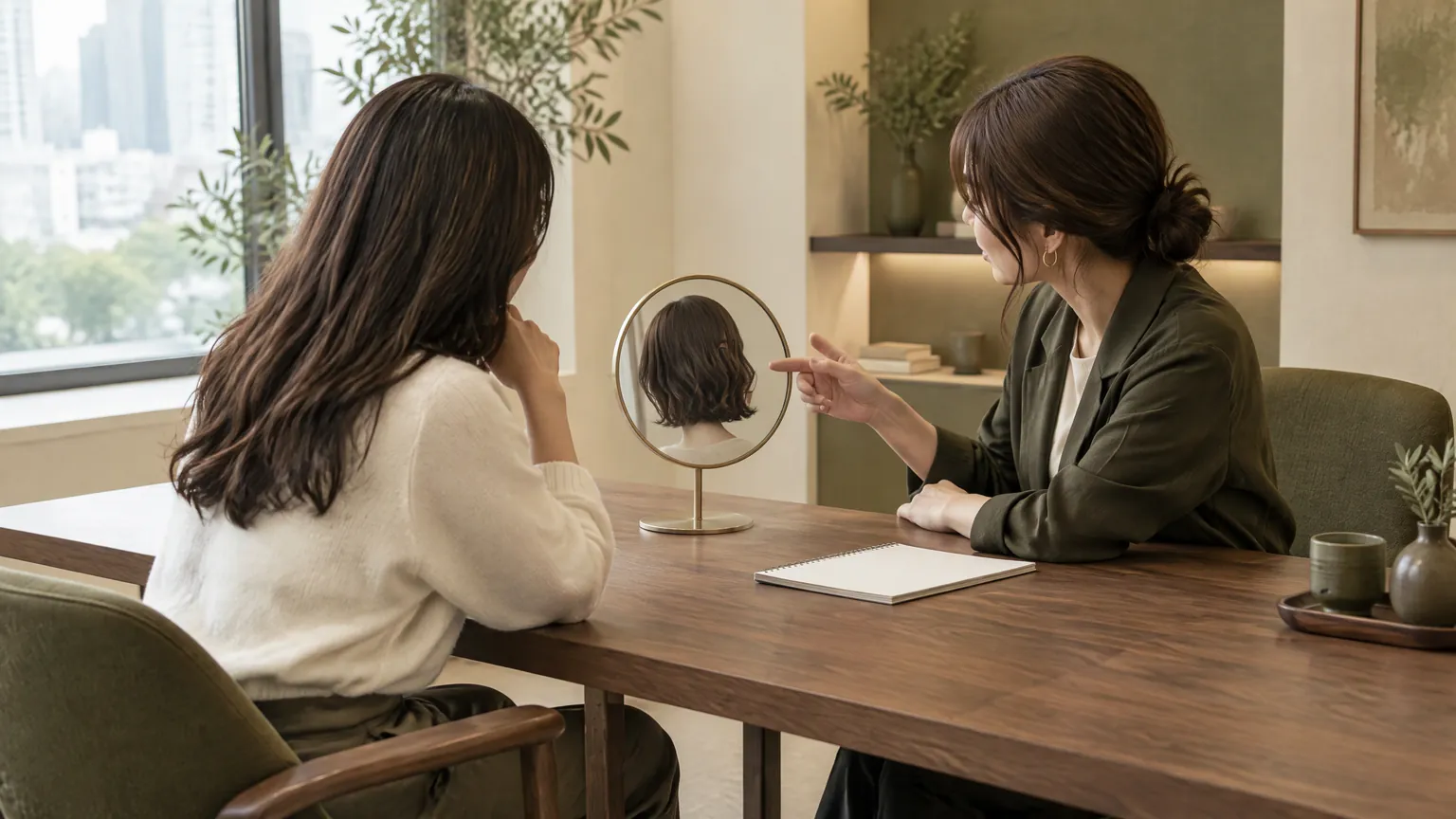
Salon extensions or clip-ins? Compare ongoing support and removal
GotGear and DT HUB share an owner. This collection is not an independent recommendation. GotGear does not supply DT HUB salon, wig, Academy or healthcare services. Three online service sections do not represent three physical stores; the shared public studio is in Kwun Tong. Medical articles are informational only, with no diagnosis, clinical endorsement or outcome promises, and do not replace medical advice.
The short answer
Salon-attached extensions usually involve a continuing relationship with a stylist for checks, maintenance and method-specific removal. Clip-ins give you more control over when to wear extra hair, but place more responsibility on you for fitting, handling and storage. Neither option is automatically suitable for fine, damaged or thinning hair. Compare the support available after fitting, your ordinary washing and exercise routine, and how you would remove the pieces if they became uncomfortable—not just the finished hairstyle.
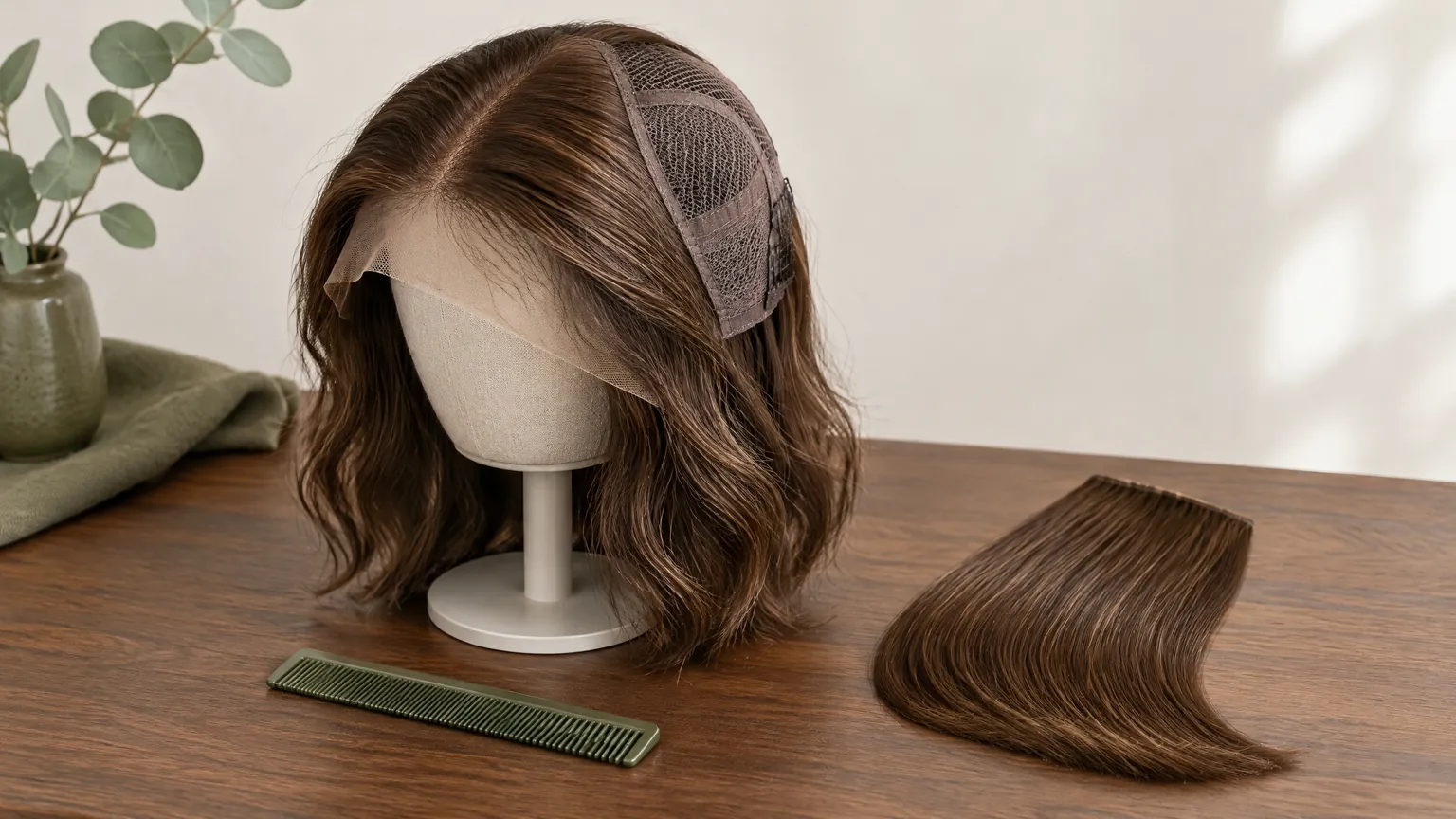
Extra length is the visible part of choosing extensions. The less visible decision is who will look after the attachments, how your own hair will be cleaned, and what happens when you want the added hair taken out. A style that fits a photograph may not fit a week of commuting, exercise and washing.
Start by deciding whether you want extra hair for particular occasions or as part of your everyday appearance. Then consider the practical work involved. Salon-attached extensions are not a single method, and clip-ins are not a maintenance-free alternative. The useful comparison is between the actual fitting and care arrangements being proposed, rather than a broad promise that one category is easier or safer.
What support are you choosing?
With extensions intended to stay attached between washes, support should cover more than the initial installation. Ask who will check the attachments, what would prompt an earlier appointment, and whether the provider can remove that specific system. The method matters: adhesive attachments, small mechanical attachments and sewn-in arrangements do not have identical release procedures. These are general examples, not a claim that every salon offers them.
With removable clip-ins, much of the support needs to happen before you use them independently. A fitting demonstration should show how the pieces open and close, where they belong, and how to take them out without dragging through your own hair. If you cannot comfortably manage the back of your head, that is a practical limitation worth discussing rather than something to overlook.
Professional fitting does not eliminate the possibility of damage. The American Academy of Dermatology explains that pulling from weaves or extensions can cause breakage and hair loss, including permanent loss if follicles are damaged. It advises speaking up when installation hurts or causes a headache, rather than treating discomfort as something to endure. 1
A sensible support arrangement therefore includes permission to change the plan. Reducing the proposed volume, choosing a different style, or declining attachment altogether should remain possible when the fit or your own hair does not support the original idea.
Compare the work before comparing the finished look
Use the table below to identify the questions that matter in your situation. It is a comparison of responsibilities, not a ranking of attachment methods or an assurance of suitability. Actual instructions must match the pieces and system you are considering.
| Decision point | Salon-attached extensions | Removable clip-ins | Question to resolve |
|---|---|---|---|
| Fitting | Installation and later adjustment depend on the method | The wearer needs to learn repeatable placement | Can the fit be demonstrated without painful pulling? |
| Washing | Your own hair is cleaned with attachments in place | Pieces can be removed before washing your own hair | What is the separate care routine for scalp and added hair? |
| Upkeep | Checks and maintenance need an agreed plan | Clips, tangles and placement need attention between uses | Who can help if a piece shifts or becomes difficult to handle? |
| Changing your mind | Removal may require a stylist and specific tools or products | Normal removal uses the clips' release mechanism | What happens if the usual removal process does not work? |
| Time away from home | Access to maintenance and removal needs consideration | Fitting and storage travel with you | Can you manage the routine during your actual trip? |
Neither column tells you how natural the result will look. Colour, texture, placement and the relationship between the added hair and your existing cut all need discussion. A longer or fuller proposal may also demand more handling than a smaller change. Ask to compare a modest version of your goal before committing to the most dramatic one.
Make the consultation about your own hair
Bring a clear description of the result you want, but also explain what your hair is like now. Recent bleaching, chemical straightening, breakage, tenderness or noticeable shedding are relevant information. Do not describe all thinning as a styling problem that simply needs more hair attached. Persistent irritation, pain or sudden obvious hair loss warrants assessment by a qualified healthcare professional.
Fine hair and damaged hair are not interchangeable descriptions. Hair can be naturally fine without being chemically damaged, while thicker strands can still be fragile after processing. Ask the stylist to explain how the proposed attachment and amount of added hair relate to your present condition. A label such as “lightweight” does not answer that question by itself.
DT HUB's hair extensions kwun tong service information is a starting point for asking about the proposed installation, blending and aftercare scope. Confirm the method being offered for your appointment and whether checks and removal are included in the arrangement. A page describing several options does not establish that every option is available or appropriate for you.
Explain how you normally wear your hair at work. If you need it tied back, ask to see how that position affects the attachments and your comfort. Tell the stylist about headwear or protective equipment too. Do not compromise the fit of safety equipment to accommodate a hairstyle.
Before fitting, agree what will happen if the proposal proves uncomfortable. It is easier to discuss adjustment and removal while choosing the service than when you are already worried about an attachment.
Clip-ins offer flexibility, not freedom from tension
The appeal of clip-ins is the ability to choose when the extra hair is present. That can be useful when you want occasional fullness but prefer your usual hair routine on other days. However, a removable piece still puts its weight and grip onto existing hair while it is worn.
The British Association of Dermatologists identifies extensions, tight hairstyles and hair clips among factors associated with traction alopecia, which is hair loss caused by repeated pulling. It also notes that excessive hair length can contribute through weight. This means that “no adhesive” is not the same as “no risk”; repeated pressure from clips deserves attention too. 2
For a product-level discussion, the clip in hair extensions hong kong information page can help frame questions about removable pieces and their care. Check whether the particular item under discussion is genuinely clip-attached or a different system: a page covering both clip-in and tape-in products should not lead you to assume they share a removal routine.
Ask for a placement demonstration that you can repeat, followed by a removal demonstration. Show how you would reach each clip rather than merely watching someone else do it. You also need instructions for caring for the added hair itself; a familiar shampoo or styling tool is not automatically suitable for every material.
Do not keep adding pieces to hide a clip that is awkwardly placed. Take the difficulty back to the fitter and discuss placement or a less full result. If wearing the pieces causes soreness, stop using them and seek advice rather than trying to make the grip tighter.
Fit the care routine around washing and exercise
Think about an ordinary day rather than an ideal one. Someone who exercises before work may need a routine that accommodates sweating and frequent washing. Someone who styles their hair hurriedly may struggle with attachments that require careful handling. These are reasons to ask detailed questions, not reasons to assume a particular method is unsuitable for every active person.
The American Academy of Dermatology advises washing as needed for your hair type and removing clip-ins before washing your natural hair. It also recommends ongoing care of your own hair while wearing and between periods of wearing extensions. Keeping the added hair present should not mean abandoning scalp hygiene. 1
For salon-attached pieces, request instructions that distinguish scalp cleansing from care of the hair lengths and attachments. Ask what to do after swimming, how to manage drying, and which products should stay away from the attachment area. Do not borrow instructions for a different system simply because both are called extensions.
For clip-ins, separate the routine into care for your own hair and care for the removable pieces. Ask how the pieces should be cleaned, dried and stored according to their material. Also confirm when they should be removed, including before bed or activities where they might snag. There is no need to invent a universal washing interval for every wearer and product.
Protecting the hairline matters in either case. AAD describes the fine hairs around its edges as fragile. Ask whether the intended placement or tied-back style pulls on that area, and avoid using a tight finish to disguise an uncomfortable fit. 1
Agree the removal route before installation
Removal is part of the decision to get extensions, not an optional detail for later. Find out whether the person fitting the system also removes it, how to arrange that service, and what to do if you need help earlier than expected. Availability must be confirmed rather than inferred from a general booking page.
For attachments that stay in place
Ask for the exact name of the system and a clear explanation of its intended professional removal process. Adhesive systems may need a compatible release product; mechanical or sewn attachments require their own approach. This is not a reason to buy a generic remover or cut around an attachment yourself. The point is to know who can carry out removal without improvisation.
If you plan to travel or will have limited time for appointments, address that before fitting. Ask whether removal would require returning to the original provider and what information another appropriately experienced stylist would need. Do not assume any salon can remove every type of attachment.
For removable clips
In normal use, a clip needs to be released before the piece is lifted away. Follow the demonstrated technique and avoid pulling on the added hair to force a closed clip loose. If the piece is caught in tangled hair or the mechanism will not release normally, stop and request help. Removability only helps when you can actually manage the removal.
Once either type is removed, avoid assuming that immediate reattachment is the only next step. AAD recommends giving natural hair breaks from extensions and weaves. Its general advice does not replace system-specific care instructions, nor establish a guaranteed safe wearing period for an individual. 1
A hypothetical working-week comparison
Consider a hypothetical Hong Kong office worker who wants fuller hair for two evening events but also swims regularly. She has no reported scalp symptoms and usually wears her own hair loosely. This is an illustrative decision, not a customer account or a claim about results.
Her first question is whether occasional removable pieces would meet the goal. The useful test is practical: can she fit and remove them comfortably, do they blend with her current haircut, and can she follow the material-specific care instructions? If those questions remain unresolved, a clip-in label alone is not enough to proceed.
Now change one detail: she wants the fuller style throughout the working week and finds repeated fitting difficult. Salon-attached extensions may be worth discussing, but swimming and her appointment schedule become central. She needs an explanation of the particular system's care, a realistic maintenance arrangement and a confirmed removal route. Wanting everyday fullness does not make every attachment suitable.
Change another detail: she has new tenderness and obvious shedding. The immediate decision is no longer which extension method to choose. She should seek qualified medical assessment before using added hair to conceal the change. A fitting consultation cannot establish the cause of hair loss, and a comfortable-looking photograph cannot resolve that uncertainty.
Leave with a clear scope, not just a style name
The hair extensions hong kong information page offers another place to review the service categories before making an enquiry. Ask the provider to specify what the proposed work covers, rather than combining descriptions from different pages into an assumed package. DT HUB and GotGear have shared ownership; these links are service-information resources, not an independent endorsement.
Use this checklist to make the arrangement concrete before agreeing to fitting:
- Identify the actual attachment system and the proposed amount of added hair.
- Explain your washing, exercise, headwear and tied-back styling needs.
- Ask to see both the fitting or placement process and the relevant removal approach.
- Request care instructions for your own hair, the attachments and the added material.
- Confirm how checks, adjustment and planned or earlier removal would be arranged.
- Agree what to do if there is pulling, soreness, slipping or tangled attachments.
Keep the instructions somewhere you can retrieve them. For clip-ins, that might mean retaining a simple placement guide with the pieces; for salon-attached extensions, keep the system details alongside the care and contact information. The purpose is not paperwork for its own sake, but avoiding guesswork when your routine changes.
Neither dermatologist source compares every commercial attachment system or certifies a particular provider. Their guidance supports caution about pulling, attention to hygiene and taking symptoms seriously. Choose only after the actual proposal fits your hair and your ability to maintain and remove it. If pain, irritation or sudden hair loss persists, seek qualified healthcare advice rather than relying on a styling adjustment alone. 1
Common questions
Are clip-ins automatically safer because they have no adhesive?
No. Clips still grip existing hair and carry the weight of the pieces. Repeated pulling can matter even without adhesive. Discuss placement, volume and your hair's condition, learn normal removal, and stop wearing pieces that cause soreness. Persistent symptoms or noticeable hair loss need qualified healthcare advice.
What should I confirm if I may need salon extensions removed early?
Confirm the exact attachment system, who can remove it and how to arrange help before fitting. Ask what happens if your usual provider is unavailable or you are travelling. Do not assume a generic remover, another salon or a home technique will be appropriate for the specific attachments.
How should regular swimming affect my extension decision?
Explain your swimming and washing routine before choosing. Ask for care instructions for the specific attachment and material, including cleansing and drying after swimming. Removable pieces may offer scheduling flexibility, but still require comfortable fitting and separate care. No category should be treated as universally suitable for swimmers.
Sources & what they support
The scope below identifies what each reference supports. Citations do not imply independent endorsement of DT HUB or any provider, and do not establish treatment benefits or guaranteed results.
- American Academy of Dermatology: How to prevent hair damage from a weave or extensions (opens in a new tab)
Supports the risk of hair damage and traction-related hair loss from extensions; advice to report pain or headaches during fitting, maintain natural-hair care, remove clip-ins before washing, protect fragile hairline hairs and take breaks. Does not certify a provider or prove one system safest.
- British Association of Dermatologists: Traction alopecia (opens in a new tab)
Supports the explanation that repeated pulling can cause traction alopecia, including permanent damage with prolonged tension; identifies extension attachments, hair clips and excessive hair weight as associated factors. Used for risk awareness, not diagnosis or treatment recommendations.