A family haircut booking: give each person a separate brief
GotGear and DT HUB share an owner. This collection is not an independent recommendation. GotGear does not supply DT HUB salon, wig, Academy or healthcare services. Three online service sections do not represent three physical stores; the shared public studio is in Kwun Tong. Medical articles are informational only, with no diagnosis, clinical endorsement or outcome promises, and do not replace medical advice.
The short answer
Book a family haircut as several individual services, not one shared instruction. Give the salon each person's preferred shape, length to retain, daily styling routine and comfort needs. For children, explain any difficulty with capes, washing or clipper noise before confirming arrangements. For adults, separate the haircut from any additional grooming request. Ask how supervision and appointment order would work, and leave room to pause rather than relying on a promised finishing time.
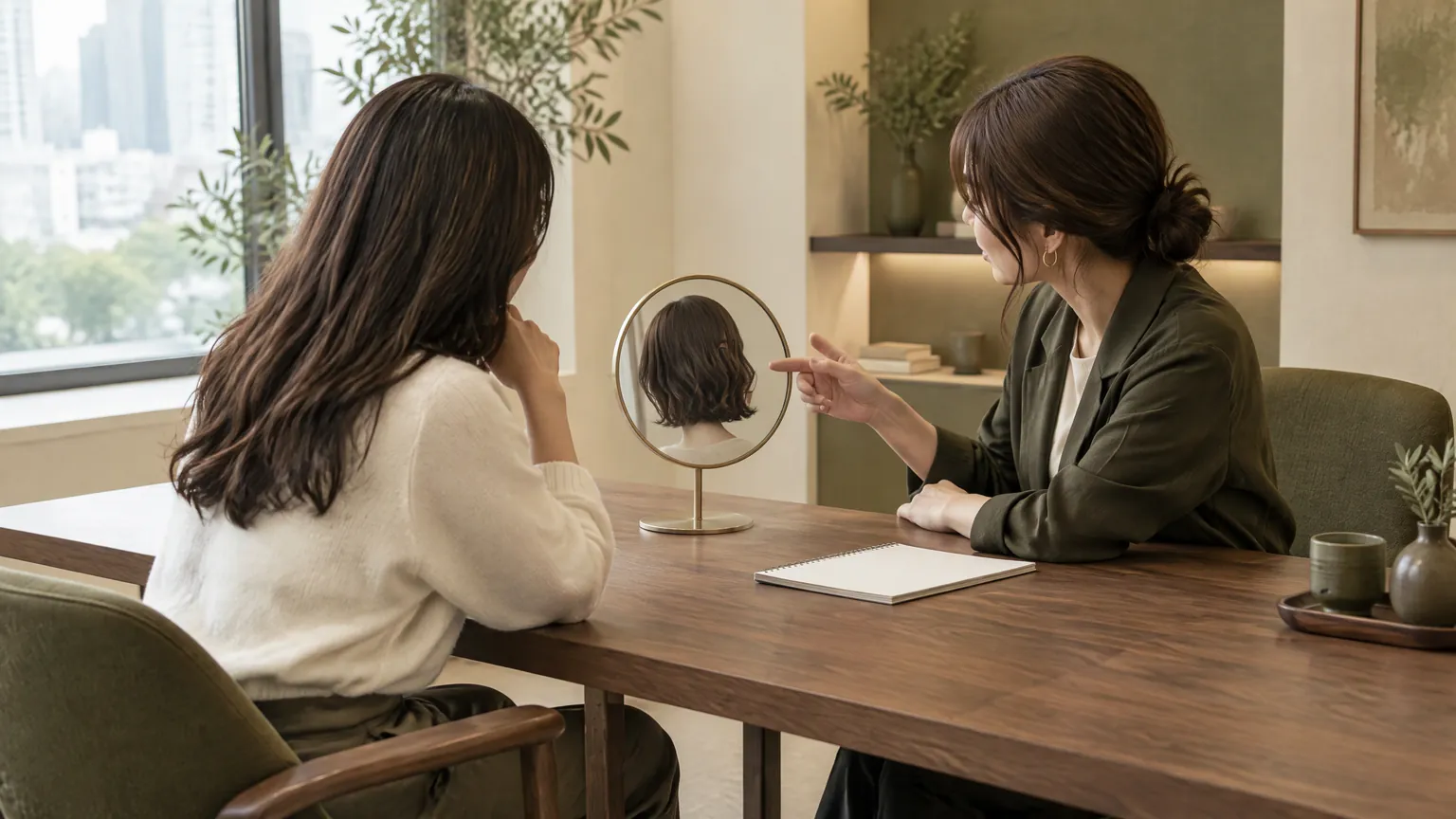
A family haircut booking should contain one brief for each person. Sharing a journey does not mean sharing a haircut, a tolerance for the same tools or the same expectations about grooming. The useful starting point is to identify what each person needs from the visit before asking whether those services can be arranged together. That makes the enquiry more specific than asking for a family appointment and explaining everything at the chair.
For local arrangements, DT HUB's haircut kwun tong information page is a starting point for an enquiry. Send the number of people and their separate service requests, then ask the salon to confirm the proposed arrangement. GotGear and DT HUB share common ownership; these links provide access to service information, not independent recommendations. A published page does not confirm that several chairs, consecutive appointments or a particular finishing time will be available.
Separate the shared logistics from the individual haircut
Keep the group details brief: who is attending, who needs a haircut and which adult will supervise any younger child. Put style preferences in separate notes underneath. This helps prevent an adult's request for very short sides becoming the default instruction for a child who dislikes clippers. It also avoids treating an accompanying parent as available for their own haircut while they are still responsible for someone in another chair.
A family booking is not necessarily a simultaneous booking. Ask whether the services would be consecutive or overlapping, who would carry out each cut and where the accompanying family members could wait. Treat the answers as arrangements to confirm, not features to assume. If one adult is bringing two children, an overlapping adult appointment may be impractical even when multiple services could otherwise be offered.
Avoid attaching a non-negotiable activity immediately after the visit. Consultation, washing choices and a child's need for a pause can change the sequence. Rather than requesting a guaranteed departure time, explain any genuine constraint and ask whether the proposed booking is realistic. If the answer remains uncertain, separating the appointments may be more workable than compressing everyone's needs into one visit.
Give every person a short, usable brief
A useful brief describes the desired result in terms the person can check. Instead of saying only 'tidy', explain whether the fringe should stay clear of the eyes, whether the ears should remain covered and whether enough length must remain for tying back. Mention what was difficult about the previous cut without assuming the new hairdresser has seen it. A fringe that needed constant adjustment is more useful information than a general complaint that the shape was wrong.
Use a reference photograph to identify particular features, not to demand a duplicate result. Point out the outline, the amount of scalp visible at the sides or the length retained on top. Hair texture, density and growth direction may make a different version more practical. For a child, include their own preference where they can express one; an adult can then explain any school requirement without speaking over them.
| Person or situation | Put in the individual brief | Confirm before proceeding |
|---|---|---|
| Child who dislikes buzzing | Clipper noise is difficult; describe the desired side length | Whether another cutting approach is suitable |
| Child who ties hair back | Retain enough length for the usual tie; identify shorter front sections | What will still reach the tie after trimming |
| Teenager with a reference photo | Identify the preferred fringe and side shape separately | How the choice fits the actual school rules |
| Adult choosing close sides | State how much scalp visibility is acceptable | Shortest area, transition height and retained top length |
| Adult requesting extra grooming | Describe the additional task separately from the haircut | Whether it is offered and included in the proposed booking |
The table is a way to structure questions, not a menu of confirmed salon arrangements. Each note should also say what the person normally does after washing their hair. Someone who lets it dry naturally needs a different discussion from someone willing to blow-dry and restyle it every morning. Do not give every family member the same maintenance expectation simply because they use the same bathroom.
Tell the salon what a child finds uncomfortable
Describe the experience rather than assigning a label
Aneurin Bevan University Health Board's children's occupational therapy guidance explains that haircut difficulties can involve touch around the scalp, product smells, tool sounds and loose cut hair against the skin. It also notes that work happening behind the child can be difficult to understand because they cannot see it. These are useful prompts for a parent to describe observations, not grounds for diagnosing a child from their reaction to a haircut. 1
For example, 'she accepts combing but becomes upset when the cape touches her neck' gives the hairdresser something specific to discuss. 'He can watch the scissors but dislikes an unexpected buzzing sound' is similarly clearer than 'he is difficult'. Explain what has helped previously and what has made matters worse. Do not promise that a toy or video will keep the child still throughout the cut.
When considering DT HUB's kids haircut kwun tong service information, ask about the child's particular needs rather than relying on a general description of children's services. Discuss washing, seating and how a pause would be handled. Those are separate questions from whether the salon offers children's haircuts, and the workable answer may depend on the child and the proposed session.
Prepare for the steps, not a perfect performance
The NHS guidance recommends explaining the visit beforehand, letting the hairdresser know about anxiety or sensory difficulties, and asking for tools to be shown before use. It also suggests visual sequences and familiar objects as possible supports. 1 At home, talk through a simple sequence such as sitting down, putting on the cape, combing and cutting. Keep the explanation accurate: do not tell a child there will be no washing or buzzing unless that has been agreed.
A familiar handheld toy may be useful if it can be held without obstructing the haircut. Ask before using headphones, because they may interfere with access around the ears or make instructions harder to hear. A spare top is another practical option: the NHS guidance identifies loose hair against clothing and skin as a possible source of discomfort. 1 None of these measures guarantees that the child will tolerate the appointment.
Make the child's everyday routine part of the decision
The easiest-looking haircut in a photograph is not necessarily the easiest one at home. Explain who handles washing and detangling, whether the child ties their hair back and what they can manage independently. If an adult normally helps with knots after swimming, that matters more than describing the desired cut as low maintenance. Ask which parts of the proposed shape would require regular styling rather than assuming shorter hair eliminates care.
The American Academy of Dermatology advises gentle shampooing focused on the scalp, absorbing water with a towel rather than rubbing, and gently combing damp hair without yanking. It recommends a wide-tooth comb, especially for curly hair, and conditioner for children with dry or curly hair. 2 These habits help frame a realistic maintenance discussion; a haircut is not a substitute for gentle handling.
DT HUB's kids haircut hong kong page can support a discussion about a child's or student's service request, but the family still needs to describe the routine at home. For longer hair, clarify how much length must remain for a loose tie. For a fringe, check the proposed resting position before cutting. If school rules affect the decision, bring the actual wording rather than assuming a style name proves compliance.
The AAD also advises loose braids and ponytails, considering styles that do not require heat or chemical treatments, and lowering the heat when heat styling is used. 2 If the reference image depends on daily heat styling, discuss an alternative that fits the child's routine. The practical question is not whether the photo looks polished, but whether the family wants and can manage the work needed to style that shape.
Keep each adult's grooming request independent
Define the outline before choosing a style name
For an adult, identify the fringe length, the weight to retain at the crown and how the sides should meet the top. Say whether the hair will usually be brushed into place, dried with a hairdryer or left to settle naturally. Mention a section that tends to stick up after washing so the consultation can address it before length is removed. A photograph can help, but it should not replace those details.
The men's haircut kwun tong service information describes several haircut categories, including fades and scissor cuts. Use those categories to clarify a request, then discuss the intended shape on the actual head of hair. One adult may want a defined part and close sides while another wants a softer outline; a shared appointment should not turn either preference into a family standard.
An additional grooming task needs its own instruction. If someone wants beard work, explain whether they mean shortening the beard, adjusting its outline or simply discussing how it meets the haircut. Do not fold that into 'tidy everything'. Ask whether the task is offered as part of the proposed arrangement and what would be agreed before work begins. There is no need for every adult to request it.
DT HUB's barber kwun tong page is relevant to questions about men's cutting and grooming scope. The word barber alone does not establish which tools or additional tasks will be used. Ask about the specific work wanted, particularly around a beard, neckline or sideburns, and let the person receiving the service confirm the boundaries rather than having a relative decide for them.
Discuss close sides separately from the rest of the cut
A fade concerns the transition between shorter and longer hair. The consultation still needs to establish how short the bottom should be, how high the transition should rise and how much length remains above it. 'Short back and sides' does not answer all three questions. Likewise, saying a clipper number without discussing the rest of the shape leaves important choices unresolved.
For someone reviewing fade haircut hong kong information, distinguish a close visual outline from the maintenance they actually want. Ask how the transition is likely to look as it grows and which areas would need attention to retain the chosen appearance. Do not impose a fixed return interval on every wearer. Their preferred degree of sharpness, the agreed cut and their routine all belong in that discussion.
The broader mens haircut hong kong information is also useful when an adult has not decided between a close transition and a softer scissor-cut outline. Describe what they dislike about their present hair first. Wanting less bulk around the ears does not automatically mean wanting exposed skin, and wanting a shorter fringe does not require changing the entire haircut.
Agree who supervises and when to pause
The accompanying adult should know where to stand or sit without blocking the hairdresser's access. Ask about supervision before the adult's own service starts. Having an older sibling nearby is not a substitute for an agreed adult arrangement, and a younger child should not have to wait unsupervised while the parent has a wash or cut. The plan should remain workable even if the order changes.
Before tools approach the face or ears, agree a simple way for the child to ask for a pause. If the child becomes distressed or moves unpredictably, allow the hairdresser to stop and assess whether continuing is safe. Do not respond by holding the child still to complete the original plan. A smaller amount of cutting, or postponing the service, may be the more appropriate outcome; confirm how a changed or incomplete appointment would be handled.
A hypothetical family enquiry
Consider a hypothetical family of one parent, a primary-school child and a teenager. The parent wants softer sides and no additional grooming. The younger child wants the fringe away from the eyes but dislikes buzzing. The teenager likes a reference photo with close sides, while the school restricts certain styles. Their shared objective is one journey, not matching haircuts or a promised departure time.
The parent sends three separate briefs and asks whether the adult service can take place while another responsible adult supervises the younger child. If that supervision is not available, consecutive services or separate visits remain options to discuss. The younger child's brief prioritises explaining the tools and agreeing a pause. The teenager brings the school rule so the consultation can distinguish an acceptable outline from the more dramatic reference.
Before confirming your own enquiry, use this checklist:
- Name each person receiving a service and give an individual brief.
- State the length to retain, especially for fringes and tied-back hair.
- Describe normal washing, drying and styling habits.
- Explain any specific difficulty with sound, touch, washing or waiting.
- List additional adult grooming separately from the haircut.
- Confirm appointment order, supervision and how pauses would be handled.
At the end of each consultation, have the relevant adult or child check the agreed changes before cutting begins. At the end of the visit, ask how to manage that person's new shape at home, rather than taking one set of instructions for the whole family. The booking can be shared; the decisions about length, comfort and upkeep should remain individual.

Common questions
Should a parent have their haircut while a younger child is in another chair?
Only if a workable supervision arrangement has been agreed. Confirm who remains responsible for the child and whether that adult can stay available throughout. Multiple chairs do not remove this responsibility. If the parent needs to supervise, ask about consecutive services or separate visits instead of assuming the appointments can overlap.
Can two siblings use the same reference photograph?
They can share a photograph, but each still needs an individual brief. Identify the feature each child likes, how much length must remain and any comfort difficulty with the proposed tools. Different hair textures or routines may call for different versions. Check school requirements separately rather than treating the image as approval.
What should the booking message say if a child dislikes clippers?
Describe the specific reaction, such as distress from buzzing near the ears, and say whether scissors or combing have been tolerated previously. Ask what approach could be discussed and how pauses would work. Do not promise that the child will remain still or assume an alternative tool can achieve exactly the same result.
Sources & what they support
The scope below identifies what each reference supports. Citations do not imply independent endorsement of DT HUB or any provider, and do not establish treatment benefits or guaranteed results.
- Aneurin Bevan University Health Board: Sensory Strategies for Hair Cuts (opens in a new tab)
Children's occupational therapy guidance identifies sensory challenges during haircuts and suggests preparation, communication, showing tools, visual sequences, familiar objects and a change of clothing. These are possible supports, not guarantees or evidence of any named salon's facilities.
- American Academy of Dermatology: Teaching your child healthy hair care habits (opens in a new tab)
Supports gentle scalp shampooing, towel absorption rather than rubbing, gentle wide-tooth combing, conditioner for dry or curly children's hair, loose tied styles and limiting heat or chemical styling demands. Does not endorse a salon or establish a haircut outcome.