A first hairdressing course: compare practice access and feedback
GotGear and DT HUB share an owner. This collection is not an independent recommendation. GotGear does not supply DT HUB salon, wig, Academy or healthcare services. Three online service sections do not represent three physical stores; the shared public studio is in Kwun Tong. Medical articles are informational only, with no diagnosis, clinical endorsement or outcome promises, and do not replace medical advice.
The short answer
Choose a first hairdressing course by what you will personally practise and how your work will be corrected, not by the number of styles advertised. Ask how demonstrations, mannequin exercises and supervised model sessions fit together, whether each learner receives individual feedback, and what happens after a missed lesson. A useful beginner course makes its starting level and assessment expectations clear. A completion certificate alone does not establish external recognition or readiness to work independently.
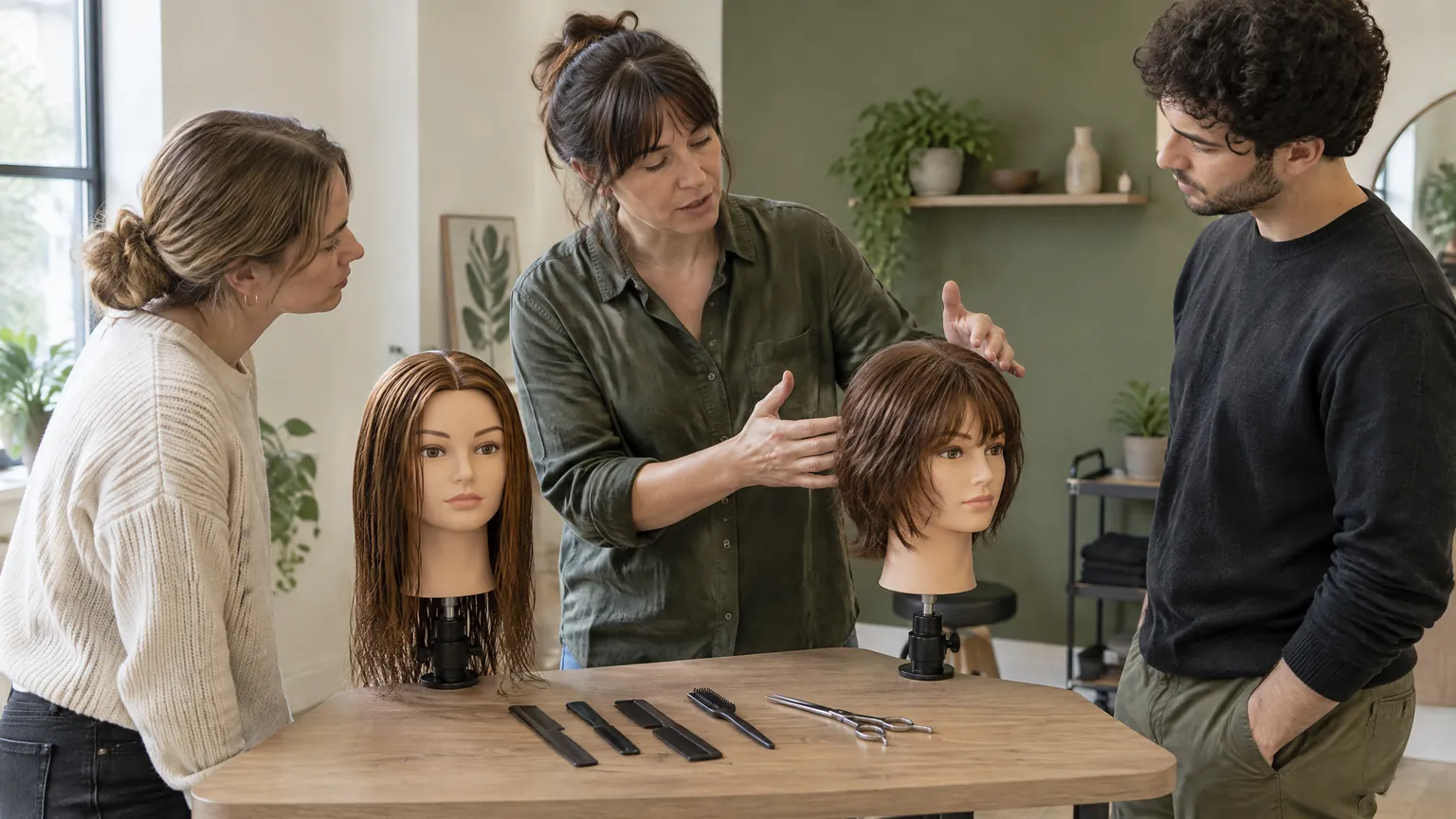
A first hairdressing course is easier to compare when you ask what happens at your own workstation. Watching a tutor complete a haircut, sharing a mannequin and cutting under supervision are different learning experiences. A long timetable can contain little individual cutting; a shorter programme may leave little room to repeat an exercise. Neither duration nor a polished gallery tells you whether your grip, sectioning and decisions will be checked while you work.
For a beginner, the practical question is straightforward: will you get a chance to attempt a manageable task, receive a specific correction and try again? Use that sequence to examine course descriptions and ask for details before committing. This is a learning comparison, not a promise of qualifications, employment or professional readiness.
Define one useful outcome before comparing courses
Start with something you can describe without naming a fashionable hairstyle. You might want to hold scissors comfortably, create orderly sections on a mannequin and follow a basic cutting plan under supervision. Someone already assisting in a salon may instead want feedback on maintaining a guide or checking the balance of a completed outline. These are different starting points, even if both learners are attracted to a course labelled beginner.
Hong Kong's Qualifications Framework lists hairdressing competencies across areas including technical work, customer service and education. Within technical work, it distinguishes assisting with basic cutting and blow-drying from more developed cutting and design responsibilities. That separation is a useful reminder that introductory participation and broader professional competence are not the same thing. It does not show that any particular course is recognised under the framework. 1
When reviewing the hairdressing course hong kong information, use the course categories to narrow your intended skill rather than assuming every programme covers the same foundations. DT HUB x Canvas Academy provides the teaching information, with course enquiries handled by Canvas Academy. GotGear and DT HUB are under common ownership; the page is a provider information source, not an independent endorsement.
Write down your existing experience honestly. Having watched cutting videos is not equivalent to having a tutor observe your hands. Equally, a learner who can section confidently may need a different exercise from someone still learning to coordinate comb and scissors. Ask how the tutor handles that difference without leaving either learner waiting.
Decide whether you want broad cutting foundations or barbering
Basic cutting: look for a sequence you can follow
A foundation course should make the progression between exercises understandable. Tool handling and sectioning need attention before a complete haircut becomes the main task. Ask whether the tutor checks preparation, explains the cutting plan and reviews the result, rather than only correcting the finished appearance. The useful detail is how each learner moves between stages, not how many style names appear in a syllabus.
The basic haircut course hong kong page lists tool handling, sectioning, layering concepts and guided model practice. Treat those as the provider's stated curriculum topics. Ask which exercises you would personally complete, how practice is allocated and what feedback accompanies each stage. A listed module does not establish how much supervised time an individual will receive.
Also ask about the hair used for early practice. A mannequin with long, straight hair may support repeated sectioning exercises but cannot represent every head shape, growth pattern or hair texture. A sensible answer explains what the exercise teaches and where its limits lie. Do not expect one practice head or one model to demonstrate every type of haircut.
Barbering: examine the starting level behind the style names
If your main interest is short cuts, look at whether clipper handling, guard selection and blending are taught from the beginning. Learning to recognise a transition between lengths is different from producing it consistently. Ask whether the tutor observes your tool movement and explains how to review an uneven area before you remove more hair.
The barber course hong kong description includes clipper fundamentals, fades, scissor-over-comb and beard grooming. That is a different emphasis from a general cutting foundation. Confirm how complete beginners are taught alongside learners with existing experience, and whether every listed topic includes individual practice. Coverage of beard grooming does not mean an inexperienced learner should practise razor work without direct instruction.
Choose by the tasks you want to learn, not by assumptions about who belongs in either course. A learner interested in longer shapes may need broader sectioning work; someone interested in short cuts may want more clipper practice. Neither route removes the need for consultation, safe handling and realistic limits on what a beginner can attempt.
Count individual practice, not just attendance
Ask for a typical lesson breakdown. It should distinguish explanation, demonstration, your own attempt, instructor correction and review. If students work in pairs, find out whether both perform the task or whether one mostly watches. Sharing can be useful for observation, but it should not be confused with individual tool time.
Use the following comparison when two course descriptions appear similar. These are questions to ask, not claims about any provider's arrangements.
| What to compare | Ask the provider | Why the answer matters |
|---|---|---|
| Demonstration access | Can each learner see the hands and section clearly? | An obstructed view can make the next exercise difficult to follow. |
| Individual practice | Which tasks does every learner perform rather than observe? | Attendance alone does not establish practical experience. |
| Tutor checkpoints | When is work inspected before the next stage? | A correction is more useful before an error carries forward. |
| Practice materials | Is a mannequin dedicated, shared or reused after cutting? | Repeated shortening can limit later exercises. |
| Model arrangements | Who organises models, and what happens if one cancels? | A planned session may otherwise become observation only. |
| Review and repetition | Can a learner repeat a weak task with further feedback? | A finished haircut is not the same as a corrected technique. |
Avoid treating a small advertised class as sufficient proof of individual attention. Tutor numbers, simultaneous activities and the time required to check each learner also matter. If one instructor is demonstrating while another task needs approval, ask how supervision works. The answer should describe a workable teaching arrangement rather than simply repeat the phrase hands-on.
Look for corrections you can use in the next attempt
Useful feedback identifies a visible issue, explains its likely connection to your method and gives you something specific to check next. For example, a tutor might ask you to revisit an inconsistent section before continuing. General praise about confidence or creativity can be encouraging, but it does not tell you which action to change.
Ask for an explanation of a typical feedback session. Does the tutor inspect your preparation as well as the finish? Can you explain the intended shape in your own words? Is there time to apply a correction while the tutor is still available? A final photograph cannot answer those questions, especially when styling changes how the haircut looks.
Assessment should be equally clear. Find out which tasks are observed, what criteria are used and whether the assessment is individual. Ask what happens when a learner needs more practice: a further attempt, additional tuition or another arrangement. Get the conditions in writing rather than assuming a repeat assessment is included.
Separate attendance evidence from assessed performance and external recognition. If recognition matters to you, ask for the exact qualification title and issuing body, then verify the relevant official record. Hong Kong's published competency standards provide a vocabulary for discussing levels of work; their existence is not proof that a provider's certificate has a particular status. 1
Include safe working and model consent in the comparison
A mannequin is useful because early mistakes do not affect a person's haircut. Moving to a live model adds consent, comfort, communication and the possibility of an unwanted result. Ask how models are told that a learner will be working, who approves the proposed cut and when a tutor intervenes. Being available as a model should not be treated as agreement to any length or style.
A course should also explain its photography arrangements. Ask whether learning records are kept separately from promotional images and whether permission is requested before images are published. A model should understand the intended use, while a learner should know whether an assessment can be documented without being used in publicity.
Safety questions should extend beyond sharp tools. The UK's Health and Safety Executive warns that frequent contact with water and shampoo can irritate skin, while some hairdressing and cleaning products can cause dermatitis or skin allergies. Its guidance includes ventilation, disposable non-latex gloves for relevant wet and chemical tasks, thorough hand drying and changing gloves between clients. These are occupational safety considerations, not a statement of Hong Kong course requirements. 2
Ask how those precautions are demonstrated during preparation and clean-up, not just mentioned in notes. If your course includes shampooing or introduces chemical services, find out how product instructions and suitable protection are taught. More topics are not automatically an advantage if safe working receives little practical attention.
DermNet's occupational guidance also identifies injuries from scissors, razors and hot styling equipment, and includes staff education in workplace risk assessment. 3 Ask who supervises unfamiliar equipment and what happens if a learner or model reports discomfort. Persistent irritation or pain needs appropriate medical advice; it is not a training problem to be solved by simply carrying on.
A hypothetical comparison: two evening learners
Consider a hypothetical beginner who works rotating shifts and wants to explore basic cutting before deciding on further study. One imaginary programme offers a broad introduction, but its model session depends on learners bringing someone. Another offers a narrower exercise sequence with clearly described tutor checkpoints. Neither is automatically better; the beginner needs to know which practice they can reliably attend and complete.
Suppose the first learner cannot find a model for the planned session. The decisive question is whether the provider has a stated alternative: a rearranged supervised session, a suitable mannequin exercise or observation only. Those options offer different learning experiences. A replacement activity should not be assumed to deliver the same outcome.
Now consider an imaginary salon assistant who already handles combs comfortably and wants to improve short-cut blending. That learner may value targeted clipper feedback more than a broad introductory demonstration. The comparison changes because the starting skill changes. In both cases, the choice rests on available practice and correction, not on a claim that one course leads to a job.
Check the practical conditions before enrolling
A timetable needs to fit the way you can actually learn. Ask about lesson length, breaks, missed demonstrations and whether catch-up work is supervised. A recording may help you revisit an explanation, but it cannot observe your grip or stop an unsafe movement. Do not assume access to a video replaces an observed practice session.
Use this checklist to obtain a concrete written answer before enrolling:
- State your starting experience and the task you want to learn; ask whether the proposed course fits both.
- Request the lesson sequence and identify which exercises every learner personally performs.
- Confirm what tools and practice heads are supplied, shared or required, including storage between lessons.
- Ask who arranges models and what happens after a cancellation or an unsuitable haircut request.
- Confirm the teaching language and how safety explanations and individual corrections are communicated.
- Ask about missed lessons, additional practice, assessment criteria and repeat-attempt conditions.
- Read the enrolment, cancellation and refund terms, and clarify any ambiguous condition before agreeing.
Keep your practice expectations modest outside class. In a small Hong Kong flat, setting up a stable mannequin stand, suitable lighting and a clear surface may be more realistic than recreating a salon workstation. Ask the tutor which non-live-model exercises are appropriate between lessons. Do not move to friends' hair merely because supervised classroom access is limited.
Judge progress by what you can explain and repeat
After each session, keep a brief learning record: the task attempted, the correction received and the next thing to check. Where photography is permitted, use consistent views to support the tutor's review rather than selecting only the most flattering finish. Notes about sectioning or tool control can be more useful than a large collection of styled photographs.
Before choosing further study, ask the tutor which foundations still need work. Being able to explain your plan and recognise a mistake is meaningful progress, but it does not establish readiness for every client or service. The strongest first-course choice is one with a clear starting point, realistic access to practice and feedback you can act on. Those details are worth confirming before the first cut.

Common questions
What should I ask if a course advertises real-model practice?
Ask which tasks each learner performs, who arranges the model and how the proposed haircut is approved. Confirm the tutor's supervision and the alternative if a model cancels. Real-model practice is a broad description; it does not tell you whether you complete a haircut yourself or mainly watch someone else.
Should a complete beginner choose basic cutting or barbering first?
Match the route to your intended tasks. Basic cutting may focus on sectioning and broader cutting shapes, while barbering may emphasise clippers and short-cut blending. Ask how either programme teaches tool handling from the start. A beginner label alone does not establish that the pace or practice arrangements suit you.
How can I tell whether feedback is more than general encouragement?
Ask when the tutor inspects your work and how corrections are recorded. Useful feedback identifies a particular issue and gives you an opportunity to apply the correction. Praise for the final appearance can be encouraging, but it should not replace observation of preparation, tool control and the decisions made during the exercise.
Sources & what they support
The scope below identifies what each reference supports. Citations do not imply independent endorsement of DT HUB or any provider, and do not establish treatment benefits or guaranteed results.
- Hong Kong Qualifications Framework: Units of Competency in the Hairdressing Industry (opens in a new tab)
Official hairdressing competency categories and the distinction between basic assisting tasks and more developed technical and design responsibilities; does not establish recognition of any named course.
- Health and Safety Executive: COSHH and Hairdressers — Key Messages (opens in a new tab)
Occupational skin and respiratory hazards from wet work and hairdressing products, with practical precautions including ventilation, relevant gloves, hand drying and changing gloves between clients; UK guidance is not presented as Hong Kong law.
- DermNet: Skin Problems in Hairdressers and Barbers (opens in a new tab)
Mechanical and thermal injury hazards from scissors, razors and heated styling equipment, and the inclusion of staff education in workplace risk assessment; no treatment or prevalence claims are adopted.