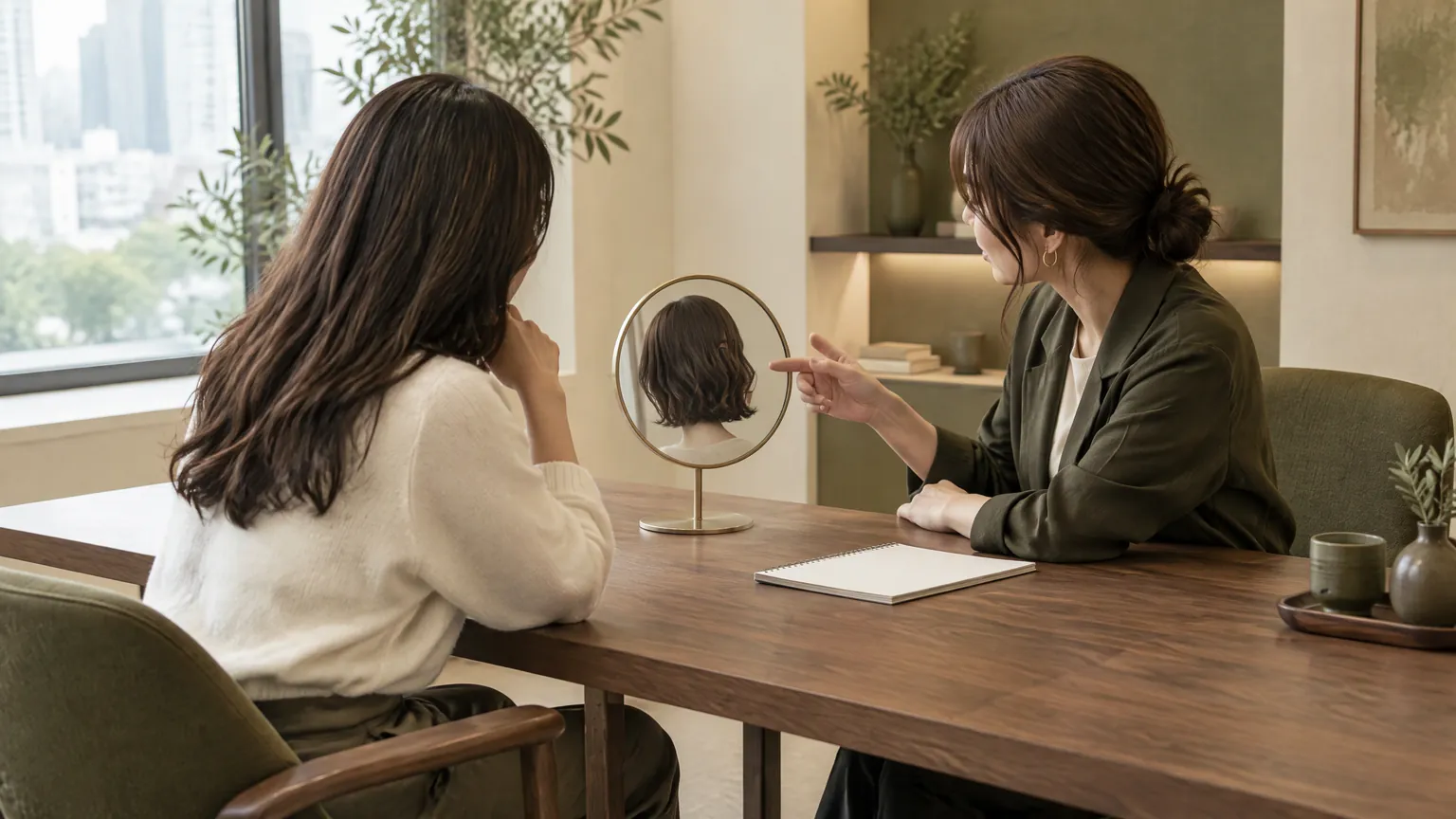
A perm enquiry needs more than a curl photograph
GotGear and DT HUB share an owner. This collection is not an independent recommendation. GotGear does not supply DT HUB salon, wig, Academy or healthcare services. Three online service sections do not represent three physical stores; the shared public studio is in Kwun Tong. Medical articles are informational only, with no diagnosis, clinical endorsement or outcome promises, and do not replace medical advice.
The short answer
A useful perm enquiry combines a reference photograph with your current hair length, chemical history and everyday styling habits. Explain where you want movement, how much curl you can accept and whether you normally air-dry or use heat. Ask what the proposed method actually involves rather than choosing by its name. Before committing, confirm suitability, the work included and the aftercare instructions; a photograph alone cannot establish any of those things.
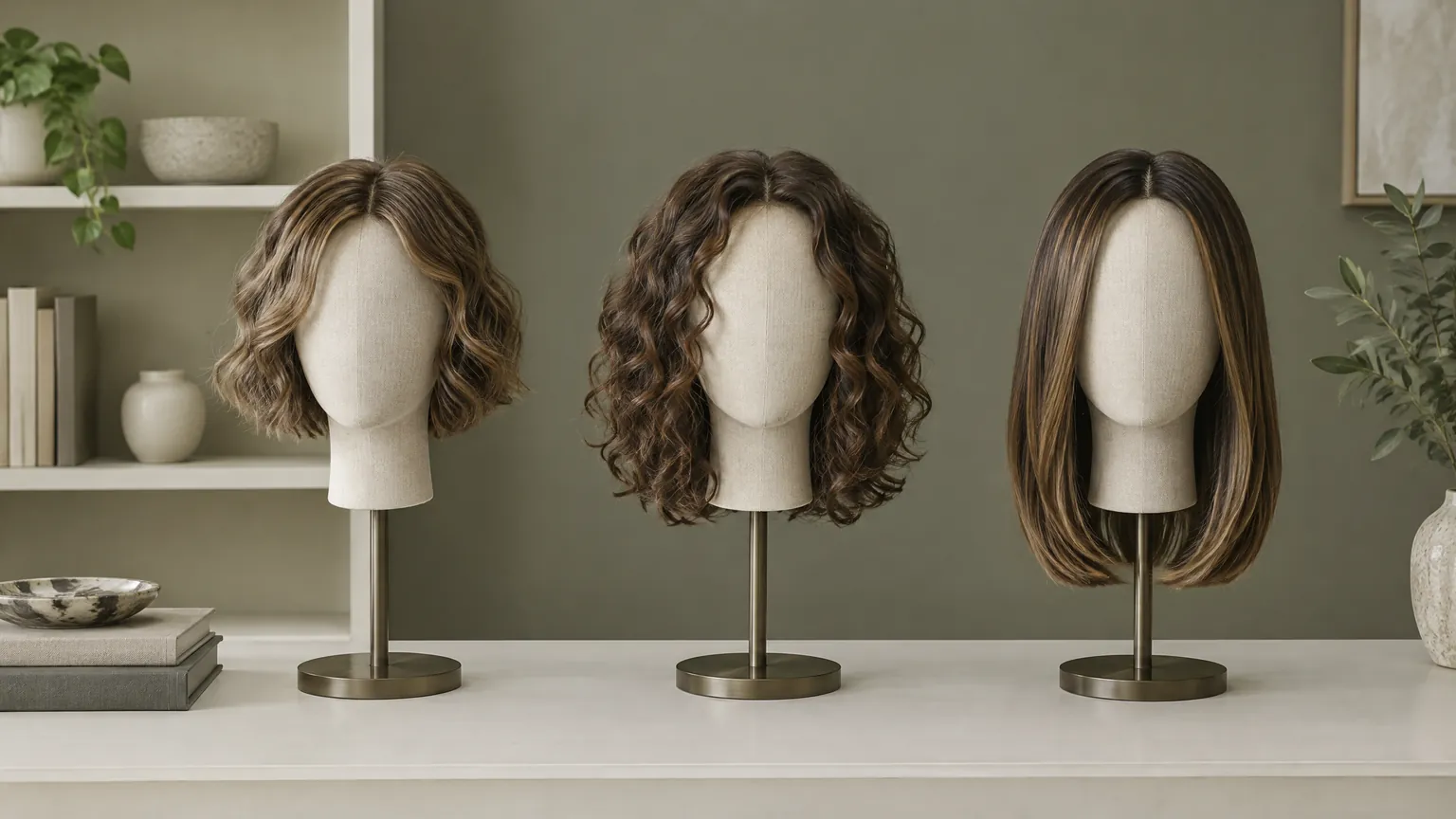
Translate the photograph into a usable brief
The most useful thing to say about a curl photograph is what you like in it. Is it the bend at the ends, the lift beside the face or the waves through the whole length? Those are different requests. A photograph may also show a haircut, a blow-dry and styling products working together. It does not tell you which part of the appearance came from chemical processing.
Start with one preferred image and one example that is too curly for you. Describe the difference in ordinary language: ‘I want movement below my chin, but I do not want a rounded fringe.’ That gives a consultation more substance than asking for the same look. Include current front, side and back photographs of your own hair, with its usual parting and without a freshly curled finish.
The hair perm kwun tong service page can be a starting point for identifying the category you want to enquire about. Pair that enquiry with your own hair photographs and a description of the desired shape, rather than treating a menu photograph as a promise of your result.
Also say whether you are willing to change the haircut. Someone may want the movement of a layered reference style while keeping a blunt outline and every centimetre of length. Ask which elements are compatible and which involve a compromise. An explanation of what cannot be reproduced is useful information, not necessarily a reason to seek a more confident promise elsewhere.
GotGear and DT HUB are under shared ownership. The linked pages here provide service information, not an independent salon review or evidence that a particular result is guaranteed.
Separate the method from the style name
Perm terminology mixes equipment, treatment area and visual style. ‘Digital’ describes a heated-rod method; ‘root volume’ describes where movement is wanted; a national style label may describe an aesthetic rather than one standardised procedure. Two names can overlap, while two services with similar photographs may involve different work. Ask for the proposed process in plain language.
The comparison below is a guide to consultation questions, not a suitability chart. The absence of added heat does not establish that a chemical process is harmless. The American Academy of Dermatology warns that appearance-enhancing treatments can leave hair dry and brittle and advises caution with perming. 1
| Description used in an enquiry | What needs clarifying | What to check before agreeing |
|---|---|---|
| Digital or heated-rod perm | Whether heated rods are proposed and which sections will be treated | How the finished shape is expected to look after your normal drying routine |
| Cold perm | What chemical process and wrapping pattern are intended without heated rods | The expected wet and dry appearance, and how much styling it needs |
| Root-volume or partial perm | The precise area to be processed, rather than assuming a whole-head service | Whether the lengths stay untreated and how the haircut affects the outline |
| Japanese-style wave perm | Whether the name describes a soft-wave aesthetic, a product range or a particular method | The actual curl placement, processing method and realistic upkeep |
| Straightening or straight perm | Whether the objective is to reduce curl rather than add it | Chemical-history compatibility and the plan for untreated new growth |
What digital tells you, and what it does not
The digital perm hong kong information sits within DT HUB's broader perm menu. Use it to ask whether heated rods are part of the proposed appointment and which lengths would be wrapped. The word ‘digital’ alone does not tell you how much movement you will get, whether your hair can tolerate the process or how your morning routine will change.
Ask to see the distinction between a simply dried finish and a finish shaped with additional styling. If the reference requires section-by-section blow-drying, you should know that before choosing it for an air-dry routine. Equipment cannot make those two routines equivalent, and the consultation should not blur them.
Japanese waves are not Japanese straightening
DT HUB's japanese perm hong kong page describes a wave-oriented service. If that is the direction you want, specify the amount and position of movement. Do not assume that a national label means a gentler formulation, suitability for every person with Asian hair or a finish that needs no daily attention.
By contrast, the japanese straight perm page concerns straightening. That is a different objective from adding waves. If you want straighter roots and curled ends, describe both requests separately and ask whether combining them is appropriate for your existing hair. A shared word in two service names does not make them interchangeable.
Give the history of the lengths, not just the last appointment
‘My last colour was a while ago’ leaves an important gap. The ends you want permed may still include hair that was bleached, straightened or repeatedly coloured much earlier. Make a simple timeline of treatments affecting the hair you still have. Include home applications and partial services such as highlights or fringe straightening; they need not have covered the whole head to matter.
If you remember the product or method, bring that information. If you do not, say so rather than guessing. Useful details include the approximate date, which areas were treated and whether there was breakage or scalp discomfort afterwards. A fresh photograph cannot provide all of that history, particularly when different sections have had different treatments.
Dermatologists' general damage-prevention advice favours one chemical service at a time. Where someone wants both a perm or relaxer and colour, the AAD advises doing the perm or relaxer first and colouring two weeks later. 2 This is general guidance, not clearance for your individual hair: waiting does not remove previously processed lengths or establish that another service is suitable.
Report tangible concerns rather than trying to diagnose them. Explain if the ends snap during ordinary handling, if one section tangles much more than the rest or if your scalp has been sore. Ask what an in-person assessment would need to establish and whether a strand assessment is appropriate. Do not conduct improvised chemical tests at home to prove your hair can take a perm.
A salon may decide not to proceed, or suggest changing the plan. Do not treat an added conditioning step as proof that chemical damage has been undone or that further processing is now safe. Persistent irritation, pain, sudden noticeable shedding or unexplained thinning needs assessment by a qualified healthcare professional, rather than being folded into a cosmetic consultation. The AAD also advises dermatological assessment when hair-care changes do not help or hair loss is a concern. 2
Test the idea against an ordinary morning
Hypothetical example: a person with shoulder-length hair wants broad waves from a photograph, but usually washes before leaving home and lets the hair dry during the journey to work. They also tie it back for an afternoon exercise class. Their ends retain older highlights, even though the roots are now their natural colour.
For that person, ‘soft waves’ is not a complete brief. The enquiry should explain the drying routine, tied-back requirement and highlighted lengths. They could ask what shape is realistic without a brush blow-dry, whether the desired face-framing sections would still fit into their usual hairstyle and whether the previously lightened ends change the recommendation. None of those questions is answered by choosing a larger-looking curl in a picture.
A possible consultation outcome would be to discuss a different cut, a reduced chemical scope or no perm at present. These are hypothetical options, not predictions about what any salon will offer. The useful result is a decision that acknowledges the person's hair and routine instead of matching the photograph at any cost.
For the same reason, assess upkeep against your least convenient day, not the day when you have unlimited time. If the plan relies on careful drying, product application and leaving the hair loose, ask how it fits around exercise, frequent washing or a workplace requirement to keep hair secured. Establish the practical conflict before arranging the appointment.
Ask for aftercare that fits how you wash and dry
A perm changes the styling task; it does not automatically remove it. Ask the salon to explain the proposed washing, detangling and drying routine for your particular finish. You should understand what to do after the first ordinary wash, not just how the hair is presented when you leave. A demonstration should distinguish essential steps from optional polishing.
The AAD recommends conditioner after shampooing, gentle handling and avoiding towel rubbing. It also advises using the lowest heat setting and using hot styling tools less frequently. 2 These are general damage-reduction principles, not evidence that a particular product will preserve your curls or make repeated chemical processing risk-free.
Detangling advice should reflect texture rather than a blanket rule to brush all wet hair. The AAD distinguishes straight hair, which should dry a little before gentle wide-tooth combing, from textured hair or tight curls, which should be combed while damp. 2 Ask how to apply that guidance to the shape you are considering, especially if only part of the hair will be permed.
Request written instructions about the initial washing interval, tying up and heat styling for the specific products used. Do not assume that a fixed no-wash period quoted for one service applies to every perm. If you swim regularly, disclose that too: the AAD notes that pool chemicals can be hard on hair and recommends protective measures including a swim cap and rinsing afterwards. 2
Discuss maintenance as a future assessment, not a guaranteed expiry date. Ask how new growth, trimming and the changing haircut may affect the appearance, and what would be checked before another chemical service. A timetable alone is not a reason to reprocess hair that is fragile or to repeat the same treatment through every section.
Compare the work included, not the headline alone
When comparing a perm salon kwun tong information page with another service description, compare the explanations you can obtain. Can you identify the proposed method, the areas to be processed and the haircut changes being discussed? Does the enquiry distinguish a consultation from a confirmed chemical appointment? Location terminology does not answer those questions.
Ask whether the proposed scope includes a cut, any preparatory assessment, finishing and an aftercare explanation. Check which elements are optional and what happens if an in-person assessment changes the plan. This avoids comparing a partial service with a whole-head process or a simple finish with a more involved styling appointment.
The perm price hong kong guide is best used as a resource for checking service scope. Request confirmation of what your individual quotation covers, including any optional steps, before agreeing. A published category cannot settle suitability or establish that the same work applies to every length and chemical history.
Also clarify how much time to set aside without assuming that an online estimate reserves an appointment. Ask how the consultation and service are arranged, whether assessment must happen first and what to do if you decide not to proceed. Clear arrangements matter more than squeezing chemical processing into a fixed gap between other commitments.
Send an enquiry that leaves room for a safer decision
A concise enquiry can contain enough detail to begin a useful conversation. Keep photographs relevant and put the important information in the message rather than assuming it can be inferred from the images. Use this checklist before sending it:
- State the current length, normal parting and whether you are willing to change the cut.
- Identify the feature you want from the reference and one curl effect you do not want.
- List approximate dates and areas of bleaching, colouring, perming or straightening affecting the remaining lengths.
- Describe your usual washing, drying, tying-back and swimming habits.
- Mention prior reactions, current scalp discomfort or noticeable breakage.
- Ask what assessment is needed, what work is proposed and which instructions you would receive afterwards.
Do not normalise excessive stinging or burning as the price of getting a curl. The AAD's perm-specific advice says the solution should be washed off immediately if excessive stinging or burning occurs, followed by consultation with a dermatologist. 1 During a salon service, alert the person applying it immediately; do not wait silently for the planned processing time to finish.
If a smoothing product is proposed instead, add an ingredient question. The US FDA warns that some hair-smoothing products contain or release formaldehyde when heated and recommends asking about ingredients and ventilation. It also explicitly notes that not all smoothing products contain formaldehyde. 3 This is not a claim about the formulation used by DT HUB, nor a reason to equate every curl perm with that exposure. It is a reason to identify the actual product and process rather than relying on a reassuring service name.
The photograph remains useful, but its role is to explain an appearance you like. The decision needs three additional things: a credible account of the hair being treated, a clearly described method and a routine you can actually follow. If one is missing, the next step is a better conversation, not a more dramatic reference image.

Common questions
Should I choose a digital perm before the consultation?
You can ask about it, but do not make the equipment name your only requirement. Describe the movement you want, show your current hair and explain how you usually dry it. The consultation should establish whether heated rods are proposed, which sections would be treated and whether the plan is appropriate for your hair history.
Why mention old highlights if my latest colour was only at the roots?
The lengths being considered for a perm may still contain previously highlighted hair. A root-only colour appointment does not erase that history. Give approximate dates and identify the affected sections, including home treatments. If you do not know the product or process, say so and ask what assessment is needed before chemical work is considered.
What should I clarify if I need to tie my hair back every day?
Explain whether tying back is required for work, exercise or both, and ask how that fits with the proposed initial aftercare and finished shape. Also check whether face-framing sections will fit your usual hairstyle. Obtain instructions for the specific service rather than assuming that a generic waiting period or loose-wave photograph answers the practical question.
Sources & what they support
The scope below identifies what each reference supports. Citations do not imply independent endorsement of DT HUB or any provider, and do not establish treatment benefits or guaranteed results.
- Coloring and perming tips for healthier-looking hair — American Academy of Dermatology (opens in a new tab)
Chemical appearance-enhancing treatments can cause dryness and brittleness; perm processing requires caution and product instructions; excessive stinging or burning calls for immediate removal of solution and dermatological consultation.
- How to stop damaging your hair — American Academy of Dermatology (opens in a new tab)
General guidance on spacing and sequencing chemical services, conditioning, gentle towel handling, texture-dependent detangling, reduced heat use and swimming care; dermatological assessment for unresolved hair concerns or thinning. The general two-week sequencing advice is not individual suitability clearance.
- Formaldehyde in Hair Smoothing Products: What You Should Know — US FDA (opens in a new tab)
Some smoothing products contain or release formaldehyde when heated; ingredient and ventilation questions are relevant before that process. The source states that not all smoothing products contain formaldehyde and does not identify DT HUB's formulations or establish exposure from all curl perms.