Short curls or a straighter finish: frame the maintenance trade-off
GotGear and DT HUB share an owner. This collection is not an independent recommendation. GotGear does not supply DT HUB salon, wig, Academy or healthcare services. Three online service sections do not represent three physical stores; the shared public studio is in Kwun Tong. Medical articles are informational only, with no diagnosis, clinical endorsement or outcome promises, and do not replace medical advice.
The short answer
Choose short curls or a straighter finish by the work you can realistically maintain, not the appearance of one salon photograph. Curls may require deliberate shaping and gentle detangling; a straighter silhouette still needs drying, haircut upkeep and a plan for new growth. Neither chemical route suits every hair history. Establish the intended shape first, then ask which product would be used, what its manufacturer permits and what aftercare applies to that exact service.
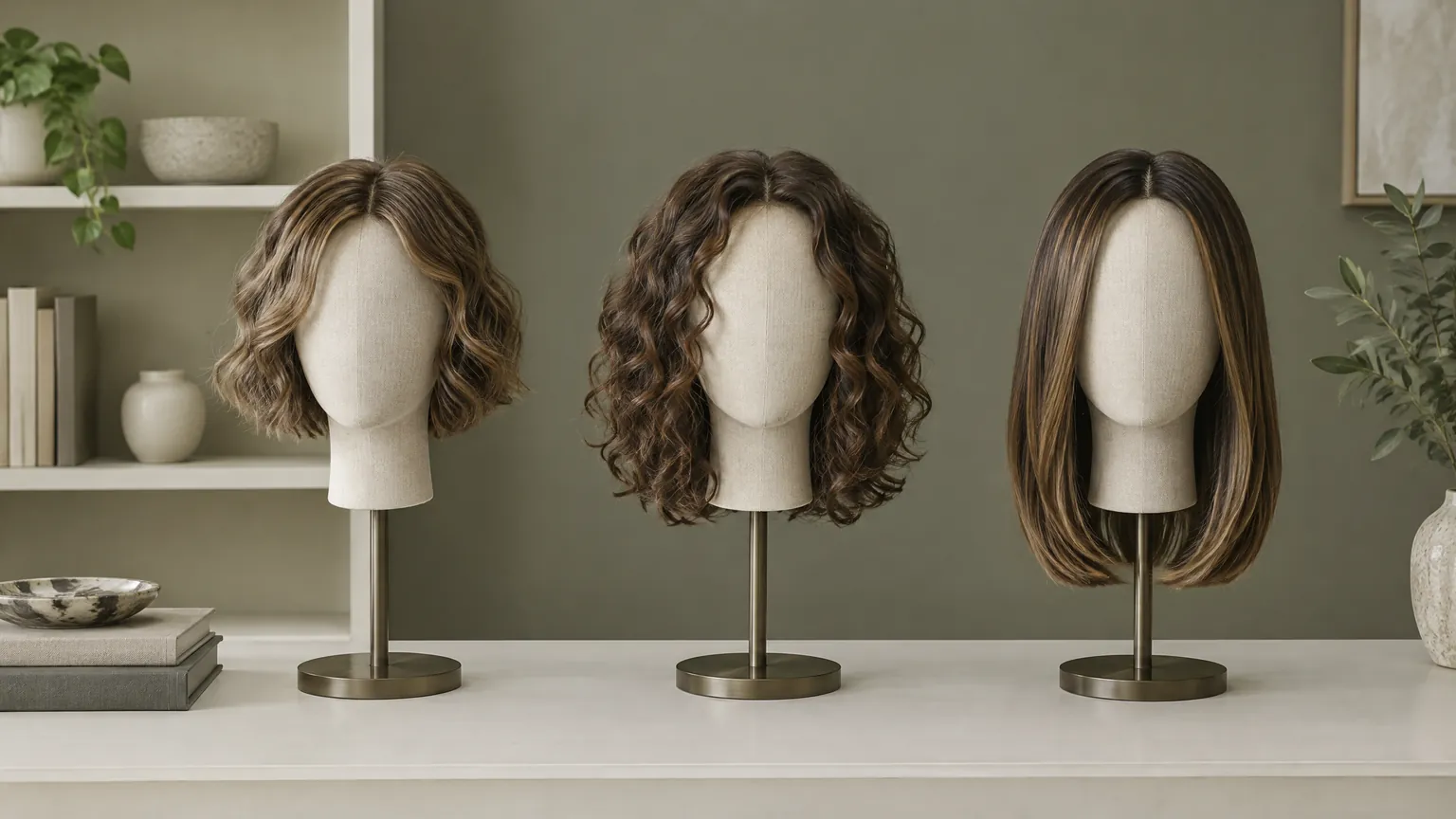
Start with the morning you actually have
A short haircut can reduce the amount of hair you handle without making its shape automatic. Before choosing curls or a straighter finish, describe what happens between washing and leaving home. Do you let your hair dry naturally, wear a helmet on the journey, exercise before work or use a dryer to arrange the fringe? A useful consultation connects the proposed silhouette to those habits rather than assuming everyone wants the same polished finish.
Bring two sorts of reference: a picture of the shape you like and an ordinary photograph of your own hair after your usual routine. Explain which part bothers you. It might be a fringe that separates, a crown that looks flat or sides that feel too wide. These are different styling goals. A chemical service should not be the default answer to every difficulty with a cut.
For a softly curved reference, DT HUB's korean perm hong kong page is an information starting point for a discussion about curl styling. The important question is what the desired movement means on your present length: lifted roots, curved ends or a more visible curl pattern. A style label alone does not specify the product, suitability or amount of daily finishing needed.
GotGear and DT HUB are under common ownership. These service links help readers locate relevant information; they are not independent endorsements or evidence that a particular chemical service is suitable for an individual. GotGear is not providing the salon service.
Compare the upkeep, not just the finished photograph
The useful comparison is between complete routines. A curl option that you repeatedly straighten at home may conflict with your real preference. Equally, choosing a straighter silhouette and then adding volume with hot tools every morning may leave a different maintenance burden from the one you expected. Ask what the haircut will look like with your normal drying method, not only after a carefully finished appointment.
| Decision point | Short curls or waves | Straighter finish | What to clarify before deciding |
|---|---|---|---|
| Shape you want | Movement, bend or visible texture | A flatter or more linear outline | Which areas should retain volume? |
| Daily handling | Arranging texture and detangling gently | Drying direction and arranging the fringe or ends | Can the proposed shape work without daily hot-tool correction? |
| Haircut upkeep | Trims change the amount of curled length remaining | Trims change the outline and weight distribution | How will the shape change as the cut grows? |
| Chemical history | Previous colour or straightening may affect assessment | Previous colour or perming may affect assessment | Which processes remain on the current lengths? |
| Future changes | A later switch to straightness needs fresh assessment | A later switch to curls needs fresh assessment | Is the long-term aim different from today's request? |
| Aftercare | Depends on the actual curl product and service | Depends on whether the service straightens or smooths | Which written instructions apply to the exact product? |
This is a decision table, not a ranking of chemical safety. The American Academy of Dermatology identifies colouring, perming and relaxing among practices that can damage hair. It also warns that damaged hair is fragile and prone to breakage. A softer-looking result or a familiar service name does not remove the need to consider the hair's condition.1
For short curls, think about where the length remains
On a short cut, specify whether the desired movement belongs in the fringe, the top or the whole outline. Closely cut sides and a longer top present a different shape question from a short bob. Ask the stylist to explain which parts of the reference depend on the haircut and which depend on curling or finishing. Otherwise, you may request a chemical change when the main difference is where the hair has been left longer.
DT HUB's mens perm hong kong information page provides a relevant route for discussing a short textured look. Rather than relying on the category name, describe whether you want an understated bend or a clearly curled top, and whether you normally use styling product. Gendered service wording is less informative than the specific shape and routine being discussed.
For straightness, decide what should not become flat
A straighter outline and reduced puffiness are not necessarily the same request. You may want the sides to sit closer while keeping movement at the crown. Or you may want a straighter fringe without changing the rest of the cut. Make that distinction before discussing a service, particularly if root volume matters to you. A photograph can communicate an outline, but it cannot tell the stylist how much movement you are willing to lose.
The ion straightening hong kong information page can frame questions about the intended straight finish. Ask what process the label refers to and how the proposed result differs from temporary styling or a smoothing service. Do not infer the ingredients, heat exposure or maintenance rules from the word “ion”. Those require information about the actual product and planned service.
Manufacturer limits belong in the consultation
Manufacturers do not necessarily use one formula for every hair type. Wella's Creatine+ technical folder distinguishes curl and wave variants for normal or resistant hair from variants for coloured or sensitised hair. Its straightening range identifies a further variant for highlighted or very sensitised hair, and its professional directions include checks during processing.2 These distinctions demonstrate why the exact system matters; they do not establish that another product has the same permissions.
A label intended for sensitised hair is not a promise that any damaged hair can safely be processed. Ask which manufacturer's instructions the stylist will use and how your current hair history fits them. The useful answer concerns your actual lengths and the actual product, not a broad assurance that a formula is gentle. Product selection and assessment remain professional responsibilities.
Give a history of what is still on your hair. Include bleaching, permanent colour, previous perms, straightening and any home chemical products, even if the roots now look natural. If you cannot remember a product, say so rather than guessing. Old photographs or packaging can help communicate the history, but they do not replace an assessment. Visible shine is not a reliable substitute for knowing what processing has occurred.
For the length-specific discussion, DT HUB's short hair perm hong kong page is a relevant information resource. Ask how the remaining length and existing cut affect the proposed shape, then whether the hair is suitable for the product being considered. Neither a short haircut nor a shorter length of chemical application automatically establishes suitability.
There is no home chemical method in this guide. Do not borrow a professional processing schedule, add heat to imitate a salon procedure or combine products from separate systems. Manufacturer material is useful here for understanding why a service has boundaries, not for carrying out the service yourself. If the product cannot be identified or its instructions do not support the proposed use, postpone the decision.
Smoothing is not automatically straightening
Service names can obscure an important difference: changing the curl pattern is not necessarily the same goal as making hair feel smoother or easier to arrange. Wella describes SmoothFiller as a demi-permanent smoothing service and explicitly says it is not intended to straighten curls; its stated aim retains natural pattern and movement.3 This is one manufacturer's description of one product, not proof of what every smoothing service does.
The DT HUB page labelled straight therapy hong kong should therefore be read as a service-information entry point, not a technical definition or a claim of repair. Ask whether the proposed service changes texture, provides cosmetic conditioning or combines distinct steps. The word “therapy” in a beauty service name does not establish a medical treatment or permanent restoration of damaged hair.
Aftercare rules also differ. Wella's SmoothFiller page says that its product does not impose a waiting period before washing, while giving different sequencing guidance for different colour services.3 That does not justify washing immediately after any perm or straightening appointment. Nor does a familiar rule about delaying shampoo apply automatically to all smoothing products. Obtain the instructions for what was actually used.
There is also a specific ingredient question for some heated smoothing products. The US Food and Drug Administration warns that products containing formaldehyde or related ingredients can release formaldehyde gas when heated, creating an inhalation risk. It advises asking the salon about ingredients and consulting safety information.4 This warning is not evidence that every straightening product, or any particular DT HUB service, contains formaldehyde.
Ask whether the proposed product contains or releases formaldehyde, formalin or methylene glycol, and how its safety directions are followed. If the answer is uncertain, uncertainty should not be converted into reassurance. The FDA guidance supports ingredient and ventilation questions; it does not certify a Hong Kong salon or establish local regulatory compliance.
A hypothetical choice between two workable routines
Consider a hypothetical reader with a short fringe, longer hair on top and a busy commute. They like both a lightly curled reference and a smooth, straighter one. They usually wash before work and allow limited time for drying. Their first task is to describe the finish they can accept on an ordinary morning, including some irregularity, rather than selecting the most polished photograph. This is an illustrative scenario, not a client account.
If that reader enjoys arranging texture but dislikes flattening the fringe every day, a curl discussion may fit their preferences. The consultation still needs to establish suitability and explain how much finishing the reference requires. If the reader actually wants a neat linear fringe and dislikes working with texture, the straighter option may be closer to the desired outline. Neither conclusion proves that chemical processing is appropriate.
Now suppose the same reader has previously bleached sections and cannot identify a later smoothing product. That missing history changes the decision more than the preference between photographs. The sensible next step is to explain the uncertainty and seek assessment, not request another service to correct the appearance quickly. A haircut adjustment or postponement can remain an option while the chemical question is unresolved.
For someone comparing the broader straightening category, the hair straightening hong kong page offers a relevant place to begin questions about service scope. Bring the preferred outline and the known hair history together. Ask which result is realistic without promising a processing choice in advance, and confirm arrangements directly rather than assuming the page establishes availability.
Prepare a short checklist before making arrangements
Write down the information that would change your choice. This keeps the consultation focused on your hair and prevents a discussion of style names from crowding out the practical details. You do not need technical expertise, but you do need to be candid about previous processes and the routine you will actually follow.
- Identify the one part of the shape you most want to change: fringe, crown, sides or ends.
- Record the chemical services and home products used on the current lengths; mark anything unknown.
- Bring a preferred reference and an ordinary photograph of your own usual finish.
- Explain washing, drying, swimming, exercise and helmet habits that affect your routine.
- Ask for the exact product or system name and any relevant manufacturer exclusions.
- Ask how suitability will be assessed and what would lead to postponing or declining the service.
- Request product-specific aftercare, including washing and how future colour or texture changes should be discussed.
- Confirm the agreed service scope and arrangements directly, without assuming an appointment is available.
Ask what happens as the haircut changes
A maintenance discussion should include the next haircut, not just the first wash. Ask how trimming the fringe or top will alter the remaining shape and how new growth will sit beside processed lengths. There is no single return interval that can be promised from a service label. Length, the chosen outline, hair history and tolerance for a changing finish all matter to the plan.
Also explain any future change you are already considering. If you expect to grow the cut out, change colour or return from straightness to curls, the stylist needs that context now. Do not assume opposite chemical services can be alternated without reassessment. A plan that accepts gradual changes may suit your routine better than repeatedly trying to recreate one photograph.
Keep aftercare realistic and recognise warning signs
Ordinary care still matters after either choice. The AAD recommends conditioner after shampooing, gentle towel handling and reducing heat exposure. Its detangling advice differs by texture: let straight hair dry somewhat before gentle combing, while textured hair or tight curls should be combed while damp with a wide-tooth comb.1 Discuss how to adapt these general habits to the finish you have, alongside the product-specific instructions.
Conditioning and smoother-looking hair should not be described as permanent repair or proof that further chemical processing is safe. If the new shape needs constant hot-tool correction to look acceptable, discuss that mismatch rather than treating extra heat as inevitable. The maintenance question is whether the routine fits your life while limiting avoidable damage, not whether you can reproduce a salon finish at any cost.
Pain, persistent scalp irritation or sudden marked shedding should not be accepted as the price of a hairstyle. Seek assessment from a qualified healthcare professional rather than using another beauty service to cover the problem. The AAD advises dermatology assessment when changes in care do not help or when thinning and hair loss are concerns.1 The FDA also advises discussing adverse reactions to smoothing products with a healthcare provider.4
Choose the shape only after the routine and product boundaries are clear. A realistic decision may be curls, a straighter finish, a different cut or no chemical service for now. The best-fitting choice is the one you can describe, maintain and reassess as your hair changes—not an assurance attached to a service name.

Common questions
Can a short perm be a wash-and-go choice if I never use styling product?
That depends on the proposed shape, your existing cut and what finish you consider acceptable. Ask how the curls would look with your normal drying method and without extra finishing. A styled reference photograph does not establish a wash-and-go result, and short length alone does not establish chemical suitability.
Does a service described as smoothing give the same result as permanent straightening?
Not necessarily. Some smoothing products are described by their manufacturer as preserving natural texture rather than straightening curls. Ask what the exact product is intended to do and whether the proposed result matches your goal. Neither the service name nor a glossy appearance establishes the chemical process or permanent repair.
Should I follow a friend's rule about when to wash after the appointment?
Use the instructions for the product and service actually used on your hair, not a rule borrowed from another appointment. Manufacturers can set different washing and colour-sequencing guidance for different systems. Request clear aftercare before leaving, and ask the salon to resolve any conflict between verbal advice and the relevant manufacturer instructions.
Sources & what they support
The scope below identifies what each reference supports. Citations do not imply independent endorsement of DT HUB or any provider, and do not establish treatment benefits or guaranteed results.
- American Academy of Dermatology: How to stop damaging your hair (opens in a new tab)
Supports chemical-processing and heat damage cautions, conditioner and gentle handling advice, texture-dependent detangling guidance, and seeking dermatology assessment for unresolved problems or hair loss. Does not assess any named salon.
- Wella Professionals: Creatine+ permanent curls and straightening technical folder (opens in a new tab)
Primary manufacturer documentation showing different variants for hair condition and professional processing checks. Used only to demonstrate product-specific assessment, not to endorse performance claims, supply chemical instructions or suggest DT HUB uses this system.
- Wella Professionals: SmoothFiller product information and FAQ (opens in a new tab)
Supports the manufacturer's stated distinction between this smoothing product and curl straightening, plus its product-specific washing and colour-sequencing guidance. Marketing efficacy and duration claims are not adopted; no claim is made about DT HUB's products.
- US FDA: Hair smoothing products that release formaldehyde when heated (opens in a new tab)
Supports qualified warnings about formaldehyde release from relevant heated smoothing products, ingredient and safety-information questions, ventilation concerns and healthcare assessment of adverse reactions. Does not establish that all straighteners contain formaldehyde or certify a Hong Kong salon.