
Wig repair and styling enquiries: ask what your specific piece can tolerate
GotGear and DT HUB share an owner. This collection is not an independent recommendation. GotGear does not supply DT HUB salon, wig, Academy or healthcare services. Three online service sections do not represent three physical stores; the shared public studio is in Kwun Tong. Medical articles are informational only, with no diagnosis, clinical endorsement or outcome promises, and do not replace medical advice.
The short answer
Start a wig repair or styling enquiry with the piece’s own care instructions, construction and history, rather than a hairstyle photograph alone. Ask which changes are feasible, which are irreversible and what must be inspected before anyone agrees to the work. Human hair, synthetic fibre and mixed-fibre pieces should not be treated as interchangeable. Unknown adhesive residue, a damaged base or missing heat instructions are reasons to pause and seek piece-specific advice, not to experiment with products at home.
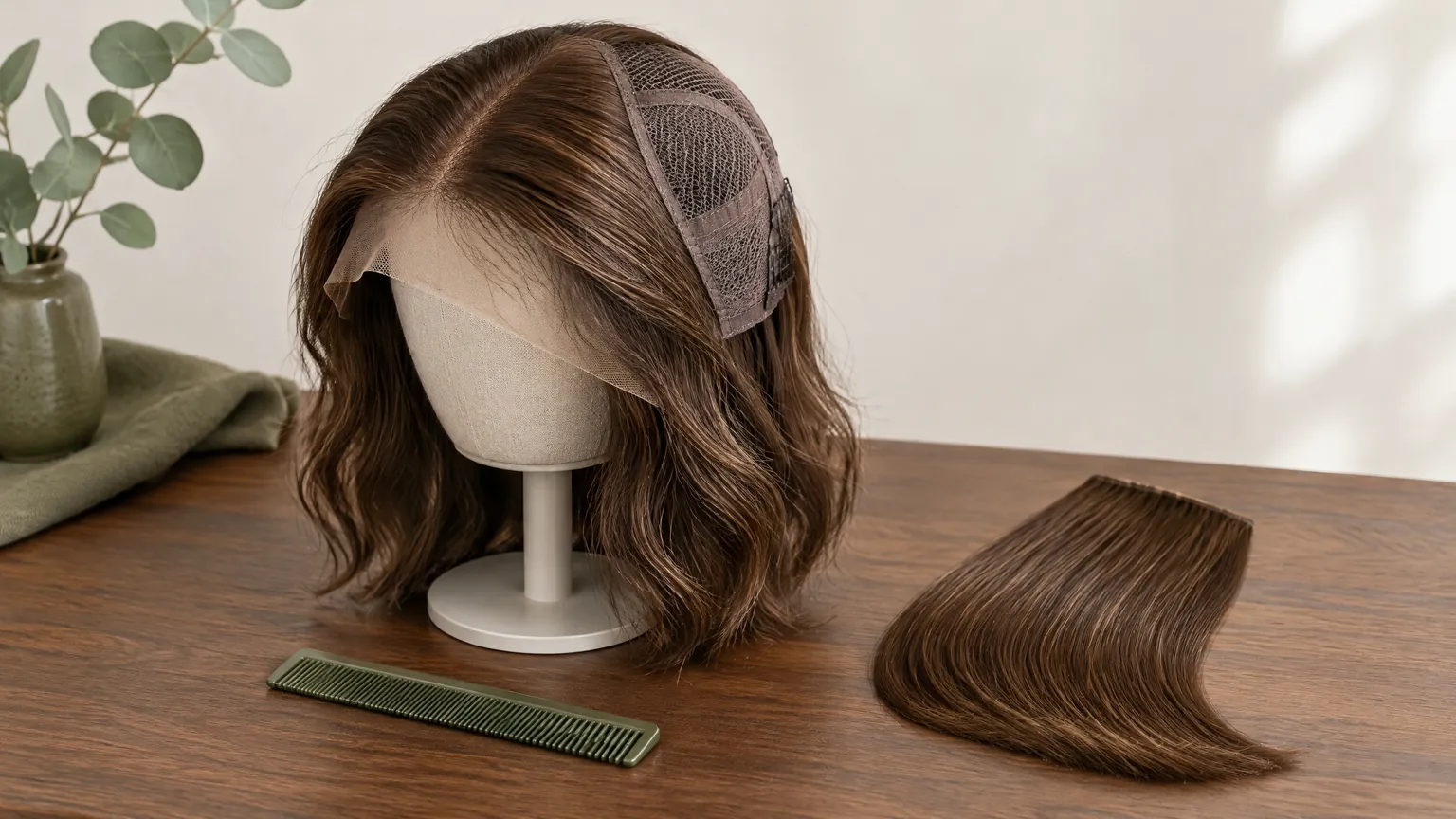
A useful wig enquiry starts with two questions: what is wrong with this piece, and what must remain unchanged? A fringe that falls into your eyes calls for a different conversation from a torn edge, persistent tangling or an uncomfortable fastening. Asking for a general ‘refresh’ leaves too much open to interpretation. A clearer request describes the problem, the intended appearance and the limits on cutting, heat, colour or structural work.
The aim is not to identify a universal rescue treatment. It is to establish whether the specific piece can tolerate the proposed work, and whether that work will still suit your everyday routine. A tidy finish on collection is only part of the decision; you also need to understand how to maintain it afterwards.
Establish what the wig actually contains
Find the label, model name, care leaflet and any written advice from the original supplier. Cancer Research UK distinguishes synthetic, human-hair and mixed-fibre wigs. Its guidance also warns that direct heat can melt synthetic fibres or make them frizz, and says to check the manufacturer’s information before heat exposure.1 These are useful starting distinctions, not permission to use the same settings on every wig in a category.
‘Human hair’ does not describe the entire construction. The base, hairline, attachment points and previous alterations still need consideration. For a prospective purchase, DT HUB’s human hair wig hong kong information provides an enquiry starting point; ask for the particular model’s care limits rather than treating the category name as approval for unrestricted styling or colouring.
If the identity is uncertain, say so. Do not infer heat tolerance from softness, shine or a seller’s photograph. A second-hand piece may arrive without its original instructions, while an older piece may have been altered since purchase. Give the person assessing it the information you have, and ask what remains unknown. A photograph can show the shape of a problem but cannot establish every material or structural detail.
Record the history without guessing
Note earlier cuts, colour changes, heat styling and repair work, including anything you cannot identify. Bring the names or packaging of products previously used rather than describing them only as ‘shampoo’ or ‘spray’. If you do not remember a product, record that uncertainty. This is more useful than reconstructing a confident but inaccurate history.
Explain when the problem appeared. For example, did tangling begin after a styling change, or did an edge start lifting after a fastening became uncomfortable? Those observations do not diagnose the cause, but they give the assessment a sequence. Keep claims modest: ‘I noticed this after washing’ is different from ‘the wash caused the damage’.
Separate a styling problem from a structural problem
Before asking for repair, describe the affected area and its behaviour. Is the hair simply sitting in an unwanted direction? Is there a visible gap at an edge? Does the cap feel different from before? Avoid pulling at a suspect area to demonstrate the problem. Record what you can see without deliberately stressing it, and ask whether an in-person inspection is needed.
A discussion about wig repair hong kong should establish the proposed scope for your own piece, not assume that every tear, sparse area or fastening can be restored. Ask which part would be worked on, what cannot be corrected, and whether the provider needs to inspect it before deciding. A service category alone cannot answer those questions.
The following comparison is an enquiry guide, not a home-repair menu. Several concerns can occur together, and the assessor may need to address the base before discussing appearance.
| What you notice | What to clarify before work | What not to assume |
|---|---|---|
| Fringe or layers obscure your face | Proposed length, reference points and how the wig will sit during the assessment | That hair cut away can be put back |
| Fibre looks frizzy or tangled | Material identity, care history and whether the issue is manageable within its instructions | That more heat or stronger products will solve it |
| An edge or seam looks damaged | Exact affected area, assessment needs and limits of any proposed structural work | That every base can be repaired invisibly |
| A fastening feels uncomfortable | Whether fit or attachment needs assessment, and whether there are skin symptoms | That a firmer hold is necessarily a better solution |
| Previous product or adhesive residue is present | Product identity and whether the provider can assess safe handling of this combination | That a remover suitable elsewhere is compatible here |
Ask for the assessment and the proposed work to be distinguished. Agreeing to have the wig examined should not be treated as permission for an unplanned cut or material change. If the scope changes after inspection, ask for an explanation before deciding whether to proceed.
Make styling requests precise enough to assess
Bring a reference photograph, but explain which feature matters: an unobstructed forehead, a softer outline around glasses or less length at the nape. A picture may show a cut on growing hair rather than on a wig with your construction. Ask which features can realistically be adapted without treating the reference as a guaranteed final result.
For enquiries about wig styling hong kong, describe the piece alongside the intended look. Include whether you wear glasses, how you position the wig and whether you want to retain the current parting. Ask which proposed changes involve cutting and which depend on styling that you would need to repeat at home. Those are different maintenance commitments.
Discuss irreversible changes separately
Cutting removes length. Before authorising it, agree where the fringe or perimeter should finish when the wig is positioned as you normally wear it. A small adjustment may be easier to judge than an immediate dramatic change. Ask whether the work can be discussed in stages; do not assume that this arrangement is offered or that every shape can be achieved incrementally.
Treat colour changes as a separate enquiry rather than an automatic addition to a styling request. Ask whether the particular piece permits the proposed process and what uncertainties remain. The fact that general guidance describes human-hair wigs as restylable does not establish that an individual piece, its base or its history is compatible with every chemical process.1
Get piece-specific heat instructions
Some synthetic wigs permit heat, but Cancer Research UK explicitly directs wearers to check manufacturer information.1 Do not borrow a temperature from a tutorial for a different fibre or rely on a tool’s vague ‘low’ setting. If instructions are missing, ask the supplier or assessor to clarify whether heat styling is appropriate at all.
If a proposed style relies on heated tools, ask how it would be maintained within the piece’s documented limits. Distinguish between a finish you like and a routine you can follow. Someone who prefers minimal morning preparation may reasonably choose to keep the existing shape rather than commit to repeated restyling.
Keep adhesive questions out of trial-and-error territory
Adhesive residue and attachment concerns deserve their own conversation. The FDA includes hair adhesives among cosmetic products and advises users to read the entire label, follow directions and heed warnings.2 That guidance is about cosmetic safety; it does not certify that an adhesive is suitable for a particular wig base, or that a remover will leave its materials unaffected.
When discussing wig glue, identify the product already involved and ask whether the provider can assess that specific attachment situation. If the product is unknown, make that clear before any work is agreed. This is not a reason to try household solvents, add another adhesive over residue or pull the piece away to see what happens. Seek handling advice for the actual combination instead.
Material compatibility and skin tolerance are separate questions. A product could be intended for a type of attachment yet still cause an individual reaction. The FDA cautions that ‘hypoallergenic’ does not mean a product cannot cause an allergy, and that ‘natural’ ingredients are not automatically safer.2 Neither label resolves a fitting problem or replaces the original product instructions.
If a cosmetic causes a rash, redness, burning or another unexpected reaction, the FDA advises stopping its use and contacting a healthcare provider.2 Persistent scalp irritation, pain or sudden marked hair loss also warrants assessment by a qualified healthcare professional. Do not treat these symptoms as merely a reason to request a stronger hold. If the piece is still attached, seek appropriate help rather than attempting a removal method from an unrelated online example.
Choose aftercare by compatibility, not marketing language
Ask for aftercare recommendations that identify the intended fibre and any relevant base restrictions. ‘For wigs’ is a broad description, not proof that a product suits every construction. Cancer Research UK advises following the supplier’s wearing and care instructions and notes that a fitter can tell you whether a real-hair wig can be washed at home.1
A discussion of wig care products is most useful when it connects the proposed product to your piece’s documented needs. Ask what it is intended to do, where it is appropriate to use and whether it conflicts with anything already applied. Do not assume that buying several products creates a complete care routine or makes damaged material repairable.
Keep labels and instructions with the wig’s records. The FDA advises keeping cosmetic containers clean and closed, protecting them from temperature extremes and discarding products if their colour or smell changes.2 These precautions concern product handling; they do not establish the lifespan of your wig or justify using an unidentified product.
Be realistic about storage and routines in Hong Kong. If your only storage space is a cramped shelf beside frequently used appliances, describe that constraint and ask what arrangement the piece’s instructions require. Similarly, explain whether you wear it daily, rotate pieces or often need it again soon after care. Ask about a workable routine without assuming that faster drying or a more intensive product is acceptable.
Prepare a short enquiry that leaves room for inspection
A practical enquiry can fit on one page. Include clear photographs of the overall piece and the affected area, taken without manipulating damaged sections. Ask whether photographs are sufficient for an initial discussion and what must be brought for assessment. Do not interpret an encouraging reply as a confirmed repair outcome or an agreed completion date.
Before authorising work, use this checklist:
- Record the model, fibre description and original care instructions, including any missing information.
- Describe the problem, when you first noticed it and the exact change you want.
- Identify earlier alterations and products, including unknown adhesive or residue.
- State what must stay unchanged, such as length, parting, colour or attachment arrangement.
- Ask which decisions require inspection and which changes would be irreversible.
- Confirm the agreed scope, aftercare instructions and arrangements for reassessment if new damage is found.
Hypothetical example: An office worker wears an older wig on commuting days and wants a shorter fringe because it catches on their glasses. They also notice a small damaged area near the front edge, but have lost the care leaflet. The useful first enquiry is not ‘please restyle it completely’. It is a request to identify the piece as far as possible, assess the edge and discuss a fringe adjustment that preserves the existing parting.
In that situation, the structural concern and missing instructions remain unresolved even if a photograph makes the fringe look easy to shorten. The wearer can ask whether styling should wait until the edge is assessed. They can also explain that they cannot accommodate a heat-dependent morning routine. If the proposed work does not fit those constraints, postponing it is a valid decision rather than a failed enquiry.
Agree what happens after the assessment
Before leaving a piece for work, clarify the record of its condition, the changes authorised and how you will be contacted if the plan needs revision. Ask how you will review the fit and appearance afterwards, and what written care advice you will receive. Do not assume that a repair is permanent, that the result will be invisible or that future maintenance is included.
A useful decision may be to proceed with a limited adjustment, seek more information from the original supplier or make no alteration for now. The right enquiry produces an informed scope, not a promise that every piece can be rescued. GotGear and DT HUB share ownership; the linked information pages are resources for enquiries, not independent endorsements. Confirm acceptance of your particular piece and the proposed work directly before making arrangements.

Common questions
Can a photograph confirm that my wig is repairable?
A photograph can show where a problem appears, but it may not establish the fibre, base condition or identity of earlier products. Use it for an initial enquiry and ask what requires physical inspection. Make sure permission to assess the piece is separate from permission to carry out a cut, repair or other alteration.
Does a human-hair label mean any heated or chemical styling is acceptable?
No. The label identifies a broad fibre category, not the full construction or its history. Check the original care instructions and ask about the specific proposed process. Missing instructions, previous alterations and concerns about the base should be discussed before work is authorised; a generic tutorial cannot resolve those uncertainties.
What should I disclose if there is old adhesive residue?
Provide the product name, packaging or instructions if available, and describe any skin reaction. Say plainly if the product is unknown. Ask whether the provider can assess the specific combination before agreeing to work. Do not experiment with solvents or removal techniques; unexpected cosmetic reactions require appropriate healthcare advice.
Sources & what they support
The scope below identifies what each reference supports. Citations do not imply independent endorsement of DT HUB or any provider, and do not establish treatment benefits or guaranteed results.
- Cancer Research UK: Wigs, hats and scarves (opens in a new tab)
Distinguishes synthetic, human-hair and mixed-fibre wigs; warns that direct heat can melt or frizz synthetic fibres; advises checking manufacturer heat information and following supplier care instructions. General guidance does not establish compatibility or repairability of an individual piece.
- FDA: Using Cosmetics Safely (opens in a new tab)
Includes hair adhesives among cosmetics; advises reading labels, following directions and warnings, careful storage and discarding changed products; explains limits of hypoallergenic and natural claims and advises stopping a product and contacting a healthcare provider after unexpected reactions. Does not establish wig-material compatibility or Hong Kong regulatory approval.