Night, wreck and photography courses: reduce task loading before adding novelty
GotGear and DiveHarbour share an owner; this collection is not an independent recommendation. GotGear is not a diving school and does not provide dive training. Articles are general information, not practical training, instructor guidance or individual medical clearance to dive. Original concept images are not real course records. No certification or safety outcomes are promised.
The short answer
Choose a specialty for the learning need it addresses, not simply for the most dramatic setting. Before booking night, wreck or underwater photography training, discuss your recent diving experience, equipment familiarity and comfort with the instructor. Ask which new demands the course introduces, what assessment comes first and what can be left out. Confirm the exact training scope and environmental expectations in writing; a course title alone does not establish readiness for a particular dive.
Night diving, wreck exploration and underwater photography can each change what a diver needs to pay attention to. Combining them is not automatically a useful way to learn more. A better course enquiry starts with the demands you already manage comfortably and the new demand you actually want help understanding. The aim is not to collect several specialty names on one booking, but to agree on a learning arrangement that leaves room for instruction and observation.
GotGear and DiveHarbour share ownership. The course links here are related-site information pages, not independent provider endorsements, and GotGear does not provide diving training. This article helps readers compare and question proposed arrangements. It is not a night-diving or wreck-penetration tutorial, and it cannot establish an individual's medical fitness or replace instruction by a qualified instructor.
Start with the demands, not the photograph
Task loading means having several demands competing for attention. For a course enquiry, the useful question is what will be unfamiliar at the same time. Darkness may be new; so may a camera housing, a buddy, a boat routine or the environment around a wreck. A diver can be interested in all of these without needing them in the same training session.
Divers Alert Network publishes a diver-reported case involving a challenging dive that combined darkness, wrecks, unfamiliar equipment, camera use and unfamiliar buddies. The diver's reflection identified the accumulation of new factors as a problem. This is an illustration, not a risk percentage or proof that a camera alone caused the outcome. It gives a concrete reason to discuss stacked novelty before agreeing to a course plan. 1
Send the instructor an honest account of recent experience, rather than just a certification title. Mention a long break, equipment changes or any situations in which attention felt stretched. If your camera has only been used on land, say so. These details let the instructor consider whether an assessment, refresher or a different learning sequence should be discussed before the specialty booking. They do not allow an article or an online form to clear you to dive.
A useful personal objective is specific: understanding night-diving instruction, learning about responsible observation around wrecks, or developing photography without neglecting the surrounding environment. A vague objective such as doing something more advanced is harder to match to a syllabus.
Compare the courses by what they add
These subjects overlap, but they are not interchangeable. PADI's official night-course description highlights the changed scene after dark as daytime creatures retire and nocturnal organisms emerge. Its wreck-specialty explanation discusses specialised training, hazards and conservation. Green Fins' photography guidance focuses on how camera users can avoid disturbing animals or damaging habitat. None of those descriptions establishes the exact content of a particular DiveHarbour booking. 2 4
| Learning interest | Demand to discuss before booking | Written clarification worth requesting |
|---|---|---|
| Night diving | Darkness, lighting equipment and an unfamiliar evening routine | How readiness is assessed, what equipment is required and whether cameras are excluded during initial learning |
| Wreck diving | Structural hazards, the intended activity and any overhead environment | The named agency and syllabus, whether training stays outside, and the exact scope of any proposed penetration component |
| Underwater photography | Camera handling, attention to subjects and space around living habitat | Whether your equipment is suitable, how diving readiness is assessed and how environmental conduct is taught |
The table is an enquiry aid, not a ranking or a set of universal entry requirements. Ask which agency's current standards apply to the course being offered. Do not transfer prerequisites from a PADI page to an SSI or NAUI arrangement, or assume that similarly named courses deliver identical training.
There is also no universal order in which every diver must take these specialties. An instructor may identify a more basic learning need than the one you expected. Treat that discussion as relevant information, not as an obstacle to collecting another qualification.
Night training: clarify what changes after dark
The attraction of a night course is often seeing a familiar place differently. PADI's course description makes that change explicit, including the transition between daytime and nocturnal wildlife. Familiarity with a place in daylight does not make the proposed night activity equivalent. Use the enquiry to understand the planned setting, supervision and equipment expectations rather than assuming that a previously visited site settles those questions. 4
DiveHarbour's Night Diver specialty course Hong Kong information page provides a starting point for asking which course route is available and how the school would assess your recent experience. Request the proposed schedule, training location and lighting-equipment arrangements for the specific booking. The presence of a page does not confirm a running class, a fixed meeting point or your eligibility.
Ask whether the first learning session is camera-free
A camera is optional to the photographic ambition, but it need not be part of every learning occasion. Ask whether the instructor wants it left out while you become familiar with the night-course demands. If friends expect images from the session, explain beforehand that training may take priority and there may be no photographs to share.
Also ask how the instructor handles discomfort or a request not to continue a proposed activity. Obtain the school's explanation of the learning options rather than expecting friends to persuade you through uncertainty. This is a booking conversation, not guidance on managing an underwater incident. Any practical response must come from the instructor's training and briefing.
For a Hong Kong evening arrangement, confirm the expected finishing time and the return journey after any boat activity. Avoid making a tight onward commitment based on an assumed timetable. Dates, transport and meeting arrangements need written confirmation, and weather or sea conditions can change the proposed plan.
Wreck courses: make the boundary explicit
Viewing a wreck from outside and entering its interior are materially different proposals. PADI's wreck-specialty explanation identifies confined spaces, disorientation, low visibility, sharp objects and entanglement hazards, and says wreck penetration requires training. That supports asking detailed scope questions; it is not an invitation to teach yourself from a description or to assume a specialty title permits every interior route. 3
The Wreck Diver specialty course Hong Kong page can anchor a written enquiry about the offered syllabus and intended activity. Ask whether the arrangement is exterior observation, includes any penetration component, or is something else, and request the applicable agency requirements. Do not infer interior access from a promotional photograph, a wreck name or a friend's previous experience.
Exterior observation is a legitimate objective
A reader interested in history or marine life can state that they want to understand wrecks without entering them. Ask how that preference fits the proposed course and what it means for training completion. Do not assume either that penetration is mandatory or that declining it leaves every certification outcome unchanged; the school must explain the actual syllabus and assessment.
If an interior component is proposed, ask the instructor to explain its training boundaries and suitability for you before you commit. The explanation belongs in professional instruction, not in a checklist of penetration techniques copied from an article. An unclear answer is a reason to seek clarification or choose a different proposal, not to improvise.
Wreck conservation also deserves attention. PADI notes that wrecks can be historical artefacts and homes for marine life. Ask about site-specific restrictions, protected features and the environmental briefing. A metal structure should not be treated as an empty backdrop whose occupants can be moved to improve a photograph. 3
Photography training: choose attention before equipment
A photography course should address the relationship between camera use and diving, not only camera settings. Green Fins warns that photographers trying to get closer or steady themselves may damage reefs. Its environmental guidance discourages touching corals, manipulating wildlife and stirring sediment. Those concerns make habitat awareness a relevant course-selection criterion, even for a small camera. 2
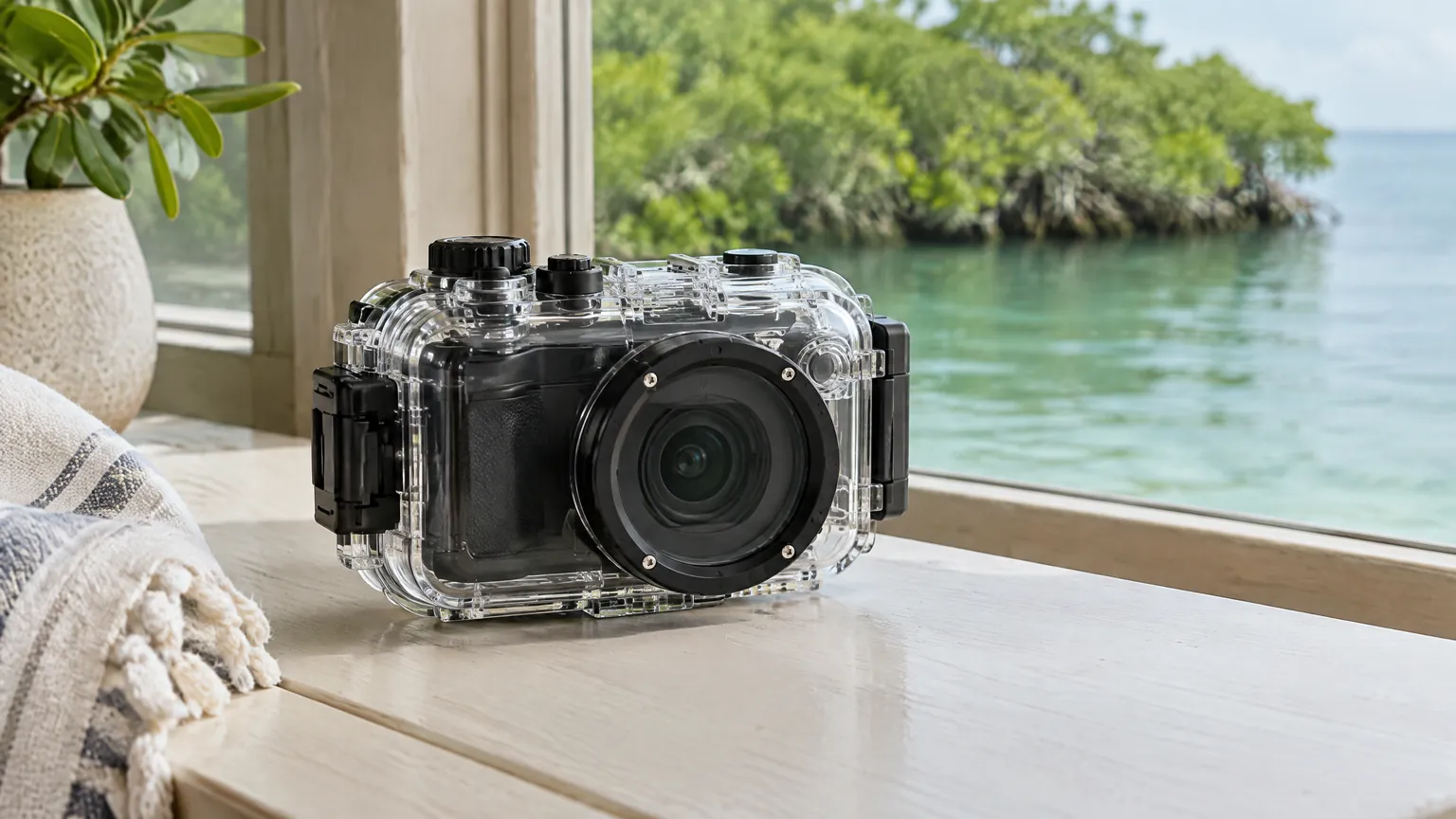
When considering an underwater photography diving course Hong Kong, describe the camera and housing you actually own and ask whether they suit the offered training. Confirm what photographic equipment is included, what must be supplied and whether an assessment or separate supervised familiarisation is recommended. Do not assume that buying a larger rig will resolve the learning need.
Request a clear description of the balance between photography instruction and diving assessment. A camera review can happen without establishing underwater readiness. Likewise, impressive sample images do not explain how the course handles attention to buddies, habitat or unfamiliar equipment. Ask how these concerns feature in the instructor's teaching and feedback.
If photography is your main goal, discuss whether it can begin in an arrangement with fewer unfamiliar features, rather than adding darkness and a wreck at the outset. This is a proposal for the instructor to evaluate, not a prescribed training sequence or permission to practise independently. Equipment purchases can wait until that discussion clarifies what is useful.
Make habitat respect part of the booking
Environmental conduct should be an explicit expectation, not an optional conversation after the images are taken. Green Fins discourages chasing, touching or manipulating animals and holding corals for support. It also cautions against excessive flash and disturbing sleeping fish with torches at night. Ask how the operator communicates these expectations and addresses conduct that conflicts with them. 2
Tell the instructor that you do not want wildlife moved or pressured for a picture. This matters because Green Fins notes that guides may feel pressure when photographers fixate on finding a particular species. A responsible objective allows observation without promising a specific animal, behaviour or composition. Neither a booking nor a course certificate guarantees wildlife encounters. 2
Ask whether feedback includes environmental impact as well as image quality. A technically appealing photograph is not a good learning outcome if getting it involved holding coral or rearranging an animal. The briefing should also address local restrictions applicable to the actual site; general conservation guidance does not establish access rights or replace site rules.
Using Green Fins guidance in this article does not imply that DiveHarbour is a Green Fins member or has undergone its assessment. Readers can ask providers about their environmental practices without treating a shared conservation principle as an independently verified accreditation.
Send one clear enquiry before paying
A concise written enquiry gives the school enough context to answer usefully and creates a record of what was proposed. It should distinguish the experience you want from the course arrangement you are asking the instructor to evaluate. Avoid simply requesting a night wreck photography package if your real priority is learning to use a new camera responsibly.
Before payment, request or provide the following:
- Give your certification agency, recent diving history and any relevant break from diving; ask which prerequisites and readiness checks apply.
- Identify one main learning objective and any activities you do not want included, particularly wreck penetration.
- Describe unfamiliar equipment and ask what is supplied, required or recommended for the actual course.
- Request the proposed syllabus, instructor details, teaching language and supervision arrangement; verify relevant instructor credentials with the issuing agency where appropriate.
- Confirm dates, meeting arrangements, boat logistics and how weather-related changes or incomplete training are handled.
- Obtain the current written payment, non-refund, cancellation and make-up terms, including any additional charges or conditions.
Do not assume that cancellation automatically leads to a refund, a free replacement session or a particular rescheduled date. If the written material differs between languages, ask the school to resolve the difference before paying. Course listings and friends' experiences are not substitutes for the terms attached to your own booking.
Health questions need a separate route. Follow the medical-screening process required for the proposed course and consult a qualified healthcare professional when assessment is needed. An instructor's course discussion, this article and a confidence-building conversation cannot provide personal medical clearance.
Judge the proposal by what it leaves out
Consider a hypothetical diver returning after a break who has a new camera housing and wants to photograph a wreck at night. The useful first conversation is not about fitting every attraction into one outing. It is about the recent experience gap, the unfamiliar equipment and whether the instructor recommends assessment or a narrower initial objective. No single detail establishes that diver's readiness.
A good written proposal makes the objective and exclusions understandable. It explains what training is being offered, what still needs confirmation and what happens if the intended learning cannot proceed as expected. It does not promise visibility, wildlife, course completion or a particular sea condition.
The strongest specialty choice is therefore not necessarily the most novel one. It is the one whose demands you have discussed honestly, whose scope you understand and whose environmental expectations you are prepared to respect. Leave the practical skills to qualified instruction and leave room for the instructor to recommend doing less before adding more.
Common questions
Should my first night-course session include a camera?
Ask the instructor rather than assuming it should. Explain your camera familiarity and recent diving experience, then clarify whether camera use is part of the proposed learning or should be left out initially. Friends' expectations of photographs should not determine the training arrangement. A camera-free session may be worth discussing, but this article cannot prescribe your course sequence.
Does a wreck-specialty booking mean I will enter a wreck?
Not from the title alone. Request the named agency, syllabus and exact scope of the offered activity, including whether any penetration component is proposed. State if you want exterior observation only and ask how that affects assessment. Do not infer permission or suitability from a course page, a photograph or another diver's certification.
What environmental questions belong in a photography-course enquiry?
Ask how the course addresses contact with habitat, manipulation of wildlife and the use of lights or flash. Explain that you do not want animals moved or chased for images. Request feedback on environmental conduct as well as photographic results, and ask about restrictions at the actual site. Wildlife appearances and particular photographs cannot be guaranteed.
Sources & what they support
The scope below identifies what each reference supports. Citations do not imply independent endorsement of DiveHarbour or any school, establish course outcomes or provide individual medical clearance to dive.
- DCS After a Deep, Wreck and Night Dive (opens in a new tab)
DAN's diver-reported case illustrates several unfamiliar factors coinciding, including darkness, camera use, equipment and buddies. Used to explain stacked novelty, not to infer causation, risk percentages, clinical advice or course standards.
- How to be a Responsible Underwater Photographer (opens in a new tab)
Green Fins environmental guidance on reef damage, coral contact, wildlife manipulation or pursuit, sediment disturbance, excessive flash and night-light disturbance. Supports course-enquiry and habitat-respect questions, not in-water skills instruction or a provider accreditation claim.
- Why Wreck Diver Should Be Your Next Specialty Course (opens in a new tab)
PADI's explanation identifies specialised wreck training, hazards associated with interiors, the need for training before penetration and the conservation value of wrecks. Does not establish DiveHarbour's syllabus, universal prerequisites or unrestricted penetration entitlement.
- PADI Night Diver Specialty Course (opens in a new tab)
Official PADI course introduction describes the changed underwater scene and the transition between daytime and nocturnal organisms. Used only for the subject's appeal, not to claim particular schedules, equipment requirements or provider eligibility.