Layers for natural movement: plan the cut around real hair fall
This column offers salon and styling information and links to Vit So, a hair website under the same ownership. Hair services are provided by Vit So, not GotGear.
The short answer
Choose layers by how your hair settles after your usual wash and dry, not only by a finished salon photograph. Decide where the shortest pieces can sit without catching your glasses, whether the ends will meet your work collar, and how much styling you will actually do. A strongly layered shape, a medium cut with a fuller edge and a gently graduated wavy cut solve different problems; the useful choice is the one that works with your daily constraints.
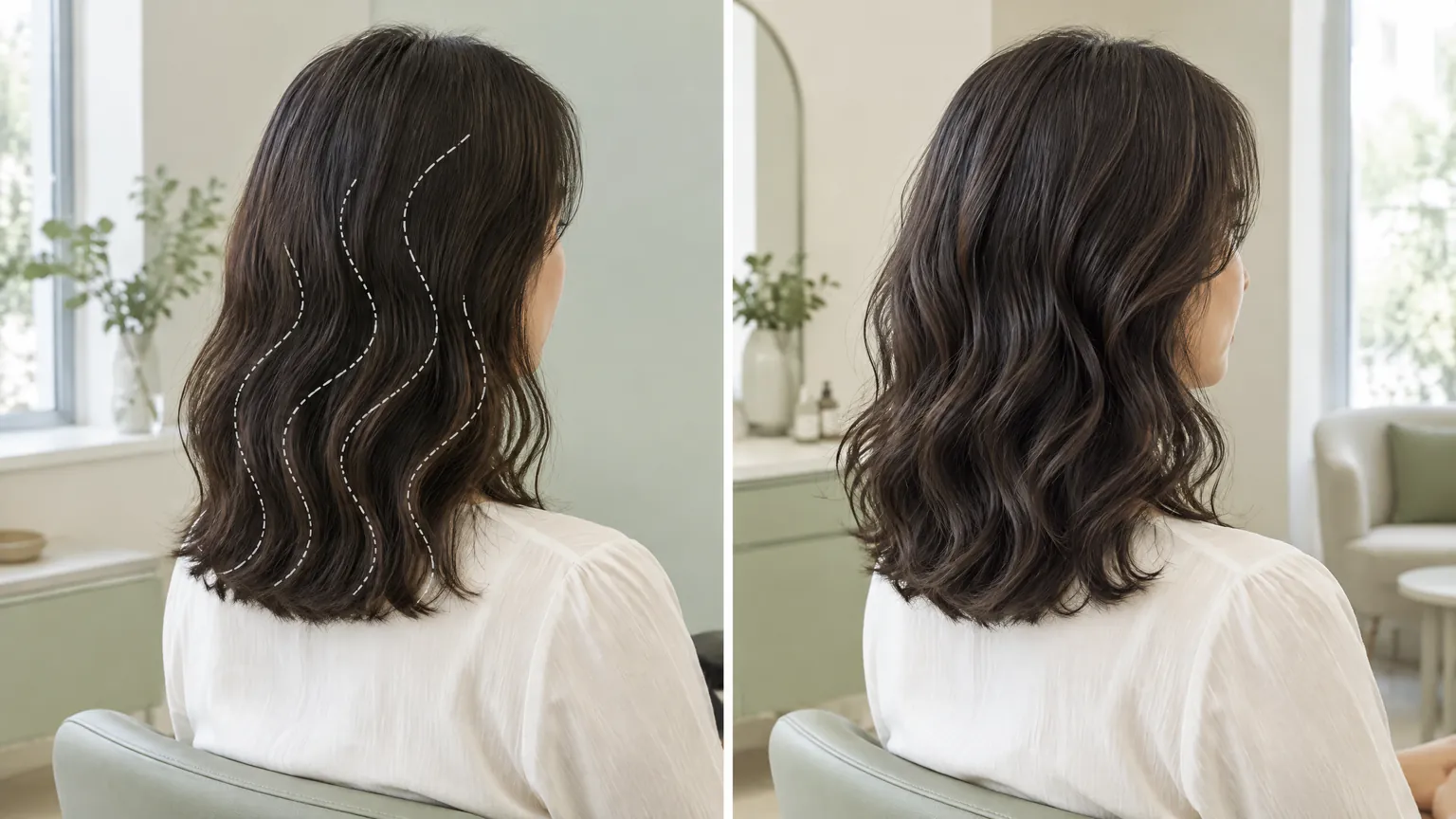
Layers should earn their place in a haircut. They might create a more visibly stepped shape, free up movement around the face or reduce a heavy-looking outline. They can also leave pieces too short to tie back, expose a thinner perimeter or introduce sections that need more styling than the rest. Before choosing a reference photograph, decide what you want the cut to do on an ordinary working morning.
For someone moving between a shop floor, a commute and an evening out, natural movement does not mean a deliberately untidy finish. It means a shape that makes sense when the hair falls without being repeatedly redirected. The most useful reference is therefore your own hair, dry and worn as usual, alongside the image of the shape you like.
Read the hair you actually have
Look at your hair after your normal routine, without changing the parting to imitate a photograph. Note which sections bend, which remain relatively straight and whether the front sits differently from the back. A single label such as wavy does not describe every section. Record the difference rather than trying to make the whole head behave uniformly before a consultation.
Separate strand fineness from how much hair you have. Fine strands can still form a dense head of hair, while thicker strands may be more sparsely distributed. For planning purposes, the useful question is whether removing length from upper sections would leave the lower edge looking as substantial as you want. Ask the stylist to assess that balance instead of requesting maximum layers as a shortcut to movement.
Your current ends matter too. If they look sparse, show that concern before discussing shorter crown sections. The Canadian Dermatology Association identifies trimming as the remedy for split ends; conditioning or a new silhouette should not be presented as permanent repair for a split hair shaft.2 A cut can change the outline, but it does not turn previously processed lengths into untreated hair.
Make a simple record of natural fall
Take a front, side and back photograph for your own use on a normal hair day. Note whether the hair was air-dried, brushed during drying or finished with heat. Keep the lighting and head position ordinary. These images are a communication aid, not a test of hair health, and there is no need to publish them.
If you usually arrive wearing a tight bun or with the front tucked behind your ears, tell the stylist how long it has been held that way. Also explain which parting you normally keep. Ask whether arriving with your usual dry texture would help the consultation, rather than assuming every salon follows the same assessment or cutting sequence.
Compare shapes by what the shorter pieces must do
Style names are useful starting points, but they do not specify the shortest layer, the amount of hair retained at the edge or how the fringe connects to the sides. Two reference photographs carrying the same name can suggest different practical cuts. Use a comparison to identify the trade-off you are willing to accept.
| Cut direction | What to discuss | Everyday limitation to check | Most useful reference |
|---|---|---|---|
| Strongly layered, wolf-inspired shape | Visible contrast between shorter upper sections and longer lower lengths | Whether upper and front pieces can still be secured for work | Front and side views showing the shortest pieces |
| Medium length with a fuller perimeter | A substantial lower edge with restrained face-framing or internal layers | Whether the ends sit against the usual collar or shoulders | The desired length shown with a similar neckline |
| Medium length with softer distributed layers | Movement without a strongly separated top and bottom | Whether the lower edge remains full enough for your preference | An ordinary dry finish, not only a curled finish |
| Wave-led shape with selective layering | Where the existing bends settle and how the front connects | Uneven wave strength and different behaviour on each side | Your own usual dried texture beside the inspiration image |
Vit So, which shares ownership with GotGear, offers a guide to the wolf cut. Use it to frame a discussion about the layer pattern, then specify which elements you want: perhaps the visible separation, but not a short fringe; perhaps face movement, but enough side length to secure behind the ears. The name alone is not a complete instruction.
A useful consultation question is: which pieces would be shortened most, and what would they do without a round-brush finish? Ask the stylist to explain this on your current hair. If the plan depends on lifting the crown every morning, that is a different commitment from simply letting longer layers settle. Neither approach is inherently wrong, but the styling requirement should be explicit before the cut.
Put on your glasses before deciding the front
Bring the glasses you actually wear to work, not only a smaller pair that suits the reference image. The frame, arm position and your habit of taking them on and off are part of the haircut brief. A front piece can look attractive when held beside the cheek yet become inconvenient if it repeatedly catches near the hinge.
Check the proposed front length with the glasses on and with your head in a normal position. Then look down as you would when checking a till, reading a label or using a laptop. Explain whether you are comfortable moving the front back by hand. If you are not, that preference matters more than whether a face-framing section looks perfectly placed in a still photograph.
Treat ear-tucking as a real requirement
If tucking the sides behind your ears is your default, ask which proposed pieces will reach comfortably. A deliberately loose piece may be part of the look, but it should not be mistaken for a section that will stay contained throughout a shift. Demonstrate your usual tuck rather than describing it only as easy styling.
If a work rule requires hair to be secured, bring the clip or tie you normally use and explain the rule. Do not solve escaping layers by pulling the rest increasingly tight. The American Academy of Dermatology warns that continuously worn styles that pull on hair can cause breakage and, with ongoing tension, hair loss.3 A workable cut should be discussed alongside a comfortable way of containing it.
Set medium length against the actual neckline
Medium length is not a single position on the body. Decide whether your intended edge should sit above the collar, touch it or extend clearly below it. A shirt collar, high uniform neckline and apron strap occupy different places. If you wear the same combination most days, show it in a photograph or wear it to the consultation where practical.
Hair meeting the shoulder or a firm collar can be redirected by that contact. If your current ends turn outward there, point out where it happens rather than simply asking for a length that does not flick. The useful discussion is whether to change the contact point, accept the bend as part of the shape or retain a finishing step to manage it. No reference picture can promise that every end will lie flat throughout the day.
When comparing medium length haircuts for women, look beyond the apparent centimetres in a photograph. Ask about the retained perimeter, the shortest side section and the space needed to tie everything back. The same overall length can support a relatively full outline or a more separated layered shape; those differences may matter more than the category name.
Think about the neckline at the back as well as the face. If you dislike hair collecting inside a collar, say so. If a longer back is welcome because it stays in a loose tie, say that instead. A practical brief describes the point of inconvenience and the acceptable solution, rather than asking the stylist to infer both from a mood board.
Choose a drying routine before choosing the layer pattern
A layered photograph may owe part of its appearance to deliberate drying, brushing or hot-tool styling. That does not make it a poor reference, but it changes what the image demonstrates. Ask what the shape would look like after your usual routine and which sections, if any, need separate attention. Avoid treating an air-dried finish as equivalent to a carefully directed blow-dry.
The Canadian Dermatology Association advises minimising heat styling and using cool or low heat when blow-drying.2 The American Academy of Dermatology also recommends allowing hair to partially air-dry before styling and reducing blow-drying frequency to help limit damage.3 These are general care recommendations, not evidence that one named haircut is healthier than another. Build the finish around a realistic routine rather than adding daily high-heat correction to every layer.
For a haircut for naturally wavy hair, bring examples of your own texture after the drying method you intend to keep. Discuss the flatter sections as carefully as the strongest waves. Ask whether the proposed front and crown lengths make sense across that variation, and whether the outline can remain coherent without making every bend equally defined.
Detangle without chasing perfect uniformity
The American Academy of Dermatology's curly and coily hair guidance recommends detangling with suitable tools while the hair is wet and conditioned, and avoiding dry brushing that can cause breakage and frizz.1 Its advice is aimed at those textures; it should not become a blanket washing schedule or product prescription for everyone with a slight wave.
For hair that tangles, the Canadian Dermatology Association recommends a wide-toothed comb, working from the ends upwards, and avoiding vigorous towel-drying or harsh handling of wet hair.2 Explain your current detangling method during the consultation. If recreating an inspiration image would require repeatedly brushing out the texture and then curling it back in, decide whether that extra work fits your goal. Natural movement does not require each section to match perfectly.
A hypothetical working-day choice
Consider this hypothetical example, not a reported customer result: a shop assistant has fine, loosely wavy strands, wears glasses throughout the shift and usually ties shoulder-length hair back with a soft tie. A high uniform collar pushes some ends outward. They like the lifted top and separated outline of a strongly layered reference, but have little interest in styling short sections before leaving home.
The first decision is not whether the reference looks fashionable. It is whether its shortest pieces would remain outside the tie and interfere with the glasses. The assistant could ask about retaining longer side sections and a fuller lower edge while introducing some movement. That is a consultation direction, not a guarantee that a particular modification will work on hair that has not been assessed.
The second decision concerns the collar. They could discuss moving the perimeter away from its current contact point or keeping enough length for a comfortable tie. The third concerns drying: they should show the actual loose waves rather than promising to learn a daily blow-dry they do not want. If the desired crown shape depends on that technique, they can choose a less dramatic version or knowingly accept the extra task.
This example illustrates why a useful brief may combine elements rather than copy a whole look. It also shows why preserving length is sometimes the practical choice. More visible layering is not automatically more suitable just because the aim is movement.
Bring a brief the stylist can act on
Use the following checklist before committing to a major change. It translates everyday preferences into questions that can be answered during an assessment, without prescribing a cutting technique.
- Photograph your normal dry hair from the front, side and back, and note how you dried it.
- Choose one or two inspiration images and identify the specific features you like, including any you do not want.
- Bring your usual glasses and show the neckline you wear most often.
- State whether every side and front piece must tuck back, clip away or reach a tie.
- Describe where your current cut becomes inconvenient: the crown, frame hinges, collar or lower edge.
- Disclose previous colour, bleaching, perming or straightening, including processed lengths that remain.
- Agree on the shortest proposed pieces and the overall length before substantial cutting begins.
- Ask for a drying explanation that fits the tools and time you are willing to use.
Processing history belongs in this discussion because colouring, perming and relaxing can weaken hair and make it more prone to breakage, according to the Canadian Dermatology Association.2 Do not assume another chemical service is necessary to make a layered cut workable, or suitable for every hair condition. If there is persistent scalp irritation, pain or sudden marked hair loss, seek assessment from a qualified healthcare professional rather than treating a new haircut as a remedy.
Before leaving the consultation, be able to describe the plan in plain words: where the edge will sit, which pieces will be shorter, what can be secured and how you will dry it. That description is more useful than a style name alone. It gives the cut a clear everyday purpose while leaving room for your actual hair to move differently from the reference photograph.

Common questions
Can I keep a wolf-inspired shape if all my hair must tie back for work?
Possibly, but discuss the shortest layers before choosing the overall silhouette. Ask which front, side and crown pieces will reach your usual tie or clip. A less pronounced version may be worth discussing if full containment is essential. Do not assume that keeping the back long means every section will tie back.
Should I choose front layers with my glasses on?
Yes, bring the pair you normally wear and demonstrate looking down, removing the frames and tucking your hair. Explain whether loose front pieces bother you during work. The aim is to agree on a comfortable placement and manageable length, not simply to copy how a fringe sits on someone without glasses.
Does medium-length wavy hair have to be cut above the shoulders?
No. Shoulder and collar contact are practical considerations, not universal cut-off rules. Show where your current ends change direction and discuss whether a different contact point, more retained length or accepting the bend would suit you. The right choice depends on your hair's fall and whether you need to secure it.
What should I bring if I want an air-dried finish rather than a blow-dried look?
Bring photographs of your own hair after its usual wash and air-dry, plus a reference showing the shape you like. Note any flatter or stronger-waved sections. Ask which elements of the proposed cut would still need directed drying, so you can choose a routine you are genuinely willing to maintain.
Sources & what they support
The scope below identifies the information supported by each reference; a citation is not an endorsement of a salon or a guarantee of results.
- American Academy of Dermatology: 6 curly hair care tips from dermatologists (opens in a new tab)
Supports wet, conditioned detangling and avoiding dry brushing for curly or coily hair; the article does not generalise its washing schedule to all wavy hair.
- Canadian Dermatology Association: Hair Care (opens in a new tab)
Supports gentle detangling from ends upwards, avoiding vigorous towel-drying, minimising heat and using cool or low dryer heat, trimming split ends, and discussing breakage risks from previous chemical processing.
- American Academy of Dermatology: Hair styling without damage (opens in a new tab)
Supports partial air-drying and less frequent blow-drying to limit damage, and cautions about breakage and hair loss associated with ongoing tension from pulling hairstyles.