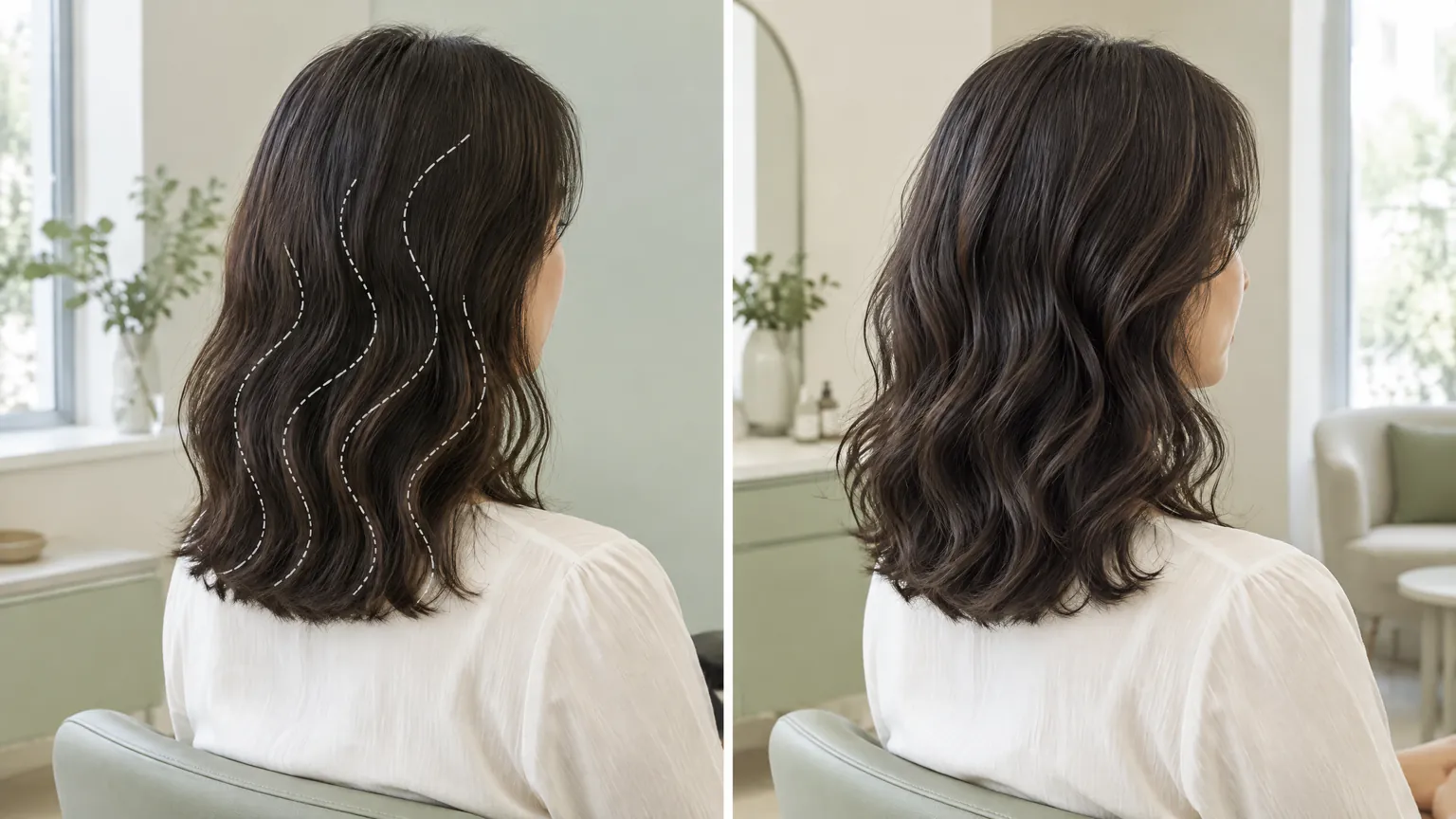
No-bleach colour for working lives: darkness, contrast and expectations
This column offers salon and styling information and links to Vit So, a hair website under the same ownership. Hair services are provided by Vit So, not GotGear.
The short answer
No-bleach colour can suit a working routine when the goal is a believable brunette shift rather than a dramatic leap from dark hair to a pale shade. The useful questions are how light the result needs to look indoors, where contrast should sit in the haircut, and what previous treatments remain on the lengths. Avoiding a separate bleach step does not guarantee damage-free or allergy-free colouring, so the decision still needs an individual assessment and the appropriate product safety checks.
Start with the change you need at work
A colour that looks brown beside a sunny window may still read as almost black in a meeting room. That is not necessarily a disappointing result. For someone who wants a small change without a conspicuous difference at work, a dark brunette effect might be exactly the brief. The problem arises when the reference photograph shows an obviously light top and the request simultaneously rules out the lightening needed to create it.
Before choosing a shade name, describe the visible outcome. Do you want colleagues to notice a lighter colour, or do you want the hair to look less uniformly dark? Is the priority a warmer reflection, a softer frame around the face, or a contrast between the longer top and cropped sides? These are different design goals. A consultation becomes more useful when the stylist can distinguish the change you need from the colour label you happen to like.
The no bleach hair colour page at Vit So is a relevant starting point for enquiries. Vit So and GotGear share ownership; this is linked service information, not an independent endorsement. Confirm the proposed process and its limits for your own hair before treating any reference image as an achievable result.
What the no-bleach boundary actually means
Avoiding a separate bleach application does not necessarily mean that a colour treatment leaves natural pigment untouched. A peer-reviewed review explains that permanent oxidative dyes use an oxidising agent, commonly hydrogen peroxide. In an alkaline mixture, that agent can lighten melanin, the natural pigment in the hair, while the dye chemistry creates colour. Non-oxidative colour works differently, adding colour without that same lightening mechanism. The formulation matters more than an informal service label. 1
Ask whether the proposal is to add colour, lighten natural pigment with permanent dye, or work over hair that is already lighter. Those distinctions help explain why two people requesting the same brunette shade may receive different advice. They also prevent a misunderstanding in which someone avoids the word bleach but still expects a substantial change with no chemical trade-off.
The American Academy of Dermatology recommends staying within three shades of natural colour and says that going darker is typically better than going lighter for limiting damage. It notes that lightening by more than three shades requires higher volumes of peroxide and causes more damage. This is general hair-care guidance, not a promise that a particular three-shade change will be achievable or appropriate for every head of hair. 2
Natural darkness is not the whole starting point
New roots, previously coloured lengths and old lightened ends should not be treated as one identical surface. Tell the stylist what has been applied, including home colour, rather than describing only the colour visible today. A dark-looking length may contain an earlier treatment that still matters to the next decision. Where the history is uncertain, ask whether a representative strand assessment is needed and whether the goal should be reduced or postponed.
Do not assume that a lighter-looking box or swatch establishes what will happen over old dark colour. The chemical review describes final permanent colour as dependent on the ingredients and processing conditions, among other factors. A photograph cannot provide those details. Any prediction should therefore come from assessing the actual roots and lengths, not simply matching a name on a chart. 1
Compare realistic brunette goals, not just shade names
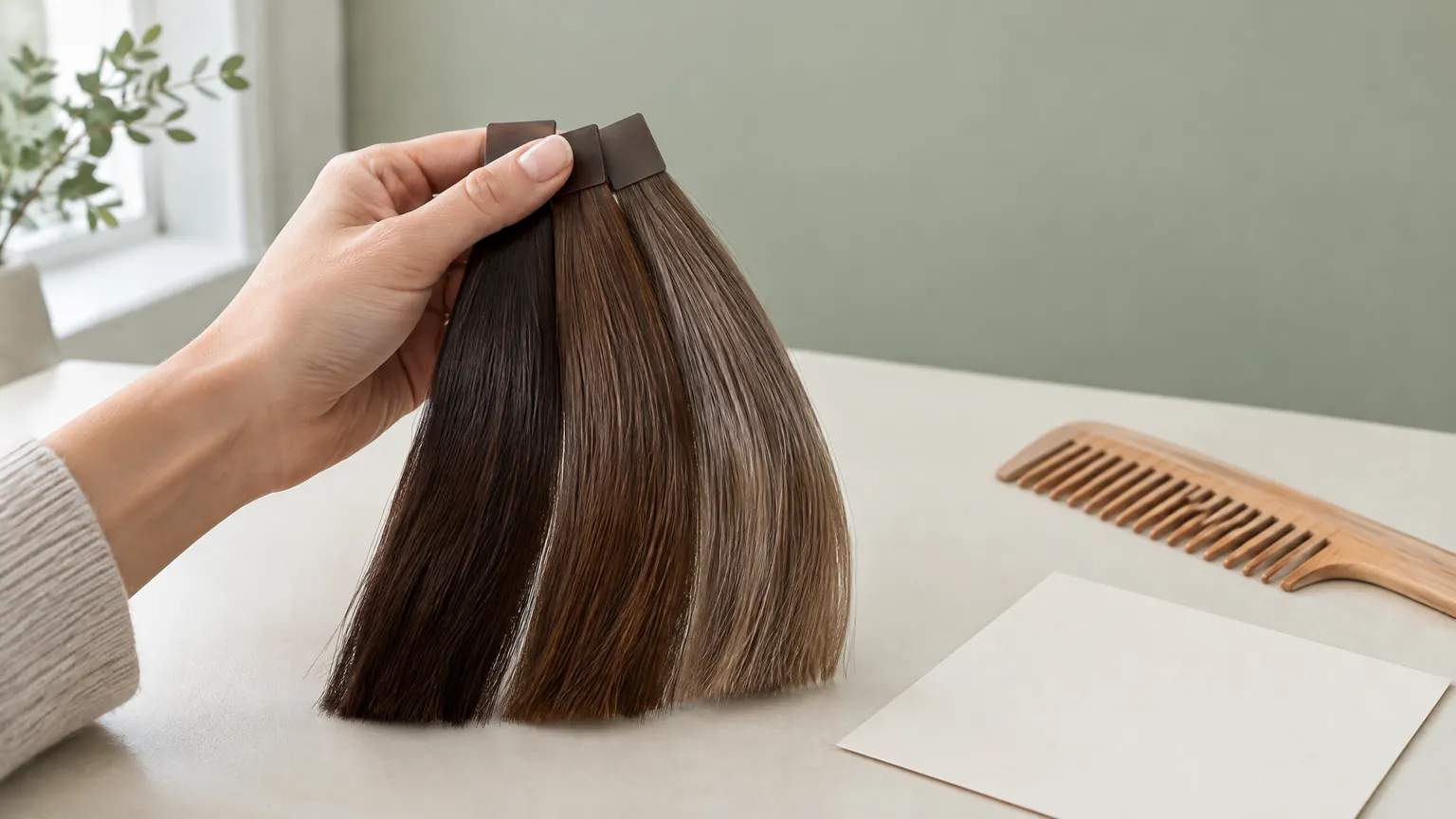
Words such as espresso, chestnut and ash brown are useful conversation starters, but they do not define a standard result across products or hair histories. Separate depth, meaning how light or dark the hair appears, from tone, meaning its warm, neutral or cool character. If a photograph appeals mainly because it is lighter, selecting a cooler label will not solve the underlying brightness requirement.
| Desired effect | Question to settle during assessment | Working-life trade-off |
|---|---|---|
| A subtle brown reflection on a dark base | Will it look different in ordinary indoor light, or mainly near daylight? | The change may be discreet but less visible than expected. |
| A noticeably lighter brunette overall | How much lightening is needed, and is it possible within the agreed no-bleach boundary? | Roots and the difference between untreated and coloured hair may become more noticeable. |
| A dark top with natural cropped sides | Will the intended contrast still show when the top lies flat? | Frequent cutting can change the balance even before the colour needs attention. |
| A cool-looking brunette | How will existing warmth affect the proposal and its later appearance? | Maintaining the preferred tone may need a separate plan from maintaining depth. |
| Less obvious grey among dark hair | Is the aim partial blending or more complete coverage? | Softer blending and uniform coverage create different expectations for regrowth. |
For readers comparing brunette descriptions, the brown hair colour guide can support a discussion about depth. Bring the distinction back to your own priorities: a brown that remains dark indoors is not interchangeable with one that reads as clearly lighter under ceiling lights. Neither is inherently more suitable for an office; the better choice depends on the effect you actually want and can maintain.
Choose two references rather than a large collection. One should show the colour in everyday light; the other should show the haircut from the side. Explain what you like in each. This avoids asking for a composite result that only exists because the first photograph has studio lighting and the second has a completely different length.
Men's colour: plan the top and sides together
A short haircut makes placement particularly important. A longer top, close sides and an exposed parting offer different places for colour to be seen. When the sides are cropped very close, visible scalp also affects the overall impression. A pale-looking side in a photograph may therefore reflect the cut and lighting, not a separate lighter dye formula.
Treat top-to-side contrast as a design choice rather than assuming men's colour means an all-over application. For an enquiry about scope, the men's hair colour page provides the appropriate service context. Ask which areas would be treated, what would remain natural, and how the colour plan relates to the next haircut; do not assume that any particular placement is offered without confirmation.
Test the contrast in the hairstyle you actually wear
If the top is normally swept back, a coloured section may be more exposed than when the same hair falls into a fringe. If you wear a cap during a shift or commute and arrive with the top flattened, an upright reference style may be a poor guide to the everyday effect. Discuss the ordinary version of the haircut, not only its freshly styled appearance.
Ask how the boundary will look around the temples, crown and parting. Also explain whether you intend to grow the sides out or keep them very short. Cutting away coloured sections and exposing untreated growth can alter the arrangement. A useful plan anticipates those changes instead of treating the first finished shape as permanent.
A hypothetical choice for a customer-facing week
Consider a hypothetical Hong Kong shop supervisor with naturally very dark hair, a longer top and short sides. They want the top to look softer while keeping a restrained appearance for customer-facing shifts. Their saved image shows a light, cool brown top against much darker sides, but they do not want a separate bleach step. This is an illustrative scenario, not a customer account or reported treatment result.
The first question is whether the attraction is the lightness or the contrast. If lightness is essential, the supervisor needs an honest discussion about whether their starting hair permits it within the stated boundary. If contrast is the priority, they could instead discuss a darker brunette top, accepting that the difference may be modest in indoor light. The stylist still needs to assess whether either proposal is suitable.
The supervisor should also describe their haircut cycle and morning routine. If they have little time to style the top before opening the shop, a result dependent on careful lifting and separation may not meet the practical brief. The fallback could be a smaller colour change with a cut that makes the top more distinct, or no colour until the goal is clearer. Declining an unsuitable colour target is a valid outcome, not a failed consultation.
Bring a brief that a stylist can act on
A consultation should settle what will happen, not merely establish that you like brown. Bring enough information to make the assessment useful, and leave room for a more conservative recommendation. This checklist can be copied into a phone note before an enquiry:
- State the desired indoor appearance: barely changed, visibly brown, or clearly lighter.
- Identify the part that matters most: tone, overall depth, grey blending, or top-to-side contrast.
- List earlier colour, bleach, perm and straightening treatments, with approximate dates if exact ones are unavailable.
- Disclose previous dye reactions and any black henna tattoo history before product selection.
- Describe your normal haircut, styling routine, washing habits and outdoor exposure.
- Ask what testing is required, what areas would be coloured and what result cannot reasonably be promised.
- Agree a fallback if the chosen shade needs more lightening than you accept.
- Confirm the service scope, likely follow-up needs and total charge directly before committing.
Keep hair history and skin-reaction history separate. One informs how the hair might respond and look; the other informs precautions around the product. A strand assessment is not proof that your skin will tolerate the dye. The FDA advises following the product instructions and carrying out the skin test before every use. It also warns that a reaction can still occur even when the skin test shows none. 3
No bleach does not remove the safety checks
An uneventful previous appointment is not a lifetime clearance. The FDA explains that sensitivities can develop with repeated exposure and that formulations can change. It advises against dyeing an irritated, sunburned or damaged scalp. A no-bleach request does not override those precautions, and neither darker colour nor a gentler-sounding name establishes that a product is allergy-free. 3
Tell the stylist about itching, burning or swelling after an earlier dye rather than experimenting with a different shade on your own. The NHS identifies PPD, present in many permanent and some semi-permanent dyes, as a cause of irritation or allergic reactions. It also notes that a previous black henna tattoo may increase allergy risk. Someone with a reaction history should seek appropriate medical advice rather than relying on a cosmetic consultation to identify a safe ingredient. 4
If a reaction develops, stop using the product and seek medical guidance, particularly if symptoms persist or worsen. Symptoms can be delayed by up to 72 hours. Sudden swelling of the mouth, tongue or throat, or difficulty breathing, requires emergency help. Persistent scalp pain or sudden marked hair loss also warrants assessment by a qualified healthcare professional; changing brunette shade is not a treatment for those problems. 3
Judge the result and maintenance in ordinary conditions
Before deciding how much contrast to pursue, explain how much ongoing change you are willing to notice. Grey coverage, a lighter top and a darkening treatment do not create the same visual relationship with new growth. Ask what will be reassessed at a future appointment and whether the lengths need further colour at all. Do not assume every visit must repeat the original application everywhere.
Use comparable conditions when discussing the appearance later: the same parting, similar styling and ordinary light without a colour filter. A daylight photograph and a dim bathroom photograph can make an unhelpful comparison. Describe the problem precisely if one arises: too dark indoors, too warm in daylight, or too little separation from the sides. Each points to a different conversation.
Outdoor exposure belongs in that conversation too. The American Academy of Dermatology says sun can weaken and fade hair, particularly after colouring, bleaching or perming, and recommends a wide-brimmed hat outdoors. Follow a realistic care routine agreed for your hair rather than expecting conditioner to erase chemical processing. 2
The strongest no-bleach decision is an agreed boundary paired with an achievable visual goal. Decide what must change, what can stay dark and what you will do if assessment rules out the reference shade. That gives both the colour and the haircut a better chance of fitting working life without depending on a promise that every brunette photograph can be reproduced.
Common questions
Can no-bleach colour make very dark hair look like light ash brown?
Not reliably from a shade name or photograph alone. Clearly lighter colour requires an assessment of the starting pigment, previous treatments and proposed process. If the necessary lightening exceeds your no-bleach boundary, choose a darker interpretation or postpone colouring rather than expecting a cool label to create brightness.
Can I colour the longer top but leave short sides natural?
That is a placement idea to discuss, not a guaranteed service arrangement. Ask how the boundary would look at the temples, crown and parting, including when the top lies flat. Explain your next haircut plans, because cutting and untreated growth can change the contrast you see.
Does a successful strand assessment mean the dye is safe for my skin?
No. A hair strand assessment and a product skin test answer different questions. Follow the product's safety instructions and disclose previous reactions before colouring. The FDA warns that even a skin test with no visible reaction cannot guarantee that you will not react during the application.
How should I describe a brunette goal for indoor work?
Say whether you want hair that remains nearly black indoors, reads as visibly brown, or looks clearly lighter. Then identify whether tone or top-to-side contrast matters most. Bring an everyday-light reference and explain your normal hairstyle so the discussion is not based entirely on a studio-lit image.
Sources & what they support
The scope below identifies the information supported by each reference; a citation is not an endorsement of a salon or a guarantee of results.
- Comprehensive Review of Hair Dyes: Physicochemical Aspects, Classification, Toxicity, Detection, and Treatment Methods (opens in a new tab)
Peer-reviewed review supporting the distinction between oxidative permanent dye and non-oxidative colour, hydrogen peroxide's role in lightening melanin, and factors influencing final permanent colour. It does not predict an individual's result.
- Coloring and perming tips for healthier-looking hair (opens in a new tab)
American Academy of Dermatology guidance on staying near natural shade, the greater damage associated with substantial peroxide lightening, and protection against sun-related hair damage and fading.
- Hair Dyes (opens in a new tab)
FDA guidance on following product directions, skin testing before every use and its limitations, sensitisation after previous uneventful exposure, avoiding dye on an irritated or damaged scalp, and seeking medical help for reactions.
- Hair dye reactions (opens in a new tab)
NHS information on PPD and black henna-related allergy risk, potentially delayed symptoms, seeking medical advice for worsening reactions, and emergency symptoms such as mouth or throat swelling and breathing difficulty.