Scalp comfort in a small salon: cosmetic care and medical boundaries
This column offers salon and styling information and links to Vit So, a hair website under the same ownership. Hair services are provided by Vit So, not GotGear.
The short answer
A comfortable scalp appointment starts with deciding whether cosmetic care is appropriate, not choosing the strongest cleansing product. A small salon should explain what it will apply, use clean towels for each client and keep used linen away from clean supplies. Persistent irritation, pain or sudden noticeable hair loss needs assessment by a qualified healthcare professional rather than another salon add-on. Clear stop signals and a realistic laundry routine matter more than an elaborate treatment menu.
Decide whether cosmetic care is the right next step
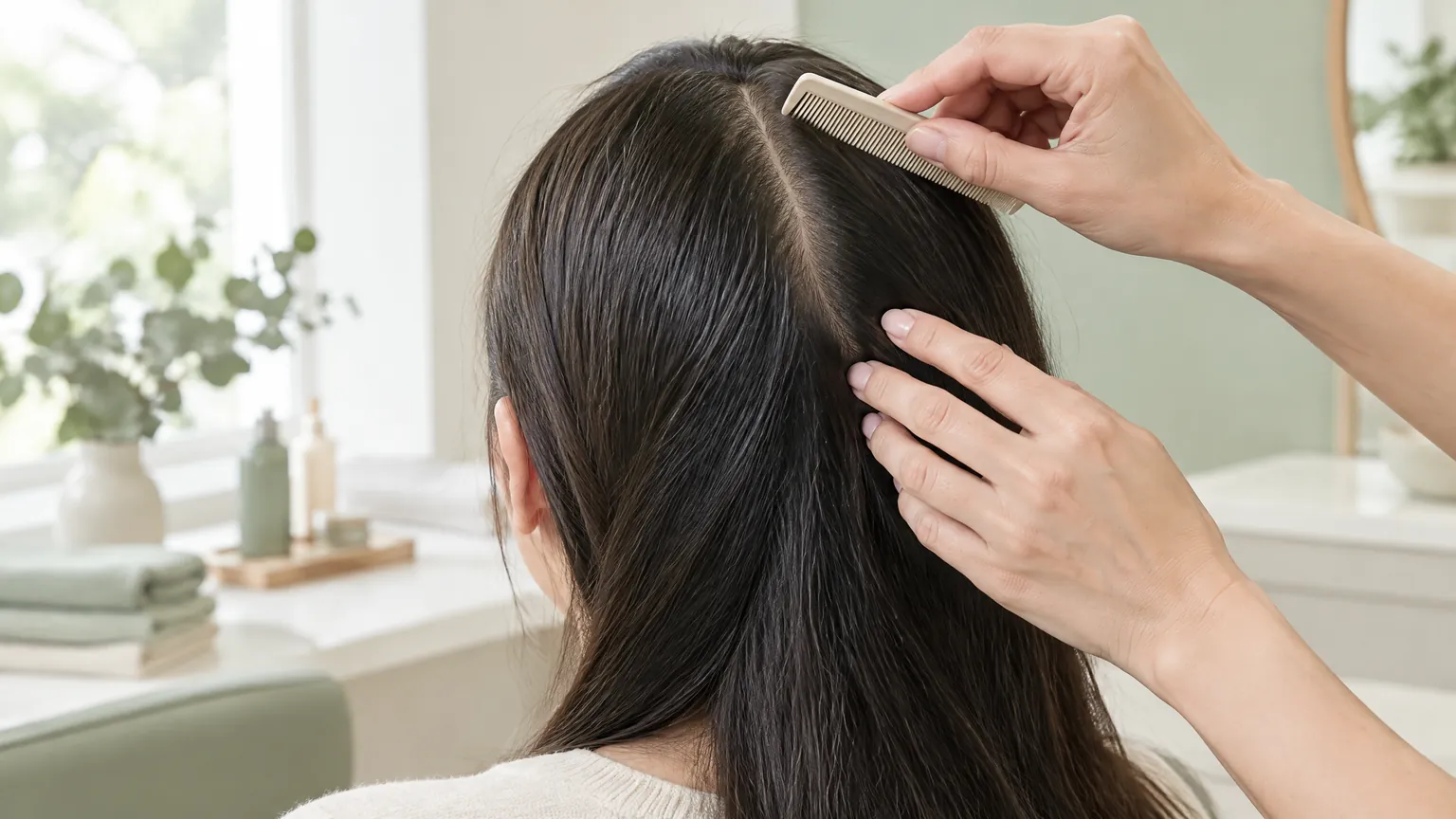
A scalp that feels oily after commuting is a different starting point from one that burns, hurts or repeatedly develops a rash. Before discussing products, describe what you feel, when it began and whether anything recently changed. Useful details include a new styling spray, repeated dry-shampoo use, a colour appointment or discomfort under a cap. These observations help a salon decide whether to proceed within its cosmetic scope; they do not establish a diagnosis.
The NHS describes contact dermatitis as irritation triggered by contact with a substance and advises seeing a doctor for persistent, recurrent or severe symptoms. That does not mean every itchy scalp has this condition. It means a recurring problem should not be explained away as ordinary product build-up without medical assessment. Skin changes may also look different across skin tones, so visible redness is not the only sign worth reporting. 1
For someone considering scalp treatment, the useful question is what the service actually involves: cleansing, products applied to the scalp, optional contact or massage, and finishing. Vit So's page is a service-scope reference, not evidence that a cosmetic appointment treats disease or produces hair growth. GotGear and Vit So are under common ownership; this link is not an independent endorsement.
| Starting point | Appropriate conversation | Boundary to keep clear |
|---|---|---|
| Oily roots or styling residue, without pain or an active rash | Explain your wash routine and ask about cosmetic cleansing | Feeling cleaner is not proof that a medical problem has been treated |
| Discomfort that began after a new product | Name the product and when symptoms started | Do not use further products to test a suspected reaction in the salon |
| Persistent itching, soreness or a recurring rash | Arrange healthcare assessment and tell the salon before attending | A stylist cannot diagnose the cause from appearance alone |
| Sudden noticeable shedding or a new patch of hair loss | Seek assessment from a qualified healthcare professional | A scalp-care package is not a substitute for investigating hair loss |
Review the washing routine before adding a service
Preparation does not require arriving with an artificially pristine scalp. It requires an accurate account of ordinary habits. Explain how often you wash with shampoo and water, what you apply between washes and whether your routine changes after exercise. Someone trying to preserve a blow-dry may use dry shampoo differently from someone washing after every workout. Neither description should become a judgement about personal cleanliness.
The American Academy of Dermatology explains that dry shampoo absorbs oil but does not replace washing with regular shampoo and water. It also advises stopping dry shampoo if itching, burning or other irritation develops. This is relevant when roots look less oily but still carry repeated applications of product: appearance alone does not describe the washing history. 2
When reading about scalp cleansing, compare the proposed process with the routine you already tolerate. Ask which product would be used, whether it is intended for scalp contact and how it will be rinsed out. If the answer is simply that a stronger cleanser is always better, ask for a clearer explanation rather than agreeing to extra intensity.
Avoid stacking several changes immediately before an appointment. Introducing a new shampoo, scrub and leave-on product together can make it harder to describe what preceded discomfort. If you already have a clinician's care plan, tell the salon that it exists and ask whether the cosmetic visit should wait. The salon should not tell you to abandon prescribed care to make room for its products.
Give clean and used towels separate routes
In a compact salon, towel handling is a space-planning issue as much as a laundry task. A pile beside the basin may be convenient, but it becomes hard to manage if wet hands, returned tools and used towels all pass over it. The aim is a route from protected clean storage to one client's service, then to a separate used-linen container and laundering. Returning a used towel to the clean side breaks that route, even if the towel looks tidy.
As an overseas benchmark, Virginia's official salon sanitation rules require clean linen for each patron, protected dry storage for clean towels and enclosed storage for soiled towels unless they are in a separate laundry room. These are Virginia requirements, not a statement of Hong Kong law. They provide a concrete reference for the separation principle used in the practical workflow below. 3
At the basin: keep the clean supply protected
Place clean towels in a dry cabinet or covered storage arrangement away from splash and product spills. Bring out what is needed for the current client instead of leaving a day's supply beside the bowl. Clean supplies should be reachable without moving a used towel or reaching across the used-linen container. A compact layout can still achieve separation by assigning different storage positions rather than relying on a large room.
Assign each towel a clear job during the service. A towel used to wipe a surface should not then be used on a client's head or neck. If a fresh towel falls onto the floor, move it into the laundering route rather than deciding that the untouched-looking side is acceptable. If a client needs another towel, take a clean replacement; do not stretch the first towel's use merely because the next appointment is approaching.
A cape does not solve every contact issue. Virginia's rules also specify a clean towel or neck strip between a haircloth and the client's skin. Again, this is an overseas benchmark rather than local legal advice. For a salon reviewing its own procedure, the useful question is whether the neck-contact arrangement is clean for the next person, not whether the cape still looks presentable. 3
Between clients: finish the reset before restarting
Move used linen directly into its designated container. Do not rest it temporarily on a clean shelf, an unused chair or the next client's cape. Keep the container positioned so staff can use it without crossing the clean-towel area. An enclosed container still needs a handling and cleaning routine; a lid does not make its contents clean.
Plan laundering around actual turnover and the instructions for the textiles, detergent and equipment. A wash cycle is not complete from an operational perspective until towels are dried, checked and returned to protected storage. Do not solve a shortage by offering a damp towel as ready-to-use stock. Nor should a salon advertise a universal temperature or sterilisation claim without a validated process that supports it.
Clean hands and clean equipment matter alongside linen. Virginia's rules require staff to cleanse their hands before serving each client and describe separate cleaning and disinfection steps for reusable implements. A fresh towel cannot compensate for a comb or brush that has not completed its appropriate reset. Follow applicable local requirements and product instructions rather than treating this article as a complete infection-control protocol. 3
For the owner, the useful operational measure is whether enough fully ready towels remain before the next wash service starts. Keep a reserve that matches normal use and likely delays in laundering, without adopting an invented universal towel quota. If clean stock is running short, adjust the schedule or pause the relevant service. Reusing client linen is not an acceptable way to recover lost appointment time.
Agree on products, pressure and a stop signal
Scalp comfort is not measured by how strongly someone scrubs or how long a product tingles. Before application, ask the salon to identify the product and explain its intended use. Mention known allergies and previous reactions without assuming that a different fragrance or a botanical label makes a replacement safe. The NHS notes that cosmetics can contain substances capable of triggering allergic contact dermatitis. 1
Keep the conversation practical. If massage is part of the proposed appointment, agree on pressure and whether you can decline it. If heat or steam is suggested, ask why it is being included and whether it can be omitted. These are questions about a proposed process, not a claim that any particular service includes those steps. A smaller, simpler cosmetic appointment may be easier to understand than a bundle with unclear additions.
Tell staff immediately about stinging, burning, increasing itch or pain. Agree that saying 'please stop' means stopping and checking the situation, not finishing a timed stage first. Do not accept reassurance that discomfort necessarily proves a product is working. If a suspected product reaction occurs, discontinue the exposure, follow the product's safety instructions and obtain appropriate healthcare advice. Further scrubbing or another product is not a diagnostic test.
Know when to stop and seek medical help
A clean, calm salon environment does not remove the need for medical boundaries. Persistent, recurring or severe irritation should be assessed by a doctor, consistent with NHS guidance. Pain, worsening symptoms or sudden noticeable hair loss also warrant professional assessment rather than repeated cosmetic experimentation. A salon can report what it observed and used; it should not assign a disease name or promise a cure. 1
Recent colouring deserves particular attention when discussing symptoms. The NHS lists burning, itching, soreness and blisters among possible hair-dye reactions, and notes that symptoms can take up to 72 hours to appear. An appointment that seemed comfortable at the time therefore does not rule out a later reaction. Tell the healthcare professional about recent dye exposure and give the product details if available. 4
Sudden swelling of the lips, mouth, tongue or throat, breathing difficulty, or fainting with inability to wake can indicate a serious allergic reaction requiring immediate emergency help. The NHS lists these as emergency warning signs. In Hong Kong, call 999 for an emergency rather than waiting for a salon reply or a routine appointment. Do not drive yourself for emergency care. 4
For less urgent but persistent symptoms, prepare a short timeline: onset, recent products, the areas affected and whether symptoms are changing. Ask the salon for the names of products applied rather than accepting a vague description such as 'the soothing one'. Staff should keep any service note factual. 'Client reported burning and application stopped' is useful; an unsupported medical diagnosis is not.
A hypothetical small-salon appointment
Consider a hypothetical client who uses dry shampoo between washes to keep a styled finish, then books cosmetic scalp care before a work event. They report oily roots and repeated product use but no soreness, active rash or sudden hair loss. The salon discusses the washing routine, confirms the proposed products and agrees on a stop signal. This example describes planning, not an actual client's experience or a promised result.
In the same hypothetical salon, the laundry return is delayed. Only a small clean supply remains after the previous appointments. The responsible response is to check whether the planned service can be completed with clean linen and time for a proper reset. The owner can rearrange the relevant booking if it cannot. Borrowing a towel already used for another client would turn a scheduling problem into a hygiene failure.
Now change one detail: the client describes burning since a new product and a rash that keeps returning. The decision is no longer about making roots feel fresher before an event. The cosmetic plan should be deferred while the client seeks appropriate medical assessment. Clean towels remain necessary, but they cannot make an unsuitable scalp appointment appropriate.
Ask these questions before a Sheung Wan booking
For readers looking up scalp treatment sheung wan, separate the location enquiry from the suitability decision. Read the service description, then confirm the actual cosmetic scope and booking arrangements directly. A convenient address is not a reason to proceed through active irritation, and this article does not establish appointment availability or how a particular visit will be conducted.
Use this checklist to prepare a focused conversation:
- Describe your current sensations and when they began, including whether they persist after washing.
- Name recent shampoos, dry shampoos, styling products and chemical services, and mention previous reactions.
- Ask what will contact the scalp, how it will be removed and which optional steps can be declined.
- Ask whether the service should be deferred given the symptoms you have described.
- Confirm that a clean towel and a clean neck-contact arrangement will be used for you.
- Agree on a clear stop signal and ask what product information can be provided if discomfort develops later.
For the salon, add one final internal check: is the basin reset complete, with protected clean stock ready and used linen removed? That check is useful whether the client has booked a simple wash or a longer cosmetic service. A comfortable appointment depends on both people understanding the plan, with no pressure to turn unresolved symptoms into another sale.
Common questions
Should I wash away every trace of styling product before asking about scalp care?
Ask the salon about preparation instead of changing several products beforehand. Describe your normal shampoo-and-water routine and anything used between washes. That history is more useful than trying to make the scalp look unusually clean. Report irritation before attending, even if washing temporarily changes how your roots look.
Can a used towel be reused if it only touched the previous client's hair?
No. Treat it as used client linen and send it through the laundering route. Appearance is not a reliable basis for returning it to clean stock. A small salon should keep clean replacements protected and adjust scheduling if ready-to-use towels run short, rather than sharing linen between clients.
What if burning appears after the appointment rather than during it?
Stop using any suspected product and seek appropriate healthcare advice, particularly if symptoms persist or worsen. Ask for the names of products applied and note when discomfort began. Hair-dye reactions can be delayed. Sudden mouth or throat swelling, breathing difficulty or unresponsiveness requires emergency help, not a follow-up salon booking.
Does a scalp-care booking include diagnosis or a hair-growth plan?
Not within the cosmetic scope discussed here. Clarify the actual cleansing and care steps before booking, without expecting disease treatment or guaranteed regrowth. Persistent irritation, pain or sudden noticeable hair loss needs assessment by a qualified healthcare professional. A salon's observations can inform that conversation but cannot replace it.
Sources & what they support
The scope below identifies the information supported by each reference; a citation is not an endorsement of a salon or a guarantee of results.
- NHS: Contact dermatitis (opens in a new tab)
Contact-related irritation, variation in skin appearance, cosmetics as potential allergens, and advice to see a doctor for persistent, recurrent or severe symptoms; not used to diagnose readers.
- American Academy of Dermatology: Dry shampoo tips (opens in a new tab)
Dry shampoo absorbs oil rather than replacing shampoo-and-water washing; stop dry shampoo if scalp irritation develops.
- Virginia Administrative Code: Salon sanitation and safety standards (opens in a new tab)
Overseas benchmark requiring clean linen for each patron, protected dry clean-linen storage, enclosed used-linen storage with a separate-laundry-room exception, neck barriers, hand cleansing and reusable-implement sanitation; explicitly not presented as Hong Kong law.
- NHS: Hair dye reactions (opens in a new tab)
Possible burning, itching, soreness and blistering after hair dye, onset up to 72 hours later, worsening reactions requiring medical advice and emergency warning signs of serious allergic reactions.