Smoothing is not straightening: identify the shape you want to keep
This column offers salon and styling information and links to Vit So, a hair website under the same ownership. Hair services are provided by Vit So, not GotGear.
The short answer
Smoothing and straightening describe different aims, but salon names can overlap. A smoothing procedure may change curls, while straighter hair is not necessarily repaired hair. Start by identifying the movement, fullness and end shape you want to keep, then ask what the actual product and procedure would change. Your processing history, current condition and home routine matter more than the label. Keeping curls must be an explicit requirement, not an assumption attached to the word smoothing.
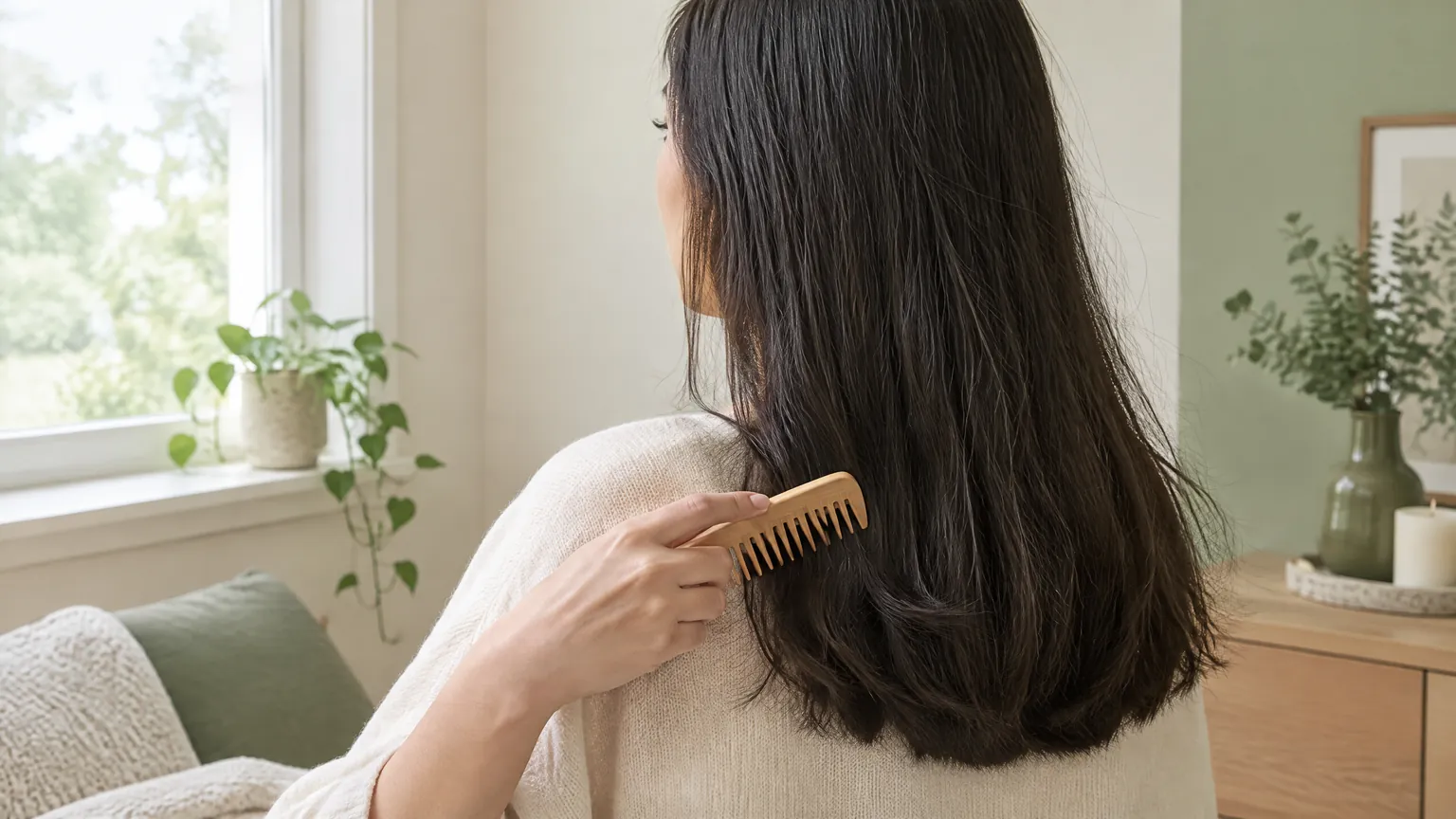
Smoother hair can still be curly. Straighter hair can still feel rough. If you ask a salon to make your hair ‘less frizzy’, you have not yet said whether you want a softer surface, fewer flyaways or a different curl pattern. Those wishes may overlap, but they can also conflict: the volume you dislike beside your ears might be part of the curl shape you enjoy through the ends.
The useful starting point is therefore not a treatment name. It is a description of what should stay. Before discussing a lasting process, identify the features you would miss if your hair fell straighter after washing. That makes it easier to judge a proposal against your own preferences rather than against a glossy reference photograph.
Describe the shape you want to preserve
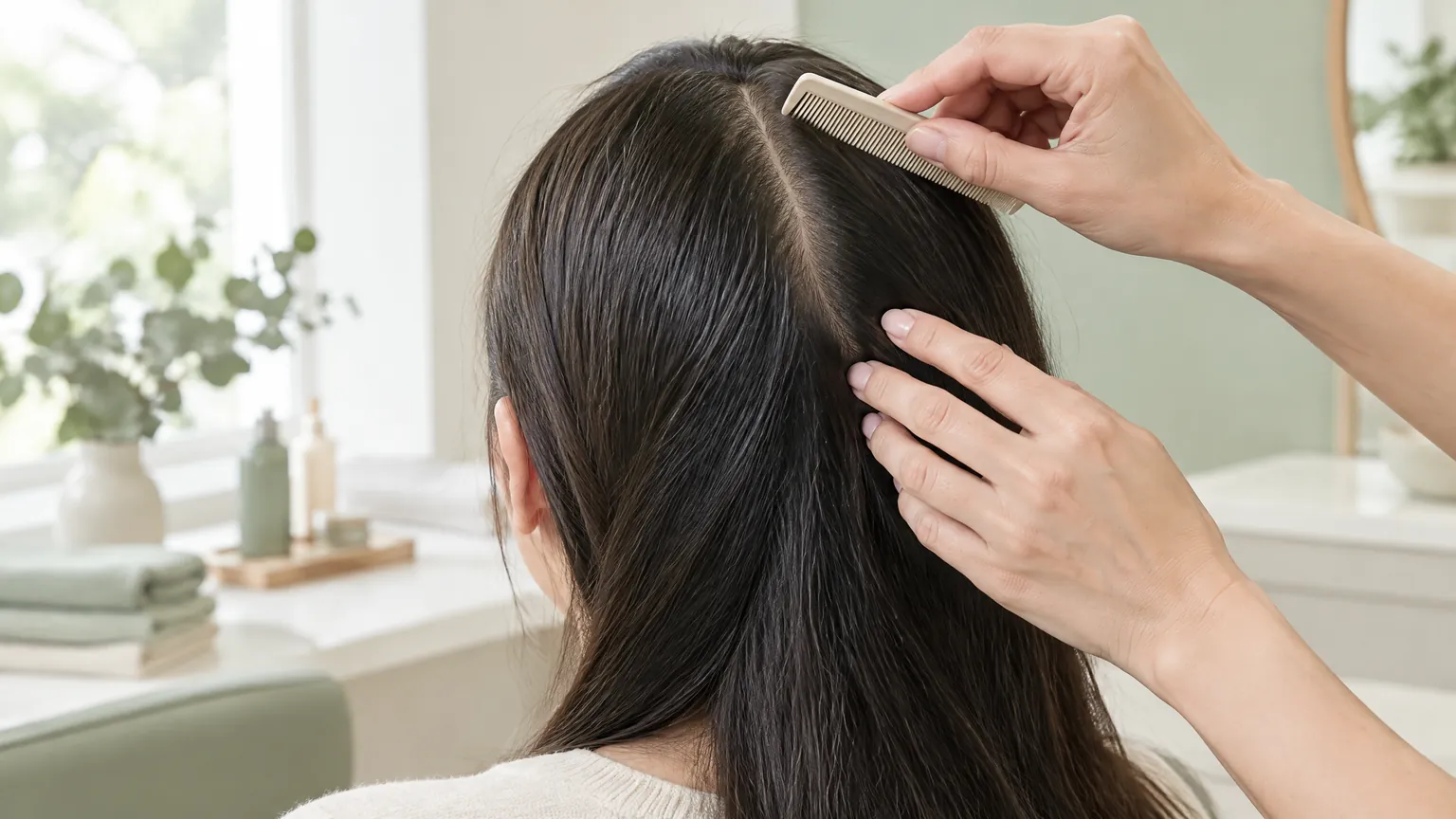
Look at your hair after your usual washing and drying routine, without adding an extra pass of the straightener for the photographs. Separate three observations: how the hair feels when handled gently, where it bends, and how much space its outline occupies. ‘Rough ends’ describes feel. ‘An S-shaped wave below the ears’ describes curvature. ‘Too much width at the sides’ describes the outline. None is automatically a request to remove all curls.
Then identify a specific feature you value. Perhaps the crown has enough lift for your preferred parting, the front curls frame your face, or the ends turn in without a brush. Describe the unwanted feature just as precisely. A fine halo around the parting is a different concern from a strong bend through the full length.
Make a keep-and-change note
Write two short sentences before enquiring. For example: ‘Keep the wave through the middle and the lift at the crown. Change the tangling at the ends and discuss the width near my cheeks.’ This is not a technical prescription. It tells the professional which compromises would matter to you. If the proposed procedure cannot reasonably respect those priorities, you have a reason to reconsider before application.
For the published service scope, Vit So’s hair straightening page is a starting point for an enquiry, not confirmation that your hair is suitable. GotGear and Vit So share ownership; these links provide service information and further reading rather than independent recommendations.
Compare goals before comparing treatment names
There is no dependable rule that every service called smoothing leaves curls intact. The FDA describes smoothing products as products used to straighten hair or smooth out curls. A scientific review also distinguishes chemical processes with variable durability from processes that permanently change the treated section. The actual formula and application matter more than the everyday label. 1
Use the comparison below to decide which conversation you need. It compares aims and questions, not guaranteed results or named salon packages.
| Your priority | Route to discuss | Shape question to settle | Practical trade-off |
|---|---|---|---|
| Easier detangling while keeping curls | Suitable conditioning and handling changes | Is a lasting shape change unnecessary for this goal? | Curvature remains; the routine still needs attention. |
| A sleek look for one occasion | Temporary blow-drying or hot-tool styling | Which bends would be styled out temporarily? | The look requires styling again; heat still carries a damage risk. |
| Less visible frizz with movement retained | Assessment of a proposed smoothing procedure | Could this specific product loosen the curls you want to keep? | Curl retention and duration cannot be assumed from the name. |
| Consistently straighter lengths | Assessment of a lasting straightening process | What would change in the treated lengths, and what fullness might be lost? | New growth and the transition to treated hair need a plan. |
| One troublesome area only | Whether limited work or a cut adjustment is feasible | How would that area sit beside untreated texture? | A smaller area is not automatically suitable or easier to blend. |
A further discussion of hair smoothing vs hair straightening can help organise those questions. Use it to distinguish your objectives, then ask for an explanation of the procedure proposed for your own hair rather than choosing a category from the table alone.
Ask what the product changes, not whether it sounds gentle
Chemical straightening is not one interchangeable process. The review describes hydroxide and thioglycolate systems that alter strong connections within hair protein through different chemistry. It also reports variable effects on the hair shaft and scalp across studies. That does not allow a reader to predict the outcome of a particular appointment, but it does explain why earlier treatments and the proposed product need to be considered together. 1
You do not need to choose the active ingredient yourself. Ask for the product name, its intended purpose, the application steps and the expected effect on your remaining curl. If heat is involved, ask how the manufacturer’s instructions will guide its use. Words such as keratin, glossy or nourishing are not enough to answer these questions.
Vit So lists ionic straightening as a service option. The listing does not establish a universal formula, a particular appliance or guaranteed movement afterwards. Confirm the method proposed, the areas it would cover and whether your preservation goals are realistic before agreeing to the work.
Treat ingredient information as part of the decision
The FDA warns that some smoothing products contain formaldehyde-related ingredients and can release formaldehyde gas when heated. Its consumer guidance recommends asking about formaldehyde, formalin and methylene glycol, as well as available safety information. This is a reason to ask about the actual product; it is not evidence that every smoothing service, or any named Vit So service, contains those ingredients. 2
Ask how the product’s precautions and ventilation requirements would be met. Share previous reactions before application. Do not accept eye irritation or burning as proof that a treatment is working. Tell the professional immediately if discomfort develops. Significant or persistent symptoms warrant medical advice, and breathing difficulty warrants urgent medical help.
Assess curls by area, not by a single curl label
A curl description can help explain your starting point, but it is not a product-strength guide. Photograph the front, sides and back and note the differences you actually see. Your outer layer might form loose waves while the hair underneath forms tighter curls. Your fringe might bend near the root while longer sections curve mainly towards the ends.
Look at the features in the positions you use daily. Loose curls may spread around your shoulders but gather into a ponytail you like. A face-framing bend might be useful when your hair is down and inconvenient when tucked behind your ears. Show both positions rather than assuming that one photograph captures the whole brief.
The American Academy of Dermatology notes that curly and coily hair is more prone to dryness and breakage. Its care advice includes conditioning and gentle, sectioned detangling, while recognising that finding a suitable routine can take trial and error. That supports exploring handling changes when tangling is the main issue; it does not establish that curls need chemical alteration. 4
When considering hair straightening for naturally curly hair, include what you want to preserve after ordinary home drying. Ask whether a proposed process could change the curl pattern beyond your comfort level. If ‘I still want recognisable curls’ is a firm requirement, say so before discussing a service name.
Bring the history of the lengths, not just the roots
Naturally curly new growth does not mean the whole head is untreated. Older bleach, permanent colour, a perm or previous straightening can remain in the lengths. Hair coloured darker may still contain previously lightened areas. Prepare a timeline that follows the hair you will keep, even if an older treatment happened at another salon.
Include home kits and regular hot-tool use. If you cannot remember a product, mark it as unknown. A photograph of packaging or an earlier service record may help, but guessing a chemical name creates false certainty. Point out where the hair catches, breaks unusually or has become difficult to handle. Do not pull it forcefully to perform a home ‘strength test’.
Ask whether a professional strand assessment is appropriate and what would make the proposed process unsuitable. A small test is not a guarantee for every strand. Its value is in the assessment it informs. The review reports damage to hair structure and scalp reactions with chemical straighteners, with findings differing between studies; a smooth-looking surface is not proof that previously processed hair has been permanently repaired. 1
Mention future colour plans too. Ask whether the proposed products are compatible and whether the timing or scope should change. Do not use a waiting period copied from an unrelated treatment as permission to combine processes. If preserving the existing lengths is more important than straightness, postponing further chemical work can be a legitimate outcome of the consultation.
A hypothetical choice: keep the bends, change the handling
Imagine a reader with shoulder-length waves who likes the curve around the face but dislikes tangling after washing. They usually dry with their fingers and tie their hair back for work. Some ends were lightened previously. This is a hypothetical situation, not a customer account or a prediction of improvement.
Their first request might be ‘smoothing without losing volume’. That leaves several uncertainties. Do they want the front bend untouched? Is the width through the lower lengths acceptable? Would they be disappointed if the ends hung straighter? The useful brief is narrower: keep the face-framing bend and tying-back length, assess the rough ends, and explain whether the proposed procedure could loosen the waves.
A consultation could then compare suitable conditioning and handling, a cut adjustment that respects the retained length, temporary styling, or an assessed chemical option. None should be presented as automatically appropriate. Previously lightened ends may change the recommendation, and a process aimed at straightness may remove movement the reader values.
The decision is not simply whether smoothing is ‘weaker’ than straightening. It is whether the assessed route addresses the troublesome handling without crossing the reader’s boundary on shape. If no proposed process can reliably meet that boundary, keeping the waves and changing the routine is a reasonable choice.
Judge the home routine, not only the finished chair photograph
Ask what your hair is expected to look like after ordinary washing and drying without a polished salon finish. Which features depend on the treatment, which depend on the cut, and which still need a brush or dryer? A straighter length does not automatically give you the root lift or turned-under ends shown in a styled reference.
Bring practical constraints into the discussion: frequent exercise, tying hair back, a preference for air-drying or little time for sectioned drying. Confirm the product-specific instructions for the first wash, clips, tying and later colour before choosing an appointment date. If the instructions conflict with your routine, change the plan rather than assuming they are optional.
Straightened hair is not permission for unlimited heat styling. The AAD advises limiting blow-drying and using flat irons on dry hair at low or medium heat; excessive heat can damage every hair type. Its handling advice also distinguishes tightly curled or textured hair from other patterns. Match the routine to the texture you retain rather than forcing every strand through the same brushing method. 3
Discuss new growth separately from treated lengths. A lasting change to existing hair does not change the natural texture of future growth. Ask how the transition would be managed and what would prompt reassessment. Do not assume that another full-length treatment is the answer whenever the outline changes.
Use this checklist before agreeing to the process
Take a short written brief to the consultation so that the shape decision is not lost during a discussion of service names.
- Identify one feature to keep at the roots, middle lengths or ends, and one specific concern to change.
- Bring ordinary front, side and back photographs, noting any styling used before each image.
- Record previous colour, bleach, perms, straightening and home products, with unknown details clearly marked.
- Ask for the proposed product, intended treatment area, heat steps and safety information.
- Confirm whether curl retention is realistic, what could change in fullness, and what alternatives the assessment supports.
- Check the home-care instructions, appointment duration, included work and agreed total before proceeding.
Keep the confirmed treatment details with your hair history afterwards. If the hair becomes harder to handle, describe where the change occurs and how you washed and dried it before seeking advice. Persistent scalp irritation, pain or sudden noticeable hair loss should be assessed by a qualified healthcare professional, not answered with a promise of stronger smoothing or permanent repair.

Common questions
Can I assume smoothing will leave my natural curls unchanged?
No. Smoothing is not a single standard formula, and some procedures can alter curls. State which bends and fullness you want to retain, then ask how the proposed product would affect them. If recognisable curls are essential, do not proceed on the treatment name alone.
Why should I mention old bleach when my roots are natural?
Previously lightened areas may remain in the lengths even when the roots are untreated or the hair has since been coloured darker. Identify the affected sections and any unknown products. Those lengths need their own assessment before a professional can discuss compatibility with another chemical process.
Does a shiny finish mean straightening has repaired damaged hair?
No. Appearance, easier handling and structural condition are different things. Research on chemical straighteners reports variable hair-shaft effects, including damage, so gloss cannot establish permanent repair. Ask what the process is intended to change and what limitations remain for previously processed areas.
What should I confirm if I usually air-dry and tie my hair back?
Explain both habits before choosing the process. Ask what shape is expected without a salon blow-dry and whether the product has first-wash, tying or clipping instructions. Confirm those details for the actual procedure; restrictions from another treatment online may not apply to yours.
Sources & what they support
The scope below identifies the information supported by each reference; a citation is not an endorsement of a salon or a guarantee of results.
- Effects of chemical straighteners on the hair shaft and scalp (opens in a new tab)
Peer-reviewed 2022 review in Anais Brasileiros de Dermatologia: different chemical straightening systems, variable durability versus lasting changes in treated hair, and reported hair-shaft and scalp effects. Supports caution about equating gloss with repair; does not predict any named salon service outcome.
- Hair Smoothing Products That Release Formaldehyde When Heated (opens in a new tab)
FDA consumer guidance: smoothing products may straighten hair or smooth curls; some contain formaldehyde-related ingredients released as gas with heat. Supports product-specific ingredient, safety-information and ventilation questions, without identifying Vit So's ingredients or applying US regulation to Hong Kong salons.
- Hair styling without damage (opens in a new tab)
American Academy of Dermatology general care guidance on reducing blow-drying, using flat irons on dry hair at lower settings and avoiding excessive heat; distinguishes handling of tightly curled or textured hair. Not an endorsement of a product or salon.
- 6 curly hair tips from dermatologists (opens in a new tab)
American Academy of Dermatology guidance on greater dryness and breakage susceptibility in curly or coily hair, conditioning and gentle sectioned detangling, and individual variation in care routines. Paraphrased general care information, not an endorsement or evidence that a chemical service is needed.