Choosing during chemotherapy: comfort and clinical questions are different
GotGear and OWNSTRAND share the same owner. This collection is not an independent recommendation. GotGear does not supply wigs or medical treatment; actual wig services are provided by OWNSTRAND, whose only known studio is in Kwun Tong. These articles provide general information, not medical advice.
The short answer
A wig during chemotherapy is optional appearance support, not a treatment or a requirement. Ask your cancer care team about scalp symptoms, skin-contact products and any treatment-specific restrictions before discussing fit and styling with a supplier. Then choose around the days you actually want to wear it: how it feels with glasses, how easily you can remove it and how much upkeep you want. Synthetic fibre, human hair and a soft head covering each involve different practical trade-offs.

A familiar hairstyle can matter when other parts of daily life are changing. So can leaving the house without having to think about hair at all. Choosing a wig does not require you to promise that you will wear it every day, and deciding against one does not mean you are neglecting your appearance. The useful starting point is your own preference, within any restrictions your care team gives you.
The American Cancer Society explains that not everyone receiving cancer treatment loses their hair, and that experiences can differ even between people receiving the same treatment.1 Ask your team what to expect from your particular treatment rather than planning around someone else’s timetable. You can gather style references now without committing to a purchase or a full-day wearing routine.
Put clinical questions to the care team first
A wig supplier can explain a cap’s construction, demonstrate its adjustment and discuss how to care for the hair or fibre. Those are useful services, but they do not establish whether an irritated scalp can tolerate a particular attachment. Macmillan specifically advises asking a doctor or nurse which wig tape can be used and how best to remove it when skin may be sensitive during treatment.2 A reassuring product label is not a substitute for that individual advice.
Make your clinical questions concrete. If you are considering tape, show the team its product information rather than asking whether all wigs are acceptable. If a seam touches a sore area, describe the location and what happens during wear. Ask whether there are restrictions on head coverings during appointments, and whom to contact if new scalp symptoms appear. These answers belong to your treatment plan, not to a retailer’s general fitting instructions.
The American Cancer Society notes that the scalp may feel itchy, sore or sensitive and recommends gentle handling.1 Persistent irritation, pain, broken skin or a sudden change should be assessed by a qualified healthcare professional. Do not keep tightening a cap over discomfort or add a new scalp product merely to make a chosen style wearable. It is reasonable to pause the appearance decision while the clinical question is resolved.
Choose what the covering needs to do
Start with situations rather than a perfect hairstyle. Perhaps you want familiar hair for a work video call, an easy covering for a clinic journey or no covering at home. These are different needs. A single wig does not have to meet all of them, and there is no obligation to hide hair loss from everyone you meet.
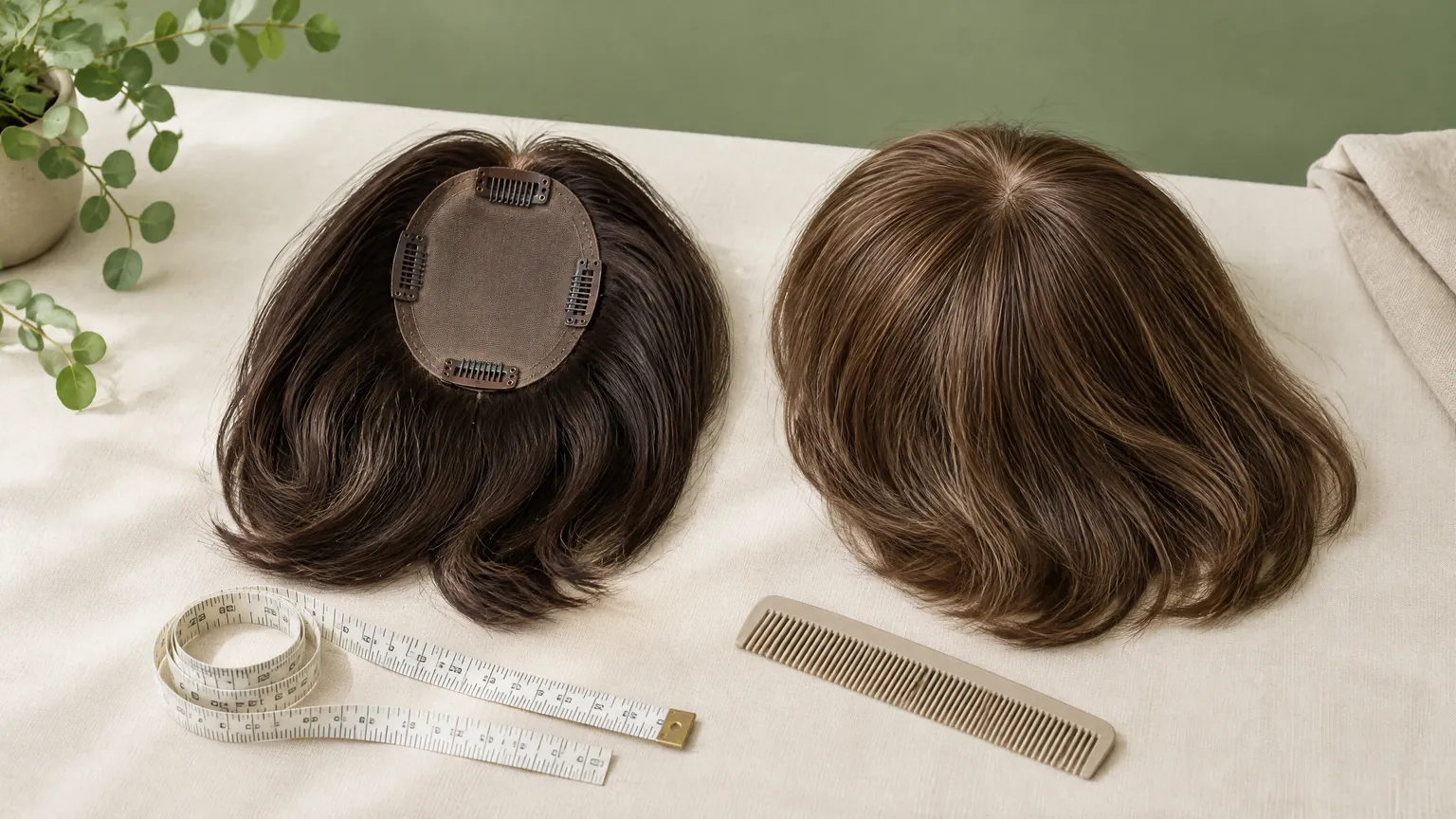
A full wig covers the whole head, whereas a topper adds coverage to thinning hair at the top. The American Cancer Society distinguishes these from accessories such as hair attached to head coverings.3 Coverage and attachment are separate questions: a topper is not automatically an appropriate replacement for a full wig, especially if its securing method depends on remaining hair that cannot tolerate pulling.
For readers exploring chemotherapy wigs, use the service information to prepare questions about coverage, cap adjustment and what a fitting discussion includes. Ask the supplier to confirm the actual construction and attachment of any proposed piece. The category name alone does not tell you whether it suits your scalp, your current hair or the restrictions your care team has set.
The following comparison is a starting point for questions, not a ranking of what someone undergoing chemotherapy should wear. General material and care differences are described by Macmillan and the American Cancer Society.2
| Option | Practical reason to consider it | What to check before choosing |
|---|---|---|
| Synthetic full wig | A preset style may reduce everyday styling work. | Exact fibre-care instructions, heat limits and how the cap feels. |
| Human hair full wig | You may want greater styling flexibility. | The washing and restyling routine, plus help you might need. |
| Topper or partial piece | It may provide targeted coverage where hair is thinning. | Whether coverage is sufficient and how it attaches to remaining hair. |
| Soft hat or scarf | You may prefer a simpler appearance option on some days. | Fabric, seams, fit and any clinical restrictions on scalp contact. |
Fit for changing hair, not just today’s mirror
A fitting before hair loss can help you compare your usual colour and style. It can also be misleading if you judge only how snug the wig feels over your current hair. Macmillan and the American Cancer Society both explain that adjustment may be needed as hair is lost.2 Ask how the proposed cap can accommodate that change and what happens if its adjustment range is insufficient. Do not assume a piece that fits today will fit identically later.
Bring your everyday glasses to the discussion. Look at where their arms meet the sides of the cap and whether the ear area feels crowded. Notice the nape while sitting against a chair, and whether the fringe interferes with reading. A hairstyle that looks appealing while standing in front of a mirror may be less convenient when you put on a mask, look down at a phone or sit through an appointment.
Secure does not mean tighter
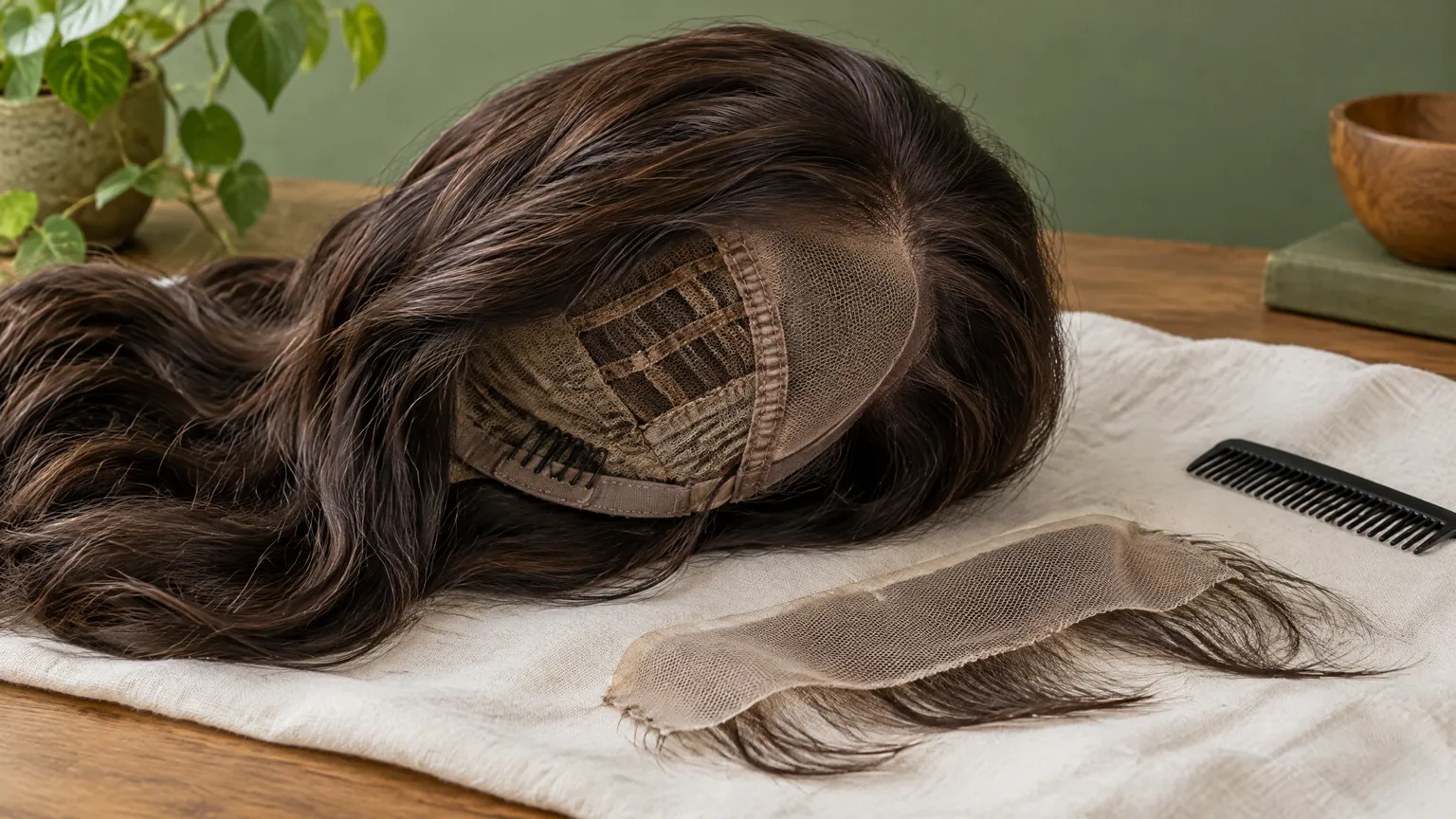
Ask the supplier to demonstrate the intended fitting method rather than improvising one. A cap should not need painful pressure to feel dependable. If it moves, first establish whether its size or positioning is wrong. Adding tape, clips, a grip band and a liner all at once can make it difficult to identify what is causing pressure or movement.
A liner is not automatically an improvement. Macmillan says a thin cotton liner may help with irritation from the wig lining, but can sometimes allow the wig to move more.2 If a liner is appropriate under your clinical advice, check the fit with that liner in place. Do not assess the bare cap and then assume the extra layer will make no difference.
Check ordinary movements without forcing a test
If you feel well enough and a fitting is appropriate, try comfortable everyday movements: turn your head, look down and put your glasses back on. Ask to practise removing and replacing the piece. You do not need vigorous movement to prove that a wig is usable, particularly when you are tired or uncomfortable.
Describe what you notice in plain language: a seam rubbing behind an ear, a heavy fringe or a cap that shifts when you look down. This gives the supplier a specific fitting problem to discuss. If the sensation is pain or persistent skin irritation, stop treating it as a styling issue and ask the care team for advice.
Match the material to your care routine
Macmillan describes synthetic wigs as generally light and easy to look after, with their style set into the fibre. Human hair wigs may require more cleaning and styling support.2 The American Cancer Society likewise identifies lower maintenance as a general advantage of synthetic fibre while noting the greater styling flexibility of human hair.3 These are broad tendencies, not guarantees about the comfort of an individual cap.
When comparing synthetic wigs, put the maintenance instructions beside your actual routine. Ask which washing products are intended for that fibre, how it should be dried and what styling tools are permitted. A preset style may be useful if you want fewer morning decisions, but you still need a manageable way to clean, dry and store it. Confirm the specific model rather than borrowing instructions from another wig.
Do not interpret artificial fibre as automatically suitable for heat styling. The American Cancer Society advises against hairdryers and heated styling tools unless the wig is heat resistant, and warns that sudden heat from cooking can damage a wig.3 Follow the manufacturer’s limits even when a catalogue describes a fibre as heat-friendly. The label does not make every temperature or technique acceptable.
Human hair is not automatically the easiest choice either. Ask who will do the restyling after washing and whether you want that task during treatment. A familiar look that needs less intervention may suit your priorities better than flexibility you rarely use. Keep wig-care products separate from scalp-care decisions: an instruction for cleaning fibre is not advice about what to apply to your skin.
Plan for humid journeys and indoor breaks
For a Hong Kong routine, think about the whole outing: the outdoor section, public transport, an indoor waiting area and the return home. Looking comfortable for a few minutes in an air-conditioned fitting space does not settle how you will feel during that sequence. Instead of asking for the coolest wig in general, explain when you want to wear it and where you can comfortably remove it.
Macmillan suggests taking a wig off when possible to let air reach the scalp, and describes cotton liners as an option for absorbing moisture.2 Neither suggestion establishes that a particular liner or wearing schedule is right for you. Extra layers change the fit, and a damp liner still needs care. Ask about its washing instructions and keep any skin-specific advice with the clinical team.
A guide to choosing a wig for hot humid weather can help frame questions about cap layers, hair length and daily upkeep. Compare those details on the actual piece instead of treating breathable as a clinical assurance. Also consider whether a fringe rests on your forehead and whether hair at the nape bothers you against a collar; personal comfort involves contact as well as material names.
Build an alternative into the outing. That might be a soft covering you already tolerate and somewhere appropriate to put the wig if you remove it. Ask the supplier how to store it temporarily without damaging the style. The point is not to extend wear at any cost, but to avoid feeling trapped in a piece that has become uncomfortable.
Prepare a fitting conversation without oversharing
You can give a supplier useful information without providing a detailed medical history. Relevant information might include a restriction on adhesives, a need to avoid pressure in a particular area or a wish to remove the wig easily. Ask your care team how to phrase any restriction that you are unsure about. There is no need to turn a style consultation into a discussion of your diagnosis unless you want to share it.
Before arranging a visit or a remote discussion, use this checklist to keep the conversation focused:
- Write down clinical restrictions already given to you, and leave unresolved questions for the care team.
- Bring a hairstyle reference if you want a familiar look, together with the glasses you normally wear.
- Describe your intended outings and whether you want help learning to put the piece on.
- Ask to see the cap interior, adjustment method and written care instructions.
- Confirm which fitting or alteration steps are offered, and the terms for changes or returns, before agreeing to them.
- Decide whether a companion or photographs would be helpful; ask before any images are taken or shared.
The American Cancer Society recommends checking a retailer’s return policy before buying.3 Do not presume a tried-on, altered or custom piece can be exchanged. Establish the terms while you still have a choice, including whether a proposed alteration changes them.
GotGear and OWNSTRAND share ownership, so the linked pages here are related-site information resources, not independent endorsements. Confirm the scope of any consultation directly. Neither a catalogue description nor a fitting conversation replaces personalised clinical advice.
A hypothetical choice for a changing week
Consider a hypothetical reader, Alex, who wears glasses and wants a familiar hairstyle for occasional work calls and clinic journeys. Alex prefers low-effort mornings but does not want to wear a wig at home. This is an imagined decision example, not a customer account or a report of results.
Alex first asks the care team about a sensitive patch and the suitability of any skin-contact attachment being considered. While those questions are being answered, Alex collects a photograph of the usual haircut and writes down where the glasses sit. There is no need to resolve colour, fibre and scalp tolerance in the same conversation.
When comparing pieces, Alex asks to see how a cap adjusts with and without a proposed liner, subject to the team’s advice. A preset synthetic style is considered because Alex wants a simpler care routine, not because synthetic fibre has been declared medically better. Alex also checks the return and alteration terms before requesting a fringe change.
For an outing, Alex plans an alternative covering and asks how to store the wig if it is removed. If the cap later becomes uncomfortable as hair changes, the plan is to revisit the fit and seek clinical advice for persistent symptoms, not keep adding attachments. The useful outcome is a flexible decision process, not a promise that one piece will suit every day.
Leave room to change your preference
You may want a wig for one event and a scarf the next day. You may also decide that neither feels right. A purchase does not create an obligation to keep wearing it, and a family member’s preference for a familiar hairstyle does not override your comfort.
If you want help, give a companion a defined task: note the care instructions, compare a colour reference or help you remember the questions you prepared. Keep the final appearance choice yours. As treatment and hair change, revisit practical fit separately from skin concerns. A supplier can address the former; your qualified care team should guide the latter.
Common questions
Should I choose a wig before chemotherapy-related hair loss starts?
Planning early can help if you want to match your current hairstyle, but it is not an obligation. Ask your care team what to expect from your treatment. If you try a wig while you still have hair, ask how its fit can be adjusted later; a comfortable fit today may change as hair is lost.
Does a synthetic wig automatically suit a sensitive scalp?
No. Synthetic fibre generally involves less styling maintenance, but that does not establish scalp suitability. The cap lining, seams, fit and securing method also matter. Have persistent sensitivity or irritation assessed by your care team, and ask the supplier about the particular piece rather than relying on a material label.
Can I add tape if my wig moves during a humid journey?
Do not treat tape as the automatic next step. Ask the supplier to check size, positioning and the effect of any liner first. Macmillan advises checking with a doctor or nurse which tape can be used and how to remove it during treatment. Plan an alternative covering rather than forcing uncomfortable wear.
Sources & what they support
The scope below identifies what each reference supports. Citations do not imply independent endorsement of OWNSTRAND or any provider, and do not establish treatment benefits or guaranteed results.
- American Cancer Society: Hair Loss (Alopecia) (opens in a new tab)
Cancer-treatment hair loss varies between individuals; scalp itchiness, soreness and sensitivity may occur; gentle handling is recommended.
- Macmillan Cancer Support: Wigs for cancer treatment (opens in a new tab)
General synthetic and human-hair care differences; adjustment as hair is lost; checking wig tape and removal with a doctor or nurse; possible benefits and movement trade-offs of cotton liners; removal breaks for comfort.
- American Cancer Society: Wigs for Hair Loss (opens in a new tab)
Distinction between full wigs, toppers and other coverage styles; adjustable fitting; general maintenance differences; checking return terms; heat-tool limits and risks from cooking heat.