A wig for a humid Hong Kong day: plan activity, fit and breaks
GotGear and OWNSTRAND share the same owner. This collection is not an independent recommendation. GotGear does not supply wigs or medical treatment; actual wig services are provided by OWNSTRAND, whose only known studio is in Kwun Tong. These articles provide general information, not medical advice.
The short answer
Choose a wig for a humid Hong Kong day by considering your whole outing, not a material label alone. Check how the actual cap fits, how you will secure it and whether you can take a comfortable break. Allow for outdoor walking as well as air-conditioned interiors, and follow the piece’s care instructions afterwards. No wig can guarantee a cool day, so change your activity plans when the weather or your body tells you to.
Map the day before comparing wigs
Start with the longest outdoor part of your day. A commute followed by desk work is different from standing at an outdoor event, even if both end in an air-conditioned room. Write down where you will walk, where you might have to wait and whether you can shorten an exposed part of the journey. Do not judge the outing only by how comfortable the destination sounds.
The Hong Kong Observatory explains that heat stress depends on humidity, airflow and solar radiation as well as temperature. Its Hot Weather Special Advisory can apply when high humidity and light winds create concerns even below the conditions for a Very Hot Weather Warning. A temperature reading alone therefore does not describe every aspect of the day you are planning.1
Check the forecast and warnings before leaving, then decide which parts of the outing are flexible. The Observatory advises avoiding overexertion outdoors, choosing morning or late afternoon activities where possible, and avoiding vigorous physical activity in extremely hot weather. It also advises taking a rest in a shaded or cooler place when feeling unwell.2 These precautions apply regardless of what is on your head; changing a wig is not a substitute for changing an unsuitable plan.
For appearance choices, use the wig for hot humid weather guide as a starting point for questions about an actual piece. Ask about its construction, fitting and care rather than treating a description as proof of all-day comfort. GotGear and OWNSTRAND share ownership, so this is a contextual resource link, not an independent product endorsement.
Compare the whole piece, not just the fibre
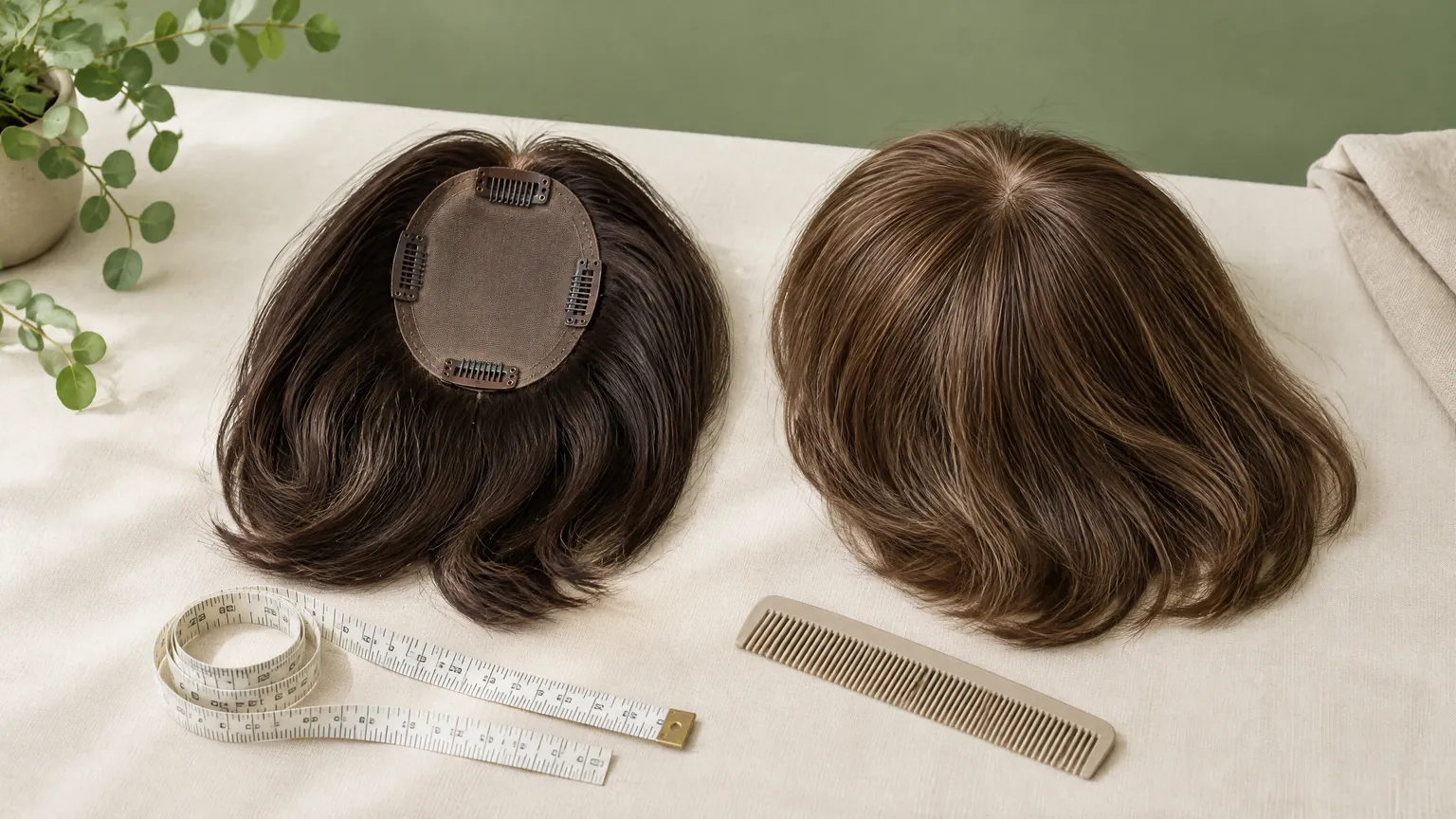
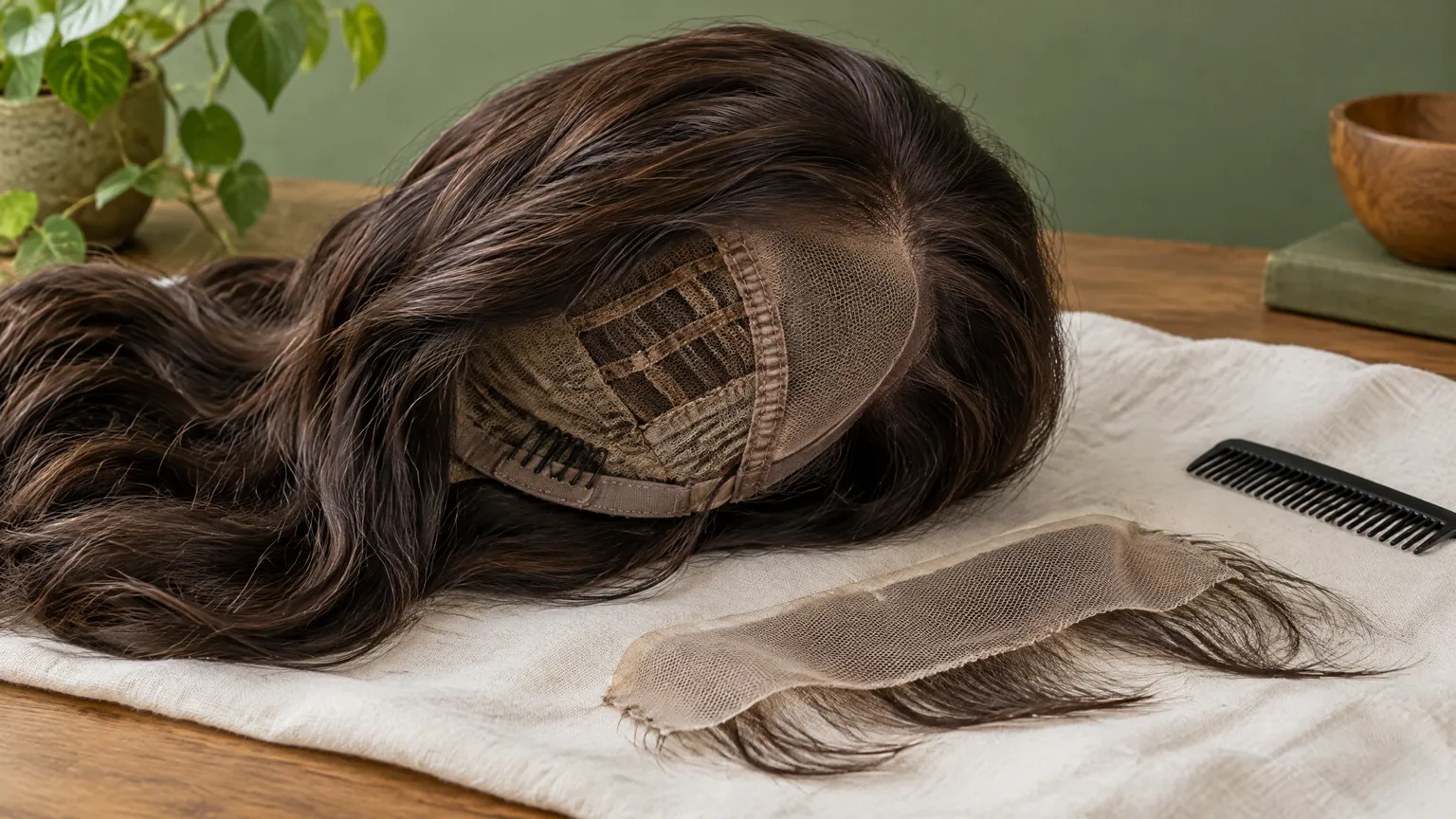
Human hair and synthetic hair describe the strands, not every part of a wig. The cap, its edges, the amount of hair and any accessories also belong in your comparison. A photograph may show a convincing parting without showing what touches your scalp. Ask to see the interior and find out which measurements correspond to that particular piece.
Macmillan’s wig guidance, written for people experiencing cancer-related hair loss, notes that synthetic wigs are often lighter than human hair wigs. It also explains that different wig types have their own care requirements.3 That is a useful reason to compare examples, not a promise that every synthetic style will feel cooler than every human hair style. For an everyday choice, assess the pieces you can actually consider rather than ranking fibre names in the abstract.
Decide how much coverage you need. A full wig covers the head, while a topper is intended for a particular area and blends with remaining hair. A hair system or toupee is another category whose attachment arrangements need separate clarification. Do not assume that a smaller-looking item uses the same fitting method as a full wig, or that any category is automatically suitable for your hair.
The following comparison is about planning priorities, not tested temperature performance.
| Your usual day | What to compare on the piece | What to arrange outside the fitting |
|---|---|---|
| Mostly indoors, with a short commute | Pressure at the edges and compatibility with glasses | A way to check placement after travelling |
| Repeated indoor and outdoor stops | Repositioning method and care instructions for the interior | Flexible stops and access to drinking water |
| A long social occasion | Hair length near the collar and a manageable style | Somewhere appropriate for a private adjustment |
| Active outdoor plans | Whether the proposed attachment suits the activity | A less strenuous alternative if conditions worsen |
Style matters here in an ordinary, practical way. If you dislike hair brushing your neck, compare lengths while wearing your usual neckline. If you prefer to tuck hair back, ask whether the chosen style can accommodate that without exposing parts you wanted covered. The aim is fewer unwanted adjustments, not a claim that a certain haircut controls body temperature.
Make the fit check resemble real life
Check pressure separately from movement
During a fitting, look beyond the first front-facing mirror view. With permission, turn your head gently, look down and return to your normal posture. Put on the glasses you normally wear. Notice whether an edge presses behind an ear or the front needs repeated repositioning. A piece that looks right while you sit still may need further discussion before it suits your routine.
Macmillan advises that a well-fitting wig should stay in place on its own and describes a gentle movement check to assess security.3 This does not mean every piece needs the same adjustments or that vigorous activity is covered by a simple fitting check. Ask the provider to explain the intended fit and any additional attachment, especially if your plans involve more movement than an ordinary walk.
Describe a problem by location and action: “The edge presses here when I turn” is more useful than “It feels wrong.” Do not respond to every small movement by tightening everything. Ask how to distinguish a size issue from placement or an accessory problem. You should understand the adjustment method before relying on it away from home.
Try a liner as an option, not a rule
A liner adds another component to the fit. Macmillan suggests a thin cotton liner for some wearers and notes that it can sometimes make a wig move around more. Its keeping-cool advice also includes a cotton liner to absorb moisture.3 These points belong together: a potentially useful accessory still needs checking with the actual wig.
If you already use a liner, bring that type to the fitting or describe it accurately. Compare placement with and without it if the provider says this is appropriate. Notice whether you can adjust the piece without bunching the liner. Ask how to wash both components, rather than assuming that one set of care instructions covers the other.
For clips, grips, tape or another attachment, ask what the piece is designed to use and how removal works. Do not add several products merely because the weather is humid. Persistent irritation, pain or sudden noticeable hair loss calls for assessment by a qualified healthcare professional, not a tighter fitting or a new cosmetic product. Anyone with treatment-specific wearing restrictions should follow their clinical team’s advice.
Arrange breaks that you would actually use
A break needs a realistic location and a manageable next step. You might be comfortable removing a wig at home but not in a shared washroom. That preference is legitimate. Instead of planning around an imaginary private room, work out whether you can return home between engagements, shorten the outing or choose a destination where you already know the facilities.
Macmillan’s practical guidance includes removing a wig when possible to let air reach the scalp, and taking it off at night and for a shower.3 For a daytime outing, translate this into a plan that respects your privacy and the fitting method. A temporarily removable wig and an attached hair system do not necessarily offer the same break options. Ask about safe removal rather than improvising it.
If you do plan to remove the piece, decide how it will be stored and how you will put it back on. Ask the supplier about a suitable storage method for that cap and hairstyle. Practise at home first, where you can stop and check the result without the pressure of an appointment. A plan you cannot carry out comfortably is not a useful contingency.
Watch your overall condition as well as local discomfort. The Observatory lists dizziness, headache, nausea, shortness of breath and confusion as symptoms requiring rest and immediate help, with medical advice as soon as possible.2 Do not treat feeling unwell as an appearance problem to hide. A private adjustment can wait; seeking help cannot.
A hypothetical day with two different demands
Consider this hypothetical example: a Hong Kong office worker wears a full wig for a morning commute and desk work, then plans to meet friends outdoors after work. They wear glasses and find hair against the shirt collar distracting. This is an ordinary planning example, not a customer account or a claim about any product’s performance.
For the office portion, their fitting questions concern the ear area, the position of the front and whether the style can sit clear of the collar. They would check these with their usual glasses and a similar shirt. If a liner is proposed, they would include it in the comparison and ask how it affects placement. None of these checks tells them how the entire evening will feel.
The outdoor meeting is a separate decision. Before setting off, they check the weather information and ask whether the group can meet somewhere cooler or reduce the time outdoors. They also decide whether going home first would make the evening more manageable. If there is nowhere they would feel comfortable removing the wig, they do not assume a removal break will be available.
Afterwards, they record a few specific observations: where pressure appeared, whether hair needed frequent moving and which part of the day felt difficult. Those notes can guide a later adjustment discussion. If the main problem was a long wait in uncomfortable heat, the next improvement may be a different meeting plan rather than a different wig. This keeps product choices connected to the circumstances they can actually change.
Use a Kwun Tong visit for questions a screen cannot answer
Seeing a sample can help you discuss the inside of a piece and its position on your head. OWNSTRAND’s listed location is Room 2103, Lee Bo Time Centre, 50 Hoi Yuen Road, Kwun Tong. Readers elsewhere in Hong Kong should not interpret regional browsing pages as evidence of another branch. Confirm arrangements before travelling; do not assume walk-in access or a same-day fitting.
The wig shop Kwun Tong page is a relevant place to begin an enquiry about visiting the listed location. Explain your daily activity and ask whether the enquiry can include viewing samples, head measurements and discussion of the intended style. If considering custom work, ask what later fitting, adjustment and care steps would involve for your chosen piece rather than presuming every stage can happen during the first visit.
Bring questions that require demonstration: where an adjustment sits, how you would remove the piece and what care the interior needs. You can describe sensitivity or privacy preferences without offering unnecessary medical history. There is also no need to choose immediately because a sample looks convincing; understanding the routine matters as much as liking the reflection.
Turn online browsing into a precise enquiry
Online photographs are useful for narrowing appearance preferences, but they do not reproduce pressure, weight or your reaction to a cap edge. Save the reference for the specific style you are considering and ask for its fibre composition, cap details and sizing method. Keep those details tied to the individual piece rather than assuming they apply across the whole catalogue.
If you intend to buy wigs online Hong Kong, use the shop page to identify a style and start a product-specific conversation. Ask how to measure for it, what adjustment it allows and which cleaning instructions apply. A catalogue entry is not a promise of availability or proof that the piece suits your outdoor routine; confirm the details before making a decision.
Ask what happens if fit needs reviewing and what conditions apply to an exchange or alteration. Do not presume that a tried-on, cut or customised item follows the same process as an untouched one. If information is missing, pause rather than filling the gap with assumptions. A clear reply about one piece is more useful than several attractive photographs with no fitting information.
Finish the day with a workable care routine
Follow the instructions supplied for the particular wig and any liner. Macmillan advises careful washing of both synthetic and human hair wigs with slightly warm or cold water, and warns about exposure to flames and heat from appliances.3 Do not assume that a familiar shampoo, hot hairdryer or styling tool is appropriate simply because the piece resembles your own hair. Ask about the approved products and drying method.
After an outing, check the inside as well as the visible strands. If it needs washing, allow enough time for the instructed drying process before the next wear. Ask how to judge when cleaning is needed for your routine; do not invent a fixed humid-weather washing schedule. Keep any washable liner’s instructions separate and make sure it is ready before dressing the next morning.
Use this short checklist before the next outing:
- Check the forecast and current warnings, then shorten or move outdoor activity if necessary.
- Confirm that the usual glasses and any liner do not create an unresolved fitting problem.
- Identify a shaded or cooler rest option without assuming private changing facilities.
- Carry drinking water and any care items the provider has specifically explained.
- Leave time afterwards for the piece’s instructed cleaning and drying routine.
The most useful humid-day choice is a combination you can manage: an appropriate fit, an understandable care routine and plans that can change. Comfort is something to assess in your own circumstances, not something a fibre label or a promotional adjective can guarantee.
Common questions
Will a synthetic wig necessarily feel cooler on a humid commute?
No. Macmillan notes that synthetic wigs are often lighter, but that does not establish how every complete piece will feel. Compare the actual cap, fit, hair length and any liner. Your outdoor walking and waiting time also matter, so do not rely on fibre composition as a comfort guarantee.
What if I cannot remove my wig anywhere during the day?
Plan around breaks you can realistically take, such as resting somewhere cooler or returning home between engagements. Do not assume a shared facility offers the privacy you need. Ask about the intended removal method, and consider shortening outdoor plans. If you feel unwell, seek help rather than waiting for a private adjustment opportunity.
What should I ask before travelling to the Kwun Tong location?
Confirm the visit arrangements and whether your enquiry can include samples, measurement and fitting questions. Explain your glasses, preferred liner and usual activity. Ask which later steps would apply to a custom piece. Do not assume walk-in access, immediate availability or that all fitting and finishing work happens at the first visit.
Sources & what they support
The scope below identifies what each reference supports. Citations do not imply independent endorsement of OWNSTRAND or any provider, and do not establish treatment benefits or guaranteed results.
- Hong Kong Observatory: Beware of Health Effects of Extremely Hot Weather (opens in a new tab)
Heat stress involves temperature, humidity, airflow and solar radiation; the Hot Weather Special Advisory addresses relevant conditions below the Very Hot Weather Warning level.
- Hong Kong Observatory: Cold and Very Hot Weather Warnings (opens in a new tab)
Official precautions include water, avoiding overexertion, earlier or later outdoor activity, rest in shaded or cooler places, avoiding vigorous activity in extreme heat, and seeking help for specified symptoms.
- Macmillan Cancer Support: Wigs for cancer treatment (opens in a new tab)
Patient-context practical guidance on synthetic wigs often being lighter, checking fit and security, cotton liner benefits and possible movement, removal breaks, careful washing and avoiding appliance heat. It does not endorse OWNSTRAND or establish any product’s humid-weather performance.