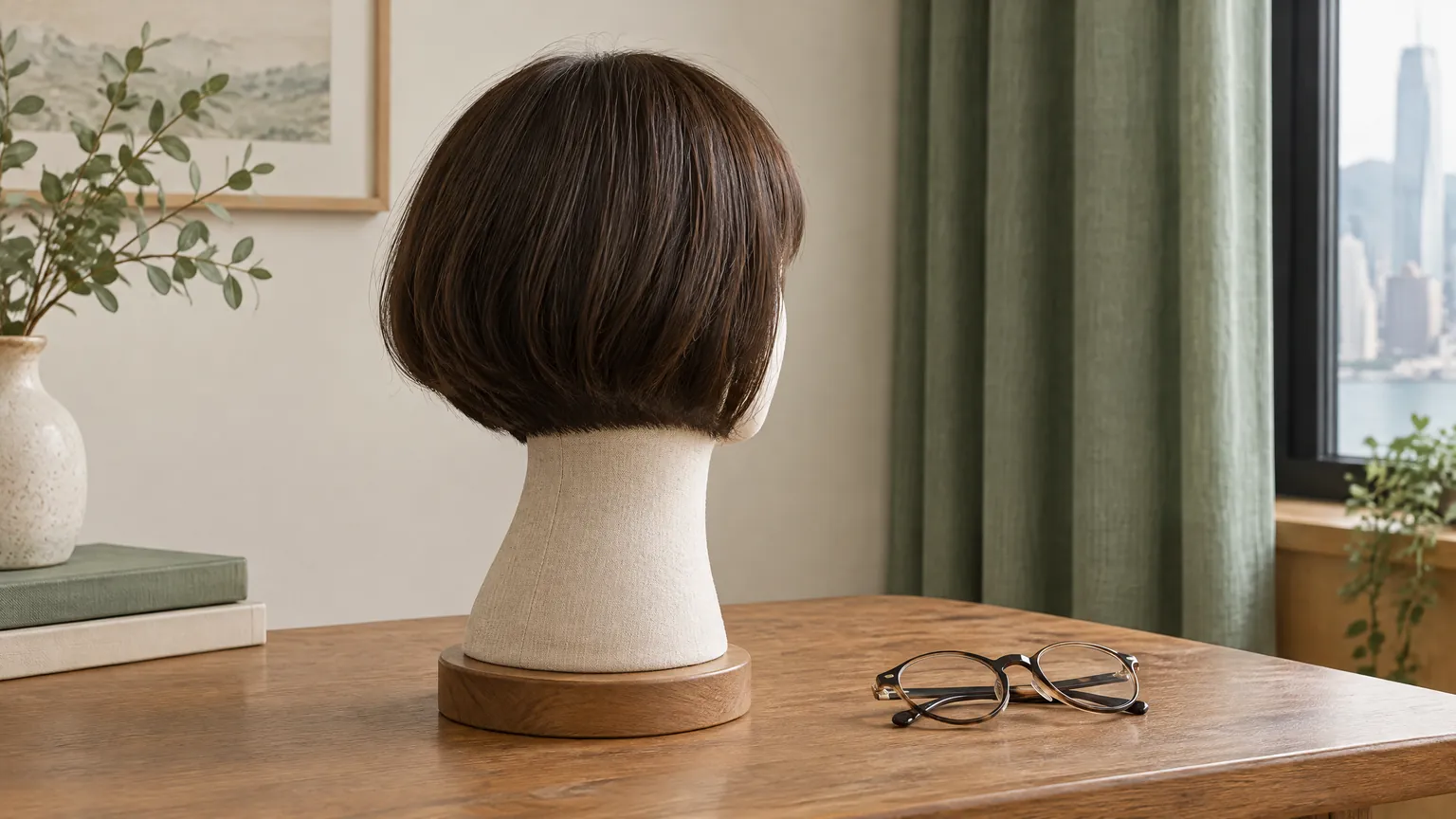
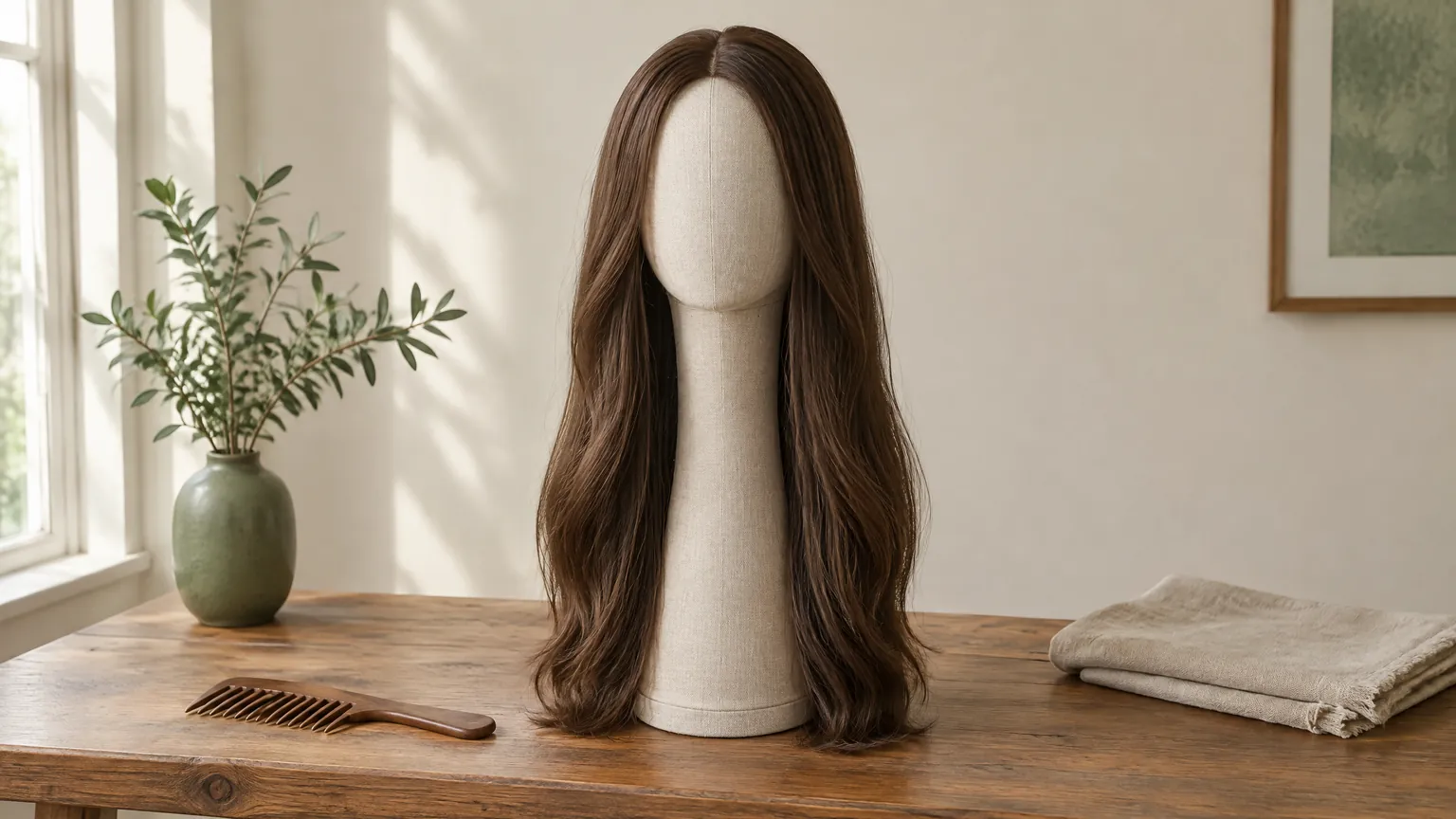
Bangs on a full wig: where the fringe changes the daily routine
GotGear and OWNSTRAND share the same owner. This collection is not an independent recommendation. GotGear does not supply wigs or medical treatment; actual wig services are provided by OWNSTRAND, whose only known studio is in Kwun Tong. These articles provide general information, not medical advice.
The short answer
A full wig with bangs can reduce how much of its front edge you choose to show, but it does not remove the need for a comfortable fit. The daily work shifts towards placing the cap consistently, keeping the fringe clear of your eyes and caring for its shape. A topper leaves more of your own hair involved, so blending and clip placement matter more. Choose between them by coverage and attachment needs before deciding on the fringe.
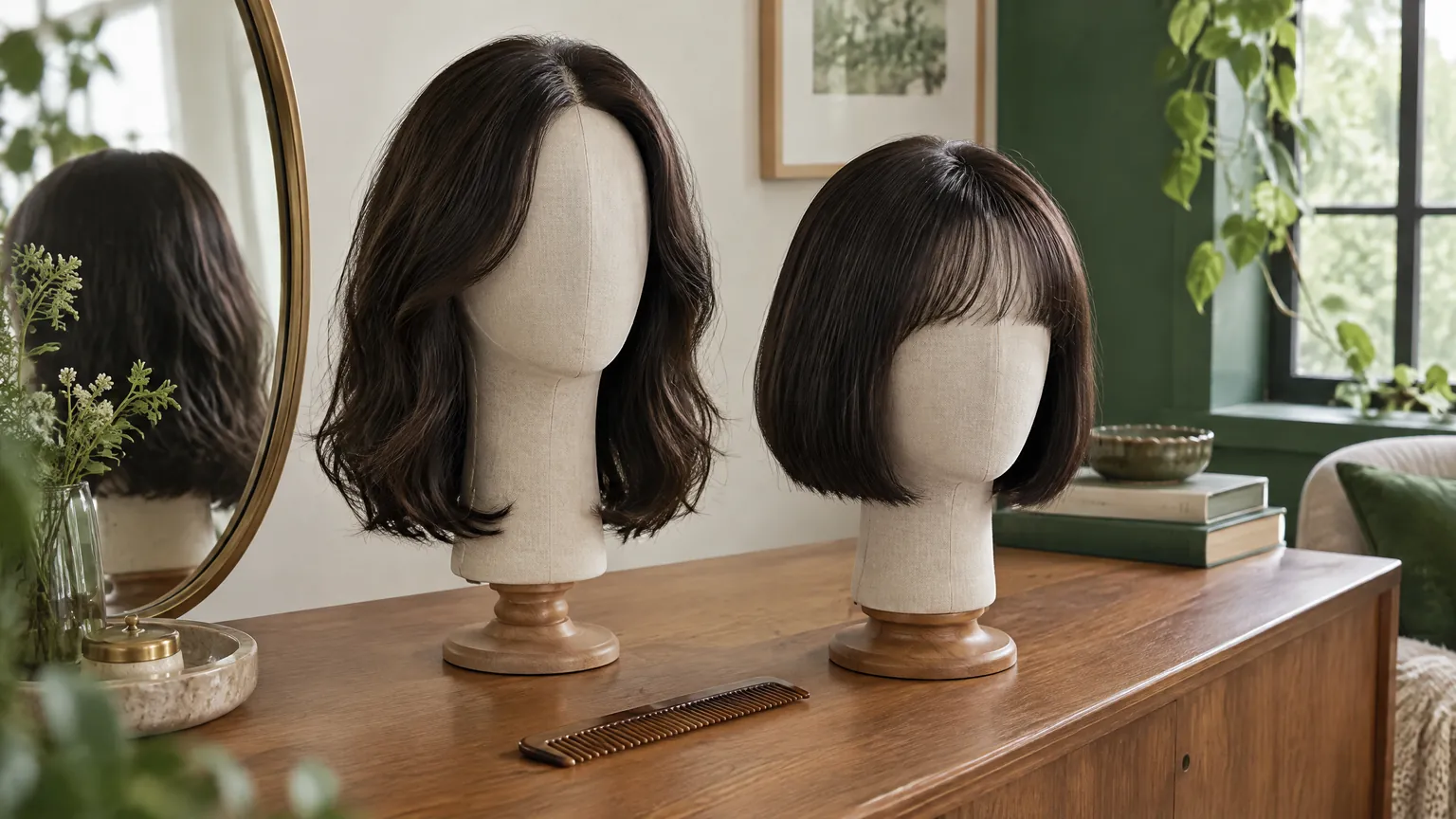
A fringe is not just a different outline around the face. On a full wig, it changes which details you see each morning and which details need checking before leaving home. Instead of arranging an exposed front hairline, you may spend more time separating the fringe, checking its height and making sure it works with your glasses. That can be a useful exchange, but only if the rest of the wig fits your routine.
The first decision is therefore not whether bangs suit your face. It is whether you want a complete hairstyle worn over your own hair, or a partial piece that works together with it. Neither option is automatically simpler. A short fringe that needs constant attention can be more distracting than a longer, open-front style; a small topper can involve more blending than a full wig.
What a fringe changes, and what it leaves unchanged
A full wig supplies hair across the head rather than adding coverage only to a selected area. Its fringe can fall across the forehead and obscure part of the front edge while it is down. That is a visual feature, not a fixing method. Wind, movement or pushing the fringe aside can expose the edge again, so inspect the front without relying on the bangs to cover every detail.
When browsing wigs with bangs, look beyond the front-facing photograph. Ask how the fringe separates, where it starts and what is visible when it moves sideways. A dense, straight fringe and a light, swept fringe create different amounts of coverage. Use the style page to prepare questions about the actual piece rather than assuming every pictured fringe will behave the same way on your head.
The fringe does not compensate for a cap that sits awkwardly or moves during ordinary activity. Macmillan Cancer Support advises that a well-fitting wig should stay in place on its own, while discussing possible additional securing methods and fitting advice. Its guidance is written for people affected by cancer, but the basic distinction between fit and extra fastening is useful here: assess the fit before looking for another attachment. 1
A topper changes the role of your original hair
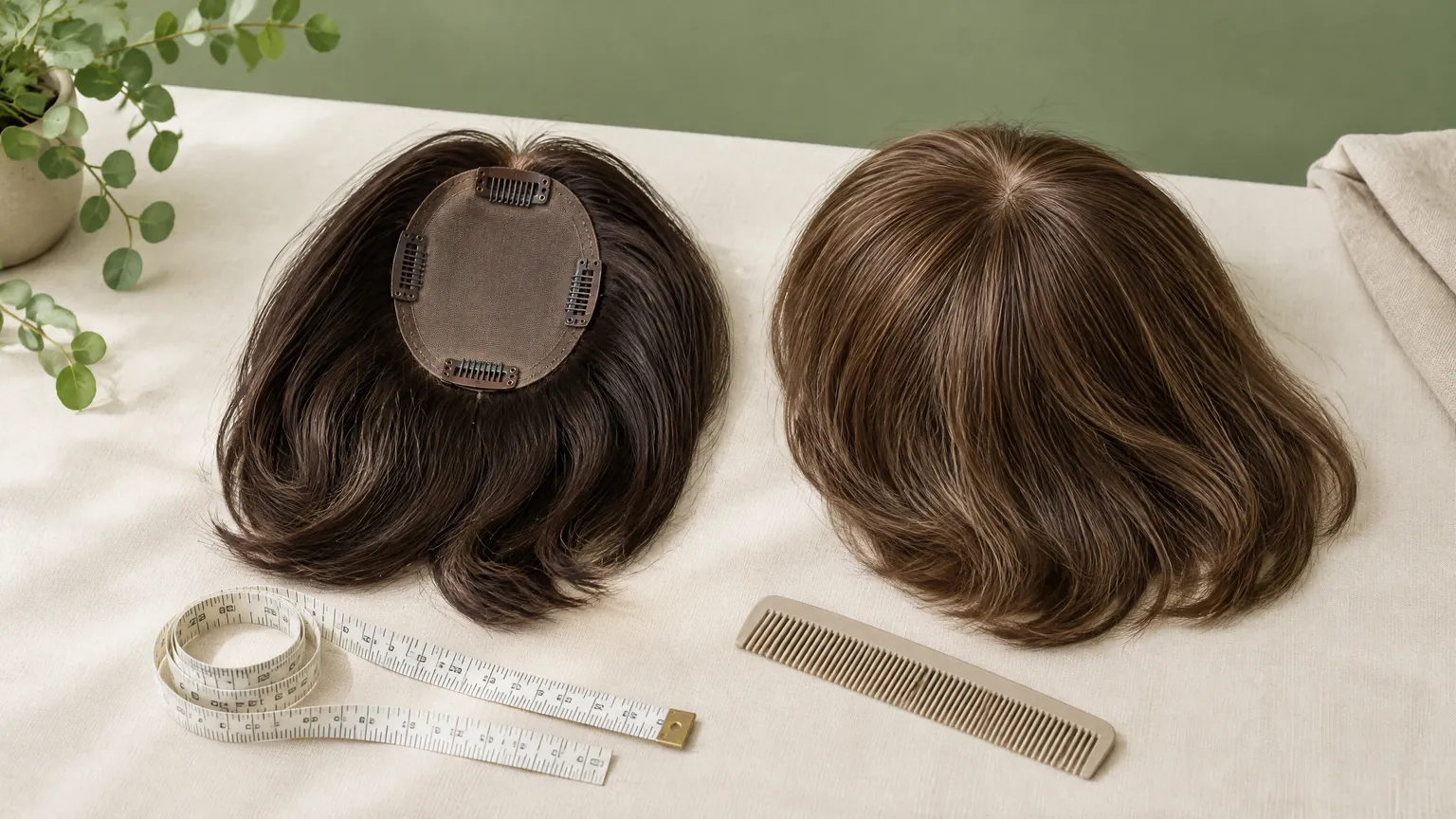
A topper covers a selected area, such as the parting or crown, rather than replacing the whole visible hairstyle. Your own hair may remain visible at the sides, back or front, depending on the piece. That makes colour, length and texture matching part of the daily routine. Even an attractive topper can need extra arranging if its fringe falls differently from the hair beneath it.
The practical question behind hair toppers is not simply whether a smaller piece feels preferable. Ask which area its base covers, where each attachment sits and how the visible hair will blend. If you want to retain your original fringe, show that preference during fitting. If you want the piece to supply the fringe, check that its front coverage and attachment design actually support that arrangement.
Manufacturer Jon Renau explains that topper measurements should extend into areas with enough existing hair to support the attachments. Its base-sizing guidance specifically connects clip position with the ability of that hair to carry the piece. This is manufacturer guidance, not a universal measurement rule for every brand, but it explains why choosing the smallest possible base can be the wrong starting point. 2
An exposed original hairline needs its own check
If the topper sits behind your original hairline, look at the transition between your own front hair and the added hair. Check it with the fringe down, then gently move the fringe aside. A mismatch may be more apparent at this junction than at the back. Decide whether you are willing to style that transition each morning rather than judging only the first arranged view.
A full wig normally contains or covers the hair underneath, while a topper deliberately leaves some hair in the finished style. For either option, be clear about which hair is being cut if fringe adjustment is discussed. Cutting the piece and cutting your own fringe are different decisions, with different consequences when you take the piece off.
Compare the routines before comparing the silhouettes
The table below compares practical tasks, not guaranteed results. Construction, fibre and the individual fit can change how each option behaves. Use it to identify what needs checking on the specific piece.
| Daily question | Full wig with a fringe | Topper used with a fringe |
|---|---|---|
| Which hair makes the finished style? | The wig supplies the overall silhouette; underlying hair needs arranging beneath it. | The piece and visible original hair need to work together. |
| What happens at the front? | Bangs may obscure the front edge when down; movement can reveal it. | The original hairline may remain visible, or the piece may provide front coverage. |
| What needs checking about security? | Cap position, fit and any specified fastening method. | Base coverage and attachment positions, including hair available for clips. |
| What affects morning styling? | Fringe separation, cap height and the rest of the wig's shape. | Blending the piece with your own fringe, sides and lengths. |
| What needs checking after removal? | Underlying hair arrangement and any areas of pressure or irritation. | Attachment areas and how your original hair looks without the piece. |
For a wider silhouette comparison, the women's wigs category provides a starting point for questions about full-head styles. Compare a fringe style with an open-front alternative, not only with another fringe. Ask what the actual cap construction allows you to do with the front hair, and whether the shape you want requires specialist adjustment. A category listing alone does not confirm suitability or availability.
Set the wearing position before judging fringe length
A fringe can appear too long because the wig is sitting too far forward, or too short because it is placed farther back than intended. Before requesting a trim, have the wearing position checked. Then practise reproducing that position. A haircut decision made while the cap is misplaced may leave you with a fringe that no longer works once the fit is corrected.
Macmillan notes that wigs can be cut and styled by a hairdresser or wig consultant, and that existing hair can affect how tight a wig feels. 1 Bring the same underneath arrangement you expect to use regularly. Changing from loosely arranged hair to a bulky pinned section after fitting can change how the cap sits and how the fringe lands.
Test glasses, movement and your usual view
Wear the glasses you normally use, including reading glasses if they are part of your day. Sit upright, look down at a phone or document, then turn your head. Notice whether the fringe enters your eyes, catches near the frames or needs pushing away repeatedly. Do not accept eye obstruction merely because the still photograph looks balanced.
Ask before trying any temporary way of sweeping or holding the fringe aside. Check the sides as well as the centre: longer fringe ends may touch the glasses even when the middle is clear. View the style in ordinary light and from conversational distance. A close-up can reveal useful construction details, but it should not be the only view used to choose the silhouette.
Security should not mean pulling harder
Some full wigs have clips, while other designs use different securing arrangements. A topper is not necessarily clip-in either, although clips are common in the type discussed here. Ask which method belongs to the actual piece. Avoid improvising a tighter fastening simply because the fringe hides the front; the hidden area still needs to feel comfortable.
The American Academy of Dermatology explains that repeated pulling from tight hairstyles can cause traction-related hair loss. It advises wearing hair loosely beneath a covering and changing a style that causes pain, stinging or crusting. 3 This does not establish that every clip causes damage. It does mean that tugging should not be treated as proof that an attachment is secure.
For a clipped topper, have the attachment positions checked rather than fastening into visibly sparse areas and hoping they hold. Jon Renau's guidance links base selection to adequate hair outside the area needing coverage. 2 If a clip pulls during ordinary movement, stop and reassess the fit and attachment arrangement. Do not add backcombing or more tension as a substitute for an appropriate base.
Persistent irritation, pain or sudden marked hair loss needs assessment by a qualified healthcare professional. A seller can discuss the piece's construction and fit, but cannot determine the medical cause of a scalp problem. Where treatment affects skin sensitivity or wearing restrictions, ask the relevant healthcare professional before choosing adhesives or other additional securing products. 1
Fibre choice affects how the fringe resets
The word “bangs” describes the cut, not the fibre. Macmillan explains that conventional synthetic wigs have their style set into the hair, while human-hair wigs may need regular cleaning and styling. It also stresses following the care instructions supplied with the wig. 1 Neither description tells you exactly how a particular fringe will settle after washing, so request instructions for that piece.
Ask whether the fringe is expected to return to its shape through the specified wash-and-dry routine, or whether it needs restyling. Confirm which brush or comb is appropriate. If heat styling is permitted, obtain the specific limits and method rather than treating a general “heat-friendly” label as unrestricted permission. Keep the piece away from flames and uncontrolled heat sources; Macmillan warns that heat can damage wig fibres. 1
A short morning check beats repeated adjustment
Place the wig using the fit demonstrated to you, then arrange the fringe before assessing its length. Check the centre and both ends without tugging the cap into position by its hair. If the same section repeatedly falls into your eyes, note the issue for an adjustment discussion. Continually touching and pushing the fringe away is not a reliable long-term styling plan.
For a topper, check the blend after the base is correctly positioned, not before. Otherwise, correcting the attachment position can undo the hairstyle you just arranged. Keep a note of which parts require your own hair to be styled alongside the piece. That gives you a realistic morning routine rather than a promise that a smaller piece will take less effort.
Plan for Hong Kong's indoor–outdoor day
Think about the situations in your actual day: an outdoor walk, an air-conditioned office, looking down at a counter or changing clothes after work. You do not need a dramatic stress test. You need to see whether ordinary activities make you adjust the fringe or cap. If a uniform, hat or other headwear is involved, ask how it interacts with the piece before committing to that combination.
Macmillan notes that wig linings can irritate the scalp and that a liner can sometimes help, but may also make a wig move more. It recommends caring for the wig and liner as advised and removing the wig at night and for showering. 1 Treat a liner as something to assess with the fit, not as an automatic solution to warmth or friction.
Hypothetical example: imagine an office worker who wears glasses and wants coverage mainly at the crown while retaining her original hairline. She compares a fringe full wig with a clipped topper. The full wig asks her to arrange her own hair beneath a cap and check how the supplied fringe meets her frames. The topper asks her to blend her original fringe and confirm suitable attachment areas.
If she enjoys styling her existing lengths and the topper attachments are comfortable, the partial option may fit her preferences. If she wants one complete silhouette with less blending between two sets of hair, she may prefer the full wig. Neither choice is a reported customer result. The deciding factor is which recurring task she is willing to perform, after the actual fit has been checked.
Take a specific checklist to the fitting
A useful fitting discussion turns a photograph into repeatable instructions. You need to know what to do at home, what requires specialist help and what cannot be inferred from the style name. GotGear and OWNSTRAND share ownership; the catalogue links here are related-business resources, not independent product endorsements. Ask the provider to confirm the scope of any fitting, fringe-cutting or subsequent adjustment service.
- Bring your usual glasses and show your normal underneath hairstyle without pulling it tightly.
- Identify the coverage you want, including whether your original hairline should remain visible.
- Ask to see the front edge with the fringe down and gently moved aside.
- Have the intended wearing position checked before agreeing to any fringe trim.
- For clips, ask where each one attaches and whether those areas have suitable supporting hair.
- Look down, turn your head and check eye clearance during ordinary seated movement.
- Request piece-specific instructions for washing, drying, styling, removal and storage.
- Confirm which changes require another fitting, and raise discomfort rather than fastening more tightly.
Leave with a clear sequence: prepare your own hair, position the piece, secure it as instructed, then arrange the fringe. A full wig with bangs can be a sensible choice when that sequence suits you. A topper can be equally sensible when retaining and blending your original hair is the preferred task. The strongest choice is the one whose everyday demands you understand, not the one that looks easiest in a single image.
Common questions
Do bangs mean I can ignore the front edge of a full wig?
No. The fringe may obscure part of the edge while it is down, but moving it aside can reveal the front. Check both views during fitting. Comfort and security still depend on the cap and its intended fastening method, not on how much hair falls over the forehead.
Can I keep my own fringe when wearing a topper?
Possibly, depending on the coverage and design of the actual piece. Ask how its front section will meet your original hairline and where the attachments will sit. Test the blend with your fringe arranged normally. Clarify whether a proposed trim affects the topper, your own hair or both before agreeing.
Why does the wig fringe look longer on some mornings?
First check whether the wig is sitting in the intended position and whether your underneath hair arrangement has changed. Then consider how the fringe has been styled or dried. Do not trim it to correct inconsistent placement. If it still obstructs your eyes with the fit confirmed, discuss a suitable adjustment.
Sources & what they support
The scope below identifies what each reference supports. Citations do not imply independent endorsement of OWNSTRAND or any provider, and do not establish treatment benefits or guaranteed results.
- Macmillan Cancer Support: Wigs for cancer treatment (opens in a new tab)
Practical guidance on full-wig fit, optional securing methods, the effect of existing hair on fit, specialist cutting, synthetic and human-hair care, heat precautions, liners and removal. The source's cancer-treatment advice is not presented as a medical claim about everyday wig wear.
- Jon Renau: All About That Base (opens in a new tab)
Manufacturer explanation that topper base selection depends on the area needing coverage and adequate original hair at clip attachment positions. Brand-specific sizing instructions are not generalised to OWNSTRAND products.
- American Academy of Dermatology: Hairstyles that pull can lead to hair loss (opens in a new tab)
Repeated hair tension can cause traction-related hair loss; hair should be worn loosely beneath coverings, and pain, stinging or crusting warrants changing the hairstyle. Supports caution around tension, not a claim that all wig clips cause hair loss.