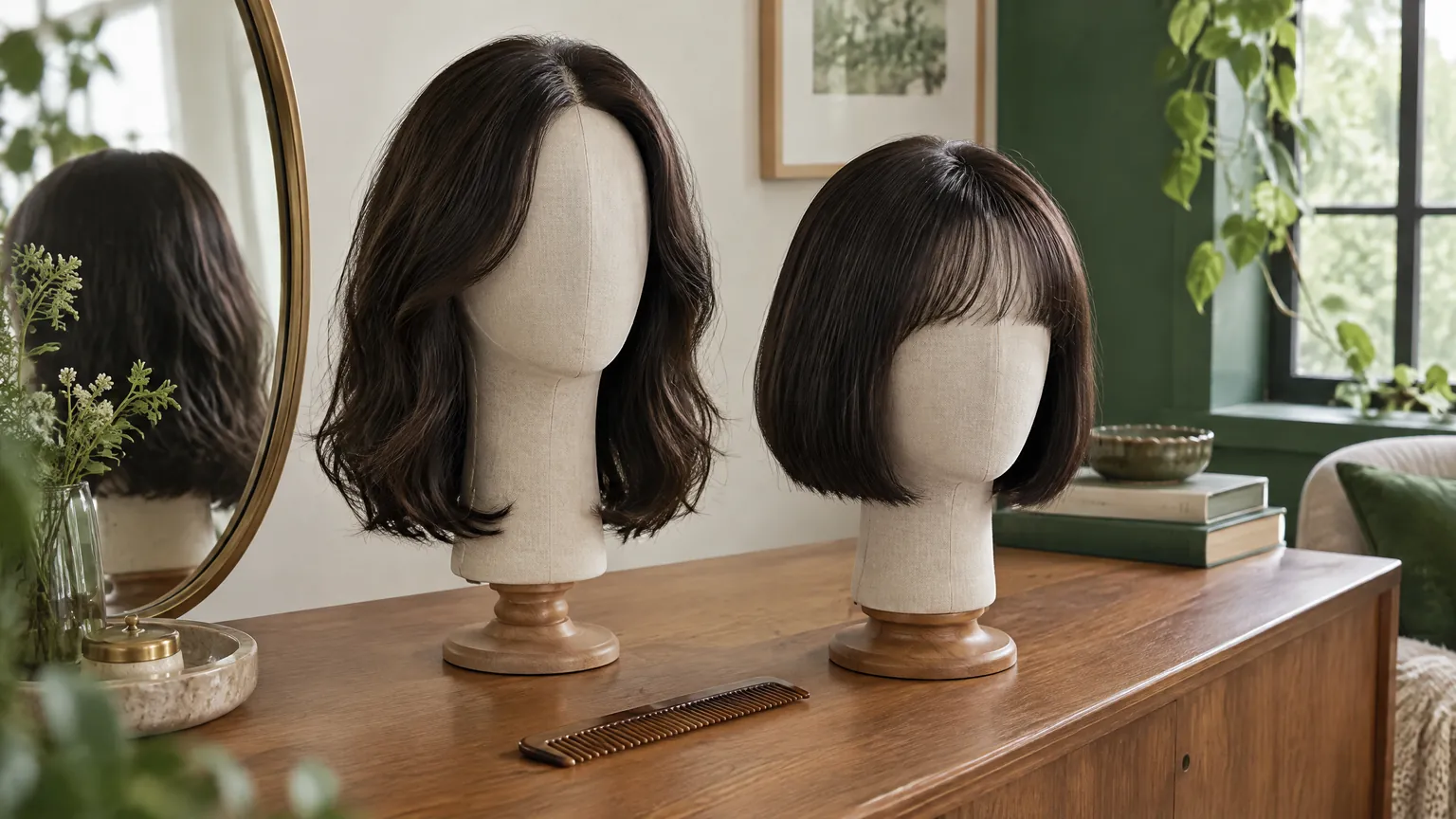
Long wigs: decide how much daily handling you actually want
GotGear and OWNSTRAND share the same owner. This collection is not an independent recommendation. GotGear does not supply wigs or medical treatment; actual wig services are provided by OWNSTRAND, whose only known studio is in Kwun Tong. These articles provide general information, not medical advice.
The short answer
Choose a long wig by considering where its ends will sit during your normal day and how much care you are willing to do afterwards. Length alone does not determine the routine: fibre, curl pattern, cap construction and the product's instructions also matter. Compare styles while seated and wearing your usual clothing, ask for a care demonstration, and plan washing and drying before committing. A look that suits your schedule is more useful than a length you can only manage occasionally.
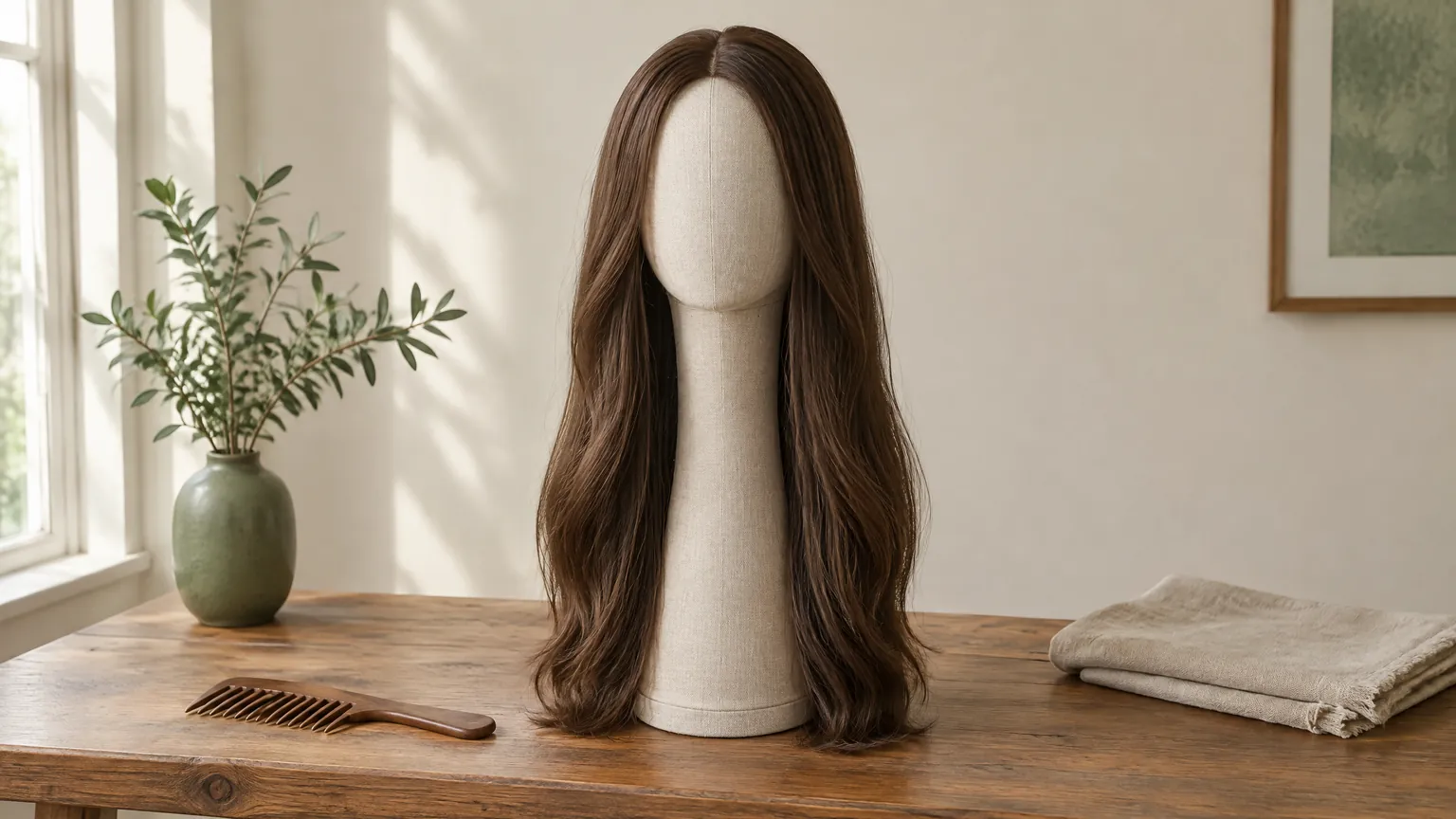
A long silhouette can look appealing in a front-facing photograph while asking more of you when you sit down, carry a shoulder bag or change clothes. Before choosing, consider three separate tasks: arranging the hair before leaving home, keeping it clear of everyday contact, and putting it away properly afterwards. Washing and restyling are additional tasks, not substitutes for those daily checks.
The useful question is not whether long hair is inherently difficult. It is whether the particular length, fibre and shape fit the amount of handling you want. You may happily maintain loose waves for occasional outings but prefer a shorter style for repeated work shifts. Neither preference needs to be justified by a promise that one option will last a certain number of months.
Judge the length against your clothes and chair
When browsing long wigs, use the photographs to shortlist silhouettes, then ask how the length is measured and where the ends would sit on you. An image cannot show whether the lower sections will rest on your jacket collar, disappear behind a backpack strap or become trapped between your back and a chair. Those are practical questions to check during a suitable fitting, rather than details to infer from a catalogue pose.
If a fitting is arranged, bring or wear a normal outer layer. Look at the style while standing and sitting, then turn your head gently. Check whether you keep moving the hair to clear your face or clothing. A length you continually rearrange may still be worthwhile for an event, but that same movement can become an unwelcome part of an ordinary working day.
Friction deserves attention without turning every contact into a warning. Macmillan notes that regularly wearing something over a wig causes friction. Jon Renau's care guide also discusses friction frizz in synthetic styles and gives particular attention to detangling medium-to-long lengths. These sources support checking contact points; they do not establish a universal wear limit for a wig from another supplier.1
Do not rely on the total length alone. Compare where layers finish, how much hair gathers at the nape and whether a curl pattern can be maintained with the permitted tools. Ask before assuming that tying the hair back is an easy solution. The cap and hairline may not suit the same tied styles as naturally growing hair.
Separate daily handling from wash-day work
A preset style and a flexible style offer different conveniences. A preset synthetic shape may reduce the amount of styling you want to do after washing, while human hair may involve additional finishing. Macmillan describes synthetic styles as having their shape set into the fibre and notes that human-hair wigs may need regular cleaning and styling by a professional. That is a reason to ask about the routine, not to classify every product in either group as effortless or demanding.1
Use the following comparison to decide what needs confirming. It is not a ranking of quality, and the individual care instructions take priority.
| Option to compare | Daily handling question | Wash-day question | What to confirm before choosing |
|---|---|---|---|
| Ordinary synthetic, long and preset | Can you keep the lower sections clear using the approved tool? | How should the set shape dry without styling heat? | Fibre identity, detangling method and drying support |
| Heat-friendly synthetic, long | Is periodic fibre-specific maintenance part of the routine? | Which tools and heat methods are permitted? | Written instructions for that exact fibre, not a generic heat-resistant claim |
| Human hair, long | Will you want to restyle the lengths between wears? | What drying and finishing steps does this wig require? | Suitable products, cap precautions and help with styling |
| A shorter version of the same silhouette | Does it clear the clothing or chair that bothers you? | Does the care method remain manageable? | The actual sitting length and shape, rather than the style name |
A shorter alternative may solve a specific contact problem without changing your preferred fringe or overall outline. Equally, shortening the hair does not remove the need to clean the cap or follow fibre instructions. Compare the routine as a whole instead of treating a haircut as a complete maintenance solution.
Check ordinary synthetic and heat-friendly separately
The word synthetic does not supply a complete care method. Jon Renau publishes separate instructions for ordinary synthetic and heat-friendly synthetic fibres, including different tool restrictions and maintenance steps. Its guidance is specific to its products; it illustrates why you need the instructions for your own wig rather than a method copied from an unrelated video.3
If the fibre identity or heat limit is unclear, leave hot tools out of the routine until the supplier clarifies it. Heat-friendly does not mean that any hairdryer, straightener or steaming method is acceptable. Also consider incidental heat from cooking equipment. Macmillan warns against exposing wigs to flames and heat from an oven or hairdryer.1
Ask what human-hair styling involves
Human hair is not a reason to assume that all your usual hair products and habits will transfer unchanged. Cleveland Clinic emphasises that even natural-hair wigs need careful handling and that manufacturer recommendations should guide care. Its general advice includes avoiding pulling or stretching the fibres during preparation and not squeezing or wringing the wig during washing.2
Drying advice can differ. Cleveland Clinic describes air-drying as an option for natural-hair wigs, while Jon Renau's human-hair guide calls for drying and styling after washing. Rather than combining the two into a new routine, ask which instructions apply to your exact piece and what finish to expect. If the required styling is something you do not want to undertake, establish what assistance you would need before selecting it.2
Check the fit without using the lengths to hide problems
For someone comparing full-head options through the women's wigs information, fit and length should be considered separately. Ask how the cap sits, how its adjustment works and whether the preferred hair arrangement remains secure. A long style should not have to be repeatedly pulled down or drawn forward to disguise an uncomfortable edge. Confirm the product type as well: a full wig and a partial topper involve different coverage decisions.
Cleveland Clinic advises measuring the head with any existing hair lying flat and understanding how to adjust the wig. During a fitting, explain how you normally arrange that hair rather than arriving with an unusual bulky arrangement that you will not repeat at home. The aim is to assess a realistic everyday fit.2
Keep accessories in that assessment. If you wear glasses, check the relationship between their arms and the wig edge. If you expect to add a liner, ask whether it changes the fit. Macmillan notes that a liner can sometimes make a wig move around more, so it should not be treated as a guaranteed answer to discomfort.1
Persistent irritation or pain is not a styling issue to cover with more hair. Stop an uncomfortable arrangement and seek qualified healthcare advice if symptoms persist; sudden marked hair loss also warrants medical assessment. This guide concerns appearance and general care, not treatment or a claim that a particular cap suits every scalp.
Make a gentle routine you can repeat
An everyday routine should start with observation, not automatically with more product. Check the nape and lower lengths after wear. If those sections need attention, use the tool and detangling method specified for the fibre. Cleveland Clinic recommends fingers where possible and wig-appropriate brushes or combs, while cautioning against pulling or stretching the hair.2
Work patiently on a manageable section instead of dragging a comb through the entire length against resistance. Support the hair so that dealing with the ends does not become a pull on the cap. If the instructions distinguish wet and dry handling, keep that distinction. Do not assume a method suitable for straight human hair is also appropriate for a synthetic curl pattern.
Adding spray to every rough section is not necessarily the next step. Cleveland Clinic advises using styling products sparingly because heavier use creates more need for washing. Follow the product directions and ask for help if tangles persist rather than layering several unconfirmed products onto the fibre.2
Use this practical check before deciding on a long style:
- Identify the exact fibre and keep the care label or written instructions.
- Check where the ends sit against your usual collar, straps and chair.
- Ask for a demonstration of the permitted detangling tool and method.
- Confirm how to maintain the chosen waves or curls without guessing about heat.
- Set aside a suitable place for drying and storage before the first wash.
- Decide whether the required routine is one you will actually repeat on working days.
This is a choice checklist, not a timed maintenance schedule. The amount of handling depends on the wig and how you use it. A routine that looks short in a demonstration may still be inconvenient if it requires equipment you cannot leave set up at home.
Plan washing around the label and your available space
Before narrowing a selection of human hair wigs, ask for the care instructions for the proposed piece, including what happens after washing. Find out whether the intended finish requires a styling demonstration, which products are suitable and which tasks you should leave to someone familiar with that construction. A material description is not enough to plan the whole routine.
There is no need to borrow a universal wash interval from another product. Ask how the supplier wants you to respond to everyday wear, perspiration and styling-product use. Macmillan recommends washing the wig and any liner as advised by the wig specialist; Cleveland Clinic also makes manufacturer instructions central to care.1
Clear enough space that the lengths can be handled without being bunched into the basin. Check the prescribed water temperature and washing method before starting. The sources recommend gentle handling, but their detailed procedures are not identical. Keep the steps from the applicable instructions together rather than mixing a soaking method, an unrelated conditioner and a different brand's drying advice.2
Pay particular attention to where conditioner is allowed. For example, Jon Renau's human-hair instructions direct users to avoid the base because conditioner there may weaken knots. That is a construction-specific precaution worth asking about, not permission to use the same product placement on every wig.3
Schedule washing when you can complete the required drying and finishing. Do not begin immediately before an outing while assuming a hotter setting will recover the time. If you need the wig again soon, ask about a suitable washing plan in advance rather than improvising around damp hair or an unfinished cap.
Give the lengths somewhere suitable to rest
A drying stand needs a location where the long sections can hang without lying across a cluttered surface. Check the support recommended for the piece and leave room around it. Cleveland Clinic describes placing wigs on a stand for drying; Jon Renau's instructions also distinguish drying the cap from moving the piece onto a styling block.2
For storage, ask whether the recommended arrangement preserves the particular shape and keeps the cap supported. A stand intended only to hold the crown may not solve the problem if the ends still collect on a shelf. In a compact home, measuring the available clear height can be more helpful than choosing an accessory from a photograph.
Avoid treating a handbag as the automatic storage place when you remove the wig outside. Ask how to contain the piece without crushing its shape, and distinguish a brief transport arrangement from drying or longer storage. Follow the instructions about when the wig is ready to put away; do not pack it solely because the visible ends seem dry.
A hypothetical workday can reveal the better compromise
Consider this hypothetical example: a Hong Kong office worker likes waist-length loose waves, wears a collared jacket and carries a shoulder bag. At home, there is one small shelf available for wig care. She does not want to restyle the hair every morning, but she is willing to check the lower lengths after work. This is a planning example, not a report of a customer's experience.
Her first comparison should be the same general outline at two lengths. During a fitting, she would check whether the longer ends remain against the chair back and whether the shorter version clears the main contact points. She would then ask how each fibre maintains its wave pattern and measure whether the recommended drying arrangement fits her shelf.
If the longer style requires a routine or drying setup she cannot accommodate, the shorter option may be the more practical workday choice. If she can accommodate both and prefers the longer look enough to do the required care, length alone is no reason to reject it. The decision rests on demonstrated instructions and her own priorities, not a claim that one option will inevitably wear better.
Before committing, describe the actual tasks you need help understanding: fitting, detangling the lower sections, washing, drying and restoring the chosen shape. Ask what support is available for the proposed piece without assuming that every catalogue style can be supplied or adjusted in the same way. Leave with a clear routine, not just a reassuring description of the material.
GotGear and OWNSTRAND share ownership. The linked pages are related-site browsing resources, not independent endorsements. The external sources below support the care discussion and do not recommend OWNSTRAND.

Common questions
Will choosing a shorter long style remove the care routine?
No. It may clear a particular collar, strap or chair contact point, but fibre care and cap cleaning still apply. Compare where the ends sit when you are seated, then check the instructions for each shortlisted piece. Choose shorter hair to solve an identified handling problem, not because the style name implies maintenance-free wear.
Can I use a straightener if the long wig is labelled heat-friendly?
Only follow the heat methods and tool restrictions confirmed for that exact fibre. Heat-friendly is not a universal permission to use any setting or technique. Keep the written instructions, ask for clarification if they are incomplete, and do not borrow another manufacturer's temperature limit or maintenance procedure.
What should I ask to see in a long-wig care demonstration?
Ask how to handle the nape and lower lengths with the permitted tool, maintain the chosen curl pattern, wash without bunching the hair, and complete drying. Also check product placement around the cap. Explain your available space and whether you want to style at home, so the demonstration addresses a routine you can realistically follow.
Sources & what they support
The scope below identifies what each reference supports. Citations do not imply independent endorsement of OWNSTRAND or any provider, and do not establish treatment benefits or guaranteed results.
- Macmillan Cancer Support: Wigs for cancer treatment (opens in a new tab)
Supports set styling in synthetic wigs, possible cleaning and styling needs of human-hair wigs, friction from coverings, liner-related movement, care according to supplier advice and cautions around incidental heat. No UK access rules, prices, lifespan figures or medical treatment claims are carried into the article.
- Cleveland Clinic: Wig Care 101, How to Wash, Style and More (opens in a new tab)
Supports realistic head measurement and adjustment, manufacturer-led care, gentle preparation without pulling or stretching, sparing styling-product use, washing without wringing, and stand drying. Its general human-hair drying advice is contrasted with product-specific guidance, not treated as universally applicable.
- Jon Renau: Alternative Hair Care Guide (opens in a new tab)
Manufacturer-specific evidence for separate ordinary synthetic, heat-friendly synthetic and human-hair care methods; medium-to-long length detangling; friction frizz; human-hair finishing; conditioner placement away from the base; and cap drying before a styling block. Product quantities, heat settings and wash intervals are not generalised to other brands.