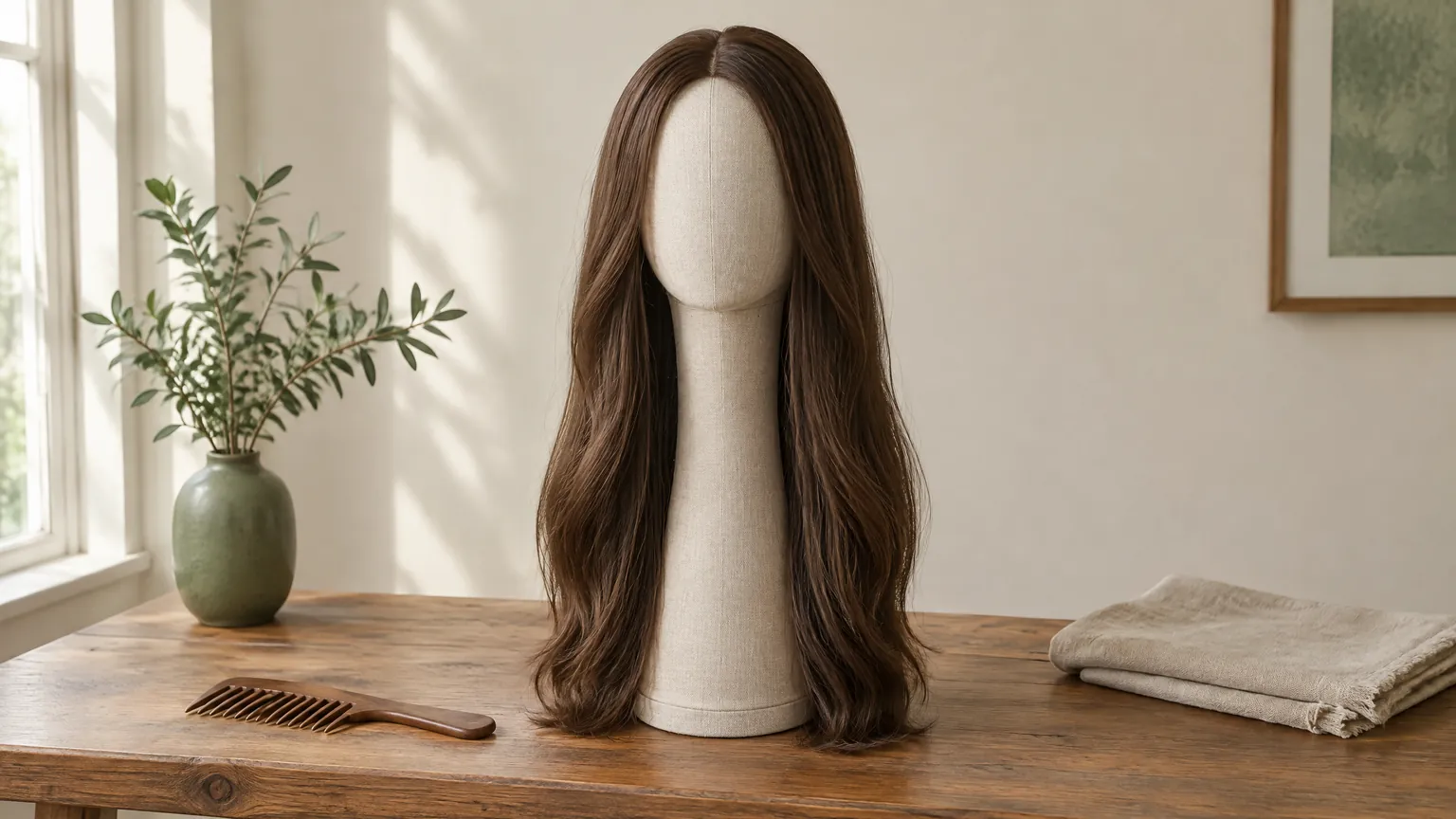
Wavy wig photographs: tell shape, density and fibre apart
GotGear and OWNSTRAND share the same owner. This collection is not an independent recommendation. GotGear does not supply wigs or medical treatment; actual wig services are provided by OWNSTRAND, whose only known studio is in Kwun Tong. These articles provide general information, not medical advice.
The short answer
A wavy wig photograph is useful for judging the outline, wave placement and visible fullness, but it cannot reliably identify the fibre or prove the amount of hair in the cap. Compare front, side and back views under consistent lighting, then check the written material and care information. Treat shine and colour as lighting-sensitive clues rather than quality tests. A good online shortlist records what you can see separately from what you still need the supplier to confirm.
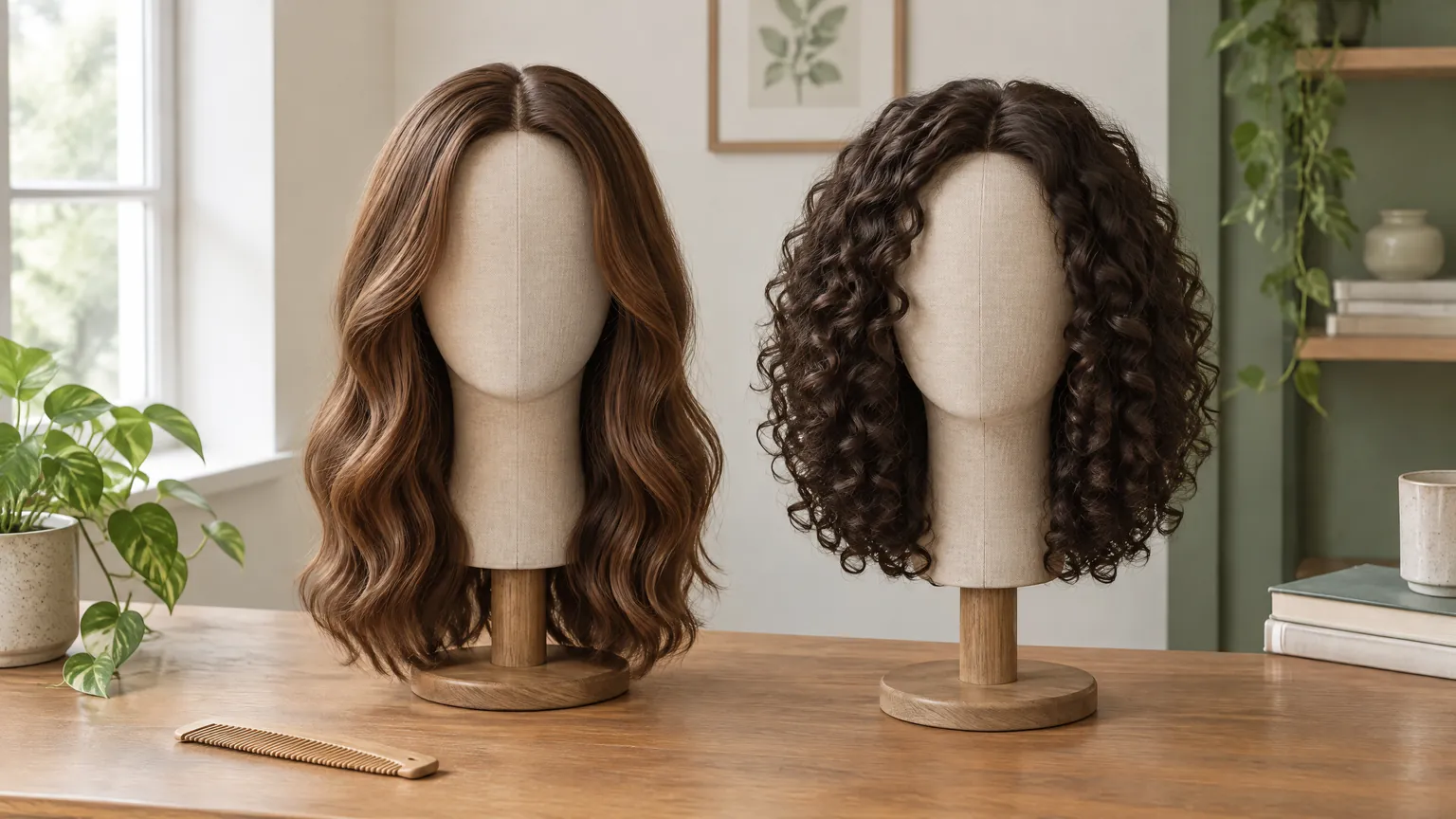
The most useful question about a wavy wig photograph is not whether it looks natural in isolation. It is whether the image shows the shape you want, clearly enough to compare it with another option. A glossy studio portrait may communicate a style beautifully while leaving the cap, fibre and everyday handling almost entirely unexplained.
Read the picture in three stages. First, trace the hairstyle's outline and the position of its waves. Next, assess the visible fullness without assuming it reveals the amount of fibre attached to the cap. Finally, put material questions aside for the written specification. Keeping these stages separate prevents a flattering photograph from answering questions it was never equipped to answer.
Start with the wave pattern, not the shine
A wave is a shape, not a material category. In a still image, look for the repeated bends along a section of hair: where they begin, how broad they appear and whether they continue towards the ends. Loose bends near the bottom create a different silhouette from waves beginning close to the crown, even when both products carry a general wavy description.
When browsing wavy wigs, use the style page to identify possible silhouettes rather than to settle fibre or construction questions. Write down a specific preference, such as a flatter crown with bends below the jaw, instead of saving several pictures merely because they share a texture label. Confirm the details of the particular option with the supplier before treating a catalogue image as a product specification.
The direction of the part matters to this reading. A deep side part can place much of the visible hair on one side of the face. Hair brought forward over both shoulders can make the front view look especially full. A back view may show that the same style has a much narrower outline when its lengths fall naturally behind the wearer. Neither arrangement is inherently misleading; they answer different styling questions.
Locate the first bend
Look at the section between the crown and the first clear wave. A smooth upper section may suit someone who wants less visual width around the upper face. Waves starting higher may create a fuller outline there. Check this in the side view too: hair lifted at the roots can look like an early wave from the front, while a side photograph reveals the difference between root lift and a bend through the length.
Check the final few centimetres
Ends deserve their own inspection. Are they turned under, flicked out, grouped into waves or brushed into a softer finish? A layered cut may leave several visible ending points instead of a single hemline. If you prefer an orderly outline against a work shirt, compare those endings rather than concentrating only on the most prominent wave halfway down.
Separate visible volume from actual density
Volume describes the space the styled hair appears to occupy. Density concerns how much hair or fibre is attached to the cap, including how it is distributed. A photograph usually gives you more information about the first than the second. An airy, spread-out wave pattern can make an outline wide, while closely grouped waves can appear compact. You cannot convert either appearance into a dependable density percentage.
Macmillan's guidance on matching an existing hairstyle suggests choosing a similar volume of hair, or slightly less, when the aim is a less noticeable change.1 That is a useful starting point for someone seeking continuity, not a rule against fuller styles. If your goal is a deliberate change of silhouette, assess how much width you actually want rather than assuming maximum fullness is automatically preferable.
| What the photograph shows | A useful reading | What still needs confirmation |
|---|---|---|
| Broad waves spreading out at shoulder level | The styled outline is wide at that point | Whether the same outline remains after the recommended care routine |
| A narrow part with little visible base | The part is covered or closely styled in this view | Cap construction and density distribution at the part |
| A large amount of hair over one shoulder | Much of the length has been brought forward | Fullness across the back and the other side |
| Bright bands across the bends | Light is reflecting from the curved sections | Fibre composition and any surface treatment |
| Soft, separated ends | The photographed finish is less tightly grouped | Whether this is the supplied finish or additional styling |
If a listing gives a density figure, ask what it describes and whether it applies to the pictured version. Do not compare that number as if all suppliers use an identical measurement method unless they explicitly establish one. For an everyday choice, the distribution around the hairline, part and ends can be more informative than an unexplained headline figure.
Lighting changes colour, and shine is not a fibre test
Adobe explains that white balance affects every colour in a photograph. Different light sources can introduce blue, yellow, orange or green casts, and editing can adjust those casts.2 Consequently, the brown you see in a warm portrait may not be the same brown you would see beside an office window. This does not, by itself, show that the product is incorrectly described. It shows why a single lighting setup is a weak basis for an exact colour match.
Look at other objects in the frame before interpreting the hair colour. A supposedly white background or shirt that appears yellow may suggest a warm overall cast. However, it is only a clue: you do not know the object's original colour, and a background may have been edited separately. A neutral-looking background is therefore not a certificate of colour accuracy either.
The bright bands on a wave also deserve caution. Curved sections can catch the light differently from the sections between them. A photograph with a concentrated light source may show distinct highlights, whereas another view may show a softer appearance. Comparing those pictures as if brightness were a direct measurement of fibre quality confuses the lighting with the product.
For colour-sensitive decisions, request a consistent set of photographs rather than a collection of unrelated glamour shots. Adobe recommends consistent lighting and describes using a grey card for precise white balance in product photography.2 A supplier may not provide that setup, but you can still ask for one view in even light without a colour filter. Such a view improves the comparison; it does not guarantee that your screen will reproduce the colour exactly.
Confirm the fibre through the description and care instructions
Neither a soft-looking wave nor a restrained shine proves that a wig is made from human hair. Macmillan notes that synthetic wigs can look very natural and commonly have their style heat-sealed into the fibre. Its guidance also distinguishes human hair wigs, which may need regular cleaning and styling, from blended wigs that require particular care.1 The useful difference is not a simplistic ranking of appearance, but what the individual product requires after wear and washing.
If you are considering human hair wigs, confirm the material of the particular item and ask how its photographed waves were created. The page is a starting point for material enquiries, not visual proof that every pictured finish will return without styling. Ask whether the photograph shows the usual supplied finish or an additionally styled example, and what work is needed to reproduce it after the recommended wash routine.
Do not infer an unprocessed fibre from an undyed-looking colour. Macmillan explains that a human hair wig can contain hair from several people and that the hair types are often bleached and dyed.1 An image therefore cannot establish the fibre's processing history. If a listing uses a material or processing label that matters to your choice, ask the supplier what that label means for the specific product.
Heat tolerance is another question that cannot be resolved by the presence of waves. Check the product's own care instructions before using a dryer, curling tool or straightener. Macmillan warns that heat can damage wigs and that blends need particular attention.1 Even when heat styling is expressly permitted, obtain the applicable method and limit rather than treating the broad material name as permission.
Request a small photo set that answers practical questions
More pictures are not necessarily better evidence. Ten front portraits with identical hair placement may leave the same gaps as one. A useful set changes the view while keeping the product identity and lighting clear. First confirm that the photographs show the same model, colour and length, and whether they depict a standard version or a customised example.
Use this checklist when requesting clarification or organising your own shortlist:
- Record the product identifier and the exact colour and length shown.
- Ask for front, side and back views with the ends visible.
- Request a view of the part and hairline without hair deliberately covering them.
- Ask whether the waves have been brushed out or created with additional styling.
- Confirm fibre composition, relevant cap details and the recommended care routine in writing.
- Keep any unanswered point marked as unknown rather than filling it in from the photograph.
A mannequin view and a worn view serve different purposes. The mannequin can make the shape easier to inspect without clothing obscuring the ends. A worn view can help you understand where the style falls relative to a face and shoulders. Neither gives your own fit: head proportions, cap adjustment and the placement of any existing hair remain individual considerations.
For length, ask how the supplier measures it. A wavy section can look shorter in its styled form than when extended, so an unexplained length label may not tell you where the ends will sit. Do not attempt to stretch or alter an unfamiliar wig simply to check a number. A clear measurement description and an uncropped side view are safer ways to resolve the ambiguity before deciding.
A hypothetical commute-to-desk comparison
Consider a hypothetical Hong Kong office worker who wants shoulder-length waves for a commute and a day at a desk, with limited time for morning styling. Their existing hairstyle is fairly flat at the crown. They often wear a collared shirt and would prefer the wig's ends not to dominate the collar. This is an illustrative scenario, not a customer account or a product test.
The first saved picture has large waves swept forward and strong golden highlights. The second has a straighter upper section, less width beside the cheeks and smaller bends near the ends. Judging only the portraits, the first might feel more impressive. Judging the stated routine, the second might deserve closer investigation because its photographed outline is nearer the worker's preference. That remains a shortlist decision, not proof that it will be easier to maintain.
The next questions should concern care and placement. Can the supplier show each style from behind with the lengths falling freely? What does the wave pattern look like after the recommended wash and drying process? What daily arranging is expected? Will the pictured length put the ends against the worker's usual collar? A response about fibre alone would not settle these points.
If the worker has existing hair to accommodate beneath the cap, a sleek photograph should not be mistaken for a promise of the same root profile. They should ask how fit is assessed with that hair arrangement. If they also wear glasses, they can ask about checking the sides during a fitting. The photograph cannot demonstrate pressure, comfort or secure placement on their own head.
Make the enquiry more precise than the picture
A useful shortlist can be as small as two clearly documented options. Beside each image, write one sentence about the visible shape, one about your routine and one unresolved question. For example: smooth crown with waves below the jaw; limited styling time on weekdays; need confirmation of how the waves are maintained after washing. This gives the supplier something concrete to answer.
For readers using the buy wigs online Hong Kong shop page, carry those questions into the enquiry rather than assuming a catalogue entry confirms stock, fit or an appointment arrangement. OWNSTRAND and GotGear are under the same ownership; the link is a browsing resource, not an independent endorsement. Ask what can be confirmed for the specific selection and whether viewing a sample or discussing adjustments is appropriate before proceeding.
Keep the distinction between a styled example and a confirmed specification throughout the exchange. A clear reply about fibre does not answer a missing cap question; a back photograph does not settle care requirements. When those gaps are resolved, choose the outline you actually want and the routine you can realistically manage. The strongest use of a wavy wig photograph is to narrow your questions, not to replace them.
Common questions
Can the shine in a wavy wig photo reveal whether it is synthetic?
Not reliably. Brightness depends on the lighting and the way curved sections reflect it, while synthetic wigs can look natural. Use the photograph to assess the finish you like, then obtain the stated fibre composition and care instructions for the specific product.
Why does a wavy wig look fuller from the front than the back?
Hair may have been brought forward over the shoulders, or a side part may concentrate it in one area. Waves can also spread out when arranged differently. Compare front, side and back views of the same version before treating the front outline as evidence of overall density.
What should I ask if I want the photographed waves after washing?
Ask whether the image shows the supplied finish or additional styling, what happens after the recommended wash and drying routine, and what arranging is required afterwards. Confirm any heat restrictions for that exact product. The material label alone does not establish how its photographed wave pattern is maintained.
Sources & what they support
The scope below identifies what each reference supports. Citations do not imply independent endorsement of OWNSTRAND or any provider, and do not establish treatment benefits or guaranteed results.
- Macmillan Cancer Support: Wigs for cancer treatment (opens in a new tab)
Supports the distinction between synthetic, human hair and blended wigs; synthetic style retention and natural-looking appearance; possible processing of human hair; matching existing hair volume; and the need to follow product care advice and avoid inappropriate heat. Does not endorse OWNSTRAND or establish a specific product's properties.
- Adobe: Adjusting white balance settings to improve photos (opens in a new tab)
Supports the effect of light-source colour temperature and white balance on photographed colours, the difficulty of mixed lighting, and the usefulness of consistent lighting and a grey card for product-photography colour control. Does not verify the colour accuracy of any wig listing.