
What should building managers map first? Trace waste from each zone to contractor handover, set collection intervals and confirm accepted streams, signage, access controls and storage conditions with building management and the relevant collector.
Commercial building recycling station Hong Kong — Size stations from a waste audit
Start by confirming which waste streams your collector will accept from your site and where each stream should be handed over. In mixed‑use towers, verify any differences between office, retail and food and beverage (F&B) floors. When planning a commercial building recycling station in Hong Kong, managers should size the station based on field observations, not assumptions. Walk each zone at representative times, tally bag counts by stream and note typical fullness. As an initial reference, a one‑week snapshot can reveal peak‑day patterns, but the responsible supplier or collector must confirm the sampling scope and findings in writing.
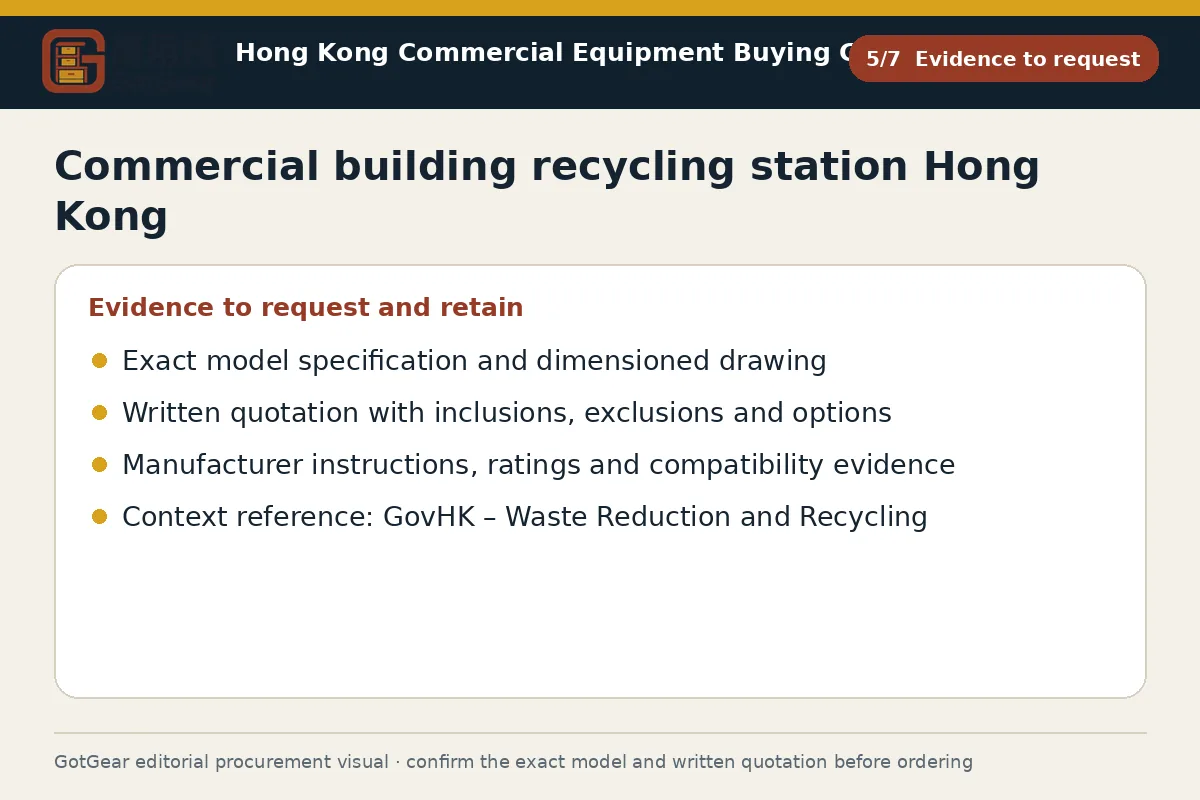
Translate those findings into container capacity for the recycling station in Hong Kong. Sum peak‑day volumes for paper, plastics/metal, glass and any food waste you intend to separate, then convert those figures into target litres per stream for each user point. Measure alcoves, corridor widths, door swings and lift thresholds to confirm a safe footprint and adequate manoeuvring space. In enquiries, request data sheets that state external dimensions, usable litres, body and lid material, aperture style, wheel diameter, any fire performance notes (if relevant to your insurer or landlord), and cleaning guidance. Ask the supplier to state the model number, colour options, liner compatibility and details of replacement parts in the written quotation. On receipt, inspect dimensions, lid action, caster integrity and finish against the quoted specification; the formal written quotation and the manufacturer's specification shall prevail over any informal estimate.
Commercial building recycling station Hong Kong — Plan back-of-house consolidation
Back-of-house efficiency depends on smooth consolidation from floors to the loading bay. Map trolley routes, goods-lift cycles and staging areas, and check for slopes, thresholds and shared-corridor pinch points common in Hong Kong industrial buildings. As an example starting point, plan for safe turning of your largest cart without encroaching on fire egress; the building manager or competent adviser must verify floor loading and clearance. Confirm loading-bay booking windows so full containers are not left in public view or blocking service routes.
When specifying consolidation equipment, request tilt-truck or cart data sheets listing internal volume, empty weight, maximum recommended load, wheel size and tread, brake type, handle height, and compatibility with your lift car dimensions and ramp gradients. For 4‑wheel bins, ask for details on lid restraint, towing eyes and toe-board interaction. If balers or compactors are proposed, require the manufacturer’s site services guide for electrical, ventilation and clearance needs, and ask your building engineer whether any penetrations or isolation switches are needed. For rooms, document drainage, wash-down access, pest controls and signage plans. On delivery, confirm serial numbers, safety labels, wheel condition and that all accessories (rope hooks, lid stays, couplings) match the quotation before signing off.
What should buyers compare for commercial building recycling station Hong Kong?
| Criterion | Straightforward requirement | More complex requirement | Evidence to provide |
|---|---|---|---|
| Streams and acceptance | Paper, plastics/metals, glass only | Add food waste, cartons, batteries or toner | Collector’s written acceptance list and special-handling notes |
| Station sizing and footprint | 3-stream floor stations in standard alcoves | Mixed-use floors with extra F&B or glass points | Waste-audit peak volumes; corridor/alcove and door measurements |
| Container specification | HDPE/PP bodies, 60–80 L with restricted apertures | Fire-rated steel skins; 4-wheel 240–660 L BOH bins | Data sheets: dimensions, materials, apertures, wheel size; test notes if needed |
| Movement and consolidation | Carts and bins compatible with goods lift | Tilt trucks, towing, baler/compactor interface | Lift door and car sizes, gradients, thresholds; floor-load advisory |
| Signage and controls | Bilingual labels with stream colours | Access-controlled rooms with CCTV if required | Approved artwork proof; access-policy summary; cleaner training brief |
This framework helps buyers create comparable written enquiries. Final model specifications, availability, delivery and commercial terms must be confirmed in a formal quotation.
Commercial building recycling station Hong Kong — Join tenant and cleaner routes
Tenants and cleaners need a single, joined-up route plan. Align each user-facing station with the cleaner’s round and the collector’s pick-up timetable, so liners are changed shortly before consolidation runs and long before the loading-slot cut-off. Standardise stream order, colours and container models across floors; this helps cleaners swap like-for-like liners and reduces errors when carts are staged in a tight service lobby. For office areas, review the internal guide "How many recycling bins does a Hong Kong office need" to validate baseline layouts before you finalise the route.
Produce a simple route map noting access controls, door codes or card-reader points, and where keys are stored in the management office. If some floors are managed by separate tenants, agree responsibilities and escalation paths in writing. Where lifts are shared with catering or contractors, set contamination guardrails: bag types, double-bagging thresholds and spill kits at choke points. For buildings that host public activations, coordinate with event managers early; the planning notes on event recycling station setup in Hong Kong and on event recycling and queue management in Hong Kong can help adapt crowd-facing points to the cleaning round without obstructing queuing or registration flows.
Commercial building recycling station Hong Kong — Review signs and contamination
Clear, bilingual signs and consistent apertures make or break contamination control. Obtain your collector’s accepted-stream list and preferred terms, then create Traditional Chinese/English labels using the same wording and recognisable pictograms. Before ordering, ask for sample artwork, material specs (vinyl, polycarbonate or powder-coat print), adhesive type, edge sealing, UV/fade resistance, and wipe-clean performance. In Hong Kong’s humidity, poorly sealed labels can lift at corners; specify lamination and rounded edges where appropriate, and confirm wall or bin-surface compatibility.
Run a short pilot on one floor, measuring mis-sort items and noting causes. As an example starting point, a two-week pilot can surface the top three contamination drivers, but the building manager should confirm duration and sampling with the collector. Standardise liner colours by stream and, if your contractor allows, use clear bags for recyclables to support spot checks. Train cleaners with a one-page visual brief and place check cards in the supervisor’s folder. For offices, the commercial waste separation bin checklist Hong Kong provides a practical label cross-check before full roll-out. Keep one set of spare labels and liners onsite; on receipt, verify language accuracy, colour consistency and aperture fit against the approved proof and quotation.
Commercial building recycling station Hong Kong decision checklist
Confirm which streams your collector accepts and how they want them received, then audit each zone to estimate peak daily volumes. Measure alcoves, corridors, doors and lift thresholds, and sketch user-point footprints. Decide on stream order and consistent colours, and specify bin volumes, aperture shapes, liners and body materials in your enquiry. Map cleaner and tenant routes, loading-bay timing and access controls, including key or card procedures. For consolidation, request cart and bin data sheets listing load limits and wheel details, and verify lift compatibility. Prepare bilingual label artwork for approval by building management and the collector. Compare written quotations like-for-like on dimensions, materials, accessories and delivery method. On receipt, check model numbers, finishes, casters, lids and label sets against the quotation before placing equipment into service.
- Operating use, quantity and expected frequency
- Dimensions, capacity, material and accessory requirements
- Delivery address, floor, goods lift and loading window
- Required documents, acceptance checks and after-sales arrangements
Key points for commercial building recycling station Hong Kong
Hong Kong buildings often work within tight goods-lift cars, narrow service corridors and short loading-bay windows shared across tenants. These constraints push you to specify compact, manoeuvrable stations and carts, confirm lift door sizes and turning radii, and schedule consolidation to match booked collection slots. Collector acceptance lists can vary by contract and district, so always get the approved streams and any special handling (for glass or food waste) in writing. Bilingual Traditional Chinese/English signage and humidity-resistant materials are practical necessities rather than afterthoughts. Treat any fire performance, odour control or pest management requirements as site specific and verify with your landlord, insurer or competent adviser; this summary is operational guidance, not legal advice.
Questions about commercial building recycling station Hong Kong
How do I estimate the number and size of stations per floor?
Use a short field audit to total peak-day volumes by stream for each zone, then convert into target litres per stream at each user point. As an example starting point, many office floors operate well with three streams sized around medium liners, but your collector and building manager must confirm streams and capacity. Always size to alcove and door measurements, not just headcount.
What bin materials work best in Hong Kong’s humid, high-traffic conditions?
HDPE or polypropylene bodies with smooth interiors and rust-resistant hardware are a robust default, while powder-coated or stainless-steel skins suit premium lobbies. Choose restricted apertures and lined interiors for easy wipe-down. If your insurer or landlord requires certain fire performance or cleaning chemicals, ask suppliers for material declarations and maintenance guidance, and verify compatibility before ordering.
Can recycling share space with the refuse room?
It can if ventilation, hygiene separation and access are properly managed, and if building rules and the collector’s requirements are respected. Keep egress routes clear and protect recyclables from moisture and pests. Any fire, odour or drainage measures should be confirmed with your building manager, competent adviser or insurer; some sites designate a separate, signed room for clean materials.
What documents should I secure before placing an order?
Get the collector’s accepted-stream list, written collection schedule and any artwork approvals. From suppliers, request data sheets showing dimensions, volumes, materials, load ratings and wheel details, plus sample labels and colour proofs. Ask building management to confirm access controls, lift compatibility and staging locations. The final written quotation and the manufacturer’s specification should govern what is delivered.
Continue with closely related procurement topics
These pages share equipment, operating or decision-stage signals with this guide.
How many recycling bins does a Hong Kong office need
GotGear explains how many recycling bins does a Hong Kong office need, covering collection frequency and zone sizing, plus office recycling station setup Hong Kong and clean recycling bin placement in Hong Kong offices.
Read the guide
Event recycling station setup Hong Kong
GotGear has a checklist for event recycling station setup Hong Kong covering disposal points, servicing and signage. It includes recycling station signage for Hong Kong events and visitor direction signage for Hong Kong events.
Read the guide
Where should waste containers be placed in a Hong Kong commercial kitchen
Where should waste containers be placed in a Hong Kong commercial kitchen? This GotGear guide explains how to map prep, service, wash-up and refuse flows and how to check access, cleaning and collection.
Read the guide
Event recycling and queue management Hong Kong
GotGear covers event recycling and queue management Hong Kong and links peak forecasts and disposal points with queue barrier layout for Hong Kong registration events and exhibition registration flow planning Hong Kong.
Read the guideRelated topic indexOpen more English procurement pages1 topics
Browse additional equipment families, applications and procurement questions relevant to a wider buying brief.