
For fluorescent lamp recycling bins Hong Kong, keep lamps separate from batteries and everyday recycling, and minimise handling that could cause breakage. Confirm accepted items and follow manufacturer instructions, the responsible operator’s process, actual site conditions and applicable Hong Kong requirements, including the site response if a lamp breaks.
Identify accepted formats for fluorescent lamp recycling bins Hong Kong
Start by listing every lamp format in service across your premises and ask the prospective operator for a written acceptance list. Typical formats include straight tubes (T5, T8, T12) in several lengths, U‑bend, circular lamps and compact fluorescent lamps (pin‑based and integrated). Note that many schemes do not accept non‑fluorescent lamps in the same container. Keep LEDs and items routed to battery recycling bins Hong Kong separate to avoid rejection. Record whether lamps can be deposited in original sleeves, corrugated transport tubes or dedicated “coffin” boxes.
Procurement actions: request specification fields that state accepted diameters and maximum lamp length; capacity described by count per format; container orientation (vertical or horizontal); presence of dividers or cradles; liner material; lid type and aperture dimensions. Confirm whether bilingual waste stream labels Hong Kong are supplied and where they should be fixed. Measure the tightest doorway, corridor pinch points and goods‑lift car length before shortlisting models; record the maximum piece length you can move without tilting. Where examples help your team, note common lengths such as 600 mm, 1,200 mm and 1,500 mm only as a starting point to be confirmed in writing with your operator and supplier. Ask for manufacturer handling instructions and the responsible operator’s process for intact versus broken lamps, and ensure your building manager approves the proposed storage location.
Set controlled access to fluorescent lamp recycling bins Hong Kong
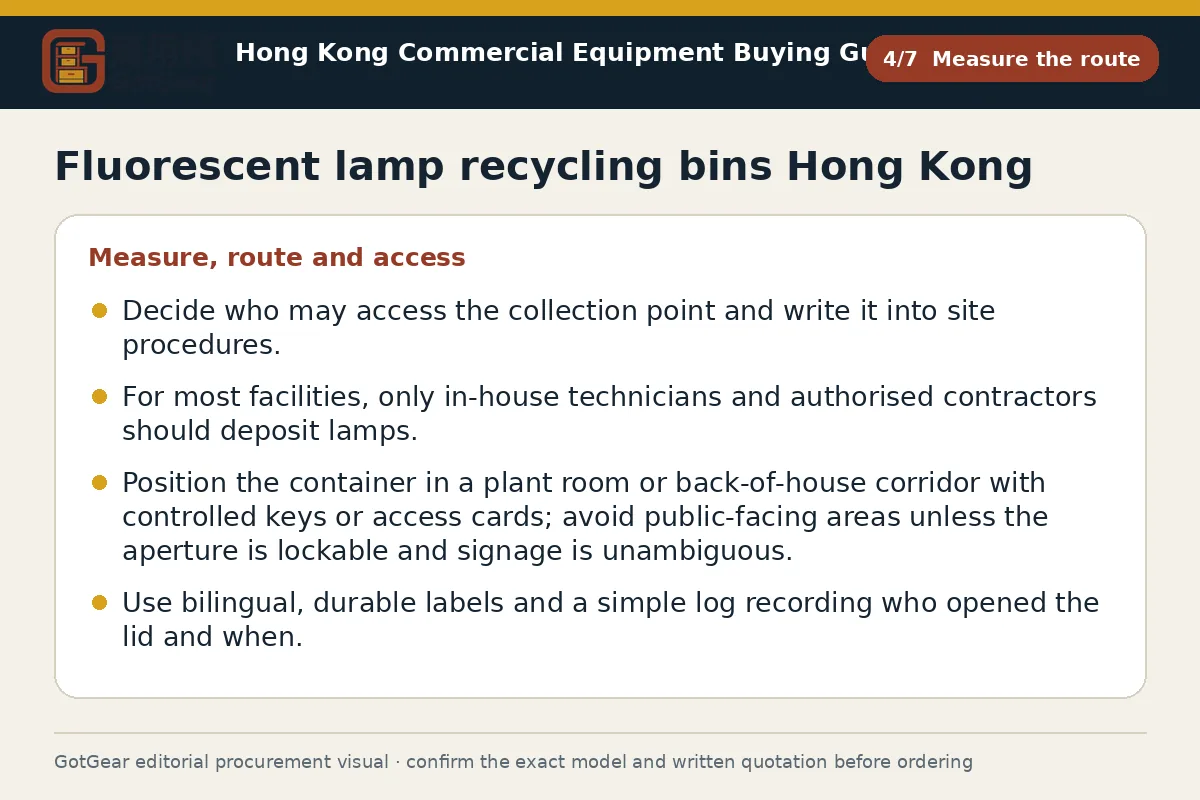
Decide who may access the collection point and write it into site procedures. For most facilities, only in‑house technicians and authorised contractors should deposit lamps. Position the container in a plant room or back‑of‑house corridor with controlled keys or access cards; avoid public‑facing areas unless the aperture is lockable and signage is unambiguous. Use bilingual, durable labels and a simple log recording who opened the lid and when. Coordinate key management with the property management office and document the response plan if a lamp is found broken inside the container.
Procurement actions: specify lid construction (hinged or lift‑off), lock type and number of keys; aperture dimensions that admit tubes but deter other waste; tamper‑evident seal options; anchoring points or enclosure compatibility if installing within bulk waste containers Hong Kong. Request drawings showing footprint, height, opening clearances and fixing details so you can model placement in tight rooms. Ask for material and finish suitable for humid plant spaces (e.g., powder‑coated steel or corrosion‑resistant hardware) and whether spare locks and labels are available. Confirm delivery arrangements: if the route requires contractors to pass through an industrial‑building security lobby, note pass requirements and loading‑bay booking rules so the supplier’s written quotation reflects real access constraints.
What should buyers compare for fluorescent lamp recycling bins Hong Kong?
| Criterion | Straightforward requirement | More complex requirement | Evidence to provide |
|---|---|---|---|
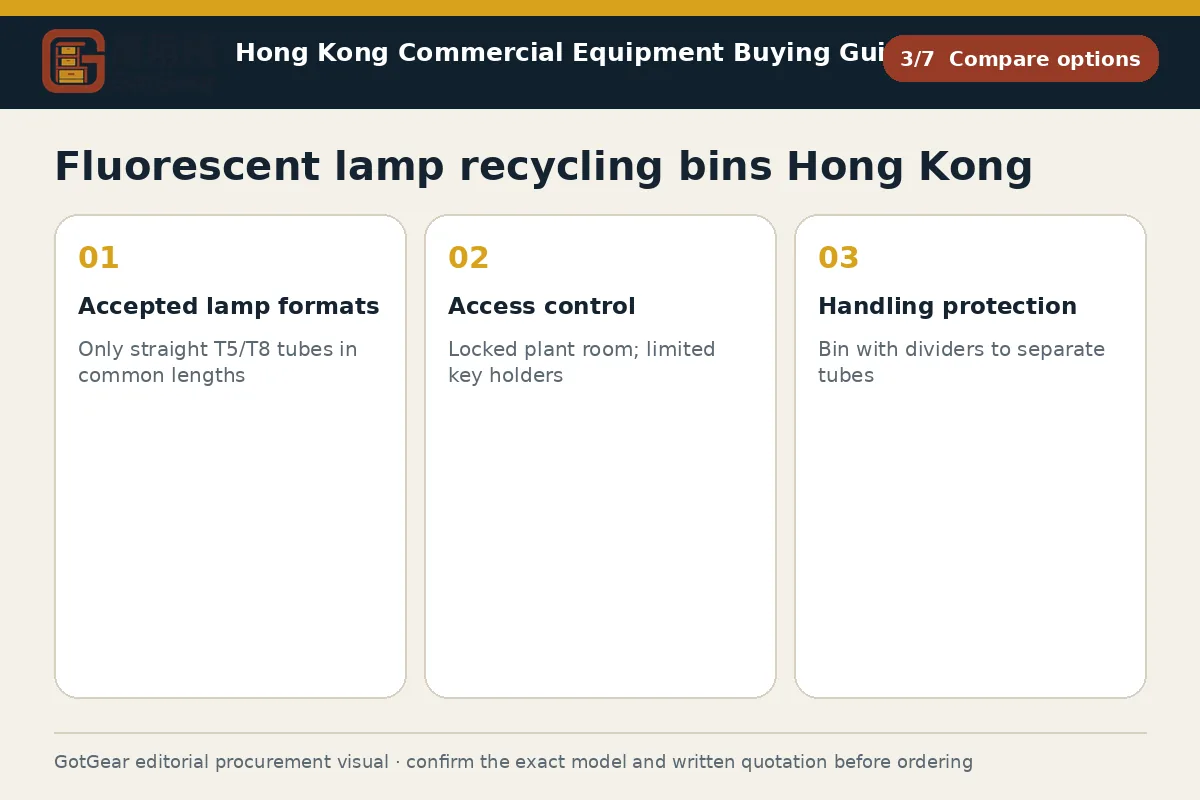
| Accepted lamp formats | Only straight T5/T8 tubes in common lengths | Mixed formats including U‑bend, circular and CFLs | Operator acceptance list and site inventory by format |
| Access control | Locked plant room; limited key holders | Shared back‑of‑house with contractors and night shifts | Location photo, lock type, key‑holder list and access notes |
| Handling protection | Bin with dividers to separate tubes | Dividers plus transport totes and padded enclosure | Spec sheets for dividers/liners and supplier photos |
| Route constraints | Same‑floor movement; no lift required | Goods‑lift use and narrow turns/doorways | Measured lift car length, door widths, turn radii and steps |
| Documentation and pickup | Planned scheduled pickup with simple handover | Variable volumes and operator decanting requirements | Written pickup SOP, labels/seal template and contact details |
This framework helps buyers create comparable written enquiries. Final model specifications, availability, delivery and commercial terms must be confirmed in a formal quotation.
Reduce handling and breakage risks around fluorescent lamp recycling bins Hong Kong
Minimise handling from the moment a lamp is removed. Pre‑stage a long, rigid tote or fibre tube near the work area so technicians place each spent lamp directly into a protective sleeve before any corridor movement. Keep the container as close as practicable to the point of replacement, within authorised areas. Avoid laying lamps on floors or mixing them with cardboard, plastics or general recyclables. If a lamp breaks, follow your site’s documented response, escalation and clean‑up procedure that aligns with the responsible operator’s guidance and applicable Hong Kong requirements.
Procurement actions: request internal dividers or end‑cap cradles that separate individual lamps; shock‑absorbing liners; rounded, deburred apertures; and a stable base with lockable castors if mobility is required. Ask suppliers to state the empty weight, typical loaded weight range (example starting point only) and any tipping‑stability test or guidance, to be confirmed in the written quotation. If you also use transport coffins, ask for recommended maximum stack height and handling method. On receipt, inspect for intact dividers, smooth edges, clear bilingual labels and corrosion‑resistant finishes suitable for humid plant rooms. Keep spare labels; confirm availability of replacement liners or dividers. File manufacturer assembly and handling instructions with your safety documentation and ensure the operator’s breakage instructions are accessible to staff.
Confirm the collection route for fluorescent lamp recycling bins Hong Kong
For fluorescent lamp recycling bins Hong Kong, map the end‑to‑end collection route — from the deposit point to the handover agreed with the operator of your recycling station Hong Kong — before ordering. Measure the tightest lift car length and diagonal, doorway widths, corridor radii and threshold heights against your longest lamp. Use example starting points such as 600 mm, 1,200 mm and 1,500 mm only to test fit; confirm actual lamp lengths in your estate. Identify tight corners where a horizontal container may not turn, or vertical bins may strike ceilings or sprinklers. Note where interim use of coffins or totes is required en‑route.
Procurement actions: ask how the chosen container is secured for transport (latches, seals), what labels the collection team requires, and whether the operator will move the bin or decant into their own containers. Confirm maximum single‑lift weight and permitted movement method (hand‑truck, trolley, two‑person carry). Share loading‑bay booking windows and vehicle height limits with both supplier and operator so the quotation and pickup plan reflect reality. Prepare a brief route plan with measurements, photos of pinch points and an agreed handover location. Seek written confirmation from the building manager and operator that the route and pickup steps are acceptable before installation.
Fluorescent lamp recycling bins Hong Kong decision checklist
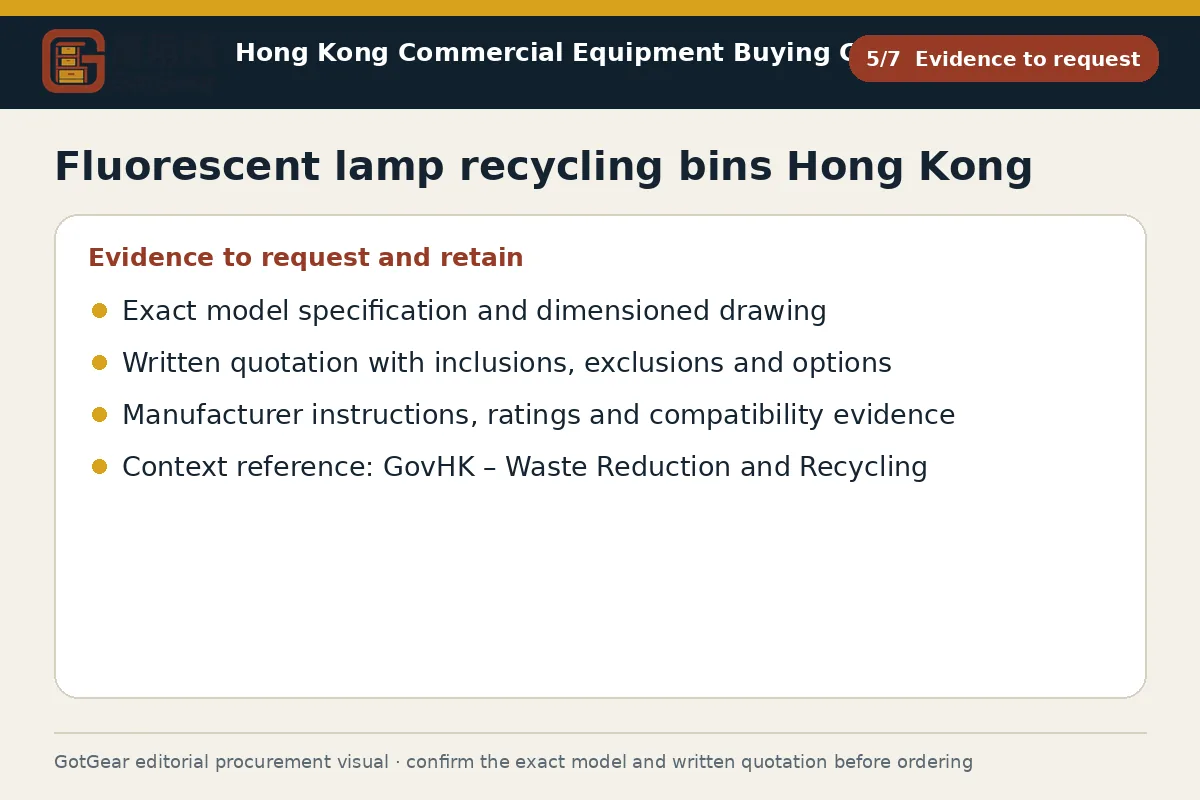
Document accepted lamp formats with the operator, then shortlist bins that match your longest tubes and the route you can actually navigate. Measure door widths, lift car length and turning radii, and record the tightest figures. Choose orientation, dividers and liners that protect lamps, and specify lock type, aperture size and anchoring to control access. Request bilingual labels and drawings showing footprint and opening clearances. Compare quotations on accepted formats, capacity by count, materials/finish, locks, included labels and delivery to the specific floor. Share loading‑bay booking rules and access‑pass needs so both supplier and operator factor in the real conditions. Before approval, file the manufacturer’s handling instructions, the operator’s acceptance list and the site’s breakage response, then inspect the delivered bin for labels, smooth apertures and intact dividers.
- Operating use, quantity and expected frequency
- Dimensions, capacity, material and accessory requirements
- Delivery address, floor, goods lift and loading window
- Required documents, acceptance checks and after-sales arrangements
Key points for fluorescent lamp recycling bins Hong Kong
In Hong Kong estates, the limiting factor is often the building route rather than the container itself: goods‑lift cars and service corridors can be short and narrow, and loading‑bay access must be booked through the management office. Operators may require lamps to be intact and segregated because of mercury content, so confirm acceptance criteria, labelling and breakage response with the responsible operator and your building manager. Provide bilingual signage and consider humidity‑resistant finishes for plant rooms. This summary is practical guidance; confirm applicable Hong Kong requirements with competent parties.
Questions about fluorescent lamp recycling bins Hong Kong
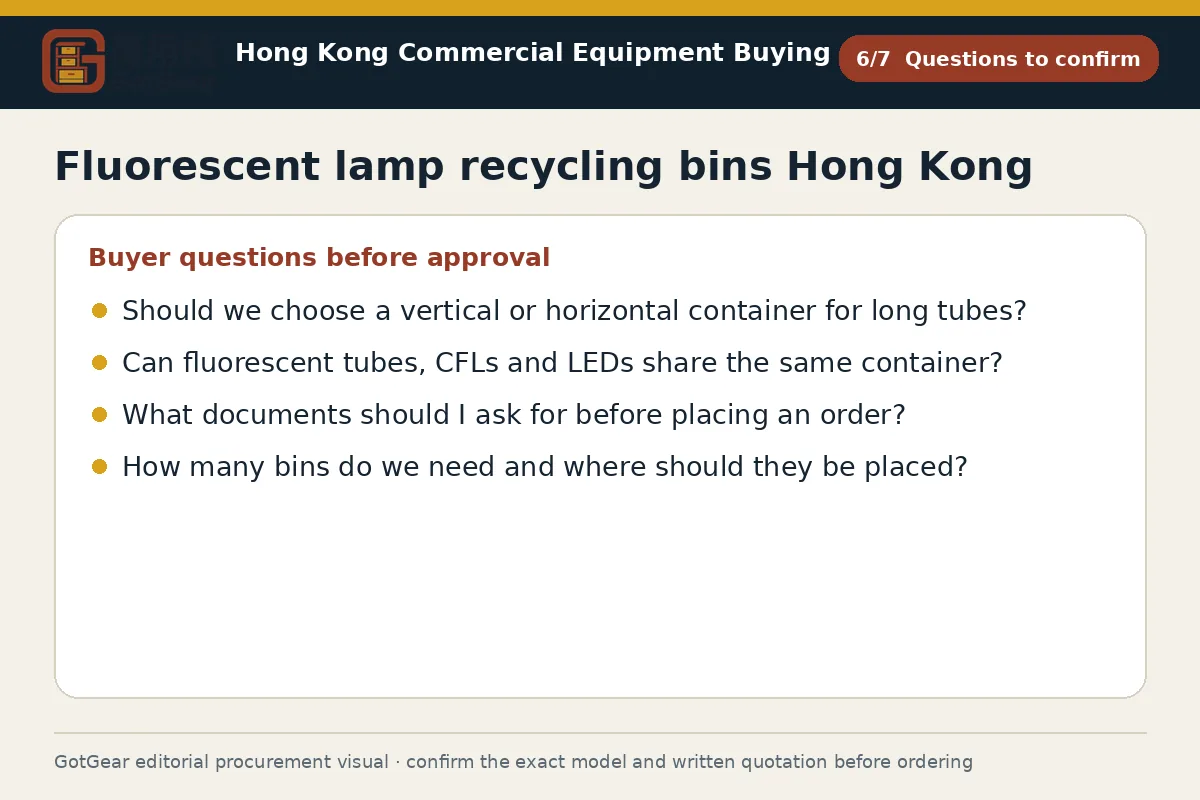
Should we choose a vertical or horizontal container for long tubes?
Pick the orientation that best fits your route and longest lamp length. Vertical bins save floor space but need ceiling clearance and stable bases; horizontal bins may turn tight corners more easily. Ask suppliers for drawings with full dimensions and opening clearances, then test against measured lifts and corridors. Use example lengths only as a starting point, and confirm your actual inventory.
Can fluorescent tubes, CFLs and LEDs share the same container?
Keep fluorescent lamps in their own stream and follow the operator’s acceptance list. Avoid mixing with LEDs or batteries; direct those to the appropriate processes such as battery recycling bins Hong Kong. Apply clear bilingual labels, ideally consistent with waste stream labels Hong Kong, to reduce contamination. Always confirm accepted items, packaging and any exceptions in writing with your chosen operator.
What documents should I ask for before placing an order?
Request the operator’s written acceptance list, the manufacturer’s handling and assembly instructions, material/finish specifications suitable for your environment, and sample bilingual labels. For controlled access, ask for lock and key details. If the operator needs specific labelling or sealing, get their template. Confirm the proposed placement and route with your building manager and capture their approvals in writing.
How many bins do we need and where should they be placed?
Match bin count and placement to actual replacement points and the feasible route to your loading bay. Many sites start by mapping one end‑to‑end route and validating lift and doorway constraints before expanding. Position bins in controlled back‑of‑house areas near frequent maintenance locations. Confirm placements with the management office and your operator so pickup and access arrangements are workable.
Continue with closely related procurement topics
These pages share equipment, operating or decision-stage signals with this guide.
Battery recycling bins Hong Kong
GotGear checklist for battery recycling bins Hong Kong specifies a separate collection point and outlines accepted battery types, storage and labelling, assigned handlers and the designated receiver.
Read the guide
Recycling station Hong Kong
GotGear explains a recycling station Hong Kong, outlining accepted streams, signage, staff checks, volumes and transfer routes. We connect front of house recycling bins Hong Kong with back of house recycling bins Hong Kong.
Read the guide
Waste stream labels Hong Kong
When specifying waste stream labels Hong Kong, confirm accepted materials, wording, colours, visibility and bin location. Pair recycling bin stickers Hong Kong with larger recycling bin signage Hong Kong for guidance from GotGear.
Read the guide
Paper recycling bins Hong Kong
GotGear explains the differences between paper recycling bins Hong Kong, plastic recycling bins Hong Kong and glass recycling bins Hong Kong in contamination risk, filled weight, handling route and written collection rules.
Read the guideRelated topic indexOpen more English procurement pages2 topics
Browse additional equipment families, applications and procurement questions relevant to a wider buying brief.