
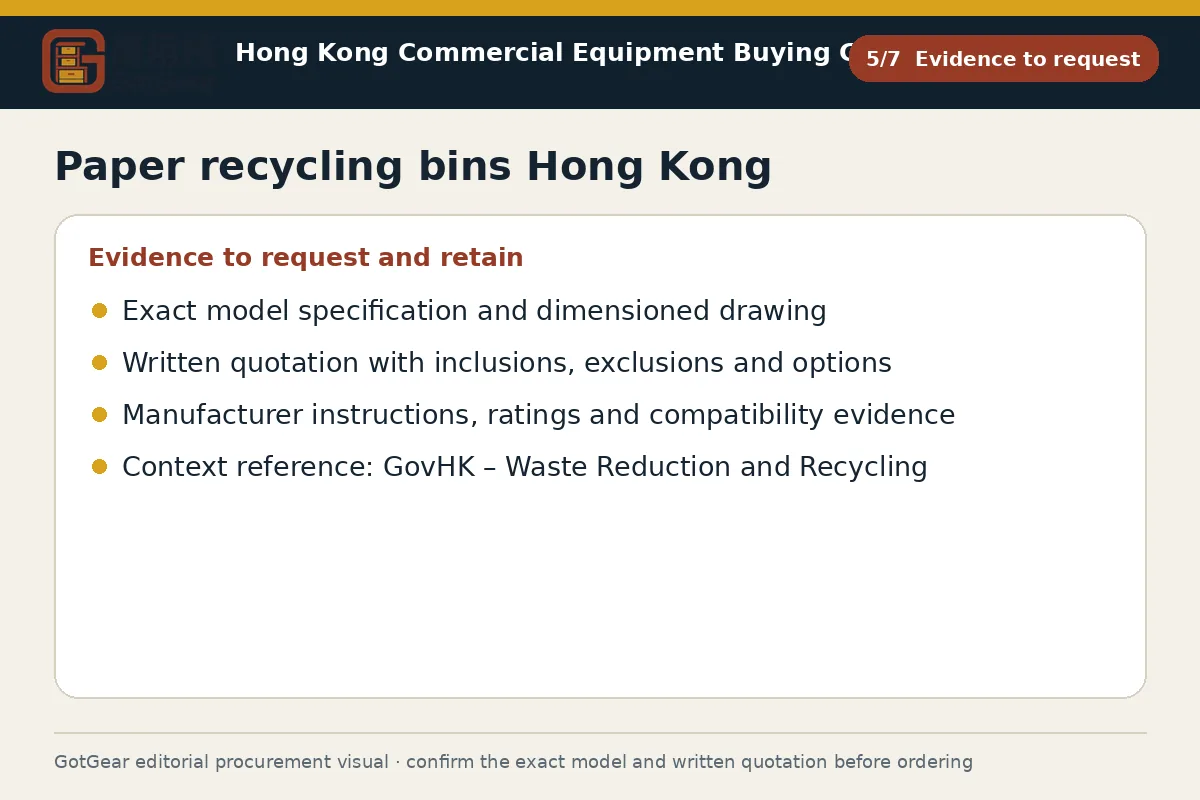
Before placing paper recycling bins Hong Kong, confirm accepted paper grades and exclusions with the responsible operator. Use separate criteria for plastic and glass, including container preparation, breakage risk, filled weight and the site’s handling process.
Keep paper dry when locating paper recycling bins Hong Kong
Begin by mapping where paper is generated and where moisture or splashes occur. Printer areas, mailrooms and meeting rooms are usually suitable for central stations; pantries, open dock edges and planter lines often are not. In humid months and during typhoon rain, cross‑drafts can carry mist into lobbies, so specify lidded units with a paper slot and a drip‑resistant top if they will sit near entrances. When planning paper recycling bins in Hong Kong, note the nearest mop sink and the cleaning schedule so lids and surrounds can be kept dry without relocating the station.
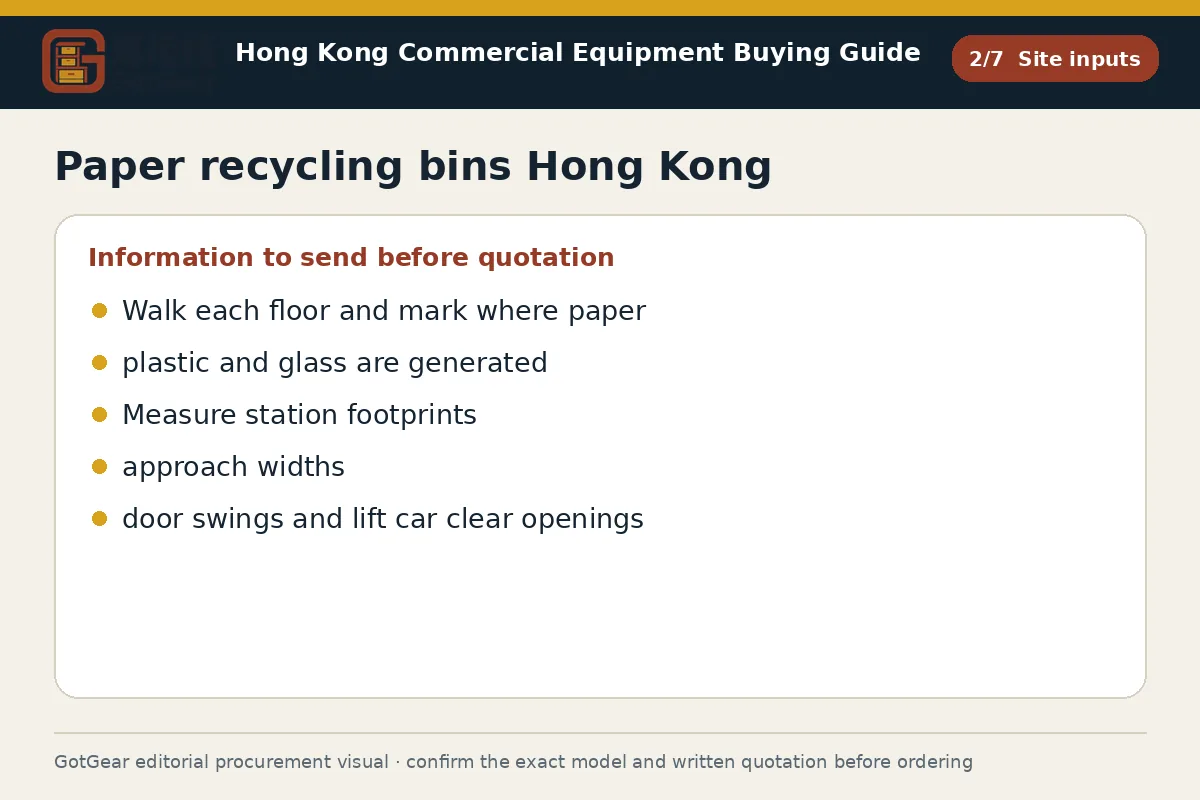
Measure the intended footprint, the approach corridor and the goods‑lift car: width, depth and door clear opening are essential. As a starting example, allow a combined station width of 900–1,200 mm for three adjacent streams, to be confirmed in the written brief. Request manufacturer data sheets for body material, lid fit, hinge type and liner compatibility; ask whether the body resists swelling or delamination in high humidity. For busy floors, specify wall‑protection strips or rear bumpers, and choose floor glides that will not mark tiles. Document the exact label language and icon set required; waste stream labels in Hong Kong should be bilingual and consistent across all floors. The model specifications and the formal written quotation prevail over any planning note.
Plan weight and breakage controls for glass recycling bins Hong Kong alongside paper recycling bins Hong Kong
Glass is dense and brittle, so control both weight and fragments from the outset. For glass recycling bins Hong Kong, select rigid, impact‑resistant bodies with small capacities positioned close to points of generation, using dollies or bottle trolleys for transfer. As an example starting point, many back‑of‑house teams trial 40–70 L rigid tubs with tight lids, but your operator’s lifting method and your floor loading must confirm the safe size range. Fit internal rigid liners rather than bags to avoid puncture leaks, and consider sound‑dampening pads if drops occur after hours.
Map the route alongside paper recycling bins Hong Kong to consolidate pickups without mixing. Measure lift car and threshold gaps for dolly wheels, turning circles at corridor bends, and any slopes to loading bays. Ask suppliers for caster diameters, dolly load ratings, wheel tread material and brake type in writing. Specify PPE expectations and broom/pan parking points if breakage occurs. If collections are at night near guest rooms or classrooms, request noise‑reduction lids and edge bumpers. Confirm with the operator whether bottles must be emptied and whether colour sorting is required; obtain their acceptance list and container handling limits in writing before ordering. The model specifications and formal written quotation prevail.
What should buyers compare for paper recycling bins Hong Kong?
| Criterion | Straightforward requirement | More complex requirement | Evidence to provide |
|---|---|---|---|
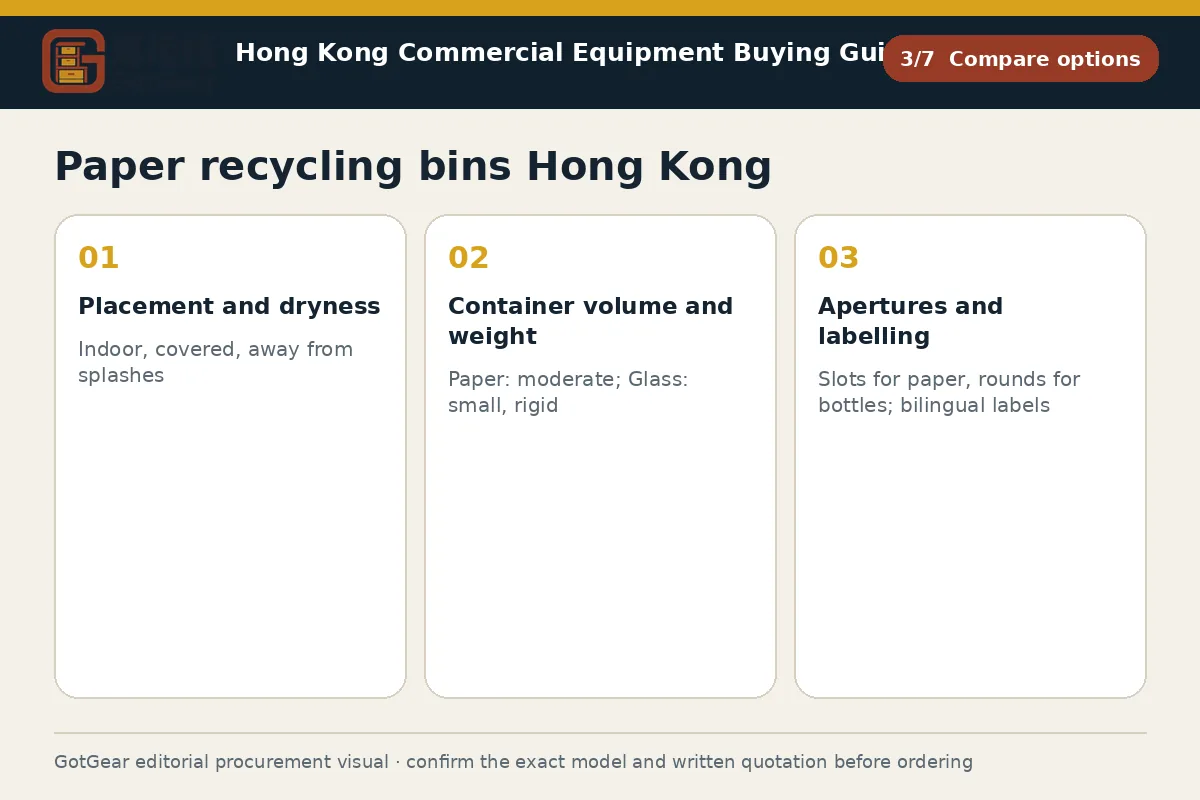
| Placement and dryness | Indoor, covered, away from splashes | Wind‑exposed lobbies with drip‑resistant lids and wall bumpers | Photos of site, moisture notes, cleaning schedule |
| Container volume and weight | Paper: moderate; Glass: small, rigid | Route‑constrained sites require dollies and weight‑limited tubs | Waste audit counts, lift limits, example size range for confirmation |
| Apertures and labelling | Slots for paper, rounds for bottles; bilingual labels | Multi‑tenant branding with colour‑locked icon sets | Label artwork, language, icon guide, substrate compatibility |
| Handling and transport | Fixed stations with bag rings or liners | Casters/dollies with stated wheel size, brake, load rating | Measured routes, lift car sizes, wheel spec sheets |
| Acceptance verification | Operator list confirmed in writing | Multiple operators with differing codes per stream | Signed acceptance sheets, contact names, sample item photos |
This framework helps buyers create comparable written enquiries. Final model specifications, availability, delivery and commercial terms must be confirmed in a formal quotation.
Paper recycling bins Hong Kong: How they differ from plastic recycling bins Hong Kong
To prevent cross-contamination, design visual and functional differences between plastic and paper streams. Distinguish plastic recycling bins in Hong Kong from paper recycling bins in Hong Kong by using contrasting lid apertures (round for bottles, slot for paper), high-contrast colour panels and clear bilingual icons. Locate plastic bins near vending machines, cafeterias and lift lobbies where drinks are consumed; keep paper bins by printers and desks. For mixed-use atria, plan a single, clearly signed recycling station in Hong Kong so users are not forced to choose between scattered points.
If liquids are likely, choose plastic bins with leak-resistant bodies, wipeable finishes and optional drip trays; ask for the stated seam type and base construction in the specification. For front-of-house recycling bins in Hong Kong, consider lockable lids, concealed liners and fingerprint-resistant surfaces. Request evidence of UV resistance if units face window walls, and ask for sample labels to check adhesion on your chosen substrate. Compare quotations on lid aperture size, replacement-part availability, liner ring type, and external footprint to ensure carts still fit lifts and doorways. On receipt, inspect moulding quality, lid closure tension and label print clarity; photograph any transit damage before signing. Use this guide to compare specifications and prepare a written enquiry; the model specifications and formal written quotation prevail.
Confirm accepted items before labelling paper recycling bins Hong Kong
Before any label is printed, confirm in writing exactly what your operator accepts in the paper stream. For office settings, this usually means clean mixed office paper and flattened cardboard, excluding tissues, paper towels and waxed food wraps; acceptance varies and must be verified. Build your label set from the confirmed list and use consistent iconography; waste-stream labels in Hong Kong should be bilingual (local language and English) and, where needed, include short examples or QR links to the site policy.
When preparing labels for paper recycling bins in Hong Kong, align internal station names with what occupants recognise: "Printer Paper" near devices, "Mailroom Paper" by sorting benches. If your site also handles plastic and glass, review the paper label design alongside the other streams to avoid colour clashes. Where additional special streams exist (for example, battery recycling bins in reception), ensure colours and icons cannot be confused with paper. Keep a controlled master artwork file, note the approval date, and save the operator’s acceptance sheet with contact details. For public-event deployments, pre-laminate or plate-mount labels to resist humidity and cleaning chemicals. The model specifications and formal written quotation prevail.
Paper recycling bins Hong Kong decision checklist
Walk each floor and mark where paper, plastic and glass are generated. Measure station footprints, approach widths, door swings and lift car clear openings. Photograph splash and rain‑exposed locations to rule them out for paper. Decide glass container sizes based on safe manual handling, then confirm with the operator’s lifting method. Specify lids, apertures and colours that users cannot confuse. Request written data sheets on body material, liner compatibility, caster size and dolly load rating. Ask for bilingual label proofs aligned to the confirmed acceptance list, and set a version date. Compare quotations line by line on aperture type, footprint, replacement parts, and delivery method to your floor. On receipt, inspect mouldings, lids, label print and any castors; record variances immediately. Keep approvals from the building manager and operator on file; the final model specifications and formal written quotation prevail.
- Operating use, quantity and expected frequency
- Dimensions, capacity, material and accessory requirements
- Delivery address, floor, goods lift and loading window
- Required documents, acceptance checks and after-sales arrangements
Key points for paper recycling bins Hong Kong, plastic recycling bins Hong Kong, glass recycling bins Hong Kong
Hong Kong sites face tight lift cars, narrow fire‑escape corridors and sudden wind‑driven rain. Dry placement for paper, and small, rigid containment for glass, reduce risk when moving through high‑rise buildings and mixed‑tenant industrial estates. District‑level glass collection and sorting practices can differ by contractor; verify your operator’s acceptance and container handling rules in writing. Night collections in residential towers or hotels can trigger noise complaints, so specify quieter lids, soft casters and buffered dollies where relevant. Bilingual labels and simple icons are expected for diverse user groups; seek building‑manager approval before installation. This is practical guidance, not legal advice.
Questions about paper recycling bins Hong Kong
What bin sizes work best for office paper collection?
Start with central stations using moderate volumes that staff can service quickly; a small number of larger units often works better than many small ones. As an example starting point, 60–120 L per station can serve an office floor, subject to your user count and pickup plan. Confirm safe weights, liner fit and lift constraints in the written brief.
Should we separate PET bottles from other plastics on site?
Follow your operator’s acceptance list. Some contractors want PET and HDPE together; others require PET only or mixed plastics excluding film. Choose lid apertures, colours and labels that match that written instruction. Re‑check before printing labels, and note any rinsing or crushing requirements that affect station design and cleaning.
How do we manage glass safely in hospitality back‑of‑house areas?
Use small, rigid containers with tight lids and dollies, keep routes short, and require emptying of bottles if the operator requests it. Specify caster diameters and load ratings, and plan broom and pan points for breakage. Where night moves pass guest rooms, add bumpers and dampened lids. Confirm all handling limits in writing.
What labelling and language should we use across mixed‑use properties?
Provide clear bilingual (Chinese/English) labels with consistent colours and icons across all floors and tenancies. Match label text to the operator’s acceptance list, and test adhesion on your bin material. Consider pre‑laminated plates in humid or high‑cleaning zones. For consistency across streams, align with any existing waste stream labels Hong Kong artwork and obtain building‑manager sign‑off.
Continue with closely related procurement topics
These pages share equipment, operating or decision-stage signals with this guide.
Battery recycling bins Hong Kong
GotGear checklist for battery recycling bins Hong Kong specifies a separate collection point and outlines accepted battery types, storage and labelling, assigned handlers and the designated receiver.
Read the guide
Recycling bin enclosures Hong Kong
Use this site checklist to assess recycling bin enclosures Hong Kong and bulk waste containers Hong Kong. With GotGear, record measurements for gates, turning space, clearances, capacity and drainage to verify fit and access.
Read the guide
Waste stream labels Hong Kong
When specifying waste stream labels Hong Kong, confirm accepted materials, wording, colours, visibility and bin location. Pair recycling bin stickers Hong Kong with larger recycling bin signage Hong Kong for guidance from GotGear.
Read the guide
Recycling station Hong Kong
GotGear explains a recycling station Hong Kong, outlining accepted streams, signage, staff checks, volumes and transfer routes. We connect front of house recycling bins Hong Kong with back of house recycling bins Hong Kong.
Read the guideRelated topic indexOpen more English procurement pages1 topics
Browse additional equipment families, applications and procurement questions relevant to a wider buying brief.