Work Backwards from the Boat Departure to Plan Party Food
GotGear and YumYum (including its gifting, baking and florist branches) share an owner; this collection is not an independent recommendation. GotGear does not provide catering, gifting, cake, floral, tuition or rental services. External-service information is separate from GotGear’s equipment catalogue; confirm the actual scope with the relevant provider. Articles are general planning information, with no promises about supply, arrangements or outcomes. Concept photos are not records of real events, customers or classes.
The short answer
Start with the boat operator's confirmed departure and boarding arrangements, then work backwards to food loading, pier handover and dispatch. Give each stage a named contact and an agreed latest decision point. Choose food only after checking onboard storage and serving conditions, and prepare a separate weather alternative: changing the sailing does not automatically change the food order.
Start with the boat operator's confirmed departure and boarding arrangements, then work backwards to food loading, pier handover and dispatch. Give each stage a named contact and an agreed latest decision point. Choose food only after checking onboard storage and serving conditions, and prepare a separate weather alternative: changing the sailing does not automatically change the food order.
Establish what must happen before the boat leaves
Departure is the organising point, but it is not the only time that matters. Ask the operator when guests may board, when food may be loaded and when the vessel must be ready to leave. Keep these as separate entries. An agreed sailing time does not mean a courier can reach the boat at that moment, or that crew will be available to move boxes while guests are boarding.
Confirm the departure point precisely, including the agreed meeting position on shore. A place name such as Sai Kung is not a complete handover instruction. Ask whether the receiver should wait at a pier entrance, a nearby permitted meeting point or another location specified by the operator. Do not assume a vehicle may stop there, a trolley can reach the vessel or a delivery person may board.
For a hypothetical workplace outing, colleagues might leave a Central office separately while a food receiver travels directly to the departure area. That receiver should not also be responsible for finding every late guest. Assign a second person to guest messages so the food contact can remain available for the actual handover.
Use the Party Catering page as a same-owner journal resource for comparing shared platters, small bites and drinks before making a specific enquiry. Send the provider your departure-led brief rather than choosing a package first and asking the boat to accommodate it afterwards. GotGear and YumYum share an owner; this is planning guidance, not an independent endorsement, and GotGear does not supply food, flowers, gifts, classes or event-equipment services.

Build a timeline with decisions, not guessed buffers
Write the sequence backwards: ready to depart, food secured onboard, loading complete, shore handover complete, receiver at the meeting point, and provider dispatch. For each stage, record who controls it and who must accept any change. Ask the operator and food provider what margin they need; there is no universal buffer that makes every pier and vessel workable.
Keep guest arrival on a parallel line. A family birthday may need someone to meet relatives arriving from different districts, while a workplace group may need a single organiser to confirm attendance. Neither task should silently delay food loading. Tell guests which contact handles boarding questions and which contact is receiving the order.
Before dispatch: freeze the accepted handover brief
The brief should contain the event date, departure location, shore meeting point, agreed receiving window, receiver's mobile number and expected package count. Include the intended first serving time and the holding arrangements you have actually confirmed. Ask the provider to acknowledge the whole brief, especially if it differs from an ordinary street-address delivery.
For the logistics enquiry, Party Food Delivery is the assigned resource for discussing a party order's receiving arrangements. Ask whether the proposed location and window can be accepted for your date, where responsibility transfers, and what happens if the receiver or vessel is delayed. A general delivery page is not confirmation that a particular pier handover has been booked.
At the pier: receive, check and transfer without a second wait
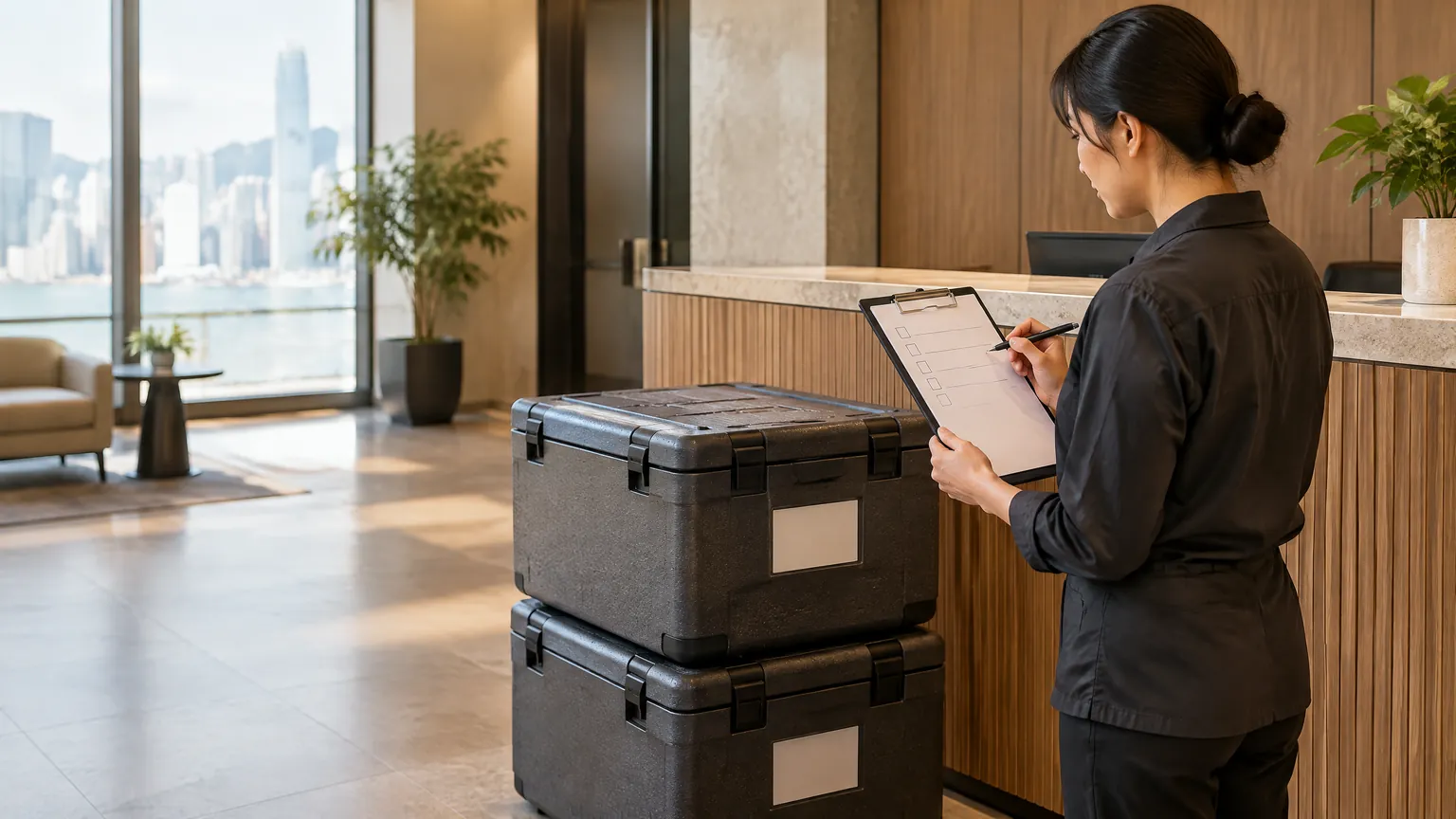
Give the receiver a simple manifest showing the expected boxes and any separately packed meals. Count the packages against it and check container integrity and the instructions supplied with the food. The Centre for Food Safety advises checking delivered food's temperature, packaging integrity and general hygiene condition. A photograph of closed boxes can support a count, but it cannot establish the food's temperature or earlier handling history.1
Agree who moves the order after receipt. The provider's shore handover, the host's carrying task and the operator's permission to load are different arrangements. If one is unresolved, the timeline is incomplete. Avoid opening every tray at the pier simply to admire the presentation; reconcile the manifest and move the closed packages to the confirmed holding place.
Choose dishes for the actual boat and serving plan
Before discussing dishes, ask about usable table space, cold storage, hot holding, clean handwashing facilities and waste storage. Ask what equipment and containers the operator allows. A vessel description or an attractive deck photograph does not establish these details. If a storage or serving condition cannot be confirmed, change the food brief rather than treating the uncertainty as something to solve after departure.
The Junk Boat Party Catering page provides a boat-gathering enquiry context, including portable sharing dishes and pier-delivery considerations. Use it to ask which proposed items fit your confirmed holding and serving conditions. Do not interpret references to boat menus as permission to cook onboard, bring heating equipment or use a particular vessel's facilities.
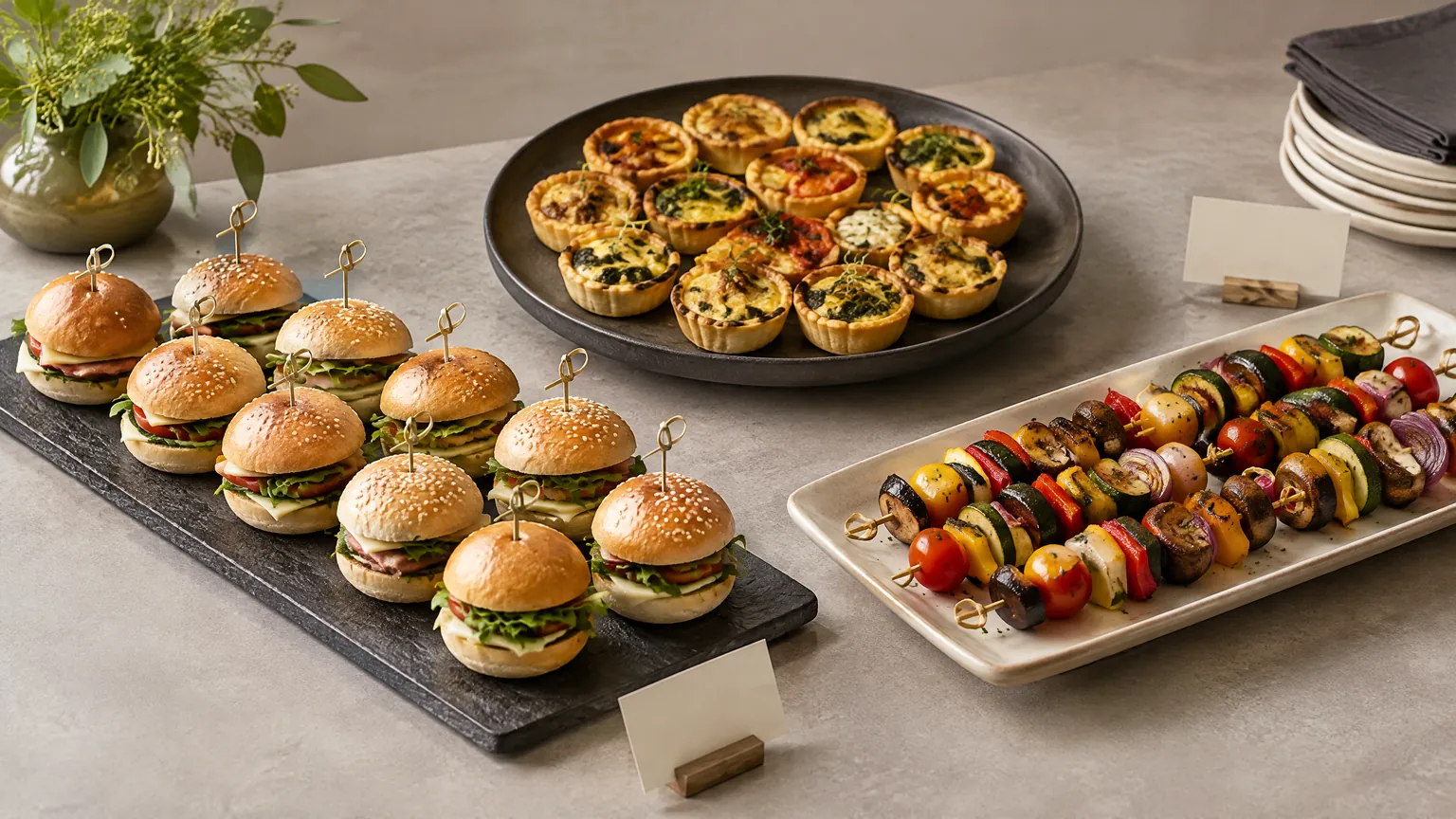
Compare formats by what guests will need to do. Small sandwiches and savoury bites can reduce the need to cut food at the table, but their portability says nothing about how long they may stay without temperature control. A covered tray may be easier to carry than several open platters, yet its dimensions still have to fit the storage space. Ask for the pack format as well as the dish description.
For a family group that plans to eat after boarding, keep the first meal separate from anything intended for later. For colleagues expecting to mingle, discuss smaller serving batches rather than placing the entire order on the table at once. These are planning options, not an assertion that a provider offers a specific menu or packaging arrangement.
Collect dietary requirements before finalising the manifest. Ask about ingredients and cross-contact handling directly, and agree how any separately packed meal will be identified without guesswork. A dish's appearance or a menu category is not an allergen-exclusion guarantee. Keep the information available to the person serving, not only in the organiser's private messages.
Include every carrying stage in the food-holding plan
The food clock does not restart when the boat leaves. The Centre for Food Safety explains that time in the temperature danger zone is cumulative across handling, storage and transport. Relevant earlier exposure of ready-to-eat ingredients can also count. A late courier, a shore wait and a tray left out for serving therefore cannot each be treated as a separate allowance.1
CFS identifies cold holding at or below 4°C and hot holding above 60°C as the appropriate temperature controls for delivered food. When perishable food is held without those controls, elapsed time matters. Ask the provider what handling information accompanies the order and how the proposed journey and onboard holding will be managed; the outward appearance of an insulated carrier is not proof that temperatures have been maintained.1
The Catering Delivery resource can help frame questions about transport packaging, receiving details and availability. For a boat outing, ask specifically about the whole route from dispatch to the first meal, including any transfer from a shore meeting point. Confirm who supplies the transport containers, who keeps them during the trip and whether any return arrangement applies; do not assume these tasks are included.
CFS says prepared food held at room temperature for more than four hours should be discarded. Food kept at room temperature for less than two hours may be refrigerated for later use or consumed within the four-hour limit. These are cumulative handling principles, not permission to leave a newly delivered order out for four more hours. Where earlier uncontrolled time is uncertain, CFS advises consuming delivered food as soon as possible.1
If the departure is delayed, ask what has already happened to the order: is it still being held by the provider, travelling, received on shore or onboard? The answer determines what can sensibly change. Moving the meal later while leaving the holding plan unchanged is not a complete revision. If the food's handling history or storage conditions cannot support the proposed delay, do not improvise an assurance.
Pack drinks and serving items as a separate task
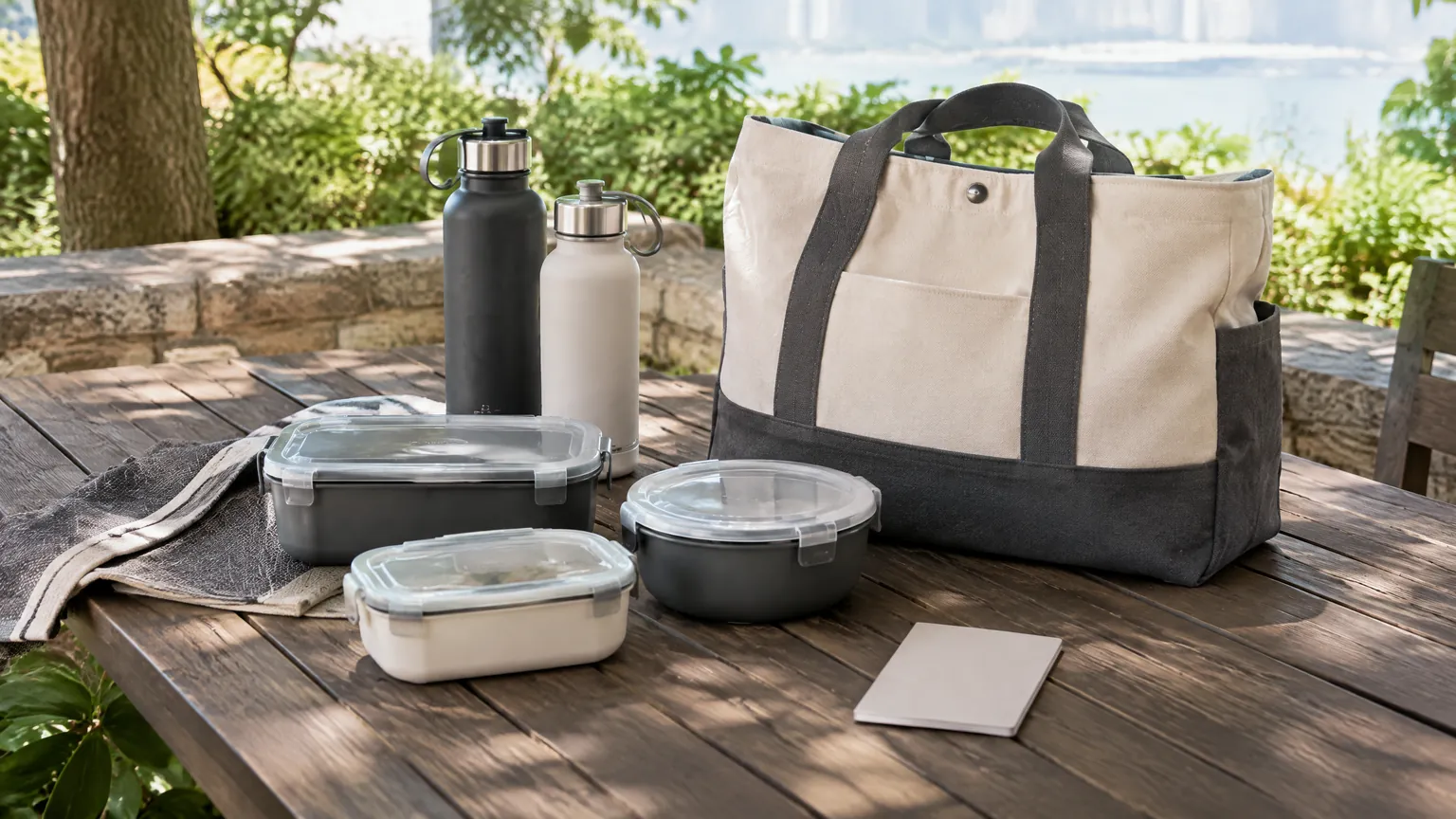
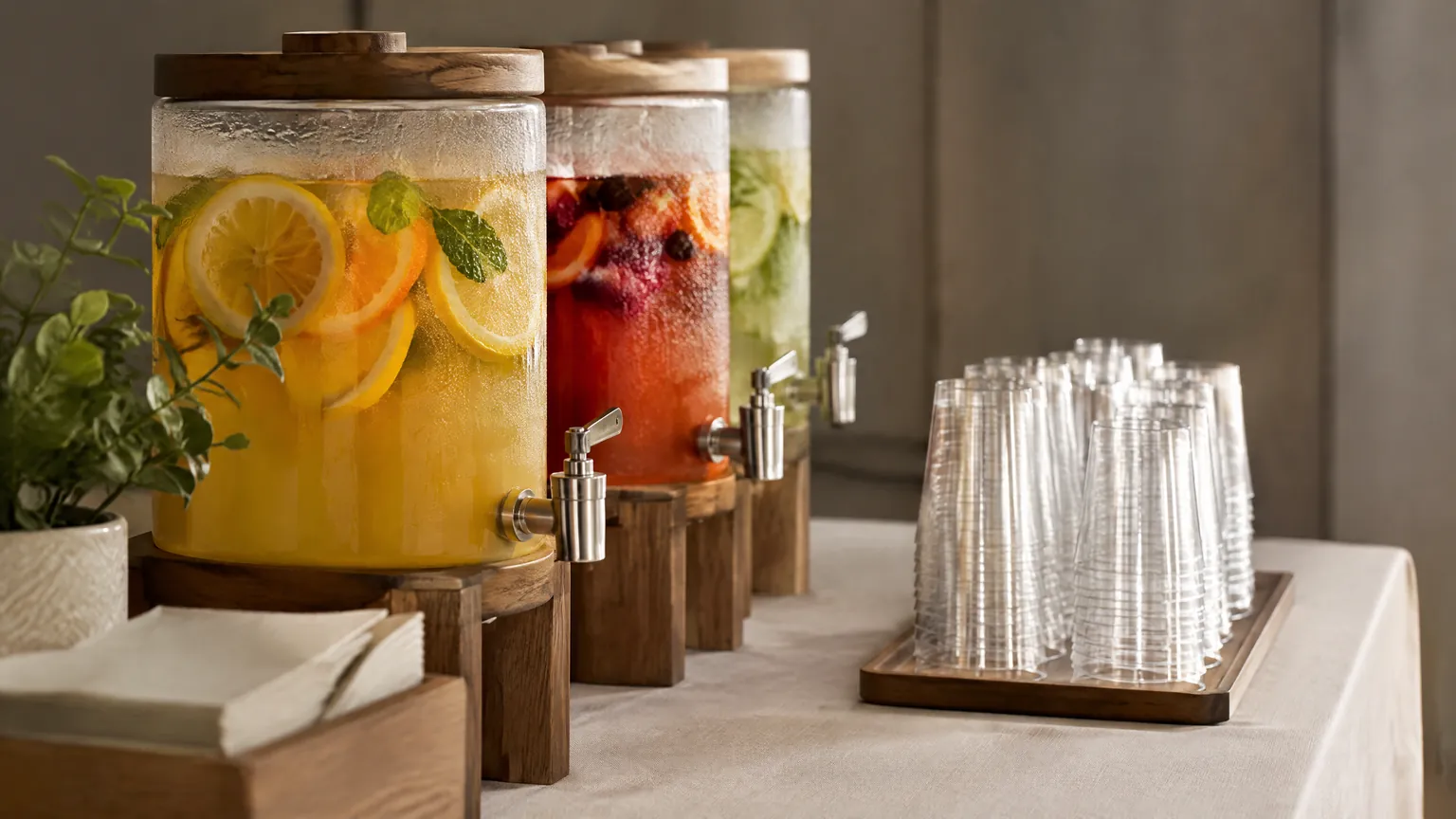
Drink handling deserves its own place on the loading plan. Decide where closed bottles or permitted dispensers will be stored and where cups will be used. Ask the operator whether the proposed drink containers and serving arrangement are acceptable. A drinks table that works in an office pantry may take up too much of a boat's usable surface.
Pack the first-use serving items where they can be reached without unpacking the whole order. Keep clean utensils protected and separate from waste supplies. If several people are carrying boxes, give each a destination agreed with the operator so items do not accumulate in an access route while everyone asks where to put them.
Consider the difference between a family meal and a workplace outing. A family may prefer a seated serving point with someone helping younger guests, while colleagues may return to refreshments at different times. In either case, keep the closed reserve food in the confirmed holding place and put out only what the serving plan calls for. Make the person responsible for food holding distinct from whoever is distributing cups.
Decide the weather alternative before food is committed
Agree who checks official weather information and who obtains the operator's latest sailing decision. The Hong Kong Observatory explains that thunderstorm warnings give short-term notice and that storms can develop, move and dissipate rapidly in local areas. A forecast checked earlier is therefore not a substitute for checking again at the relevant decision point.2
The Observatory advises seeking safe shelter when thunderstorms occur, leaving the water and avoiding outdoor water sports. It also warns people on small boats at sea to watch for approaching squalls or waterspouts. Food planning must defer to the operator's safety instructions and official precautions; this article does not determine whether a particular trip may proceed.2
Choose a genuine alternative rather than saying only that the party will move indoors. For an office outing, an approved workplace room might be a candidate if it can receive the order, hold the food appropriately and accommodate the guests. For a family gathering, confirm that a proposed household location has sufficient receiving and storage space. Do not assume the original delivery can simply be redirected.
Set a decision point with the provider before dispatch and ask what changes remain possible after preparation or transport begins. Obtain acceptance of any revised address, timing or order arrangement. A boat cancellation and a food-order cancellation are separate matters with separate terms; request the applicable conditions without assuming one automatically resolves the other.
If weather interrupts the shore handover, people should not stay exposed to protect a schedule or photograph the boxes. Follow official precautions and the operator's instructions first, then tell the provider what has changed when it is safe to do so.2
Plan how everything will leave the vessel
Include waste in the original loading conversation. The Marine Department states that littering Hong Kong waters is an offence. Keep food scraps, cups and loose packaging contained, and agree with the operator how they will be removed at the end. Do not assume public marine-refuse services are an event collection arrangement.3
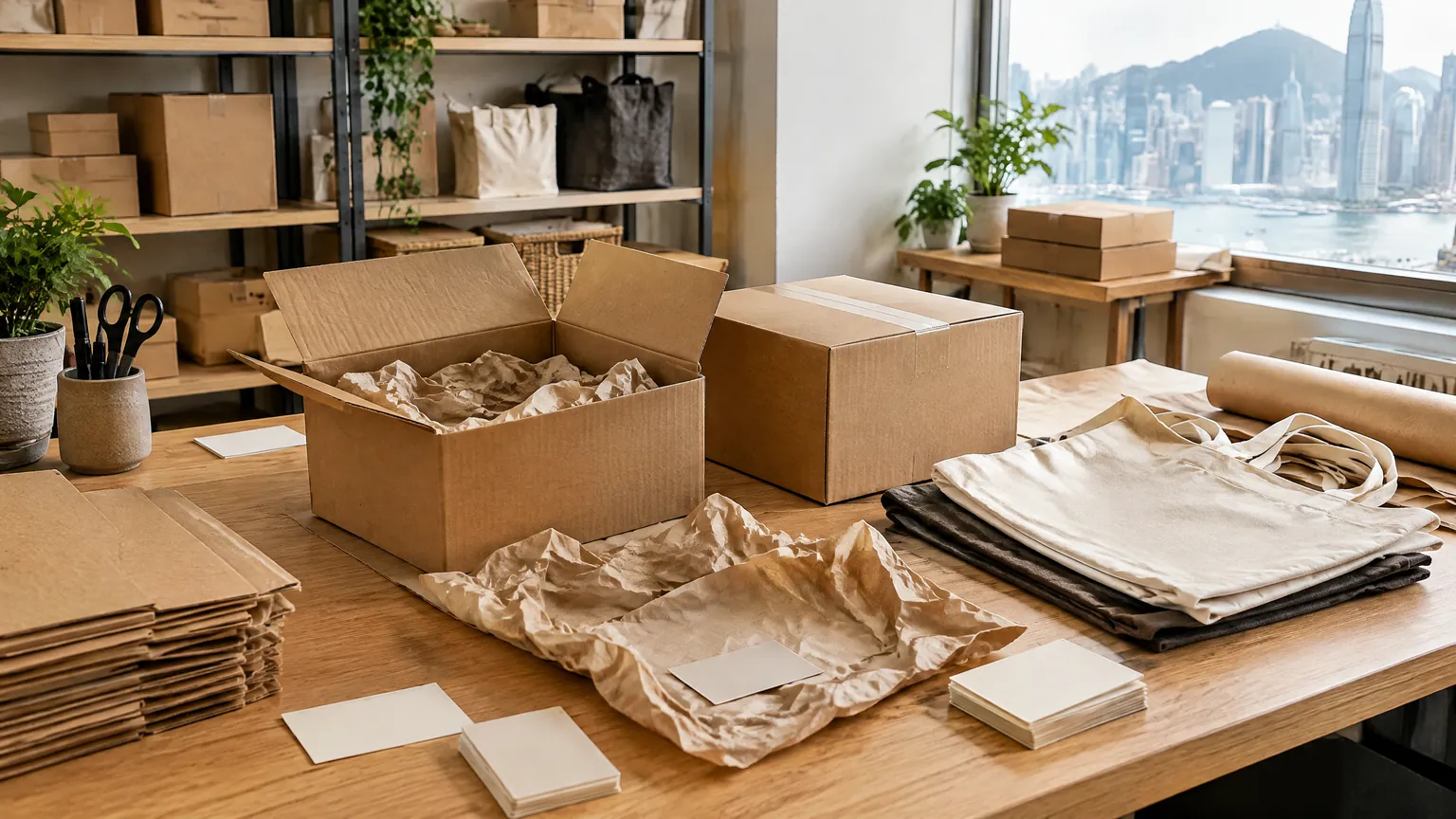
Bring only the packaging the plan needs. Plain outer boxes can help organise the load, but ask whether they should remain onboard or be removed before departure. Secure any packaging that stays with the group and identify a permitted place for waste containers. The useful question is not merely whether a container looks recyclable, but whether there is an accepted disposal or recycling route after landing.
Separate clean reusable containers from food waste at wrap-up. Decide who checks the serving area, who carries the agreed waste ashore and who handles any container returns. A household host taking boxes home needs a different arrangement from colleagues heading straight to different MTR stations. Allocate that responsibility before the group disperses.
Leftover food needs its own decision, not an automatic invitation to take it home. Use the documented handling time and confirmed storage conditions when discussing what can be retained. A container that has been sitting out through the outing cannot be made suitable for later use merely by closing its lid.1
Before leaving home or the office
- Reconfirm the operator's departure, boarding and loading instructions.
- Check that the provider has accepted the shore meeting point and receiving window.
- Give the receiver the package manifest, contact details and food-holding instructions.
- Confirm permitted storage, serving items and the responsible food contact onboard.
- Check the weather decision and obtain acceptance of any changed food arrangement.
- Assign waste removal and any container returns before guests disperse.
A workable plan lets each person know their next action without guessing. If the latest departure decision changes, update the affected receiving and food-holding stages explicitly. Leave the original assumptions behind rather than carrying them onto the boat.
Common questions
Should food arrive at the pier at the boat's departure time?
Do not equate departure with handover. Obtain separate accepted times for shore receipt, loading and boarding, then ask the operator and provider what margin they require. Name a receiver who can be present at the agreed shore meeting point.
What should I ask if the boat departure is delayed after food dispatch?
Establish the order's current location and handling status, then reconfirm the receiving point, intended meal time and available holding conditions. Ask the provider whether the changed arrangement is acceptable. A later sailing does not reset elapsed food-handling time.
Does a boat-party menu mean delivery staff can bring food onboard?
No. Confirm shore handover scope with the provider and loading permission with the operator separately. Agree who carries the boxes from the meeting point and where they may be placed on the vessel.
Can an indoor backup receive the same order if sailing is cancelled?
Only if the location can receive and hold the food appropriately and the provider accepts the revised arrangement. Obtain approval for the new address and timing; do not assume the boat's cancellation changes the food order or its terms.
Sources & what they support
Each reference supports only the stated scope. Citations are not independent endorsements of YumYum or its branches and do not confirm a provider’s current arrangements or any individual outcome.
- Centre for Food Safety: Control for Safe Delivered Foods (opens in a new tab)
Delivered-food receipt checks; hot holding above 60°C and cold holding at or below 4°C; cumulative danger-zone exposure across handling, storage and transport; room-temperature time principles and prompt consumption where earlier handling time is uncertain.
- Hong Kong Observatory: Thunderstorm Warning (opens in a new tab)
Short-term thunderstorm warnings, rapid and local storm changes, seeking safe shelter, leaving the water and avoiding outdoor water sports during thunderstorms, and small-boat precautions concerning squalls and waterspouts. Does not establish vessel-specific permission to sail.
- Marine Department: Marine Refuse and Oil Pollution (opens in a new tab)
Littering Hong Kong waters is an offence and marine refuse has formal collection arrangements. Supports planning contained waste and an agreed removal route, without assuming departmental collection is available for the outing.