Who Does What at a Central Office Reception?
GotGear and YumYum (including its gifting, baking and florist branches) share an owner; this collection is not an independent recommendation. GotGear does not provide catering, gifting, cake, floral, tuition or rental services. External-service information is separate from GotGear’s equipment catalogue; confirm the actual scope with the relevant provider. Articles are general planning information, with no promises about supply, arrangements or outcomes. Concept photos are not records of real events, customers or classes.
The short answer
Give each reception task one named owner and a clear handover point. Your office host coordinates the event, the facilities contact confirms building access, and external staff perform only agreed duties. Separate receiving, drinks, food service and cleanup so that none depends on an assumed all-inclusive package.
Give each reception task one named owner and a clear handover point. Your office host coordinates the event, the facilities contact confirms building access, and external staff perform only agreed duties. Separate receiving, drinks, food service and cleanup so that none depends on an assumed all-inclusive package.
At a Central office reception, the awkward moment is often not a missing dish. It is a delivery colleague waiting downstairs while the organiser introduces a speaker, or used glasses collecting beside a pantry sink because everyone thought someone else would clear them. A responsibility map should prevent these gaps without turning colleagues into full-time event staff.
GotGear and YumYum share an owner. This is a service-information journal, not an independent endorsement: GotGear does not provide food, floral, gift, class or rental services. The planning advice below helps you define an enquiry and organise your workplace; any external service arrangement needs confirmation with its provider.
Start with the office host, not the menu
Choose an internal host who can settle event decisions, then identify who covers that person during greetings or speeches. The host owns the guest programme and coordinates changes. That does not mean the host must carry every box, check every cup or supervise cleaning. Their main job is to make sure those tasks have owners who know when to act.
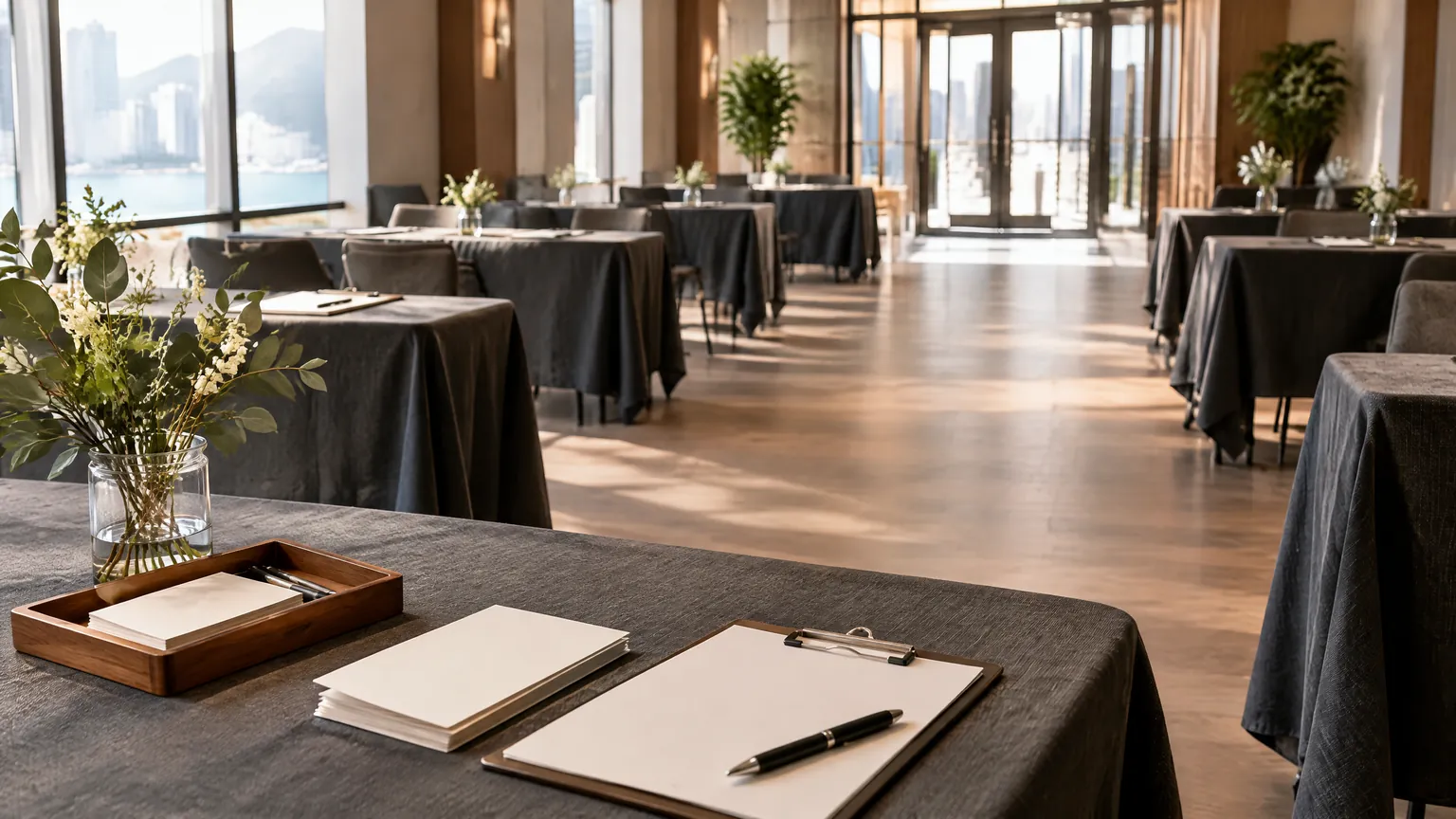
Imagine a reception for visiting colleagues in a Central meeting suite. Some employees are still working nearby, a presentation precedes refreshments, and the pantry remains in normal use. These conditions matter more than a polished menu description. The host should state which rooms guests may enter, where refreshments may stand and who can approve a change if the presentation overruns.
For each task, record the responsible person, the intended result and the moment responsibility transfers. For example, the receiving colleague confirms the delivered items and passes food instructions to the service lead; the service lead acknowledges that handover before the receiver returns to work. A tick beside “delivery arranged” is not enough if nobody owns the next step.
Separate doing the work from approving the change
A colleague may be able to move a table but not approve placing it in a corridor. An external attendant may be able to clear plates but not enter a restricted storage room. Give the people doing the work a named office contact for permission, rather than expecting them to resolve building rules or internal access themselves.
The map can stay short: internal host, facilities liaison, receiver, agreed external service lead and cleanup owner. One person may hold more than one role when the tasks do not overlap. If guest registration and supplier arrival happen together, however, assign a separate receiver or backup instead of asking the same receptionist to manage both.

Make building access an office responsibility
The facilities liaison should ask building management about the permitted arrival point, visitor registration, supplier entry, lift use and any trolley or loading restrictions. Record the answers for this event rather than carrying them over from a previous office. A route that worked for a small parcel may not suit a food carrier or several serving containers.
YumYum’s Central Corporate Catering page is a district-focused starting point for a workplace enquiry, not proof that a particular building or floor is accessible. Give the provider the actual address, receiving location and management instructions, then ask it to confirm whether the proposed handover is workable. Keep office approval separate from provider acceptance of the route.
Treat entrance routes and escape routes differently: convenience for arrivals must not obstruct emergency movement. The Labour Department’s workplace guidance says means of escape should remain safely reachable and unobstructed, and fire doors must not be wedged open. Have the facilities liaison check the proposed receiving and serving positions against the office’s established arrangements. 1
If the building requires an escort, name the escort and the colleague who covers their desk. Share a contact method with the supplier and agree what happens if the arrival point is temporarily unavailable. Do not solve an access delay by putting boxes in an exit passage or leaving a fire door propped open. The host should authorise a suitable alternative through facilities.

Define external duties before deciding staff numbers
Ask what work the provider can undertake, not simply how many people will attend. Your brief should distinguish setting out supplied items, assisting guests at the food table, replenishing agreed drinks, collecting used tableware and packing provider-owned items. These are separate duties. General references to event service do not show that every duty is included.
In this same-owner journal, Catering Staff Hire is an external service-information resource for exploring event staffing. Use it to frame questions about duties, supervision and service boundaries; it is not a GotGear equipment offer. Ask the provider to identify the agreed lead, the working window and any exclusions in writing, including whether staff remain for clearing after food service ends.
Describe the busy moments so the provider can assess the brief. If guests arrive together after a presentation, someone assisting at the food table cannot simultaneously escort a delivery from downstairs. If the drinks station is outside the meeting room, its attendant may not see that a food utensil needs replacing. Request a workable division of duties instead of assuming one person can cover separated areas.
Write down what is outside the service
Make exclusions useful and specific. Clarify whether external staff move office furniture, wash items in the pantry, handle office waste or return later for collection. Also confirm who controls restricted-room access and who responds to a spill. An exclusion is not a service failure when it was agreed; it becomes a problem when the office leaves the excluded task unassigned.
Brief the external lead on the office contact and emergency arrangements on arrival. Facilities should retain responsibility for communicating workplace rules. The Labour Department recommends that people working on the premises understand fire warnings and escape arrangements, including those working outside normal hours. An evening reception should not leave visiting workers guessing what an alarm means. 1
Treat receiving as a handover, not a signature
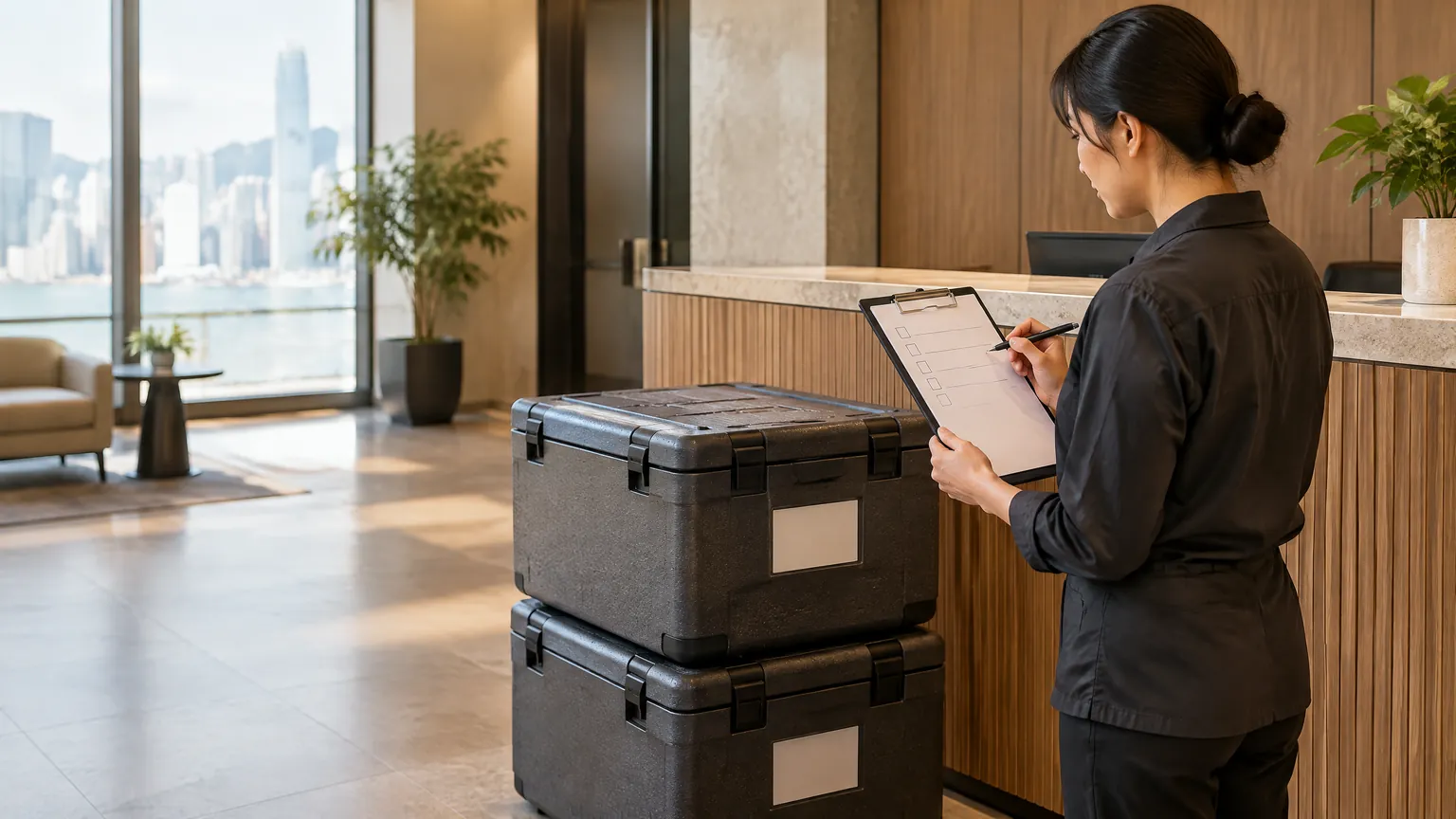
Put the receiver somewhere they can actually meet the delivery. Give them the agreed order summary, a clear landing surface and the service lead’s contact. They should know who can resolve a missing item or a difference in the delivery, without needing to interrupt the welcome speech for every question. Receiving should not depend on an unattended lobby telephone.
At handover, check the supplied items against the confirmed arrangement and look at the general condition of containers. Ask for the food’s holding and consumption instructions, and record arrival alongside any relevant timing information from the provider. The Centre for Food Safety advises consumers to check delivered food’s temperature, container integrity and hygiene condition. 2
Timing matters because the food’s history does not restart when it reaches your floor. The Centre for Food Safety explains that time in the temperature danger zone is cumulative across handling, storage and transport. Its guidance keeps hot food above 60°C and cold food at or below 4°C; office arrival alone cannot establish that those conditions have been maintained. 2
The receiver’s role is to communicate and escalate, not invent a food-safety judgement. If a container is damaged, relevant instructions are missing or the intended serving time has changed, contact the provider and host before treating the arrangement as ready. Decide in advance who can pause service while the concern is addressed.
Give food service its own owner and clock
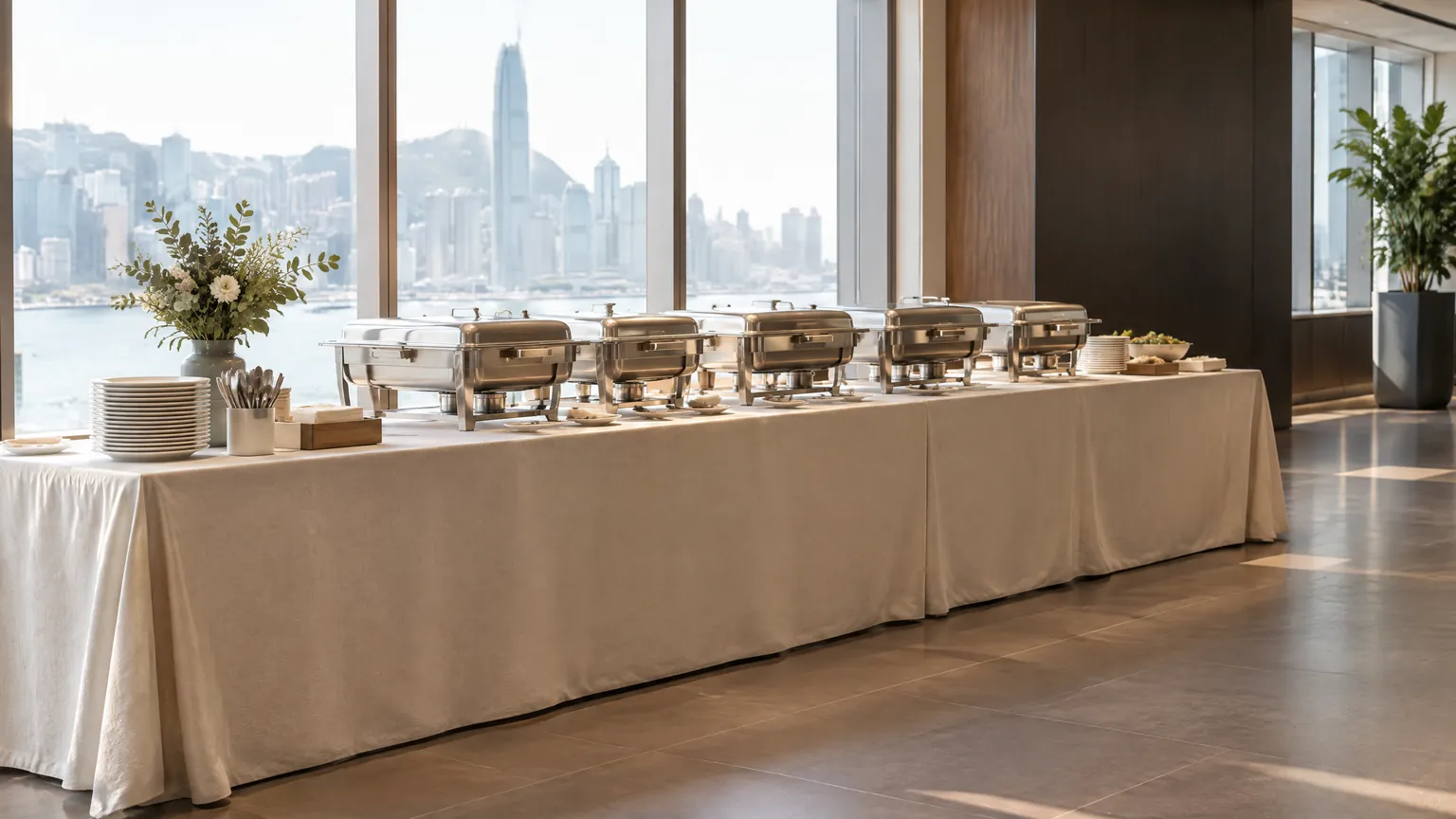
For a shared food table, decide who releases the first dishes, who deals with a used or missing serving utensil and who ends service. A self-service format describes how guests take food; it does not remove the need for someone to manage the table. Make that person visible to the host and receiver.
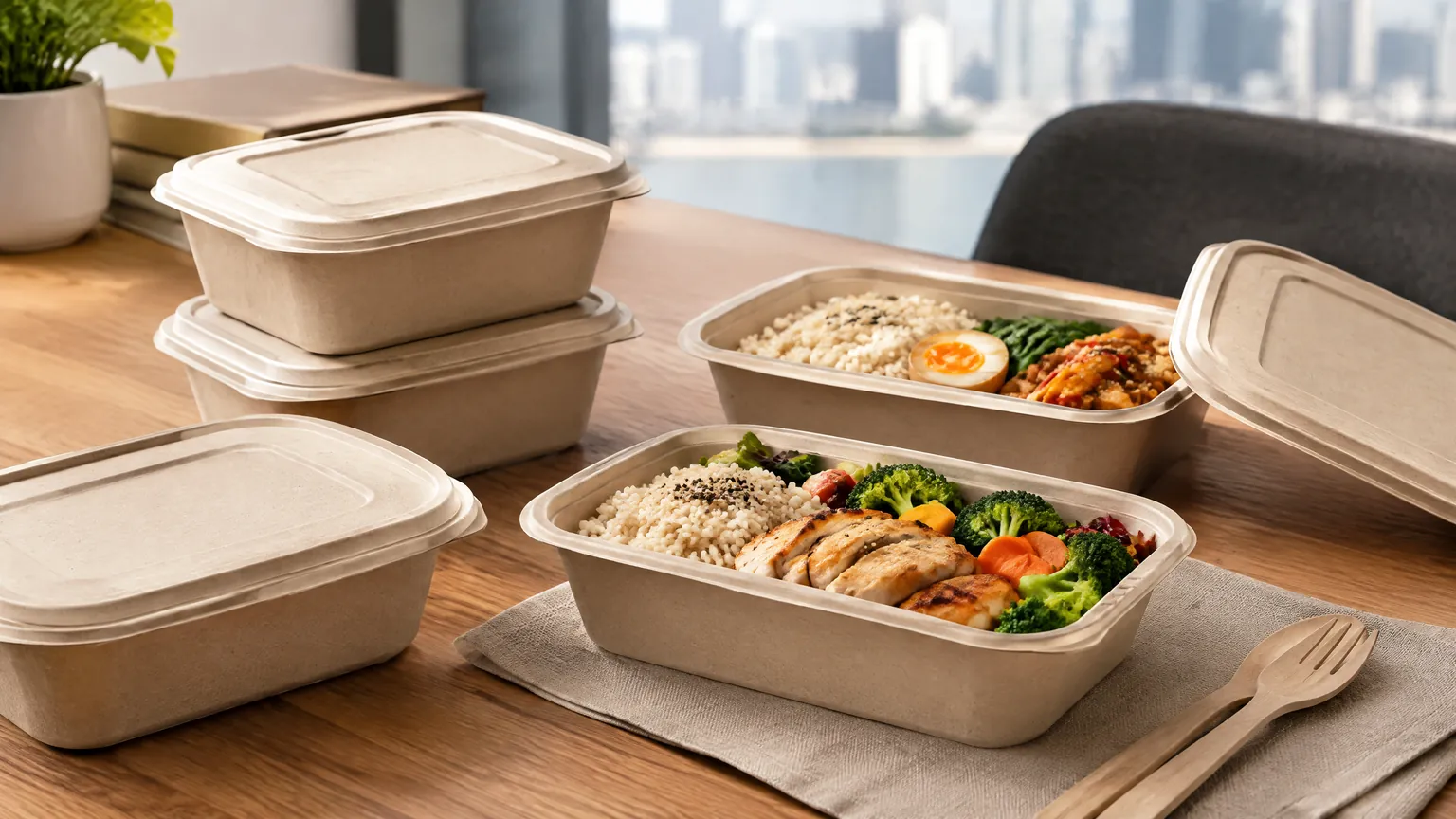
The Buffet Catering page describes shared and self-service formats, but the office still needs an order-specific setup agreement. Confirm the supplied containers and utensils, any holding arrangements, who places the food and whether anyone remains to attend the table. Do not infer full setup or cleanup from the word “buffet”.
Walk through a guest’s movement before placing the table. Someone carrying a plate should not have to squeeze through incoming visitors or stop in a doorway to find cutlery. Provide somewhere suitable for guests who need to sit while eating, and check the layout with facilities rather than treating spare corridor space as available reception space.
Consider a speech that runs longer than planned. The host communicates the revised programme; the service lead checks the change against the provider’s instructions. Avoid opening everything early merely to make the room look ready. When food handling history is uncertain, the Centre for Food Safety advises consuming delivered foods as soon as possible; a delayed programme needs an explicit decision, not unattended waiting. 2
If a guest asks about ingredients, direct the question to the agreed provider contact or confirmed information. Staff should not guess from the appearance of a dish. A preference noted in the enquiry is not a guarantee about ingredients or cross-contact, and the host should not describe a shared table as allergen-free.
Run drinks separately from the pantry
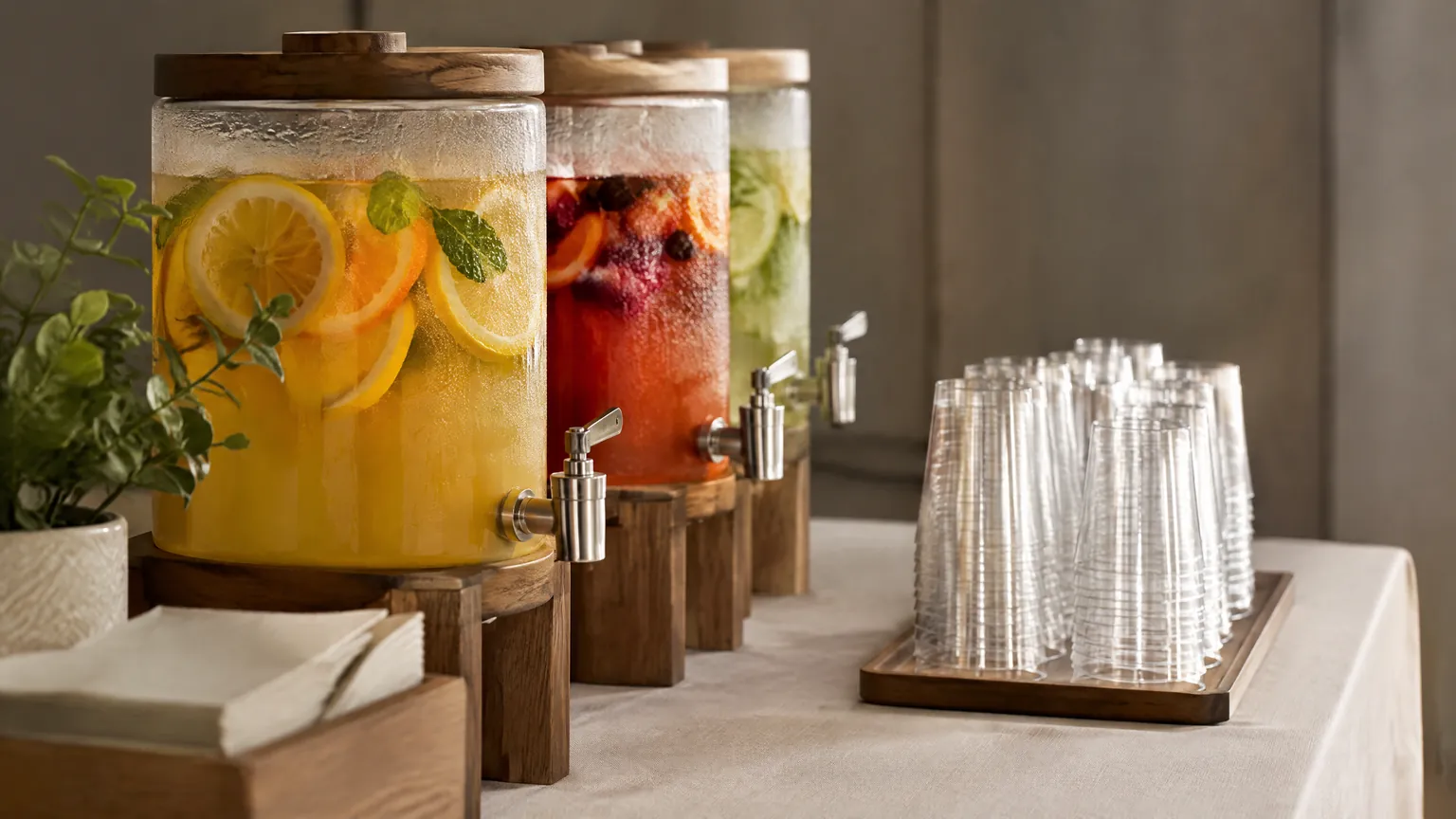
Name a drinks owner even when guests serve themselves. They check whether cups are running low, watch for spills and know how replacement supplies reach the station. Put clean cups and used-cup collection in clearly different positions. Avoid turning the normal staff pantry into an informal service area without asking the office team first.
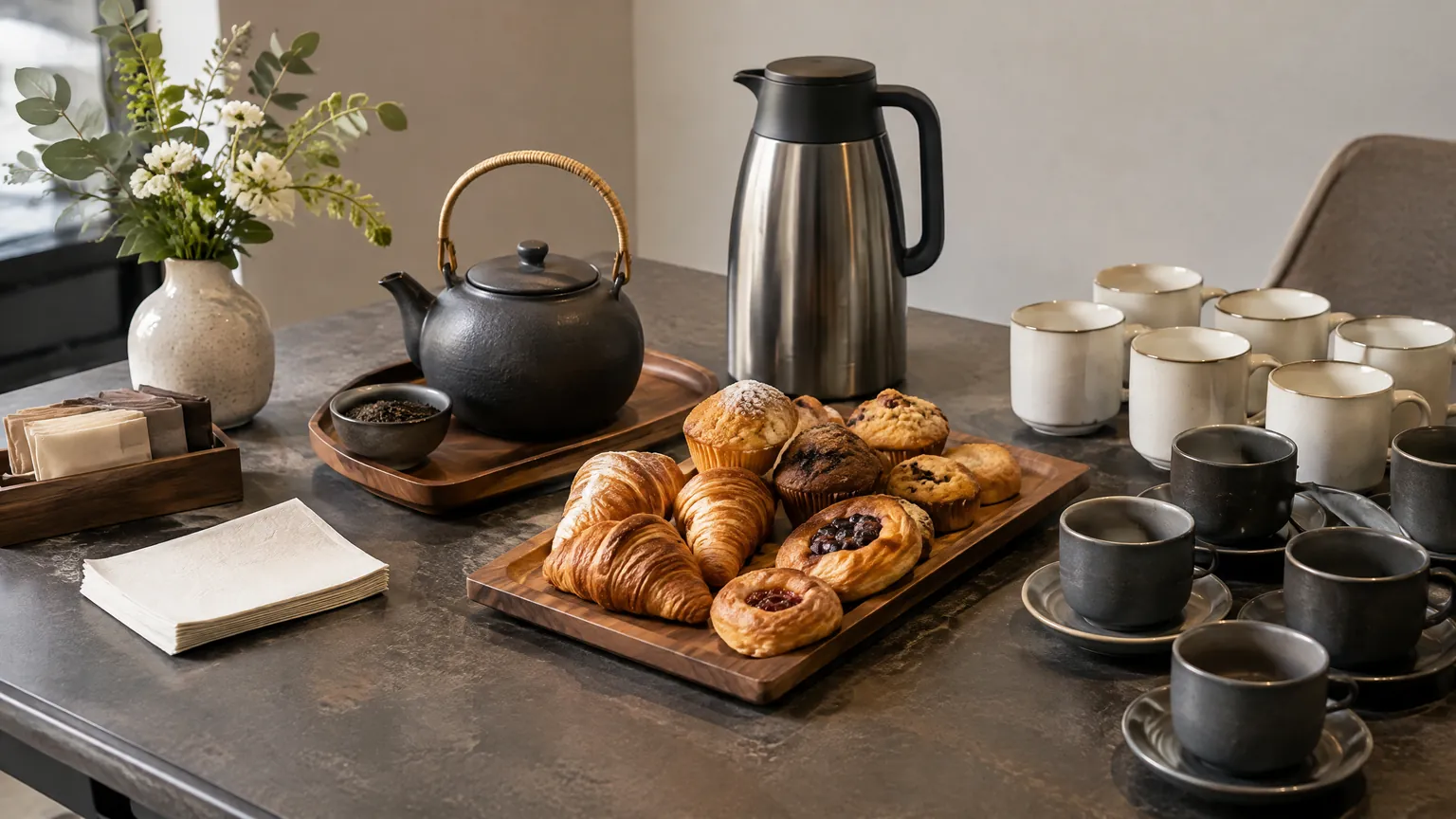
YumYum’s Drinks Catering page describes bottled and bulk beverages alongside station-style possibilities. Ask which format is proposed for your reception and confirm cups, dispensing items, storage instructions and any attendance or replenishment arrangement. A beverage selection does not by itself establish that an attendant, replacement supply or continuous cold holding is included.
In a meeting suite with a separate pantry, the drinks owner should know whether supplies can be stored there and who has access. Colleagues should not discover during the reception that their everyday fridge space has been reassigned. If hot-drink equipment is proposed, facilities should confirm a suitable approved arrangement; the Labour Department identifies overloaded electrical circuits and sockets as fire hazards. 1
Keep water easy to identify, and make non-alcoholic choices clear if alcohol is being considered. Do not assume beverage staff and food attendants are interchangeable. Ask the provider about the exact serving arrangement and check the office’s policy before agreeing the drinks plan, rather than adding a bar-style station informally on the day.
Define cleanup by the room you need back
“Clear up afterwards” leaves too much unresolved. State whether the expected result includes removing used tableware from guest areas, returning office furniture, dealing with spills, separating accepted recyclables and moving waste to an approved collection point. Assign each part to the office team or a confirmed external service, with a finish point the host can inspect.
The Environmental Protection Department’s event guidance recommends planning waste reduction before an event, providing suitable source-separation facilities during it and arranging appropriate handling afterwards. For a modest office reception, apply those principles through the building’s actual arrangements: ask which materials are accepted and who takes them to the correct collection point. Do not assume that every building collects food waste. 3
Keep reusable items separate from rubbish, and agree how provider-owned containers or tableware will be counted and stored. If collection is later, the office needs a custodian and an approved storage position. An attendant’s departure does not automatically mean all supplied items have left the premises or that responsibility for them has ended.
Do not offer exposed leftovers to colleagues simply to avoid waste. Follow the provider’s food instructions and resolve uncertain handling history before making any takeaway decision. Preventing unnecessary surplus starts with a realistic attendance estimate; the EPD encourages ordering appropriate quantities, while the food-safety requirements remain a separate consideration. 3
Finish with a short walk-through by the cleanup owner and facilities contact. Check that guest areas are restored, escape routes remain clear, stored items have an owner and any later collection has an access arrangement. This closes the reception as a workplace task, not merely as the moment the final guest leaves.
A short action checklist before the reception
- Put a named owner and backup beside access, receiving, food, drinks and cleanup.
- Obtain building instructions for the actual address and share the approved arrival route.
- Confirm external duties, exclusions and the service window in writing.
- Prepare a receiving handover that passes food instructions to the service lead.
- Agree who decides when programme delays affect food service.
- Define the restored-room standard and responsibility for later collection.
Send the final map to the people doing the work, not only to the event organiser. At the arrival briefing, ask each owner to confirm their task and the person they contact when something changes. That simple check reveals an unanswered responsibility while there is still time to fix it.

Common questions
Can our receptionist receive the food while registering guests?
Only if the duties do not overlap and a backup is available. When supplier arrival and guest registration coincide, assign a separate receiver who has the order summary and can pass food instructions to the service lead.
Does a Central service page confirm access to our office floor?
No. Ask building management about the actual receiving route, registration and lift arrangements, then ask the provider to confirm that it can work with those instructions.
Who decides what happens when the welcome speech overruns?
The internal host communicates the programme change, and the service lead checks it against the provider's food instructions. Agree beforehand who can pause service and contact the provider if the revised timing is uncertain.
If external staff clear plates, do they also remove waste and collect equipment?
Not necessarily. Confirm plate clearing, waste separation, disposal-point access and equipment collection as separate duties. Name an office custodian for anything that remains after the external team leaves.
Sources & what they support
Each reference supports only the stated scope. Citations are not independent endorsements of YumYum or its branches and do not confirm a provider’s current arrangements or any individual outcome.
- Labour Department — Guidance Notes on Fire Safety at Workplaces (opens in a new tab)
Office workplace escape routes must remain safely reachable and unobstructed; fire doors must not be wedged open; electrical overload is a fire hazard; people working on the premises should understand warning and escape arrangements.
- Centre for Food Safety — Control for Safe Delivered Foods (opens in a new tab)
Delivered perishable foods need time-temperature control; hot food above 60°C and cold food at or below 4°C; danger-zone time is cumulative across handling, storage and transport; consumers should check temperature, container integrity and hygiene and consume promptly when timing is uncertain.
- Environmental Protection Department — A Waste Reduction Guidebook for Large Scale Event Organisers (opens in a new tab)
Plan event resource reduction early, provide source-separation facilities and stakeholder instructions, arrange appropriate post-event handling, and order suitable food quantities. Applied as practical principles, not evidence of any office building's collection services.