A First-Time Host’s Brief for a Hong Kong Team Event
GotGear and YumYum (including its gifting, baking and florist branches) share an owner; this collection is not an independent recommendation. GotGear does not provide catering, gifting, cake, floral, tuition or rental services. External-service information is separate from GotGear’s equipment catalogue; confirm the actual scope with the relevant provider. Articles are general planning information, with no promises about supply, arrangements or outcomes. Concept photos are not records of real events, customers or classes.
The short answer
Start with a one-page scope worksheet that fixes the event purpose, attendance, meal format, venue constraints and named responsibilities. Compare packages against that same brief, then ask the provider to confirm every uncertain inclusion before you commit.

Start with a one-page scope worksheet that fixes the event purpose, attendance, meal format, venue constraints and named responsibilities. Compare packages against that same brief, then ask the provider to confirm every uncertain inclusion before you commit. For a newly appointed host, this is more useful than choosing the most impressive-looking spread: it exposes missing work before the event reaches the office calendar.
This is a planning article in GotGear’s journal. GotGear and YumYum share an owner, so the linked provider pages are related-business resources, not independent recommendations. GotGear does not supply catering, floral, gift, class or rental services. The decisions below belong to the host, venue and relevant provider, with specific arrangements confirmed between them.
Write the event purpose before choosing food
Give the worksheet a plain first sentence: what are colleagues gathering to do, and where does eating fit? A project debrief followed by lunch needs a different arrangement from a short welcome gathering before everyone returns to their desks. If the event replaces lunch, say so. If it offers refreshments only, make that clear in the invitation rather than leaving people to infer a meal from a photograph.
Consider a hypothetical team of twenty-eight colleagues meeting in a Kwun Tong office. Some will join the discussion in person; others will attend remotely and will not need food at the venue. A few visiting colleagues may arrive only for the meal. Record these groups separately. The number on a meeting invitation is not automatically the number of portions required, and the number eating is not automatically the number who can arrive together.
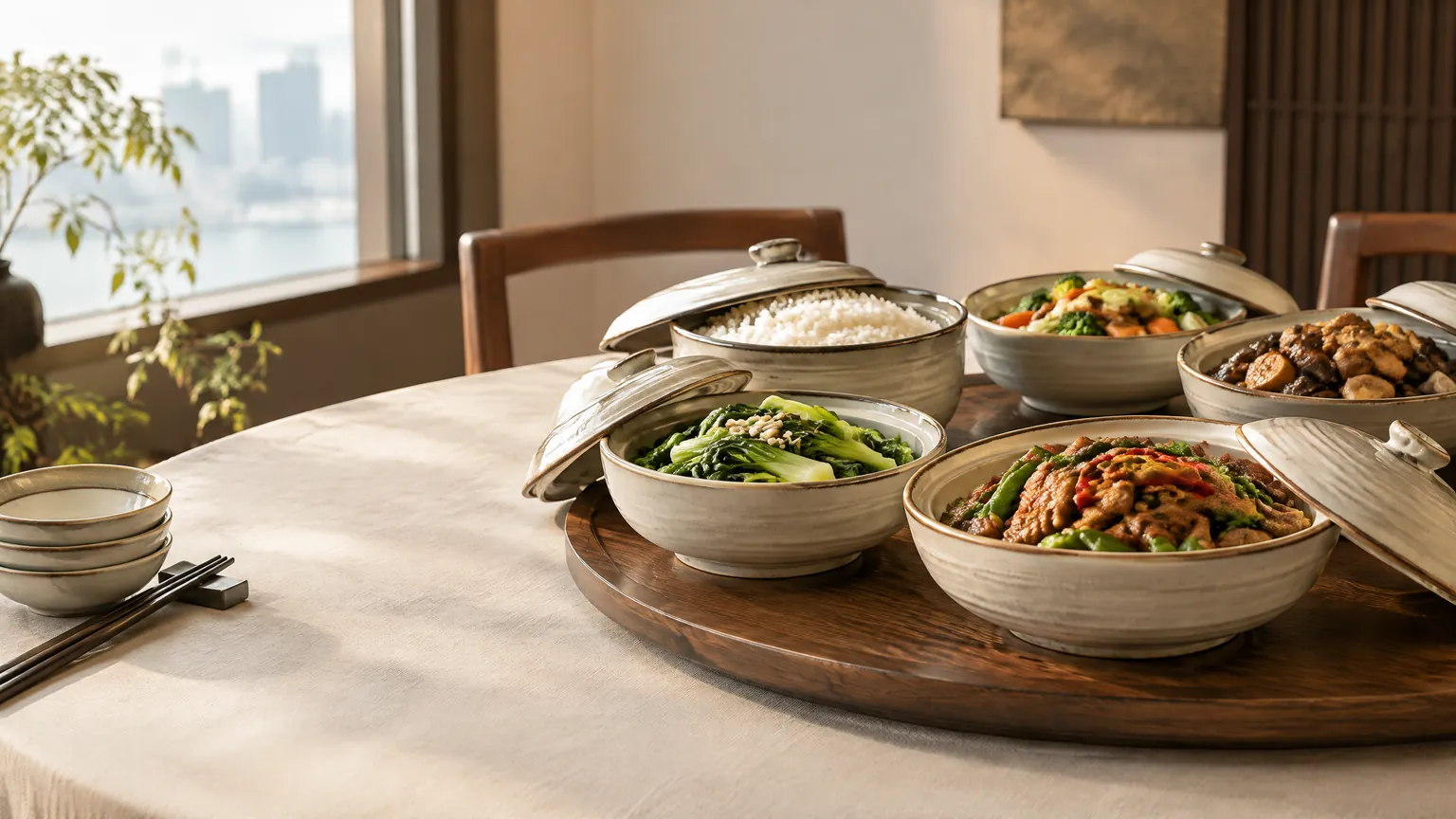
When using the related Hong Kong Catering Service overview, treat its descriptions of shared dishes, desserts, drinks and individual meals as starting points for questions. Ask which format can actually be arranged for your date and location. The worksheet should record the provider’s specific response, not turn a broad website statement into an event commitment.
Next, distinguish a confirmed requirement from an assumption. For example, “meeting room booked” is incomplete if permission to serve food there is still pending. Give each unresolved point an owner and a decision deadline. This need not become a complicated project plan: a note saying “facilities colleague to confirm food permission before menu selection” is enough to prevent a quiet assumption from becoming a problem.

Make attendance and participation visible
Ask colleagues whether they will eat, when they expect to arrive and whether they have dietary, access or support requirements they want the organiser to consider. Provide a direct contact rather than forcing everyone to explain a personal need in a group chat. The Australian Human Rights Commission’s event guide recommends inviting these requests and naming a contact person; use that as practical planning guidance, not as a statement of Hong Kong law.2
Separate preferences from requirements needing confirmation
A preference for vegetables and a request concerning an ingredient allergy need different follow-up. Record what the participant actually needs without translating it into a guarantee you cannot make. Ask the provider for relevant ingredient information and its approach to possible cross-contact. A menu description alone does not establish that a dish is suitable for a particular person, and separate packaging alone does not settle how it was prepared.
Do not ask for a medical history to complete a meal count. Instead, explain what information is needed to assess the requested arrangement, ask the colleague how they would like to discuss it and share only the relevant requirement with the provider. If suitability remains uncertain, tell the participant before the event and agree a practical alternative with them. Do not quietly assign the nearest-looking menu item.
Check whether the serving format works for people
The same institutional guide recommends sufficient seating, usable tables, unobstructed movement and assistance with food selection or service where needed.2 For your office, turn that into specific questions: can someone reach the table without squeezing behind chairs, carry a meal comfortably, or ask for help without losing their place in the discussion? Do not assume that standing around a buffet is equally workable for every colleague.
A seated meal might suit a team whose members want to continue talking while eating. Individual boxes might simplify distribution across separate rooms, but the packaging and utensils must still be usable. Ask participants about arrangements that matter to them rather than designing around guesses. Keep the attendance sheet connected to the room plan so a late change in participation triggers a check of both food and seating.
Choose a meal format that fits the room and timetable
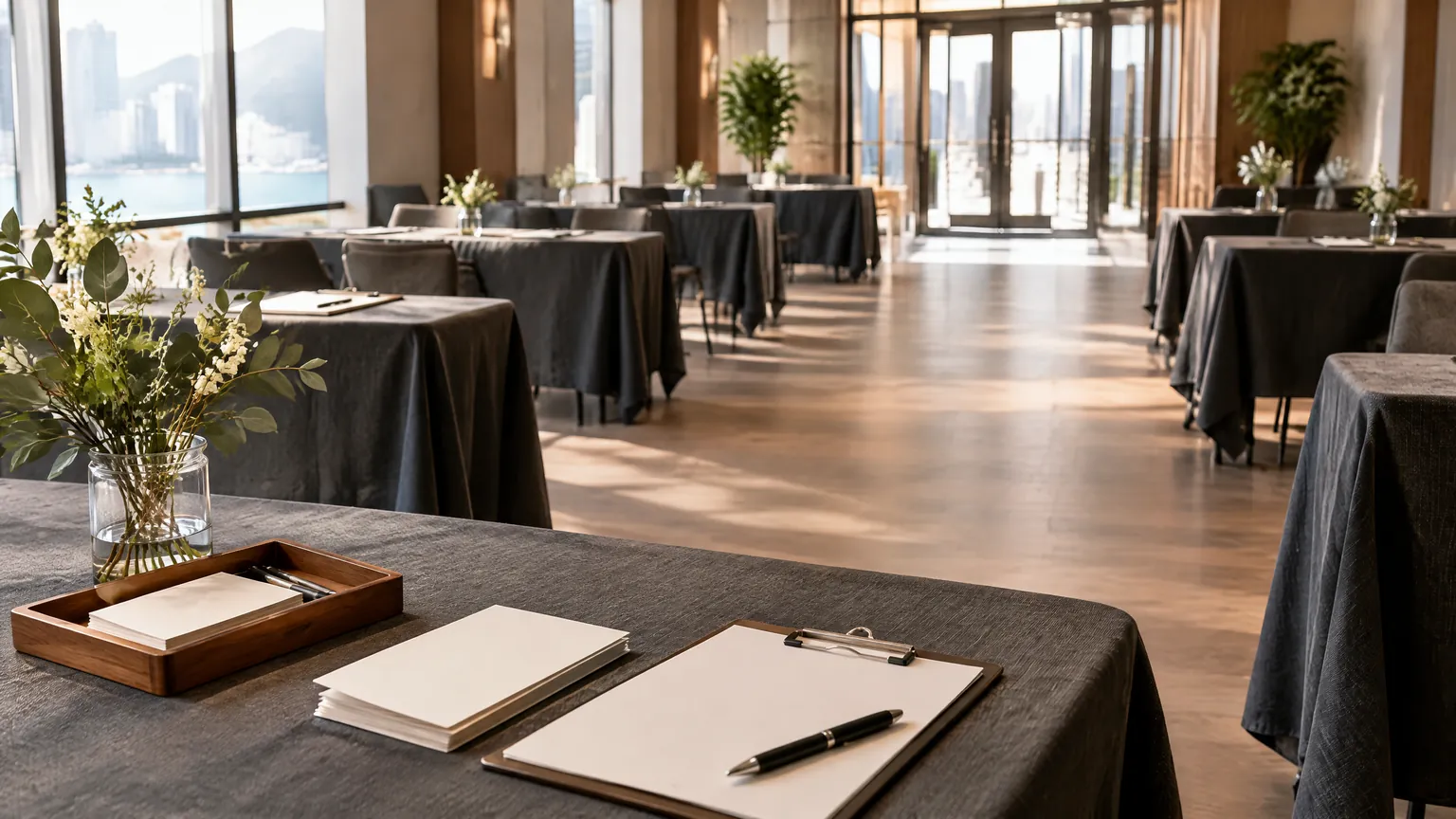
Before comparing dishes, sketch how food will move through the space. Mark the receiving point, serving area, seats and clear route to the entrance. In a compact Central meeting room, placing food beside the presentation screen might force everyone to cross the speaker’s line of sight. A side room could solve that problem, but only if colleagues can reach it comfortably and the venue permits its use.
The related Catering Services page can help you identify formats to discuss, including shared food, desserts, drinks and individual meals. Choose the format against your actual room and schedule, then confirm the current items and arrangements. Category names do not establish that serving equipment, on-site assistance or a particular layout is included.
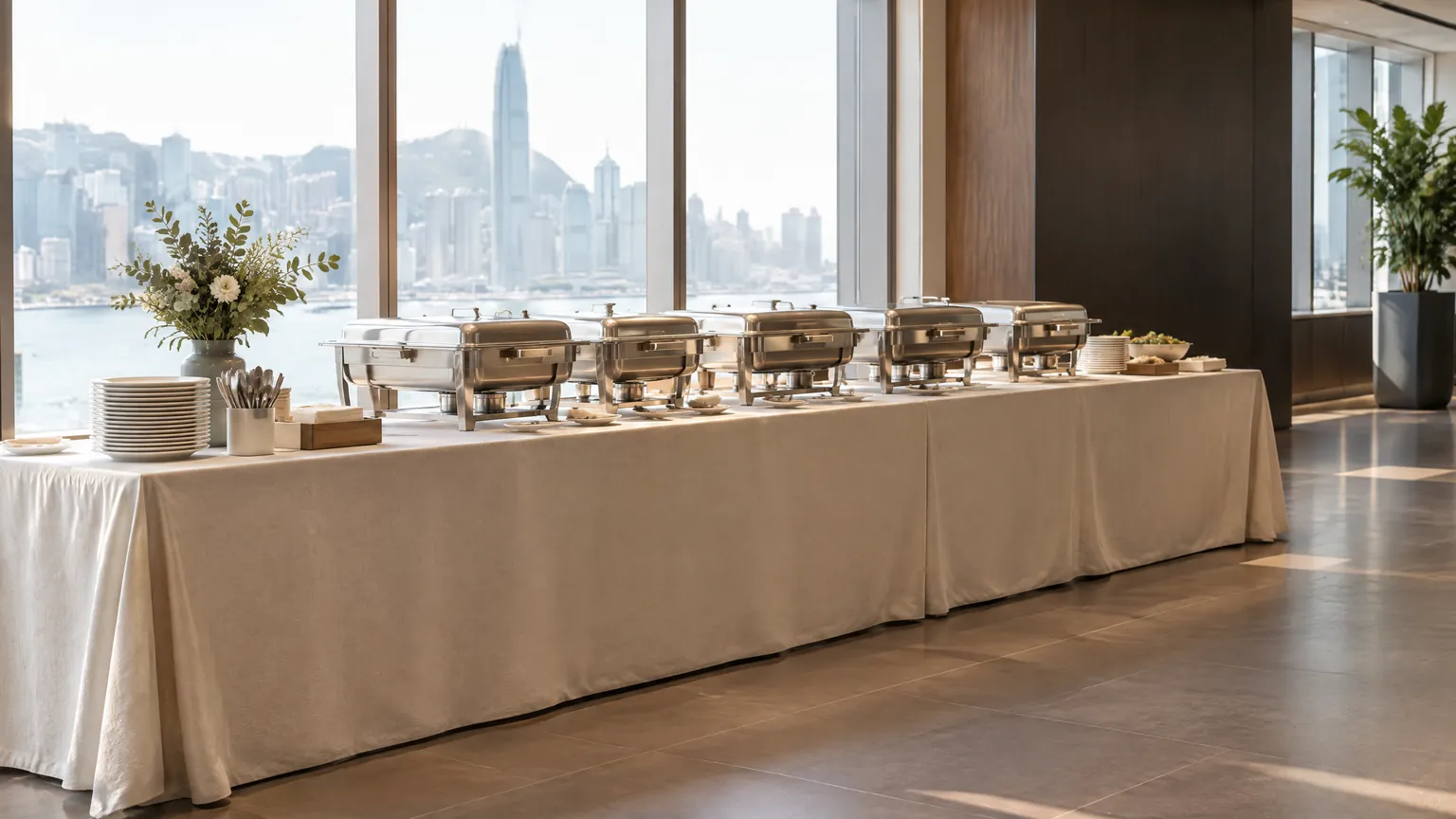
For a buffet, ask who will place the trays, supply the serving utensils and manage the transition from meeting to meal. For individual boxes, decide where each person will collect their meal and how identified dietary arrangements will be handed to the intended participant. Avoid putting personal dietary details on a public collection chart when a discreet handover would work. Neither format removes the need for a receiving person.
Treat the timetable as a sequence rather than a single start time. There is a venue-access window, a receiving period, the meeting itself, eating and clearing. If a regional call may overrun, do not assume the meal can simply sit until everyone is ready. Put an unresolved-delay question on the worksheet and obtain the provider’s guidance before choosing a format that depends on precise timing.
Compare packages against one unchanged brief
Prepare a short description that every option must answer: event date, venue, eating headcount, whether it replaces a meal, serving format and known constraints. If you change those details for each option, the comparison becomes misleading. A larger collection of dishes may not answer the same task as a smaller selection with clearer portion information and confirmed serving arrangements.
Use the related Catering Packages overview to narrow the kinds of set-menu arrangements you want to enquire about. Request the actual menu, stated portions and permitted substitutions for your event. Its general package descriptions are not a substitute for an itemised reply, and an illustrative food image is not evidence of the quantities you will receive.
On the worksheet, give each option the same questions. What food is specified? How are portions described? Which dishes share an ingredient that a participant has asked about? What happens if an item is unavailable? Is the proposed format compatible with the venue’s facilities? Mark unanswered points as unanswered rather than copying a promotional label into the confirmation column.
The related Catering Packages Comparison resource is a way to frame a side-by-side enquiry, not an independent review. For each shortlisted option, separate the food specification from tableware, setup, receiving arrangements and clearing duties. Because this is the same package destination, a second heading or description on it does not provide separate evidence of suitability. Your useful comparison is between documented responses to one brief.
Suppose one response specifies individual meals but says nothing about drinks, while another describes shared trays and a drinks selection without explaining utensils. Neither is complete enough to compare as a whole event arrangement. Ask both to fill the gaps. You are not trying to make every option identical; you are making their differences visible so the team can choose knowingly.
Assign the work that a package name leaves unclear
Write responsibilities as actions with named owners. “Setup included” is too broad unless everyone understands whether it means placing sealed containers on a table, arranging food for service or something else. Ask who does each required task and what the venue must provide. Then record what the provider has agreed, what the host will do and what remains outside the arrangement.
Tableware deserves its own line. Confirm the number and type of plates, cups and eating utensils required, along with separate tools for serving shared dishes. If an office pantry supplies some items, check that they are available for this event rather than assuming that everyday stocks will be sufficient. A venue providing plates does not necessarily provide someone to clear, wash or put them away.
In a hypothetical Sha Tin office with a shared reception desk, the receptionist might accept visitors but not be available to receive food boxes or move them upstairs. Nominate a colleague who can meet the delivery contact, plus a backup if that colleague is in the meeting. Confirm whether handover is at the building entrance, reception or the event room. Those are different arrangements, even within one address.
Close the worksheet with what happens after people finish. Decide who gathers used tableware, separates any materials the venue accepts for recycling, wipes the tables and checks that the room is ready for its next booking. Ask about any equipment collection separately. Do not leave these tasks under “host to help” when the host will also be leading the final discussion.
Plan the handover and the possibility of a delay
The Hong Kong Centre for Food Safety explains that time outside appropriate temperature control is cumulative across handling, storage and transport. The countdown does not begin afresh when food reaches your office.1 That is why the worksheet should ask about the intended consumption window and handling guidance, not merely the expected arrival time.
Ask the provider how the proposed food should be handled between handover and consumption, and whether the venue can support that arrangement. An ordinary meeting-room table is not automatically suitable for holding a meal through a long presentation. If refrigeration or other facilities are relevant, have the venue confirm their availability and suitability rather than relying on the presence of a pantry appliance.
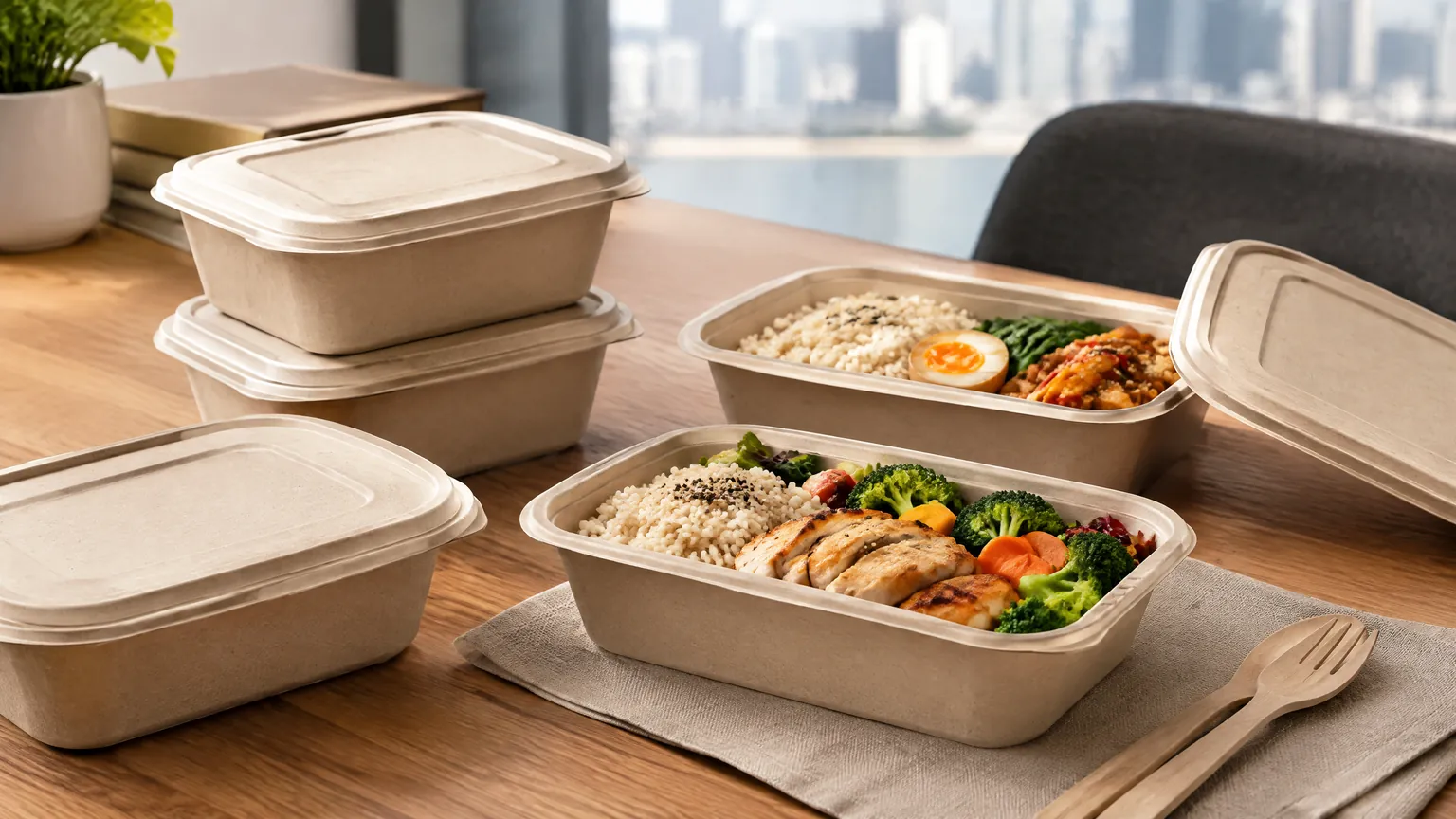
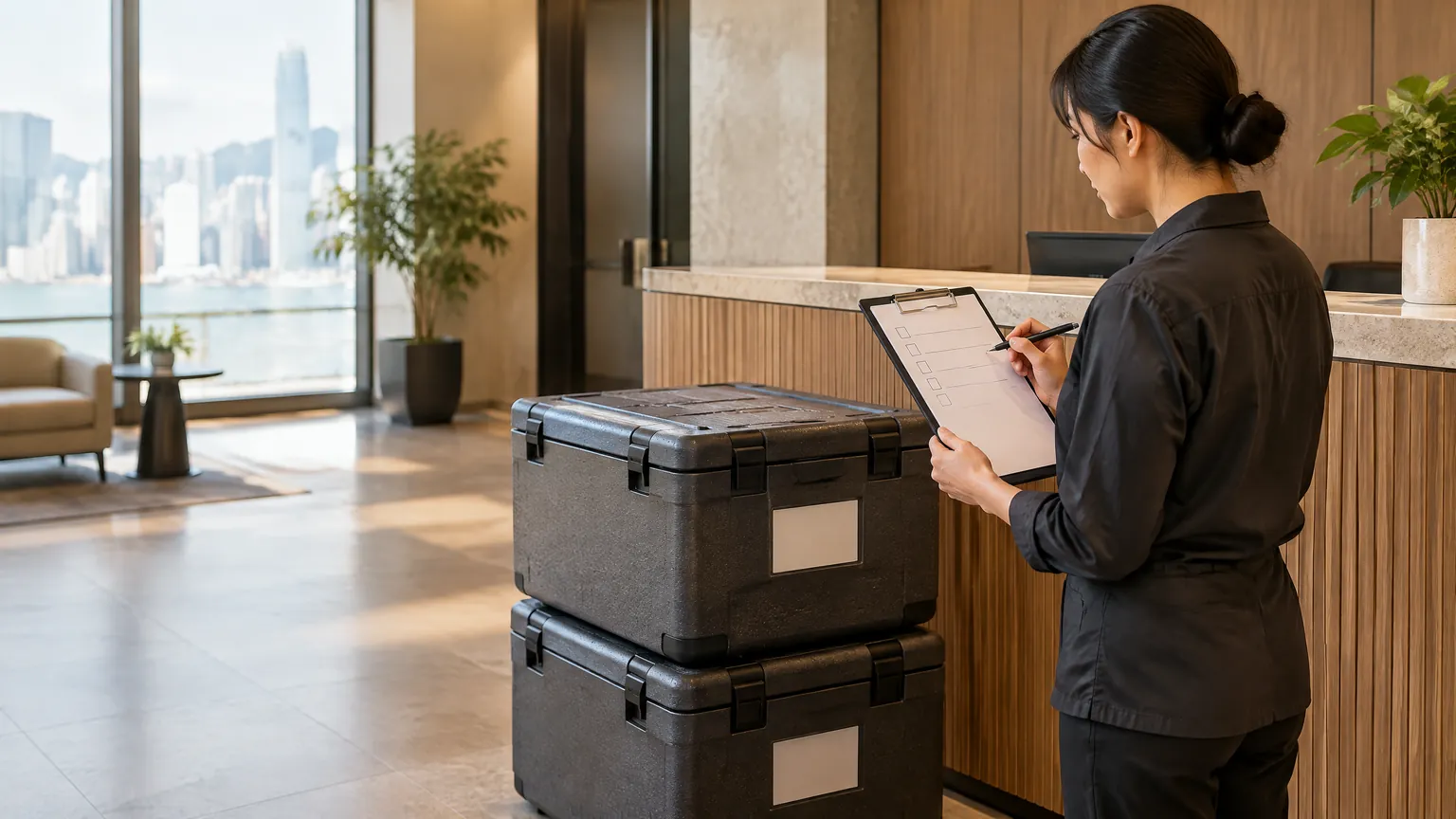
CFS advises consumers to check the general condition of delivered food, including temperature, container integrity and hygiene, and to consume it promptly when handling time without temperature control is uncertain.1 Translate this into a receiving note with room for actual arrival time, visible packaging concerns and the provider’s instructions. A neat-looking insulated box, or a conceptual photograph of one, is not proof that the full journey met the required conditions.
If the meeting overruns or there is a concern at handover, contact the provider promptly and follow appropriate guidance. Do not improvise a longer holding period, or decide that refrigeration makes an unknown history irrelevant. A host’s practical contribution is to notice the change, communicate it and protect the agreed serving plan, not to make a safety assurance based on appearance.

Send a concise confirmation and keep one current version
Before committing, send back a short summary of what you understand has been agreed. Include the current headcount, specific food arrangement, venue-access details, receiving contact, serving time and division of duties. Ask the provider and relevant venue contact to correct anything incomplete. A friendly conversation is helpful, but it should end with a record that another colleague can use if you are unavailable.
Use this short action checklist before closing the brief:
- Confirm who is eating and whether the food replaces a meal.
- Resolve participant requirements and outstanding venue-access questions.
- Obtain an itemised menu and clear answers on uncertain inclusions.
- Name the receiving person, backup and owner of each setup or clearing task.
- Confirm handling guidance, the serving plan and whom to contact if it changes.
Give the worksheet a revision date and keep one current copy. If attendance changes, update the meal count and then recheck portions, seating, utensils and handover arrangements. If the venue changes, reopen the access and facility questions even when the menu remains the same. A previous answer may have depended on conditions that no longer apply.
Finally, circulate a participant-facing note that states when and where to eat, how to raise a remaining requirement and whom to contact on the day. Keep provider uncertainties in the organiser’s working record, but do not conceal a limitation that affects a colleague’s ability to participate. The useful outcome is not a flawless-looking package description. It is a team event whose food, space and responsibilities have been deliberately matched.
Common questions
What should I send before asking about a package?
Send the date, venue, eating headcount, event purpose, whether the food replaces a meal, preferred serving format and known access or participant requirements. Ask for an itemised response to that same brief.
Does a package description mean setup and clearing are included?
No. Ask what setup means, who supplies and places tableware, who receives the food and who clears afterwards. Record each agreed action and its owner separately.
What if our meeting may finish after the planned serving time?
Raise this before confirming the food arrangement. Obtain handling and consumption guidance, check the venue’s facilities and agree a contact for delays. Do not assume the office arrival time starts a new safe holding period.
Can I treat a dietary option on the website as suitable for a colleague with an allergy?
No. Obtain relevant ingredient and cross-contact information from the provider, discuss the requirement discreetly with the colleague and disclose any unresolved limitation before the event. A category label is not an individual suitability guarantee.
Sources & what they support
Each reference supports only the stated scope. Citations are not independent endorsements of YumYum or its branches and do not confirm a provider’s current arrangements or any individual outcome.
- Centre for Food Safety: Control for Safe Delivered Foods (opens in a new tab)
Supports cumulative time outside temperature control across handling, storage and transport; checking delivered-food temperature, container integrity and hygiene; and prompt consumption when prior handling time is uncertain.
- Australian Human Rights Commission: Hosting accessible and inclusive in-person meetings and events (opens in a new tab)
Supports inviting dietary, access and support requirements, naming a contact person, accessible entry and movement, suitable seating and tables, and assistance with food selection or service. Used as practical guidance, not Hong Kong legal advice.