A Seafood Reception Brief Starts with Handling Questions
GotGear and YumYum (including its gifting, baking and florist branches) share an owner; this collection is not an independent recommendation. GotGear does not provide catering, gifting, cake, floral, tuition or rental services. External-service information is separate from GotGear’s equipment catalogue; confirm the actual scope with the relevant provider. Articles are general planning information, with no promises about supply, arrangements or outcomes. Concept photos are not records of real events, customers or classes.
The short answer
Start a seafood reception brief by confirming each dish’s serving state, required holding conditions, receiving contact and ingredient information. Decide how guests will eat only after the caterer and venue agree how food will move from arrival to service, including what happens if the programme runs late.
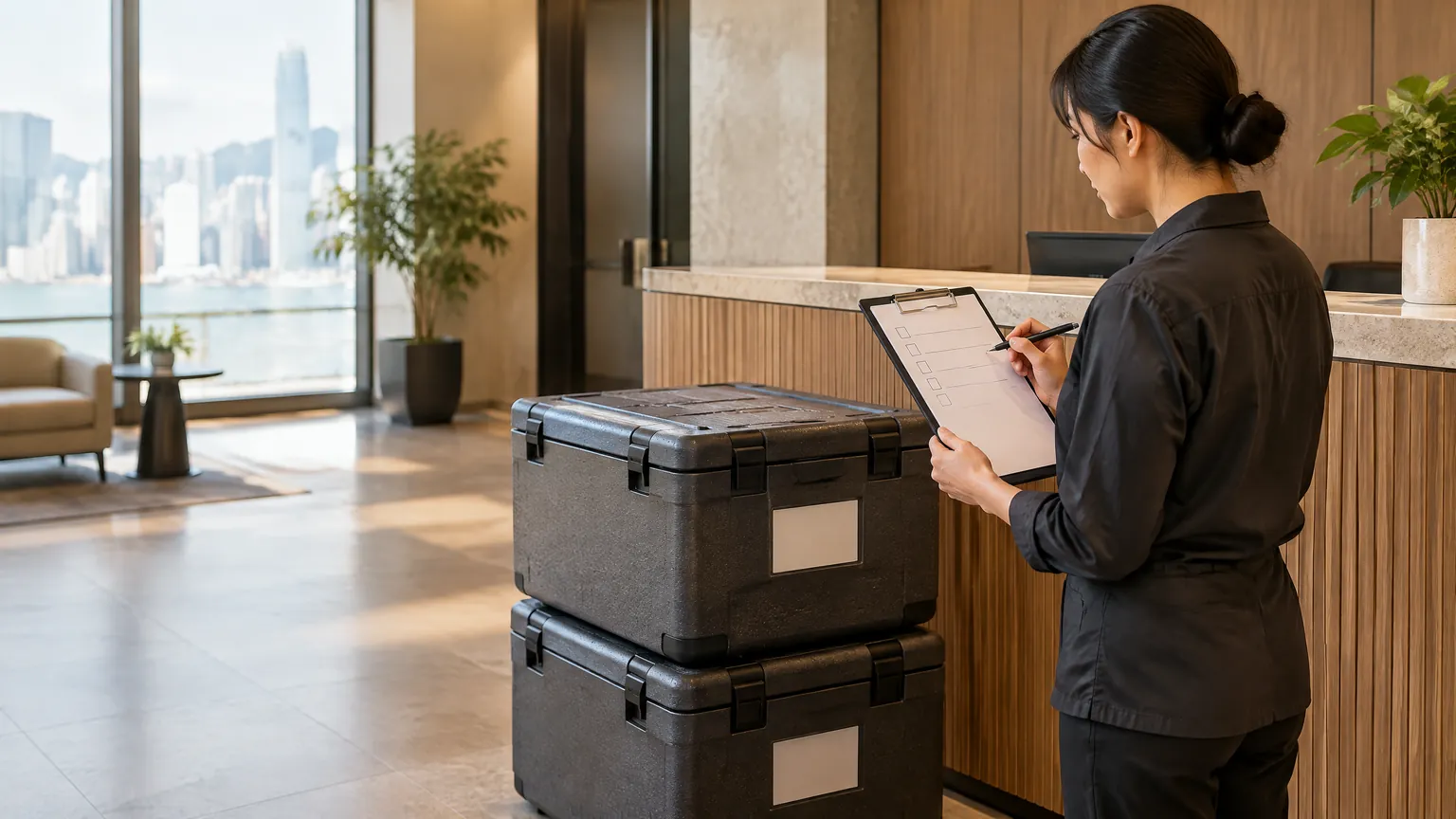
Start a seafood reception brief by confirming each dish’s serving state, required holding conditions, receiving contact and ingredient information. Decide how guests will eat only after the caterer and venue agree how food will move from arrival to service, including what happens if the programme runs late. A photograph of a generous platter cannot answer those questions.
Imagine an evening reception in a Kwun Tong office: guests arrive through the same entrance as the food, a short welcome speech may overrun, and the pantry fridge already contains staff lunches. The useful first decision is not which platter looks most impressive. It is whether the proposed food can be received, held and served under appropriate conditions in that particular room.
This is a GotGear planning journal, not an independent provider endorsement. GotGear and YumYum share an owner; GotGear does not provide food, floral, gift, class or rental services. The linked YumYum pages below are related service-information resources, while the handling advice draws on independent sources.
Describe the food’s state before choosing its place in the reception
“Seafood” is too broad a description for an event brief. A hot cooked dish, a cooked dish intended to be served chilled and raw fish slices need different arrangements. Ask the caterer to identify the proposed state of each item and whether it arrives ready to serve. Do not assume that a broad seafood category means an assembled reception menu, or that every item in a Japanese selection is raw.
YumYum’s Seafood Catering page provides a starting point for a seafood-focused enquiry, but its broad descriptions do not settle the exact ready-to-serve format. Ask for a dish-level proposal that distinguishes cooked hot, cooked chilled and raw items, with accompaniments identified separately. If an option involves live seafood or preparation on site, it is not the same brief as ready-to-serve reception platters; clarify that distinction before progressing.
For a standing reception in a small Tsim Sha Tsui meeting room, also ask how the proposed pieces are eaten. Shells, sauce bowls and foods needing a knife create practical demands that an open platter photograph does not show. If guests have nowhere to put a plate down, choose a more manageable confirmed format rather than expecting everyone to balance food, a glass and discarded shells.
Raw items require a deliberate decision
Hong Kong’s Centre for Health Protection advises the public to avoid eating raw seafood and states that susceptible groups should not consume raw or undercooked foods. It also warns that salt, vinegar, wine and wasabi are not effective ways to kill bacteria. A sauce or condiment is therefore not a substitute for considering the risks of a raw selection.4
For a mixed-age household gathering in Sha Tin, do not make raw seafood the only substantial choice. Ask about fully cooked alternatives, while still checking their holding requirements and ingredients. This is a menu-planning decision, not personal medical clearance. The host should not pronounce a dish suitable for an individual merely because it has been cooked or chilled.

Separate arrival, completed handover and guest service
An arrival window tells you when transport is expected to reach a location. It does not tell you when the food reaches the serving room or when guests begin eating. Record these as separate points in the brief. Building reception, security access and lift use should be confirmed with the venue rather than left to an unnamed colleague who may already be welcoming guests.
Give the receiver a bounded task
Name a receiving contact and a backup, with a contact method available during the event. Their task is to identify the consignment, check it against the agreed description and pass it to the person responsible for holding and service. They should know whom to call about a missing instruction or unexpected format. A delivery left on the reception counter is not a completed food-service arrangement.
In a Central office tower, the brief might state that the building desk contacts the organiser, the organiser arranges access, and the agreed service contact receives the containers in the event room. Confirm these roles with the people involved. Do not assume a building receptionist can move trays, operate equipment or answer ingredient questions simply because they accepted the boxes.
Ask which instructions will accompany the food and how the receiver can distinguish chilled items from hot ones without opening everything. Record who supplies suitable holding equipment and who checks that it is being used as intended. If no one has accepted that responsibility, revise the menu or venue arrangement before confirming the reception.
Ask how chilled food stays chilled beyond the journey
The Centre for Food Safety’s buffet guidance says cold dishes and foods eaten raw, including sushi and sashimi, should be kept in a chiller or on ice at a storage temperature of 4°C or below. It identifies cold and raw dishes as high-risk foods whose storage conditions deserve particular attention. That guidance concerns the food’s holding conditions, not simply whether the room feels cool.1
The Sushi & Sashimi Catering page describes platter options, but a transport description does not answer how those platters will be held after handover. Ask which items are raw, what chilled storage and display arrangements the provider proposes, and whether suitable reserve storage is available at the venue. Confirm those details for the actual reception rather than treating cooling materials mentioned online as a complete service plan.
An office pantry fridge may be available in principle but unsuitable for the agreed platter dimensions or occupied when the event starts. Ask about usable space, access during the reception and who controls it. A closed transport box also should not be presumed to provide appropriate holding for an unspecified period; obtain the provider’s instructions for its actual contents and proposed use.
Discuss replenishment rather than placing the entire selection on display for photographs. The practical question is where reserve food remains under its required conditions and who authorises its release. A smaller display is only useful if the reserve arrangements work. It does not make an uncontrolled waiting tray acceptable elsewhere in the room.
Give hot dishes their own handover and holding questions
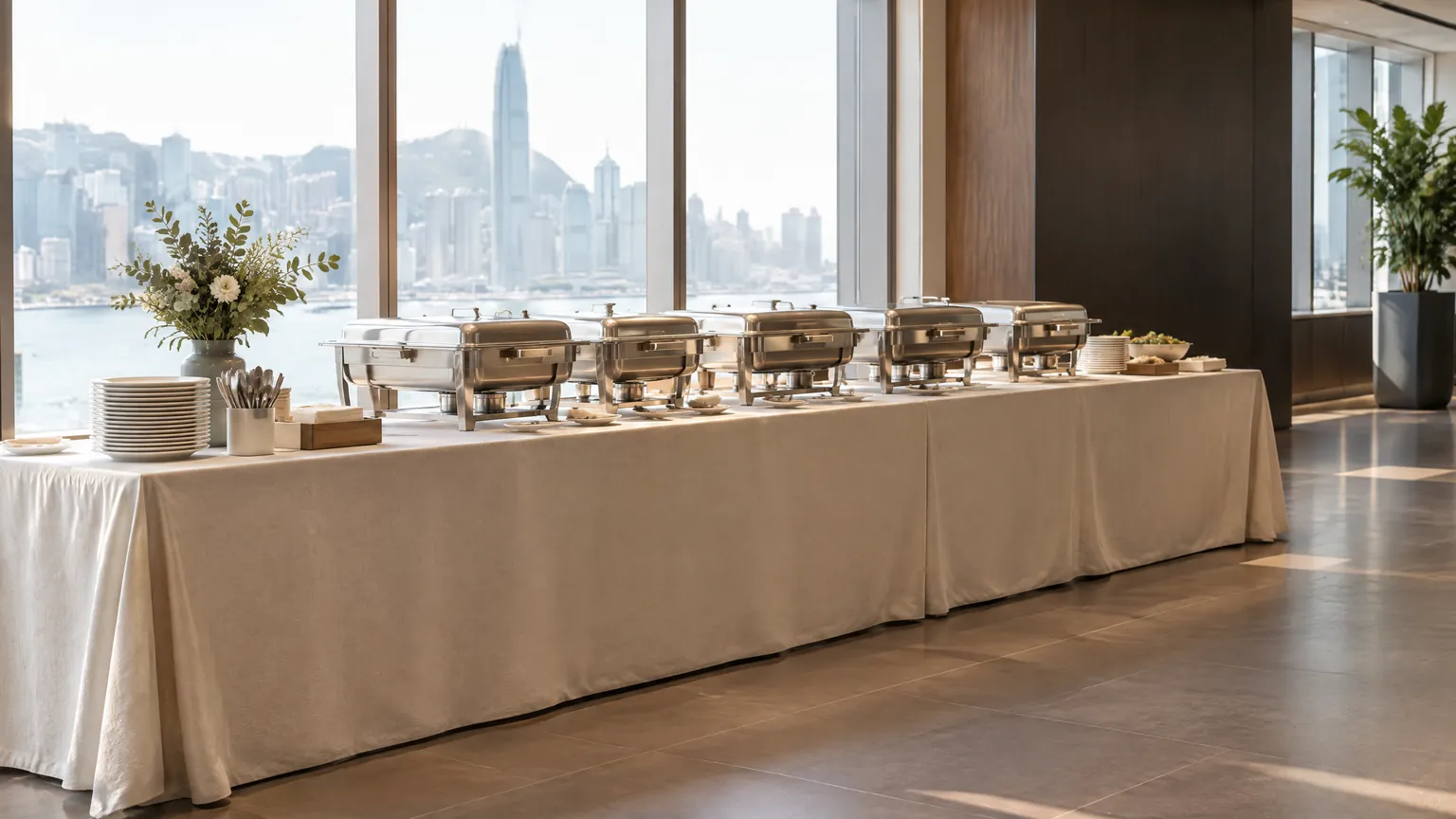
Hot dishes need a separate plan from chilled platters. CFS advises holding hot buffet dishes above 60°C and cautions against eating hot food that is merely lukewarm. Seeing steam at one moment does not establish how a dish has been held throughout the reception, so ask who is responsible for the agreed holding conditions and checks.1
If steamed bites are part of the proposed reception, the Dim Sum Catering page helps frame an enquiry about that format. Ask which items would be included, how they would arrive and what holding arrangement is required before and during service. Do not treat a steamed dumpling as interchangeable with a chilled fish platter, and ask about fillings rather than assuming all small bites contain the same ingredients.
For a workplace welcome event with a speech before food service, distinguish food that is waiting under appropriate control from food already displayed. If the venue cannot accommodate the proposed hot holding, ask the caterer to reconsider the format. Do not add an improvised appliance or promise that staff can reheat everything without a confirmed arrangement.
Also establish where the equipment would sit and whether the venue permits its proposed use. Guests should be able to reach plates without leaning across hot equipment, and staff need access without pushing through the queue. These are layout questions for the organiser and venue, not a reason to instruct office volunteers in cooking or restaurant operations.
Treat ingredient answers and utensil arrangements as separate checks
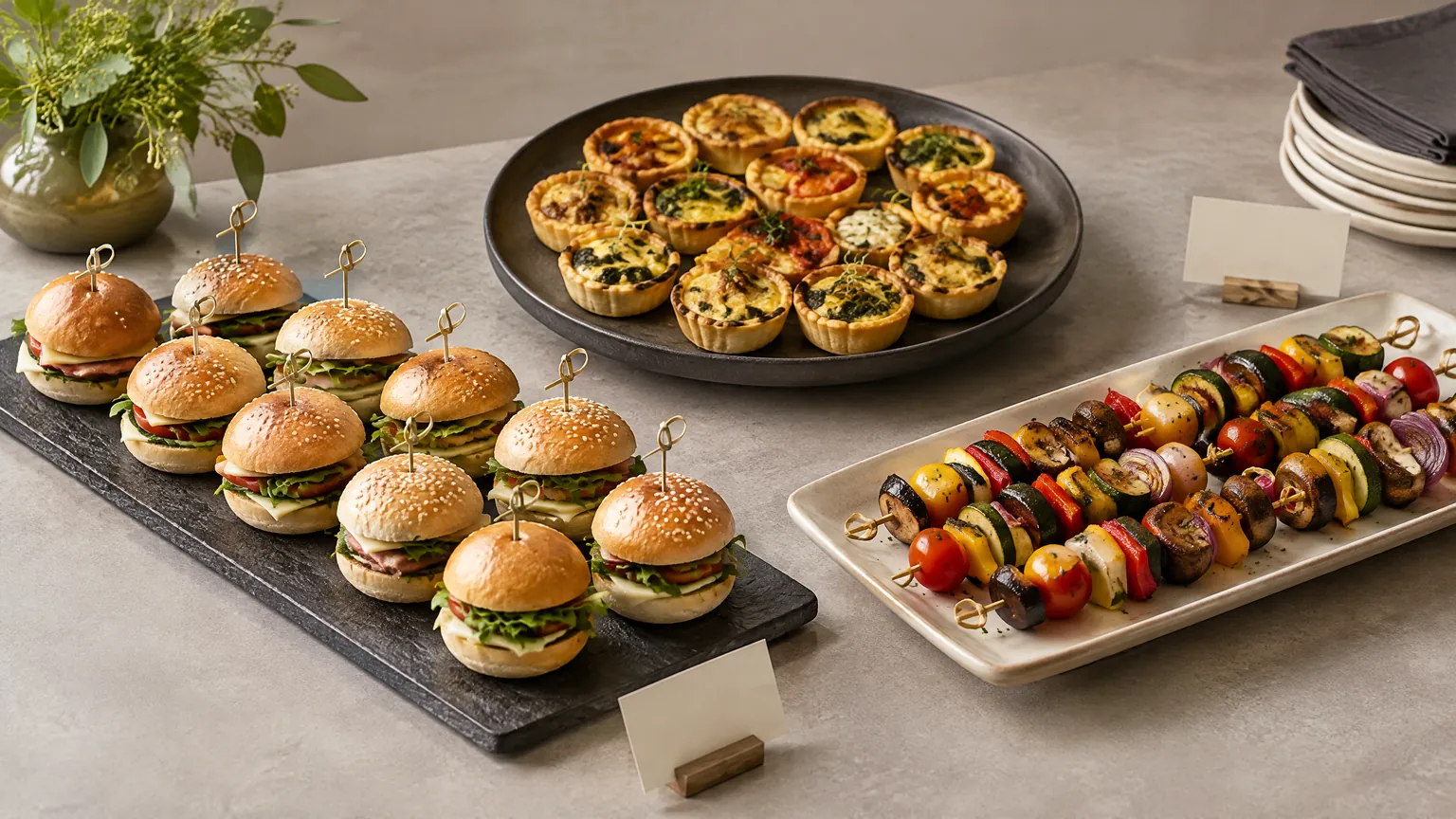
An ingredient list and a serving layout answer different questions. CFS notes that dishes may contain hidden ingredients, including fish and crustaceans in sauces, and that allergens can be transferred through inadequately cleaned utensils and hands. It recommends telling serving staff about allergies so they can check with the kitchen.2
A broader cooked-food selection may be worth discussing through Japanese Catering, whose current scope includes dishes and accompaniments beyond sushi and sashimi. Request the ingredients for the actual proposed selection, including sauces, toppings and mixed rice or noodle dishes. A dish name or a visible piece of chicken does not establish whether fish or crustaceans are absent from the rest of it.
Ask guests who need ingredient information to raise the relevant requirement before the menu is finalised. Pass the specific question to the provider and keep its response with the event brief. Do not translate “no prawn visible” into “no crustacean ingredient”, or turn a menu preference into a guaranteed allergy-safe option. If an answer is incomplete, tell the guest what remains unconfirmed.
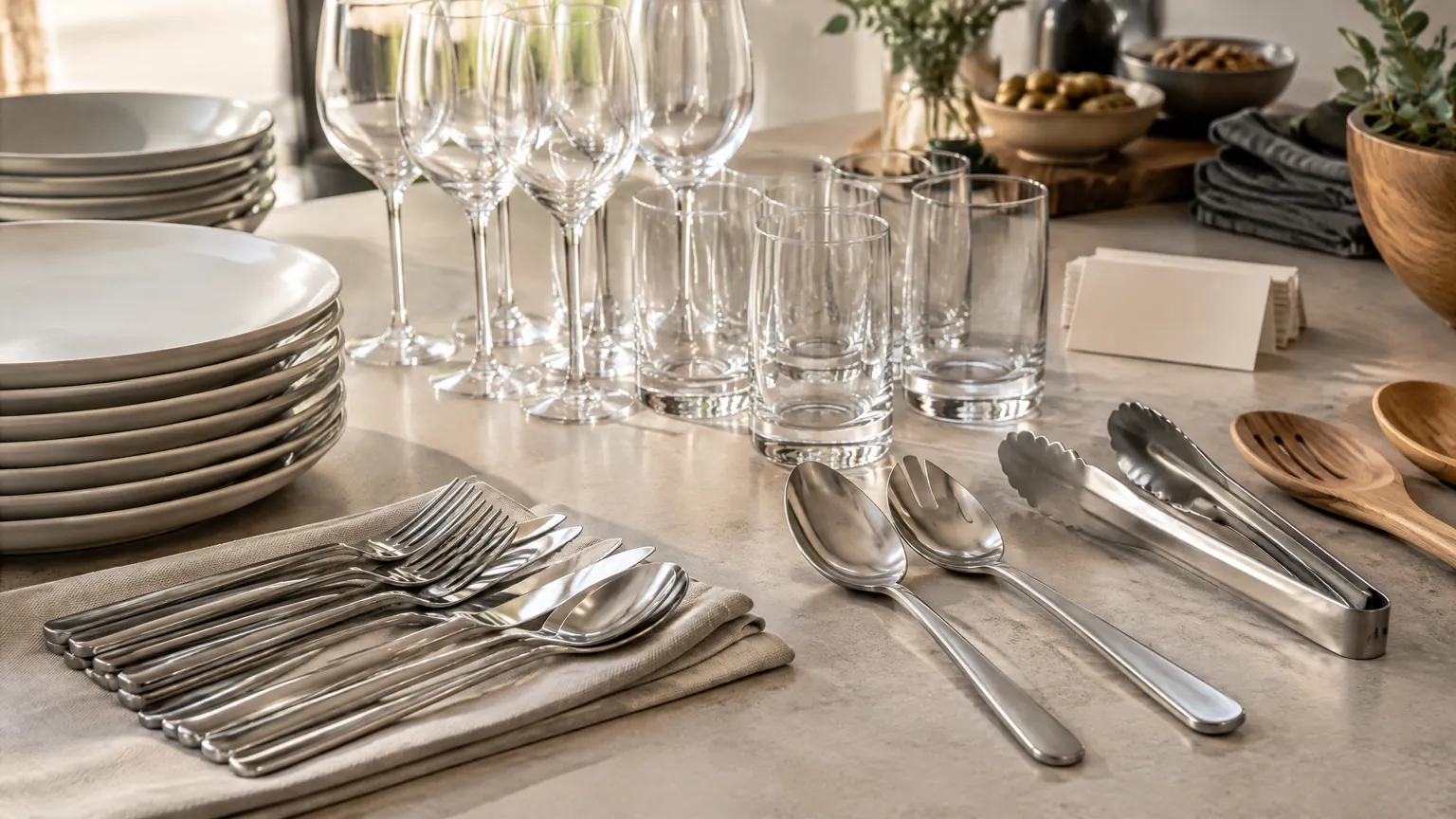
For shared service, agree separate serving utensils for each dish and somewhere appropriate to rest them. This gives guests a clear way to use the intended utensil rather than borrowing the nearest pair of tongs. It is a practical separation measure, not proof that an allergy-sensitive meal can be served without cross-contact.
FARE explains that cross-contact occurs when food proteins are unintentionally transferred between foods, sometimes in amounts too small to see. It also explains that cooking does not eliminate the possibility of an allergic reaction from such transfer.3 An organiser should therefore ask how an agreed individual meal will be identified and kept separate, rather than offering to remove a garnish or warm a shared portion as a solution.
Make the table workable for guests and the service contact
Draw a simple room sketch showing the receiving point, required holding areas, serving table and route for used plates. In a narrow Hong Kong office lounge, a drinks queue beside the seafood table can stop the service contact from reaching it. Separating drinks from food may make replenishment easier, but confirm that the revised layout still allows the agreed equipment and storage to function.
CFS advises checking that tableware is clean and in good condition, requesting a replacement if it is dirty or cracked, and using designated utensils for raw foods.1 Include suitable plates and serving tools in the brief rather than assuming they are automatically part of the order. Ask who supplies replacements and who guests should notify if a tool has been moved or used with the wrong dish.
If the menu includes shells or bones, discuss a separate waste point with the venue so used plates and waste do not accumulate beside the food. Have the service contact review whether guests can take and eat the proposed portions comfortably. A reception may look tidy before doors open yet become awkward once people are standing close together with drinks.
Keep the confirmed menu information accessible to the person answering guest questions. A printed dish card can help identify an item, but should use the provider-confirmed description and should not imply an allergen guarantee. If a guest asks something that is not covered, the responsible response is to check, not to guess from appearance.

Agree the response to delays and the end of service
Choose someone who can change the running order in consultation with the food-service contact. If an opening speech overruns, that person should know whether the food remains under the agreed holding conditions or whether service arrangements need to change. “Leave it out until everyone is ready” is not a useful contingency for chilled or hot dishes.1
At a family anniversary reception, photographs may take longer than expected. The host can plan in advance to keep the relevant food under its required control while guests gather, provided the provider and venue confirm that arrangement. If the arrangement cannot be maintained, the brief should direct the host to contact the responsible service person rather than inventing an extension to the service window.
Ask about withdrawal and leftovers before the event, not while someone is packing the room away. CFS cautions against leaving food at room temperature for a long time, while CHP advises proper storage and reheating of precooked and leftover food.1 Obtain product-specific instructions and clarify what is known about the food’s handling history. Do not automatically distribute remaining shared platters as takeaway portions when that history is unclear.
A short checklist before the brief is accepted
- Identify each proposed dish’s serving state and whether it arrives ready to serve.
- Name the receiving contact, backup and person responsible for holding and service.
- Confirm usable chilled and hot holding arrangements with the caterer and venue.
- Resolve ingredient questions, while recording any uncertainty without a guarantee.
- Agree dish-specific serving utensils, guest access and a waste route.
- Record who decides what happens after a delay and how service ends.
A reception brief is ready when those answers fit together in the actual room. If the chilled platter has nowhere suitable to wait, the menu still needs work. If no one can answer a sauce question, the ingredient enquiry is still open. Choosing a simpler confirmed selection is more useful than keeping an elaborate proposal whose handling responsibilities remain unresolved.

Common questions
Can a sushi platter wait in an air-conditioned meeting room?
Do not treat room air-conditioning as chilled food storage. CFS advises holding cold dishes, sushi and sashimi at 4°C or below in a chiller or on ice. Confirm the actual storage and display arrangement with the caterer and venue.
What should the receiver do if a chilled tray has no holding instructions?
Contact the designated provider or service contact before releasing it for guest service. The receiver should not invent a waiting period or assume that a transport container remains suitable indefinitely.
Does removing prawns from a shared dish resolve an allergy request?
No. Other ingredients, sauces and transferred food proteins may still matter. Obtain a dish-specific ingredient and cross-contact response from the provider; do not describe a modified shared portion as guaranteed suitable.
What belongs in the plan if the welcome speech runs late?
Name the decision-maker and service contact, identify where each dish remains under its required holding conditions, and agree whom to contact if those conditions cannot be maintained. Do not simply extend display time.
Sources & what they support
Each reference supports only the stated scope. Citations are not independent endorsements of YumYum or its branches and do not confirm a provider’s current arrangements or any individual outcome.
- Centre for Food Safety: Buffet and Food Safety (opens in a new tab)
General buffet guidance on hot holding above 60°C, chilled and raw food storage at 4°C or below, clean tableware, designated utensils, and caution about uncontrolled or unsuitable holding conditions.
- Centre for Food Safety: Beware of Allergens in Food (opens in a new tab)
Hidden fish and crustacean ingredients in sauces, potential allergen transfer through utensils and hands, and communicating allergies so serving staff can obtain kitchen information.
- Food Allergy Research & Education: Avoiding Cross-Contact (opens in a new tab)
Inadvertent food-protein transfer can be invisible; cooking does not eliminate the risk of an allergic reaction from cross-contact. Used for ingredient and separation enquiries, not an allergy-safe guarantee.
- Centre for Health Protection: CHP investigates two food poisoning clusters (opens in a new tab)
General public advice to avoid raw seafood, susceptible groups not to consume raw or undercooked foods, ineffectiveness of salt, vinegar, wine or wasabi for killing bacteria, and proper storage and reheating of leftovers. The incident itself is not used to characterise any provider.