A Team Flower Session Needs an Attendance Plan, Not Just a Group Booking
GotGear and YumYum (including its gifting, baking and florist branches) share an owner; this collection is not an independent recommendation. GotGear does not provide catering, gifting, cake, floral, tuition or rental services. External-service information is separate from GotGear’s equipment catalogue; confirm the actual scope with the relevant provider. Articles are general planning information, with no promises about supply, arrangements or outcomes. Concept photos are not records of real events, customers or classes.
The short answer
Plan who can participate, what each person needs to take part and how they will leave with their work before confirming a team flower session. A group headcount alone does not settle work cover, accessible seating, demonstration language or the journey home. Choose the flower project only after those attendance questions have workable answers.
Plan who can participate, what each person needs to take part and how they will leave with their work before confirming a team flower session. A group headcount alone does not settle work cover, accessible seating, demonstration language or the journey home. Choose the flower project only after those attendance questions have workable answers.
For a Hong Kong workplace, this means thinking beyond an invitation sent to the whole department. A colleague may still be covering reception, another may need a seated working position, and someone travelling home across the harbour may have little space to carry a finished arrangement. These are planning constraints, not signs of weak team spirit.
GotGear and YumYum share an owner. This is a same-owner planning journal, not an independent recommendation: GotGear publishes this resource and does not provide food, floral, gift, class or rental services. Any workshop arrangements discussed here require confirmation with the relevant provider.
Decide what attendance is supposed to achieve
First decide whether the occasion is an optional creative break, a department celebration or an activity intended to include everyone on a project. The answer affects the invitation and the work-cover plan. An optional after-work session should not quietly become an attendance test. An activity described as a whole-team celebration needs a considered route for people whose duties prevent them from leaving together.
Imagine an office in Kwun Tong with a reception team and colleagues supporting overseas calls. Reserving one afternoon does not mean everyone is free. The organiser should ask managers which duties must continue, whether cover can rotate and whether the session can sit within an agreed work window. Do this before collecting enthusiastic replies that cannot become confirmed attendance.
The Corporate flower class resource can help frame a group enquiry, but the useful next step is a written participation brief rather than an assumed package. Explain the purpose, likely attendance pattern, preferred language and any working-position requirements. Ask how the proposed project would run for that group; do not infer a teaching ratio or a suitable timetable from the page title.
Separate the number invited from the number expected to make something. A host, observer or support person may need a place without needing an identical material set. Confirm how the provider treats these roles before finalising the attendance list. Avoid making a colleague negotiate their role in front of everyone at the workshop table.

Send an invitation that allows a useful reply
An invitation should describe the activity plainly: the proposed location, the expected work window, whether participation is optional and what attendees might handle. If details are still pending, say so. A flower image cannot tell someone whether the project involves delicate stems, small components, shared tools or prolonged standing.
Cornell University's accessible-event checklist recommends including a contact for accommodation requests and following up with each person. It also advises discussing alternatives when a specific request cannot be met.1 For a workplace flower session, offer a private reply channel and ask what would help the person participate, rather than requesting a diagnosis on a shared attendance sheet.
A practical reply might cover attendance, a firm departure constraint and a request to discuss access or the activity privately. Someone who must leave for a household commitment can state a departure deadline without explaining their family arrangements. Keep the public list focused on information colleagues actually need, such as which session they are attending.
Do not promise a scent-free or allergen-free environment merely because a project uses preserved materials. Ask the provider for the proposed flower and craft-material list, then discuss any requested changes before confirming suitability. Where a workable arrangement cannot be agreed, offer another way to join the occasion without pressure to handle the materials.
Check participation at the table, not only at the door
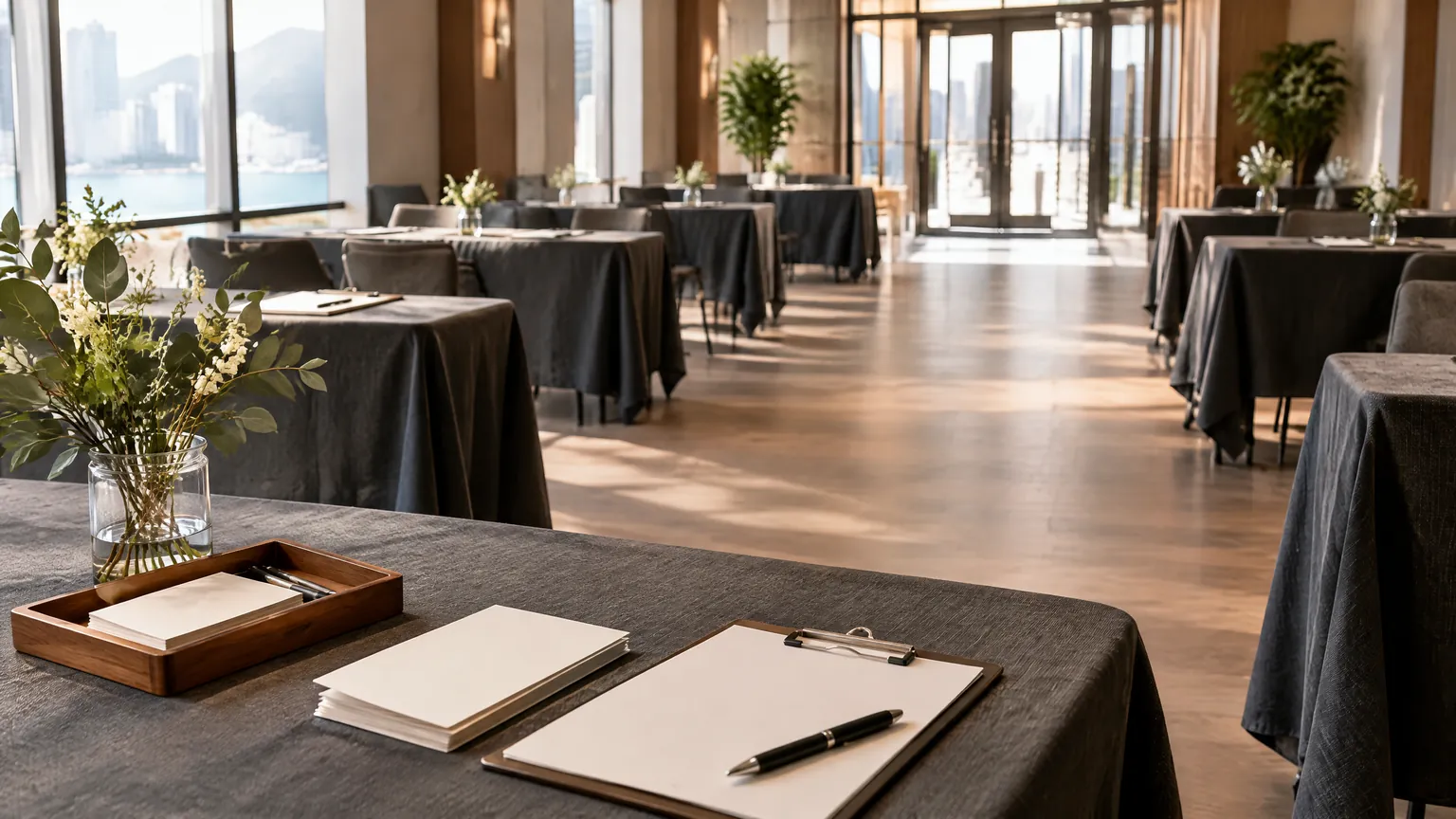
An accessible entrance is only part of the journey. Cornell's checklist includes working-table access, clear routes, bathrooms, lighting and acoustics among the features to inspect.1 Apply those questions to the actual room proposed for your session. A generic statement that a building has a lift does not establish that a colleague can comfortably reach and use the flower table.
Make the working position part of the room enquiry
Ask whether the project can be completed seated, whether a suitable table position is available and where personal belongings can go without narrowing the route. If someone uses a mobility aid, discuss their needs with them and share only the agreed practical information with the provider. Do not reserve a nominal place that leaves them outside the demonstration group.
A hypothetical office-based session has its own checks. The meeting room may hold chairs comfortably for a discussion but become crowded once materials and completed work are added. Ask the provider what space the proposed activity needs, and have the office organiser check the resulting layout. Keep entrance and exit routes clear rather than treating them as spare storage areas.
Confirm how people will follow the demonstration
Ask which language will be used for instruction and whether essential steps can be explained in the languages the group needs. An English invitation does not confirm an English-led session. Nor should a bilingual colleague be assigned informal interpreting duties without their agreement. Discuss the provider's actual arrangements instead of building the plan around an assumed volunteer.
Cornell also recommends good visibility, reduced unnecessary background noise and verbal descriptions of visual material.1 In a floral activity, that means asking whether people at the far side of the table can see the demonstration and whether they can hear an explanation while others work. Request a format that allows questions; do not promise that every participant will receive a particular amount of individual guidance.
Choose fresh or preserved work around the people attending
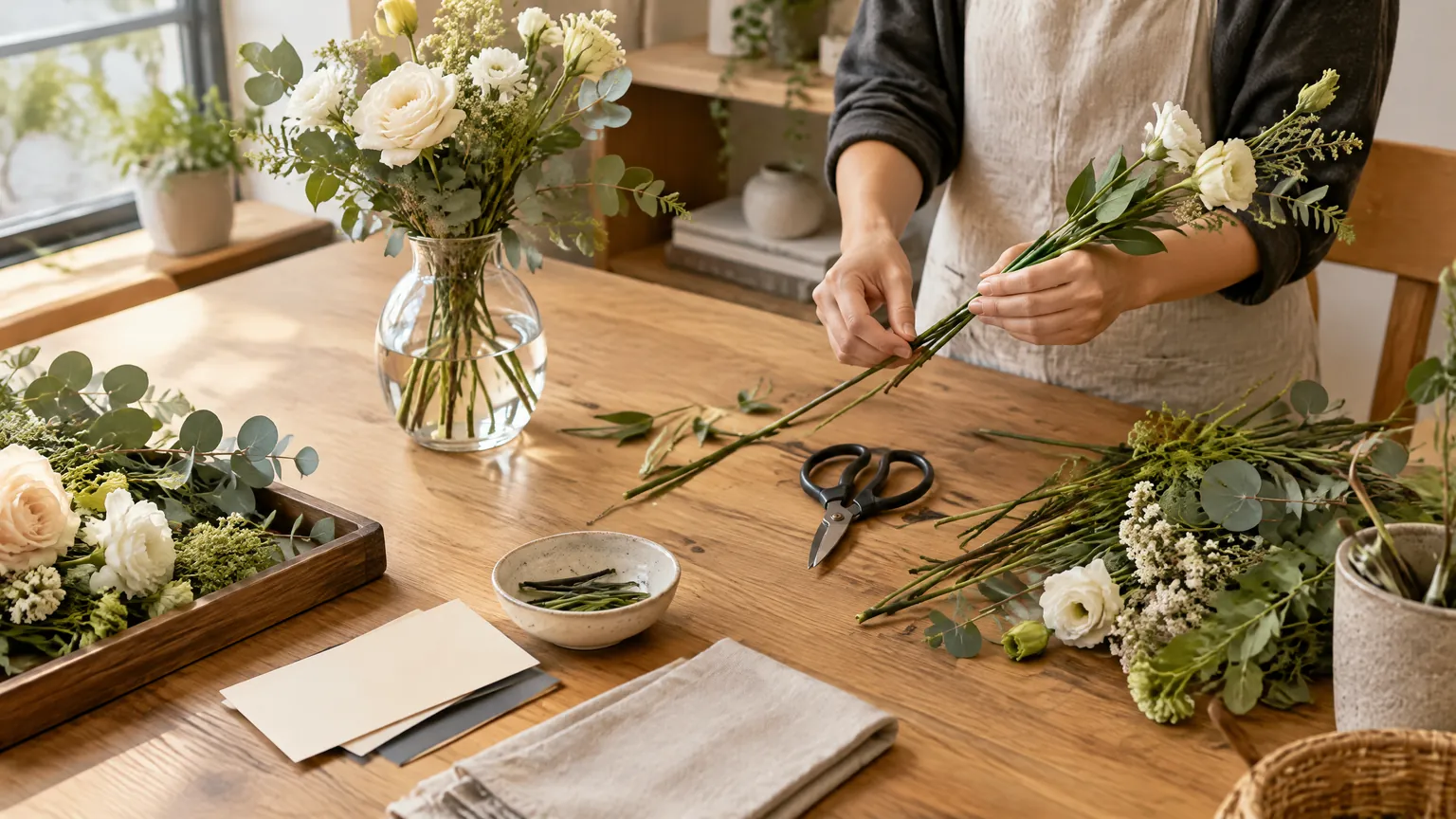
A fresh-flower project may suit a group that wants to practise placing stems in a vessel, provided the provider confirms the activity. It also creates a care question after the session. The Royal Horticultural Society advises using clean vases, checking water levels and positioning fresh arrangements in a cooler place away from heat.2 A participant returning to meetings needs to know where the work can wait and what care is required.
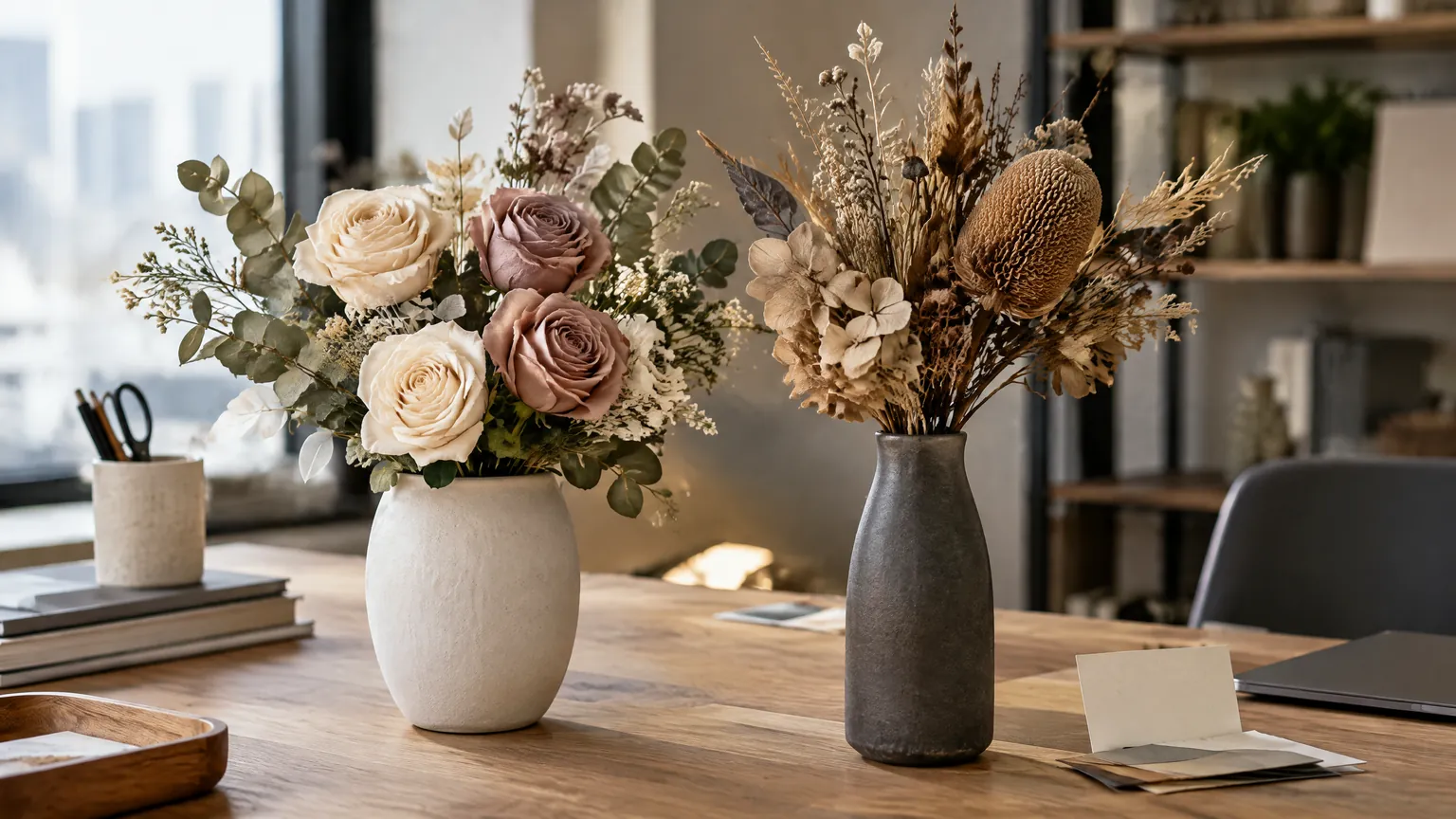
For a Preserved flower workshop, ask what the proposed materials actually are and which parts of the project participants will complete. A page name does not identify the preservation method, components or tools. Request the finished format and its own care instructions before deciding whether it suits colleagues who prefer a dry display or have limited room for a vase at home.
Do not use preserved and dried as interchangeable labels. University of Missouri Extension describes different ways of drying plant material and preserving foliage; it notes that dried petals and stems can become brittle and that dried flowers gradually fade.3 That supports careful handling, not a claim that every preserved arrangement behaves the same way or remains unchanged indefinitely.
The activity's handling demands can matter more than its appearance. Ask whether materials arrive prepared, whether participants need to manipulate small parts and who handles any cutting or other tool work. The RHS notes that some plants can cause skin irritation and recommends gloves when handling cut flowers.2 Discuss the actual materials and handling support with the provider; an attractive colour palette does not establish suitability.
Consider two possible office situations. A group returning to its desks may have a stable place for a small fresh arrangement and someone willing to manage its care. A group leaving directly for different homes may prefer another confirmed format. Neither choice is automatically easier: match the actual project, handling requirements and care instructions to the attendees.
Confirm the Kwun Tong journey before circulating directions
Use the Flower class Kwun Tong resource as a starting point for a location enquiry, not proof of a classroom address. Obtain the actual building, floor, entrance and arrival instructions for the proposed date. Ask about the route to the room and any access requirements before sending a meeting point to the group.
The shortest-looking route is not necessarily the right shared route. Once the venue is confirmed, check the current station and street information relevant to each attendee's needs. A station exit close to a map pin may not match the route someone can use. If the organiser cannot verify an access detail, ask the venue or transport operator rather than describing it as barrier-free.
Give attendees an arrival contact and a clear destination inside the building, not just a district name. Decide whether colleagues travel independently or meet first, and keep space in the schedule for reaching the room. For someone coming from an Island-side office, the relevant arrival point is the workshop table, not the moment the train reaches the station.
Also agree what happens if travel is disrupted or the venue arrangement changes. Ask who makes the decision, how everyone will receive the update and what the provider's change conditions are. Avoid inventing a universal weather policy or suggesting that attendance should take priority over safe travel.
Build departure and handover into the session
The advertised activity window, when confirmed, should be checked against the whole visit. Ask whether it includes arrival, demonstration, making, packing and clearing the working area. A colleague with a firm departure deadline needs to know when their work is expected to be ready to leave, not merely when the making stage finishes.
Tell the provider about attendance patterns before the session. Ask what an early departure would mean for the proposed project and whether an agreed alternative is possible. Do not assume the facilitator can finish everyone's work or that a colleague can join late without missing essential handling guidance.
Keep the attendance list and the finished-work handover connected. If someone leaves before packing is complete, agree who can hold their work, where it will stay and how it will be collected. Use a simple name-matching method suitable for the group. Avoid placing private access requests on labels attached to arrangements.
Think through the next destination as well. An employee returning to a compact office desk may need a temporary clear surface. Someone collecting a child before going home may have another bag to manage. Ask what protective packaging is included and whether the completed work can be carried in the way required. Packing help and later collection are arrangements to confirm, not presumed services.
If the group wants to keep one arrangement on a meeting table, name a person to manage it and check that it does not obstruct sightlines or working space. For fresh work, provide the confirmed care instructions alongside it. A shared display should not become an unassigned task for reception staff.
Recognise colleagues who cannot attend
A creative session is only one way to mark a team occasion. If an employee is covering essential duties, absent on agreed leave or unable to use the confirmed venue, decide how they will be included before the event. Do not present a photograph of everyone else as the complete recognition plan.
The Corporate gifts guide is a related same-owner planning resource when considering an alternative gesture for a non-attendee. Start with the recipient's preference and your organisation's approval requirements rather than assuming a flower item is wanted. If outside business guests are included, check their organisation's policy before offering the activity or its take-home gift; a team occasion is not an automatic exception.
The alternative need not imitate the workshop. A separate shared moment within the colleague's working hours may be more useful than an object. Where a physical gift is considered, confirm whether it is welcome, how it will reach them and who is responsible for the handover. Keep the explanation neutral so people do not have to justify their absence to receive consideration.
A short checklist before attendance is confirmed
- Agree the occasion's purpose, participation choice and essential work cover.
- Follow up private access, language and handling requests with the people concerned.
- Confirm the actual venue, working layout, project and session sequence in writing.
- Check firm arrival or departure constraints and the journey with finished work.
- Assign an organiser for updates, handover and consideration of non-attendees.
Once these points are resolved, the group booking can reflect a realistic attendance plan. The result to aim for is straightforward: colleagues know what they are joining, the provider understands the group's practical needs, and nobody has to solve an avoidable participation problem while everyone else starts arranging flowers.

Common questions
What should we confirm if reception staff cannot leave together?
Agree work cover with the relevant manager first. Then ask the provider whether the confirmed activity can accommodate the resulting attendance pattern. Plan a separate way to include anyone who must remain on duty rather than assuming they can join late.
Does a Kwun Tong page confirm a step-free classroom?
No. Obtain the actual venue, floor and entrance, then verify the route to the working table and the facilities each attendee needs. A district page or a building lift alone does not confirm a usable workshop layout.
Is preserved work automatically suitable for someone avoiding fresh flowers?
No. Ask for the proposed flower and craft-material list, discuss the person's requirements privately and confirm any changes with the provider. Do not describe preserved work as scent-free or allergen-free without a basis.
Can a colleague leave before the rest of the group?
Ask the provider before confirming attendance. Check which essential parts they would miss, whether their work can be packed by their departure and who would hold it if not. Finishing or collecting it later must be specifically agreed.
Sources & what they support
Each reference supports only the stated scope. Citations are not independent endorsements of YumYum or its branches and do not confirm a provider’s current arrangements or any individual outcome.
- Cornell University: Accessible Meeting and Event Checklist (opens in a new tab)
Offering an accommodation contact, following up requests and alternatives, inspecting working-table access and routes, and considering visibility, lighting, acoustics and verbal explanations. Institutional planning guidance, not Hong Kong law or a workshop certification.
- Royal Horticultural Society: Cut Flowers, Cutting and Conditioning (opens in a new tab)
Fresh cut-flower arrangements need clean vases, water-level checks and cooler placement away from heat. Some plants can irritate skin, and gloves are advised for handling cut flowers. No provider materials, species-specific suitability or longevity guarantee established.
- University of Missouri Extension: Drying Flowers and Foliage for Arrangements (opens in a new tab)
Different plant drying and foliage preservation methods exist; dried petals and stems may be brittle and dried flowers gradually fade. Does not establish a universal care method for commercially preserved materials or provider lesson content.