Ask Visiting Colleagues About Lunch Without Guessing Their Tastes
GotGear and YumYum (including its gifting, baking and florist branches) share an owner; this collection is not an independent recommendation. GotGear does not provide catering, gifting, cake, floral, tuition or rental services. External-service information is separate from GotGear’s equipment catalogue; confirm the actual scope with the relevant provider. Articles are general planning information, with no promises about supply, arrangements or outcomes. Concept photos are not records of real events, customers or classes.
The short answer
Ask every visiting colleague the same short questions about foods they avoid, flavours they enjoy and how they want to eat. Separate essential dietary requirements from flexible preferences, then compare confirmed menus by meal format, ingredients and serving needs—not by anyone's nationality.

Ask every visiting colleague the same short questions about foods they avoid, flavours they enjoy and how they want to eat. Separate essential dietary requirements from flexible preferences, then compare confirmed menus by meal format, ingredients and serving needs—not by anyone's nationality. A useful lunch enquiry should produce specific questions for the caterer and a workable choice for each diner, rather than a guess about what an overseas team will like.
GotGear and YumYum share an owner. This is a planning article in GotGear's journal, not an independent provider endorsement; GotGear does not provide food, floral, gift, class or rental services.
Start with the lunch, not the visitors' passports
For a Hong Kong host, offering a local meal can be a thoughtful gesture. It becomes less helpful when the invitation quietly assumes that everyone wants an unfamiliar dish, eats seafood or enjoys a shared table. Equally, choosing a supposedly familiar meal for visitors can miss their actual interests. Someone may want to try something new while a colleague from the same office prefers a straightforward lunch before an afternoon presentation. Ask both.
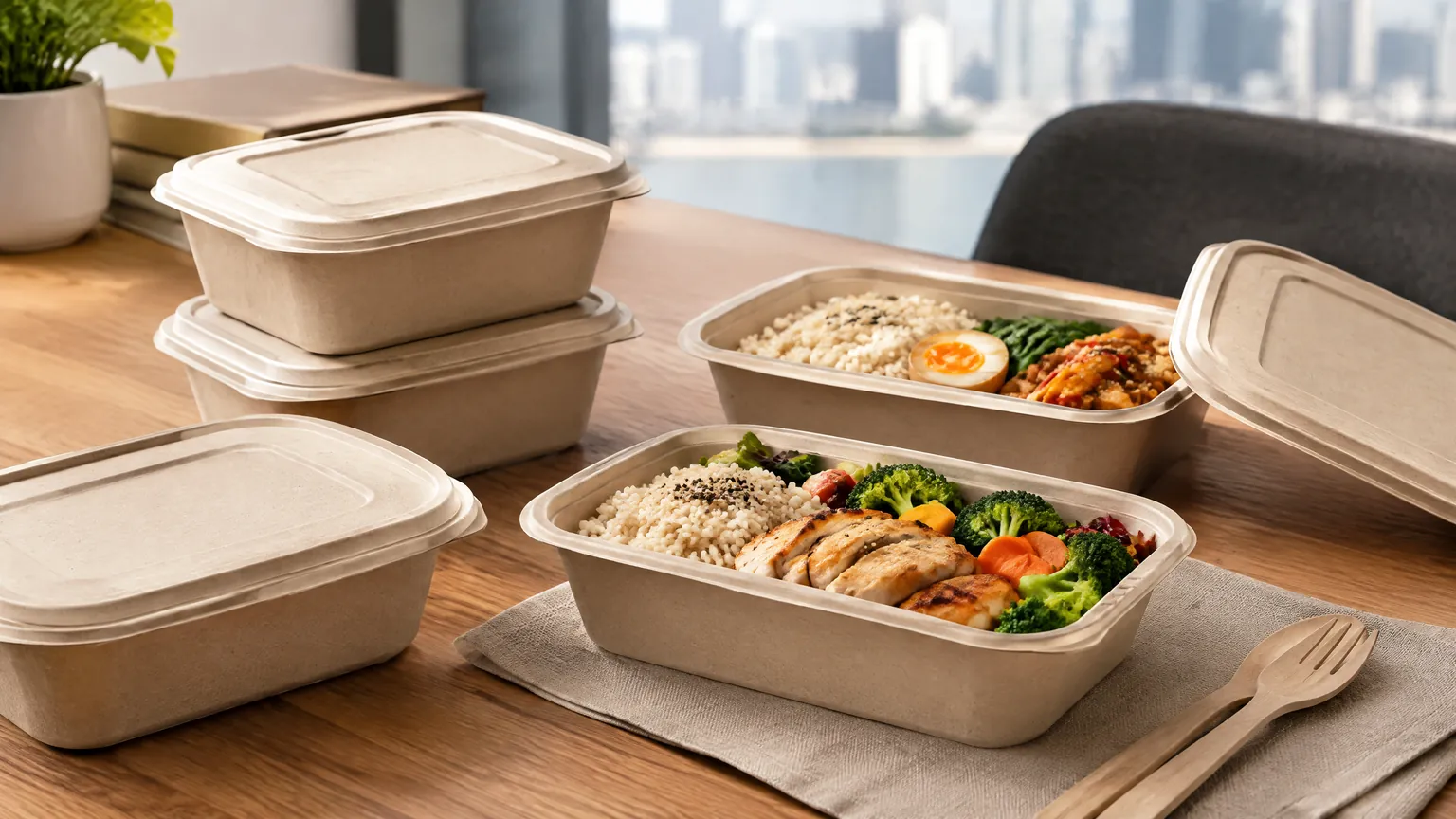
Imagine a Central office welcoming colleagues for a planning meeting. The organiser knows their flight schedule and job roles but has never eaten with them. The first decision is whether lunch is a seated social break or food collected between calls. That choice affects the enquiry before any cuisine does: shared dishes need room for people to serve themselves, while an individual meal needs a clear way to match each confirmed choice to its diner.
Tell visitors what the lunch is for and how it will work. A message such as, “We are arranging a seated lunch at our office, with time to talk before the next session,” gives them something concrete to respond to. Add that alternatives can be discussed, rather than presenting local food as a test of enthusiasm. NYU Law's inclusive-event guidance recommends asking attendees about dietary needs on RSVP forms; asking each person directly is a sound starting point here too.1
Use a brief interview people can answer privately
A preference interview need not mean a meeting. Send a short message with a named organiser and an option to reply privately. Ask what foods or ingredients the person needs to avoid, what they would enjoy, and whether they prefer an individual meal or shared dishes. Explain that you will check the proposed menu before confirming it. Do not ask visitors to justify their answer to the whole group.
For taste, use descriptions rather than broad labels. Ask whether they prefer gentle or stronger chilli heat, sauce mixed into the dish or served separately, and rice, noodles or another filling base. These are preferences to discuss, not modifications you can already promise. A person who says they enjoy “Asian food” has not told you whether a particular dish will work. A person who says “anything is fine” may simply be trying not to create work.
Separate what must be checked from what can flex
Give essential requirements their own question: “Is there any ingredient or dietary requirement we need to check with the caterer before choosing your meal?” Follow with a separate preference question: “If there are suitable choices, what would you most enjoy?” This avoids treating a food allergy like a vote against a flavour, or treating a dislike as evidence of a medical condition. Record the person's own wording rather than assigning a category on their behalf.
When someone requests vegan, halal or gluten-free food, ask what information they need before accepting a proposed meal. Their answer may concern ingredients, certification or handling arrangements. Do not turn one person's response into a rule for everyone who uses the same term. Ask only for meal-relevant details, and agree what needs to be passed to the provider. You are organising lunch, not collecting a personal health history.
Turn an uncertain answer into a useful follow-up
If someone replies, “Not too spicy,” ask whether they want no chilli heat or would consider a dish with some heat after seeing its description. If they say, “No seafood,” do not narrow that to “no prawns” without checking. If they prefer vegetables, ask whether that is a flexible preference or an exclusion of animal ingredients. These small follow-ups are more useful than sending a long catalogue and asking them to work everything out.
Keep a simple record of each person's requirement, flexible preference and pending question. A blank response means “not yet answered,” not “no restrictions.” Send one neutral reminder with a response deadline tied to your planning schedule. Meet Cambridge's dietary-requirement toolkit emphasises early conversations, shared understanding and realistic expectations between planners, venues and caterers.2 Apply that by resolving unclear answers before asking the group to choose a menu.
Compare what the menu does, not whom it supposedly suits
Once you have the responses, compare actual proposed dishes by their role in lunch. Does each diner have a filling meal they can choose? Can someone avoid an unwanted sauce without losing most of the meal? Will the food require cutting at a cramped desk, or can it be eaten comfortably at the available table? These questions work across cuisines. A collection of appealing snacks is not automatically a suitable replacement for lunch.
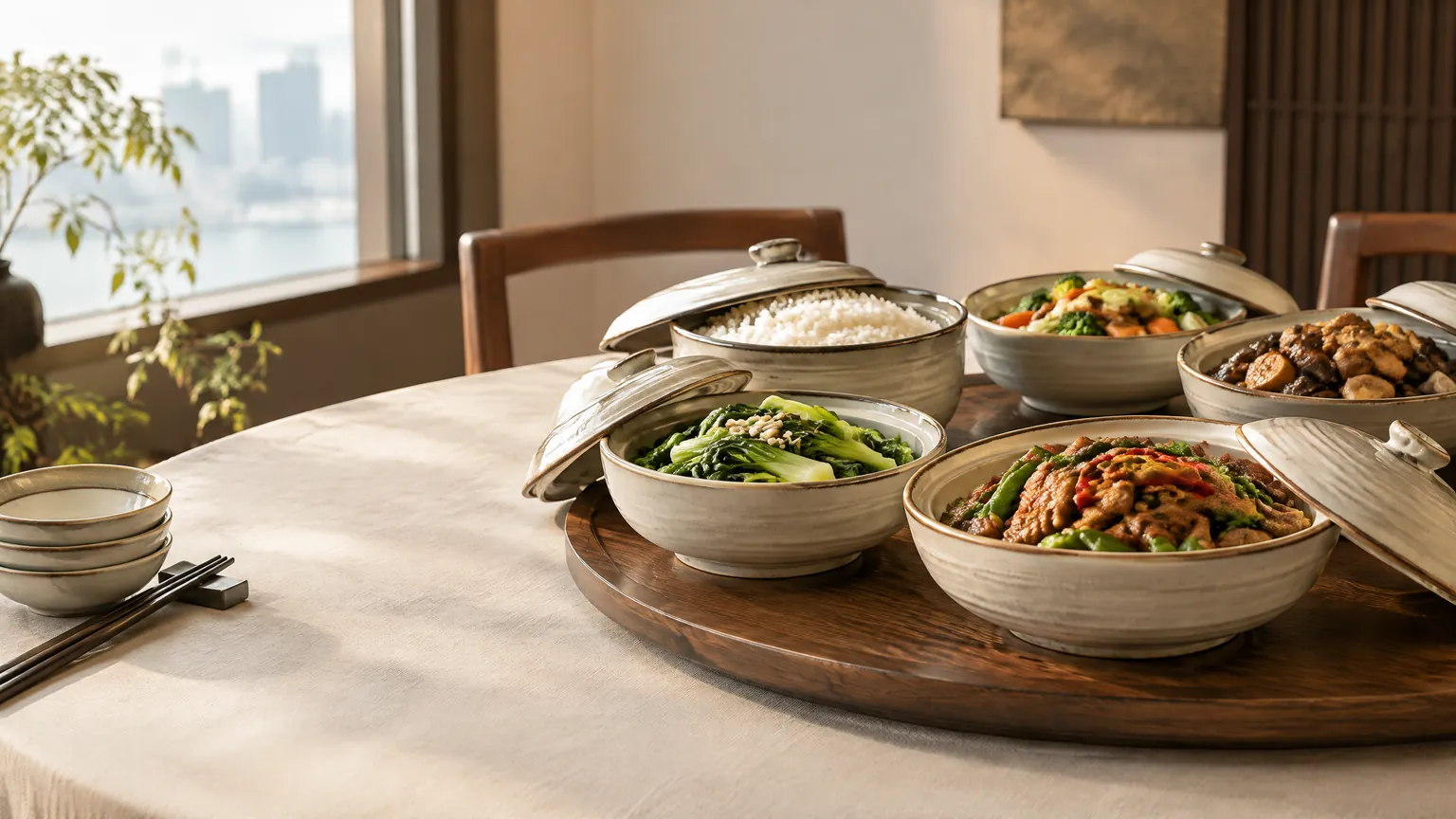
If colleagues want a communal meal, the Chinese Food Catering category can inform an enquiry about shared dishes and individual choices. Ask for the current proposed menu, then check which items form the main meal and whether each diner has a suitable combination. Do not assume that a shared vegetable dish resolves every dietary requirement, or that everyone wants to use the same dining utensils. The decision is about the confirmed meal and its presentation, not a presumed preference for local food.
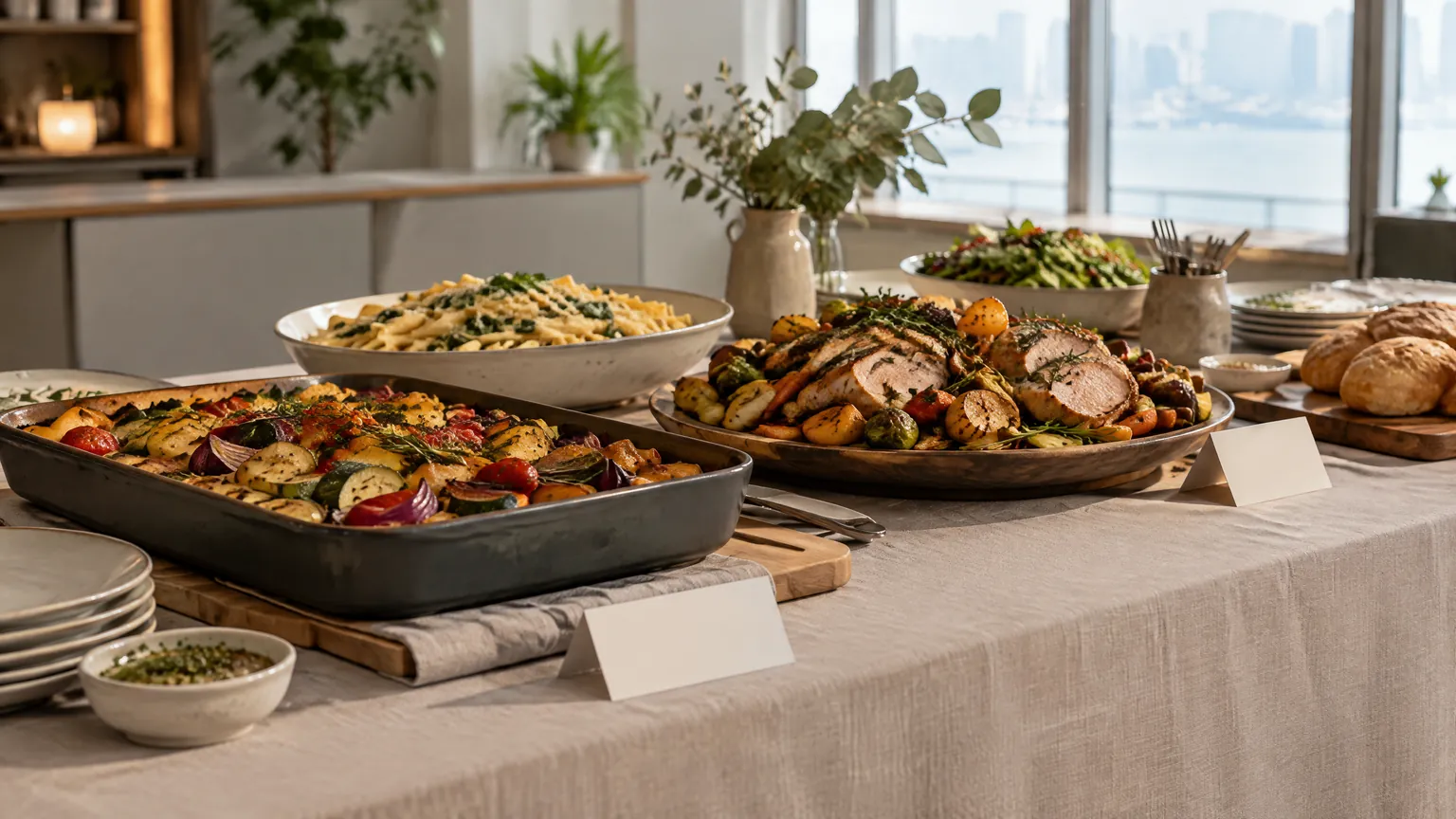
For colleagues who want an easily portioned lunch, use Western Catering as a category resource while comparing individual and shared formats. Ask how the proposed mains and sides are divided, what ingredients are in sauces, and whether the meal needs a knife as well as a fork. Familiar-looking food should receive the same ingredient checks as an unfamiliar dish. Choose it because the actual combination suits the responses and room, not because visitors are expected to prefer it.
If the group expresses interest in Korean Catering, turn that interest into dish-specific questions. Which proposed items have chilli already mixed in, which sauces are integral, and what ingredient information can the provider supply? Ask whether a suitable alternative exists before offering one. Interest in a cuisine is a reason to explore a menu; it is not evidence that every colleague enjoys the same heat level, texture or ingredients.
When comparing Thai Catering, focus on how the proposed main, sauce and rice or noodle component fit together. If someone requests sauce separately, confirm whether that arrangement is possible for the actual dish rather than assuming every recipe can be separated. Check seasonings as well as visible components. A cuisine label cannot settle an ingredient question, and an attractive menu photograph cannot establish what a particular order will contain.
You do not need to combine all four categories to demonstrate hospitality. A smaller confirmed menu may be easier for diners to understand than several overlapping selections. Mixed preferences can sometimes be handled through individual choices within one format, provided the provider confirms those choices. Write down the proposed solution for each diner before adding extra dishes simply to make the table look more varied.
Treat ingredient information and cross-contact as separate questions
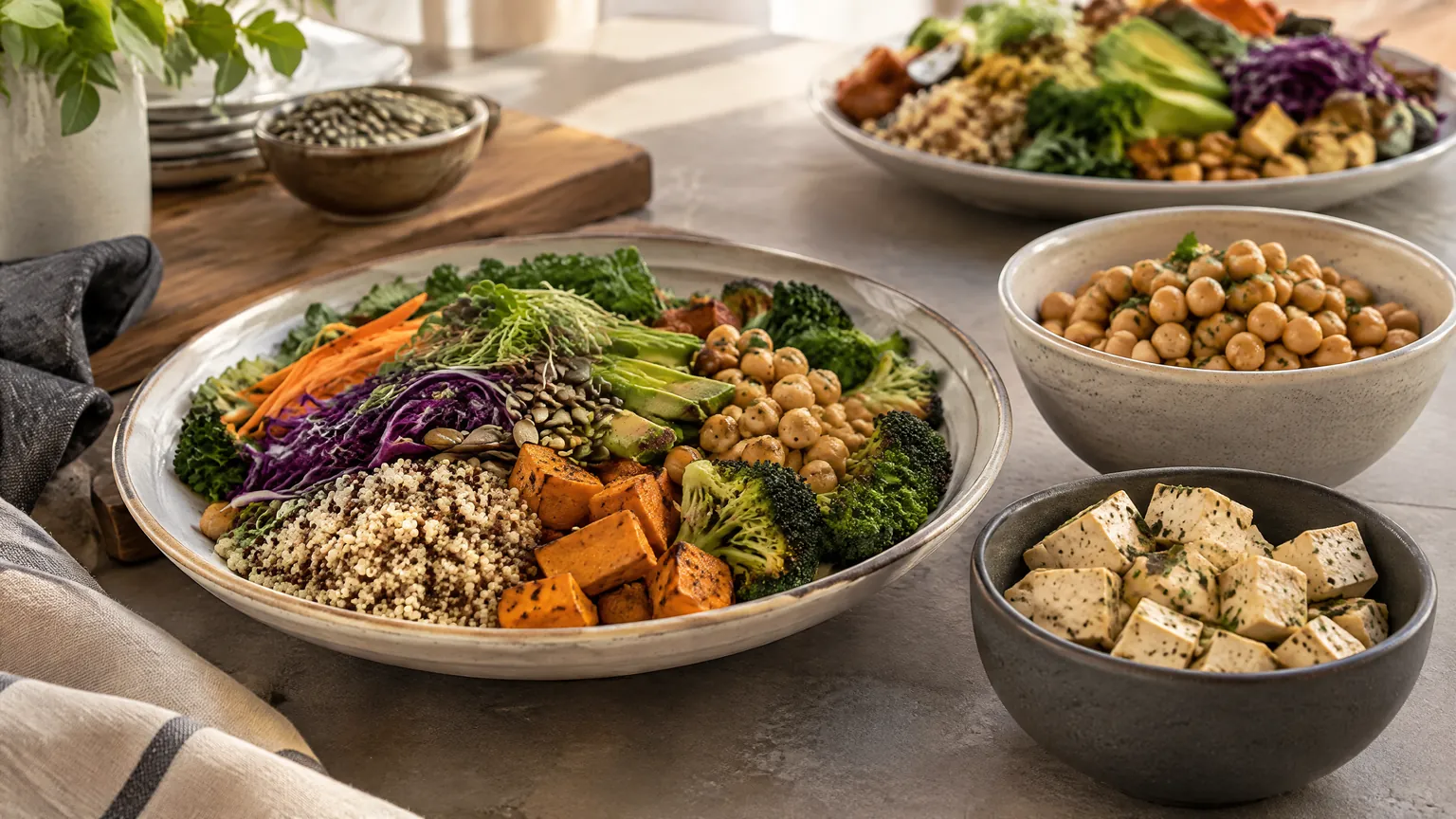
An ingredient list answers what is deliberately included in a dish. It does not, on its own, answer whether an allergen could be transferred through contact with other food or utensils. FARE explains cross-contact as the transfer and mixing of food proteins, including amounts that may not be visible.3 For a colleague with an allergy, pass the specific concern to the provider and ask what information and limitations apply to the proposed meal.
Do not reassure someone that a dish is suitable because you cannot see the ingredient, because the sauce is separate, or because the food has been cooked. FARE states that cooking does not reduce or eliminate the chance of an allergic reaction caused by cross-contact.3 The organiser's role is to obtain a clear response and share it accurately, not to certify the meal. Avoid editing a cautious provider answer into a confident promise.
Likewise, keep preference adjustments separate from safety assurances. A less spicy option may address taste without answering any allergy question. Separate serving utensils are worth discussing for shared dishes, but their presence is not proof of allergen exclusion throughout the meal's preparation and handling. If a diner cannot accept the information available, discuss another lunch arrangement with them before the meeting rather than expecting them to improvise at the table.
Check the Hong Kong office as carefully as the menu
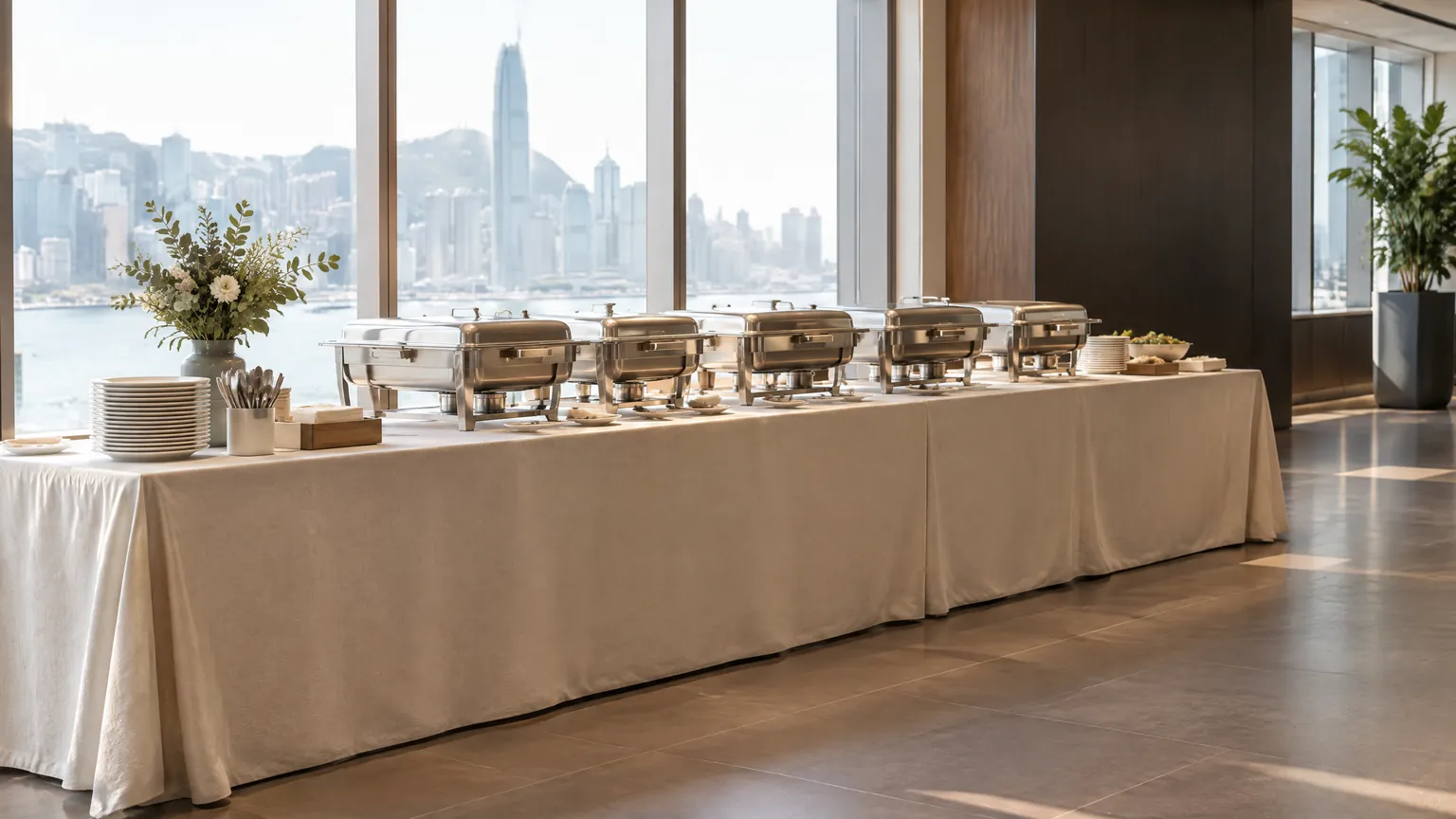
Consider a Kwun Tong workplace using its meeting room for both a presentation and lunch. A long side table may look convenient until the projector cables, chairs and open door reduce the available route. Decide where people will collect food and where they will sit without requiring them to carry a plate across someone else's laptop. NYU Law's guidance places food and drink in locations accessible to attendees using wheelchairs and other mobility aids.1 Check the actual route and reach, not merely whether a table exists.
Ask about utensils without turning the question into a cultural assumption. Offer people a way to request cutlery, chopsticks or other practical assistance where available, and confirm what the provider or office will supply. A colleague may be perfectly comfortable with chopsticks but prefer cutlery for a particular meal. Another may need a seated serving arrangement. Let the person's stated needs guide the setup.
Write a receiving plan suited to the building. Confirm the permitted entrance, any reception check-in, the person who will receive the food and the agreed handover details with the provider. Do not assume the provider can enter a restricted office floor or supply holding equipment. If the meeting runs late, someone needs to know whom to contact and what the confirmed storage or serving arrangements allow. Agree those details rather than promising that lunch can wait indefinitely.
For a visiting team moving from an Admiralty meeting to another appointment, lunch may need to finish at a definite time. Tell the provider the intended eating window, then ask whether the proposed format fits it. Count actual diners rather than everyone named on the visitor itinerary. Include local hosts who will eat, and distinguish colleagues arriving later so that a late attendee is not silently dependent on whatever remains.

Give colleagues a real choice before you confirm
Send a concise description of the workable options rather than a cuisine popularity poll. Explain the meal format, the relevant ingredients confirmed by the provider and any remaining uncertainty. Ask diners to choose between options that have already been checked for their stated needs. A majority vote can settle a flexible preference; it should not erase an individual's unresolved requirement.
If the requested arrangement cannot be confirmed, tell the affected colleague privately and promptly. Ask what alternative they would prefer to explore. That might mean a different proposed meal, a separate order or a lunch arrangement they choose themselves, subject to the office's rules. Do not announce their requirement to the room, and do not describe an unconfirmed substitute as equivalent. Honest limitations give the diner more control than reassuring language.
Keep one organiser responsible for the final version. If a colleague changes their response, update the enquiry and check whether it affects the confirmed order. On the day, make the meal choices understandable without displaying personal medical explanations. After lunch, ask a narrow question such as, “Was the portioning and format comfortable for you?” That feedback can inform a later visit, but ask again next time rather than treating one lunch as a permanent taste profile.
A short checklist before the enquiry becomes an order
- Ask each diner about essential requirements and flexible preferences separately.
- Resolve unclear replies; keep unanswered questions visibly pending.
- Compare confirmed dishes by meal role, ingredients and serving format.
- Share provider limitations accurately and agree any alternative with the diner.
- Check table access, utensils, receiving responsibilities and the eating window.
- Let each person confirm a workable choice before finalising the lunch.
A welcoming lunch does not require you to predict anyone's tastes. It requires a question they can answer comfortably, a menu description they can understand and enough follow-through to make their choice meaningful. In a busy Hong Kong office, that is a more useful expression of hospitality than selecting dishes from assumptions about where colleagues come from.

Common questions
What should I ask when a visiting colleague says any lunch is fine?
Ask separately whether there is anything the caterer must check or avoid, then offer a simple preference choice such as individual meals or shared dishes. Treat a missing answer as pending, not as confirmation that there are no requirements.
Should I choose Hong Kong food as a welcome gesture?
You can offer it as an option, but ask whether colleagues want to try it and show the proposed meal description. Choose from their responses, not their nationality, and discuss a workable alternative if needed.
Can a cuisine vote decide the whole team's lunch?
Use a vote only for flexible preferences among workable options. Check each person's essential dietary requirements first; a majority preference cannot resolve an ingredient or handling question for someone else.
What if the caterer cannot confirm a requested meal arrangement?
Share the limitation with the affected diner before confirming the order. Ask what alternative they want to explore, and check it separately. Do not present an unconfirmed dish or a separate serving utensil as an allergen-free assurance.
Sources & what they support
Each reference supports only the stated scope. Citations are not independent endorsements of YumYum or its branches and do not confirm a provider’s current arrangements or any individual outcome.
- NYU School of Law: Guide to Planning and Hosting Inclusive Events (opens in a new tab)
Institutional event guidance recommends soliciting attendees' dietary needs on RSVP forms and placing food and drinks accessibly for attendees using mobility aids. Applied as planning guidance, not a Hong Kong legal requirement.
- Meet Cambridge: Managing Dietary Requirements at Events (opens in a new tab)
The event dietary-management toolkit supports early conversations, shared understanding, clear planner-venue-caterer communication and realistic expectations. It does not verify any provider's service capability.
- Food Allergy Research and Education: Avoiding Cross-Contact (opens in a new tab)
Cross-contact can transfer food proteins in amounts that are not visible; cooking does not reduce or eliminate the chance of an allergic reaction caused by that contact. Supports cautious enquiries rather than safety guarantees.