Fit a Wedding Dessert Area into the Room Before Choosing the Display
GotGear and YumYum (including its gifting, baking and florist branches) share an owner; this collection is not an independent recommendation. GotGear does not provide catering, gifting, cake, floral, tuition or rental services. External-service information is separate from GotGear’s equipment catalogue; confirm the actual scope with the relevant provider. Articles are general planning information, with no promises about supply, arrangements or outcomes. Concept photos are not records of real events, customers or classes.
The short answer
Choose the wedding dessert area by walking the room first, not by selecting a display photograph. Reserve clear guest routes, a separate place for drinks where practical, suitable space for dessert holding and an agreed collection point for used tableware. Then confirm the actual display footprint and who handles each task before approving the layout.
Choose the wedding dessert area by walking the room first, not by selecting a display photograph. Reserve clear guest routes, a separate place for drinks where practical, suitable space for dessert holding and an agreed collection point for used tableware. Then confirm the actual display footprint and who handles each task before approving the layout. A table that fits against a wall may still fail when guests stop for photographs, open a drink or carry plates back to their seats.
GotGear and YumYum share an owner. This is a service-information article in GotGear's journal, not an independent recommendation. GotGear does not provide catering, tableware, flower, gift or class services. Any arrangement discussed here needs confirmation with the relevant provider and venue.
Start at the entrance and walk the guest journey
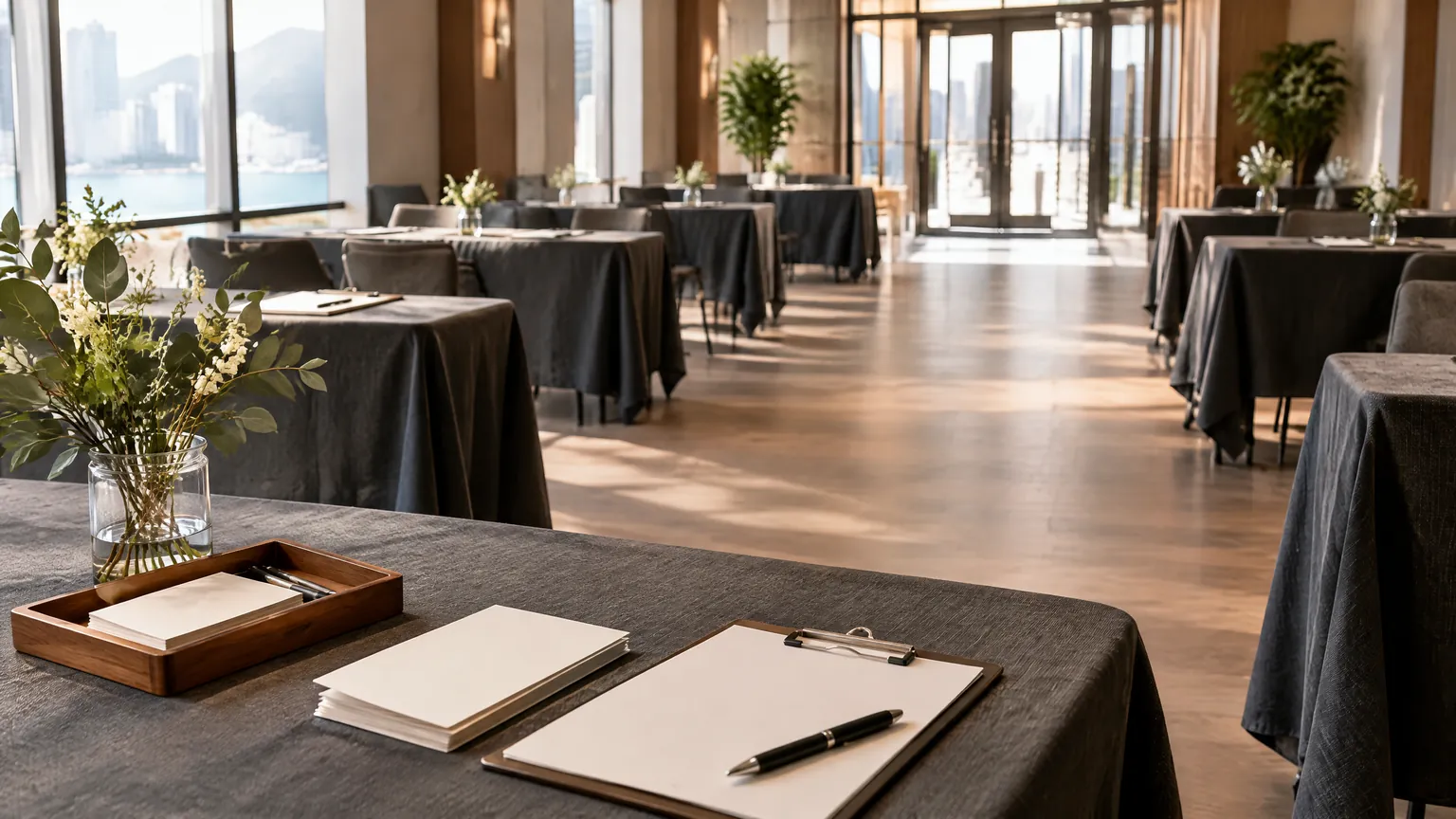
Begin the walkthrough with the venue manager and whoever will coordinate the reception. Bring the proposed seating plan, ceremony sequence and dessert-serving period. Enter as a guest would, including the point where someone puts down an umbrella, signs a guest book or pauses to greet relatives. Mark these stopping places before deciding where the sweet display belongs. A welcoming entrance and a queue for dessert should not depend on the same patch of floor.
For a compact Hong Kong clubhouse reception, imagine relatives arriving while the couple is still taking photographs. Some guests may stay seated; others may gather near the entrance. Place a temporary table outline on the venue's plan and trace both journeys. Ask whether people leaving the dessert area would walk directly into those entering. Moving a display to the opposite wall can help in one room and create a new crossing point in another. Test the actual room rather than adopting a universal layout.
The Fire Services Department's guidance for temporary places of public entertainment and non-designated venue use calls for clear passageways. Its hall provisions also say that staircases, exits and exit routes should remain unobstructed.1 That document has a specific scope; it does not establish the conditions for every private wedding. Ask the venue manager to identify the approved routes and requirements applicable to your event. Do not treat unused space beside an exit as available storage.
Test the occupied room, not just the empty floor
Repeat the route with chairs pulled out as they would be during conversation. Include a guest carrying a plate and someone helping an older relative. Ask guests with access needs what would make collection comfortable; do not infer their needs from age. Consider how a companion could collect food without leaving the guest isolated. The walkthrough is a way to reveal awkward turns and reaching points, not a substitute for professional accessibility or fire-safety assessment.
Also identify where a photographer can stand without becoming part of the serving line. If a decorative backdrop needs extra depth, include that depth in the footprint. Leave proposed dimensions for the venue to approve rather than deciding that a photograph proves the arrangement will fit.
Choose dessert formats after assigning their space
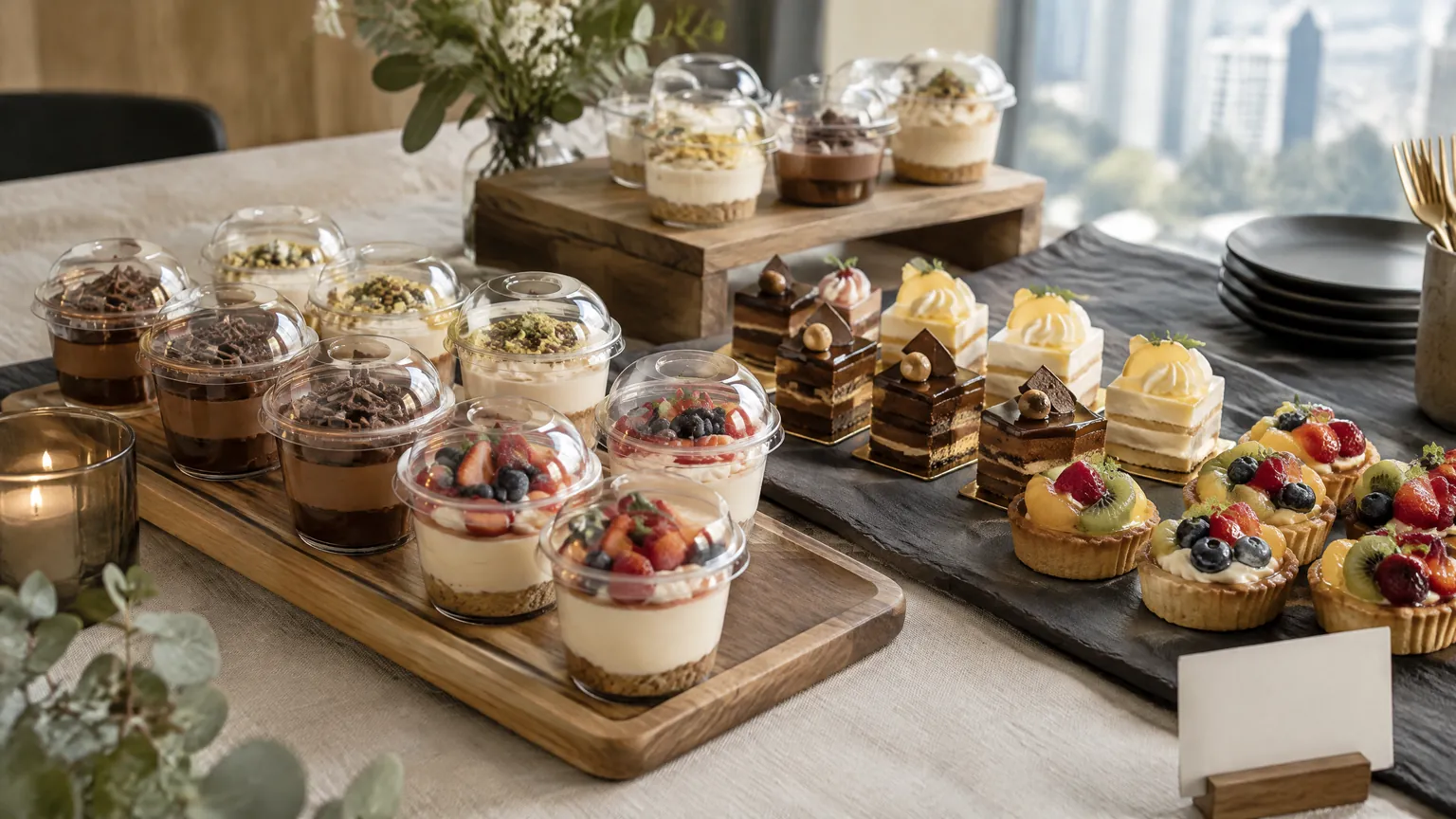
Separate the visible display from the space needed to support it. The visible area might hold dessert cups and small cakes. The support area may need room for covered replacement trays, spare utensils and transport containers. Ask whether those items can remain elsewhere and how they will reach the table. A full tabletop leaves little space for a guest to steady a plate or for someone to exchange an empty tray.
YumYum's Dessert Table Catering page describes themed sweet displays and small dessert formats, making it a relevant resource when comparing presentation ideas. However, use the room sketch to ask for the proposed table footprint, stand heights, serving approach and confirmed items. Do not assume that a pictured backdrop, every stand or the final clearing task forms part of your arrangement. Ask for those details in writing before selecting the design.
A low display can make individual portions easier to see, while a raised stand may create a stronger visual focal point. Neither is automatically the better choice. Check that guests can reach the intended portions without stretching over other food and that the stand will sit securely on the actual table. Ask the provider which dishes suit the agreed display conditions; visual similarity does not mean that two desserts have the same holding needs.
Give temperature-sensitive desserts a separate decision
The Centre for Food Safety's buffet guidance includes tiramisu and cut fruit among examples of food prepared without a cooking step. Its display advice says not to put food out too early, to keep cold food cold and to display small portions to shorten display time.2 For a couple planning a reception, the useful question is who can maintain the conditions required for the actual desserts, not how long a decorative table can remain in photographs.
Confirm where desserts needing chilled storage will wait and who decides when to bring them out. Air conditioning is not evidence that the food itself is being held at the required temperature. If suitable holding cannot be confirmed, ask the provider about another dessert format or a shorter serving period. Keep a photograph-only interval separate from the interval when guests are invited to eat, and do not expose edible portions early just to complete the room styling.
Let drinks work beside the desserts, not obstruct them
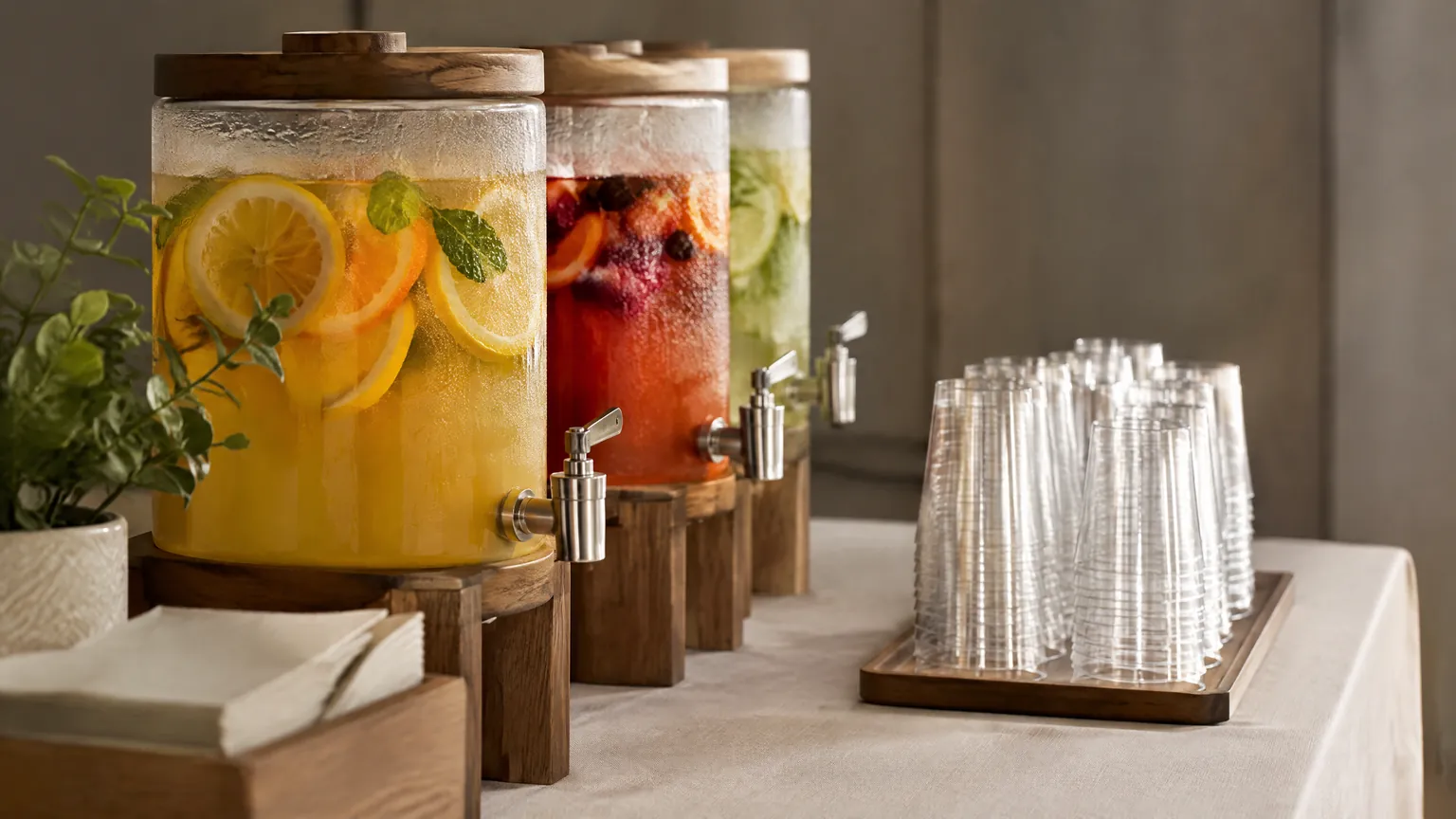
A drinks station has a different rhythm from dessert collection. People pause to choose a beverage, fill a cup or remove a bottle cap. Some return for water without wanting more dessert. Where the room permits, place drinks on a separate surface with a clear route back to the seating area. If the tables must be adjacent, test whether someone waiting for a drink blocks access to the sweet portions.
The Drinks Catering resource describes bottled beverages, bulk drink formats and beverage-station arrangements. Those are useful starting points for discussing how guests will collect refreshments, but they are not confirmation of the equipment or service available for your wedding. Ask which format is proposed, whether cups and dispensing equipment are included, how replenishment works and who attends the station. A drinks order alone does not settle those duties.
For a small post-ceremony gathering in a family flat, a sideboard may suit a modest beverage selection while the dining table holds desserts. Test the doors and drawers before approving it: the surface may be needed to reach household items, and a guest may set a used cup beside clean ones. Keep the receiving boxes somewhere else so they do not consume the space intended for serving. The example is a layout exercise, not a claim that every home can support the same setup.
In a venue with existing coffee service, confirm what is genuinely available during the dessert period. Coffee, water, cups and clearing may be managed by different people. Give spills a named response rather than leaving a cloth near the dispenser and assuming someone will notice. If electrical equipment is proposed, have the venue approve its position and cable route. The FSD guidance specifically says electrical wiring should not impede passageways.1
Allocate tableware by task and owner
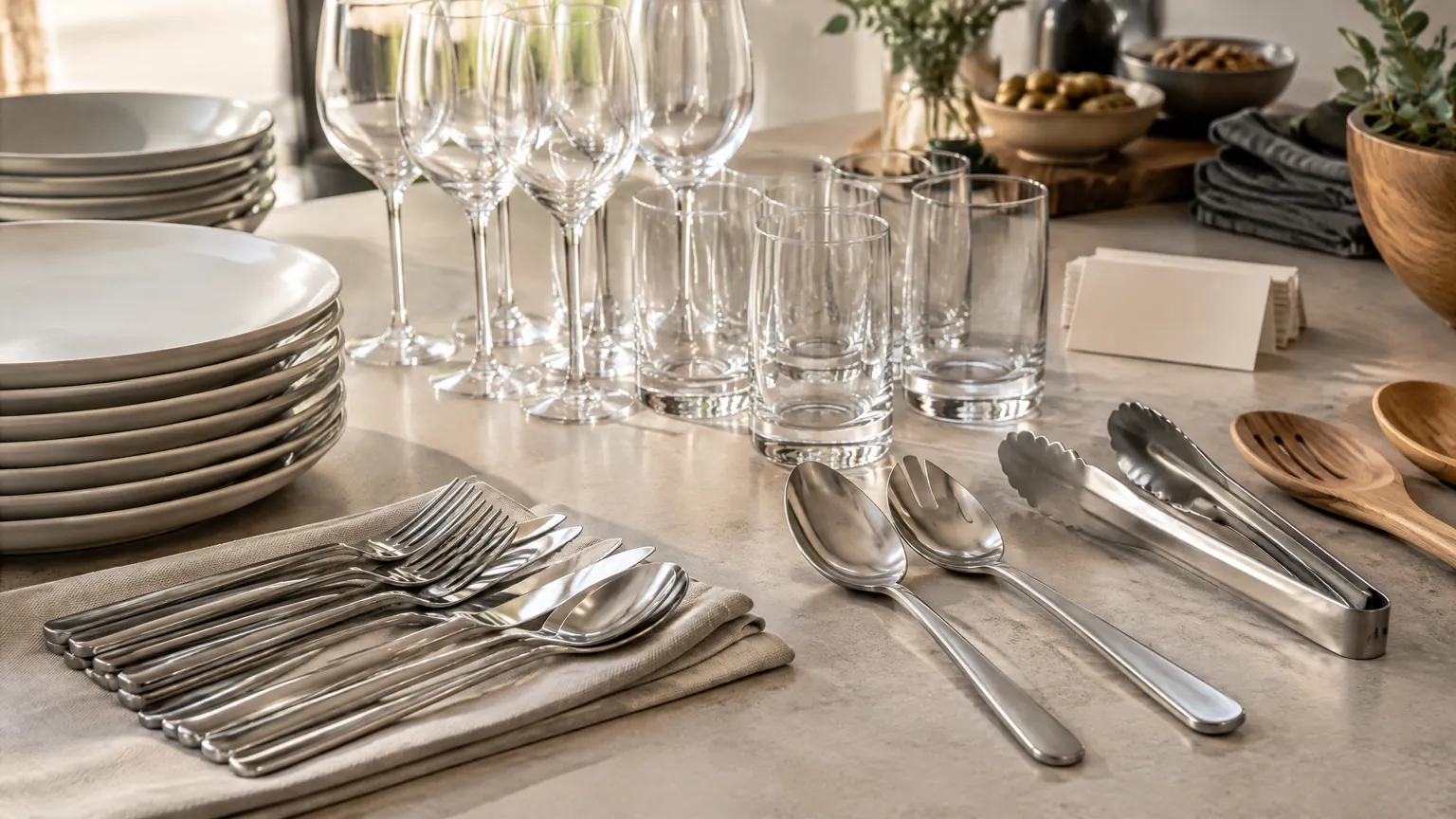
Walk from the plate stack to the desserts and then to the nearest seating. Ask whether the guest can carry everything comfortably. Dessert cups may still need spoons; pastries may need plates; a serving tray may need its own utensil. Count the different uses before settling quantities. Do not infer that a main-meal place setting can serve the dessert period if it is expected to be cleared earlier.
As a separately identified service-information resource in this same-owner journal, YumYum's Tableware Rental page outlines plates, glasses, cutlery and serving equipment. It is not an offer of equipment services from GotGear. The page does not settle a wedding-specific inventory or return process, so ask the relevant provider to confirm the actual items, quantities, handling instructions and return arrangements. Check what the venue already supplies before agreeing additional items.
Assign ownership to every group of objects. The venue's glasses, the provider's stands and the family's cake knife should not enter one unmarked return box. Use a private item list and, where practical, separate containers approved by their owners. Ask who supplies these containers. A note saying that tableware is provided is incomplete if nobody knows where used pieces should go or who will check them at the end.
Consider the return path while the room is still empty. Guests should not need to place used plates beside untouched desserts because that is the only visible surface. Agree a collection point and who moves items from it. Confirm whether washing is required, whether the venue permits it and who performs it. If no washing arrangement exists, do not improvise one on the day or assume that collection means the same thing as cleaned return.
Walk the receiving and replenishment routes too
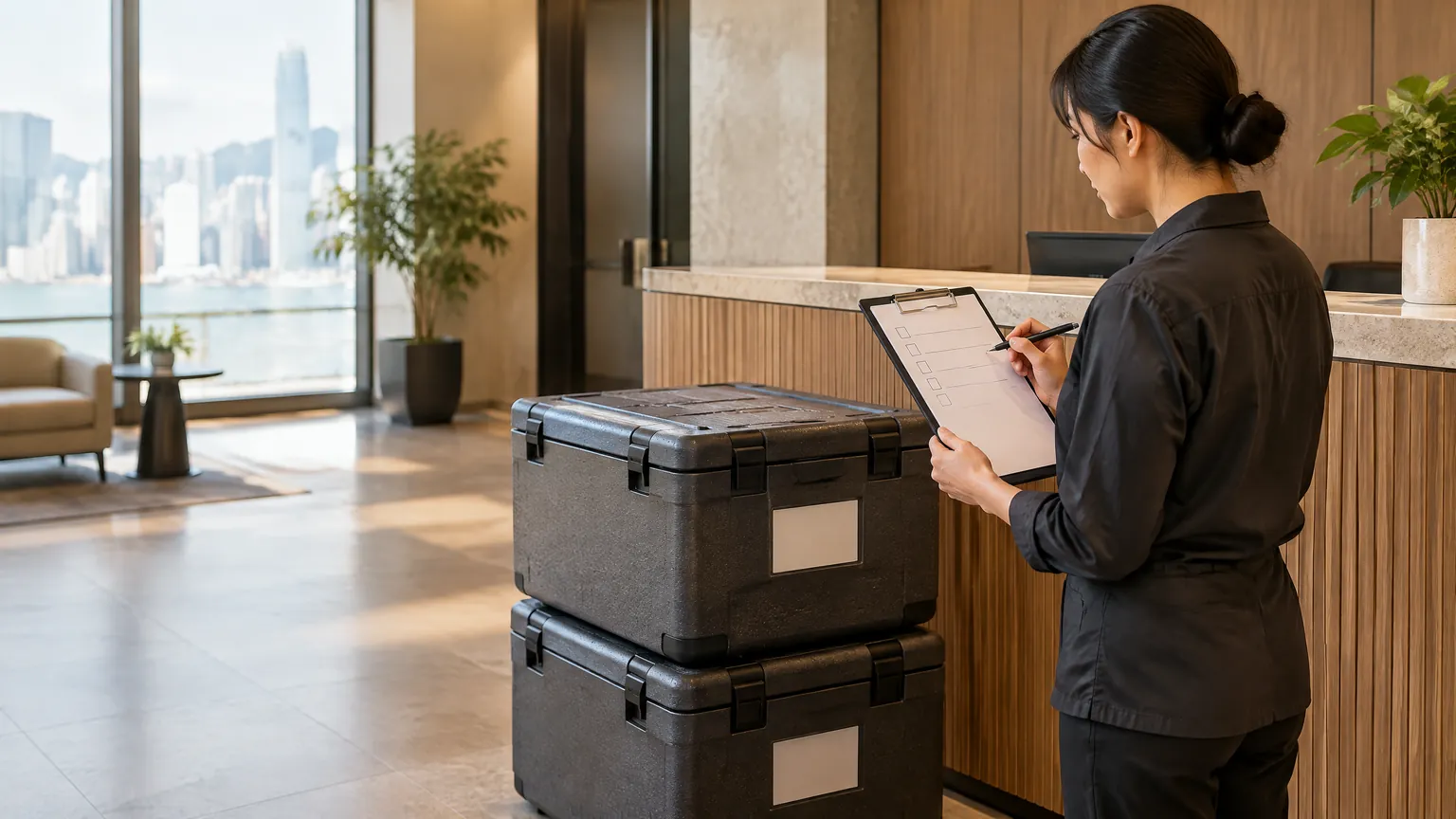
The dessert area's usefulness depends on what happens before guests arrive. Trace the route from the building's permitted receiving point to the room, including lifts, doors and any reception desk. Ask the venue about access permissions and available receiving space. Confirm the handover window with the provider; do not build the event schedule around an unconfirmed arrival promise. Someone needs to be available to receive and check the consignment.
Imagine a reception room above a busy commercial lobby. The organiser may be upstairs preparing the ceremony while food boxes arrive at the agreed point below. Give a named contact the room details and a way to reach the coordinator. That person should know where the boxes can go next and which items require prompt attention from the provider. Leaving every transport container beside the dessert table can undo the clear route established during the walkthrough.
Then trace the replenishment journey without using the guest queue as a working corridor. Ask where replacement portions are held and how an empty tray is removed. CFS guidance advises protecting food during transfer and avoiding topping up a displayed batch with a fresh one.2 Use that advice to request a clear replacement arrangement from the food provider, rather than asking a friend to combine trays whenever the display looks sparse.
Agree what happens if the dessert period moves because photographs or speeches overrun. The coordinator should contact the person responsible for food holding before announcing a revised serving time. A later invitation to eat is not automatically acceptable for food already displayed. Ask the provider to decide the appropriate response for the actual items and conditions; the room plan cannot determine that on its own.

Tie dessert service to the wedding schedule
The Wedding Catering page discusses buffet, banquet and reception formats. Read it as a format resource, then describe your actual sequence to the provider: ceremony, photographs, meal, speeches and dessert collection. Confirm whether desserts belong to the main meal arrangement or a separate serving period. Broad descriptions of wedding service should not replace agreement about setup, guest assistance, clearing and departure duties.
Make a brief task sheet rather than a second decorative mood board. For each stage, record the responsible person and the agreed location. Receiving, setting out food, monitoring the table and returning objects are different tasks. They can be assigned to the same person only if that person has accepted them and can realistically be present. Do not give a relative both ceremony participation and an uninterrupted station-monitoring role without discussing the conflict.
Finish the walkthrough by describing the room after the last dessert is collected. Ask where reusable items, waste and transport boxes will wait without blocking routes. Record who counts the items, who signs the handover and what happens if an owner cannot collect immediately. A tidy tabletop is not the end of the arrangement if someone still has to move the boxes before the venue closes.
A short checklist before approving the display
- Obtain the venue's approval for the occupied layout and clear routes.
- Confirm the display footprint and where replacement desserts will wait.
- Agree the drinks format, cup provision and spill response.
- Reconcile tableware by use, quantity and owner.
- Name the receiving, monitoring, clearing and return contacts.
- Record who must be contacted if the dessert-serving time changes.
Approve the display only when these decisions fit the same room and schedule. If the support tasks do not fit, simplify the presentation or ask about another serving format. The most useful dessert area is one guests can approach comfortably and the organisers can manage through to the final handover.
Common questions
Can the dessert table sit immediately beside the entrance?
Only consider it after the venue approves the layout and you test arrival, queuing and departure together. Keep required routes clear; a table that fits against the wall may still obstruct movement when guests gather.
What should we do if the room has no confirmed chilled holding space?
Ask the dessert provider which formats and serving conditions are feasible. Do not assume air conditioning replaces chilled holding. Change the dessert choice or serving arrangement if suitable conditions cannot be confirmed.
Does a venue's plate provision cover the dessert area?
Not automatically. Confirm which plates remain available after the meal, whether spoons and serving utensils are included, and who collects, washes and returns each item.
Who should receive the dessert boxes while the couple is taking photographs?
Choose a named contact who has accepted the task and can reach the agreed receiving point. Give them the handover details, approved storage location and provider contact, rather than leaving the duty to whichever relative is nearby.
Sources & what they support
Each reference supports only the stated scope. Citations are not independent endorsements of YumYum or its branches and do not confirm a provider’s current arrangements or any individual outcome.
- Fire Services Department: Fire Safety Requirements and Recommendations for Temporary Places of Public Entertainment and Non-designated Use of Venues (opens in a new tab)
October 2025 guidance calls for clear passageways, non-obstructing electrical wiring and unobstructed hall staircases, exits and exit routes. The article notes the document's specific venue scope and asks the venue to confirm applicable conditions; it makes no universal clearance or compliance claim.
- Centre for Food Safety: Keeping Your Buffet Safe (opens in a new tab)
No-cooking examples include tiramisu and cut fruit. Display guidance supports not displaying food too early, keeping cold foods cold, using small portions to shorten display time, protecting food in transfer and avoiding topping up an existing displayed batch with fresh food. Used to frame provider questions, not restaurant production instructions.