Balayage or ombre: the useful question is where brightness begins
This column offers salon and styling information and links to Vit So, a hair website under the same ownership. Hair services are provided by Vit So, not GotGear.
The short answer
Choose by the position and spread of the lightness, not the trend label. Balayage usually describes hand-painted placement, while ombre describes a more continuous change towards lighter ends. Either can leave the roots dark. Mark where the first bright pieces appear, where lightness becomes dominant and how much pale length remains after your intended haircut. Those details make a reference photo useful, while your colour history and hair condition determine what is feasible.
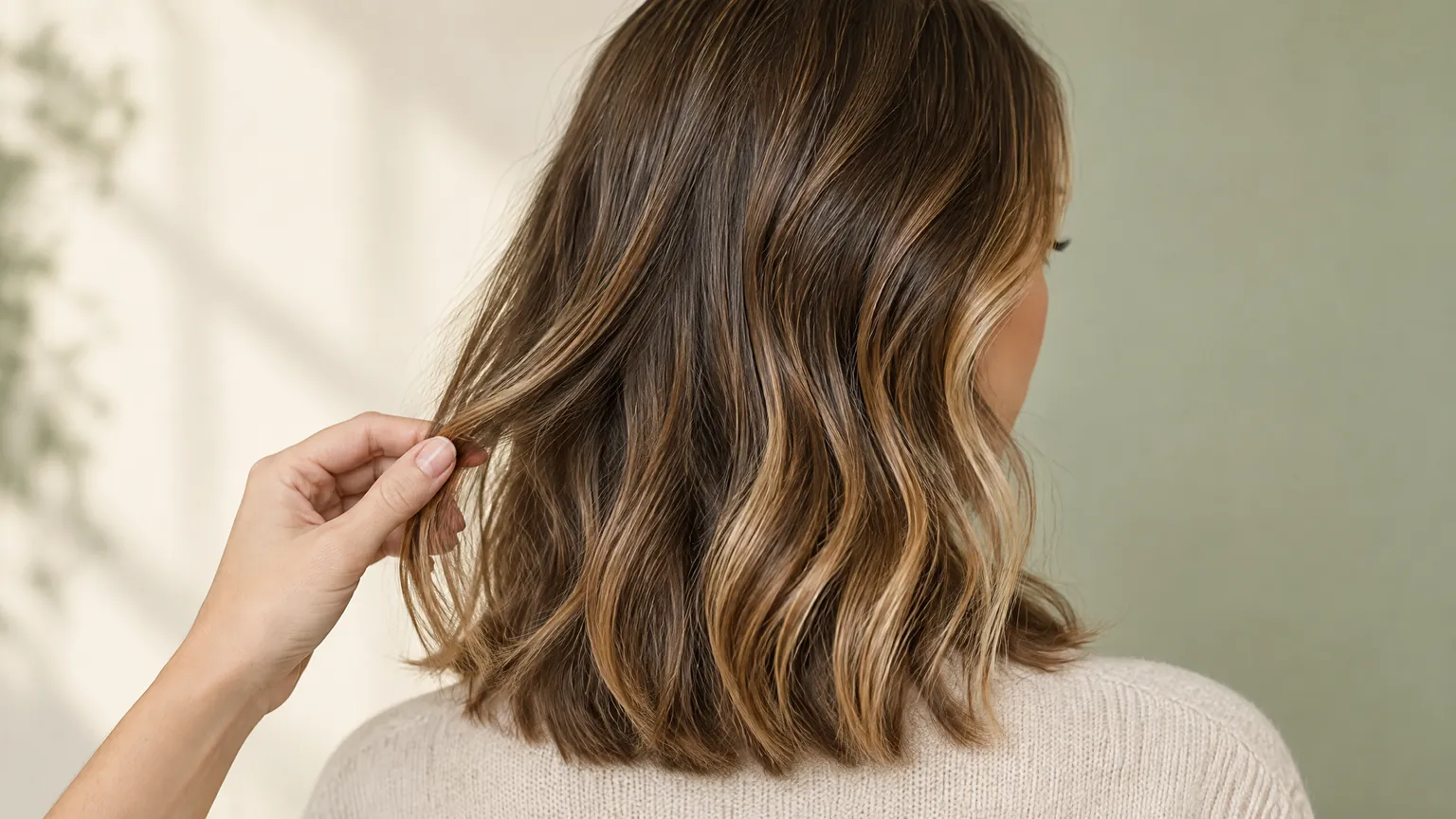
A photograph can make two very different colour arrangements look equally soft. One may contain scattered light ribbons among dark lengths; another may keep the upper half deep before becoming broadly light at the bottom. Asking for a natural finish does not distinguish them. Asking where brightness should begin does.
For a useful comparison, look beyond the first light strand. Identify where lighter colour starts to dominate and where the brightest end section begins. These points describe the shape of the transition. They also help explain why a colour you like on long, waved hair may feel different on your own shorter, straighter cut.
The names describe different parts of the design
Wella Professionals describes traditional balayage as freehand painting focused on selected sections and the hair's surface. Its ombre comparison describes a broader, horizontal progression through the lengths and ends. Some balayage pieces can begin higher than others, whereas an ombre design generally emphasises an overall gradient. The methods can be combined rather than treated as mutually exclusive choices.1
That makes the labels useful starting vocabulary, but incomplete instructions. Balayage does not specify the amount of dark hair left between the lighter pieces. Ombre does not specify how pale the ends must become or how abruptly the transition should read. Nor does either name tell you whether the original root colour will remain untouched.
Use this table to compare what you actually want to see. It describes design choices, not guaranteed results or a menu of services available at every salon.
| Visual decision | Scattered painted brightness | A more continuous gradient | What to explain |
|---|---|---|---|
| First visible light | Individual pieces can emerge at different heights | Lightness gradually appears across a broader area | Point to the first brightness you want near the face and at the back |
| Dark hair through the lengths | Dark spaces remain between lighter ribbons | Darkness becomes less dominant towards the bottom | Say whether you still want visibly dark strands at the tips |
| Lower section | A mix of lighter and darker pieces can remain | The ends can form a more consistently light area | Describe how much of the final length should look light |
| Front versus back | The front can be brighter than the rest | The overall gradient can still have front adjustments | Show both views rather than one face-framing photograph |
| Transition after a haircut | Some longer ribbons may be removed | A trim may remove much of the brightest section | Agree the retained length before judging the colour proportions |
Mark three points, not one colour boundary
Imagine tracing a reference from the scalp downwards. The first point is the earliest visible light piece. The second is where the hair starts to look more light than dark overall. The third is where the brightest lower section becomes established. You need not measure these precisely; their relationship is what matters.
First brightness is not the same as overall brightness
A small light piece beside the cheek can make the front look bright even when the crown and most lengths remain dark. If that is the detail you like, say so. Asking for brightness to start at cheek level across the whole head could describe a much larger change than the photograph suggests.
Conversely, a reference may show no especially pale face-framing strand but a wide light area below the shoulders. The impression comes from the amount of hair lightened lower down, not an early starting point. Keep those preferences separate when comparing pictures.
Vit So's balayage service description is a place to check how painted placement is discussed. Use it alongside your marked reference, then ask which areas would actually be included rather than treating the name as a complete brief.
The length of the blend changes the proportions
A long transition leaves more intermediate colour visible between the dark upper area and the light ends. A shorter transition gives the lower section a stronger presence. This is not simply a choice between good blending and bad blending: you may deliberately prefer a more noticeable change in depth.
Describe the transition you do not want as well. For example, you might dislike a horizontal band but also dislike light strands running almost to the scalp. That leaves room for an extended blend through the middle without asking for maximum brightness everywhere.
Judge the placement in the hairstyle you actually wear
A colour plan should make sense with your ordinary parting, texture and tied-up styles. Bring a photograph of your own hair as it normally falls, not only an inspiration picture with carefully arranged waves. Wella's comparison notes that balayage can vary in surface placement and in how much darker hair remains underneath.1 Those details become important when hidden layers turn outwards.
If you wear a low ponytail during work, show that view. If you change your parting, show both positions. A light section that is prominent on one side may sit underneath on the other. There is no need to colour every concealed area simply because it exists, but the intended visibility should be deliberate.
For an ends-focused change, Vit So's ombre hair information can help frame questions about the blend and the lower section. The useful enquiry is how the intended gradient works with your retained haircut, rather than whether a photograph carries the right label.
A hypothetical shoulder-length example
Consider a hypothetical reader with dark, shoulder-length hair who plans to cut it to a bob. Their reference shows long hair with the brightest colour concentrated well below the shoulders. They also wear their hair straight for most of the week and tie it back for exercise. This is an illustrative situation, not a reported client result.
Copying the reference's starting height without discussing the cut could leave little bright colour in the finished bob. Moving all the lightness higher, however, would change the dark-to-light proportions they liked. A better conversation compares the final length first, then whether selected ribbons or a shorter gradient expresses the same preference within that space.
The reader should also show the tied-back view. Brightness only on the top surface might not address what they want visible around the sides. None of this establishes chemical suitability; it simply makes the intended appearance clear enough to assess.
A soft-looking transition is not a safety assessment
The amount of lightening matters separately from how smoothly it is distributed. The American Academy of Dermatology warns that appearance-changing treatments can leave hair dry and brittle. Its colouring guidance also says that lightening more than three shades requires stronger peroxide and causes more damage.2 A softly blended photograph therefore does not prove that its colour process was mild.
Separate three parts of your current hair when describing its history: new growth, previously coloured middle lengths and older ends. Record home dyes as well as salon work. Include earlier bleach, henna, perms and straightening if those treated lengths are still present. Approximate dates are useful; an honest gap is better than guessing a product or treatment.
Explain existing roughness, frequent tangling or breakage before asking for paler tips. Ends-focused colour is not automatically a conservative choice if the ends are already fragile. Ask what can be retained without further lightening and whether the target needs to be adjusted or deferred. A haircut and a colour change may need to be considered together, not agreed as unrelated jobs.
Scalp reactions are a separate issue from hair breakage. The FDA advises following product directions and carrying out the specified skin test before each use of hair dye. It explains that a reaction can occur despite previous trouble-free colouring, and even a negative skin test does not rule out a later reaction.3 Tell the salon about previous reactions and ask about preparation for the actual products proposed.
Do not proceed with colour on an irritated or damaged scalp; this is also part of the FDA's safety advice.3 Persistent irritation, pain or sudden marked hair loss calls for assessment by a qualified healthcare professional. A salon consultation concerns cosmetic design and handling, not diagnosis or treatment of those symptoms.
Separate root upkeep from tone upkeep
Leaving a natural dark root area can make new growth less conspicuous than a design with strong lightness immediately at the scalp. Wella explicitly makes that softer-regrowth point conditional on working with the natural root colour.1 If the plan includes changing the base colour too, do not assume it has the same upkeep implications.
Lightened placement and the tone over it are also different. Wella's balayage guide explains that the lightened pieces remain while toner may need refreshing to maintain the intended finish.4 Hair looking warmer does not, by itself, mean that the lightened areas need to be bleached again.
When assessing a later appointment, name the change you are seeing. Has the dark upper section become longer? Are the ends still light but less muted? Has a trim removed the brightest area? These are different concerns. They should not automatically produce the same request to repeat the original service.
Avoid choosing a colour on the promise that it needs no attention. Instead, decide what you are willing to let change. A reader comfortable with deeper roots may still care strongly about a cool finish. Another may accept warmth but dislike the bright section moving farther down. Those preferences are more useful than a universal refresh interval.
Care for the lengths you want to keep
Maintenance is not only about preserving tone. Gentle handling matters when you want to retain coloured length. The American Academy of Dermatology recommends gently shampooing the scalp rather than rubbing shampoo through the lengths, using conditioner after shampooing and absorbing water with a towel rather than vigorously rubbing the hair.5
Detangling advice should fit the texture. The Academy advises allowing straight hair to dry a little before gentle wide-tooth combing, while textured hair or tight curls should be combed damp with a wide-tooth comb.5 Avoid imposing one routine on every hair type simply because the colour technique has the same name.
If a reference appeals mainly because of its curled styling, consider whether you want to reproduce that styling regularly. The Academy advises lower heat, shorter contact and less frequent use of hot tools.5 Choosing placement that you enjoy in your normal texture avoids making daily heat styling a condition of liking the colour. Sun protection also matters for dyed or bleached hair; the Academy recommends a wide-brimmed hat.2
Turn the comparison into a short consultation brief
If the photos leave you unsure whether you want distinct strands or a broader light area, Vit So's balayage vs highlights guide offers related terminology. Use it to sharpen the visual description, not to choose a method before your current hair has been assessed.
Prepare the following details before sending an enquiry:
- Mark the first visible light, the point where lightness becomes dominant and the brightest lower section on one reference.
- State whether the front should be brighter than the back, and whether dark strands should remain visible at the ends.
- Include current front, side and back photographs in ordinary light without a colour filter, plus a tied-up view if relevant.
- Describe the haircut you intend to keep, including any planned shortening before or with the colour work.
- List chemical treatments still present in the lengths, current breakage or roughness, and any previous product reaction.
- Explain which future changes you can accept, then ask about suitability, included work, preparation and follow-up care.
A brief can be plain: you want to keep a deep crown, see a few lighter pieces near the face and have a visibly lighter lower section, but not a sharp band. Add whether you wear it straight and whether you plan a trim. This communicates more than several trend names without committing the stylist to a process.
Confirm the work, not just the label
Before agreeing to an appointment, check whether the proposal includes a base-colour change, lightening, toner, a haircut and finishing. Ask what is outside the agreed scope and obtain the applicable total before extra work proceeds. A design description does not establish what an individual service entry includes.
GotGear and Vit So are under common ownership. The linked pages are related service information and reading resources, not independent recommendations or evidence of a promised result. Suitability and the actual appointment arrangements need confirmation directly with the provider.
The strongest decision is a clear description of the brightness you want to live with. Keep the three transition points in view, compare the dark spaces as carefully as the light ends, and check the proportions against the finished haircut. The technique name can follow that discussion; it need not do all the explaining.
Common questions
Can balayage and ombre have the same starting height?
Yes. A similar starting height does not make the whole distribution identical. Compare whether lightness appears in separated pieces or across a broader lower area, and how much darkness remains between them. The first bright strand is only one of the three transition points worth showing in a reference.
Should I choose my haircut before the colour transition?
Discuss the retained haircut before agreeing the placement. A substantial trim may remove the palest part of an ends-focused design, while shorter hair provides less length for an extended blend. This does not dictate a cutting sequence; it means the intended final length belongs in the colour consultation.
Does a dark root area mean the colour needs no upkeep?
No. Keeping your natural root colour can make new growth less conspicuous, but the tone and condition of the lighter lengths still matter. A change in warmth, the transition moving downwards and a trim removing bright ends are separate issues. Ask which concern a proposed refresh would address.
What if I like the front of one reference and the ends of another?
Show both and identify the specific feature you want from each. For example, distinguish a small bright face frame from a wide pale lower section. Also show your current back view and normal texture. Combining visual preferences is a discussion starting point, not a guarantee that both are feasible together.
Sources & what they support
The scope below identifies the information supported by each reference; a citation is not an endorsement of a salon or a guarantee of results.
- Wella Professionals: Balayage vs. Ombre Hair: The Differences to Know (opens in a new tab)
Professional colour terminology: traditional freehand surface placement, broader ombre gradients, variable starting heights, retained darker layers and softer regrowth when the natural root colour is used. Used for technique descriptions, not product endorsements.
- American Academy of Dermatology: Coloring and perming tips for healthier-looking hair (opens in a new tab)
Cosmetic chemical treatments can leave hair dry and brittle; greater lightening requires stronger peroxide and causes more damage; sun protection for dyed or bleached hair. Does not establish individual suitability.
- U.S. Food and Drug Administration: Hair Dyes (opens in a new tab)
Follow product instructions and skin-test directions before each dye use; prior tolerance and a negative skin test do not eliminate reaction risk; avoid dyeing an irritated or damaged scalp and seek healthcare help for reactions.
- Wella Professionals: What is Balayage? Your Complete Guide (opens in a new tab)
The distinction between retained lightened pieces and toner that may need refreshing to maintain the intended finish. No universal refresh interval or product recommendation is adopted.
- American Academy of Dermatology: How to stop damaging your hair (opens in a new tab)
Gentle scalp shampooing, conditioner after shampooing, non-rubbing towel handling, texture-specific wide-tooth combing and reducing heat exposure. General care rather than diagnosis or guaranteed repair.