Side control without assumptions: what to ask before a cut or down perm
This column offers salon and styling information and links to Vit So, a hair website under the same ownership. Hair services are provided by Vit So, not GotGear.
The short answer
Choose between cutting and chemical side control by deciding what hair you want to keep, not simply how narrow you want the sides to look. A fade removes length and creates a graduated outline; a down perm aims to bring retained side hair closer to the head. Neither is automatically necessary. Before arranging a salon visit, explain your preferred coverage, previous chemical treatments and normal styling routine, then confirm the proposed cutting and treatment areas separately.

Start with the length you are unwilling to lose
‘Make the sides less wide’ sounds clear until someone has to decide what to cut. You might mean removing the bulky edge above the ear, keeping that edge but making it lie closer, or changing the connection between the sides and a fuller top. Those requests can lead to visibly different haircuts. Establish your minimum coverage before choosing a technique, particularly if you dislike exposed skin or are growing your hair longer.
Look at your hair with your usual parting rather than a newly created salon finish. Identify what you want to remain: a covered temple, some hair above the ear, a longer sideburn, or a soft connection to the back. Then identify the area that looks too wide. The unwanted width may be higher than the length you are prepared to lose. Treating the entire side as one problem makes that distinction easy to miss.
Use ordinary descriptions before technical names. ‘I want the ear visible but the temple covered’ is more informative than ‘shorter, but not too short’. ‘Keep the side panel while reducing its outward projection’ is different again. You do not need to prescribe a cutting method yourself. You do need to make clear which change would leave you unhappy, because removed length cannot be restored during the same appointment.
Compare the change, not just the narrow silhouette
Cutting reduces length and can redistribute the shape of the remaining hair. A fade uses a transition between shorter and longer areas; it is not automatically a request for bare skin. Chemical side control instead considers how hair left in place sits. It does not remove the need to decide on a haircut, and it should not be treated as a general instruction to flatten the top.
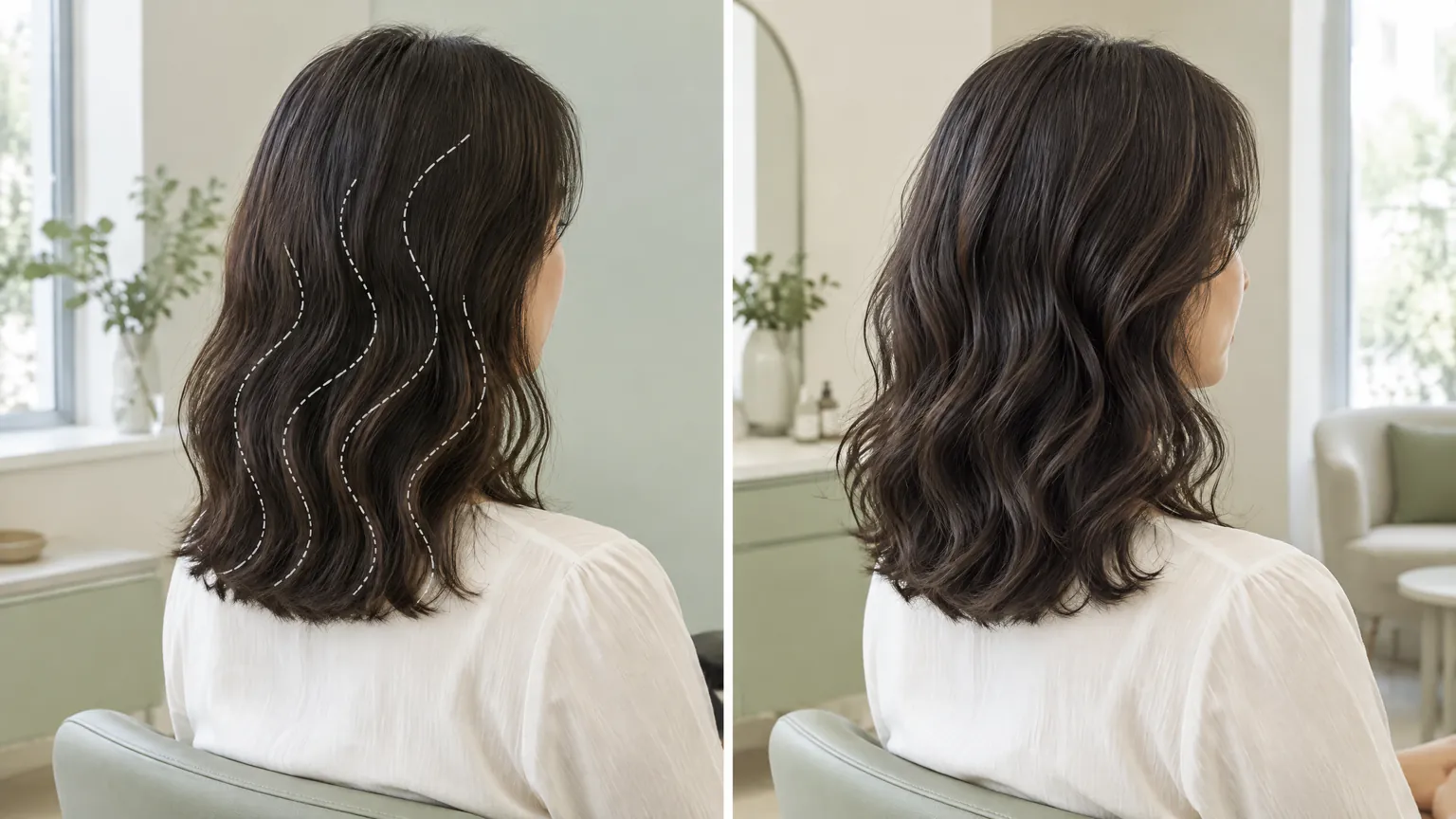
Two reference photographs may show similarly compact sides while keeping very different amounts of hair. One could have a short graduated panel; another could have a longer, covered panel arranged nearer the head. The image alone also cannot establish whether styling product or a chemical process created the finish. Compare visible coverage and the transition into the top, then ask what would be feasible on your own hair.
| Option to discuss | What changes | What you may want to protect | Question that clarifies the decision |
|---|---|---|---|
| Covered cut without chemical reshaping | Length and the distribution of fullness | Hair over the temple or above the ear | Can cutting alone reduce the unwanted width without crossing my coverage limit? |
| Fade | The graduation from shorter to longer hair | A chosen minimum length and blend height | Where will the shortest area begin, and will any skin be exposed? |
| Local chemical side control | How an agreed retained section sits | Side length and the outline elsewhere | Which strands would be treated, and is their current condition suitable? |
| Cut with side control | Both the retained shape and its direction | A coherent connection between sides, top and back | What does each part of the work contribute, and what stays untouched? |
| Grow-out with limited tidying | Progress towards a longer side shape | Length already gained | Which edges can be tidied without restarting the side panel? |
For a related-brand explanation of these choices, Vit So's down perm vs fade guide is a useful scope-checking resource. Read it alongside your own coverage limits rather than using its title to decide the service in advance. A preference for closer sides does not establish that chemical treatment is needed, and a preference against chemicals does not oblige you to choose a very short haircut.
Observe the side problem before changing your routine
Separate ordinary direction from temporary flattening
Take a front view and a view of each side after your usual wash and drying routine, before pressing everything down with a strong styling product. Keep the ear and temple visible. If one side behaves differently, show that rather than assuming both sides need identical work. These photographs communicate the location of the concern; they are not a substitute for examining the hair and scalp in person.
Next, describe when the outline bothers you. Does it project immediately after drying, become wider when you sweep the top backwards, or change where the arms of your glasses sit? If a cap is part of your day, explain what the hair looks like after you remove it. There is no need to invent a reason for each change. The useful information is what happens under conditions you actually encounter.
Keep the top out of an automatic side-treatment request
A reference with a lifted crown, wavy fringe and compact sides contains several design goals. Ask which one matters to you. If you like your existing top, say that it should remain as it is. If you want movement there as well, raise it as a separate enquiry rather than assuming it is included in a side-control service. This also prevents a narrow-side reference from becoming permission for more chemical work than you intended.
GotGear and Vit So share ownership, so the links here are related-brand information, not independent endorsements. Vit So describes its down perm service as an enquiry about bringing projecting side hair closer while discussing the length to retain. Use the page to identify the stated service, then ask what treatment boundary and assessment would apply to your request; the name does not establish a universal product or procedure.
Chemical history belongs in the first enquiry
A small side section still contains hair and sits close to skin. ‘Only the sides’ is therefore not a reason to omit previous processing or reactions. The American Academy of Dermatology notes that appearance-enhancing treatments can leave hair dry and brittle, and advises caution with perming, correct processing timing and following product instructions.1 These are general precautions, not a finding that every side-control treatment is appropriate or inappropriate.
List colour, bleach, straightening and earlier perms with approximate dates and the areas involved. Include home treatments. If you do not know a product name, say so rather than substituting a guess. Mention whether previously treated lengths may still remain around the temples. A short-looking haircut does not itself answer which sections have already been processed. An old appointment record or packaging photograph may help clarify what you cannot recall.
The FDA warns that hair dyes and relaxers can harm hair, skin and eyes, and advises following directions, not exceeding the stated processing time and rinsing properly.2 Relaxers and products sold under a down-perm service name should not be assumed to have identical formulations. The practical implication is to ask what is proposed and what precautions its instructions require, rather than borrowing a procedure from an unrelated online tutorial.
Describe existing roughness, breakage or discomfort without trying to diagnose it. Ask whether the assessment favours cutting alone, temporary styling or postponing chemical work. Do not book another process as an automatic way to correct hair that feels fragile. Likewise, do not use a photograph of a desired shape as evidence that your present hair can tolerate the method used to create it.
Tell the stylist immediately if a product causes excessive stinging or burning during processing. The AAD advises washing off perm solution immediately in that situation and consulting a dermatologist.1 The FDA also advises stopping a product and contacting a healthcare provider after a bad reaction.2 Persistent irritation, pain or sudden marked hair loss warrants assessment by a qualified healthcare professional, not a cosmetic side-control appointment.
Make the booking enquiry different from permission to proceed
A clear initial message lets a salon discuss the right scope, but it is not consent to every technique that might produce the reference image. State the present problem, what must be retained and whether you are open to chemical treatment. Ask what information is needed to assess the request. Keep the final decision on treatment and cutting boundaries for a conversation that takes your actual hair into account.
For a combined enquiry, Vit So's haircut and down perm description distinguishes the haircut decision from side control and identifies a combined service entry. Confirm which entry matches the work being discussed, its inclusions and the applicable total. Do not infer added top curls, other chemical services or an unrestricted treatment area from a package name. This is clarification of the proposed work, not a promise that it can proceed.
Vit So's stated location is 252 Hollywood Road, Sheung Wan. If enquiring there, confirm appointment arrangements and the time to allow after the scope has been discussed. A preferred date in your message is not a confirmed appointment. Do not rely on a presumed walk-in arrangement or assume that the whole reference style can be completed during one visit.
Use a short checklist before agreeing to the work
- Show the dry front and side views, and point out the exact area whose width you dislike.
- State the coverage that must remain, including whether exposed skin is acceptable anywhere.
- Share chemical history and previous reactions, naming uncertainties rather than guessing.
- Ask what cutting alone could achieve and why any chemical step is being considered.
- Confirm the cutting boundary, treatment boundary, untouched areas, inclusions and total before proceeding.
- Ask for product-specific washing and styling instructions, and clarify whom to contact if discomfort or an unexpected problem develops.
Review the proposal in the mirror from the side as well as the front. If the intended treatment area has changed after assessment, pause and clarify it before application. The same applies if the proposed cut is shorter than your original limit. A successful enquiry is one that supports a clear decision, including a decision to do less work or defer part of it.
A hypothetical choice: keeping coverage while reducing width
Consider a hypothetical reader who wears glasses, likes a longer top and wants to keep dark coverage at the temples. The hair immediately above the ears projects after ordinary drying. There is also some previously lightened hair near one temple. This is an illustrative situation, not a client account or a predicted treatment result.
The first useful question is whether reshaping the cut can reduce the unwanted width while preserving the covered panel. A fade is still discussable, but only if its shortest length and height fit that limit. Chemical control of retained hair is a separate possibility to assess, not the predetermined answer. The previously lightened section is relevant even if it is small or appears only on one side.
Suppose the reader also wants to grow the sides longer. Repeatedly shortening the entire panel would conflict with that aim. The consultation could instead distinguish protected length from an edge that might be tidied, and discuss whether the temporary outline is acceptable. If the hair assessment does not support chemical work, the reader still has a coherent brief: retain coverage, clarify a cut-only option and request a manageable styling demonstration. No result is guaranteed by that brief.
Plan for ordinary mornings, not a fixed refresh calendar
Maintenance means different things for different choices. A fade's short-to-long contrast changes as the hair grows. Retained side hair also changes in length, while newly growing hair need not sit like a previously treated section. If you are growing out the sides, some change in width may be part of retaining progress. Ask what to watch for rather than demanding one universal interval for the next visit.
The AAD recommends conditioner after shampooing, absorbing water with a towel rather than rubbing, air drying when possible and using the lowest heat setting when heat tools are used.3 These are general ways to reduce avoidable damage. They do not prove that a particular side shape will hold. Ask for a demonstration that fits your retained length and the actual treatment, without repeatedly increasing heat to force the outline flatter.
Tell the stylist whether your normal morning allows a drying routine or whether you usually leave with minimal styling. Explain regular exercise, swimming or headwear when those affect when you wash or reset your hair. Ask for the washing advice specific to the proposed product and procedure; a delay recommended for another service is not automatically applicable.
At a later enquiry, report where the outline has changed and whether the original coverage still suits you. That information can support a trim, a revised shape or a fresh suitability assessment. It should not be treated as an automatic instruction to repeat chemical processing. The most useful side-control decision keeps your preferred length, everyday routine and willingness to undertake chemical work visible throughout the conversation.

Common questions
Does asking for a low fade protect the coverage above my ears?
Not by itself. The blend position and shortest length both need clarification. Show the coverage you want to retain, say whether any exposed skin is acceptable, and ask to review the proposed boundary. A hairstyle name is not a substitute for agreeing on how much side hair can be removed.
Should I enquire about side control if my haircut already has the right length?
You can describe that as an assessment enquiry rather than requesting a new cut automatically. Show where the remaining hair projects and explain the outline you want. Whether chemical work is suitable still depends on the actual hair, treatment history and proposed process; keeping the current length does not establish suitability.
What should I say if I cannot remember an earlier treatment product?
Say that the product is unknown and give the approximate date, treatment type and sections involved. Include home processing and any reaction you remember. Available packaging photographs or appointment records may help. Do not label a section untreated just because it now looks short; let the assessment address that uncertainty.
Does renewed side width mean I should repeat the chemical treatment?
No. Describe where the shape changed, how you now style it and whether you still want the same coverage. Growth, the cut and your routine all belong in that discussion. A trim, a different shape or reassessment may be relevant; another chemical application should not be assumed to be the next step.
Sources & what they support
The scope below identifies the information supported by each reference; a citation is not an endorsement of a salon or a guarantee of results.
- Coloring and perming tips for healthier-looking hair — American Academy of Dermatology (opens in a new tab)
Appearance-enhancing treatments can cause dry, brittle hair; perming requires caution, correct timing and following instructions. Excessive stinging or burning warrants immediate removal of perm solution and dermatological advice. Does not evaluate down-perm outcomes or endorse a salon.
- Hair Dye and Hair Relaxers — U.S. Food and Drug Administration (opens in a new tab)
Dyes and relaxers can harm hair, skin and eyes; instructions, exposure limits and proper rinsing matter. After a bad reaction, stop the product and contact a healthcare provider. General chemical-product precautions, not evidence that down-perm formulations are identical to relaxers.
- 10 hair care habits that can damage your hair — American Academy of Dermatology (opens in a new tab)
General damage-reduction advice supports conditioning after shampooing, absorbing rather than rubbing with a towel, air drying when possible and using the lowest heat setting. Does not establish styling durability or a down-perm maintenance interval.