Perm coverage and movement: decide what should remain unchanged
This column offers salon and styling information and links to Vit So, a hair website under the same ownership. Hair services are provided by Vit So, not GotGear.
The short answer
Choose perm coverage by identifying what you want to keep before describing the movement you want to add. Your usual parting, fringe, outline and ability to tie your hair back can matter as much as curl size. A local change and a broader change answer different design questions; neither is automatically gentler or easier to maintain. Take a clear placement brief, your treatment history and realistic styling habits to a consultation, and leave room for the assessment to change the plan.
Start with the shape you do not want to lose
A photograph of attractive curls rarely explains which parts of your own hairstyle should stay familiar. You may like your smooth fringe, the way one side tucks behind your ear, or the flat outline that fits comfortably beneath a work cap. Before choosing a perm, name those features. The useful question is not simply how curly you want your hair to be, but where a change would help without undermining something you already rely on.
Write two short sentences: one describing the movement you want, and one describing what must remain unchanged. For example, ‘I want movement through the lower lengths, but I want my usual side part and a tidy fringe.’ This does not prescribe a technique. It gives the consultation a concrete starting point and makes it easier to recognise when a proposed design goes beyond your intention.
When checking a hair perm service description, use that brief to ask about the proposed treatment area and its relationship to your cut. GotGear and Vit So are under common ownership; this link provides access to the associated service information, not an independent recommendation. The practical value lies in clarifying the scope with the salon rather than treating a service name as a complete design.
Separate coverage from the movement you want to see
Coverage describes where treatment is proposed. Movement describes the visible shape you are seeking: a bend near the ends, a wave beside the face, or a broader change through the hairstyle. These are related decisions, but they are not interchangeable. Asking for a small treated area does not tell someone where the visible bend should begin. Asking for soft waves does not establish how much of the head needs treatment.
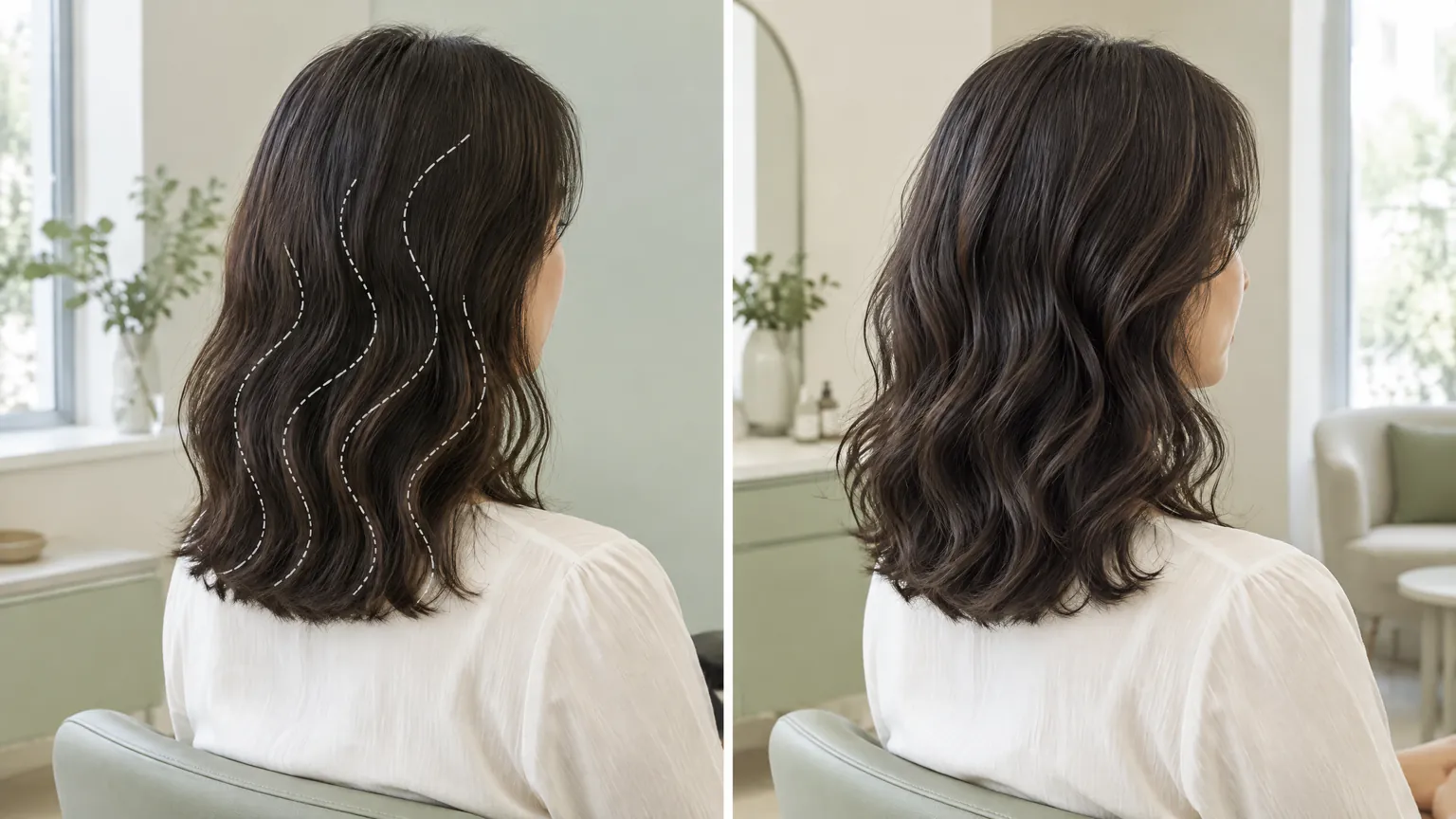
Draw a simple front, side and back outline, even if it is only a rough sketch. Mark the areas you would like to change and leave the areas you would like to preserve blank. Then indicate where you want movement to be noticeable. A marked lower section could represent a subtle change in direction or a more pronounced curl; the sketch needs words beside it to explain which you mean.
The following comparison is a consultation aid, not a promise that a particular coverage pattern will suit your hair. The salon still needs to assess its condition, previous processing and the feasibility of the requested shape.
| Starting intention | Coverage question to discuss | Feature to protect | Trade-off to clarify |
|---|---|---|---|
| Add movement near the ends | Can treatment be confined to suitable lower sections? | Smoothness nearer the scalp | Where the change would become visible |
| Change the overall texture | Which sections would need treatment across the head? | Preferred outline and parting | How the new shape would work when tied back |
| Address a specific flat-looking area | Is a local treatment appropriate for that area? | Surrounding texture | How treated and untreated sections would sit together |
| Keep a fringe familiar | Can the fringe remain outside the proposed scope? | Its usual direction and face coverage | Whether neighbouring movement would alter its appearance |
A useful proposal should explain both the treatment boundary and the intended visual effect. If those explanations remain vague, ask for a clearer map before agreeing to proceed.
Describe your usual parting before choosing curl placement
Your normal parting belongs in the design conversation because it determines which sections you see most clearly around your face. Tell the stylist whether you keep one parting, change sides, or push your hair back without a defined line. Avoid choosing placement solely from a reference photograph taken with a parting you would not normally wear.
Protect the face-framing features you already use
Describe what your fringe and front sections do in ordinary life. Perhaps you sweep them aside when reading, keep them clear of glasses, or prefer them to sit close to your cheeks. ‘Keep my fringe’ is less useful than ‘I want to continue sweeping it to the left without deliberately curling it.’ The second statement identifies a behaviour the proposed design needs to accommodate.
A service category such as women's perm is a starting point for enquiries, not a rule about the shape you should choose. Your brief should describe your actual cut, styling preferences and intended treatment area. Do not assume that a category heading settles whether the fringe, crown or lower lengths are included.
Check the outline from the side and back
Front-facing reference images can hide the most important difference between two designs. Ask to discuss the side outline, the back and the shape above the shoulders as well. If preserving a compact silhouette matters, say so explicitly. If you welcome a wider outline through the lower lengths, describe where that width would be acceptable.
Also mention how you wear your hair away from your face. A clip, low ponytail or loose bun reveals different sections from a fully loose hairstyle. The aim is not to demand identical appearances in every position. It is to identify which everyday arrangements matter enough to influence the initial proposal.
Decide whether a broader change answers your question
Broader coverage is worth discussing when your intention concerns the hairstyle as a whole rather than an isolated section. You might want movement visible from several angles or a different relationship between the upper and lower parts of your cut. That is a design intention, not proof that all sections can or should receive the same treatment.
Before asking about a full head perm, state whether you want movement near the scalp, through the lengths, near the ends, or some combination. The name alone does not specify curl placement, the handling of the fringe or the exact treatment boundaries. Ask the salon to explain what it means in your proposed service rather than relying on an image associated with the phrase.
Think through the features you would be willing to change. Would you accept a different outline around your face? Would a change through the upper sections conflict with how you smooth your hair for work? If your answer is ‘I want everything else to stay the same’, a broad texture change may not match your stated priorities. That tension is worth resolving before discussing technique.
A broader plan should also account for differences within your hair. Ends, front pieces and other sections may have different processing histories. Share those differences even if the hair currently looks similar in colour. The American Academy of Dermatology notes that appearance-enhancing treatments can leave hair dry and brittle, and specifically urges caution with perming.1 A complete history helps the salon assess the request; it cannot establish suitability by itself.
Make local coverage precise, not merely smaller
A local change can be a useful question when you want to preserve much of your current texture. However, ‘just a little’ is not a treatment map. Identify the exact section that concerns you, what movement you want there, and what should happen around its edges. The relationship between treated and untreated hair is part of the design, not a detail to leave unexplained.
If you are considering a partial perm, ask which sections would be included and why. A proposal for selected lower lengths is different from one focused on a particular upper area, even though both might be described as local. Ask how your normal parting and existing cut affect that proposal, and whether leaving a section untreated would still support the appearance you want.
Smaller coverage should not be treated as a safety guarantee. The condition of the selected hair and its previous chemical exposure still matter. A small section can contain heavily processed strands, while a larger area can include sections with very different histories. Nor should you assume a limited treatment will need less daily attention: you may still need to learn how to arrange the changed sections beside the unchanged ones.
If the proposed boundary does not make sense to you, ask the stylist to point it out on your own hair. Confirm what remains outside the treatment area, especially around the fringe and face. ‘Leave this section unchanged’ should become an agreed part of the scope, not a casual preference that disappears once the overall design is discussed.
Test the idea against your actual habits
Describe what you do, rather than what you hope you will suddenly start doing. Someone who usually lets their hair dry without deliberate styling should say that. Someone who regularly smooths sections with heated tools should say that too. Ask what handling the proposed movement would involve, and whether it conflicts with a habit you are unwilling to change.
There is a health reason to be honest about styling. The American Academy of Dermatology identifies repeated heat styling, rough towel drying, tight pulling and tugging during combing among practices that can damage hair. It recommends gentler handling, conditioner after shampooing and lower heat when heated tools are used.2 These are general care principles, not a guarantee that a perm will become effortless.
Discuss your workplace requirements as concrete constraints. If hair must be secured away from equipment or food, say how you normally secure it. If a head covering forms part of your routine, explain which areas it covers and how you arrange your hair beneath it. Do not assume that a photograph of loose curls answers questions about your working hairstyle.
Swimming and outdoor activity also belong in the conversation. The Academy notes that pool chemicals can be hard on hair and gives protective care advice for swimmers; it also recommends sun protection for chemically treated hair.1 Tell the salon about those habits so that the suggested care routine reflects what you actually do, rather than a lifestyle imagined from your reference picture.
Bring a history that distinguishes one section from another
Before the consultation, list previous colouring, bleaching, straightening and perming, including treatments performed at home. Identify which parts of your current hair were involved wherever you can. If you do not remember a product or process, say that you are unsure instead of guessing. Photographs and any records you already have can help explain the history, but they do not replace a hands-on assessment.
Report current concerns such as unusual brittleness, repeated breakage or scalp discomfort. Do not describe those concerns as something a perm is expected to repair. The Academy's guidance treats colouring, perming and relaxing as potential sources of damage and advises reducing damaging care practices.2 The appropriate conversation may therefore involve changing the proposed scope, reconsidering chemical treatment, or choosing a styling alternative.
A salon consultation is not a medical diagnosis. Persistent irritation, pain or sudden, noticeable hair loss needs assessment by a qualified healthcare professional. During a chemical service, do not silently tolerate excessive stinging or burning: alert the stylist immediately. The Academy advises removing perm solution immediately and consulting a dermatologist if excessive stinging and burning occur.1 Safety instructions for the actual product must guide professional handling.
A hypothetical example: preserve the working hairstyle
Consider a hypothetical reader with shoulder-length hair, a side-swept fringe and a low ponytail worn at work. They like their current face-framing shape but want more movement when their hair is loose. They usually dry their hair without a brush and do not want a routine built around heated tools. This is an imagined planning example, not a customer account or a predicted result.
Their first request might be ‘waves everywhere’. A more informative brief would be: ‘Keep the fringe direction and my usual side part. I want to discuss movement through the lower lengths, and I need to continue wearing a loose low ponytail.’ They would also disclose any previous processing in those lengths. That brief gives the salon several specific constraints to assess.
The consultation might explore local coverage, a broader design, a change to the cut, or no chemical treatment. None of those answers can be decided from the written brief alone. The important step is asking how each proposal affects the preserved fringe, the loose-hair outline and the working arrangement. If the proposal depends on daily styling they do not want to perform, it does not yet fit their stated priorities.
Confirm the scope in plain language
Use this checklist to prepare for the consultation and to clarify the proposal before agreeing to treatment:
- Name the parting, fringe direction and outline you want to preserve.
- Mark where you want visible movement and where you want no proposed treatment.
- Explain how you secure your hair for work, exercise and ordinary errands.
- Disclose previous chemical processing, uncertain history and current hair or scalp concerns.
- Ask the stylist to identify the included sections on your own hair.
- Clarify the everyday handling and care the proposed design would involve.
- Confirm whether cutting or any additional work forms part of the agreed scope.
- Ask what alternatives make sense if your preferred coverage is unsuitable.
Keep the final description simple enough to repeat back. You should be able to explain what is intended to change, what is intended to stay familiar, and what remains uncertain until assessment. Confirm the service scope and actual total directly with the salon; neither the coverage label nor a reference photograph settles those details.
Choosing movement does not mean abandoning every familiar feature of your hair. Equally, asking to preserve a feature does not guarantee that the rest of the hairstyle can change independently. A clear brief makes those relationships visible, allowing you to decide whether the proposed change is one you actually want to live with.

Common questions
Can I ask for my fringe to remain outside the treatment area?
Yes, make that a specific consultation request and explain the direction and appearance you want to preserve. Ask the stylist to identify the proposed boundary on your hair and discuss how neighbouring sections would sit beside the fringe. Leaving it untreated does not guarantee that the overall hairstyle will look unchanged around your face.
Does local coverage automatically mean easier styling?
No. Ease of styling depends on the proposed movement, your existing texture and the habits you are prepared to follow. You may need to arrange treated sections alongside untreated ones. Ask for a realistic explanation of everyday handling rather than assuming a smaller treatment area means less effort.
What should I bring if I keep changing my parting?
Bring photographs showing the partings you actually wear, along with a brief explanation of when you use each one. Ask how the proposed movement would sit with those arrangements. Choose reference images for specific features, such as where a bend begins, rather than expecting one photograph to describe every angle of your hairstyle.
What if only my lower lengths have been bleached?
Tell the salon which sections were bleached and disclose any other processing you remember. Do not assume those lengths are suitable for a local treatment merely because the rest of your hair was untouched. The assessment may change the proposed coverage or lead to a non-chemical alternative; the history is essential context, not approval to proceed.
Sources & what they support
The scope below identifies the information supported by each reference; a citation is not an endorsement of a salon or a guarantee of results.
- American Academy of Dermatology: Coloring and perming tips for healthier-looking hair (opens in a new tab)
Appearance-enhancing treatments can cause dryness and brittleness; perming requires caution; chemically treated hair needs sun protection; excessive stinging and burning during perming require immediate removal of solution and dermatological advice.
- American Academy of Dermatology: 10 hair care habits that can damage your hair (opens in a new tab)
Heat styling, rough drying, tight hairstyles, chemical processing and tugging can damage hair; gentler handling, conditioner and lower heat are recommended; pool chemicals can be hard on hair; concerns about thinning or hair loss warrant dermatological assessment.