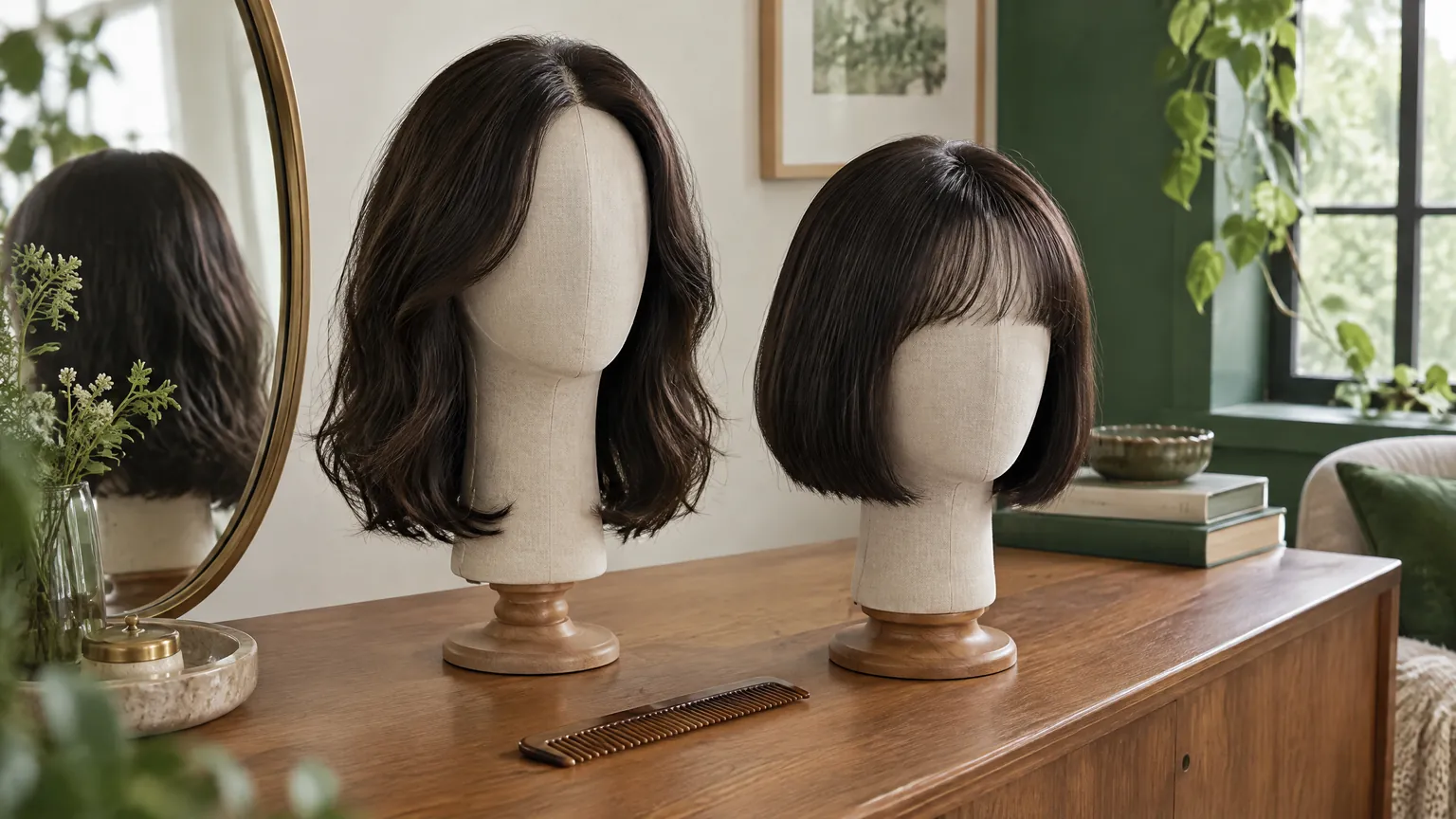
Clip-in toppers and routine hair handling: assess support first
GotGear and OWNSTRAND share the same owner. This collection is not an independent recommendation. GotGear does not supply wigs or medical treatment; actual wig services are provided by OWNSTRAND, whose only known studio is in Kwun Tong. These articles provide general information, not medical advice.
The short answer
Choose a clip-supported topper by checking where its clips will attach, not only how well it covers the top of your head. The surrounding hair must provide suitable support without being pulled tight. Ask for a placement and removal demonstration, then consider how brushing, commuting and your usual hairstyle affect the fit. Pain or persistent irritation is a reason to stop and seek advice, not a sign that you need stronger fastening.
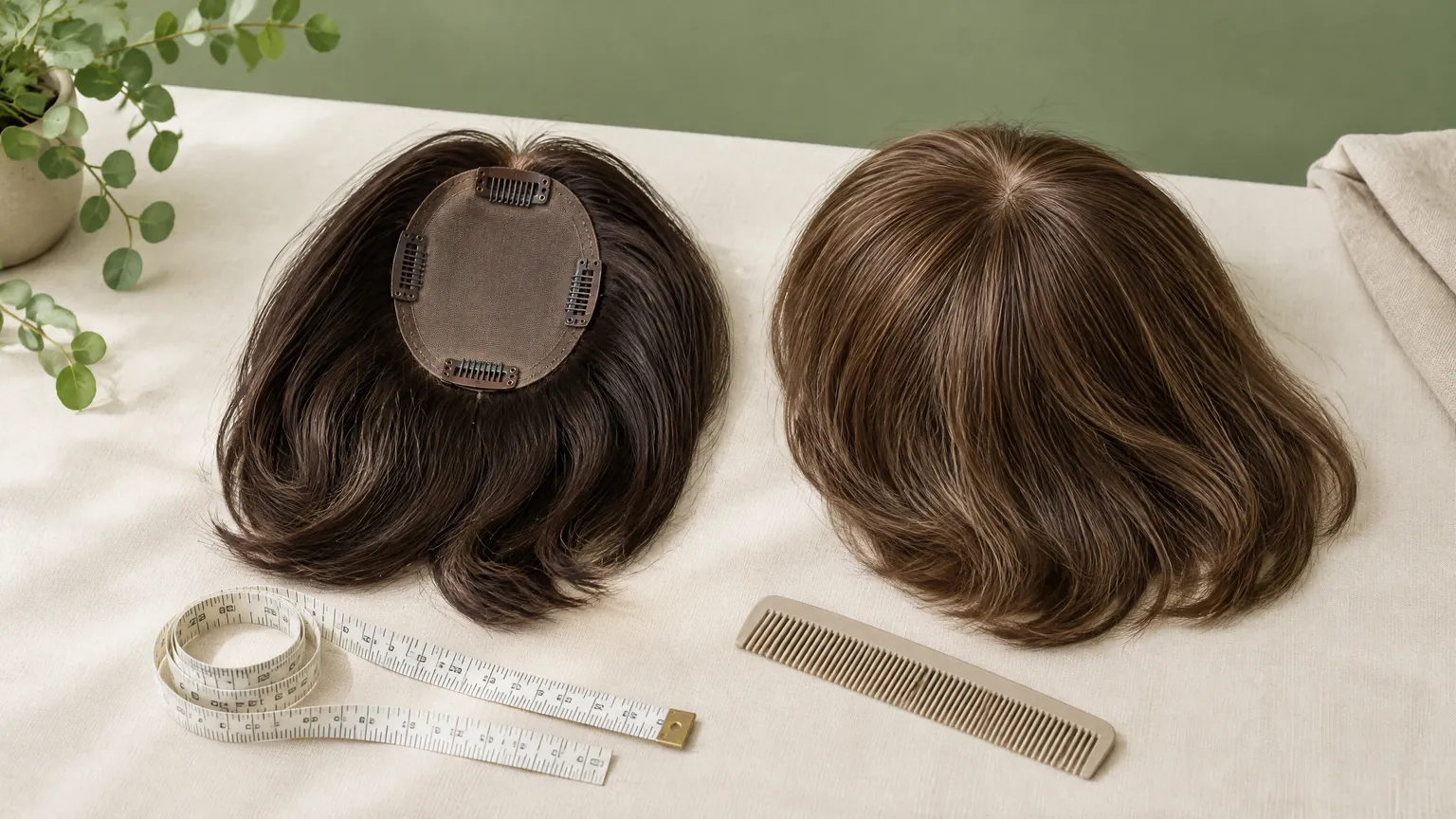
A topper that looks convincing in a mirror still needs a workable attachment routine. Colour and parting matter, but the first question is whether the clips can sit on suitable surrounding hair without pulling it. That question remains important after the first fitting: a rushed removal, a snagged brush or a tight ponytail underneath can change how the piece feels.
This is an appearance and everyday handling guide, not a way to identify the cause of thinning. The American Academy of Dermatology explains that repeated pulling can cause traction alopecia and that pain from a hairstyle means it is too tight. Hair loss also has other causes, so a visual check at home cannot establish a diagnosis.1
Separate the coverage area from the attachment area
Coverage describes the part of the head you want the topper to conceal or add volume to. Attachment describes where the clips actually grip your own hair. These areas are related, but they are not interchangeable. A small base might cover a narrow parting while placing its clips in the same sparse area. A different base may move the attachment points outward, although its shape, weight and positioning still need checking.
Jon Renau's base-selection guidance makes this distinction explicit: measurements should reach areas with sufficient hair, and the attachment hair must support the weight of the system.2 Treat that as a fitting principle rather than permission to decide that any visibly thicker patch is suitable. Hair length, condition and the position of the actual clips can affect the practical choice. A photograph alone cannot answer every fit question.
When considering a clip-in hair topper, use the service information to prepare questions about base dimensions, clip positions and a handling demonstration. Ask how the proposed piece would attach to your surrounding hair rather than assuming that the word “clip-in” means every head can support it. OWNSTRAND and GotGear share ownership; this link is a service-information resource, not an independent recommendation.
Do not test support by tugging hard on the piece or repeatedly snapping clips onto a doubtful spot. Instead, explain which areas feel uncomfortable and ask for the fit to be reassessed. If the available attachment hair is very sparse, fragile or uncomfortable, choosing a larger base is not automatically the answer. The discussion may need to move to a different design or a different type of coverage.
Compare attachment needs before choosing the hairstyle
A full wig covers the head differently from a topper, which provides local coverage and usually blends with the hair left visible around it. Neither category guarantees comfort. Compare the proposed attachment arrangement first, then decide whether the appearance and care requirements suit you. The table below is a conversation aid, not a medical assessment or a pass-or-fail test.
| Fitting observation | Why it matters | Practical next step |
|---|---|---|
| The desired coverage extends beyond the proposed base | The visible style may conceal an area while the clips remain poorly positioned | Compare the actual base outline and clip locations, not just the finished hairstyle |
| A clip would sit in an area with little surrounding hair | Concealment does not establish support for the piece | Ask whether another base or coverage approach avoids that attachment point |
| One corner pulls when you turn your head | Still photographs may miss a handling or placement problem | Stop and ask for the fit to be checked during ordinary movement |
| Your usual ponytail pulls beneath the piece | The underlying style adds another source of tension | Discuss a looser style and reassess the whole arrangement |
| Several attempts are needed to detach a clip | Removal may be too difficult for your daily routine | Request a slower demonstration and practise while supervised |
The broader category of hair toppers is useful when comparing local coverage rather than committing to the smallest-looking piece. Ask which designs can be assessed for your needs and what remains visible around the edges. A catalogue description is a starting point for discussion; it does not confirm stock, suitability or the attachment method of every individual item.
A shorter, less voluminous style is also worth comparing if your preferred look feels cumbersome. However, do not assume that fewer fibres, fewer clips or a smaller base necessarily make a piece gentler. Consider the complete arrangement: where the load is carried, whether the base lies comfortably, and how much adjustment you need to keep the style looking right.
Make the fitting about movement as well as appearance
Ask to see the base before it is covered by hair
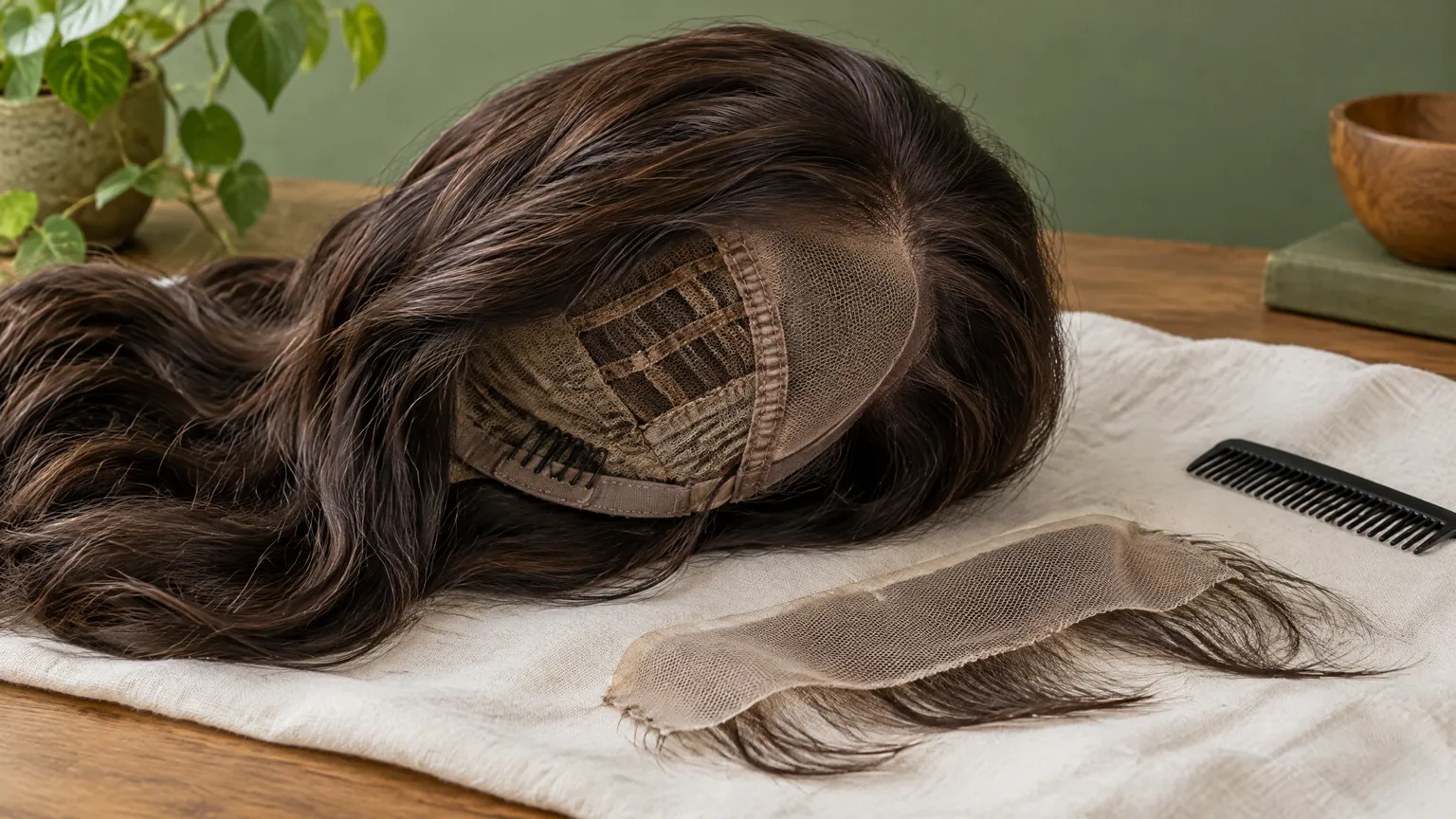
A finished hairstyle can hide the fastening details you most need to understand. Ask to see the underside of the proposed topper, including the clips and the front and back orientation. Identify which part must align with the desired parting and which areas should not be stretched or gripped during handling. Any clip that appears damaged or does not operate as demonstrated should be checked before use.
Jon Renau's application guide starts with opening the pressure-sensitive clips, then describes securing the front, back and sides before blending the hair.3 That is guidance for its products, not a universal sequence for every construction. Ask for instructions for the specific piece being considered, including how to open each clip and release it from your own hair. Do not copy a positioning measurement from another model without checking that it applies.
Check ordinary movement without a pull test
Once the piece has been positioned, turn your head normally, look down and return upright. If you usually wear spectacles, put them on. Notice whether you feel a concentrated pull, whether an edge presses against you, or whether the piece needs repeated correction. These observations help describe a fitting problem; a comfortable short demonstration does not establish that every future activity or length of wear will be suitable.
Use a rear view as well as a front mirror when assessing blending. The answer to an awkward back view should not be to fasten the front more tightly. Ask whether the base position, cut or visible surrounding hair needs reconsideration. If the look only works while you hold a strained position, it is not yet a practical everyday arrangement.
Build a gentle routine for putting it on and taking it off
Give yourself enough time to follow the demonstrated method. Begin with an uncluttered surface and the correct tool for the piece. Separate the hair that will remain visible from the attachment areas without aggressive backcombing to force a grip. If a clip keeps slipping or requires repeated attempts, stop and seek a fitting explanation rather than adding more tension to make it stay.
Release the fastenings before lifting the piece
Removal deserves its own demonstration. Support the topper so that its weight is not hanging from the last attached clip. Open each fastening as instructed and check that your own hair is free before lifting the piece away. Never use the topper's lengths as a handle for pulling it off. If hair catches, pause rather than pulling through the resistance; ask for help if you cannot release it gently.
Brushing can also become an attachment issue. Avoid dragging a brush through a knot while the topper is fastened, since the movement can tug at the piece and its attachment points. If a tangle needs more attention, remove the topper using the correct method and detangle it on an appropriate support according to its care instructions. This separates hairpiece care from the hair carrying it.
Think about what touches the topper during your normal day. A bag strap may catch long lengths, while changing a jumper over your head can disturb the arrangement. Plan those movements instead of repeatedly pulling the base back into position. If your routine requires protective headgear, do not compromise its fit to accommodate a topper; discuss a different appearance arrangement for that activity.
There is no universal number of hours in this guide that makes clipping safe for everyone. A longer day should not be treated as a challenge to endure discomfort. If you cannot remove and handle the piece when needed, that is a practical limitation to raise before adopting it as your daily option.
A hypothetical workday: solve the handling problem, not just the look
Consider a hypothetical Hong Kong office worker who wants local crown coverage and normally ties her hair back before travelling to work. In a fitting, the topper blends well when her hair is loose. Once she recreates her usual tight ponytail, she notices pulling near a side clip. Nothing in this example identifies a disease or proves that the topper has caused damage. It shows why the normal hairstyle belongs in the assessment.
Her next step would be to release the uncomfortable arrangement and explain exactly when the pulling began. She could compare a looser hairstyle and ask whether the proposed attachment positions remain suitable. Adding another clip or drawing the ponytail tighter would not resolve the underlying question of support. The AAD advises loosening styles that pull and changing a hairstyle promptly when pain, stinging or crusting occurs.1
She also needs to consider the evening routine. If taking the piece off becomes awkward after tying the hair back, she should practise removal in that arrangement before relying on it. A hairstyle that looks good but demands rushed, forceful unclipping is a poor match for her habits. The useful outcome is a manageable routine or a decision to consider another option, not a promise that a particular product will work.
Match the material to a care routine you can actually follow
Human hair and synthetic fibre are material choices; clip-in describes an attachment method. Changing fibre does not, by itself, solve an unsuitable attachment point. Ask separately about the hair material, base construction and fastening system, because each answers a different practical question. A material label should not be treated as a statement about scalp suitability.
If you are also comparing human hair wigs, use that information to discuss the difference between full-head coverage and a local piece that relies on surrounding hair. Confirm the cap and fastening arrangement of any wig being considered, alongside its washing and styling needs. A human-hair option is not automatically a lower-tension alternative, and the category alone does not establish whether it suits your routine.
Jon Renau's human-hair care guide recommends gentle detangling before washing, avoiding rubbing during washing, and keeping conditioner away from the base where it may weaken knots.4 These are manufacturer instructions for its own alternative-hair products. Obtain the correct care sheet for your actual piece rather than transferring every product recommendation, temperature or washing interval from another brand.
Set up a place to handle and dry the piece as instructed. Keeping it out of a crowded drawer reduces the need to untangle it hurriedly before leaving home. Inspect the clips while the piece is off your head and report a change in how they open or close. Do not bend, replace or relocate clips yourself unless the supplier has specifically explained an appropriate procedure.
Know when cosmetic adjustment should stop
Pain is not evidence of a secure fit. Stinging, persistent irritation or crusting should not be dismissed as a normal settling-in period. Release the uncomfortable arrangement, avoid reattaching over an irritated area, and seek advice from a qualified clinician if symptoms persist or concern you. The AAD identifies painful pulling, stinging and crusts as warning signs associated with damaging styling.1
New broken hairs, an apparent change in the hairline or a patch that looks thinner also merit attention rather than tighter fastening. These observations cannot confirm traction alopecia, and a salesperson cannot establish the cause simply by inspecting a clip position. Sudden obvious hair loss, ongoing pain or persistent scalp symptoms should be assessed by an appropriate healthcare professional.
Keep any description factual: where discomfort occurs, whether it begins during placement or later, and whether it continues after removal. There is no need to guess a diagnosis. A fitting discussion can usually focus on coverage, attachment and handling without sharing unnecessary medical history; a clinician can decide which health details are relevant to an assessment.
Avoid promises that a topper will protect every hair, reverse thinning or restore growth. The choice here is about appearance and a manageable wearing routine. When an attachment point becomes questionable, reassessing the piece is more useful than trying to preserve the same style at any cost.
Take a focused checklist to the next fitting
Bring your ordinary hairstyle into the conversation, not only an inspiration photograph. If you usually tie your hair back, wear spectacles or need to change clothing during the day, explain that. Ask whether the proposed piece can be demonstrated with those habits in mind. For a small fitting business, a clear handover should cover removal and care as carefully as the finished mirror view.
- Identify the intended coverage area and ask where each clip would attach.
- Compare the actual base outline with the proposed attachment points.
- Ask for placement and removal instructions for that specific construction.
- Practise releasing every clip without pulling the topper's lengths.
- Check ordinary head movement and your usual loose hairstyle.
- Obtain written care instructions, including suitable tools and drying arrangements.
- Agree whom to contact for a fitting problem, while keeping clinical concerns with a qualified healthcare professional.
A useful fitting ends with more than a convincing parting. You should understand where the piece is supported, how to release it without force, and what would make you pause wearing it. If those questions remain unanswered, take time to compare another arrangement. The best next decision is the one that fits your available support and everyday handling, rather than the one that merely covers the widest area in a photograph.
Common questions
Can I choose a smaller base just because it hides the parting?
Not on coverage alone. Check where the smaller base places each clip and whether those positions have suitable supporting hair. A larger base may move the clips, but it also needs assessment. Do not test suitability by pulling hard on the piece or fastening it onto an uncomfortable area.
What should I do if the topper pulls only when I tie my hair back?
Release the uncomfortable arrangement and explain the change to the person assessing the fit. Your underlying hairstyle is part of the attachment routine, so compare a looser arrangement rather than adding tension or another clip. If pain or irritation continues after removal, seek advice from a qualified healthcare professional.
Does switching to a human-hair piece solve clip discomfort?
No material label establishes a comfortable attachment. Human hair describes the fibre, not where the piece fastens or how its weight is supported. Reassess the clip positions and base arrangement first. If considering a full wig instead, ask separately about its cap, fastening method and care needs.
Sources & what they support
The scope below identifies what each reference supports. Citations do not imply independent endorsement of OWNSTRAND or any provider, and do not establish treatment benefits or guaranteed results.
- American Academy of Dermatology: Hairstyles that pull can lead to hair loss (opens in a new tab)
Repeated pulling can cause traction alopecia; painful styles are too tight; pain, stinging and crusting are warning signs; hair loss has multiple possible causes and warrants dermatological assessment.
- Jon Renau: All About That Base (opens in a new tab)
Manufacturer guidance distinguishes coverage measurements from attachment support and states that the hair at clip positions must be sufficient to support the system's weight. No brand-specific measuring allowance is presented as a universal rule.
- Jon Renau: How to apply a hair topper (opens in a new tab)
Manufacturer-specific application sequence begins with opening pressure-sensitive clips, followed by front, back and side attachment and blending. The article does not universalise its positioning measurements.
- Jon Renau: HOW TO Human Hair Care (opens in a new tab)
Manufacturer-specific human-hair care guidance recommends gentle detangling before washing, avoiding rubbing and keeping conditioner away from the base to avoid weakening knots. Product recommendations and numerical care schedules are not transferred to other pieces.